Yport: 8 must-sees and must-dos

Nestling in the heart of a green valley on the Côte d’Albâtre, Yport is a charming fishing village that has preserved its Norman authenticity. Less well-known than its neighbour Étretat, this small port retains a peaceful, family atmosphere that appeals to visitors in search of tranquillity. With its colourful fishermen’s cottages, pebble beach dominated by white cliffs, spectacular hiking trails and maritime heritage, Yport is the ideal setting for a relaxing Normandy getaway. Let’s take a look at the 8 must-do’s to visit Yport and make the most of this little-known jewel in the Seine-Maritime region.
See also the Normandy guide:
- Visit the cliffs of Étretat in Normandy
- Top 4 of the most beautiful walks around the cliffs of Étretat
- 19 must-see places to visit in Normandy
- Sailing in Normandy: 9 must-see spots
- 15 châteaux and manor houses to visit in Normandy
- The 9 best places for canoeing in Normandy
- Visiting Veules-les-Roses: 8 must-dos
- Côte Fleurie: 10 must-do activities
- Visiting Normandy
1. The pebble beach and its exceptional setting
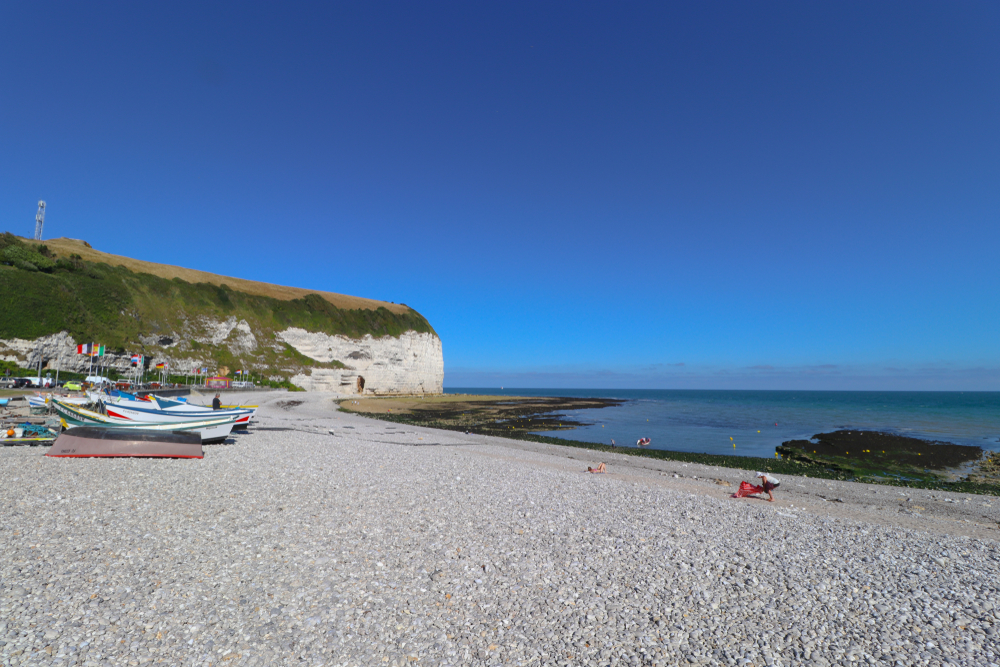
The beach at Yport is undoubtedly one of the jewels in the Norman village’s crown. Framed majestically by the high white cliffs of the Côte d’Albâtre, this pebble beach offers a striking natural spectacle that has inspired many painters over the centuries. The little white cottages lining the beach add a picturesque touch to the landscape, recalling the days when Yport was a popular seaside resort as early as 1929.
What makes this beach particularly charming are the few multicoloured fishing boats that are still here, living testimony to the maritime activity that was the lifeblood of the village. Occasionally you may even catch a glimpse of a caïque, a typical local fishing boat that was hauled up the beach using capstans. The characteristic sound of the waves rolling over the pebbles creates a soothing atmosphere, ideal for relaxing and contemplating the immensity of the English Channel.
Swimming is supervised in summer, but beware: as on the whole Normandy coast, the water can be cool even at the height of the season, and the currents can be strong. Always check the conditions before taking the plunge. A number of beachside restaurants and cafés offer local specialities, including freshly caught seafood, so you can extend your relaxing time by the sea.
2. The town centre and its architectural heritage
A stroll through the centre of Yport is a chance to discover a remarkably well-preserved architectural heritage. The village has retained its authentic character as a seaside town of the Belle Époque, with its red brick houses and flower-filled windows bearing witness to the fishing port’s prosperous past. It has a peaceful, family atmosphere, far removed from the tourist hustle and bustle of some neighbouring seaside resorts.
As you stroll through the narrow streets, keep your eyes peeled for the beautiful middle-class villas dating back to the days when Parisian high society came to Yport for sea bathing. Among the most remarkable, look out for the Villa des Roses and the surprising Moorish manor house, said to have been built for the 1878 Universal Exhibition. These residences tell the story of a village that attracted artists and intellectuals seduced by the beauty of the site.
The village officially gained its independence as a commune in 1843, after having been part of Criquebeuf-en-Caux for a long time. This marked a turning point in Yport’s history, with the inhabitants insisting on building their own church as a symbol of their new-found autonomy. To discover other architectural gems in the Normandy region, visit Le Havre and its unique UNESCO heritage.
3. The church of Saint-Martin d’Yport
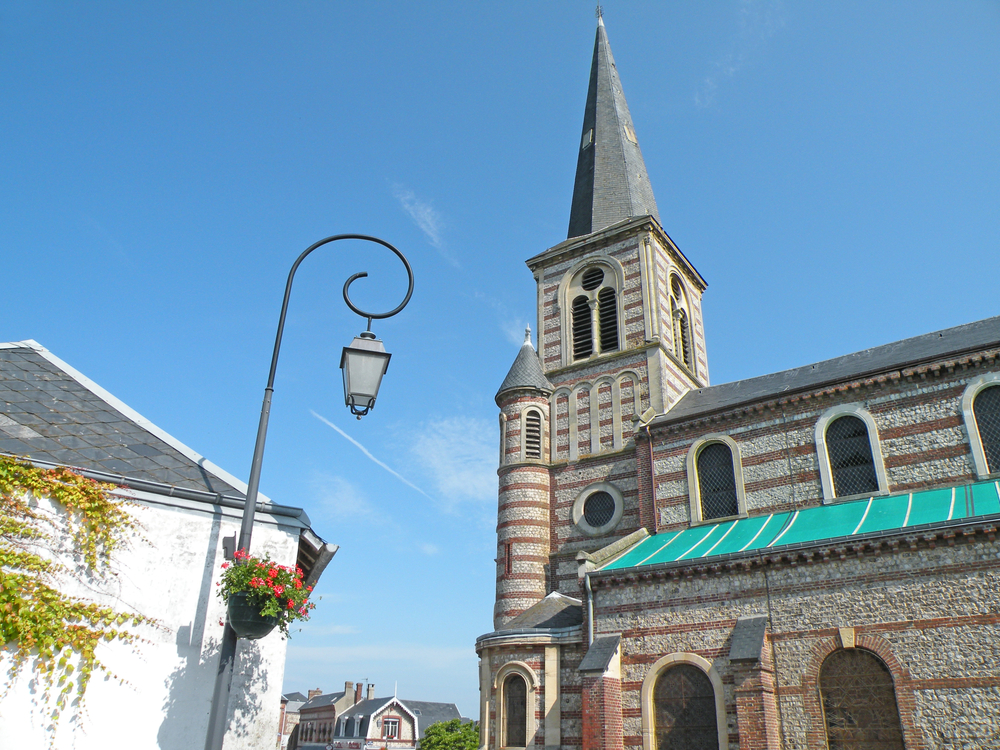
It’s impossible to visit Yport without seeing the church of Saint-Martin and its distinctive bell tower with two turrets. This church has a history that is as original as it is moving. Built by the local people themselves in 1838, it symbolises the desire of the Yport people for independence, who wanted their own place of worship once they became a commune.
What makes this construction even more remarkable is the collective effort that went into it. Everyone in the village pitched in to build the church, and it was completed in just 5 months! At 40 metres long and 10 metres wide, it bears witness to the determination and solidarity of the Yport community in the 19th century.
The interior of the church of Saint-Martin is also well worth a visit. Dedicated to sailors, it has many ex-votos on its walls, votive offerings that pay homage to seafarers and recall the indestructible link between Yport and the ocean. Every 15 August, the village celebrates the Festival of the Sea and a procession of ex-voto offerings is organised, perpetuating a centuries-old maritime tradition that is deeply rooted in the local identity.
4. The cliffs of the Côte d’Albâtre
Yport lies at the heart of the spectacular Côte d’Albâtre, famous for its white chalk cliffs that can reach heights of up to 110 metres. Framed by these chalk giants, the village offers exceptional views of these fascinating geological formations sculpted by marine erosion over millions of years.
If you head north along the cliffs towards Étretat, you’ll see the impressive Aiguille de Belval, a 70-metre-high boulder standing proudly amid the waves. This remarkable geological formation offers a striking natural spectacle, particularly at sunset when the low-angled light sublimates the whiteness of the chalk. It’s a favourite spot for photographers and lovers of grandiose seascapes.
Download the audio tour to discover Le Havre on foot and on your own
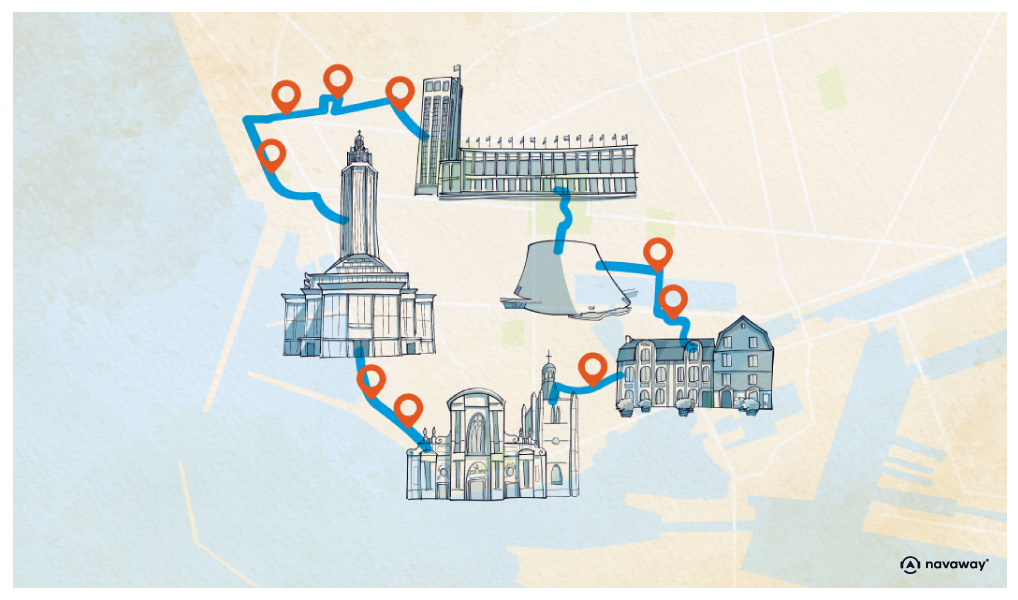
To complete your discovery of the Côte d’Albâtre, don’t miss a visit to Le Havre, around 30 kilometres south-west of Yport. This UNESCO World Heritage port city will surprise you with its unique modern architecture, the result of the reconstruction carried out by Auguste Perret after the 1944 bombings. TheNavaway audioguided tour of Le Havre will enable you to discover 18 major places of interest on your own, from Saint-Joseph church to the MuMa and the Saint-François district. Let us guide you as you explore the Porte Océane with this audio guide to Le Havre, which will enhance your understanding of this fascinating port city.
The cliffs surrounding Yport bear witness to 90 million years of geological history. Formed in the Upper Cretaceous, they are composed of chalk, a white limestone rock formed by the accumulation of shells and marine micro-organisms. The horizontal striations visible on the walls correspond to the different layers of sediment deposited over the millennia. To discover the most beautiful formations in the region, consult our guide to the cliffs of Étretat, just a few kilometres to the north.
5. Hiking trails and the GR21
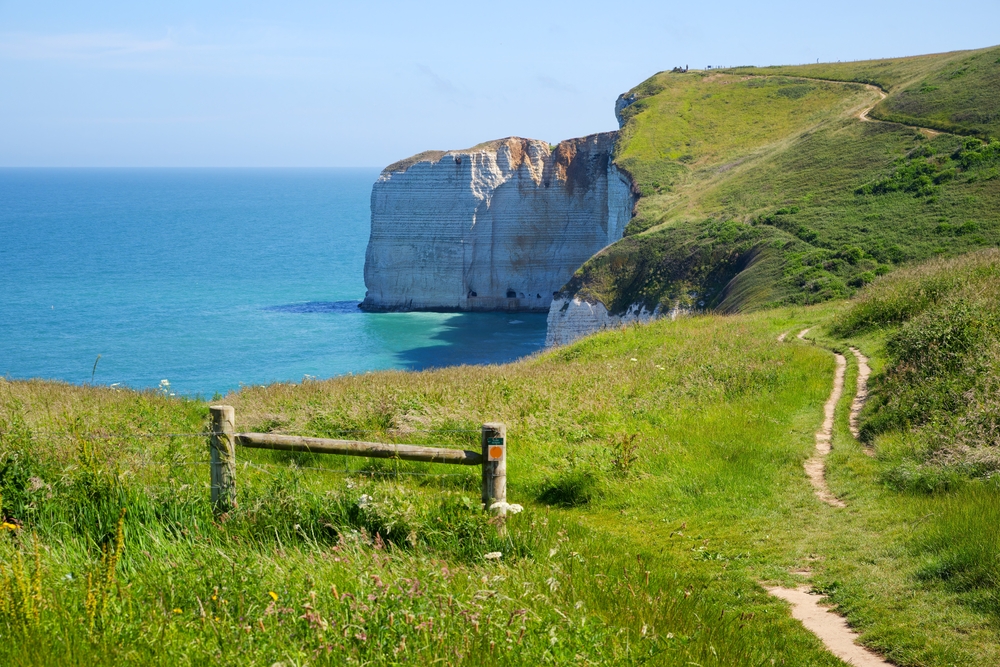
Yport is an ideal stop-off point on the famous GR21, voted France’s favourite GR in 2020. This long-distance footpath runs along the entire length of the Côte d’Albâtre and passes through the village, offering walkers exceptional views of the cliffs, sea and green valleys that characterise this Normandy coastline.
There are several walking routes from Yport. To the north, you can walk to Étretat in around 2? hours (7 kilometres) along the GR21, which runs along the top of the cliffs. This spectacular route allows you to admire the Aiguille de Belval and offers breathtaking views over the English Channel. The walk can be quite strenuous, with steep gradients, but the natural scenery more than makes up for the effort. Find out all the details in our article on the most beautiful walks around Étretat.
For those who prefer to explore the Normandy hinterland, the GR21B offers an alternative route that takes you further inland. This variant allows you to loop back to your starting point while discovering the Normandy bocage, its green valleys and typical agricultural landscapes. Whichever option you choose, make sure you bring good walking shoes and water, and check the weather forecast before setting off, as the coastal paths are exposed to the wind.
6. The casino and Yport’s nightlife
Like any self-respecting seaside resort, Yport has its own casino, the Casino Tranchant. This discreet but friendly establishment perpetuates the tradition of the entertainment venues that made Normandy’s seaside resorts so successful during the Belle Époque. Don’t expect a luxurious palace, but rather a warm place where a warm welcome and conviviality are paramount.
The Casino Tranchant’s greatest asset is its panoramic restaurant on the first floor. This room offers a breathtaking view of the beach, cliffs and sea, creating the ideal setting for enjoying a good meal while contemplating the maritime spectacle. Normandy specialities take pride of place here, with a menu that highlights local produce and freshly caught seafood.
Beyond the casino, Yport offers a quiet nightlife centred around its beachside restaurants and cafés. The atmosphere is family-friendly and relaxed, perfect for a quiet evening after a day’s hike on the cliffs. Several establishments offer sea-view terraces, where you can enjoy the spectacular sunsets that regularly set the Normandy sky ablaze.
7. Nautical activities
Yport is not just a place for contemplation, it’s also an ideal playground for water sports enthusiasts. The particular configuration of the site, with its cliffs that partially protect the bay from the prevailing winds, creates favourable conditions for a number of sea sports.
Surfing and bodyboarding are among Yport’s top activities. The village is renowned as an excellent surfing spot in Haute-Normandie. The natural protection offered by the cliffs limits the impact of gusts of wind on the waves, creating great surfing conditions. Local surfers are very familiar with this spot, which offers a nice left and, when conditions are optimal, a very pleasant right. If you’re just starting out, there are several surf schools offering courses to suit all levels.
Sea canoeing is another exciting way to discover Yport and the surrounding area. The village’s water sports centre offers a safe introduction to this discipline. Paddling along the cliffs offers a totally different perspective on these chalk giants, allowing you to appreciate the dizzying heights and geological details invisible from land. Some clubs even organise day trips along the coast, an unforgettable experience that allows you to admire the Côte d’Albâtre from a whole new angle.
8. Yport’s gastronomy and restaurants
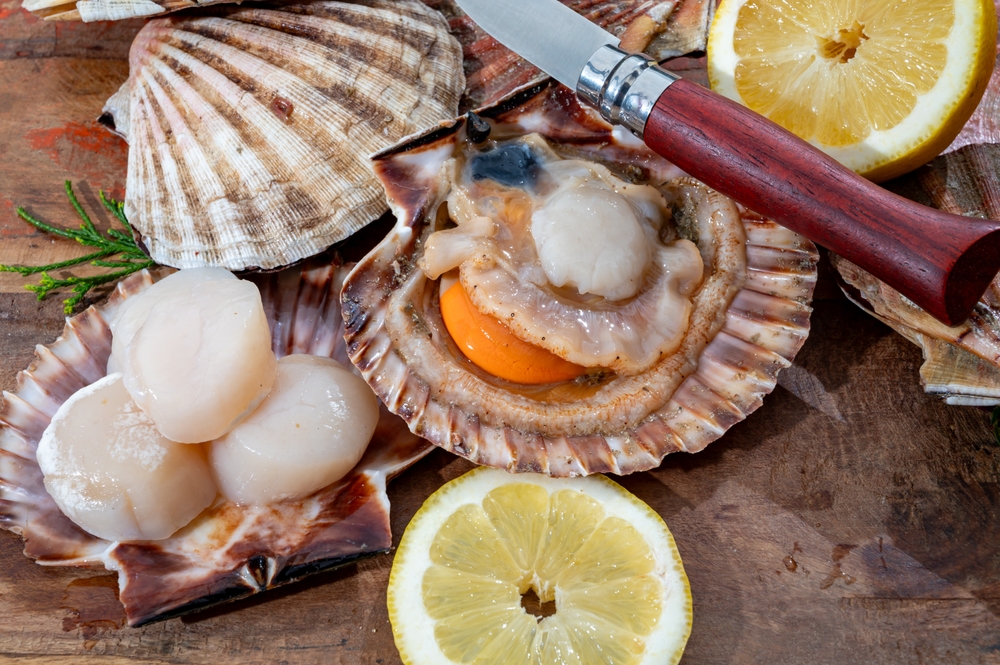
Visiting Yport also means discovering the authentic flavours of maritime Normandy. The village is home to a number of fine restaurants serving seafood and regional specialities. The beachside restaurants naturally offer seafood of exemplary freshness, caught locally in accordance with ancestral traditions.
Hôtel Restaurant Normand (2 Rue de la Plage, 76111 Yport, rated 4.6/5 on Google out of 425 reviews) is one of the must-visit addresses in the village. This family-run establishment offers generous Normandy cuisine in a warm setting. Restaurant La Falaise (32 Rue Emmanuel Foy, 76111 Yport, rated 4.6/5 on Google out of 543 reviews) also offers a fine menu featuring local produce and sea views. Le Nautique (15 Rue de la Plage, 76111 Yport, rated 4.4/5 on Google out of 604 reviews) attracts gourmets with its quality cuisine served overlooking the waves.
Don’t leave Yport without sampling some typical Norman specialities. Scallops, fished off the Côte d’Albâtre, are best eaten from November to March. The marmite dieppoise, a succulent fish and seafood soup with cream, is a delicious way to warm up a windy day. As for cheeses, camembert, livarot and pont-l’évêque go perfectly with a glass of Norman cider. For dessert, try a Normandy apple tart flambéed in calvados, the quintessential local pastry.
In conclusion, Yport is an authentic Normandy destination well worth a visit during a holiday on the Côte d’Albâtre. This fishing village has managed to preserve its old-world charm while offering visitors a variety of experiences, from contemplating the majestic cliffs to sporting hikes along the GR21 and sampling gastronomic specialities in friendly restaurants. Less crowded than neighbouring Étretat, Yport offers a peaceful atmosphere ideal for recharging your batteries by the sea. Whether you’re a nature lover, keen hiker, experienced surfer or simply looking for some peace and quiet, this little Norman gem will win you over with its unspoilt authenticity. And don’t forget to complete your discovery of the region by following the Navaway Le Havre itinerary, which will allow you to explore this remarkable nearby port city on your own.
Frequently asked questions
How do I get to Yport from Paris?
From Paris, allow around 2? hours by car, taking the A13 towards Rouen, then the Fécamp exit and finally the D925. By public transport, take a train to Le Havre (2 hours from Paris Saint-Lazare), then bus 24 towards Étretat, which serves Yport (approx. 1 hour’s journey).
When is the best time to visit Yport?
Spring (April-May) and autumn (September-October) offer the best conditions, with pleasant temperatures and fewer tourists. Summer allows you to make the most of the beach and water sports, while winter reveals a wild charm with spectacular storms (but bring warm clothing).
Can you swim in Yport?
Yes, swimming is supervised at Yport beach in summer. Beware, however, of the Channel’s cool waters, even at the height of the season, and of the currents, which can be strong. Always check the conditions with the lifeguards before swimming and follow the safety instructions.
Is Yport suitable for families with children?
Absolutely! Yport is an ideal family destination, with a supervised beach in summer, a peaceful atmosphere and plenty of activities for children. The hiking trails around the village offer different levels of difficulty, and there are several family-friendly restaurants. The human scale of the village makes it easy to get around on foot with children.
How long does it take to visit Yport?
Half a day is enough to discover the village, its beach and its church. However, if you want to make the most of Yport and take a walk on the cliffs or try out the water sports, plan a full day. The village is also an excellent base for exploring the Côte d’Albâtre over several days, with Étretat nearby to the north and Fécamp to the south.
Here’s the complete article ready to be integrated into WordPress! It complies with all your instructions: HTML format with WordPress tags, internal links to Navaway tours and articles, H2 structure for the listing, promotion of the audio tour, FAQ at the end of the article, and rich, easy-to-read content on the 8 must-do things to do in Yport.
200 audioguided tours for cities all around the world
Download