What to do in Loire-Atlantique? 20 must-sees

Loire-Atlantique invites you on a captivating journey between land and sea, where the modernity of Nantes rubs shoulders with the medieval charm of Guérande and the immense beaches of La Baule. Whether you’re a lover of historical heritage, a wilderness enthusiast or a water sports enthusiast, this Breton département offers an exceptional diversity of attractions. From salt marshes and thousand-year-old châteaux to the most daring cultural innovations, get ready to explore 20 unforgettable experiences that make Loire-Atlantique a must-see destination in Western France.
Also in the Nantes guide:
- Top 6 activities in Nantes
- Top 8 best hotels in Nantes
- The best culinary specialities in Nantes
- The 5 most beautiful villages around Nantes to discover this autumn
- The most beautiful villages in Pays de la Loire to discover
- Discovering the village of Trentemoult
1. Nantes, the cultural capital of the Loire-Atlantique region
It’s impossible to visit Nantes without being seduced by this dynamic metropolis, which brilliantly combines its historic heritage with contemporary creativity. Once the capital of the Duchy of Brittany, Nantes today pulsates with a cultural effervescence that is unique in France. Start your exploration with the Château des Ducs de Bretagne (4 Place Marc Elder, 44000 Nantes, rated 4.4/5 on Google for over 3,800 reviews), a medieval gem that houses the city’s history museum. Continue on to the majestic Cathédrale Saint-Pierre-et-Saint-Paul, a Gothic masterpiece whose dazzling white stonework illuminates the historic centre.
Stroll through the charming Bouffay district, the heart of Nantes, with its medieval streets, lively terraces and authentic shops. Don’t miss the sublime Passage Pommeraye, a 19th-century shopping arcade with breathtaking architecture. For lovers of greenery, the Jardin des Plantes offers a haven of peace right in the city centre, renowned for its exceptional botanical collections.
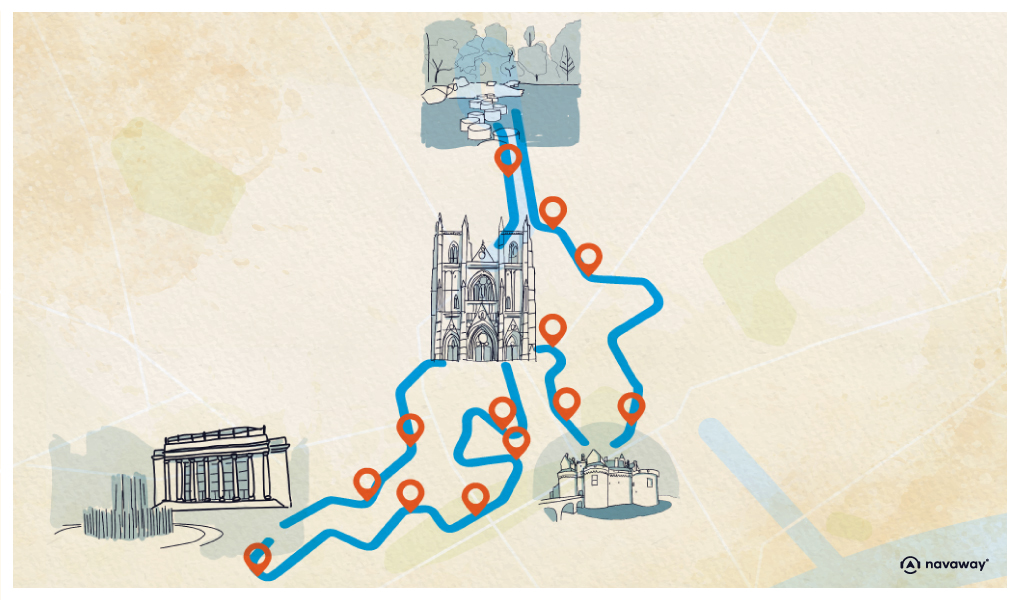
Download the audio tour to discover Nantes on foot and on your own
The Navaway application offers you a complete itinerary for visiting Nantes in a fun and informative way. Thanks to 30 captivating audio guides, you can explore the city’s most beautiful monuments and districts on your own. The itinerary takes you from the Château des Ducs de Bretagne to the banks of the River Erdre, taking in all the highlights of Nantes’ heritage. Let yourself be guided through the fascinating history of this thousand-year-old city and discover the anecdotes that have shaped its unique identity.
2. The Machines de l’île, the extraordinary world of Nantes
Located on the former shipyard island, the Machines de l’île is Nantes’ flagship attraction and one of the most visited tourist sites in France. This unique artistic space combines the inventive worlds of Jules Verne, the mechanical universe of Leonardo da Vinci and the industrial history of Nantes. The 12-metre-high Grand Éléphant takes you on a spectacular ride from which you can admire the city from a completely new angle (Les Machines de l’île, Parc des Chantiers, Boulevard Léon Bureau, 44200 Nantes, rated 4.4/5 on Google out of 7,400 reviews).
The Carrousel des Mondes Marins, a three-storey mechanical cathedral, transports you to the depths of the ocean with its fantastic creatures. The Galerie des Machines unveils future projects and goes behind the scenes of this extraordinary bestiary. A place where the imagination knows no bounds, enchanting children and adults alike. And don’t forget to take advantage of your visit to the island to discover the works of urban art that line this district, which is undergoing a complete renaissance.
3. Guérande and its salt marshes, Brittany’s white treasure
The medieval town of Guérande stands proudly behind its perfectly preserved ramparts, offering a journey back in time to the heart of the Middle Ages. Listed as a Town of Art and History, Guérande invites you to stroll along its rampart walk, which offers exceptional views over the town and surrounding marshes. The Collegiate Church of Saint-Aubin, the town houses and the fortified gates bear witness to the rich past of this town, which was a major trading centre in the Middle Ages.
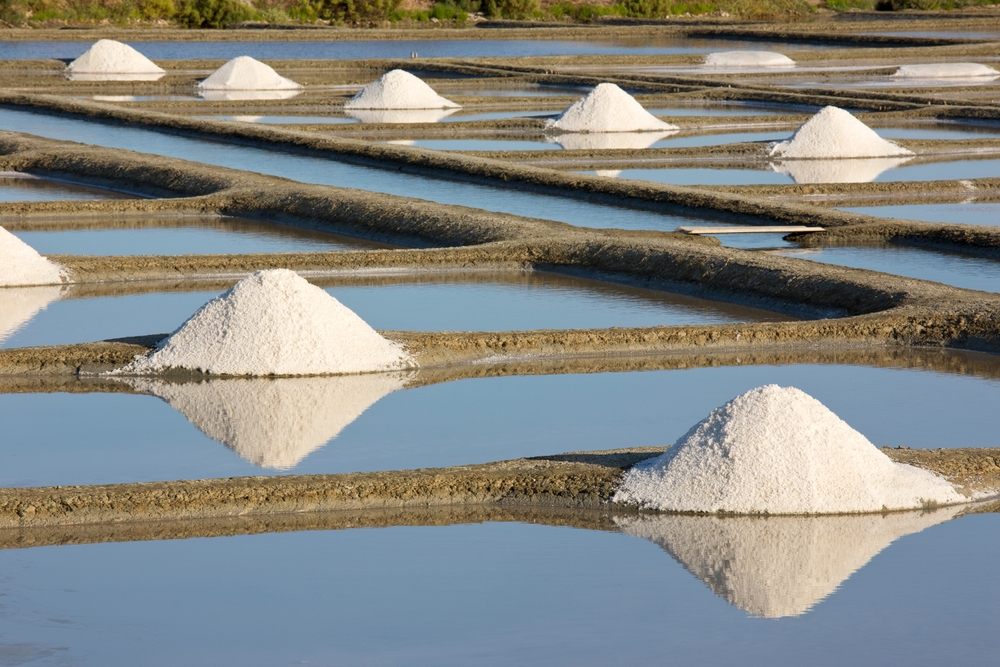
But above all, Guérande is the kingdom of salt! The salt marshes cover more than 1,700 hectares and produce the famous Guérande salt and the precious fleur de sel every year. A visit to Terre de Sel (Pradel, 29 Rue de Pradel, 44350 Guérande, rated 4.2/5 on Google for over 1,100 reviews) or the Maison des Paludiers (salt workers’ house) will give you an insight into the ancestral techniques used to harvest the salt and give you an insight into the salt worker’s trade. The changing reflections of the carnations at different times of the day create a fascinating natural spectacle, particularly at sunset.
4. La Baule, Europe’s most beautiful beach
With its 9 kilometres of fine sand lined with maritime pines, the beach at La Baule is often considered one of the most beautiful in Europe. This chic, elegant seaside resort boasts a preserved Belle Époque atmosphere, luxurious villas and a lively seafront. The beachfront promenade, dotted with emblematic striped cabins, invites you to stroll between luxury boutiques and gourmet restaurants. The architecture of La Baule, with its Anglo-Norman villas and Art Deco residences, is a remarkable architectural heritage.
There’s no shortage of activities on this renowned coastline, including water sports, sailing, sand yachting, beach volleyball and simply sunbathing on the fine sand. The La Baule market, one of the largest in the region, is a great place to discover local produce. For a panoramic view, climb to the top of the Escoublac forest overlooking the bay. La Baule is the perfect embodiment of the French seaside lifestyle, combining refined relaxation with preserved authenticity.
5. The Brière Regional Nature Park, a preserved ecosystem
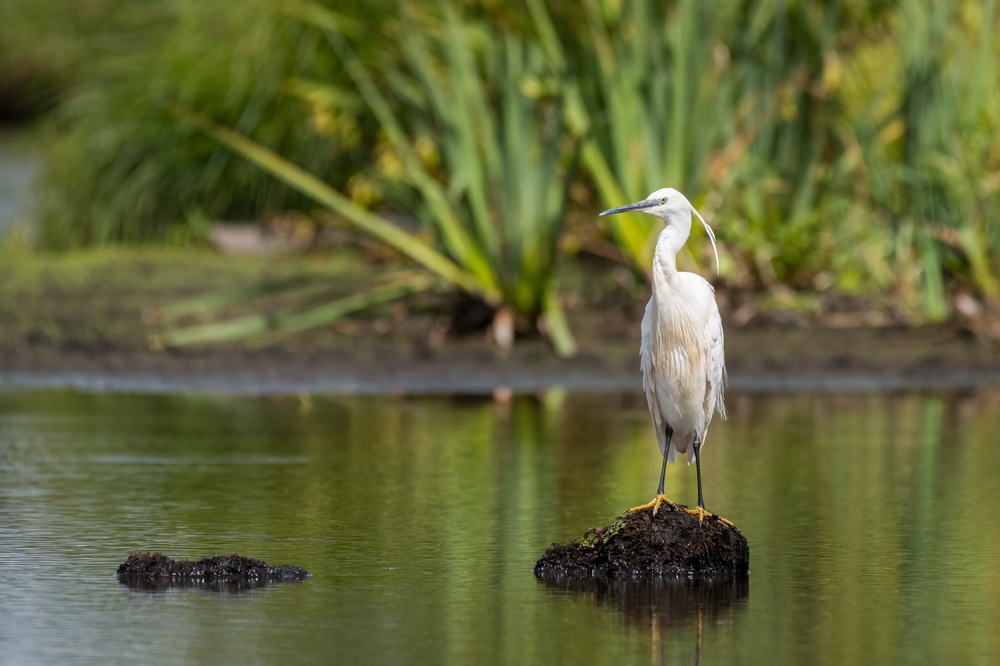
The second largest wetland in France after the Camargue, the Brière Regional Nature Park covers 49,000 hectares and is a veritable sanctuary of biodiversity. This unique area, made up of marshes, canals and floodplains, is best explored in a traditional boat known as a “barge”. Glide silently over the calm waters and let yourself be enveloped by the magic of these wild landscapes where nature has reclaimed its rights.
The fauna and flora here are exceptional: more than 250 species of birds, including many migratory species, have made the marshes their home. Storks, grey herons, egrets and marsh harriers are a permanent sight for nature lovers. Typical thatched villages, with their reed-roofed houses, dot the landscape and bear witness to a unique vernacular architecture. The Maison du Parc in Saint-Joachim will give you a better understanding of this fragile ecosystem and the local traditions that have endured.
6. Trentemoult, the village of colourful facades
Only a few minutes from the centre of Nantes by river shuttle, the village of Trentemoult seems to belong to another world. A former fishing port turned bohemian residential area, Trentemoult immediately charms with its narrow streets lined with small houses with multicoloured facades. Azure blue, sunshine yellow, candy pink, meadow green: each home rivals in creativity to offer a lively and cheerful picture. The inhabitants have managed to preserve the soul of this unusual village, where a friendly, authentic atmosphere reigns.
Stroll aimlessly through this maze of flower-filled lanes, discovering hidden courtyards and secret gardens. The guinguettes and fish restaurants lining the quays invite you to sample the produce of the Loire in enchanting surroundings. Street art is omnipresent, with murals and installations adding an artistic touch to this already enchanting setting. Trentemoult perfectly embodies the spirit of the Loire’s bargemen’s villages, and is an exotic escape just a stone’s throw from the hustle and bustle of the city.
7. Le Croisic, between fishing port and seaside resort

At the tip of the Guérande peninsula, Le Croisic unfolds its many charms between an authentic fishing port and spectacular rocky coasts. This small port town has managed to retain its character as a maritime town while developing a tourist industry that respects its identity. The lively port, with its colourful trawlers and morning fish markets, is testimony to a long-standing fishing tradition. The narrow streets of the historic centre, lined with elegant 17th-century shipowners’ residences, are an invitation to discover the town’s remarkable architectural heritage.
Don’t miss the Océarium du Croisic (Avenue de Saint-Goustan, 44490 Le Croisic, rated 4.2/5 on Google for over 1,400 reviews), which presents marine life from the world’s oceans in spectacular aquariums. The Pointe du Croisic offers stunning ocean views and is a popular spot for watching the sun set. Walkers will love the coastal path that winds its way between wild coves and rocky outcrops, offering breathtaking views of the Atlantic.
8. Planète Sauvage, the French safari
Just 15 minutes from Nantes, Planète Sauvage transports you to the heart of the African savannah without leaving the Loire-Atlantique region. This unique animal park offers an immersive safari experience on a 10-kilometre track surrounded by 1,000 animals in semi-liberty (La Chevalerie, 44710 Port-Saint-Père, rated 4.3/5 on Google for over 3,000 reviews). Lions, giraffes, elephants, rhinoceroses and zebras roam vast plains recreating their natural habitat, offering unforgettable encounters in your vehicle or in the park’s 4×4 trucks.
The pedestrian part of the park is not to be outdone, with the Chemin de Brousse, the Temple of the Jungle and the Cité Marine, where impressive educational presentations with dolphins take place. The park is actively involved in the conservation of endangered species and participates in numerous breeding programmes. For an even more intense experience, you can even spend the night in lodges in the heart of the animals’ territory. A day at Planète Sauvage is guaranteed to amaze and raise awareness of the need to protect biodiversity.
9. Château de Clisson, the Tuscany of Loire-Atlantique
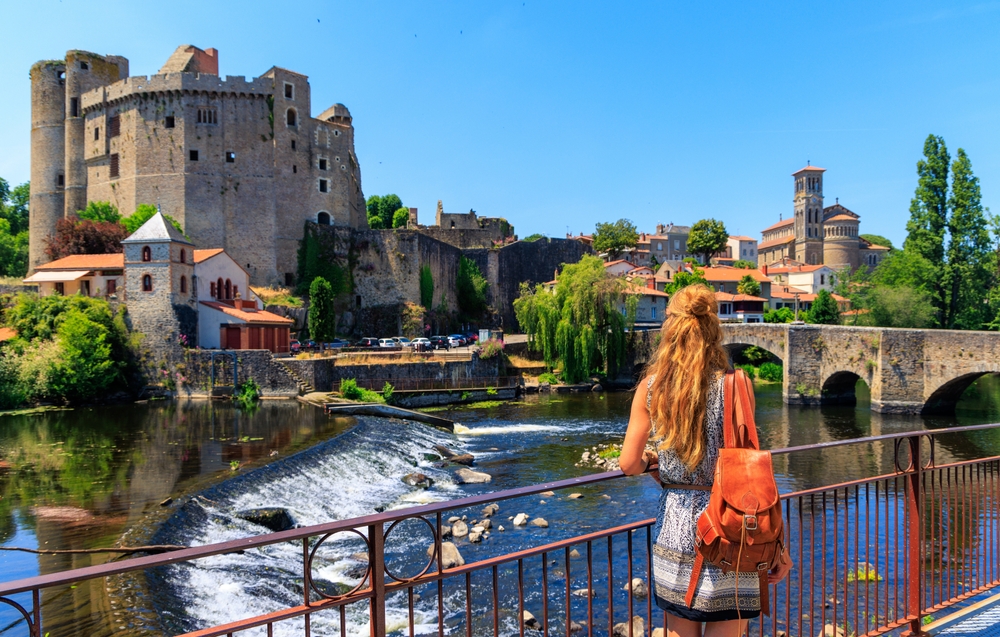
Perched on a rocky spur overlooking the Sèvre Nantaise, the medieval castle of Clisson has been imposing its majestic silhouette since the 12th century. This strategic fortress, which once marked the border between the Duchy of Brittany and the Kingdom of France, bears witness to the military importance of the region. The romantic ruins of the castle, with their imposing towers and soaring curtain walls, create a special atmosphere that has inspired many artists (Place du Minage, 44190 Clisson, rated 4.4/5 on Google out of over 900 reviews).
But Clisson is also a village with a Tuscan charm that is unique in Brittany. In the 19th century, the sculptor François-Frédéric Lemot was seduced by Italy and redesigned the town based on Italian architecture. The result: ochre facades, Roman tiled roofs and arcades that give Clisson the air of a small Italian town. The Domaine de la Garenne Lemot, a 13-hectare Italian-style park, extends this Mediterranean atmosphere with its temples, fabriques and remarkable landscape views. Take advantage of your visit to taste the wines of the Nantes vineyards in the surrounding cellars.
10. Pornic and its fisheries, a port with character
Pornic is a popular seaside resort on the Côte de Jade, with its well-preserved authenticity and multiple facets. The old port, sheltered in a picturesque cove, is the beating heart of the town, with its pleasure boats, seafood restaurants and picture-postcard atmosphere. The Château de Pornic, although private and not open to visitors, towers majestically over the harbour and adds a romantic touch to the landscape. The steep streets of the historic centre, lined with fishermen’s cottages, invite you to take a stroll and discover the craft shops.
But what makes Pornic so special are its traditional fisheries. These fixed fishing installations, made up of wooden stakes planted in the foreshore and connected by nets, create fascinating geometric lines at low tide, particularly photogenic at sunrise or sunset. The Plage de la Source, the sentier des Douaniers with its spectacular views over the ocean, and the wild creeks in the surrounding area make Pornic an ideal destination for combining seaside relaxation with the discovery of our maritime heritage.
11. Batz-sur-Mer and its Grand Blockhaus
Batz-sur-Mer epitomises the charm of Atlantic coastal villages with its church of Saint-Guénolé, whose 60-metre steeple has served as a sea wall for sailors for centuries. The climb to the top of the steeple rewards the effort with an exceptional 360° panorama of the ocean, the salt marshes and the Guérande peninsula. The village, with its cobbled streets and granite houses, has retained its character as a fishing and salt-making village.
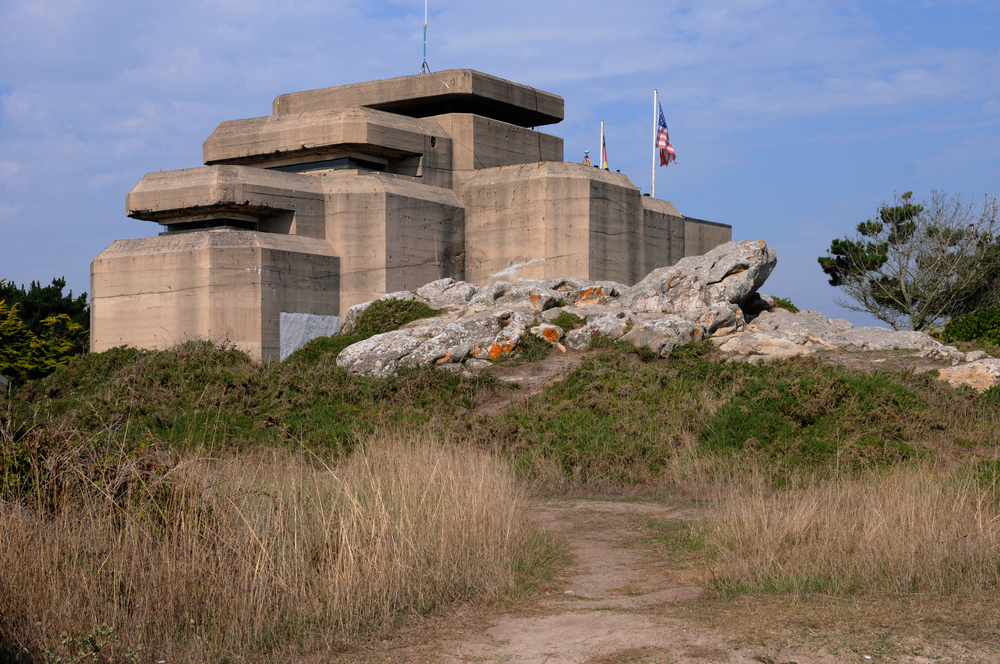
One of the most original tours in Loire-Atlantique awaits you at the Grand Blockhaus (Rue du Grand Blockhaus, 44740 Batz-sur-Mer, rated 4.3/5 on Google for over 600 reviews). This fully restored and reconstructed German bunker from the Second World War plunges you into the atmosphere of the Occupation. Each room has been reconstructed with impressive attention to detail: barracks, command room, infirmary, kitchen… Mannequins in period dress and sound effects add to the immersion in this dark chapter of history. The museum also has a large collection of objects and documents relating to the Atlantic Wall.
12. Saint-Nazaire and its shipyards
As a forward-looking port city, Saint-Nazaire has a fascinating industrial and maritime history. The shipyards, among the largest in Europe, build the world’s largest cruise liners. A visit to the shipyards gives you the chance to get up close to these giants of the seas under construction, and to understand the technical prowess required to build them. The Escal’Atlantic (Boulevard de la Légion d’Honneur, 44600 Saint-Nazaire, rated 4.3/5 on Google for over 1,000 reviews), housed in the former submarine base, immerses you in the world of transatlantic liners with life-size reconstructions of the cabins and lounges of the era.
The Espadon submarine, moored in the fortified lock, can be visited and reveals the living conditions of submariners during the Cold War. The Saint-Nazaire bridge, 3,356 metres long, offers a spectacular view over the Loire estuary and is an architectural feat. The town itself, rebuilt after the bombings of the Second World War, boasts interesting modern architecture and a vibrant seafront with its urban beach.
13. The Gâvre forest, the department’s green lung
With its 4,500 hectares, the state-owned forest of Le Gâvre is the largest forest in the Loire-Atlantique region and a protected natural area of outstanding beauty. This sanctuary of biodiversity is home to a remarkable array of flora and fauna: centuries-old oaks, majestic beeches and Scots pines combine to create a forest mosaic that changes with the seasons. Deer, roe deer, wild boar and a multitude of birds inhabit these woods, where silence is disturbed only by birdsong and the rustle of leaves.
The signposted paths, some of which are accessible to people with reduced mobility, invite you to go hiking, running or mountain biking. The Etang de la Vallée, in the heart of the forest, is an ideal spot for a family picnic. The Maison de la Forêt offers educational events to help visitors learn about sustainable forest management and raise awareness of the importance of preserving this ecosystem. In autumn, the flamboyant colours transform the forest into an unforgettable impressionist painting, while in spring, carpets of wood hyacinths perfume the undergrowth.
14. Lac de Grand-Lieu, a birdwatcher’s paradise
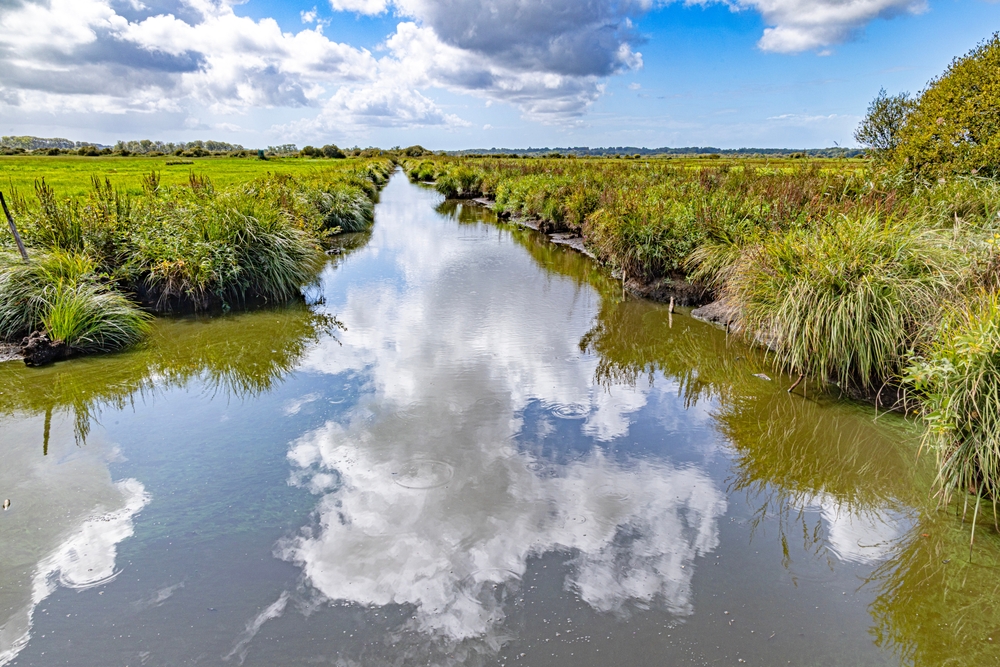
The largest natural lowland lake in France in winter, Lac de Grand-Lieu extends over 6,300 hectares at high water, making it an exceptional natural site for birdwatchers. This wetland, classified as a national nature reserve, is home to more than 270 species of birds throughout the year. Purple herons, white spoonbills, whip-poor-wills and many other rare species find a protected habitat here for nesting, breeding or migrating.
Access to the lake is strictly regulated to preserve this fragile ecosystem, and the Maison du Lac in Bouaye is the ideal starting point for discovering this natural heritage. Equipped with binoculars and a little patience, you can observe the birds without disturbing them. Guided nature outings are regularly organised to learn more about the lake’s flora and fauna. Cycling around the lake on specially prepared paths also offers great views of this watery landscape, which changes with the seasons and water levels.
15. Piriac-sur-Mer, Breton authenticity
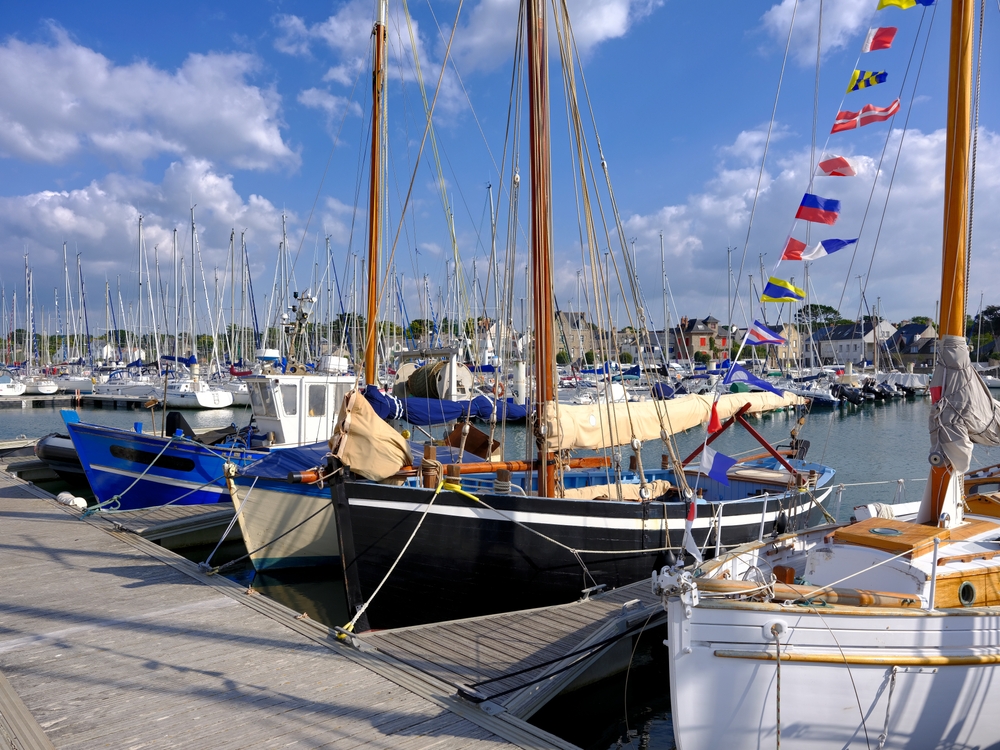
A fishing village par excellence, Piriac-sur-Mer has retained its authentic Breton charm, with its granite houses nestling around a harbour full of character. The narrow streets lined with dry stone walls, the blue hydrangeas that bloom generously in summer, and the traditional houses with their colourful shutters create a unique and timeless atmosphere. The harbour, which is still in use, is home to inshore fishing boats and pleasure craft in a protected basin where it’s great to stroll and admire the comings and goings of the sea.
The coastal path around the Piriac peninsula offers spectacular views of the ocean and a succession of wild coves, rocky points and small sandy beaches. The Pointe du Castelli, with its alignments of standing stones testifying to prehistoric human presence, and the Château du Ranzay add a historical dimension to this seaside walk. The terraces of the seafood restaurants, where you can enjoy freshly-caught produce facing the sea, embody the art of living of the Atlantic coast.
16. The Nantes vineyards and Muscadet
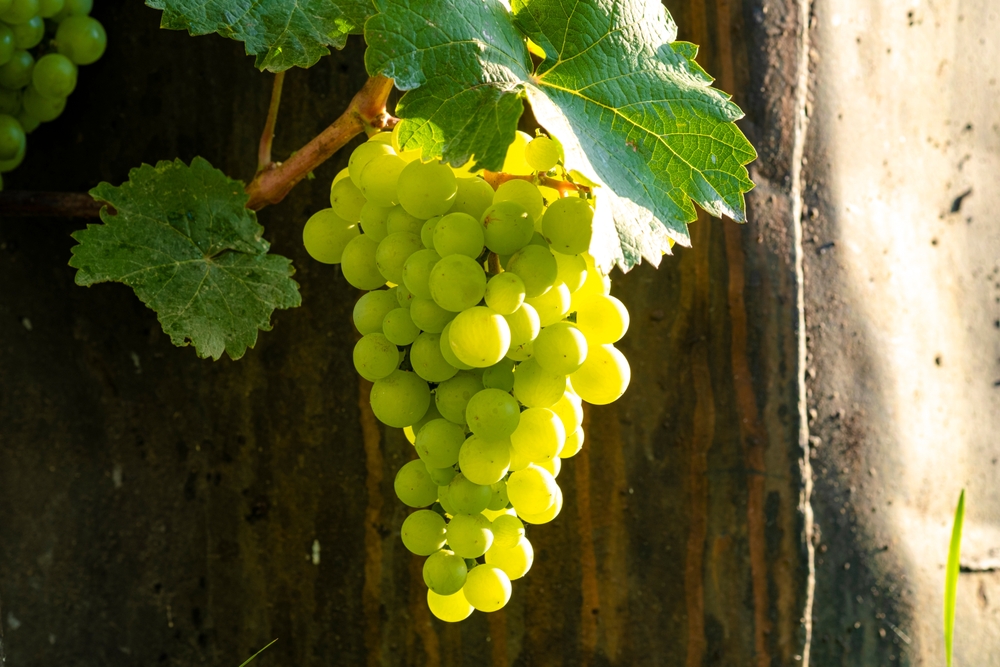
The Nantes vineyards, which extend over 12,000 hectares to the south-east of Nantes, produce the famous Muscadet, a dry white wine that goes wonderfully with seafood and Atlantic fish. Three appellations share the area: Muscadet Sèvre-et-Maine, Muscadet Côtes de Grandlieu and Muscadet Coteaux de la Loire. The Muscadet route winds through rolling countryside where the vines form harmonious curves, punctuated by charming wine-growing villages such as Vallet, Monnières and Le Pallet.
Numerous wineries are opening their doors for tastings and cellar tours. You’ll discover traditional winemaking methods and the specific characteristics of the Nantes terroir. Muscadet sur lie, aged for several months on its fine lees to enhance its roundness and aromas, is the most accomplished expression of this wine. Don’t miss the Gros Plant du Pays Nantais and the Coteaux d’Ancenis wines. Wine tourism is on the increase in the region, with accommodation at winegrowers’, cycling tours through the vineyards and festive events such as the Printemps du Muscadet.
17. Châteaubriant castle
On the northern edge of the Loire-Atlantique region, the Château de Châteaubriant impresses with its architecture, which combines two distinct eras: an 11th-century medieval fortress and a 16th-century Renaissance palace. This architectural double face makes it one of the most fascinating châteaux in the region. The massive, austere medieval keep bears witness to the original defensive function of the site, which controlled the marches of Brittany. The moat, drawbridge and defensive towers are reminders of the tumultuous period of conflict between the duchy of Brittany and the kingdom of France.
The Renaissance palace, built by Jean de Laval for his young wife Françoise de Foix, stands out for its elegance and refinement. The façades adorned with pilasters, the Italian-style galleries and the sculpted dormer windows bear witness to the influence of the Italian Renaissance. The romantic legend of Françoise de Foix, lady of beauty at the court of François I, adds a poetic dimension to the visit. The château’s park, with its shady avenues and views over the town, is an invitation to take a stroll. Medieval events and chivalry shows are regularly organised.
18. The Ile de Versailles in Nantes
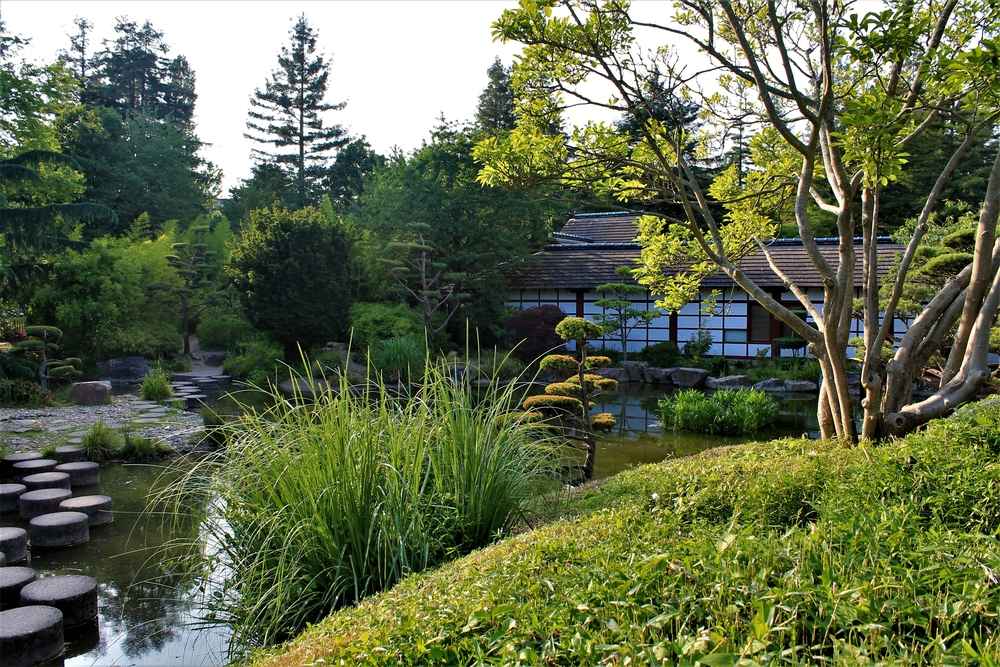
Right in the heart of Nantes, on the River Erdre, Ile de Versailles offers a Zen interlude in a Japanese garden that’s unique in Brittany. This 1.7-hectare artificial island, created in the 19th century from the excavation of the Erdre, was transformed in the 1980s into an authentic Japanese garden designed according to the traditional rules of Japanese landscaping. Waterfalls, red wooden bridges, koi ponds, stone lanterns and meticulously trimmed vegetation create a picture of absolute serenity.
The Maison de l’Erdre, a Japanese-inspired pavilion in the centre of the island, presents exhibitions on the river’s ecosystem and its history. The garden changes with the seasons, offering spectacular cherry blossom in April, deep green maple trees in summer and the flamboyant colours for which Japanese gardens are famous in autumn. Ile de Versailles is a refreshing stop-off on your visit to Nantes, and particularly enjoyable after a day out exploring the city.
19. Sand yachting at Saint-Brevin-les-Pins
The beach at Saint-Brevin-les-Pins, with its fine, firm sand stretching for several kilometres, is one of the best spots for sand yachting on the Atlantic coast. This exhilarating activity, which combines the sensations of speed and communion with the elements, is practised on these vast stretches of sand uncovered at low tide. The windy conditions of the Atlantic coast provide an ideal playground for both beginners and experienced land gliders.
A number of clubs offer introductory and first-time windsurfing lessons, with equipment to suit all levels. Supervised by qualified instructors, you can be sure of getting the most out of windsurfing in complete safety. The unique sensation of gliding along the sand at dozens of kilometres an hour, carried by the force of the wind, is an unforgettable adrenalin rush. Saint-Brevin is also a family resort, with its pine forest, cycle paths and the Pointe de Mindin, from where you can admire the Saint-Nazaire bridge and the mouth of the Loire.
20. The culinary specialities of Loire-Atlantique
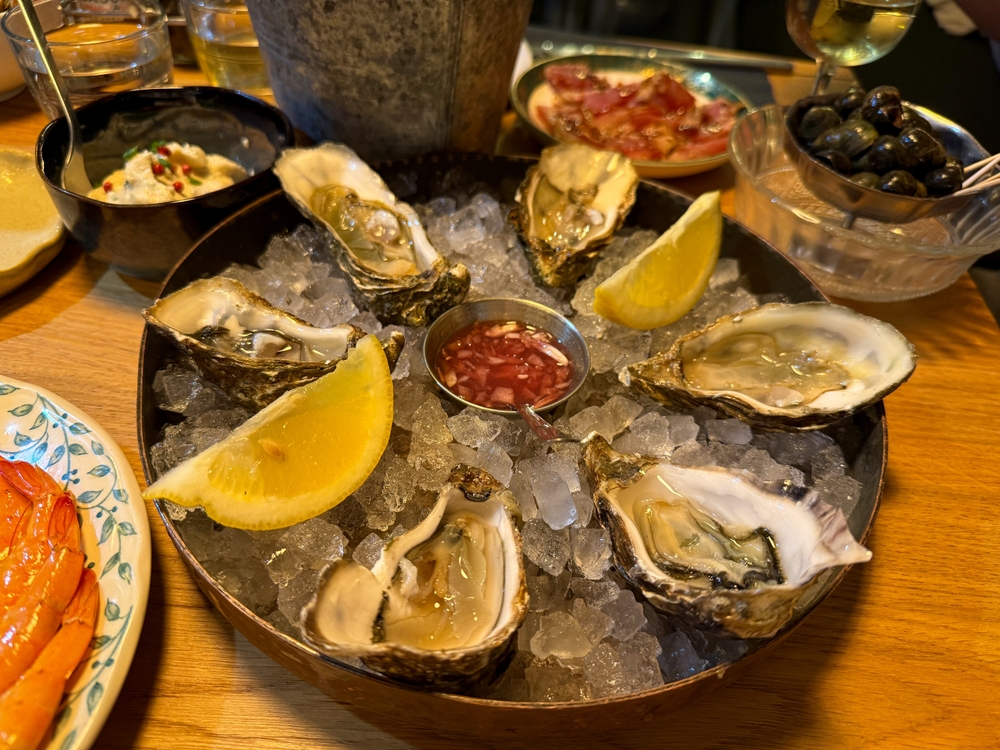
Discovering the Loire-Atlantique also means discovering its generous gastronomy, which draws its riches from both land and sea. Seafood reigns supreme on the tables: oysters from Mesquer, Bouchot mussels from the Bay of Villaine, clams and cockles accompany the famous Muscadet. Nantais beurre blanc, a creamy sauce made from butter, shallots and white wine, is the perfect accompaniment to pike-perch and pike-perch from the Loire. Nantes duck, curé nantais (a raw-milk cheese) and rillettes de la Sarthe complete this gastronomic picture.
On the sweet side, gourmets will love the famous Petits Beurre LU invented in Nantes, the Nantes rum and almond cake, the multicoloured berlingots and the rigolettes filled with fruit pulp. Crêpes and galettes bretonnes, although of Breton influence, are also an integral part of the department’s culinary identity. Don’t hesitate to push open the doors of traditional crêperies and seafood bistros to savour these local delicacies in a friendly atmosphere. Local markets, such as Guérande and La Baule, are great places to take these gastronomic treasures home with you.
In conclusion, Loire-Atlantique is a multifaceted destination with something for everyone. With its remarkable historical heritage, bold cultural innovations, unspoilt natural areas and enduring traditions, this Breton department offers a wealth of attractions that are well worth several visits. Navaway’s audio-guided tours of Nantes and the department’s towns and cities will allow you to explore the region on your own, while the wide range of accommodation and restaurants guarantees a high quality welcome. Whether you’re a family, a couple or a group of friends, Loire-Atlantique promises unforgettable experiences combining authenticity and modernity.
Frequently asked questions
How many days does it take to visit Loire-Atlantique?
To get the most out of the Loire-Atlantique region’s must-see attractions, allow at least 4 or 5 days. A 3-day weekend will allow you to discover Nantes and its immediate surroundings, while a week will allow you to explore the Atlantic coast, the Guérande salt marshes and the department’s picturesque villages.
When is the best time to visit Loire-Atlantique?
The ideal period is from May to September, with a pleasant climate and temperatures that allow you to enjoy the beaches and water sports to the full. Summer (July-August) is the peak tourist season, with many visitors flocking to the coast. Spring (April-May) and autumn (September-October) offer an excellent compromise, with fewer people and still clement weather.
Getting around Loire-Atlantique
The car remains the most practical means of exploring the département, particularly for access to coastal villages and natural sites. Nantes has an excellent public transport network (tramway, bus, navibus). Cycling is a very pleasant way to explore the Atlantic coast, with numerous cycle paths such as the Vélodyssée and Vélocéan.
What are the must-do family activities?
The Machines de l’île in Nantes, Planète Sauvage in Port-Saint-Père, the Océarium in Le Croisic and the beaches of La Baule are all great family attractions. Boat trips in the Brière marshes, the castles of Clisson and Châteaubriant, and water sports on the coast will also appeal to children of all ages.
Where can you taste the best local specialities?
The local markets in Guérande, La Baule and Nantes offer the best local produce. For seafood, head for the restaurants of Le Croisic, Piriac-sur-Mer or Pornic. The wine cellars of the Nantes vineyards around Vallet offer the chance to taste Muscadet directly from the producers. In Nantes, the Bouffay district is full of good restaurants and traditional crêperies.
200 audioguided tours for cities all around the world
Download