What to do in Crete


Crete is Greece’s largest island, offering a perfect blend of heavenly beaches and rugged mountains. Ideal for a holiday that’s both sporty and relaxing, this dream destination has a rich history that can be discovered through its ancient remains and small villages with authentic charm.
It is the cradle of Minoan civilisation, considered to be the very first in Europe, and the legendary birthplace of Zeus according to Greek mythology. Today, this Mediterranean island is home to hundreds of species of animals and plants, attracted by the great diversity of landscapes it has to offer. Whether you love culture, hiking in the White Mountains or seeking tranquillity on white sandy beaches, here are the most beautiful places to discover during your stay in Crete.
What are the most beautiful places to see in Crete?
1- The Samaria Gorge
If you’re on a trip to Crete, you absolutely must visit the Samaria Gorge, located in the national park of the same name. It’s without doubt one of the most beautiful walks you can do on the island!
The Samaria Gorge is a UNESCO Biosphere Reserve. They are characterised by 16 km of rocky walls that form an impressive stroll down to the sea. In fact, they are one of the longest gorges in Europe, after the Verdon Gorge in France!
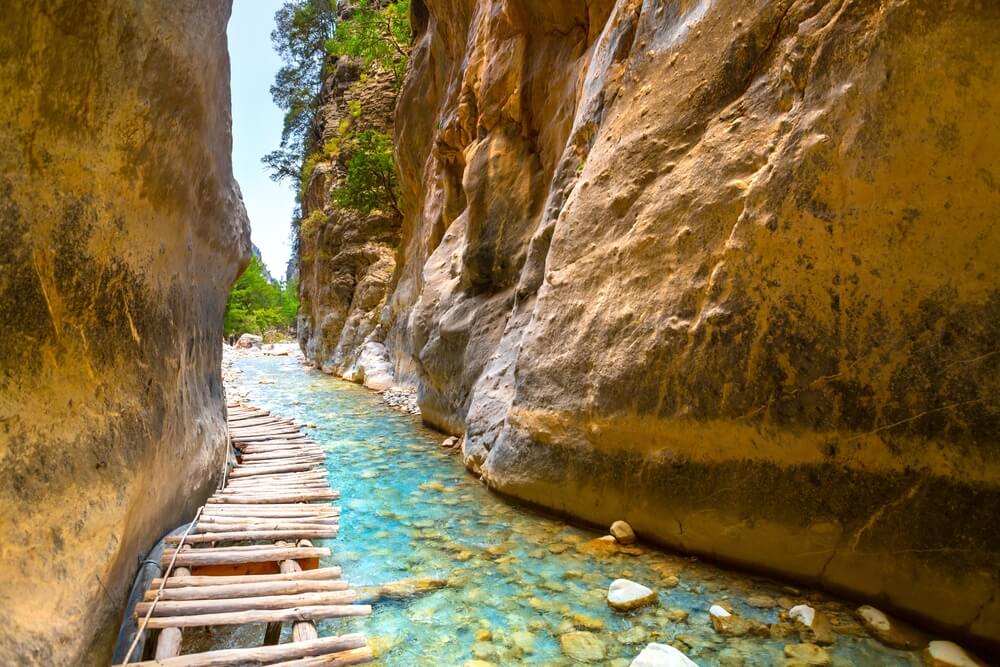
- Start of the hike at Xyloskalo
- Please note that the gorges are not open every month of the year. Make sure you check; they are generally open from May to October. They may also be closed on rainy days, as they become too dangerous.
2- Heraklion
The capital of Crete, Heraklion is a beautiful city with many monuments that tell the story of its rich history. Its Heraklion Archaeological Museum is one of the most important in Europe, displaying collections from the different periods through which Crete has passed, including the Neolithic, Minoan and Roman periods.
This bustling metropolis offers a unique atmosphere combining tradition and modernity. Travellers will love the atmosphere of the traditional cafés in the old town, where locals gather to enjoy an early morning Greek coffee. Local craft shops sell authentic objects that are living testimonies to Cretan culture.
As well as being Crete’s largest city, Heraklion boasts a seaside location! There are several beaches within easy reach of the city centre, ideal for relaxing after a day’s sightseeing. The tavernas on the seafront serve tasty cuisine in a friendly atmosphere, perfect for sampling the local specialities.
3- Knossos Palace
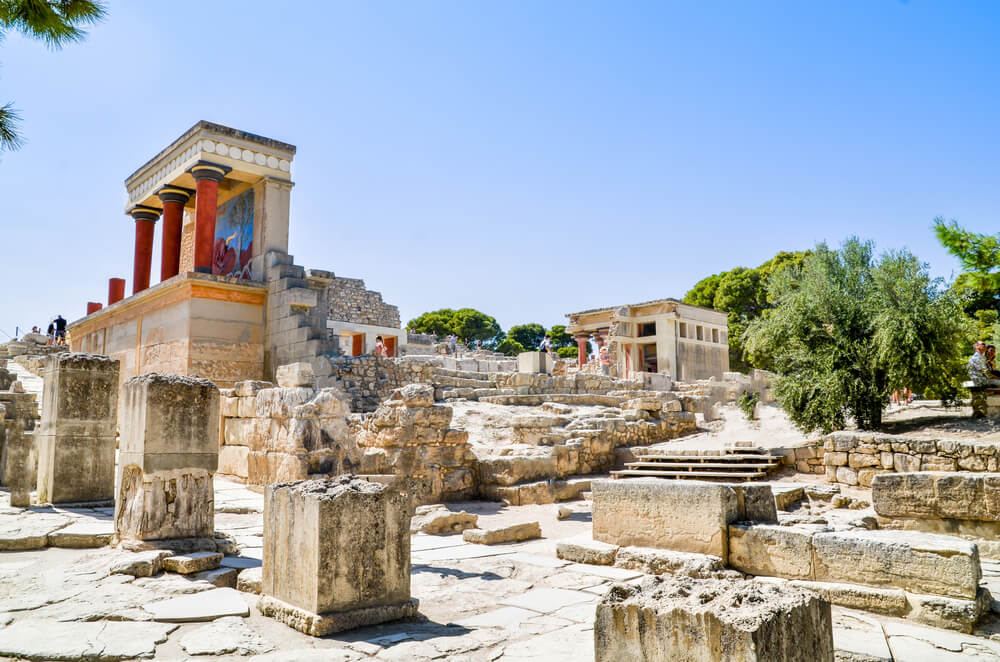
This is one of Crete’s greatest remains! Knossos Palace is just a few kilometres from Heraklion and was discovered in the 19th century. It is a palace built by the oldest civilisation in Europe, the Minoan civilisation.
This exceptional site, with its famous labyrinth and the legends of the Minotaur, fascinates visitors from all over the world. The restored colourful frescoes give an insight into the sophistication of this ancient civilisation. The tour takes in the royal flats, shops and workshops that bear witness to the wealth of this period.
The palace of King Minos is still surrounded by many of the myths for which it is famous. Fans of Greek mythology will find it an inexhaustible source of inspiration, while families will enjoy this immersion in ancient history.
4- Chania
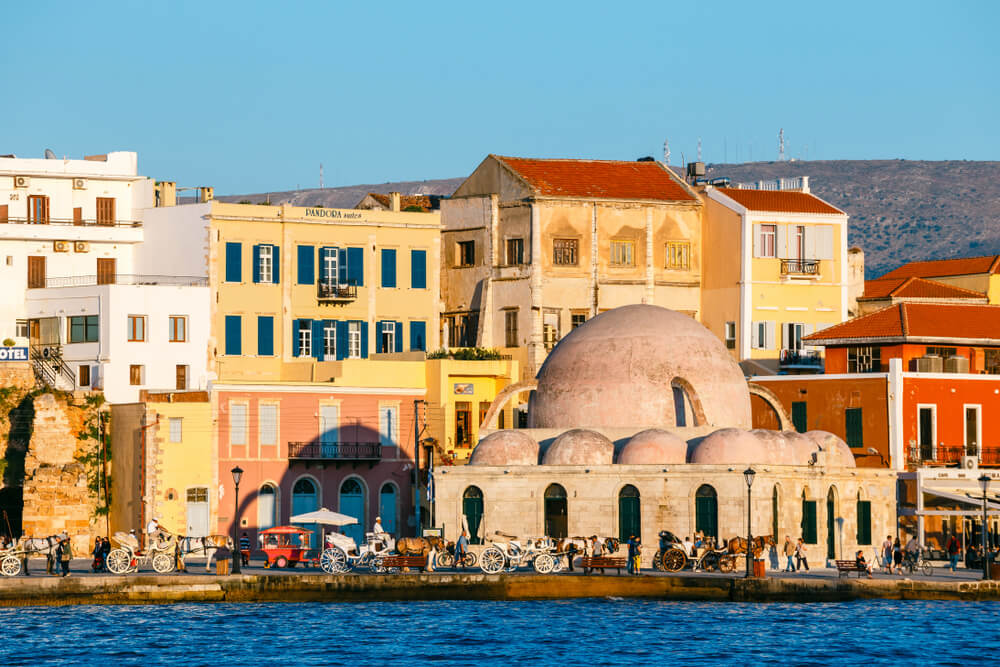
Considered to be the most beautiful city on Crete, Chania is a must-see when visiting the island. Its emblematic port, colourful houses, historic districts and magnificent beaches are just some of the reasons to stay a few days in this lively, authentic town. Its rich history has left visible traces in the centre, which was built on the ruins of an ancient Minoan city.
Chania was the former capital of Crete until 1971, when Heraklion took its place. Take a stroll through the narrow streets to discover the church, the arsenal, the old port, the covered market and the archaeological museum.
5- Réthymnon
Built in Antiquity, Réthymnon is a picturesque town that has preserved its finest remains, particularly from the Venetian and Turkish periods. As Crete’s third-largest city, it is a veritable treasure trove of history that will enthral even the most ardent visitors. Churches, mosques, gardens, the Old Port and museums – that’s what awaits you in one of the most beautiful towns on the island!
What’s more, there are beaches nearby where you can finish the day sunbathing and swimming!
6- Elafonissi
This is one of the most beautiful beaches on the island… It tends to be described as heavenly, and as you’ll see, it really is! In fact, it’s one of the most beautiful beaches in the world!
Turquoise waters, fine white and pink sand, breathtaking surroundings… It’s a real natural wonder that awaits you there! And it’s just as much a delight for those who love lounging by the water as for those who want to hike in the surrounding area, to get closer to the mountains that surround the beach. A protected natural area that’s definitely worth a visit!
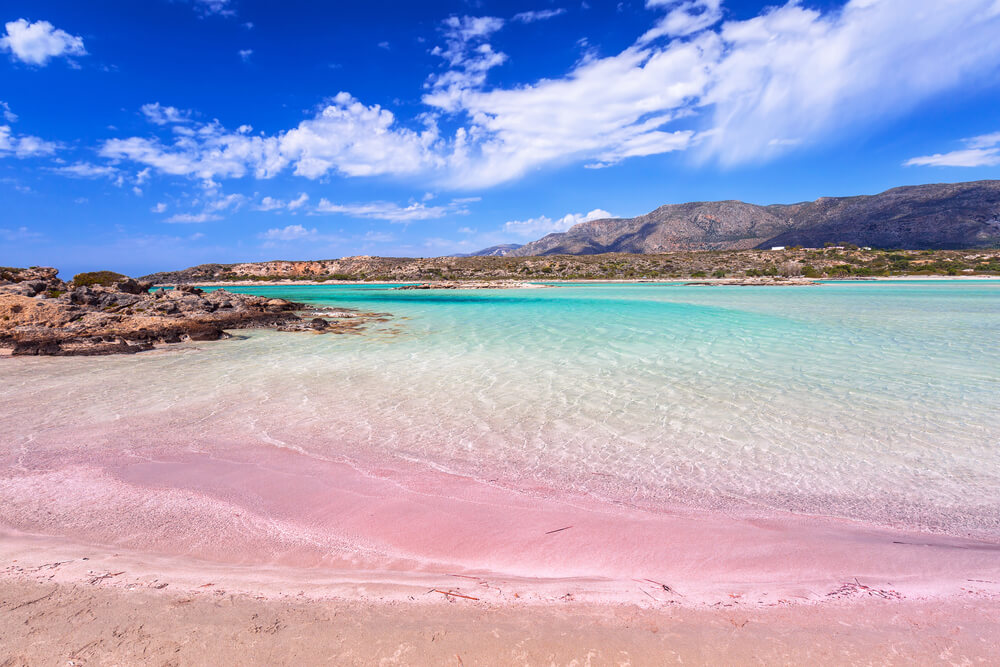
- Where to find it? Elafonissi beach is in the south-west of the island, around an hour and 40 minutes’ drive from Chania.
- This beach is one of the most popular tourist spots on the island, so you’re sure to find plenty of people there! If you want a little more peace and quiet, you can reach the island of Elafonissi by crossing the sandbank or the sea to find other, quieter beaches.
- If you don’t have a car, there are organised excursions from Chania, Heraklion or Rethymnon to take you to this corner of paradise. The beach is also accessible by bus.
7- Balos
This is Elafonissi’s great rival! Balos beach is another must-see spot on Crete. More than just a beach, it’s a lagoon in this very popular part of the island. A protected site with a wealth of plant and animal species, it’s the ideal place for a swim in a truly exceptional setting.
The transparent waters of this little corner of paradise are also perfect for snorkelling, and you can easily discover the area by hiring a boat or taking a cruise.
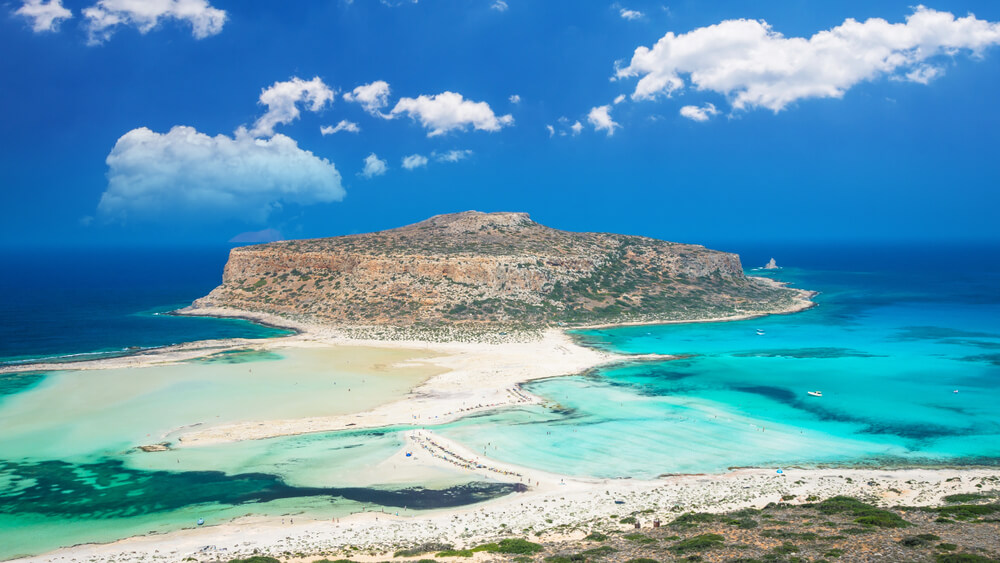
- Where can you find it? The Balos lagoon lies to the north-west of the island, a 1 hour 20 minute drive from Chania.
- The beach is accessible by car via a gravel path that takes you to the public car park. It’s about a 30-minute walk from the car park to the beach.
- If you don’t have a car, there are organised excursions from Chania and Kissamos to take you to this magnificent lagoon.
8- Island of Spinalonga
An archaeological site made popular by Victoria Hislop’s novel The Island of the Forgotten, the island of Spinalonga has a long history to tell. The remains that can be seen today date back to the Venetian era, in the 16th century, and represent a powerful fortress that protected the port of Elounda. It is no longer inhabited, but remains one of the most visited places on Crete!
You’ll have the chance to visit the fortifications, enjoy the magnificent view from the tower, explore the remains of the ancient village, discover the museum and stroll along the beach. The islands have so much to offer.
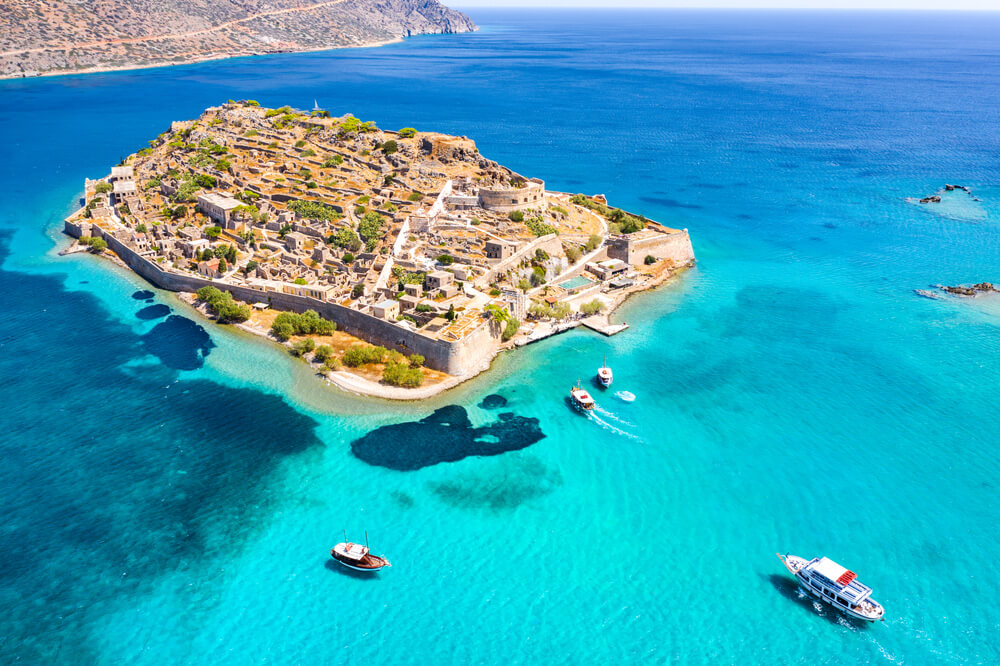
- Where can you find it? The island of Spinalonga is in north-east Crete, a 1 hour 10 minute drive from Heraklion.
- To reach the island, you need to take a boat from Agios Nikoalas, Elounda or Plake, or opt for a day trip from Heraklion or Rethymnon. There is a charge for these shuttles.
- It costs €8 to enter the archaeological site.
- Please note that the fortress is closed in winter!
9- The little village of Matala
A former fishing village, this seaside resort with a hippy past has something to surprise you. A cliff-fringed beach, a lively little village and impressive caves are all waiting to be discovered in this must-see destination on the island. You can also visit the ruins of the Palace of Phaistos, not far from the village, to discover the remains left by the Minoan civilisation.
If you’re in Crete in mid-June, you might be able to catch the Matala Beach Festival, a hippy-style festival that brings together music, theatre and street art for a throwback to the 60s and 70s, something you don’t see everywhere!
- Where can you find it? The village is located on the south coast of the island, a 1 hour 20 minute drive from Heraklion.
10- The Dikteon cave
Dikteon Cave, also known as Psychro Cave, is a spectacular succession of stalagmites and stalactites at an altitude of 1025 metres. It is so well known in Crete because legend has it that it is the birthplace of Zeus – and that’s saying something!
It is also a sacred Minoan site. Today, it has been landscaped so that visitors can explore every nook and cranny along a path that crosses it.
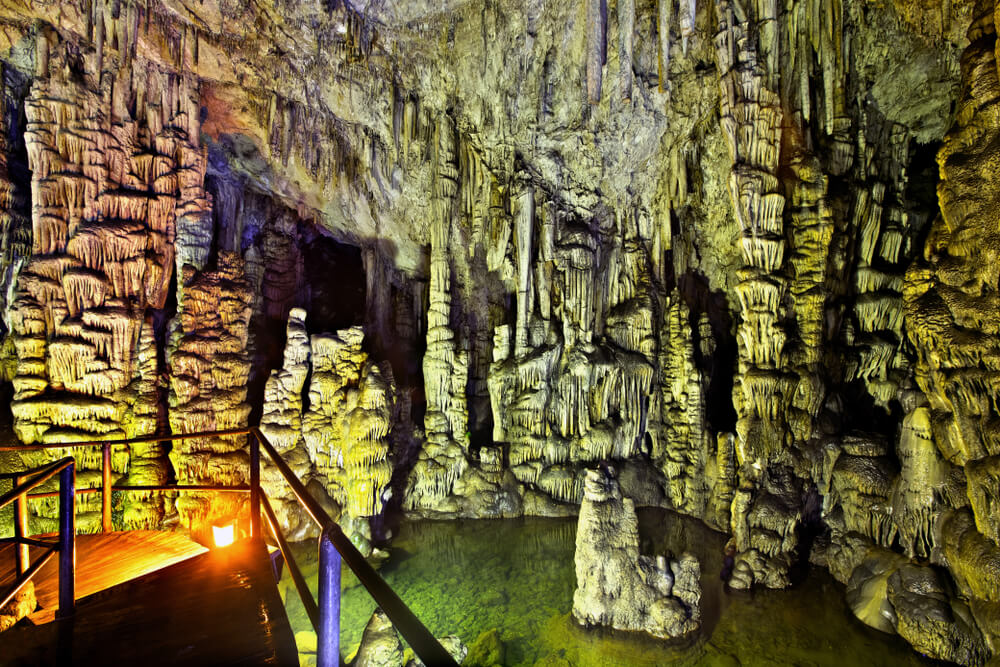
- Where can you find it? The cave is located in the heart of the Lassithi plateau, an hour and 20 minutes’ drive from Heraklion and close to Agios Nikolaos.
- There are two ways to get there: a fairly short but steep path, or a longer but less difficult path (about a 30-minute walk).
- It costs €6 per adult to enter the cave in summer, and €3 in winter. There is also a charge for parking in summer.
11- Lake Kournas
For those looking for a change from beaches and the sea, Lake Kournas is definitely worth a visit! For a start, it’s the island’s one and only freshwater lake.
Here, you can swim in the midst of magnificent scenery and sparkling turquoise water. And what’s more, you won’t be alone: you might be lucky enough to have a turtle or two join you for a swim in the lake’s clear waters! In fact, you can hire a pedalo to take you further away from the shore and perhaps catch a better glimpse of them. An experience and a place not to be missed when choosing your destinations!
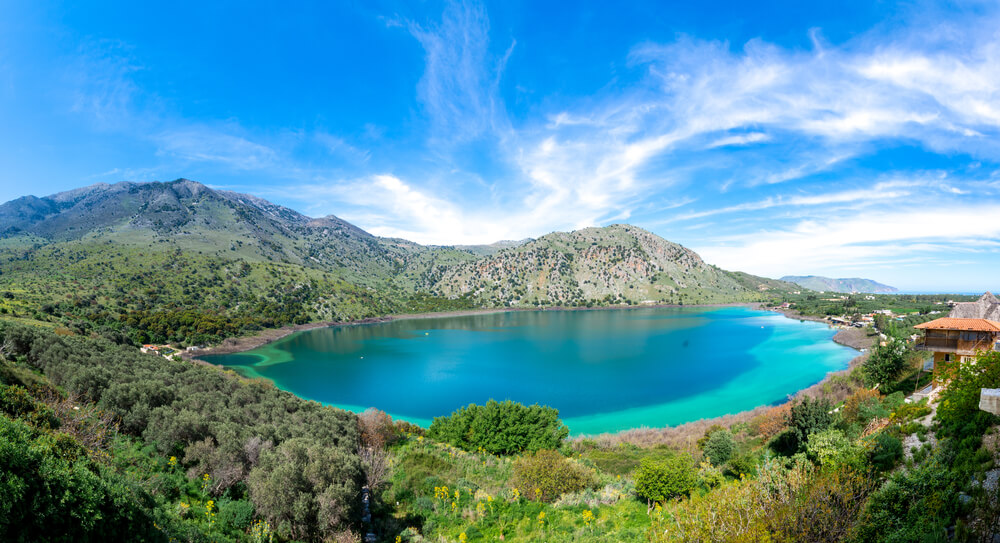
- Where can you find it? Lake Kournas is located on the north coast of Crete, a 45-minute drive from Chania.
12- Frangokastello
Less well known than the other sites, but just as interesting, Frangokastello is the name of a village, a beach and a castle all rolled into one. The imposing fortress, built in the 14th century by the Venetians, opens its doors to you to immerse yourself in the history of Crete and discover a wilder part of the island.
After visiting the castle, head for Frangokastello beach, a pretty lagoon with crystal-clear waters that’s great for swimming and sunbathing!
- Where to find Frangokastello The village is located in the south-west of the island, an hour and 40 minutes’ drive from Chania.
Monasteries not to be missed :
- Monastery of Odigiria
- Monastery of Preveli
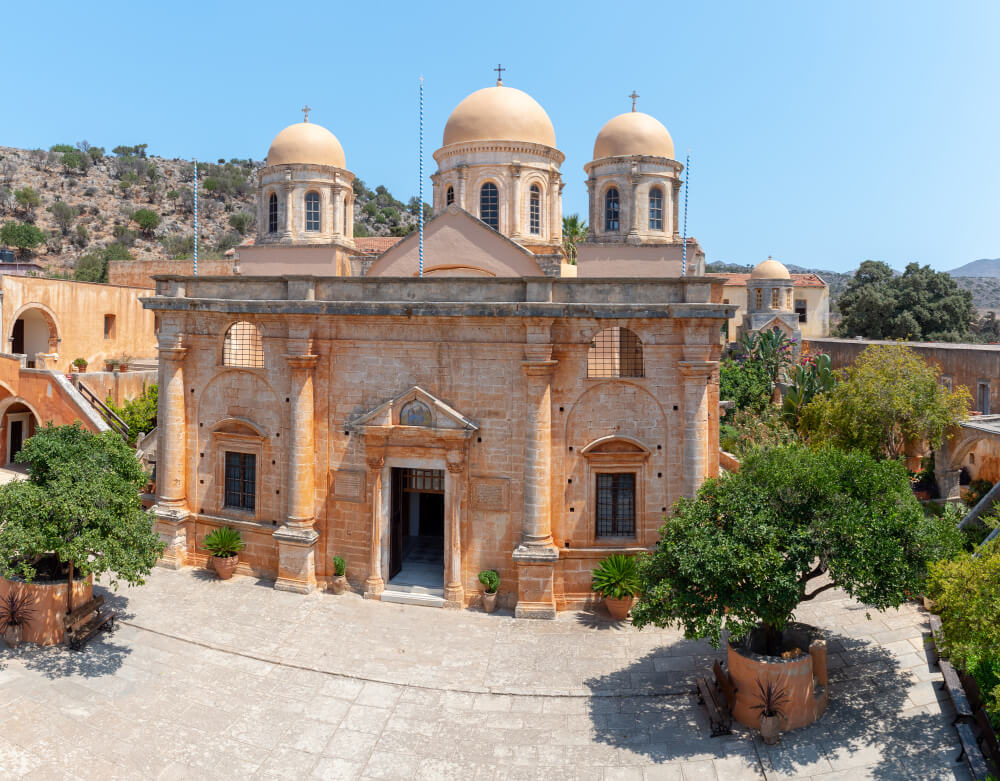
- Monastery of Aghia Triada
- Arkadi Monastery
- Gonia Monastery
- Toplou Monastery
- Gouverneto Monastery
Worth knowing: Crete has a long religious history behind it, which has left an immense legacy in every corner of the island. The Orthodox religion predominates here, with 97% of Cretans practising it. This explains why there are so many monasteries – around 75 spread across the island! Many of them served as refuges for Christians during Ottoman domination, or more recently during the Second World War.
Where to swim in Crete?
- The best beaches: Elafonissi, Balos, Falassama, Vaï, Red Beach, Preveli
- The best snorkelling spots: Matala beach, Elafonisi beach, Kedrodasos beach, Plakias beach, Agia Pelagia bay, Elounda beach, Voulisma beach.
- For experienced divers: El Greco cave, Shrimp cave, Messerschmitt wreck, Cape Stavros
- Lesser-known beaches: Koutalas, Kedrodasos, Kommos, Agios Pavlos, Skinaria, Xerocambos
- The coves: Seitan Limania, Glyka Nera, Voulisma
Worth knowing: Crete has dozens and dozens of beaches, each more beautiful than the last. Whether you want to swim, play on a sandy beach, dive or hike, there’s something for everyone! You should be aware, however, that some beaches may not be suitable for young children, as the waves and currents can be strong and dangerous. So be careful, even if you’re an adult!
What activities can you do in Crete?
The great thing about Crete is that you’re never likely to get bored. If you’re not the type to spend hours sunbathing on the beach, don’t worry! You’ll find plenty to do here!
The island’s star activities are without doubt diving and snorkelling. The seabed is magnificent, so if you get the chance, it’s a must! Guided boat trips are also very popular, and are sometimes necessary to reach certain places.
But Crete also has a multitude of gorges that you can explore by canyoning, whether you’re a beginner or an expert! A unique experience in some of the most beautiful spots on the island. For even more thrills, head for the mountains of Crete, where you can climb an activity that doesn’t require you to be afraid of heights: via ferrata! And for the more courageous, discover Crete from above with paragliding or parasailing!
The best walks :
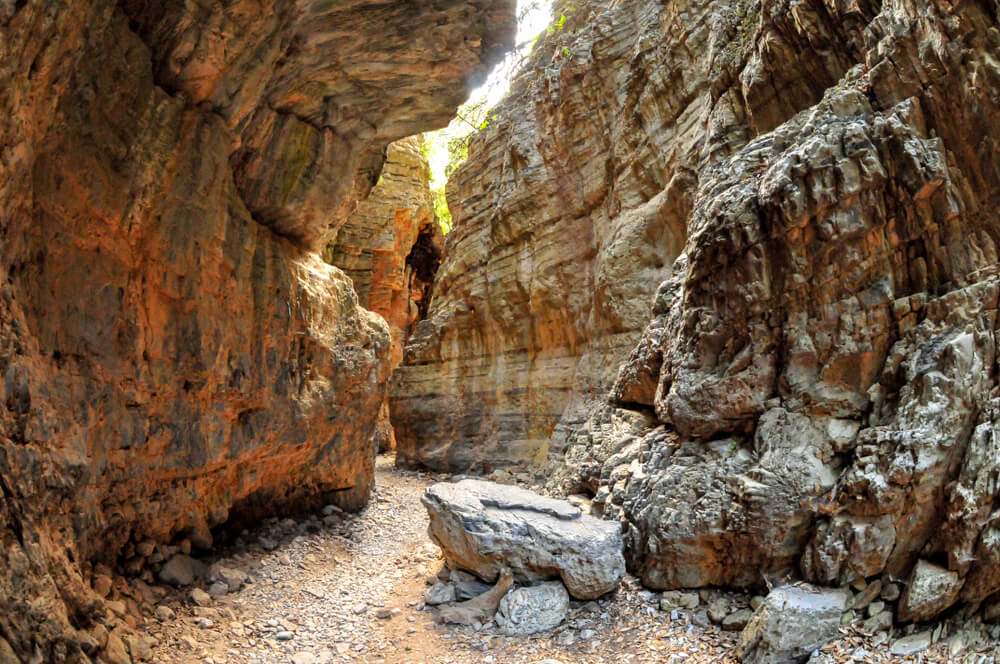
- Samaria Gorge: 16 km
- Imbros Gorge: 8 km
- Gorges du Mili: between 5 and 8 km depending on the itinerary chosen
- The Valley of the Dead: between 4 and 7 km depending on the itinerary chosen.
Worth knowing: The longest hiking trail in Europe, the E4, crosses Crete! This 10,450 km trail begins in Portugal and ends in Cyprus, passing through Spain, Andorra, France, Switzerland, Germany, Austria, Hungary, Romania, Bulgaria and Greece (including Crete). It allows you to discover some of the most beautiful places on the island (inland) and places to stay in Crete.
Gortyna is one of Crete’s archaeological sites not to be missed, with its gorges, heavenly beaches and natural lakes.
An island that keeps its promises and, as you’ll see, attracts a lot of visitors!
When should you travel to Crete?
Crete has a Mediterranean climate, so you can visit for most of the year. To make the most of your stay, here’s some advice to suit you.
Spring (May-June) is the ideal time to discover the island without the summer crowds. The temperatures are perfect for hiking, and this is the time when nature reveals all its beauty. Room prices are more affordable, and the atmosphere in the authentic villages remains tranquil.
Autumn also offers exceptional conditions. From September to October, the sea remains at an ideal temperature for swimming, while the tourist sites regain their serenity. It’s the perfect season for photography lovers who want to capture the warm colours of the sunset.
Getting to and around Crete
Arriving in Crete
Flying is still the most convenient way to get to Heraklion from France. Several airlines offer direct flights to Heraklion airport. Allow around 3 hours for the flight, and book early to get the best prices.
For lovers of maritime adventure, the ferry from Athens offers a different experience. This crossing allows you to admire the landscapes of the Aegean Sea before arriving on this mythical island.
Getting around the island
Car hire remains the most flexible option for exploring the island on your own. The main roads are in good condition, but certain sites such as Balos sometimes require off-road driving.
The public bus network serves the main towns with a regular and economical service. Taxis are available but fares may vary according to distance and season.
Where to stay in Crete according to your preferences?
Heraklion and surrounding area The capital offers a wide choice of hotels to suit all budgets. Its central location makes it easy to get to the main sites and the archaeological museum. Families will appreciate establishments with swimming pools, while travellers seeking culture will choose rooms close to the historic centre.
Chania This ancient capital has an authentic Venetian charm. Staying in the old town allows you to enjoy the unique atmosphere of its narrow streets and traditional cafés. Staying with local people is a great way to immerse yourself in the local culture.
Wild south coast For lovers of tranquillity, villages such as Loutro and Chora Sfakion offer unspoilt settings overlooking the Libyan Sea. These destinations are ideal for travellers looking for authenticity and relaxation.
Recommended itineraries depending on the length of your stay?
3 days – The essentials
- Day 1: Heraklion, Knossos Palace, lunch in a traditional taverna
- Day 2: Chania, stroll through the old town, coffee break at the Venetian port
- Day 3: Excursion to the Samaria Gorge or Elafonissi beach
5 days – In-depth discovery Add to the previous itinerary a visit to Rethymnon, exploration of eastern Crete with Agios Nikolaos, and an excursion to the Lassithi plateau to meet the locals in their authentic villages.
One week – Authentic Crete For a complete holiday, plan walks in the Lefka Ori, a sea excursion to the island of Spinalonga, and the discovery of lesser-known sites such as mountain villages where ancestral traditions live on.
200 audioguided tours for cities all around the world
Download