Visiting the Doubs: 14 must-sees
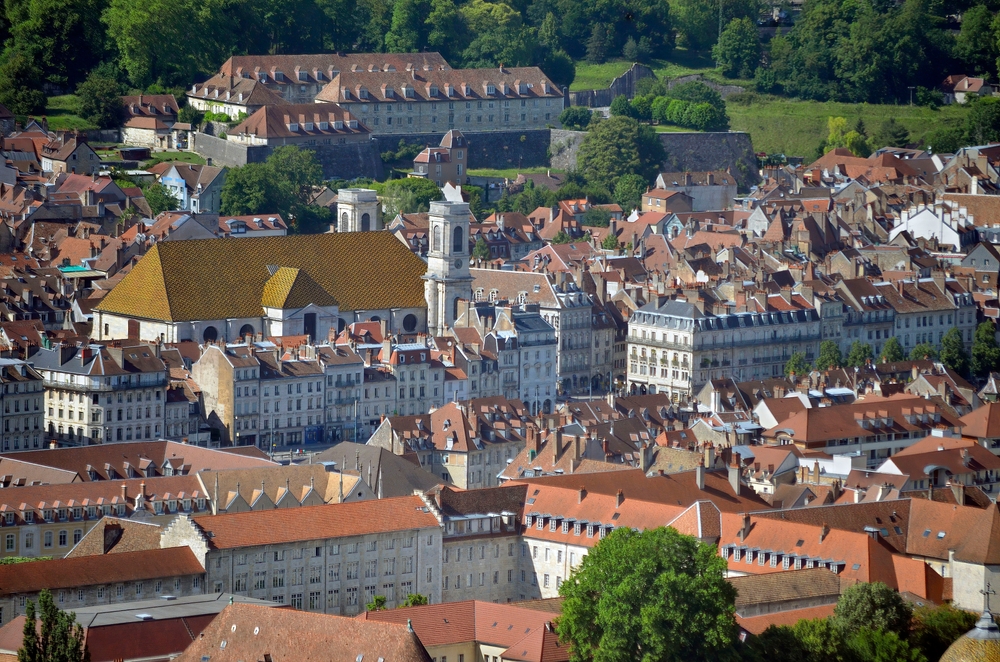

Located in the heart of the Bourgogne-Franche-Comté region, the Doubs is a fascinating département with a rich historical, cultural and natural heritage. Between the Jura mountains, lush green valleys, majestic fortresses and picturesque villages, this land of contrasts offers a multitude of experiences to discover. Whether you’re a hiking enthusiast, a history buff or in search of authenticity, the Doubs will win you over with its unspoilt landscapes and hidden treasures. Here’s our selection of 14 must-do’s to visit the Doubs and make the most of this little-known but absolutely captivating destination.
200 audioguided tours for cities all around the world
DownloadSee also the Besançon guide :
- Top 5 best hotels in Besançon
- Top 6 things to do in Besançon
- Top 10 culinary specialities in Besançon
- Visiting the Jura: 16 must-sees
- Top 5 most beautiful lakes in the Jura
- How do I visit the medieval castle of Guédelon?
- 110 most beautiful places to visit in France
1. Besançon, the capital of the Comtois region with a rich heritage
It’s impossible to visit the Doubs without stopping off at Besançon, its prefecture and a veritable architectural gem. Surrounded by a meander of the Doubs, which gives it a natural strategic position, the town has been inhabited since prehistoric times, and retains visible traces of every era it has passed through.
Besançon’s historic centre, known as La Boucle, is best explored on foot along its cobbled streets lined with Renaissance town houses. Don’t miss the Porte Noire, a finely sculpted Roman triumphal arch dating from the 2nd century, an impressive testimony to the city’s Gallo-Roman past. St John’s Cathedral, a Carolingian basilica dating back to the 3rd century, is home to a number of artistic treasures, including a remarkable astronomical clock.
Download the audio tour to discover Besançon on foot and on your own
To make the most of your discovery of Besançon, let the Navaway tour guide you through 25 places of interest in the capital of the Franche-Comté region. This fun audio guide lasts 2 hours 10 minutes and lets you explore the city’s must-sees on your own, from the birthplace of the Lumière brothers to the Palais Granvelle, via the Battant district and its colourful houses. Thanks to interactive navigation and historical commentaries enriched with anecdotes, you’ll discover the soul of this city steeped in history at a pace that suits you.
Culture lovers will also appreciate the Museum of Fine Arts and Archaeology, considered to be the oldest public museum in France, founded in 1694. Besançon is also a green city, voted France’s first green city, with its many parks and gardens inviting you to take a stroll. The Place de la Révolution, lined with old buildings, is home to several museums, including the Museum of Time, housed in the Palais Granvelle.
2. The Besançon citadel, Vauban’s masterpiece
Dominating the city from a hill over 100 metres high, the Besançon citadel is one of the finest examples of Vauban’s military genius. A UNESCO World Heritage Site, this 17th-century fortress was built after Louis XIV conquered Franche-Comté.
The twelve-hectare citadel offers much more than a simple historical visit. There are three fascinating museums: the Resistance and Deportation Museum, the Comtois Museum and the Naturalium. The ramparts offer spectacular views over Besançon and the meandering Doubs. Children will particularly enjoy the zoo, home to over 300 animals, the insectarium and the noctarium.
For an in-depth visit to the Doubs, the citadel is a must, combining military history, UNESCO heritage and naturalist discoveries in an exceptional architectural setting (Citadelle de Besançon, 99 Rue des Fusillés de la Résistance, 25000 Besançon, rated 4.4/5 on Google for 2,331 reviews).
3. The springs of the Lison, a natural aquatic spectacle
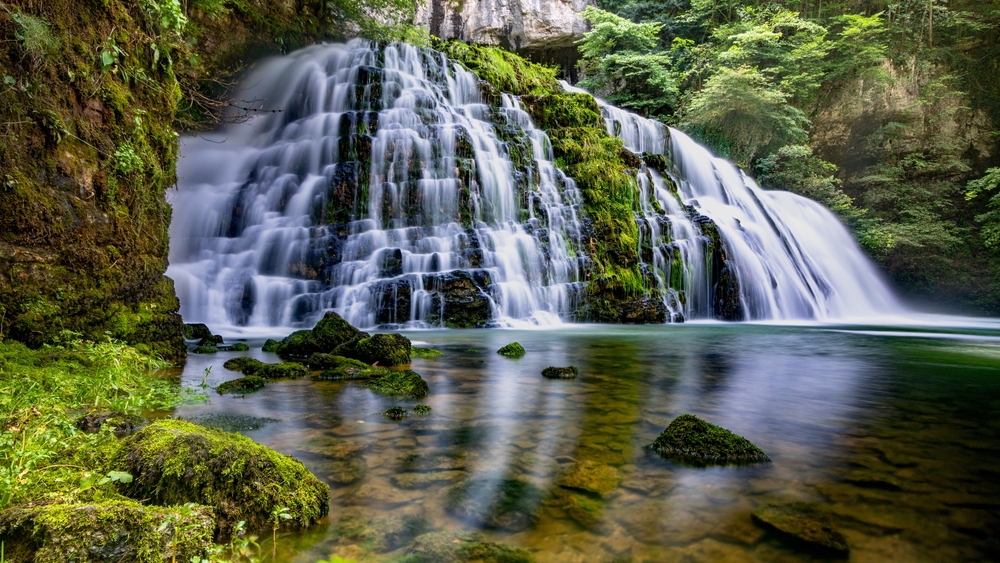
In a green setting at the foot of an imposing 80-metre-high cliff, the Lison springs offer a breathtaking natural spectacle. The water gushes out of a cave before cascading into a grandiose mineral setting. The site is easily accessible and has been designed to allow visitors to enter the cave and admire the spring from a platform.
Following the course of the Lison, you’ll discover the Sarrazine cave, a geological curiosity well worth a visit. Nearby, the charming village of Nans-sous-Sainte-Anne is home to the Taillanderie museum, a living testimony to the traditional crafts of the Franche-Comté region. This karst region offers a number of hiking trails for exploring the valley’s lush green landscapes.
The Lison springs are a refreshing stop-off point when visiting the Doubs, particularly appreciated on hot summer days. The constant flow of the spring means you can admire this natural spectacle all year round.
4. Ladders of death, guaranteed to send shivers down your spine!
Despite their ominous name, the Ladders of Death are an accessible hike offering thrills in a spectacular natural setting. Located near Charquemont on the Swiss border, these cliffside metal staircases were once used by smugglers.
The safe route takes you up blue rock faces and offers exceptional views of the Jura forests. There are several belvederes along the way, offering breathtaking views over the valley. This walk takes around 2 hours and will delight nature lovers with a moderate adrenalin rush.
Not recommended for those prone to vertigo, the Ladders of Death nevertheless offer most visitors a unique experience that allows them to see the Doubs from a different angle. The alpine landscapes and limestone cliffs create a natural backdrop of striking beauty.
5. The Royal Saltworks at Arc-et-Senans, an architectural utopia
A masterpiece of visionary architect Claude-Nicolas Ledoux, the Royal Salt Works at Arc-et-Senans is much more than a former salt factory. Built in the 18th century, this “ideal factory” in the shape of a perfect semicircle bears witness to a revolutionary conception of industrial and social architecture.
Listed as a UNESCO World Heritage Site since 1982, the saltworks now hosts a number of permanent exhibitions retracing the history of salt, Ledoux’s work and his utopian vision of the ideal city of Chaux. The symmetrical layout of the buildings, the majesty of the neoclassical architecture and the landscaped gardens create a unique atmosphere.
As well as the heritage aspect, the site offers cultural events throughout the year, themed gardens and a fun trail for children. A visit to the Royal Salt Works at Arc-et-Senans is an opportunity to understand the economic importance of salt in modern times and to admire a visionary architectural gem (Saline royale, Grande Rue, 25610 Arc-et-Senans, rated 4.2/5 on Google out of 1,008 reviews).
6. The Osselle cave, an underground marvel
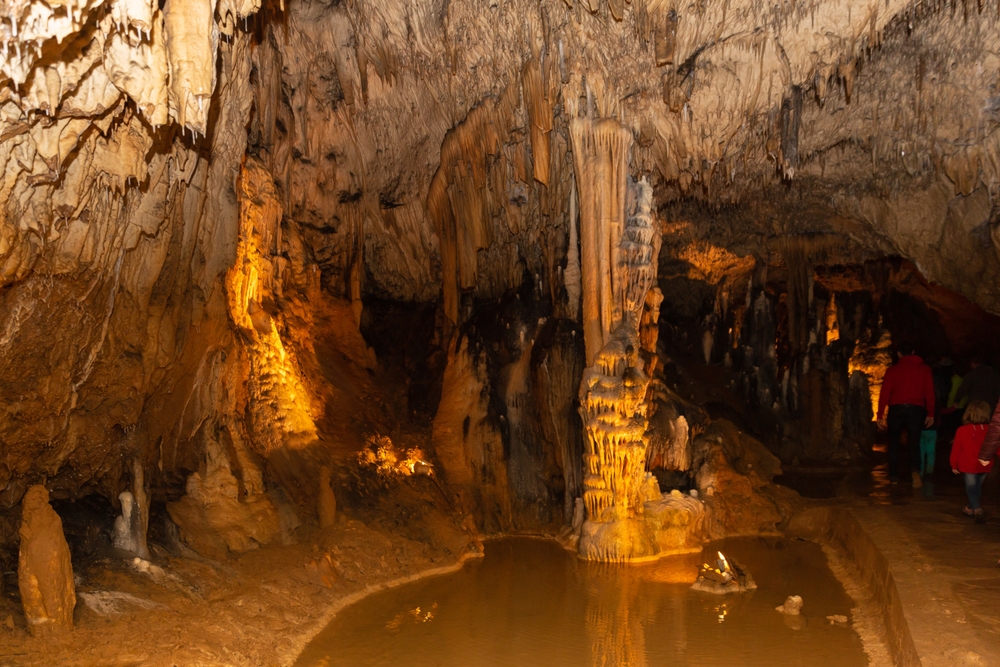
Located between the Doubs and Jura rivers, the Osselle cave holds a double record: it is both the oldest known tourist cave in France (along with the Antiparos cave in Greece) and an exceptional palaeontological site. Discovered in the 13th century, it welcomed its first visitors in 1504.
Along a 1,300-metre circuit, you’ll discover spectacular limestone formations: stalactites, stalagmites, draperies and columns sculpted by water over thousands of years. The site also contains a dry zone with walls polished by the ancient watercourse, testimony to past geological activity.
The Osselle cave has yielded almost 3,000 cave bear skeletons, making it a major palaeontological treasure trove. During the French Revolution, refractory priests took refuge here and built a clay altar, which can still be seen today. Make sure you bring a jacket, as the temperature remains a constant 7°C all year round (Grotte d’Osselle, Rue de la Grotte, 25410 Roset-Fluans, rated 4.5/5 on Google).
7. The sources of the Loue, a natural jewel
Emerging from a cave at the foot of a 100-metre-high semicircular cliff, the Loue springs offer an impressive natural spectacle. This karstic resurgence cascades its crystal-clear waters into a rocky amphitheatre of striking beauty.
The site is easily accessible by car and is well equipped for viewing from a number of vantage points. Nearby, the romantic ruins of an old mill add to the charm of the area. Unlike some intermittent springs, the Loue maintains a constant flow thanks to rainfall and losses from the Drugeon, making it possible to visit the site at any time of year.
A number of hiking trails lead from the springs to explore the Loue valley, renowned for its lush green landscapes and picturesque villages. Ornans-born painter Gustave Courbet immortalised these landscapes in several of his paintings. If you want to visit the Doubs in harmony with nature, the sources of the Loue are a must.
8. The Cirque de Consolation, a natural retreat
In the heart of the Jura Massif, the Cirque de Consolation forms a spectacular retreat, a cul-de-sac valley bordered by sheer rock faces. This typically Jura landscape creates a natural amphitheatre of rare beauty, perfect for meditation and contemplation.
An easy hike, accessible to all, leads to the heart of this unspoilt site. The path leads through mossy forests, with the sound of babbling brooks accompanying every step. The special atmosphere of the site, both serene and majestic, has inspired its evocative name.
At the end of the walk, the Tabourot spring rises out of the rock face before plummeting 47 metres in an impressive watery crash. The limestone cliffs that encircle the cirque rise several hundred metres, creating a striking natural backdrop. The Cirque de Consolation is one of the most remarkable natural sites to visit in the Doubs and discover the karstic landscapes of the Jura.
9. Château de Joux, sentinel of the Pontarlier valley
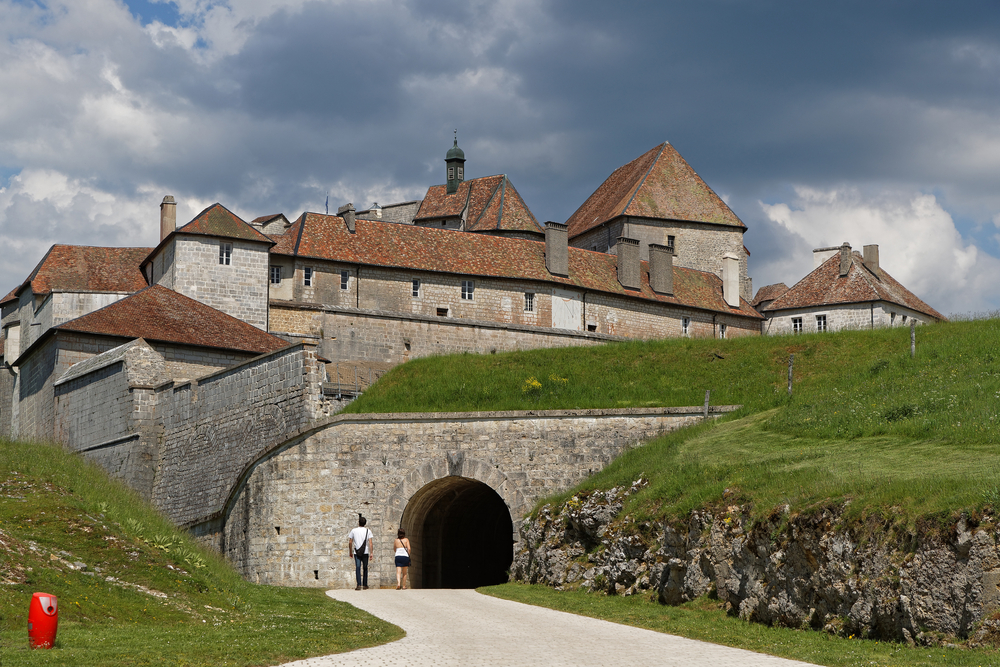
Perched on a rocky spur more than 100 metres above the strategic Pontarlier gorge, Château de Joux embodies a thousand years of military history. Built in the 11th century, it has been continually modified and strengthened over the centuries, becoming a virtually impregnable fortress.
The one-hour guided tour takes in the five successive fortifications, which bear witness to the development of fortification techniques from the Middle Ages to Vauban. The rooms, corridors, drawbridges and casemates tell the story of this stronghold that controlled the salt route in the 13th century and guarded the Swiss border.
Château de Joux was also a fearsome prison where Toussaint Louverture, the hero of Haitian independence, died in 1803. Collections of antique weapons and historical reconstructions enhance the visit to this emblematic site. For those wishing to visit Besançon and the surrounding area, the Château de Joux is a must-see excursion just a few kilometres from Pontarlier (Château de Joux, 25300 La Cluse-et-Mijoux, rated 4.5/5 on Google out of 491 reviews).
10. The Poudrey chasm, an underground cathedral
With its single chamber of almost a million cubic metres, the Poudrey chasm is home to one of the largest natural caverns in Europe. This underground cathedral impresses with its colossal dimensions and the beauty of its limestone concretions sculpted by water over thousands of years.
The tour takes in stalactites, stalagmites and evocatively shaped columns. A small underground lake with tranquil waters adds to the magic of the place. Each visit ends with a sound and light show featuring the legend of the Vouivre, a mythical creature that is half-woman and half-snake from the legends of the Franche-Comté region.
This enchanting event, open to children and adults alike, plunges visitors into the fantastic world of regional fairytales. The constant temperature of 7°C means you’ll need to bring warm clothing whatever the season. The Poudrey chasm is a fascinating way to visit the Doubs and discover the geological riches of the Jura massif.
11. The Mont d’Or, an exceptional Alpine panorama
Reaching an altitude of 1,463 metres, the Mont d’Or offers one of the finest panoramic views in the Jura Massif. On a clear day, you can see the Swiss Alps from its summit, and even Mont Blanc, the giant of the Alps, more than 100 kilometres away.
The climb up Mont d’Or is full of surprises for nature lovers. The high-altitude pastures are home to herds of Montbéliarde cows whose bells echo through the mountain. Careful hikers can spot chamois, marmots and remarkable alpine flora, including wild orchids in season.
There are several hiking routes to the summit, from the most challenging to the most accessible. In winter, the site becomes a popular cross-country skiing area. The wild, unspoilt nature of the Mont d’Or makes it a must for visitors to the Doubs, immersing themselves in the mountain landscapes of the Haut-Doubs.
12. The blue spring of Malbuisson, a turquoise mystery
Between the villages of Malbuisson and Montperreux gushes a spring with extraordinarily turquoise waters. This 6-metre-deep karstic resurgence fascinates by its deep, brilliant blue, an optical phenomenon due to the depth and mineral composition of the water.
A romantic legend from the 12th century attributes this colour to the tears of Berthe de Joux, whose blue eyes mourned the death of her lover, the knight Amey de Montfaucon. Fact or legend, the blue spring exerts an undeniable fascination on all its visitors.
The site is easily accessible and can be explored on a short walk through unspoilt countryside. Franche-Comté is home to a number of resurgent springs with blue or green water, characteristic of the region’s karstic terrain. The blue spring is a poetic and photogenic stop-off point for visiting the Doubs and discovering its natural curiosities.
13. Montbéliard, cité des Princes
A former independent principality until 1793, Montbéliard retains a unique atmosphere marked by its special history and Germanic influences. Old Montbéliard captivates visitors with its colourful facades, picturesque alleyways and warm atmosphere more reminiscent of Germany than France.
The Saint-Martin temple, built in 1601, is the oldest Protestant temple in France. The castle of the Dukes of Württemberg dominates the town and houses a museum retracing local history. To recharge your batteries, the Près-la-Rose park, located on a peninsula, boasts around a hundred species of plants in a romantic setting perfect for a stroll.
Montbéliard is also world-famous for its Peugeot Adventure Museum, located in Sochaux. This exceptional site retraces more than two centuries of industrial history through 450 objects and 130 vehicles on display. Every winter, the town celebrates one of France’s finest Christmas markets, the “Lumières de Noël”, attracting thousands of visitors (Musée de l’Aventure Peugeot, Carrefour de l’Europe, 25600 Sochaux, rated 4.4/5 on Google out of 487 reviews).
14. The Saut du Doubs, border water majesty
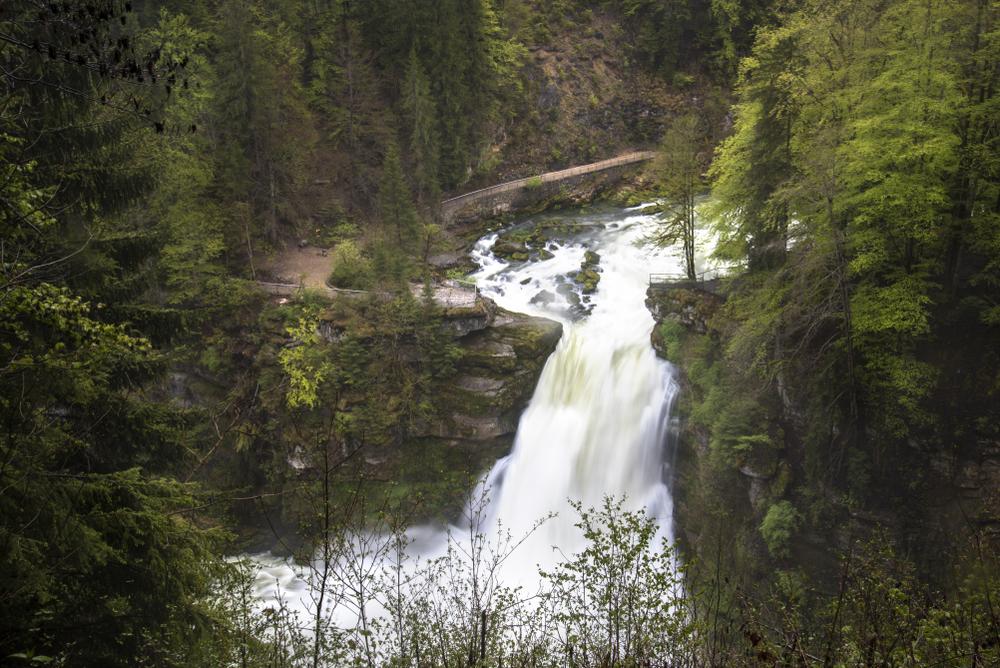
On the border between France and Switzerland, the Saut du Doubs is one of the most beautiful waterfalls in France. At 27 metres high (rising to 40 metres during floods), it crashes through a grandiose setting of limestone cliffs and lush forests.
The spectacle is particularly impressive in autumn after the rains, when the flow of the river increases. There are several ways to reach the site: on foot along hiking trails offering magnificent viewpoints, by bateau-mouche from Villers-le-Lac for a romantic approach, or even by horse-drawn carriage for an authentic, typically Comtois experience.
The Doubs gorges that lead to the waterfall run through unspoilt natural landscapes, with vegetation clinging to the rock faces. The site forms a natural border between France and Switzerland, adding to the unique character of this spectacular place. The Saut du Doubs is one of the most emblematic natural sites to visit in the Doubs, and a fitting end to your discovery of the department.
In conclusion, visiting the Doubs offers a complete tourist experience, combining an exceptional historical heritage, villages with character and spectacular natural sites. From the majestic Besançon citadel to the Saut du Doubs waterfalls, mysterious caves and crystal-clear springs, each stop reveals a different facet of this unspoilt region. Whether you’re looking for culture, adventure or simply peace and quiet in the heart of authentic landscapes, the Doubs will win you over with its richness and diversity. Don’t hesitate to extend your stay and discover Besançon by following the Navaway audioguide itinerary, which will allow you to explore in depth this Comtois capital steeped in history and charm.
Frequently asked questions
When is the best time to visit the Doubs?
The best time to visit the Doubs is from May to September, when temperatures are pleasant and nature is in full bloom. In summer, you can make the most of the hiking and natural sites. Autumn offers flamboyant landscapes and the waterfalls are particularly impressive after the rains. Winter is full of charm, with the Montbéliard Christmas market and Nordic skiing, particularly at Mont d’Or.
How long will it take to visit the Doubs?
A long weekend allows you to discover the main sites around Besançon. For a more in-depth discovery, including natural sites, villages and museums, ideally plan 5 to 7 days. This will give you time to alternate between cultural visits and walks, to wander around the characterful villages and to savour the local gastronomic specialities without rushing.
What culinary specialities from the Doubs are not to be missed?
The Doubs is a gourmet’s paradise. Among the must-tries: Comté PDO, a cheese of excellence produced in the Jura dairies, Morbier, recognisable by its ashy stingray, the creamy Mont d’Or to be enjoyed hot, Morteau sausage smoked in tuyé, Luxeuil ham, cancoillotte (a typical cheese speciality), and for sweets, Brimbelles (wild blueberries) and Pontarlier, an aniseed-flavoured aperitif descended from absinthe.
Is the Doubs suitable for families with children?
Absolutely! The Doubs has plenty to offer the whole family: the zoo and museums in the Besançon citadel, the Poudrey chasm with its sound and light show, the Peugeot Adventure Museum, the Osselle caves, and many accessible hiking trails. Children will be fascinated by natural sites such as springs and waterfalls. What’s more, the distances between the sites remain reasonable, keeping journey times to a minimum.
200 audioguided tours for cities all around the world
Download