Visiting Sicily: 10 must-sees and must-dos


To visit Sicily is to plunge into an exceptional concentration of history, culture and natural beauty in the heart of the Mediterranean. This fascinating Italian island, the largest in the Mediterranean, boasts a unique heritage shaped by centuries of Greek, Roman, Arab and Norman influences. With its majestic volcanoes, perfectly preserved ancient temples, sumptuous Baroque villages and heavenly beaches with turquoise waters, Sicily is a must-see destination for travellers in search of authenticity. From the bustling streets of Palermo to the steaming slopes of Mount Etna, from the archaeological treasures of Syracuse to the timeless charm of Taormina, every corner of the island tells a story thousands of years old. Discover our selection of 10 essential experiences for visiting Sicily and falling under the spell of this Mediterranean pearl where la dolce vita is expressed in all its splendour.
Also read the Sicily guide :
- Sicily’s 14 most beautiful villages to discover
- Top 6 things to do in Palermo
- What are the best hotels in Palermo?
- The 12 most beautiful beaches in Palermo
- Discover Selinunte, Sicily’s major archaeological site
- Top 10 culinary specialities in Palermo
- Find out how to get to Sicily from Toulon by Ferry
1. Palermo, the Sicilian capital with a thousand faces
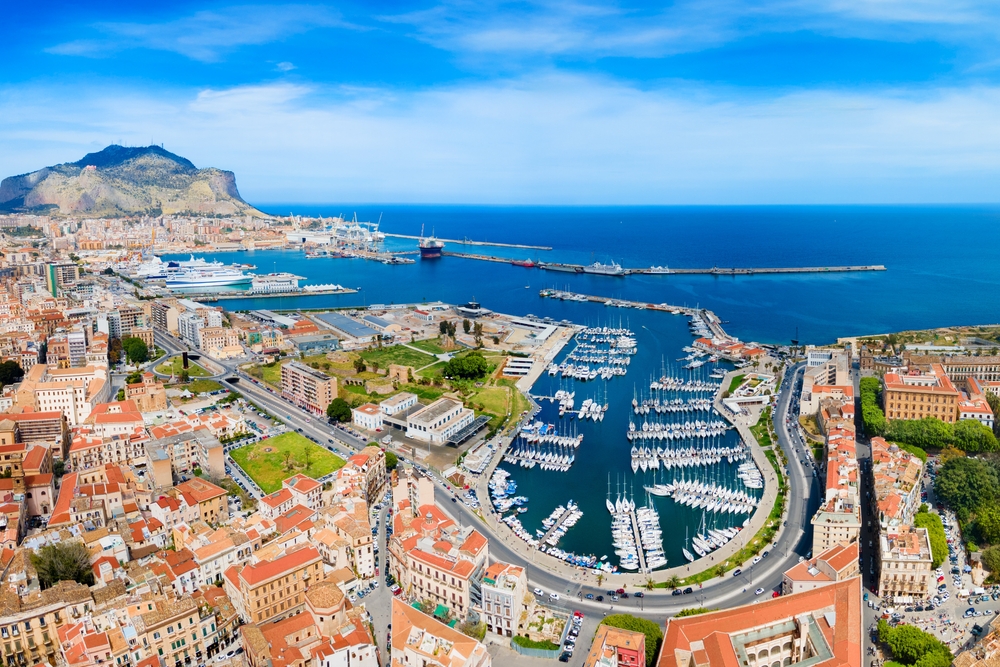
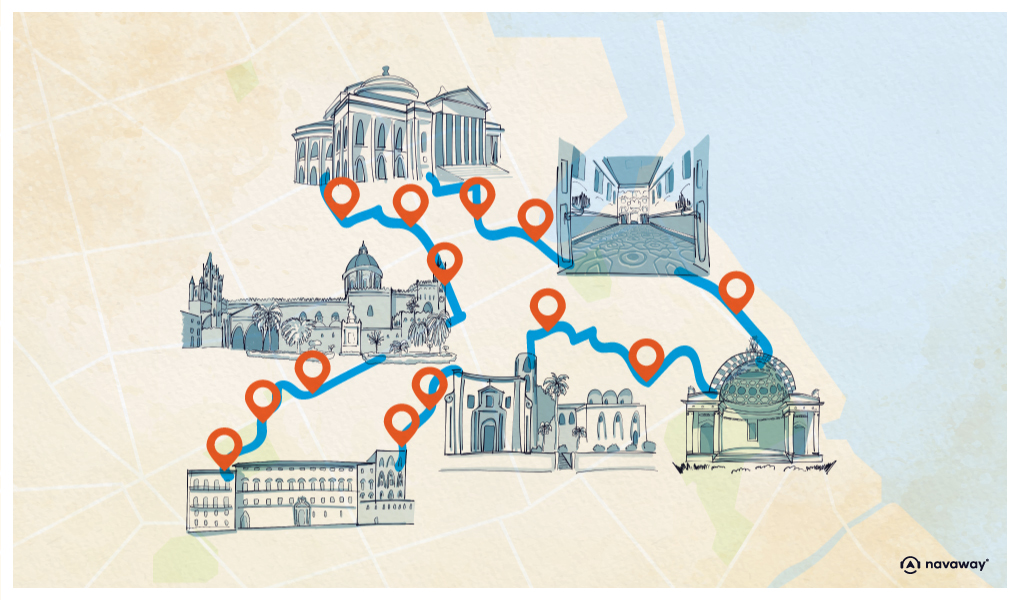
Palermo, the vibrant capital of Sicily, embodies all the cultural richness of the island. This Mediterranean metropolis fascinates with its unique architectural blend of Arab, Norman and Byzantine influences. At the heart of the city stands the majestic Palazzo dei Normanni, former residence of the kings of Sicily, which houses the sumptuous Palatine Chapel (Piazza Indipendenza, 1, 90129 Palermo PA, rated 4.4/5 on Google out of over 7,000 reviews). Its golden Byzantine mosaics are among the most beautiful in Italy and bear witness to Palermo’s glorious past.
Palermo Cathedral is another architectural jewel not to be missed (Via Vittorio Emanuele, 490, 90134 Palermo PA, rated 4.5/5 on Google out of 8,600 reviews). Built in the twelfth century, it harmoniously blends Arabic, Gothic and Baroque styles, reflecting the different eras that have marked the city. Don’t miss the chance to climb up to its roofs for an exceptional panoramic view of Palermo.
The soul of Palermo is fully revealed in its historic markets, such as the Ballarò market (Piazza del Carmine, 90133 Palermo PA, rated 4.0/5 on Google), the oldest in the city, where the scent of spices and the shouts of the merchants create a typically enchanting Sicilian atmosphere. The Teatro Massimo, Europe’s third-largest opera house (Piazza Verdi, 90138 Palermo PA, rated 4.4/5 on Google), is also worth a visit for its imposing neoclassical architecture. To discover Palermo in all its splendour, allow at least two full days to wander the narrow streets of the historic centre and soak up the unique atmosphere of this fascinating city.
2. Climbing Mount Etna, the Sicilian fire giant
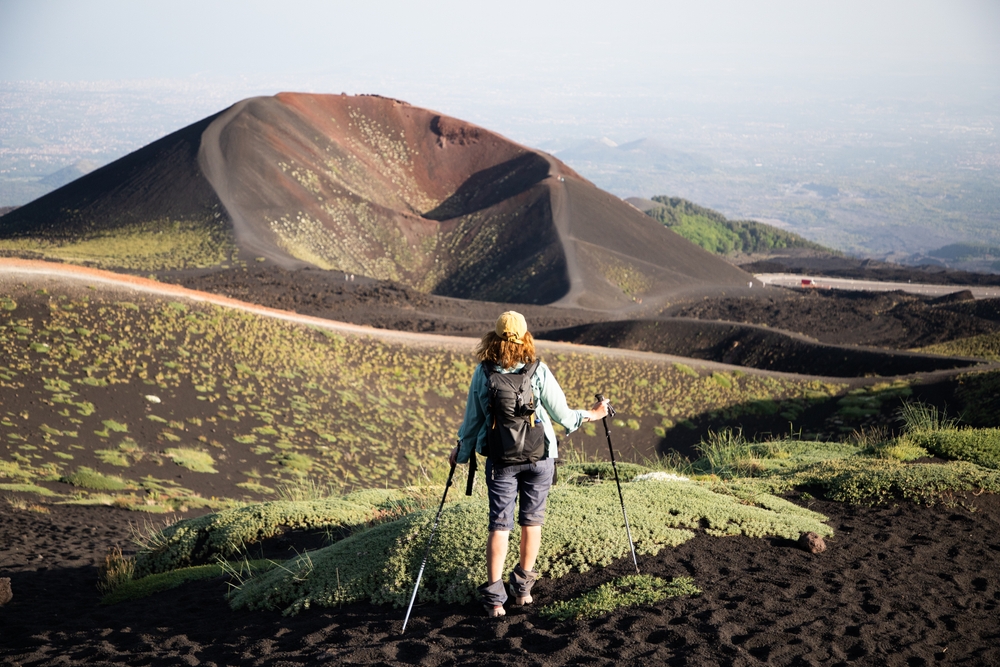
Visiting Sicily without climbing Mount Etna would be an incomplete experience. This majestic volcano, the highest in Europe at 3,330 metres, dominates the east coast of the island and offers a breathtaking natural spectacle. Its regular volcanic activity makes it one of the most active volcanoes in the world, creating unique lunar landscapes dotted with solidified lava flows and smoking craters.
The ascent of Mount Etna generally starts from the Rifugio Sapienza, located at an altitude of 1,900 metres on the southern slope (Piazzale Funivia dell’Etna, 95030 Nicolosi CT, rated 4.2/5 on Google). From here, a modern cable car takes you up to 2,500 metres, from where you can continue by 4×4 shuttle or on foot to the summit craters. The whole excursion takes around 5 hours and offers breathtaking views of the Ionian Sea, Taormina and the entire Catania plain.
To make the most of this unique experience, it is highly recommended that you set off with a certified volcano guide, who will explain Etna’s fascinating geological history and lead you safely to the active areas. Be sure to bring warm clothing (even in summer, temperatures at altitude can drop to 5°C), hiking boots and sunglasses. The best time to climb Etna is from May to October, when the weather conditions are most favourable.
3. Syracuse and the island of Ortygia, ancient pearls of Sicily
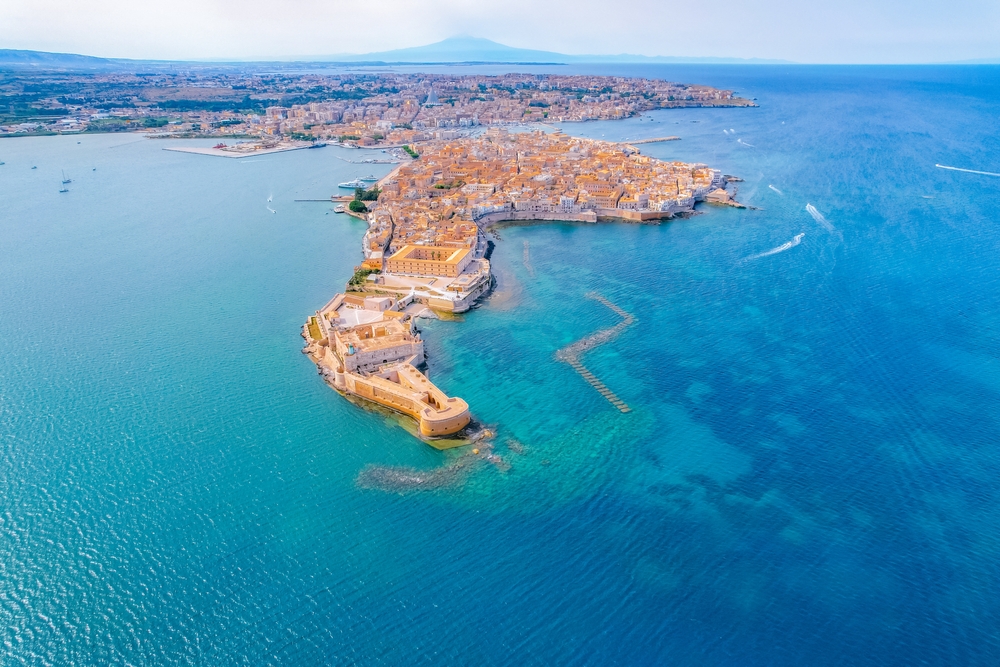
Syracuse, founded in the 8th century BC by Greek colonists from Corinth, was one of the most powerful cities in the ancient Mediterranean. Now a UNESCO World Heritage Site, it preserves an exceptional archaeological heritage, making it a must-see when visiting Sicily.
The Neapolis Archaeological Park (Viale Paradiso, 14, 96100 Siracusa SR, rated 4.5/5 on Google out of 18,000 reviews) is home to some of the finest remains of Sicilian antiquity. Its Greek Theatre, carved out of the rock in the 5th century BC, could seat up to 15,000 spectators and still hosts performances of classical tragedies during the summer. The nearbyRoman Amphitheatre and the mysterious Ear of Dionysius, an artificial grotto with extraordinary acoustics, complete the visit to this remarkable site.
Theisland of Ortygia, the historic heart of Syracuse linked to the mainland by two bridges, is the city’s other jewel. This small baroque island is packed with architectural treasures, including Syracuse Cathedral (Piazza Duomo, 96100 Siracusa SR, rated 4.7/5 on Google), built on the remains of a Greek temple dedicated to Athena, whose Doric columns can still be seen. The Fountain of Arethusa (Largo Aretusa, 96100 Siracusa SR), a freshwater spring rising up from the sea, enchants visitors with its mythological legend and lush papyrus. Stroll through the cobbled streets of Ortygia, stop off in Piazza Archimede and soak up the unique atmosphere of this district where time seems to stand still. A full day is the ideal time to savour all that Syracuse has to offer.
4. The Noto Valley, Sicily’s Baroque jewel case
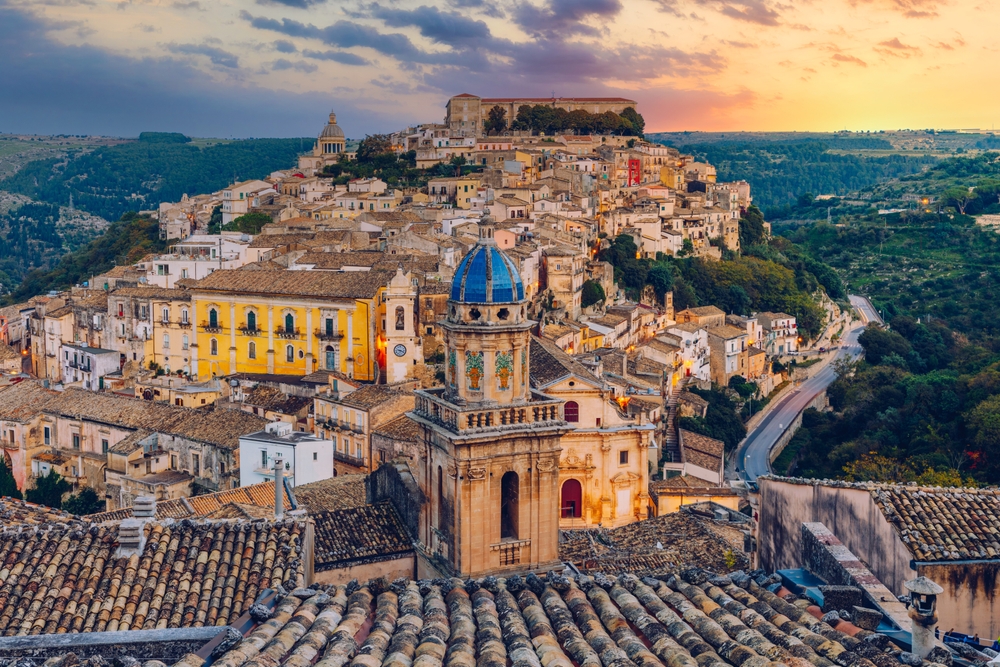
The Noto Valley, in south-east Sicily, is home to an exceptional group of Baroque towns that have been declared a UNESCO World Heritage Site. After the devastating earthquake of 1693, which levelled the region, these towns were rebuilt according to the canons of Sicilian Baroque, creating an architectural ensemble that is unique in the world.
Noto, nicknamed the “capital of Baroque”, dazzles with the beauty of its golden ochre facades carved from the local limestone (Via Nicolaci, 96017 Noto SR). Corso Vittorio Emanuele, the city’s main thoroughfare, is a harmonious blend of Baroque palaces and churches. The Cathedral of San Nicolò (Piazza Municipio, 96017 Noto SR, rated 4.6/5 on Google), recently restored after its collapse in 1996, majestically dominates the main square. In May, don’t miss the Infiorata, when Via Nicolaci is decked out in a spectacular carpet of flowers.
Ragusa Ibla, perched on a rocky spur, has a maze of medieval streets dotted with Baroque churches (Piazza Duomo, 97100 Ragusa RG). The Cathedral of San Giorgio (Piazza Duomo, 97100 Ragusa RG, rated 4.7/5 on Google) is the masterpiece of architect Rosario Gagliardi, with its elegant convex façade. Modica, built on two levels linked by countless staircases, is famous for its handmade chocolate prepared according to an Aztec recipe brought back by the Spanish (Corso Umberto I, 97015 Modica RG). Scicli, nestled between three valleys, offers a more intimate baroque setting that attracted the producers of the TV series “Commissaire Montalbano”.
To get the most out of the Noto Valley, plan on spending two or three days with a hire car, which will allow you to visit several towns and enjoy the rolling countryside covered in carob and olive trees that separate these Baroque jewels.
5. Taormina and its Greek theatre facing Mount Etna
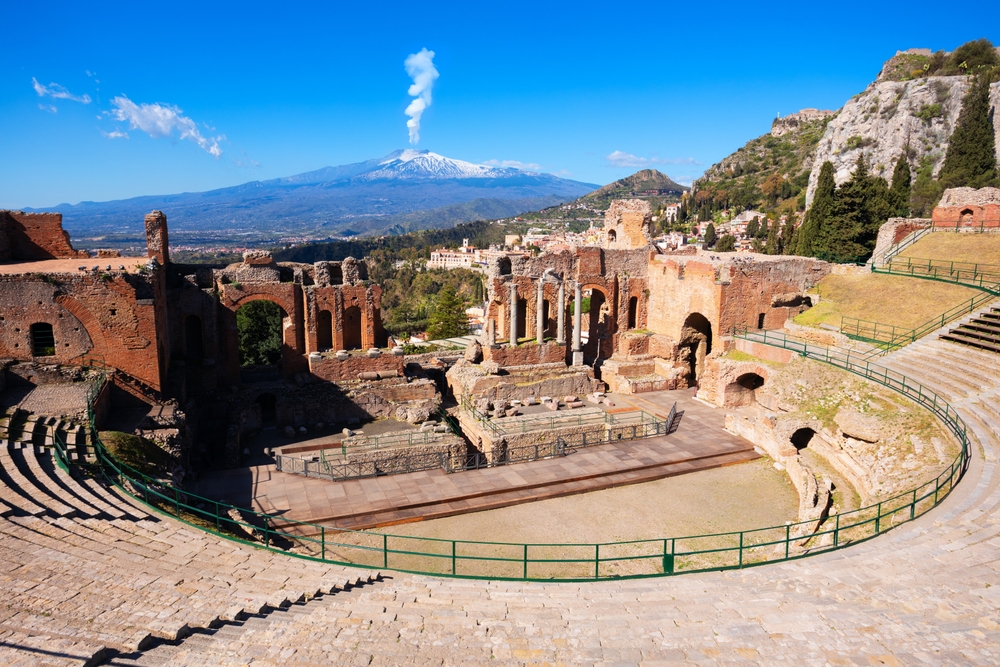
Perched 200 metres above the Ionian Sea, Taormina is one of the most popular destinations for visiting Sicily. This elegant seaside resort boasts exceptional views of Mount Etna and the Bay of Naxos, as well as a chic and refined atmosphere that has made it a haven for the European aristocracy since the 19th century.
Taormina’s flagship attraction is the Ancient Theatre (Via Teatro Greco, 98039 Taormina ME, rated 4.6/5 on Google out of 45,000 reviews). Built in the third century BC by the Greeks and then enlarged by the Romans, this 110-metre diameter theatre offers one of the most photographed panoramas in Sicily: smoking Etna rises majestically in the centre of the stage, framed by ancient columns. In summer, the theatre comes alive during the Taormina Arte Festival, which offers concerts, operas and theatrical performances in a magical setting under the stars.
Corso Umberto, Taormina’s main pedestrian street, invites you to stroll between luxury boutiques, elegant cafés and aristocratic palazzi. Piazza IX Aprile (Piazza IX Aprile, 98039 Taormina ME) offers a natural panoramic terrace where you can enjoy a drink while watching the sun set over the sea. Below,Isola Bella (Via Nazionale, 98039 Taormina ME, rated 4.5/5 on Google), a small island connected to the beach by a thin sandbank, forms a nature reserve ideal for swimming in crystal-clear waters. A cable car links the city centre to Mazzarò beach (Via Luigi Pirandello, 98039 Taormina ME). To make the most of Taormina, stay for two days and visit early in the morning or late in the afternoon to avoid the tourist crowds.
6. The Valley of the Temples at Agrigento, a marvel of Magna Graecia
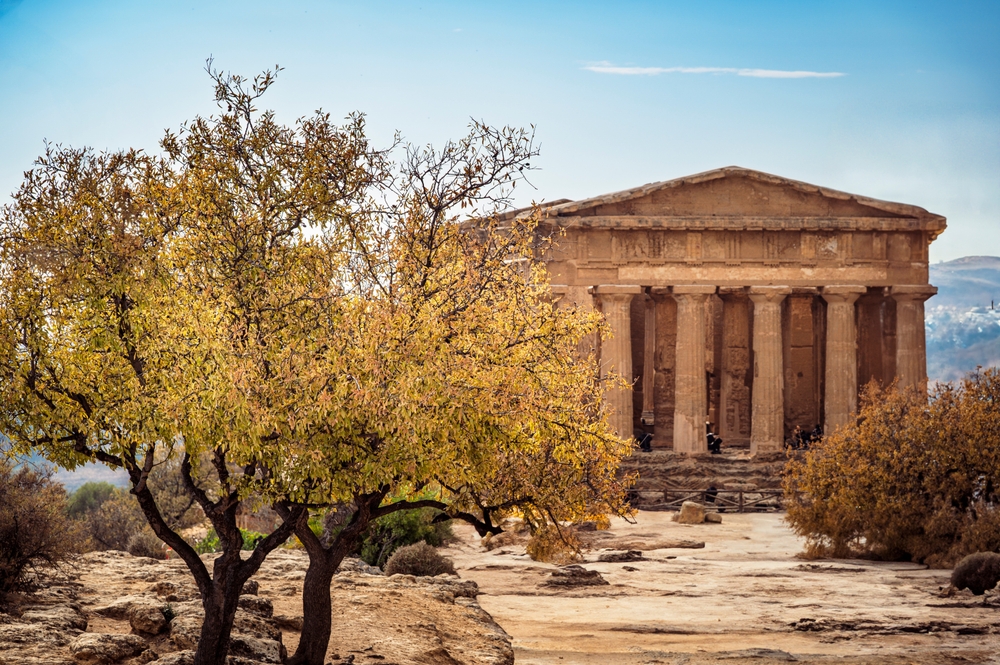
The Valley of the Temples of Agrigento (Strada Panoramica dei Templi, 92100 Agrigento AG, rated 4.7/5 on Google out of 18,800 reviews), a UNESCO World Heritage site, is home to the best-preserved collection of Greek temples outside Greece. This exceptional archaeological site bears witness to the splendour of Akragas, one of the most powerful cities in Magna Graecia in the 5th century BC.
Built around 430 BC, the Temple of Concord is in a remarkable state of preservation, making it one of the best-preserved Doric temples in the ancient world. Its harmonious silhouette, perfectly proportioned according to classical canons, has survived the centuries intact thanks to its transformation into a Christian church in the 6th century. At sunset, the limestone of the temples takes on magnificent golden hues, fully justifying Sicily’s nickname of “the golden island”.
The Temple of Hera (or Juno), perched on the highest point of the site, offers superb panoramic views over the valley. The Temple of Olympian Zeus, although partially collapsed, impresses with its colossal dimensions, making it one of the largest temples in Antiquity. The entablature was supported by 7.5-metre-high atlantes (male figures). The Regional Archaeological Museum (Contrada San Nicola, 92100 Agrigento AG, rated 4.5/5 on Google) is an ideal complement to the visit, exhibiting statues, ceramics and reconstructions that provide a better understanding of daily life in ancient Akragas.
To visit the Valley of the Temples in the best possible conditions, arrive early in the morning when it opens (8.30 am) or late in the afternoon to avoid the sweltering summer heat and groups of tourists. Allow at least 3 hours to explore the entire archaeological site, which covers 1,300 hectares. Admission costs €13 (concessions €8) and includes access to the park and museum.
7. The Aeolian Islands, a volcanic archipelago off the coast of Sicily
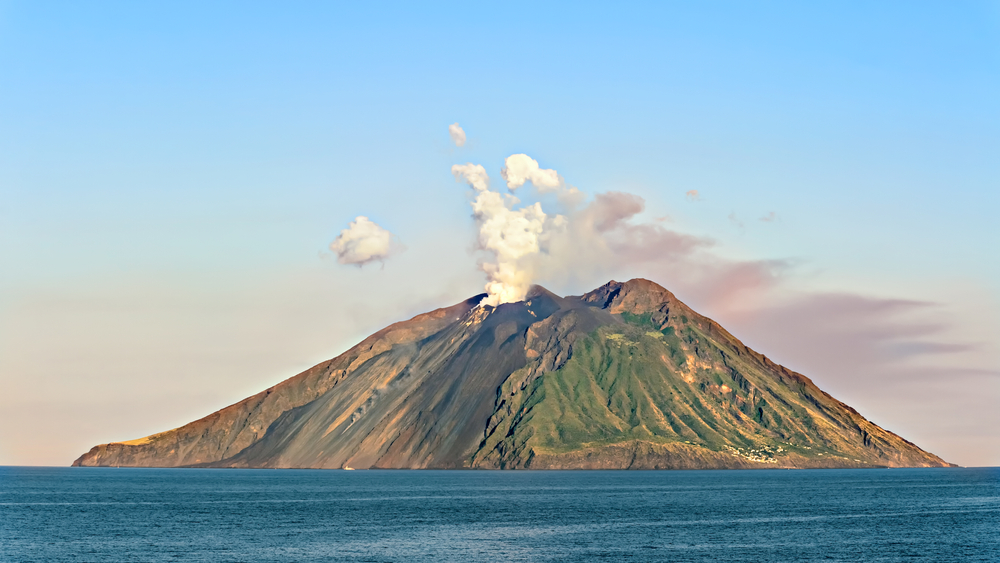
To the north of Sicily, thearchipelago of the Aeolian Islands (or Lipari) forms a fascinating volcanic complex that is a UNESCO World Heritage Site. These seven main islands – Lipari, Vulcano, Salina, Stromboli, Filicudi, Alicudi and Panarea – offer spectacular landscapes shaped by volcanic activity and crystal-clear waters ideal for scuba diving.
Stromboli, the “lighthouse of the Mediterranean”, fascinates visitors with its volcano, which has been erupting almost continuously for 2,000 years. Night-time excursions allow you to watch the explosions of glowing lava from the Sciara del Fuoco, a breathtaking natural spectacle (Via Nunziante, 98050 Stromboli ME). Authorised local guides organise climbs up to the crater (900 metres), a demanding 3-hour hike that requires good physical condition but offers unforgettable emotions.
Vulcano, a 10-minute ferry ride from Milazzo, invites you to bathe in its sulphurous mud baths with therapeutic properties (Laghetto di Fanghi di Vulcano, 98050 Vulcano ME, rated 3.9/5 on Google). The smell of sulphur can be surprising, but the experience is unique and the view from the Gran Cratere crater is worth the hour-long climb. Lipari, the largest island and capital of the archipelago, has a lively historic centre, an internationally renowned archaeological museum (Via Castello, 2, 98055 Lipari ME, rated 4.6/5 on Google) and beaches of black volcanic sand.
Salina, the green island covered in vines that produce the famous Malvasia wine, inspired the film “Le Facteur” starring Philippe Noiret. Its unspoilt villages, such as Pollara, offer an authentic setting far from mass tourism. To reach the Aeolian Islands, take the ferry from Milazzo (1h30 to 2h) or opt for the faster hydrofoil (45 min to 1h). Allow at least 3-4 days to visit several islands and make the most of this enchanting archipelago, where time seems to stand still.
8. Cefalù, the Norman pearl of the Tyrrhenian coast
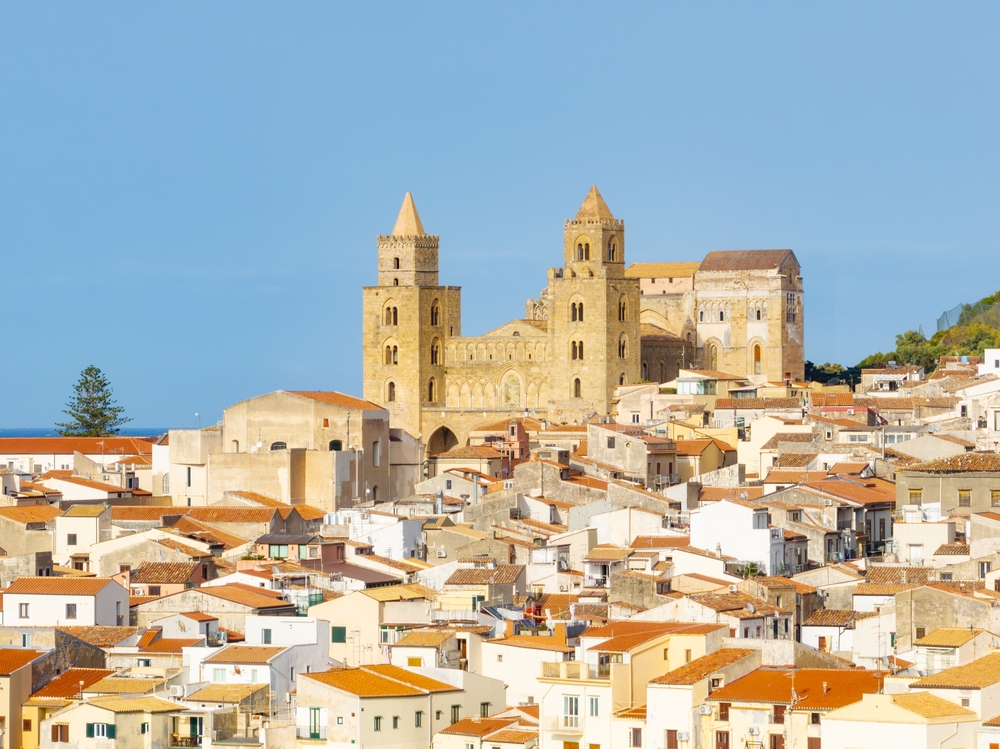
Nestling between sea and mountains on Sicily’s north coast, Cefalù enchants visitors with its spectacular setting and remarkably well-preserved medieval heritage. This small seaside town of 14,000 inhabitants, located 70 km east of Palermo, is one of the most photogenic destinations to visit in Sicily.
The Duomo of Cefalù (Piazza Duomo, 90015 Cefalù PA, rated 4.7/5 on Google out of 12,000 reviews), a Norman cathedral built by Roger II in the 12th century, dominates the city with its imposing mass. Part of Palermo’s Arab-Norman ensemble, it is a UNESCO World Heritage Site, and its gilded Byzantine mosaics of Christ the Pantocrator rival those of the Palatine Chapel in beauty. Its two massive towers frame a harmonious façade that reflects majestically on the bustling Piazza Duomo.
The historic centre of Cefalù invites you to stroll through a maze of cobbled medieval streets lined with craft shops, family-run trattorias and aristocratic palazzi. The Lavatoio Medievale (Via Vittorio Emanuele, 90015 Cefalù PA), an ancient covered public washhouse built in a natural grotto fed by the river Cefalino, is a testament to medieval ingenuity. For the more courageous, the ascent to La Rocca, a 270-metre rocky promontory overlooking the town (Salita Saraceni, 90015 Cefalù PA), offers breathtaking views of Cefalù, the Tyrrhenian Sea and the ruins of the Temple of Diana (approx. 45-minute climb).
The beach at Cefalù, a long stretch of golden sand fringed with palm trees, is the perfect place to combine culture and relaxation. The Museo Mandralisca (Via Mandralisca, 13, 90015 Cefalù PA, rated 4.6/5 on Google) houses Antonello da Messina’s famous “Portrait of a Man” and a rich archaeological collection. Cefalù is best visited in spring or autumn, when the weather is pleasant and tourist numbers are lower than in the height of summer.
9. The Roman Villa of Casale in Piazza Armerina

In the heart of inland Sicily, Villa Romana del Casale (Strada Provinciale 90, 94015 Piazza Armerina EN, rated 4.6/5 on Google out of 13,000 reviews) is home to the largest and best-preserved collection of ancient Roman mosaics in the world. This aristocratic palace, dating from the 4th century AD and a UNESCO World Heritage site, covers an area of 3,500 square metres and contained around fifty richly decorated rooms.
The polychrome mosaics covering more than 3,000 square metres of floor space are an exceptional testimony to the daily life, myths and entertainment of the late Roman aristocracy. The famous Hall of the Ten Young Girls in Bikinis depicts female athletes practising various sports in outfits that were surprisingly modern for their time. The Grand Corridor of the Hunt, a 60-metre long corridor, depicts scenes of exotic animals captured for the circus with striking realism: lions, tigers, rhinoceroses, elephants and ostriches.
The Hall of Hercules recounts the twelve labours of the mythological hero in detailed medallions, while other rooms depict mythological scenes such as the duel between Ulysses and Polyphemus. Elevated walkways allow you to admire these masterpieces without damaging them, while appreciating their overall composition. A few kilometres away, the medieval town of Piazza Armerina is well worth a stop to discover its Baroque cathedral and picturesque alleyways. Allow 2-3 hours to visit the villa (€10, audioguide recommended). The site is open every day from 9am to 6.30pm (opening times vary according to the season).
10. The archaeological park of Selinunte, Greek grandeur by the sea
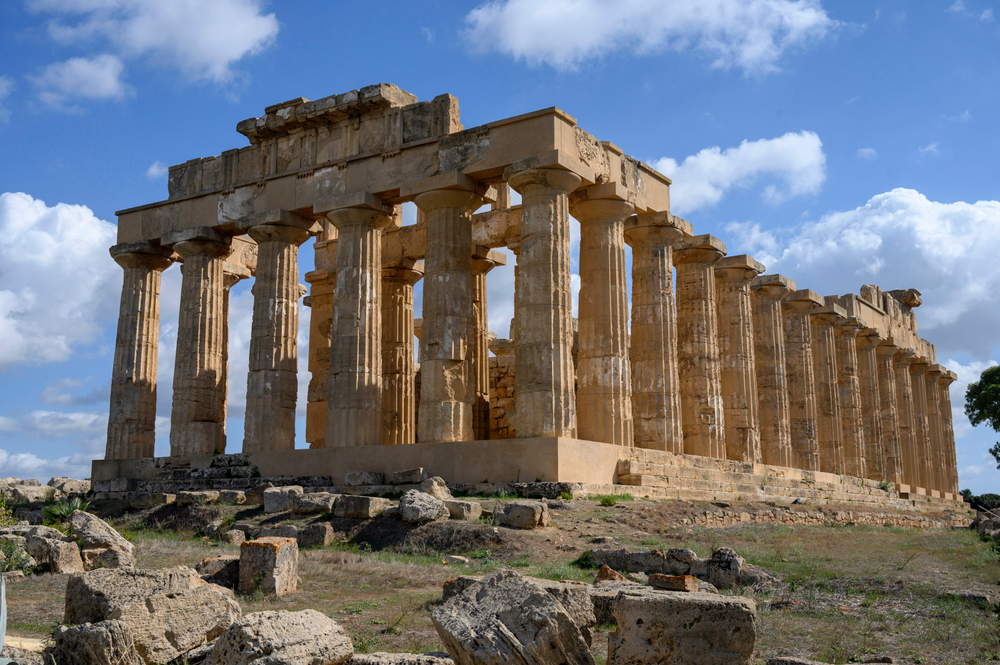
On the south-west coast of Sicily, the Selinunte archaeological park (Selinunte, 91022 Castelvetrano TP, rated 4.6/5 on Google out of 15,000 reviews) is the largest archaeological site in Europe, with 270 hectares of ancient ruins overlooking the Mediterranean. Founded in the seventh century BC by Greek colonists from Megara Hyblaea, Selinunte became one of the most prosperous cities in Magna Graecia before its destruction by the Carthaginians in 409 BC.
The site is divided into three main areas. The Eastern Hill contains the best-preserved temples, including the imposing Temple E (or Temple of Hera), which was partially rebuilt in 1958 and majestically raises its Doric columns facing the sea. Temple G, dedicated to Zeus or Apollo, is said to have been one of the largest temples of antiquity, measuring 110 metres in length, but all that remains today is a pile of colossal column drums that bear witness to its former grandeur.
TheAcropolis, the civic and religious heart of the ancient city, was home to several temples, including Temple C, which overlooked the city. Exceptional sculpted metopes discovered here are on display at Palermo’s Archaeological Museum. The Colline de Manuzza (Manuzza Hill) preserves the remains of the urban settlement, with its chequered streets characteristic of Greek town planning. A free shuttle bus runs between the different areas of the site, which requires at least half a day’s visit.
The Park of Selinunte offers an unspoilt natural setting where ruined temples meet Mediterranean vegetation and the ever-present sea. Visit in spring, when the ruins are dotted with wild flowers, or at sunset, when the golden light sublimates the ancient stones. The site is open daily from 9am to 6pm (8pm in summer). Price: €6. From Palermo, it’s a 1hr 45min drive (120km) or take the train to Castelvetrano and then a local bus.
In conclusion, a visit to Sicily reveals a multi-faceted destination that combines a thousand years of history, spectacular natural beauty and the Mediterranean art of living. From the baroque splendours of Noto to the lunar landscapes of Mount Etna, from the Greek temples of Agrigento to the bustling streets of Palermo, every stage of your Sicilian trip will leave a lasting impression. This generous island is best explored in a fortnight to get a feel for its diversity, but even a shorter stay will leave you with lasting memories. Whether you’re an archaeology enthusiast, a keen hiker, an epicurean or simply in search of authenticity, Sicily will meet all your expectations and make you want to come back again and again to explore its countless hidden treasures.
FAQ : Everything you need to know about visiting Sicily
When is the best time to visit Sicily?
The best time to visit Sicily is from April to June and from September to October. Spring offers pleasant temperatures (20-25°C), green landscapes and fewer tourists. Autumn still offers warm seas (22-24°C) and lower prices. If possible, avoid July and August, when the heat is overwhelming (35-40°C), the sites are crowded and prices are high. Winter (November-March) remains mild on the coast (15°C) but limits seaside activities.
How many days does it take to visit Sicily?
To discover Sicily’s main must-see sites, plan a minimum of 10 days to 2 weeks. A 10-day tour allows you to visit Palermo, Monreale, Cefalù, Mount Etna, Taormina, Syracuse, Noto and Agrigento. Two weeks will give you time to explore in greater depth, add the Aeolian Islands and enjoy the beaches. For a first discovery in a week, concentrate on the east coast (Catania, Etna, Taormina, Syracuse, Noto).
Getting around Sicily
A hire car is still the most practical way to visit Sicily and explore at your own pace. The roads are generally in good condition, although winding inland. Book your vehicle in advance to take advantage of the best rates (from €200/week). Public transport (trains and regional buses) links the major cities, but is less flexible and slower. Ferries and hydrofoils leave regularly from Milazzo for the Aeolian Islands.
Where to stay when visiting Sicily?
For a first stay, opt for 2-3 strategic bases rather than changing accommodation every day. Palermo (3 nights) for the west, Taormina or Catania (3-4 nights) for the east and Etna, Syracuse or Noto (2-3 nights) for the baroque south-east. Agriturismi (farmhouse inns) offer an authentic experience in the Sicilian countryside. B&Bs in the historic centres allow you to immerse yourself in the local atmosphere. Book well in advance in high season (May-September).
What culinary specialities can you try in Sicily?
Sicilian cuisine, rich in Mediterranean, Arab and Norman influences, offers unforgettable delights. Don’t miss the arancini (filled fried rice balls), pasta alla Norma (pasta with aubergine), cannoli (tubes of pasta filled with sweet ricotta), caponata (sweet and sour Sicilian ratatouille), fish couscous in Trapani, pasta with sardines, granita with brioche for breakfast, and cassata (ricotta cake with candied fruit). Pair these marvels with local wines such as Nero d’Avola or Marsala.
200 audioguided tours for cities all around the world
Download