Visiting Cyprus: Top 10 must-sees

A Mediterranean island at the crossroads of three continents, Cyprus has an exceptional wealth of history, crystal-clear beaches and unspoilt mountain landscapes. With its UNESCO-listed ancient remains, Byzantine monasteries perched in the Troodos mountains and sun-drenched turquoise coves, visiting Cyprus promises a unique travel experience combining culture, nature and idleness. Whether you’re an archaeology enthusiast, a keen hiker or a seaside relaxation enthusiast, this authentic Mediterranean destination will win you over with its diversity and unspoilt authenticity.
Also read about the Cyprus guide:
- Discover Athens, the city of the gods near Cyprus
- Explore Istanbul, the bridge between Europe and Asia
- Top 7 things to do in Istanbul
- Visit Dubrovnik, the pearl of the Adriatic
- What to do in Crete
1. Paphos and its archaeological park
The legendary city of the goddess Aphrodite and a veritable open-air museum, Paphos is one of the must-visit destinations on Cyprus. A UNESCO World Heritage Site, this port city on the south-west coast is home to some exceptionally rich archaeological treasures that bear witness to more than 2,000 years of Mediterranean history.
The archaeological park of Kato Paphos (Leoforos Apostolou Pavlou, Paphos 8042, Cyprus, rated 4.6/5 on Google out of over 10,000 reviews) is the historic heart of the town, with its remarkable, perfectly preserved Roman mosaics. Here you will discover the famous ancient villas, including the House of Dionysus decorated with colourful mythological scenes, the impressive Roman Odeon still used for summer shows, as well as the agora and the remains of the medieval castle of Saranda Kolones. Each stone here tells the fascinating story of this city, which was the capital of Cyprus in ancient times.
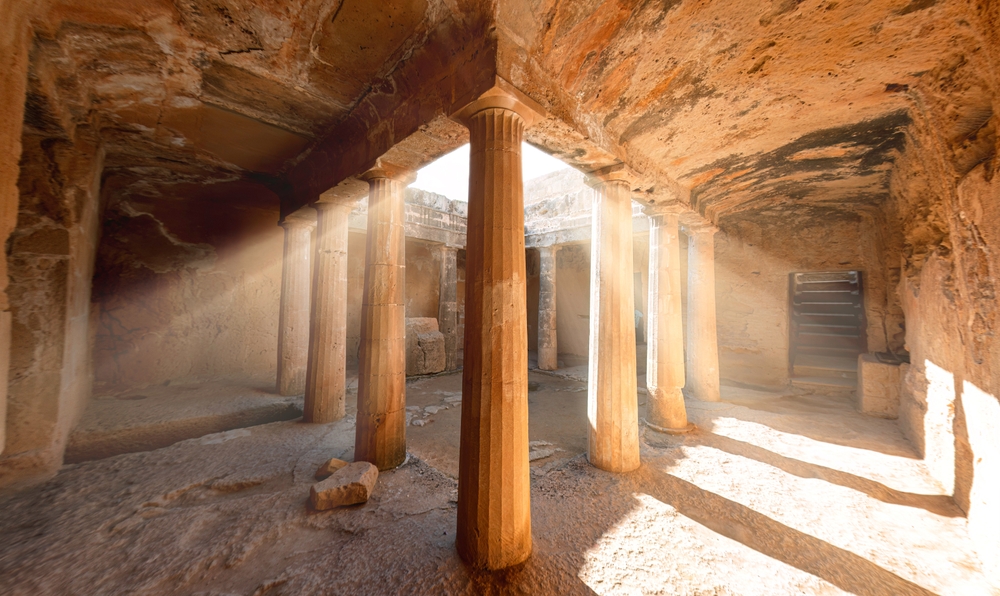
A few kilometres from the centre, don’t miss the Tombs of the Kings (Tombs of the Kings Ave 63, Chlorakas 8015, Cyprus, rated 4.5/5 on Google out of 8,500 reviews), an impressive underground necropolis dug into the rock and dating back to the 3rd century BC. These monumental tombs adorned with Doric columns bear witness to the prestige of the Hellenistic and Roman elites who rested here. Make sure you bring good shoes, as the visit involves descending into several burial chambers and wandering around this extensive site in the Mediterranean sunshine.
2. The Rock of Aphrodite (Petra tou Romiou)
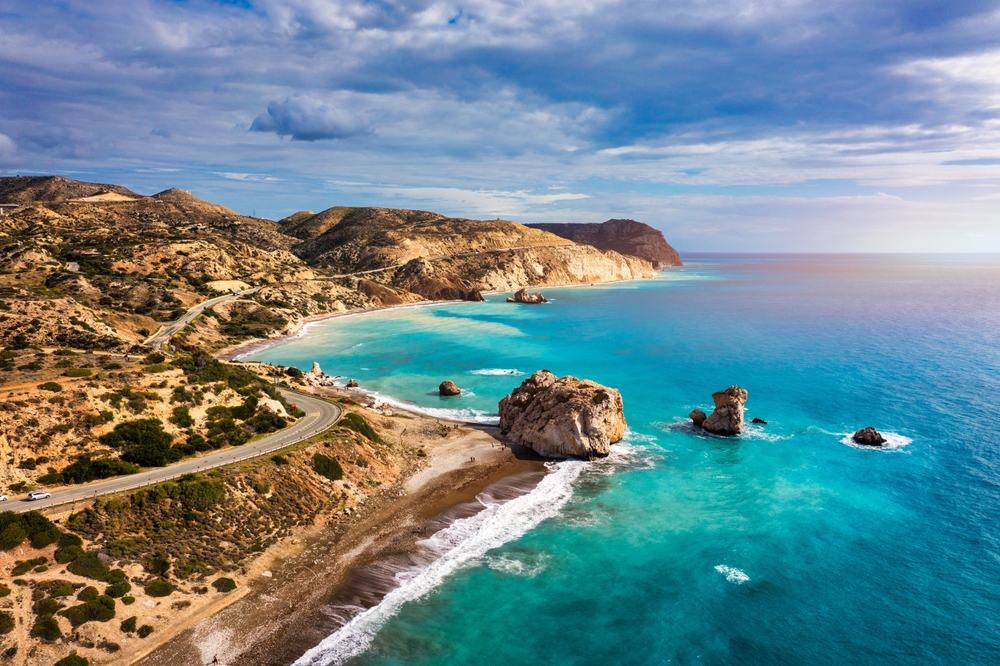
Around 25 kilometres east of Paphos lies the mythical Petra tou Romiou (Kouklia, Cyprus, accessible 24 hours a day), also known as Aphrodite’s Rock. This magical place, where the goddess of love and beauty is said to have been born from the foam of the waves, is one of the island’s most emblematic natural sites and a must-see for any visitor to Cyprus.
The imposing rock emerges from the turquoise waters to create a landscape of striking beauty, particularly at sunset when the golden rays illuminate the limestone. According to local legend, swimming around the rock three times will guarantee eternal youth and true love. The stony beach beside the site invites you to take a dip in the crystal-clear waters. A small café near the car park offers refreshments while you contemplate this enchanting panorama steeped in mythology. Access to the site is free and a car park makes the visit easy, making this magical place accessible to all travellers exploring the southern coast of Cyprus.
3. Nicosia, Europe’s last divided capital
The capital of Cyprus for over a thousand years, Nicosia offers the unique experience of a city divided between the Greek south and the Turkish north by the famous ‘Green Line’, which has been controlled by the UN since 1974. This division makes Nicosia the last European capital still separated by a militarised border, giving the city a special atmosphere where recent history and ancestral heritage meet.
The old town, surrounded by 16th-century Venetian walls, has picturesque alleyways full of craft shops, traditional cafés and remarkable historic monuments. Don’t miss the Museum of Cyprus (Museum 1, Nicosia 1097, Cyprus, rated 4.4/5 out of 2,800 reviews), which boasts an exceptional archaeological collection tracing the island’s history back to prehistoric times. The three monumental gates of the fortifications – Famagusta Gate, Paphos Gate and Kyrenia Gate – bear witness to the city’s defensive power. The famous Rue Ledra is the crossing point between the two parts of the city, offering a rare opportunity to experience two cultures in just a few steps.
To better understand the complex history of this fascinating capital and discover its many facets, a guided tour provides an insight into the historical and contemporary issues that shape Nicosia’s unique identity in the Mediterranean landscape.
4. The Troodos mountains and the Kykkos monastery
The Troodos mountain range, the green lung of Cyprus, offers a striking contrast to the beaches along the coast. The highest point on the island at 1,952 metres on Mount Olympus, this unspoilt region is home to traditional villages with stone houses, UNESCO-listed Byzantine monasteries and hiking trails winding through pine forests and terraced vineyards.
In the heart of these mountains stands the monastery of Kykkos (F966, 2865, Cyprus, open daily from 10am to 6pm in summer and until 4pm in winter), the most famous and richest in Cyprus, perched at an altitude of 1,300 metres. Founded at the end of the 11th century, this Orthodox monastery is home to a miraculous icon of the Virgin Mary attributed to Saint Luke the Evangelist. The interior courtyards decorated with golden mosaics and colourful frescoes dazzle visitors, while the monastic museum exhibits a priceless collection of ancient icons, illuminated manuscripts and precious liturgical objects. Appropriate dress (shoulders and knees covered) is required to enter this of the island’s most important spiritual sites.
The Troodos region also boasts a number of picturesque villages, including Omodos, renowned for its traditional wines, Kakopetria, with its preserved medieval streets, and Pedoulas, home to the Byzantine church of Archangelos Michail with its remarkable 15th-century frescoes. Nature lovers will particularly appreciate the paths leading to the waterfalls of Caledonia Falls or the panoramic views from the wooded heights of the massif.
5. The archaeological site of Kourion
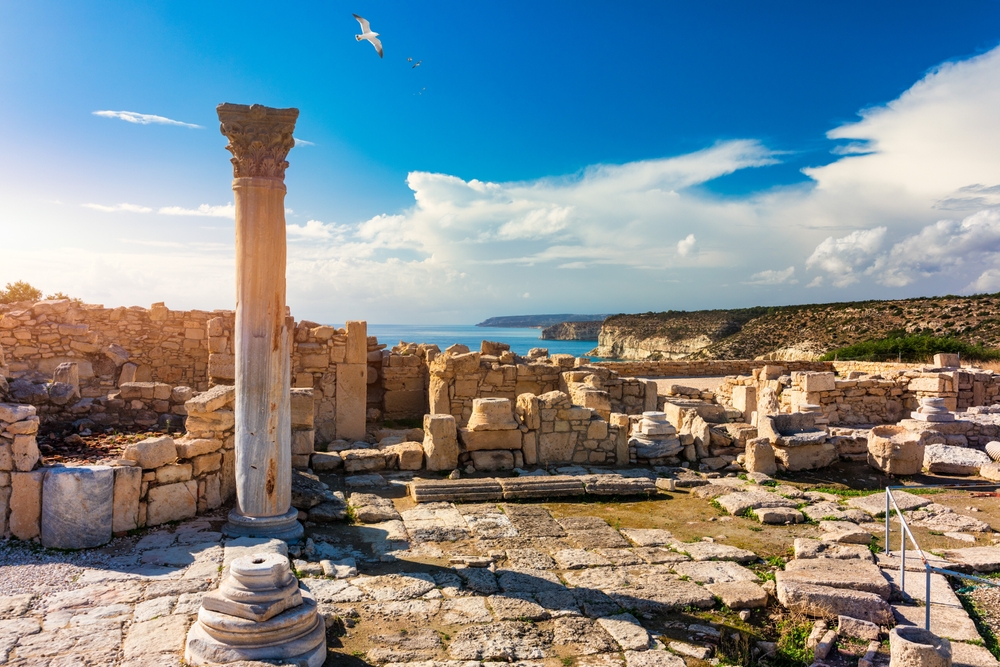
Dominating the southern coastline from a limestone cliff, the archaeological site of Kourion (Ancient Kourion, Cyprus, generally open from 8am to 7pm in high season) is one of the most spectacular ancient complexes in the eastern Mediterranean. This ancient city-kingdom, founded in the 12th century BC, prospered during the Greek and Roman periods before being destroyed by a terrible earthquake in 365 AD.
The perfectly restored Greco-Roman theatre, which seats 3,500 spectators, offers a breathtaking view of the glistening Mediterranean Sea in the distance. During the summer, ancient theatrical performances are still held here, giving visitors the chance to experience the remarkable acoustics of this thousand-year-old building. The nearby House of Eustolios fascinates visitors with its superb polychrome mosaics depicting mythological scenes and sophisticated geometric motifs. The remains of the public baths, the Palaeochristian basilica and the nearby sanctuary of Apollo Hylates complete the visit to this major archaeological site.
Free parking and a small café on site make it easy to organise a visit to Kourion, a must-see for anyone wishing to visit Cyprus and immerse themselves in its fascinating ancient history. There is an entrance fee, but it’s very affordable, and the site is well worth spending at least two hours at.
6. Limassol, between modernity and tradition
The second largest city in Cyprus and the island’s main commercial port, Limassol harmoniously combines urban dynamism with traditional Mediterranean charm. This coastal city on the south coast has developed considerably over recent decades to become a major economic centre, while preserving its historical and cultural heritage.
The medieval castle of Limassol (Richard and Berengaria, Limassol 3042, Cyprus, rated 4.3/5 out of 3,200 reviews), located near the old port, now houses the Medieval Museum of Cyprus. It was in this Byzantine fortress that Richard the Lionheart married Berengaria of Navarre in 1191 during the Third Crusade. The restored old town invites you to stroll through its narrow streets lined with authentic tavernas serving the famous Cypriot meze, while the modern marina offers a contemporary face with its trendy restaurants, luxury boutiques and yachts moored along the elegant quays.
Limassol is also an excellent base for exploring the surrounding ancient sites such as Kourion and the sanctuary of Apollo Hylates, as well as the wine-producing villages of the Troodos, which have been producing the famous Commandaria wines since ancient times. The long seafront promenade, planted with palm trees, is ideal for morning strolls or jogs in front of the rising Mediterranean sun.
7. Larnaca and its religious heritage
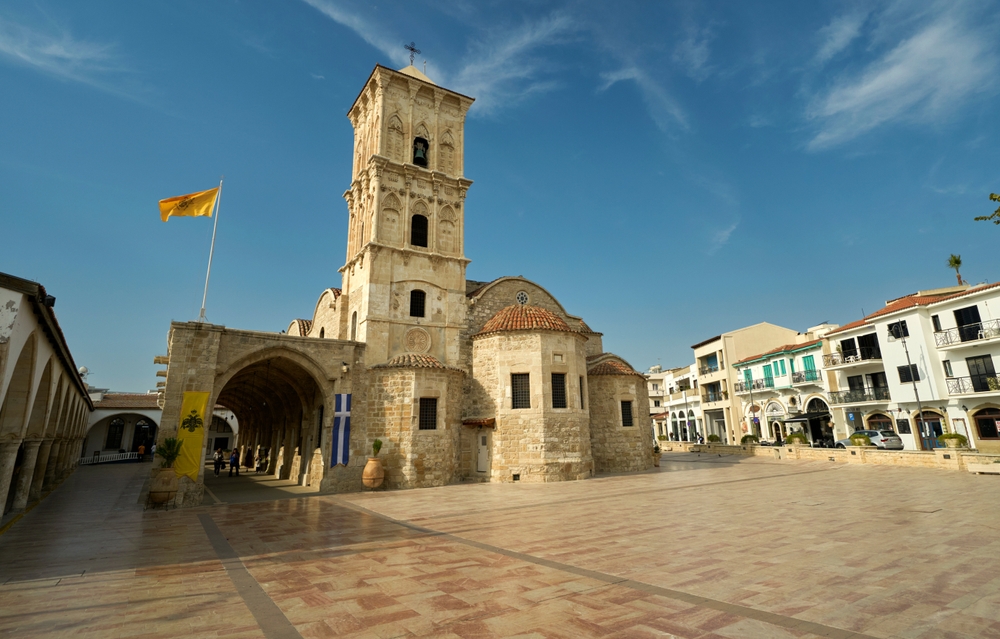
Cyprus’s third-largest city and the island’s main air gateway thanks to its international airport, Larnaca charms visitors with its relaxed atmosphere, palm-fringed seafront and rich religious heritage testifying to the historical coexistence of different communities.
The Church of Saint Lazarus (Ayiou Lazarou, Larnaca 6020, Cyprus, rated 4.7/5 out of 6,800 reviews) is the town’s architectural jewel. Built in the 9th century over the tomb of Saint Lazarus, who is said to have spent his last years in Larnaca after his resurrection, this Orthodox church is a remarkable blend of Byzantine and Latin influences, with its Baroque bell tower added later. The gilded iconostasis and precious icons adorning the interior create an atmosphere of meditation.
A few kilometres from the city centre lies the salt lake of Larnaca, home to colonies of pink flamingos every winter, offering an enchanting natural spectacle in this Mediterranean setting. On its western shore stands the Hala Sultan Tekke mosque (Larnaca, Cyprus, rated 4.6/5 out of 3,500 reviews), one of Islam’s most revered holy places after Mecca, Medina and Jerusalem. Built in the 7th century, this sanctuary houses the tomb of Umm Haram, aunt of the Prophet Mohammed, in a peaceful setting of gardens and arcades.
The Finikoudes promenade along the fine sandy beach is the lively heart of Larnaca, with its many cafés, restaurants and shops bustling until late at night during the summer season. This friendly, accessible atmosphere makes Larnaca a popular destination for families and travellers in search of Mediterranean authenticity.
8. Ayia Napa and its heavenly beaches
A renowned seaside resort on the south-east coast, Ayia Napa has earned itself a dual reputation: a party destination popular with young Europeans for its vibrant nightlife, and a paradise for lovers of beautiful beaches with turquoise waters worthy of the Caribbean. Beyond its image as a party hotspot, Ayia Napa is home to some exceptional natural treasures that are well worth a visit for anyone wishing to visit Cyprus.
Blue Flag beaches such as Nissi Beach, with its rocky islet accessible on foot, and Makronissos Beach, with its fine golden sand, are among the most beautiful in the eastern Mediterranean. The shallow, crystal-clear waters are ideal for family bathing and snorkelling to observe the colourful marine life evolving between the rocks. The Ayia Napa Monastery (Plateia Seferi 2, Ayia Napa 5330, Cyprus, rated 4.5/5 out of 2,100 reviews), a 16th-century Venetian building built around a sacred grotto, offers a welcome cultural contrast in the heart of the resort.
The Thalassa Maritime Museum features a fascinating collection dedicated to Cyprus’ naval history, including a life-size replica of the ancient merchant ship Kyrenia II. For wilderness enthusiasts, the nearby Cape Greco National Park offers spectacular coastal scenery with erosion-sculpted cliffs, Sea Caves and the famous Blue Lagoon with its supernaturally blue waters. Numerous signposted hiking trails allow you to explore this unspoilt nature reserve, offering unforgettable views of the Mediterranean.
9. Cape Greco and the Blue Lagoon
At the very south-eastern tip of Cyprus, between Ayia Napa and Protaras, lies Cape Greco National Park (Cape Greco, Ayia Napa, Cyprus, accessible 24 hours a day), a protected nature reserve covering 385 hectares of wild rocky coastline, towering cliffs plunging into azure waters and panoramic paths offering breathtaking views of the Mediterranean.
The site boasts a number of natural wonders that make it one of the must-visit destinations in Cyprus. The Sea Caves (Sea Caves, E307, Ayia Napa 5330, Cyprus, accessible 24 hours a day), sea caves sculpted by the waves over thousands of years, create spectacular natural arches where the light plays with the turquoise reflections of the water. The famous Lovers Bridge, a natural rock bridge spanning the sea, is an iconic photo spot that is particularly romantic at sunset.
The Blue Lagoon (Blue Lagoon, Cyprus), accessible mainly by excursion boat from Ayia Napa or Protaras, reveals waters of an absolutely extraordinary limpid blue where underwater visibility can reach 40 metres. This is a paradise for snorkellers and divers, with a wealth of marine life to be seen among the rocks and posidonia meadows. Several signposted footpaths criss-cross the cape between Mediterranean scrub scented with wild thyme, juniper and pine trees, leading to various panoramic viewpoints, including the small white Ayioi Anargyroi chapel perched overlooking the immensity of the sea. Experienced divers will also appreciate the many renowned dive sites around the cape, including underwater caves and rocky canyons inhabited by groupers, octopus and sea bream.
10. The Akamas peninsula, unspoilt wilderness
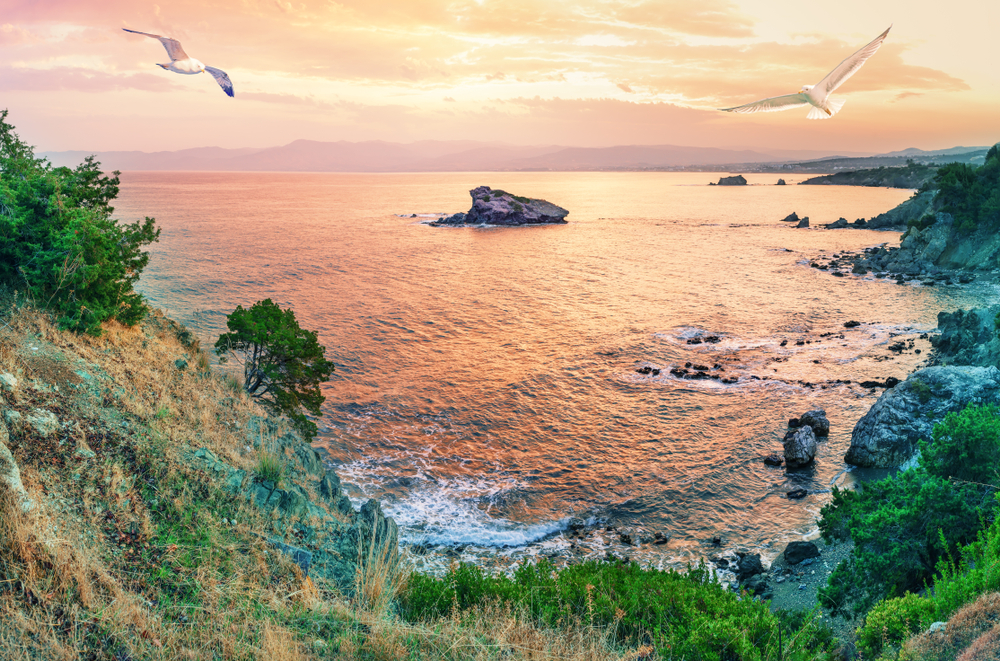
At the north-western tip of Cyprus lies the Akamas peninsula (Akamas, 8701, Cyprus, accessible all year round), the island’s last bastion of unspoilt nature and a protected national park covering almost 230 square kilometres of authentic Mediterranean landscape. This wild and undeveloped region offers a striking contrast to the developed seaside resorts along the coast, and is a veritable paradise for lovers of hiking, unspoilt nature and exceptional biodiversity.
The Avakas Gorge, a spectacular canyon with dizzying limestone walls up to 30 metres high, is best explored on foot along a hiking trail that follows the bed of a seasonal stream. The lush vegetation clinging to the cliffs and the relative coolness provided by the high rock walls create an almost mystical atmosphere in this grandiose natural setting. The Aphrodite trail (7.5 km) and the Adonis trail (7 km) offer magnificent hiking loops through pine forests, fragrant maquis and panoramic ridges overlooking the sparkling Mediterranean.
The peninsula’s wild beaches, such as Lara Beach, are protected nesting sites for loggerhead and green sea turtles, which come here to lay their eggs between May and August. A turtle conservation centre located on site gives visitors an insight into the efforts being made to protect these endangered species. The Akamas Blue Lagoon, accessible by boat or 4×4 track from the village of Latchi, boasts extraordinarily clear turquoise waters perfect for swimming and snorkelling in a totally unspoilt setting. The Baths of Aphrodite, a natural grotto where the goddess is said to have bathed according to mythology, mark the starting point of several hiking trails criss-crossing this magical peninsula, a must if you want to visit Cyprus in all its natural authenticity.
In conclusion, visiting Cyprus offers a unique Mediterranean experience combining exceptional ancient heritage, unspoilt nature and heavenly beaches in an authentic setting still untouched by mass tourism. From legendary Paphos to the Troodos mountains and the turquoise waters of Cape Greco, each region of the island reveals its own cultural and natural treasures. Whether you’re an archaeology enthusiast exploring the UNESCO sites, a hiker covering the trails of Akamas, or simply a fan of lazing on the golden beaches of Ayia Napa, Cyprus will win you over with its diversity and unspoilt authenticity. This Mediterranean island at the crossroads of civilisations is well worth spending at least a week on to discover its many facets and soak up its unique atmosphere, where a thousand years of history and a gentle way of life combine harmoniously under the generous sunshine of the eastern Mediterranean.
FAQ : Visiting Cyprus
When is the best time to visit Cyprus?
The best time to visit Cyprus is from April to June and from September to October. During these months, temperatures are pleasant (20-28°C), ideal for combining cultural visits and swimming, while avoiding the intense heat of July-August, which can exceed 35°C. Spring offers the advantage of lush green landscapes and wild flowers, while autumn allows you to enjoy a still-warm sea with fewer tourists.
How many days does it take to visit Cyprus?
A week (7 to 10 days) is the ideal length of time to discover the main sites of Cyprus without rushing. This time allows you to visit Paphos and its archaeological sites, explore the Troodos mountains, discover Nicosia, the divided capital, enjoy the beaches of Ayia Napa and Cape Greco, and make a few forays into traditional villages. With 4-5 days, concentrate on a specific region (south coast around Paphos/Limassol or east coast with Larnaca/Ayia Napa).
Do I need to hire a car to visit Cyprus?
Yes, hiring a car is highly recommended if you want to visit Cyprus in complete freedom and access sites that are far from urban centres. The island has an excellent road network and many sites of interest (Troodos monasteries, traditional villages, isolated beaches, archaeological sites) are difficult to reach by public transport. Please note: driving is on the left-hand side of the road, as in the UK, a legacy of the British colonial period. International car hire companies can be found in the airports and main towns, with prices generally affordable out of high season.
Is it possible to move from South Cyprus to North Cyprus?
Yes, it is possible to cross the Green Line separating the Republic of Cyprus (south) from the Turkish Republic of Northern Cyprus (recognised only by Turkey). There are several crossing points, the most convenient being Ledra Street in Nicosia, which is accessible on foot. You will need to present your passport or identity card. Hire cars from the south generally require additional insurance to drive in the north. Warning: entering Northern Cyprus directly from Turkey (without first transiting through the south) may be considered illegal by the Republic of Cyprus and complicate your subsequent travel.
What language is spoken in Cyprus?
The official languages are Greek (in the southern part of the Republic of Cyprus) and Turkish (in the northern part). However, English is widely spoken and understood throughout the island, a legacy of British colonisation (1878-1960). Almost all road signs, restaurant menus and tourist information are bilingual Greek-English in the south. So you’ll have no trouble communicating in English, which makes visiting Cyprus much easier for French speakers with a basic level of English.
200 audioguided tours for cities all around the world
Download