Visiting the Château de Chantilly: tickets, opening times, advice
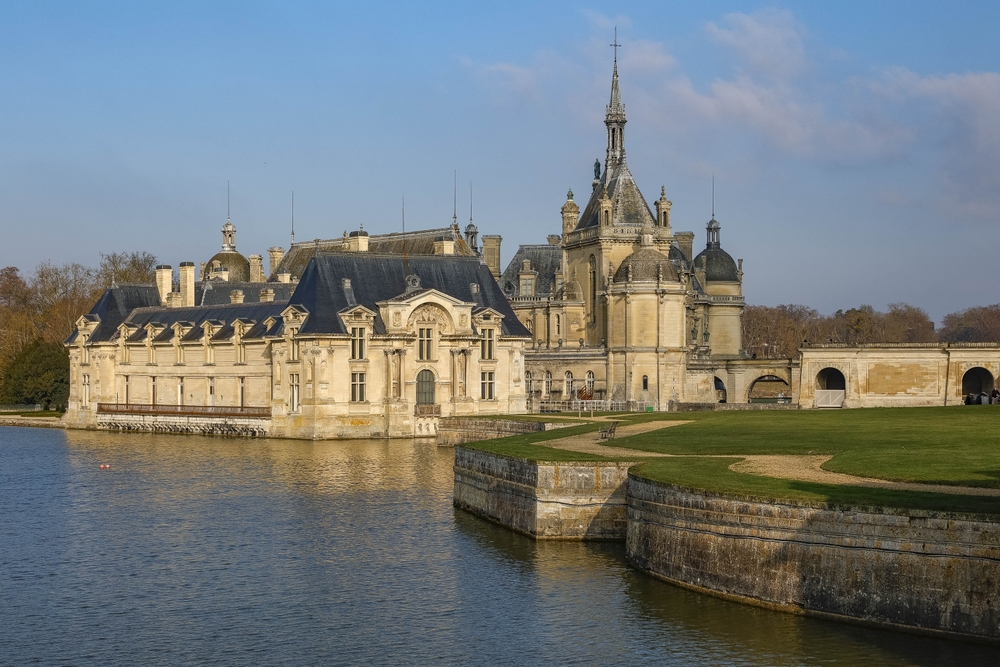

Just 50 kilometres north of Paris, the Château de Chantilly embodies French elegance in all its splendour. This princely residence, nestled in the heart of a 115-hectare estate, is home to one of the largest collections of ancient art in France after the Louvre. With its majestic gardens designed by Le Nôtre, spectacular Grandes Écuries and priceless Condé museum treasures, a visit to the Château de Chantilly promises a total immersion in French history and art. Whether you’re a fan of Renaissance architecture, a lover of old paintings or simply looking for a cultural getaway from Paris, this jewel of the Hauts-de-France region is sure to amaze you.
See also the Paris guide :
- 20 things not to miss in Hauts-de-France
- 15 day trips around Paris
- Top 20 culinary specialities in Paris
- The most beautiful villages to discover around Paris this winter
- Discover the best water parks around Paris in Ile de France
- 40 free things to do and see in Paris
- Visiting the Château de Vaux-le-Vicomte: tickets, opening times, advice
- Cruises on the Seine in Paris: itineraries, fares and advice
The history of the Château de Chantilly
The history of Chantilly Castle dates back to the Middle Ages, when a medieval fortress was built in the 12th century by the Orgemont family. But it was during the Renaissance that the site really took off. In 1528, Constable Anne de Montmorency, a leading figure in the court of François I, had a Renaissance château built, laying the foundations for the present-day edifice. This first château was enriched and embellished by his successors, notably the prestigious de Condé family.
In the 17th century, the Grand Condé, Louis XIV’s cousin and a brilliant military leader, transformed Chantilly into a residence worthy of rivalling Versailles. He called on André Le Nôtre, the king’s famous gardener, to create the formal gardens for which the estate is famous today. This period was the château’s golden age, when it played host to some of the biggest parties held by the French aristocracy.
The French Revolution marked a tragic turning point: the Grand Château was completely destroyed, leaving only the Petit Château. It wasn’t until the 19th century and the arrival of Henri d’Orléans, Duke of Aumale, that the estate rose from the ashes. Between 1875 and 1882, he commissioned the architect Honoré Daumet to rebuild the Grand Château in a neo-Renaissance style. A great art lover and collector, the Duc d’Aumale amassed an exceptional collection of paintings, rare books and manuscripts.
In 1886, the Duc d’Aumale bequeathed the entire estate to the Institut de France, with one strict condition: that the collections remain unchanged and accessible to the public. Today, a visit to the Château de Chantilly is an opportunity to discover this preserved heritage, witness to several centuries of French history and passion for art.
The Grands Appartements of the château
Located on the first floor of the Petit Château, the Grands Appartements were used by the Princes of Condé as a residence and reception area. When you visit the Château de Chantilly, these rooms immediately transport you into the sumptuous atmosphere of the 17th and 18th centuries. The decoration, commissioned in part by the Grand Condé and carried out by Jules Hardouin-Mansart, King Louis XIV’s first architect, bears witness to the excellence of French decorative art.
Each room reveals extreme refinement: gilded woodwork, painted ceilings, exceptional furniture by André-Charles Boulle, one of the greatest cabinet-makers in history. The Grande Galerie, the antechamber and the state rooms are impressive for their elegance and wealth of ornament. The private flats of the Duc d’Aumale, fitted out on the ground floor between 1845 and 1847, provide an interesting contrast with the more intimate nineteenth-century decor.
A visit to the Grands Appartements is an essential step towards understanding the art of aristocratic living through the centuries. These sumptuous salons, where balls and receptions were held, still resonate with the echoes of princely life in days gone by.
The Condé Museum and its exceptional collections
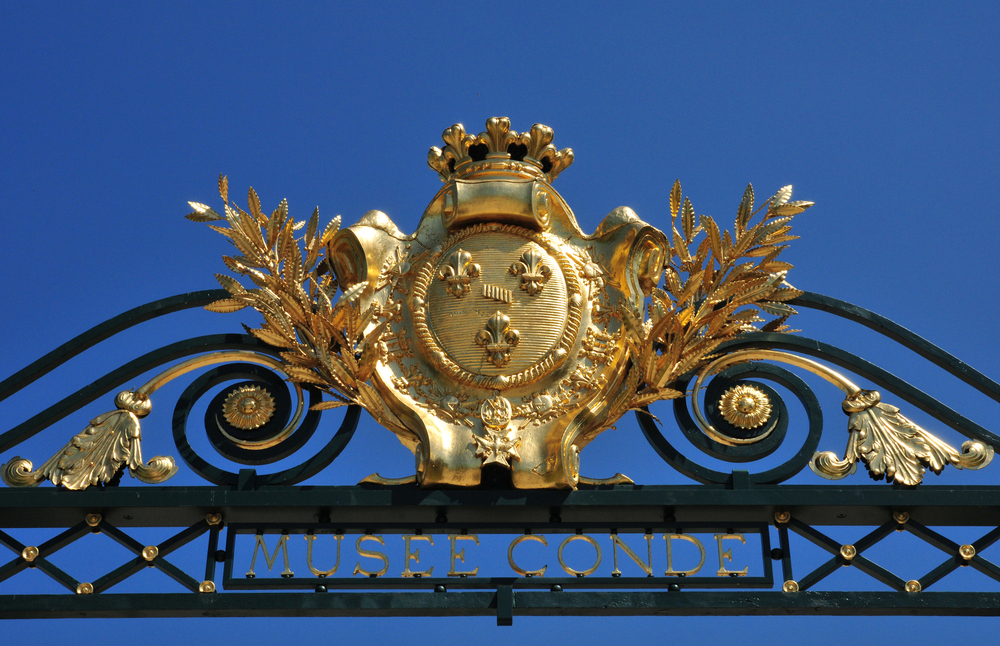
The Musée Condé is one of the Château de Chantilly’s most precious treasures. Housing the second largest collection of early paintings in France after the Louvre, this unique museum bears witness to the Duc d’Aumale’s consuming passion for art. With over 800 paintings, 2,500 drawings and 30,000 books, the collections rival those of Europe’s greatest museums.
Among the must-see masterpieces are paintings by Raphaël, including the famous “Three Graces” and the “Portrait of François I”, works by Nicolas Poussin, Jean-Auguste-Dominique Ingres, Eugène Delacroix and Sandro Botticelli, as well as a remarkable collection from the Flemish school with paintings by Jacob van Ruisdael and Willem van de Velde. The Galerie de Peinture, inaugurated in 1882, presents these works in a scenography faithful to the wishes of the Duc d’Aumale.
What makes the Musée Condé so special is its unique status: under the terms of the 1886 bequest, no work may be moved, loaned or even rehung in a different way. This strict rule guarantees that you will discover the collections exactly as the Duc d’Aumale conceived them, offering an authenticity that is rare in the contemporary museum world.
The Cabinet des Livres and the Très Riches Heures of the Duc de Berry
The Cabinet des Livres is a veritable sanctuary for bibliophiles. Housed in the château’s former theatre, this majestic space contains more than 19,000 volumes, including 1,500 manuscripts and 12,000 works printed before 1920. The Duc d’Aumale’s library is one of the largest private collections in France, and was bequeathed to the Institut de France at the same time as the estate.
The absolute jewel in this collection is undoubtedly the “Très Riches Heures du Duc de Berry”, described as the “Mona Lisa of manuscripts”. This book of hours, commissioned in the early 15th century by Jean de Valois, Duke of Berry and brother of King Charles V, is adorned with exceptionally beautiful miniatures by the Limbourg brothers. Its illuminations, notably the famous calendar illustrating the work and pleasures of the months of the year, represent a pinnacle of medieval art.
Because of its extreme fragility, the original manuscript is only displayed for a few months each year under strict conservation conditions. However, the Cabinet des Livres offers an innovative virtual approach, enabling visitors to leaf through this priceless treasure digitally. A visit to the Cabinet des Livres offers a fascinating insight into the history of the book and medieval book illumination.
The formal gardens and park
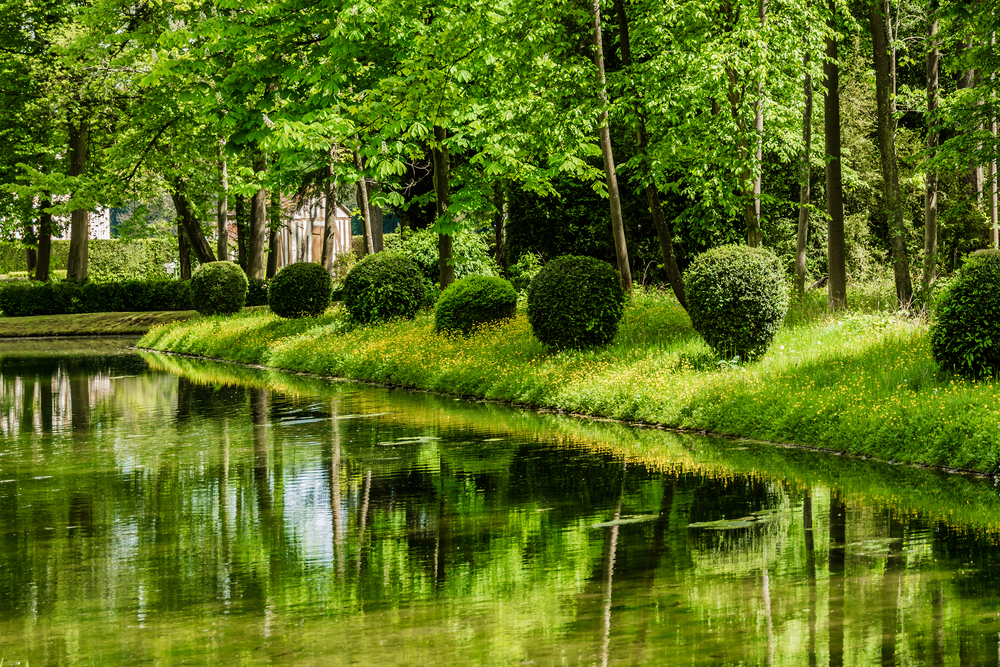
Covering 115 hectares, the grounds of the Château de Chantilly are a landscaped masterpiece that spans the centuries and styles. The French garden, designed by André Le Nôtre in 1663 for the Grand Condé, is one of the major creations of Louis XIV’s famous gardener. With its geometric parterres, ornamental ponds and skilfully calculated perspectives, this garden embodies man’s mastery of nature, a characteristic of French classical aesthetics.
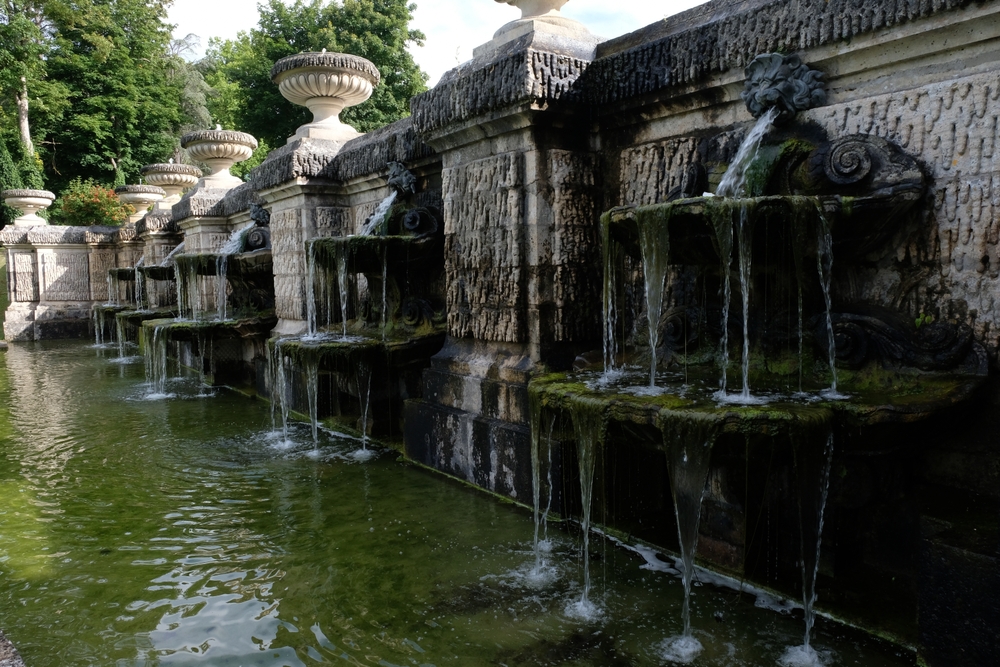
The Grande Cascade and the Bassin de la Gerbe offer impressive water displays, while the avenues lined with century-old trees invite you to take a contemplative stroll. The play of perspective from the château’s terrace reveals the genius of Le Nôtre, who knew how to create grandiose optical illusions. As you explore the estate, take the time to admire these gardens, which have inspired some of the greatest in Europe.
The park at Chantilly is also notable for its diversity: in addition to the French garden, you will discover an Anglo-Chinese garden created at the end of the 18th century, with its winding rivers, picturesque bridges and romantic atmosphere. The Hameau, a group of rustic cottages built in 1775, is said to have inspired Marie-Antoinette’s famous Hameau at Versailles. An English garden completes this exceptional ensemble, testifying to the evolution of landscaping tastes through the ages.
There are picnic areas where you can enjoy the unspoilt countryside to the full, while electric buggies are available for hire to help visitors with reduced mobility or families with young children discover the estate.
The Hamlet and the Anglo-Chinese garden
Nestling in the heart of the park, the Hameau de Chantilly offers a charming country escape. Built in 1775 for the Prince de Condé, this rustic architectural ensemble predates the famous Hameau de la Reine in Versailles. Comprising five thatched cottages of modest appearance, the Hameau illustrates the fashion for aristocratic “follies” in the eighteenth century, when nobles enjoyed playing at country life far from court etiquette.
The Anglo-Chinese garden that surrounds the Hameau is a striking contrast to the geometric rigour of the French garden. Its small canals, labyrinth of plants and winding paths create a bucolic and romantic atmosphere. Delicate bridges span the waterways, inviting you to stroll and daydream. This part of the park is reminiscent of the Oriental gardens that fascinated 18th-century Europe, combining Chinese and English influences in a landscape composition that was innovative for its time.
A visit to the Hameau and its garden is an ideal bucolic interlude after exploring the château and its sumptuous flats. It’s a particularly popular spot for families, where children can explore and play in an enchanting natural setting.
The Grandes Écuries and the Musée du Cheval
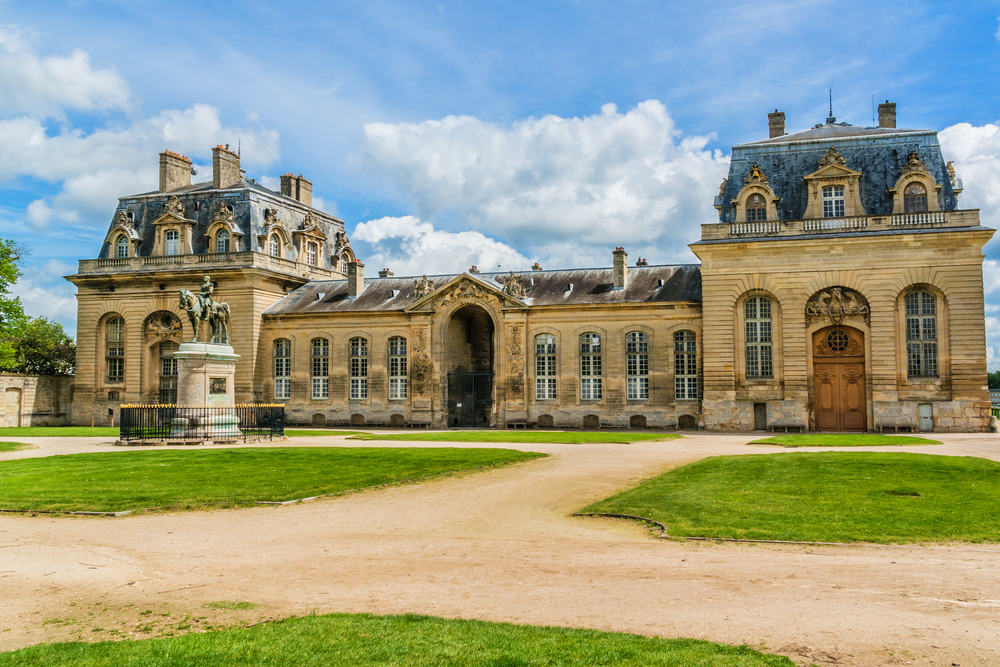
The Grandes Écuries de Chantilly are one of Europe’s most impressive equestrian monuments. Built in the 18th century at the request of the seventh Prince de Condé, Louis Henri de Bourbon, these monumental stables bear witness to the aristocracy’s passion for horses and hunting. Legend has it that the prince, convinced that he would be reincarnated as a horse, had these grandiose stables built to provide a dignified home for his future life.
With its spectacular architecture, the Grandes Écuries can accommodate 240 horses and 500 dogs. Their majestic 28-metre-high dome now houses a 13-metre-diameter show ring where equestrian performances take place on a regular basis. The Living Museum of the Horse, housed in the stables since 2013, features a unique collection tracing the history of the relationship between man and horse through the ages.
Nearly 200 objects and works of art are on display, including models, paintings, antique stirrups, precious saddles and ceremonial harnesses. The museum also offers daily equestrian demonstrations (included with admission to the estate), as well as more elaborate shows during the summer season. These performances combine equestrian high school, acrobatic acts and theatrical staging, offering a lively and impressive show for all the family.
The Compagnie équestre des Grandes Écuries perpetuates the excellence of the French equestrian tradition, with riders trained in classical disciplines. Taking in a performance during your visit to the Château de Chantilly is a memorable experience that will delight young and old alike.
Opening times and days
Château de Chantilly is open all year round, with the exception of Tuesdays, which are closed on a weekly basis. The estate also observes an annual closure, usually in January (from 6 to 24 January 2025, for example). We recommend that you consult the official website before your visit to check for any exceptional closures due to private events or maintenance work.
In the low season (October to March), the château is open from 10am to 5pm, with last admission at 4.15pm. The park is open from 10am to 6pm (last admission at 5.15pm), while the Grandes Ecuries are open from 12pm to 5pm (last admission at 4.15pm). In high season (April to September), opening times are slightly extended, with the château closing at 6pm instead of 5pm.
To make the most of your visit to the Château de Chantilly and the entire estate, you should allow at least half a day, or even a full day if you want to see a horse show and explore the gardens at your leisure. Art lovers will easily be able to spend several hours in the Musée Condé, with its rich collections.
Admission prices and tickets
There are several ticket options to suit your taste and budget. The “Domaine” ticket (€18 full price, €14.50 concessions) is the most comprehensive option: it gives access to the château with the Condé museum, the park and gardens, the Grandes Écuries with the Musée du Cheval, as well as temporary exhibitions and daily equestrian demonstrations. This ticket offers the best value for money for exploring the entire estate.
If you just want to enjoy the outside areas, the “Parc” ticket (€9 full price, €7 concessions) gives you access to the three types of garden (French, Anglo-Chinese and English) as well as the picnic areas. It’s the perfect way to enjoy a bucolic stroll on a fine summer’s day.
For visitors wishing to return the following day or to explore the site in greater depth, the “2-day” ticket (€23) gives unlimited access to the entire estate for two consecutive days. Fans of equestrian shows can opt for the “Equestrian Show” ticket (€24), which includes a seat in the grandstand for summer performances, as well as a free visit to the Horse Museum.
A “Family” package (€55) is also available, giving 2 adults and 2 or 3 children access to the entire domain together at a special price. Children under 7 are free. We strongly recommend that you book your tickets online on the château’s official website to guarantee your visit, particularly in high season and during school holidays.
How to get to Chantilly castle
Located just 50 kilometres north of Paris, the Château de Chantilly is easily accessible by both public transport and car. Access from the capital is quick and easy, making Chantilly an ideal destination for a day trip from Paris.
By train from Paris
The train is the most practical and environmentally-friendly way of getting to Chantilly from Paris. From the Gare du Nord, TER trains run regularly to Chantilly-Gouvieux station. The journey takes just 25 minutes, with frequent services offering great flexibility in organising your day. The RER D also serves Chantilly, offering an interesting alternative from several points in Paris such as Châtelet-Les Halles and Gare de Lyon.
Once you arrive at Chantilly-Gouvieux station, it’s about a 20-minute walk (1.5 km) to the château. The journey passes through Chantilly town centre and is a very pleasant way to discover this charming commune. Local buses and taxis are also available from the station for those who prefer to avoid walking. A combined train and château entrance pass is sometimes available from the SNCF to save you money.
By car
Visitors arriving by car should take the A1 motorway towards Lille. Take exit 7 “Survilliers” or exit 8 “Chantilly”, then follow the signs to the château. The estate has a pay car park right next to the entrance (around €5 for the day). Arrive early in the morning, especially at weekends and during school holidays, as spaces can fill up quickly in high season.
The château is also just 20 minutes from Paris-Charles de Gaulle airport, making it a convenient destination for international visitors with an extended layover or wishing to discover France’s heritage as soon as they arrive.
Download the audio tour to discover Chantilly on foot and on your own
To enhance your visit to Chantilly and the surrounding area, Navaway offers a comprehensive audio tour that lets you explore the town at your own pace. This immersive tour reveals Chantilly’s fascinating history, from its legendary château to its picturesque streets and iconic monuments. Thanks to captivating audio commentaries available on your smartphone, you’ll discover the historical anecdotes, architectural secrets and hidden treasures of this princely city. The app guides you step by step through Chantilly’s most beautiful sites, transforming your stroll into a true cultural and heritage adventure.
Practical tips for your visit
To make the most of your visit to the Château de Chantilly, a few practical tips are in order. Firstly, if possible, visit during the week: weekends and school holidays naturally attract more visitors, which can make it less comfortable to explore the collections. Visitor numbers are generally lower when the museum opens at 10am or in the late afternoon.
Book your tickets online in advance on the château’s official website. This will guarantee you a slot in the visit and often enables you to avoid queuing at the ticket offices. Allow at least half a day for a full tour of the estate, and a whole day if you want to see a horse show and take a long walk around the gardens. Audioguides are available in several languages to enhance your visit to the château and the Condé museum.
The Chantilly estate is accessible to people with reduced mobility, with special facilities and wheelchairs available on request. Electric buggies are also available for hire, making it easier for visitors with walking difficulties to explore the vast grounds. Photography is permitted in the gardens and certain parts of the château, but without flash in the museum rooms to preserve the works of art.
There are three dining areas on the estate: La Capitainerie offers refined meals in elegant surroundings, Le Hameau offers lighter fare in the bucolic atmosphere of the Anglo-Chinese garden, while the Grandes Écuries Cafeteria provides a quick break before or after the equestrian show. Picnic areas have also been set up in the park, so you can bring your own lunch and enjoy the exceptional natural surroundings.
For families with children, game booklets adapted to different ages are available at reception, turning the visit into a fun adventure. The princes’ labyrinth in the park and the play area are sure to delight the youngest visitors. Don’t forget to check the events calendar: children’s workshops, themed guided tours and special events regularly enrich the estate’s cultural offering. Let yourself be guided on your visit to Paris by the Navaway itineraries, which reveal all the secrets of the town.
Events and shows at the château
Château de Chantilly is not just a museum frozen in time: throughout the year, the estate comes alive with a rich and varied cultural programme. Equestrian shows are the estate’s star attraction, particularly during the summer season. Every year, the Compagnie équestre des Grandes Écuries creates a new show combining equestrian high school, acrobatic acts, sumptuous costumes and spectacular stage effects.
The daily equestrian demonstrations (included in the admission ticket) allow visitors to admire the work of the riders and the complicity between man and horse in the monumental arena beneath the dome of the Grandes Écuries. These presentations, usually scheduled at 2.30pm, last around 30 minutes and offer a unique opportunity to discover different equestrian disciplines and breeds of horse.
The estate also hosts high-quality temporary exhibitions, often devoted to ancient art, the history of books or themes linked to the permanent collections. The Cabinet des Livres regularly holds exhibitions of its precious manuscripts, providing an opportunity to discover treasures that are usually kept away from light.
The European Heritage Days in September are a great time to visit the château, with special events, free guided tours and sometimes exceptional openings of areas that are usually closed to the public. During the school holidays, creative workshops for children and family events enhance the estate’s cultural offering.
What to see around Chantilly castle
Your trip to Chantilly can easily be extended by exploring the surrounding area, which is rich in heritage. The town of Chantilly itself is well worth a visit: its historic centre boasts some fine old houses, while the famous Chantilly racecourse, one of the most prestigious in France, regularly hosts horse races, including the famous Prix de Diane every June.
Just 10 kilometres away, the medieval town of Senlis is a must-see. Its perfectly preserved Gallo-Roman ramparts, Gothic Notre-Dame cathedral and cobbled streets immerse visitors in the medieval atmosphere. The Musée de la Vénerie, housed in the former royal castle, recounts the history of hunting with hounds, a tradition closely linked to the Chantilly forest.
The Chantilly forest, which surrounds the estate over almost 6,300 hectares, offers magnificent opportunities for walking, horse riding and mountain biking. The Commelles ponds, hidden in the heart of the forest, are an exceptional romantic site, with the ruins of an ancient priory and a 19th-century château reflected in the water.
For thrill-seekers, Parc Astérix is less than 15 minutes away by car, offering a fun alternative for a family outing. The Royal Abbey of Chaalis, around twenty kilometres away, is also well worth a visit, with its Cistercian remains and its Jacquemart-André museum housing a fine collection of paintings.
In conclusion, a visit to the Château de Chantilly is much more than a simple cultural excursion from Paris: it’s a total immersion in the French aristocratic art of living through the centuries. From the splendour of its art collections, which rival those of the greatest museums, to the majesty of its gardens designed by Le Nôtre, the lively spectacle of the Grandes Ecuries and the romantic atmosphere of its grounds, the estate offers an exceptional heritage experience. Whether you’re a history buff, an art lover, a nature enthusiast or simply looking for a great family getaway, Chantilly will fill you with wonder and transport you into the timeless elegance of France’s heritage. Don’t hesitate to extend your discovery by exploring the surrounding area thanks to the Navaway tours that will guide you through the region, revealing all the hidden treasures of this exceptional destination on the outskirts of Paris.
Frequently asked questions
How long does it take to visit the Château de Chantilly?
Allow at least half a day to visit the main features of the estate: the château, the Condé museum and the main gardens. For a complete visit including the Grandes Écuries, a horse show and an in-depth walk in the park, allow a full day. Art lovers can easily spend 2 to 3 hours in the Condé museum alone, as the collections are so rich.
Can we picnic in the château grounds?
Yes, picnic areas are available for visitors to the park. This is an excellent option for enjoying the exceptional setting while keeping your budget under control. Three restaurants and cafeterias are also available on the estate for those who prefer to eat in.
Is the château accessible to people with reduced mobility?
The Chantilly estate has facilities for visitors with reduced mobility, with wheelchairs available on request. Electric buggies can be hired to help visitors explore the vast grounds. However, some parts of the historic château are difficult to access due to its ancient architecture. It is advisable to contact the castle in advance to make the best possible arrangements for your visit.
When can you see Les Très Riches Heures du Duc de Berry?
Due to its extreme fragility, the original manuscript of the Très Riches Heures is only displayed in the Cabinet des Livres for a few months each year, usually in spring and summer. The Château does, however, offer an interactive digital version so that you can virtually leaf through this masterpiece throughout the year. Visit the official website to find out when the original manuscript is on display.
Are there any activities for children?
The Château de Chantilly offers a wide range of family-friendly activities, including booklets for different ages available at reception, the Princes’ Labyrinth in the grounds, a playground, exciting equestrian shows and creative workshops during the school holidays. The estate also organises guided tours specially designed for young visitors. Admission is free for children under 7.
200 audioguided tours for cities all around the world
Download