Visit the Pont du Diable in Hérault
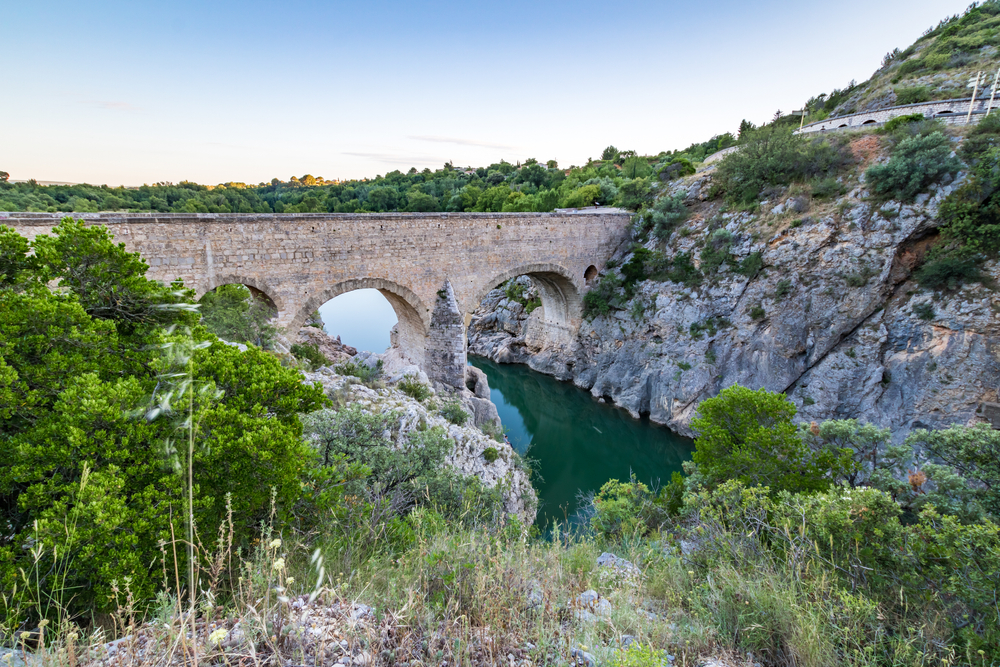

Nestling in the heart of the Hérault gorges in the Occitanie region of France, the Pont du Diable is the embodiment of over a thousand years of history. This masterpiece of Romanesque architecture, considered to be one of the oldest medieval bridges in France, has majestically spanned the Hérault river since 873. Listed as a Historic Monument and a UNESCO World Heritage Site, it is one of the must-see stops on the Pilgrim’s Way to Santiago de Compostela. Surrounded by spectacular scenery of limestone cliffs, emerald waters and picturesque villages, the Pont du Diable is much more than just a vestige of the past. It’s a lively place where you can swim, hike, canoe or simply contemplate the wild beauty of the Hérault valley. In this guide, you’ll find everything you need to know about visiting this jewel of Languedoc heritage.
Also read the Montpellier guide :
- 20 excursions around Montpellier
- 20 must-see weekend ideas around Montpellier
- The 12 most beautiful walks in Hérault
- Visiting the Hérault: 15 places not to be missed
- Top 10 culinary specialities in Montpellier
How do I get to Pont du Diable?
Pont du Diable is located in the commune of Saint-Jean-de-Fos, around 40 kilometres north-west of Montpellier, at the exit of the Hérault gorges. Access is mainly by road, making the site easily accessible by car from the main towns in the region.
1. By car from Montpellier
From Montpellier, take the A750 towards Gignac. The exit is about 30 minutes away. Continue on the D32 towards Saint-Jean-de-Fos. The road passes through magnificent wine-growing countryside before reaching the gorges. There is a large car park with 400 spaces on the site of the Pont du Diable. There is a charge for parking in high season (around €6 a day), but it is free the rest of the year.
2. By public transport
Bus routes link Montpellier with the surrounding area. Route 302 runs from Montpellier to Gignac, and there are local shuttle buses to the Pont du Diable in summer. In high season, free shuttle buses run from the main car park to Saint-Guilhem-le-Désert and other sites of interest in the Hérault valley, making it easier for visitors to get around.
3. By bike or on foot
For cyclists and hikers, there are several routes from the surrounding villages to the Pont du Diable. There is cycle parking on site. The Santiago de Compostela pilgrimage route also passes over the bridge, giving pilgrims and hikers the opportunity to discover this historic monument in an authentic setting.
The fascinating history of the Devil’s Bridge
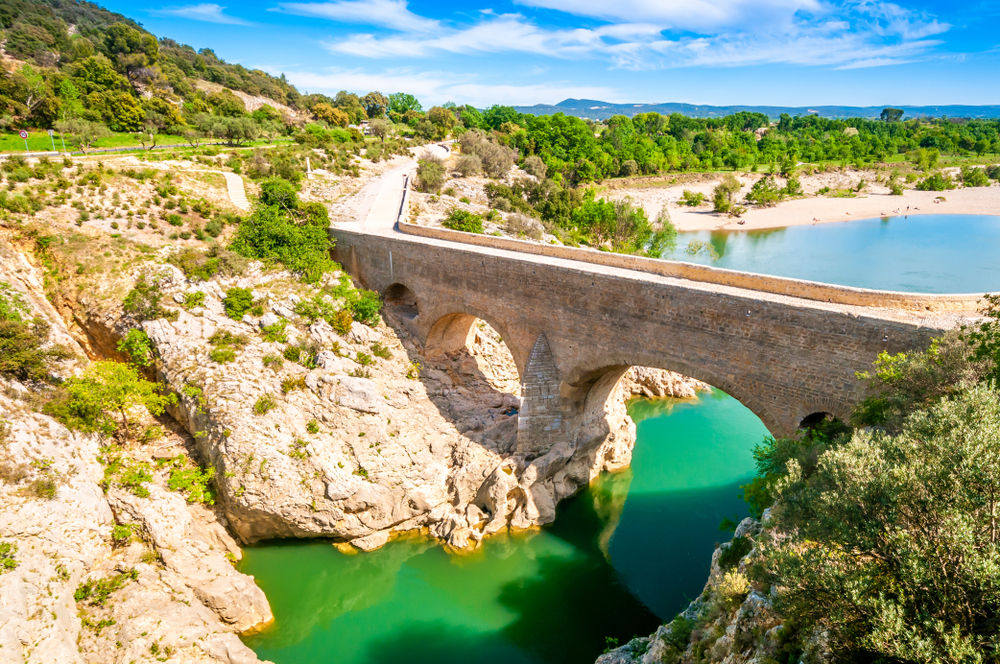
The Pont du Diable has a rich history dating back more than eleven centuries. According to the latest research by the University of Montpellier, it was built in 873, making it one of the oldest Romanesque bridges still standing in France. Built thanks to an agreement between the abbeys of Aniane and Gellone, located on either side of the Hérault, the bridge was intended to facilitate the passage of pilgrims on their way to Santiago de Compostela.
At 50 metres long, the bridge consists of two main arches and two side openings to allow the water to drain away when the river rises violently. When it was built, the monks decided that the bridge would remain open, with no fortifications, and that it would be free for everyone to cross. This feature bears witness to the spirit of hospitality that animated the religious communities of the time.
In the 18th century, a second bridge with an identical profile was added to the original structure to increase its width and meet growing traffic needs. This twin bridge remained in service until 1932, when a new modern bridge was built a few dozen metres upstream. Today, the medieval bridge is exclusively pedestrianised and is one of the heritage gems of the Occitanie region.
The legend of Devil’s Bridge
Like many medieval structures bearing this name, the Pont du Diable de l’Hérault is associated with a captivating legend. Written around 1160, almost three centuries after the bridge was actually built, this story tells how the monks of the abbeys of Gellone and Aniane struggled to build the bridge. Every night, their efforts were brought to naught by a mysterious force that destroyed the day’s work.
In despair, the monks appealed to their patron saint, Guilhem de Gellone. One night, he surprised the Devil himself, disguised as a goat, attacking the foundations of the bridge. After unmasking the demon, the monks made a pact with him: the Devil agreed to complete the bridge in a single night, on condition that he receive the soul of the first living creature to cross it.
The monks agreed, but came up with an ingenious ruse. Early in the morning, they sent a dog across the bridge with a saucepan attached to its tail. Furious at having been tricked, the Devil tried to destroy the bridge, but was unable to do so because the structure was now under divine protection. This legend, passed down from generation to generation, gives the bridge a mystical aura that still fascinates visitors today.
What to see and do at Pont du Diable?
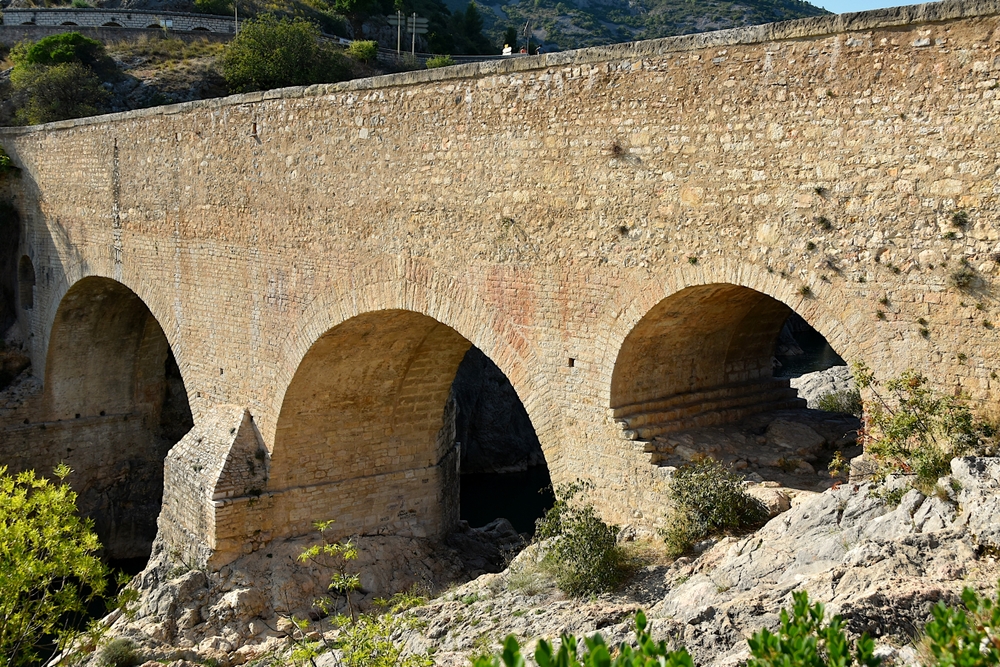
The Pont du Diable site is more than just a historic monument. It’s a veritable hub of outdoor activities and heritage discovery that will delight the whole family. Here are the not-to-be-missed highlights of your visit.
1. Admire the architecture of the medieval bridge
Take time to contemplate this Romanesque architectural feat. With its elegant arches and characteristic hump-backed silhouette, the bridge bears witness to the exceptional skills of its 9th-century builders. There are several vantage points from which to admire the structure from different angles, notably from the banks of the Hérault or from the modern bridge upstream. Photographers will particularly appreciate the morning and late afternoon light, which sublimates the golden stone.
2. Swimming in the Hérault
Just below the bridge, a supervised beach is open to bathers during the summer months. Swimming is supervised by lifeguards every day from 1 July to 31 August, from 11am to 7pm. The crystal-clear waters of the Hérault provide welcome coolness on hot summer days. Safety zones have been set up so that families can enjoy the water in complete peace of mind. However, jumping from the bridge is strictly forbidden and extremely dangerous.
3. Water sports activities
The Hérault gorges are an ideal playground for water sports enthusiasts. There are a number of canoe and paddles for hire, so you can explore the river at your own pace. Canoe trips from the Pont du Diable to Saint-Guilhem-le-Désert offer spectacular views of the limestone cliffs. For the more adventurous, canyoning in the gorges’ tributaries allows you to discover unspoilt sites accessible only by water.
4. Discover the Maison du Grand Site
Located right next to the car park, the Maison du Grand Site de France is the ideal starting point for your visit. This reception and information centre presents the geological history of the gorges, the local flora and fauna, and the cultural heritage of the Hérault valley. Temporary exhibitions highlight the region’s traditional skills, in particular the pottery of Saint-Jean-de-Fos. There is also a shop selling products from local craftsmen and producers, including wines, olive oil, honey and ceramics.
5. Hiking in the Hérault gorges
The Pont du Diable is the starting point for a number of hiking trails. The most popular route leads to Saint-Guilhem-le-Désert along an ancient pilgrimage path. This 4-kilometre walk offers spectacular views over the valley and passes through typical Mediterranean vegetation of holm oaks, Aleppo pines and olive trees. Other routes allow you to explore the heights of the gorges and reach natural lookouts overlooking the Hérault valley.
Download the audio-guided tour to discover Montpellier on foot and on your own
Planning to explore the region from Montpellier? The Navaway app offers you a complete itinerary for visiting Montpellier at your own pace, with detailed audio guides to help you discover the history and secrets of the Languedoc capital. Download the app and let it guide you through the narrow streets of the historic centre before setting off to conquer the natural treasures of the hinterland, such as the Pont du Diable.
Visit Saint-Guilhem-le-Désert from the Devil’s Bridge
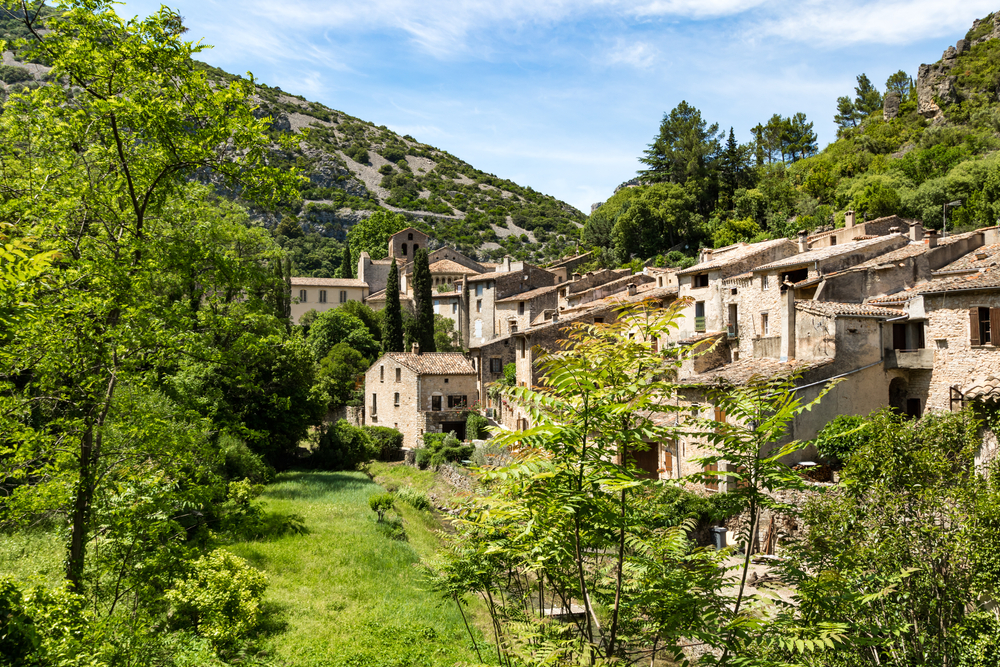
Just 3 kilometres from the Pont du Diable lies Saint-Guilhem-le-Désert, one of France’s most beautiful villages and a major stopover on the Pilgrim’s Way to Santiago de Compostela. Listed as a UNESCO World Heritage Site, this medieval village set in a rocky cirque offers an exceptional setting. The Gellone Abbey, founded in 804 by William of Aquitaine, a companion of Charlemagne, is a jewel of Romanesque art in the Languedoc region.
In summer, free shuttle buses run between the Pont du Diable car park and Saint-Guilhem-le-Désert, avoiding parking problems in the village. For a more immersive experience, the hiking trail linking the two sites offers a pleasant stroll of around an hour, punctuated by breathtaking panoramas of the gorges. Take advantage of the Navaway itinerary to visit Montpellier and the surrounding area, and find out how to easily organise your excursions in the Hérault valley.
Other remarkable sites in the Hérault valley
A visit to the Pont du Diable can be part of a wider discovery of the Hérault valley, which is packed with exceptional natural and heritage sites. Here are a few suggestions for extending your escapade.
1. The Clamouse cave
Located just a few kilometres from the Pont du Diable, the Clamouse cave is one of the most beautiful caves in France. Its exceptional concretions, notably the famous “draperies” and “fistuleuses”, make it a remarkable geological site. The constant temperature of 17°C keeps things cool in summer. There are several routes to choose from, ranging from the classic to the more adventurous.
2. Argileum, the house of pottery at Saint-Jean-de-Fos
The village of Saint-Jean-de-Fos has had a renowned pottery tradition since the Middle Ages. Argileum, a centre for the promotion of ceramics, presents the history of this local craft and regularly hosts temporary exhibitions. Every August, the famous potters’ market brings together craftspeople from all over France, transforming the village into a veritable open-air museum.
3. Villages of character
The region boasts a number of well-preserved medieval villages well worth a visit. Aniane, with its imposing abbey, Gignac and its historic bridge, and Montpeyroux, a wine-growing village perched on a rocky outcrop, are all great opportunities to extend your discovery of the Languedoc’s heritage. Don’t hesitate to consult the Navaway application to organise your visits and take advantage of the enriching audio guides on these sites.
Practical information for visiting the Pont du Diable
1. Timetables and prices
The Pont du Diable site is accessible free of charge all year round, 24 hours a day. Only the car park is subject to a charge in high season (around €6 per day from July to September). For the rest of the year, parking is generally free. The Maison du Grand Site welcomes visitors with opening times that vary according to the season (generally from 10am to 6pm in high season; check the official website for up-to-date opening times).
2. Best time to visit
Pont du Diable is a pleasant place to visit all year round, but each season offers a different experience. Summer (July-August) is still the busiest time of year, ideal for swimming and water sports, but be prepared for crowds. Spring (April-June) and autumn (September-October) are the best times for hiking, with mild temperatures and fewer visitors. Winter offers more austere but equally photogenic landscapes, with the site virtually deserted.
3. Practical advice
Bring good walking shoes if you plan to hike, as well as a hat and sun cream in summer, as shade is scarce on some paths. Don’t forget your swimming costume and a towel to enjoy the beach. Jumping from the bridge is strictly forbidden and presents mortal risks due to the shallow water and currents. Respect the signs and marked bathing areas. For the full experience, download the Navaway app, which will guide you as you discover Montpellier and the surrounding area with enriching audio guides.
Where to eat and drink near the Pont du Diable?
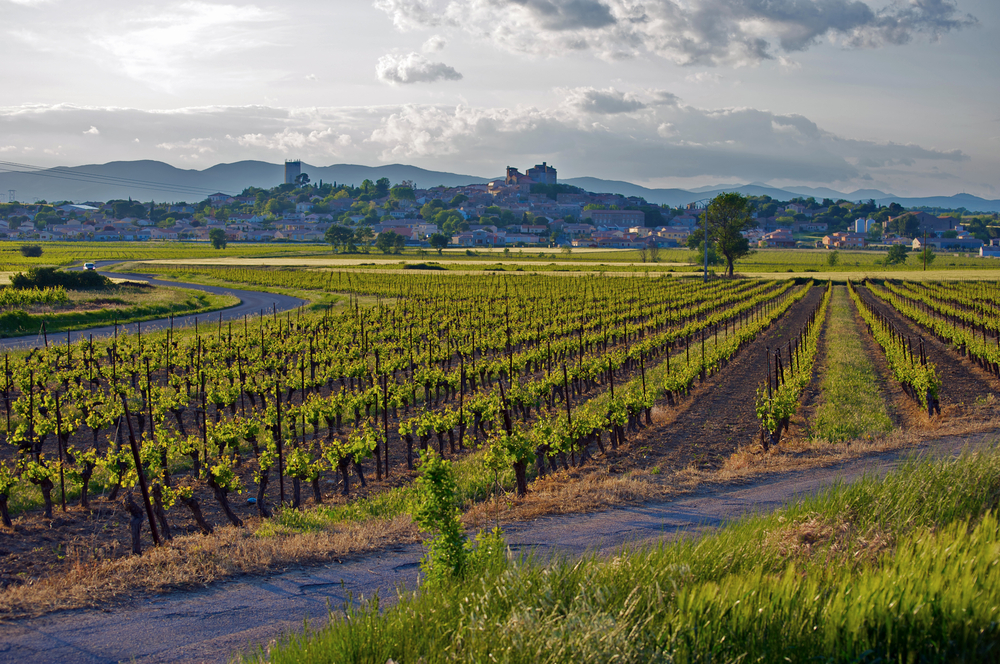
There are several options for eating out around the Pont du Diable. On the site itself, you’ll find food trucks and stalls selling snacks during the high season. For a more complete meal, the villages of Saint-Jean-de-Fos and Aniane, just a short drive away, have several traditional restaurants serving local Languedoc cuisine.
In Saint-Guilhem-le-Désert, charming restaurants and cafés welcome you in an authentic medieval setting. Remember to book in high season, as the establishments are often fully booked. For a typically local experience, opt for a picnic with regional produce bought at the local markets: pélardon (goat’s cheese), tapenade, olives from Lucques, and of course a good wine from the Languedoc hillsides.
Accommodation around Pont du Diable
To extend your stay in the Hérault valley, there are many accommodation options available. The surrounding villages offer charming chambres d’hôtes, often set in tastefully restored old stone buildings. Self-catering cottages offer total immersion in local life and the independence to explore the region at your own pace.
There are also several campsites in the valley, some with direct access to the river. For those looking for more comfort, there are hotels in Gignac, Aniane and, of course, Montpellier, which is an excellent base from which to explore the whole region. The Navaway app will help you organise your day’s sightseeing from the capital of Languedoc, offering optimised itineraries with audio guides.
In conclusion, the Pont du Diable is much more than just a historic monument: it’s a gateway to an exceptional area where unspoilt nature and a thousand years of heritage come together in harmony. Whether you’re a history buff, a keen hiker, a water sports enthusiast or simply looking for a refreshing place to swim, this site, which has been awarded the Grand Site de France label, is sure to please. Don’t forget to round off your visit by exploring Saint-Guilhem-le-Désert and the surrounding villages, and let yourself be guided by theNavaway itinerary for visiting Montpellier and the surrounding area, which will help you discover all the treasures of the Hérault at your own pace, thanks to fascinating audio guides and up-to-date practical information.
Frequently asked questions
Where exactly is the Pont du Diable in the Hérault?
The Pont du Diable is located in the commune of Saint-Jean-de-Fos, around 40 kilometres north-west of Montpellier, at the end of the Hérault gorges. It marks the border between the communes of Saint-Jean-de-Fos and Aniane.
Can you swim at the Pont du Diable?
Yes, there is a supervised beach just below the bridge. Swimming is supervised by lifeguards every day from 1 July to 31 August, from 11am to 7pm. Outside this period, swimming is possible but not supervised.
Do I have to pay to park on the Pont du Diable?
The 400-space car park charges a fee in high season (around €6 a day from July to September) and is generally free the rest of the year. Free shuttle buses serve Saint-Guilhem-le-Désert and other sites during the summer.
What’s the best time of year to visit Devil’s Bridge?
Spring (April-June) and autumn (September-October) offer the best conditions, with pleasant temperatures and moderate crowds. Summer is ideal for swimming, but very busy. Winter allows you to enjoy the site in peace and quiet, with its different landscapes.
Can you jump off the Devil’s bridge?
No, jumping from the Pont du Diable is strictly forbidden and extremely dangerous due to the shallowness of the water in some places, the rocks and the unpredictable currents. Fatal accidents have occurred in the past. For your own safety, please respect this ban.
How long does it take to visit the Pont du Diable?
A quick visit to the bridge itself takes around 30 minutes. Allow half a day if you want to swim and explore the immediate surroundings. A full day allows you to combine the visit with Saint-Guilhem-le-Désert and possibly the Clamouse cave.
Is the site accessible to people with reduced mobility?
The car park and Maison du Grand Site are accessible to people with reduced mobility. However, access to the bridge itself and to the beach has sloping paths and steps that can be difficult. We recommend that you ask at reception about suitable access options.
Are there any activities for children at Pont du Diable?
Yes, the site is very popular with families. As well as supervised swimming, children can explore the banks, observe the local flora and fauna, and take part in specially adapted walks. The Maison du Grand Site also offers educational activities during the school holidays.
200 audioguided tours for cities all around the world
Download