Visit the Palazzo dei Normanni in Palermo
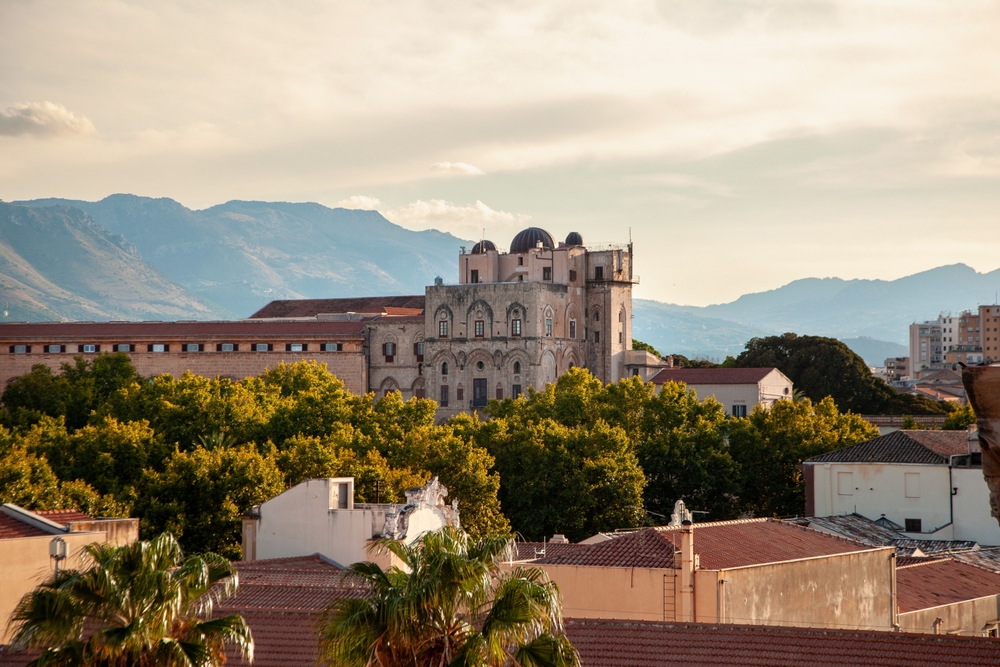

Palermo’s Palazzo dei Normanni is one of Sicily’s most emblematic monuments. This royal palace, also known as the Palazzo dei Normanni, bears witness to the island’s cultural and historical wealth. The residence of the Norman kings in the 12th century, it now houses the Sicilian Regional Assembly and the famous Palatine Chapel, a veritable masterpiece of Byzantine mosaics. To visit the Palazzo dei Normanni is to immerse yourself in the fascinating history of Sicily, where Arab, Byzantine and Norman influences blend in a unique architectural harmony.
Why visit Palazzo dei Normanni in Palermo?
The Palazzo dei Normanni is a must-see for anyone wishing to visit Palermo and understand the soul of Sicily. This exceptional monument embodies the meeting of the civilisations that have marked the island’s history. Listed as a UNESCO World Heritage Site as part of the Arab-Norman itinerary, the palace attracts thousands of visitors every year, amazed by its splendour.
The Palatine Chapel, the jewel of the palace, is considered to be one of the finest examples of Byzantine art in the West. Its gilded mosaics, Islamic-inspired carved wooden ceiling and marble columns offer a breathtaking visual spectacle. The royal flats offer a glimpse of the splendours of the Norman court, including the famous Salle de Roger, decorated with mosaics depicting hunting scenes and exotic animals.
Visiting the Palazzo dei Normanni is also a way of understanding Palermo’s strategic importance over the centuries. Built on the foundations of an ancient Punic fortress, the palace was the seat of power successively under the Arabs, the Normans, the Swabians and then the Spanish. Even today, it remains a place of power, hosting the Sicilian Regional Parliament.
See also the Palermo guide :
- Visit Palermo in 1 day: 23 things to do and see on foot
- Top 6 things to do in Palermo
- Top 10 culinary specialities in Palermo
- The 12 most beautiful beaches in Palermo
- How to get to Palermo airport: all the transport options
- Find out how to get to Sicily from Toulon by Ferry
- Visiting Sicily: 10 must-sees and must-dos
- Sicily’s 14 most beautiful villages to discover
The fascinating history of the Palais des Normands
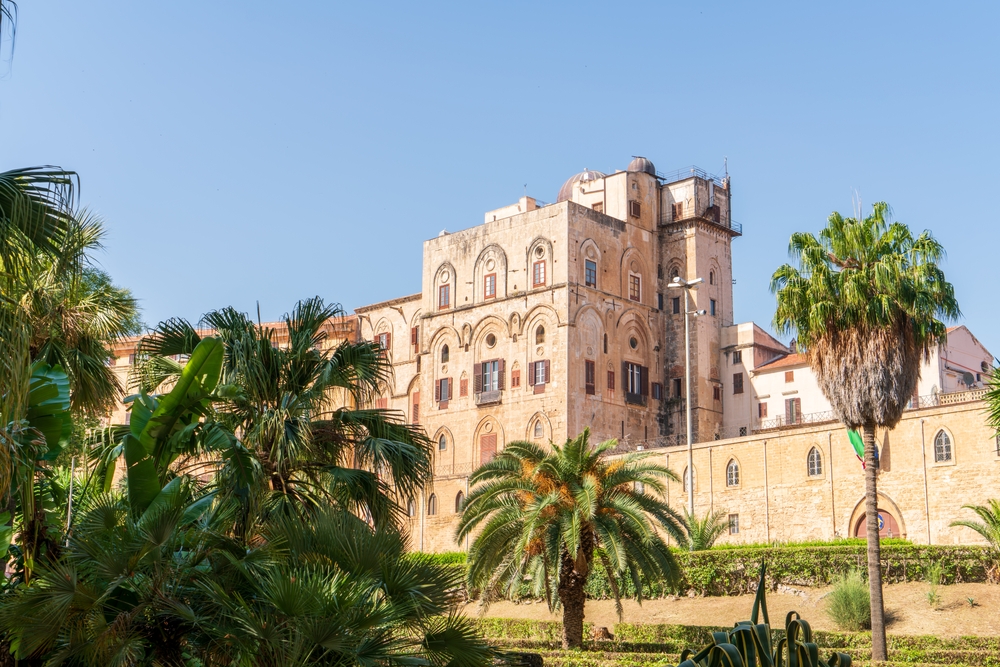
The history of the Palazzo dei Normanni dates back to Punic times, when the first fortifications were erected on this strategic promontory overlooking Palermo. The Romans then established their own fortress here, before the Arabs, in the ninth century, transformed the site into a veritable fortified castle, the Qasr al-Amīr, residence of the emirs.
The Norman era and the splendour of Roger II
It was with the Norman Conquest in 1072 that the palace underwent its most spectacular transformation. Roger II, the first Norman king of Sicily to be crowned in 1130, decided to make this former Arab fortress his royal residence. He launched ambitious renovation and embellishment works, calling on the best Byzantine, Arab and Norman craftsmen of the time.
It was during his reign that the Palatine Chapel was built and consecrated in 1140, a private chapel of the king that perfectly illustrates the cultural syncretism that characterised Norman Sicily. Byzantine craftsmen created the sumptuous mosaics on a gold background, Arab craftsmen carved the magnificent wooden ceiling of the central nave in the muqarnas style, while the overall architecture followed the Christian basilica plan.
From the Norman dynasty to the Bourbons
After the Normans, the palace remained the centre of power in Sicily under successive dynasties. The Swabians, then the Angevins and finally the Aragonese and Spanish established their headquarters here. Between 1550 and 1640, the Spanish viceroys undertook major alterations, adding Baroque and Renaissance elements that further enriched the monument’s architectural heritage.
In the 19th century, under the Bourbons, the Hall of Hercules was created to house the Sicilian Parliament. This imposing neoclassical hall, decorated with frescoes depicting the labours of Hercules, symbolised the continuity of legislative power in this historic location.
The palace today
In 1947, the Palazzo dei Normanni became the seat of the Sicilian Regional Assembly, a position it still holds today. Considered to be Europe’s oldest surviving royal residence, it is partially open to the public, allowing visitors to admire its artistic treasures. In 2015, UNESCO listed the palace, along with its Palatine Chapel, as a World Heritage Site as part of the “Arab-Norman Palermo and the Cathedrals of Cefalù and Monreale”.
What can you see when you visit the Palais des Normands?
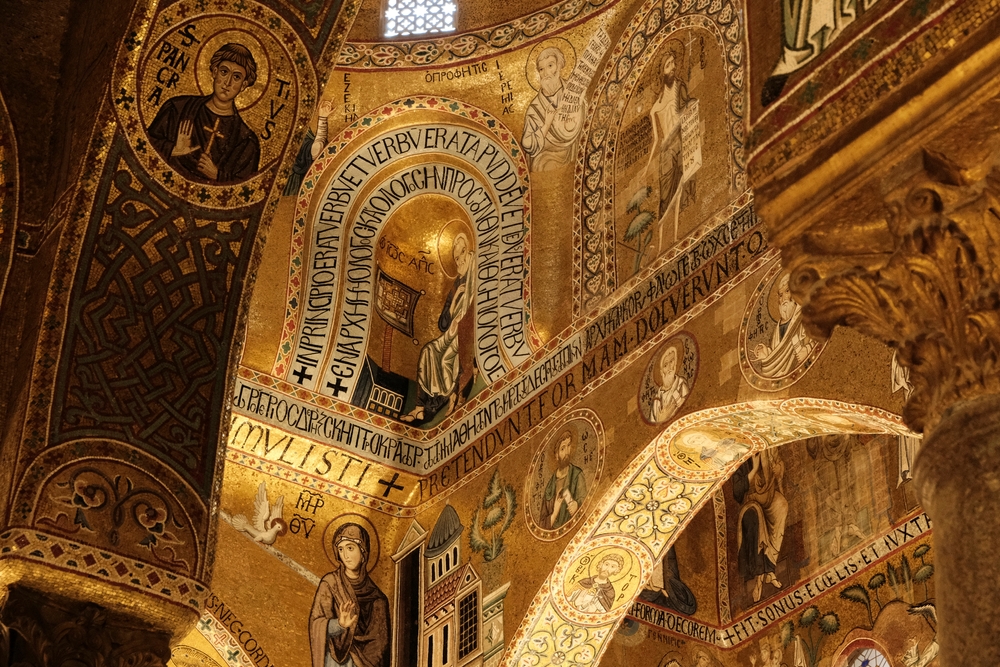
The tour of the Palais des Normands takes in a number of exceptional areas. Each room and corridor tells a page of history and bears witness to the genius of the artists who worked here. To make the most of your discovery of Palermo, don’t hesitate to let yourself be guided by the Navaway audio tour, which will allow you to explore the city on your own.
1. The Palatine Chapel, jewel of the palace
The Palatine Chapel (Cappella Palatina) is without doubt the most precious treasure of the Norman Palace. Built between 1130 and 1143, this three-nave chapel is a perfect illustration of the peaceful coexistence of cultures under Norman rule. On entering, visitors are immediately struck by the brilliance of the Byzantine mosaics covering the dome, apses and upper walls. These mosaics on a gold background depict scenes from the Old and New Testaments, in particular Christ the Pantocrator in the central dome, surrounded by angels and prophets.
The wooden ceiling of the central nave is a marvel of Islamic craftsmanship. Carved and painted in the muqarnas style, it depicts stars, fantastic animals and complex geometric patterns. This honeycomb structure, typical of Islamic architecture, creates a stunning visual effect when natural light streams through the high windows.
The floor of the chapel, in opus sectile (marble marquetry), features complex geometric motifs that add to the decorative richness of the whole. The side aisles contain later mosaics, dating from the 14th century, illustrating the lives of Saint Peter and Saint Paul. The finely sculpted marble ambo (pulpit) and the almost four-metre-high Paschal candlestick are other treasures not to be missed.
2. The Royal Apartments
The Royal Apartments (Appartamenti Reali) are only accessible on certain days of the week, when the Regional Assembly is not in session. This part of the palace contains several sumptuous rooms that bear witness to the splendour of the Norman court and the embellishments made by subsequent dynasties. Visits are usually accompanied by a guide.
The Sala di Ruggero (Roger’s Room), located in the Torre Pisana (Pisan Tower), is one of the most remarkable rooms. This former royal chamber, built under Roger II, is entirely covered in secular mosaics depicting hunting scenes, peacocks, leopards, deer and other animals in a lush plant setting. These extraordinarily fine mosaics bear witness to the Normans’ love of nature and hunting. The room also offers a breathtaking view of the Gulf of Palermo.
The Sala dei Venti (Hall of the Winds) owes its name to the paintings on its walls depicting the personification of the winds. This room was used as a passageway between different parts of the palace. The Hall of the Viceroys features portraits and coats of arms of the Spanish governors who administered Sicily from the sixteenth to the eighteenth centuries.
3. The Hall of Hercules
The Sala d’Ercole (Hall of Hercules) is the current meeting room of the Sicilian Regional Assembly. Created in the 19th century during the reign of Ferdinand III of Bourbon, it is a remarkable example of neoclassical style. The frescoes on the ceiling depict the twelve labours of the mythological hero Hercules. Elegant Corinthian columns punctuate the space, giving the room a solemn and majestic atmosphere.
Although this room is mainly reserved for parliamentary activities, it is sometimes accessible during special guided tours or when the Assembly is not in session. Its architecture bears witness to the Bourbons’ desire to establish their power in the historical continuity of the palace, while at the same time asserting an aesthetic that was modern for its time.
4. Courtyards and interior gardens
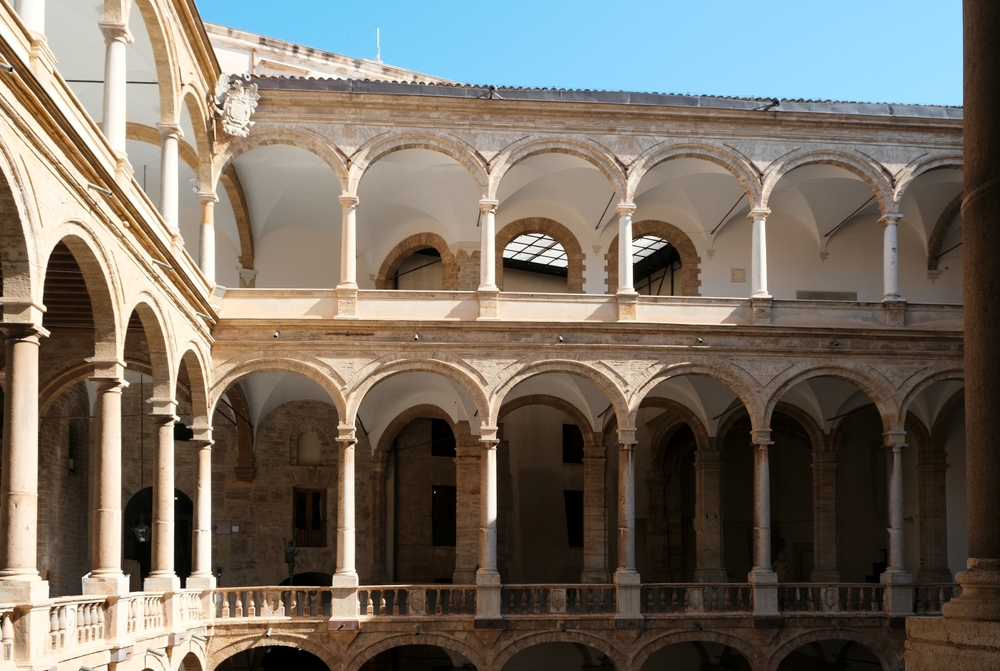
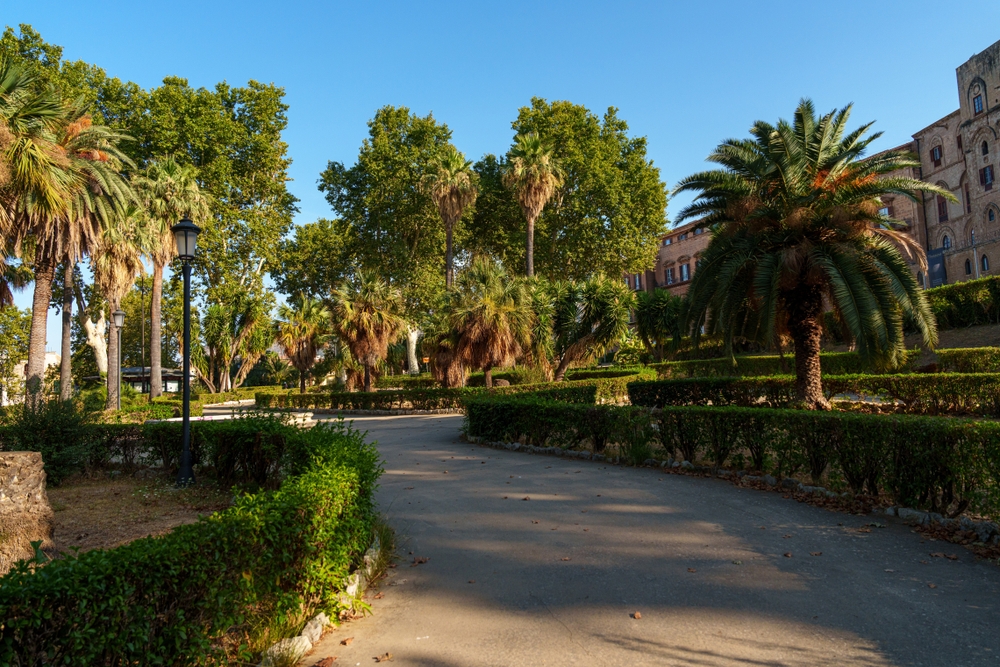
The Palazzo dei Normanni is home to a number of courtyards and gardens that provide a welcome break during your visit. These green spaces, typical of Palermo’s architecture, were once reserved for strolls by the sovereigns and their court. Today, visitors can relax in the shade of the arcades and colonnades.
The gardens feature flowerbeds, fountains and Mediterranean plants that create a peaceful atmosphere in the heart of the monument. Orange and lemon trees waft their intoxicating fragrances, recalling the Arab influence on Sicilian horticulture. These areas have been renovated and refurbished over the centuries, reflecting the evolution of aesthetic tastes from the Middle Ages to the present day.
5. Punic walls
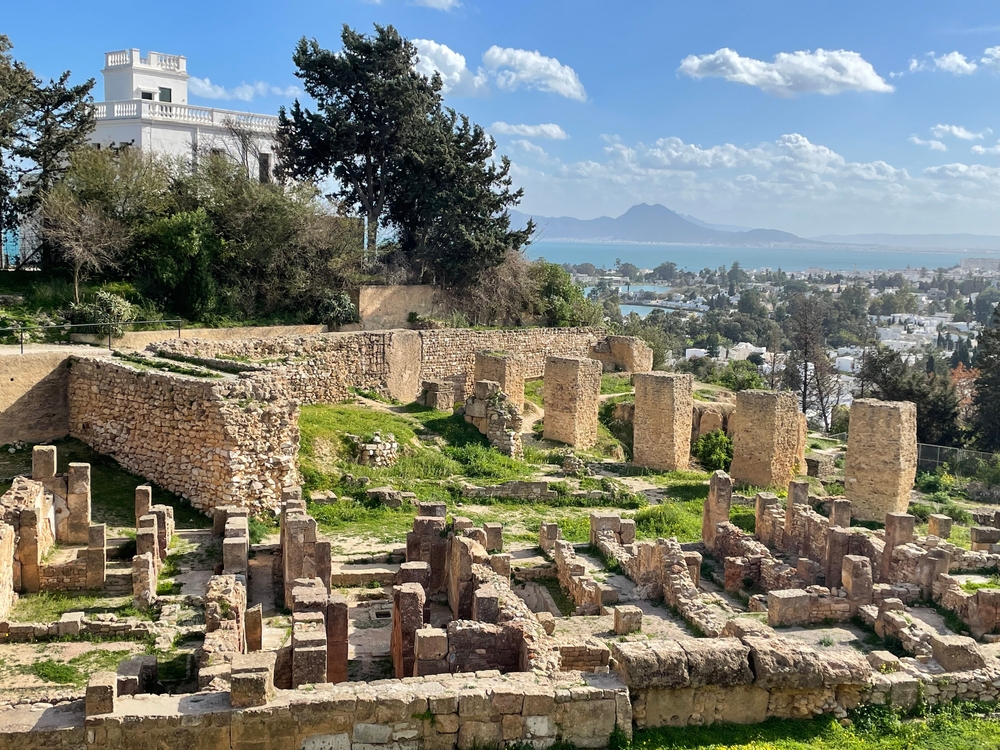
In the basement of the palace, visitors can discover the remains of the ancient Punic and Roman fortifications on which the current palace was built. These walls, dating from the 4th century BC, bear witness to the strategic importance of this site since Antiquity. Explanatory panels trace the history of the different phases of construction and provide a better understanding of the architectural evolution of the monument.
This archaeological part of the tour provides a striking contrast to the splendour of the upper rooms, and serves as a reminder that the Palais des Normands is the product of over two thousand years of history.
6. Temporary exhibitions
The Palazzo dei Normanni regularly hosts temporary exhibitions devoted to Sicilian art, history and heritage. These cultural events, held in different rooms of the palace, present rare pieces, historical photographs and contemporary works of art in dialogue with the history of the site. Before your visit, find out more about the cultural programme so that you don’t miss out on any of these events that will enhance your discovery of the monument.
Practical information for visiting the Palais des Normands
Download the audio-guided tour to discover Palermo on foot and on your own
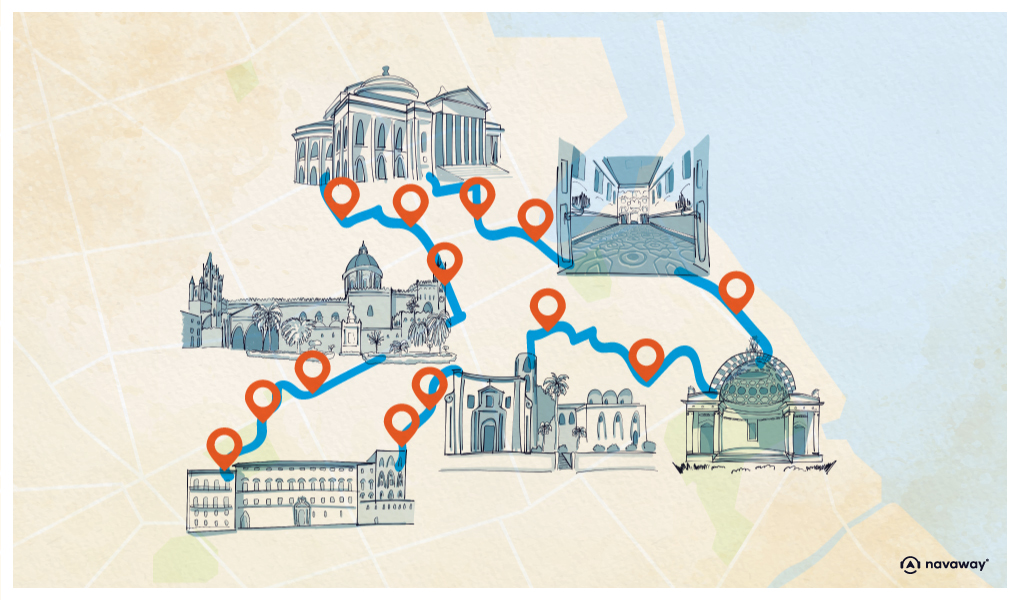
To make the most of your stay in the Sicilian capital, discover the Navaway audio tour of Palermo. This carefully designed route takes you through the city’s historic quarters, from the Norman Palace to the bustling markets, baroque churches and aristocratic palaces. Thanks to 23 fun audio guides available on your smartphone, you can discover Palermo’s secrets at your own pace, with no time constraints. The application guides you step by step and tells you the fascinating story of each place, turning your stroll into a real cultural adventure.
Opening times
The Palais des Normands and the Chapelle Palatine are open at the following times:
Monday to Saturday: 8.30am to 5.40pm (last entry at 5pm)
Sunday and public holidays: 8.30am to 1pm (last entry at 12.15pm)
Please note: opening times may vary depending on parliamentary sessions. The Royal Apartments are generally only accessible from Friday to Monday, when the Regional Assembly is not in session. We strongly recommend that you consult the official website before your visit to check the conditions of access.
The monument is closed on 1 January and 25 December.
Admission prices
Entrance fees vary according to the day and the area accessible:
Friday to Monday (Palatine Chapel + Royal Apartments + Gardens) :
– Full price: €19
– Reduced rate (18-25 years, teachers): €17
– Reduced rate (14-17 year olds): €11
Tuesday to Thursday (Palatine Chapel + Gardens + Punic Walls) :
– Full price: €15.50
– Reduced rate (14-17 years): €9
Free admission:
– Children under 14
– Disabled people and their carers
– Teachers accompanying school groups
Audioguide: €5 (available in several languages)
Tickets can be booked online on the official website to avoid queues, particularly during the high tourist season.
How do I get to the Palais des Normands?
The Palazzo dei Normanni is located in Piazza del Parlamento (also known as Piazza Indipendenza), in the Albergheria district of Palermo. The exact address is: Piazza del Parlamento, 1, 90129 Palermo, Italy.
On foot: From the historic centre and the Quattro Canti, it’s about a 15-minute walk. From Palermo’s main railway station (Stazione Centrale) it is about a 20-minute walk along Via Maqueda.
By bus: There are several bus routes to the “Indipendenza” stop right next to the palace: routes 104, 105 and 124.
By taxi: Taxis are readily available in Palermo. Just mention “Palazzo dei Normanni” or “Palazzo Reale” to the driver.
If you follow the Navaway itinerary to visit Palermo, the Palazzo dei Normanni is naturally integrated into the route, taking you there seamlessly from the other points of interest in the historic centre.
Tips for your visit
Book in advance: To avoid long queues, especially in summer and at weekends, buy your tickets online.
Arrive early: The early opening hours are generally the least crowded. This means you can enjoy the Palatine Chapel in a calmer, more serene atmosphere.
Dress code: Proper attire is required to enter the Palatine Chapel. Shoulders and knees must be covered. In summer, bring a shawl or scarf to cover up if necessary.
Length of visit: Allow between 1? and 2 hours for a complete tour of the palace and the Palatine Chapel. Add another 30 minutes if you wish to visit the Royal Apartments.
Photography: Photos are generally permitted (without flash or tripod), but certain areas may be subject to restrictions. Find out more on site.
Accessibility: Some parts of the palace are accessible to people with reduced mobility, but access may be limited in historic areas with staircases. Contact the palace before your visit to find out what facilities are available.
Combine with other visits: Palazzo dei Normanni is close to other important Palermo monuments. After your visit, continue with Palermo Cathedral (10 minutes on foot), the church of San Giovanni degli Eremiti (5 minutes) or the historic markets of Ballarò and Capo. TheNavaway audioguided itinerary allows you to combine these visits in the best possible way.
Anecdotes and secrets from the Palais des Normands
A royal residence still in use
The Palazzo dei Normanni holds an exceptional record: it is believed to be the oldest royal residence in Europe still in use. For over nine centuries, this monument has been the seat of Sicily’s legislative power, first as the palace of the Norman kings, then of the Spanish viceroys, and today as the seat of the Sicilian regional parliament. This unique institutional continuity gives the building a living dimension that distinguishes it from a mere museum.
The mystery of trilingual inscriptions
In the Palatine Chapel, you can see inscriptions in three different languages: Latin, Greek and Arabic. These epigraphic testimonies illustrate the peaceful coexistence of the Latin Christian, Greek Christian and Muslim communities under Norman rule. This religious tolerance, exceptional for the medieval period, led to the emergence of a unique culture, a harmonious synthesis of East and West.
The ceiling of eight thousand stars
The wooden ceiling of the Palatine Chapel, a masterpiece of Islamic craftsmanship, comprises more than eight thousand pieces of painted and gilded wood forming the muqarnas (stalactite) structure. Each element has been individually carved and painted by Arab craftsmen, creating a visual effect of extraordinary complexity. This technical and artistic feat bears witness to the level of refinement achieved by Palermo’s workshops in the 12th century.
The thousand-year-old foundations
Beneath the Norman splendours lie the remains of Punic fortifications dating back to the 4th century B.C. These massive walls are a reminder that Palermo was first a Phoenician colony (Ziz) before becoming Carthaginian and then Roman. A visit to the underground levels is an opportunity to admire this fascinating historical stratification, where each era has left its mark in stone.
Roger II, the polyglot king
Roger II, who commissioned the Palatine Chapel and the royal flats, was fluent in Latin, Greek, Arabic and Norman. This erudite king encouraged cultural and intellectual exchanges between the different communities in his kingdom. His court, one of the most brilliant in Europe, attracted scholars, artists and poets from all over the Mediterranean. This policy of cultural openness is reflected in the architecture and decoration of the palace.
The secret chamber of Frederick II
Frederick II of Hohenstaufen, grandson of Roger II and Emperor of the Holy Roman Empire, spent part of his childhood in the Norman Palace. Legend has it that there was a secret room where the young prince studied science, astronomy and oriental languages. Although this room has never been formally identified, it feeds the imagination of visitors and recalls the fascinating figure of this emperor described as “Stupor Mundi” (the astonishment of the world).
What can you do after visiting the Palais des Normands?
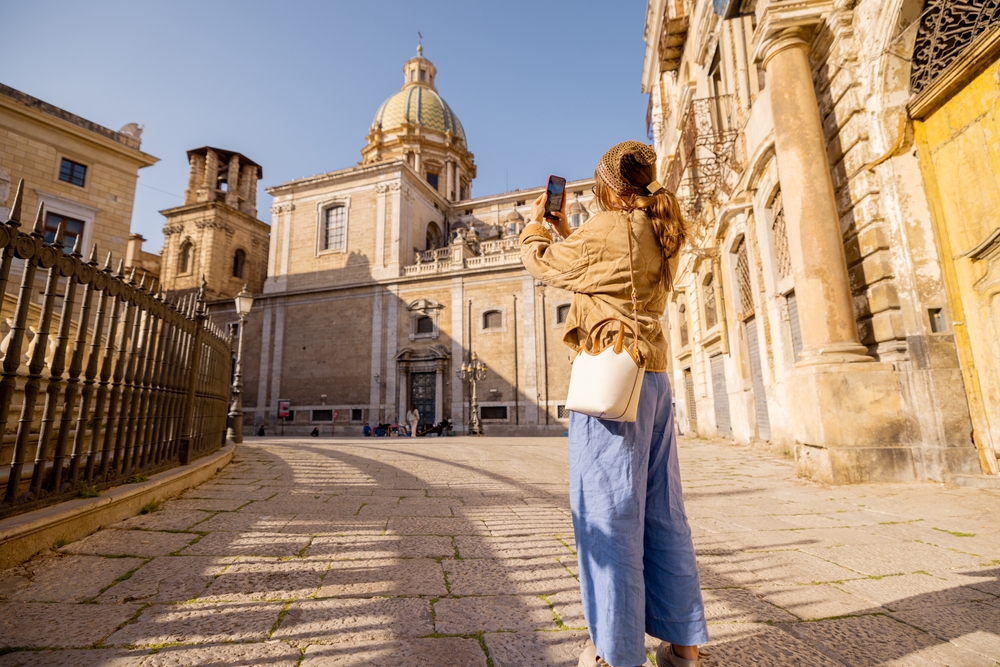
After exploring the Palazzo dei Normanni, many other Palermo treasures await you nearby. Take advantage of your visit to the district to discover other remarkable monuments and immerse yourself in the unique atmosphere of the Sicilian capital.
The church of San Giovanni degli Eremiti
Just a five-minute walk from the palace is the church of San Giovanni degli Eremiti, with its five red domes typical of Arab-Norman architecture. Built in the 12th century on the ruins of an ancient mosque, the church has a peaceful cloister surrounded by a lush garden planted with citrus and palm trees. The atmosphere here is one of contemplation, in stark contrast to the hustle and bustle of the city.
Palermo Cathedral
Just a ten-minute walk from Palazzo dei Normanni, Palermo Cathedral is well worth a visit. This imposing monument, also a UNESCO World Heritage Site, boasts a fascinating blend of architectural styles reflecting the different periods in its history. Inside, you can admire the Norman and Swabian royal tombs, including those of Roger II and Frederick II, as well as the chapel of Saint Rosalia, patron saint of Palermo.
Palermo’s historic markets
Extend your discovery of Palermo by immersing yourself in the bustle of the historic markets. The Ballarò market, located in the Albergheria district just a few minutes from the palace, is the oldest and most authentic in the city. Its stalls are overflowing with fruit, vegetables, fresh fish and Sicilian specialities. The atmosphere is electric, with vendors calling out to passers-by in Sicilian, creating a symphony of voices and colours. It’s the ideal place to sample Palermo’s street food: arancini, panelle, sfincione or freshly prepared cannoli.
The Capo market, in the district of the same name, offers a similar experience in a maze of narrow streets. These markets are much more than just places to trade: they are social institutions where traditions and ancestral skills are perpetuated.
Follow the Navaway itinerary
To make sure you don’t miss out on any of Palermo’s wonders, take the Navaway audio tour. This time-saving tour takes you from the Palazzo dei Normanni to the city’s other must-sees: the Quattro Canti, the Fountain of Shame, the Gesù church, the Teatro Massimo and many other fascinating sites. Audio explanations enhance your understanding of each place, turning your walk into a real living history lesson.
In conclusion, a visit to the Palazzo dei Normanni in Palermo is much more than a simple tourist visit: it’s a journey through the centuries, a plunge into the fascinating history of Sicily and the Mediterranean. From the splendour of the Byzantine mosaics in the Palatine Chapel to the royal flats adorned with medieval frescoes, each room tells a page in European history. This exceptional monument, which bears witness to the harmonious coexistence of Arab, Byzantine and Norman cultures, richly deserves its place on UNESCO’s World Heritage List. Don’t hesitate to make time for this not-to-be-missed visit and to extend your discovery of Palermo with the Navaway audio tour, which will allow you to explore the city in complete freedom and grasp the full richness of its heritage.
FAQ : Your questions about the Palais des Normands
How long does it take to visit the Palais des Normands?
Allow around 1? to 2 hours for a complete tour of the Palais des Normands and the Palatine Chapel. If you also wish to visit the Royal Apartments (open from Friday to Monday), add a further 30 minutes. For the best experience, arrive early in the morning to avoid the crowds and take full advantage of the beauty of the site.
Can I visit the Palais des Normands every day?
Yes, the Palais des Normands and the Chapelle Palatine are open every day of the week, but with variable opening times. From Monday to Saturday, the monument is open from 8.30am to 5.40pm, while on Sundays and public holidays it closes at 1pm. The Royal Apartments are generally only accessible from Friday to Monday, when the Regional Assembly is not in session. It is advisable to check the opening times before your visit, as they are subject to change depending on parliamentary sessions.
Is there a dress code?
Yes, proper attire is required to enter the Palatine Chapel because of its sacred nature. Shoulders and knees must be covered. Shorts, mini-skirts, tank tops and transparent clothing are not permitted. If you are visiting Palermo in summer, bring a shawl, scarf or light cardigan to cover up if necessary. This dress code also applies to many of the city’s churches.
Is it possible to take photos in the Palais des Normands?
Photography is generally permitted in the Palais des Normands and the Palatine Chapel, but without flash or tripods. However, certain specific areas may be subject to temporary restrictions. It is always best to check with the staff on site to find out what rules apply on the day of your visit. Please also respect the peace and quiet of the site and other visitors when taking photographs.
Is the Palais des Normands accessible to people with reduced mobility?
The Palais des Normands is only partially accessible to people with reduced mobility. Some areas of the building, notably the ground floor and the Palatine Chapel, are accessible, but other parts have stairs and may be difficult to access. It is advisable to contact the palace before your visit to obtain precise information on the facilities available and to organise your visit as effectively as possible.
Can I buy tickets on site or do I have to book online?
It is possible to buy tickets on site at the Palais des Normands ticket office, but online purchases are highly recommended, particularly during the high tourist season (spring and summer) and at weekends. Booking online allows you to avoid queues, which can be long, especially in the middle of the day. Line-saver tickets guarantee quicker access and allow you to better plan your day’s visit to Palermo.
What other monuments can be visited near the Palais des Normands?
The Palazzo dei Normanni is located in the heart of a district rich in historic monuments. In the immediate vicinity you can visit the church of San Giovanni degli Eremiti (5 minutes’ walk), recognisable by its red domes. Palermo Cathedral is a 10-minute walk away. The historic markets of Ballarò and Capo are also just a few minutes away. To discover these sites and many more in the best possible order, follow the Navaway audioguide itinerary, which guides you step by step through the wonders of Palermo.
Is a visit to the Palais des Normands suitable for children?
Yes, a visit to the Palais des Normands can be of interest to children, especially those with a taste for history and beautiful things. The Palatine Chapel, with its gilded mosaics and starry ceiling, often holds a fascination for young visitors. Admission is free for children under 14. To make the visit more fun, you can download the audio guide or use the Navaway app, which offers accessible and captivating explanations. Bear in mind, however, that the tour requires you to remain calm and respectful of the site, which can be difficult for very young children.
200 audioguided tours for cities all around the world
Download