Visit the iconic Mount Fuji in Japan
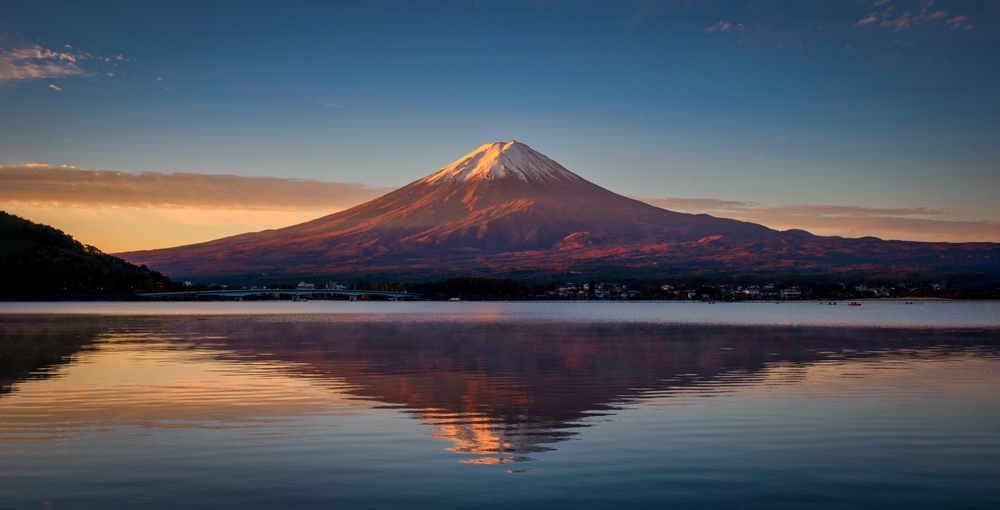

The emblematic symbol of Japan and a sacred mountain rising to an altitude of 3,776 metres, Mount Fuji has fascinated travellers from all over the world for centuries. This majestic volcanic mountain, a UNESCO World Heritage Site since 2013, offers spectacular panoramas and a unique cultural experience. Whether you want to climb its slopes during the climbing season, admire its perfect silhouette from the five lakes that surround it, or discover the temples and shrines that line its foothills, visiting Mount Fuji is an unforgettable adventure in the heart of Japan.
See also the Japan guide:
- A unique winter experience in Japan
- 8 places to visit in Tokyo for manga fans
- Top 8 things to do in Tokyo
- Japan: Top 9 most beautiful autumn landscapes
- Japan’s 7 longest rivers
- What are the main districts to visit in Tokyo?
- Top 11 culinary specialities in Tokyo
1. Climbing Mount Fuji: an unforgettable experience
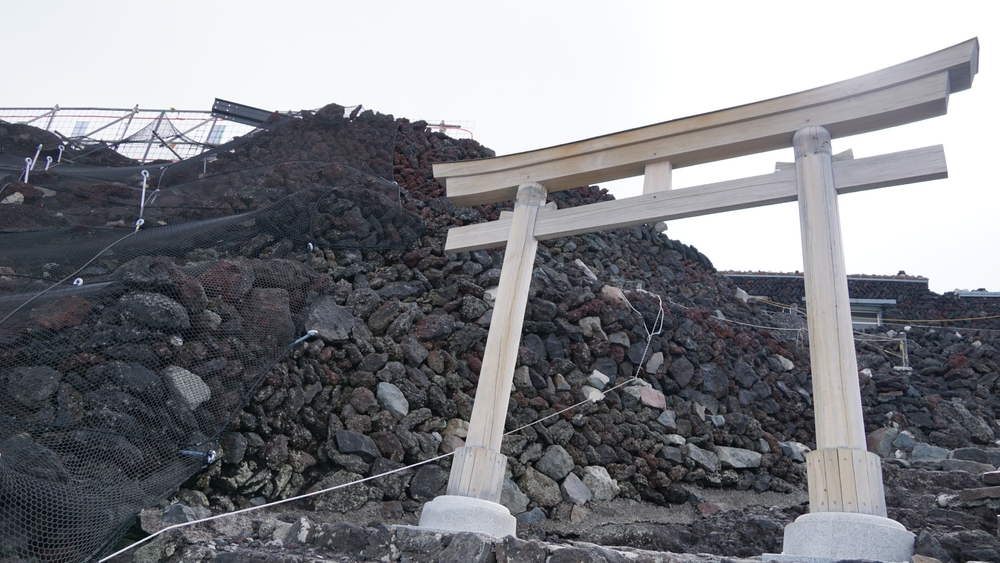
Climbing Mount Fuji is one of the most memorable experiences a traveller can have in Japan. This sacred mountain attracts around 200,000 visitors every year during the official climbing season, which runs from early July to mid-September. Climbing Mount Fuji is not just a tourist hike, but a true spiritual pilgrimage that requires adequate preparation.
There are four main trails to the summit of Mount Fuji. The Yoshida trail, starting from the fifth station at 2,300 metres, remains the most popular and has the best mountain huts. Allow between 5 and 7 hours to reach the summit, then 3 to 5 hours to descend. The Subashiri trail offers a less-frequented alternative, while the Gotemba trail, the longest, is suitable for experienced hikers. Finally, the Fujinomiya trail is the shortest but steepest route.
Since 2024, climbing Mount Fuji has required advance booking and a compulsory contribution of 2,000 yen (around 12 euros) to preserve this exceptional natural site. The aim of this measure is to regulate the flow of visitors and protect the mountain’s fragile environment. Mountain refuges, essential for resting before the final ascent, must also be booked well in advance, particularly at weekends in July and August.
2. When should you visit Mount Fuji?
Choosing the right time to visit Mount Fuji essentially depends on your objectives. If you want to make the ascent, the official season runs from early July to mid-September, when the weather conditions are most favourable and the snow on the trails has melted. July and August are the busiest months for visitors, with the trails sometimes very busy, especially at weekends and during the Obon period (mid-August).
To admire Mount Fuji from the surrounding area without climbing it, winter paradoxically offers the best visibility conditions. From December to February, clear skies allow you to see the snow-capped mountain in all its splendour from the surrounding lakes or the Chureito pagoda. Spring (April-May) is dominated by cherry blossom, which frames the volcano magnificently, while autumn (October-November) brings flamboyant colours to the landscape. However, the rainy season (June) considerably reduces visibility.
3. The five Fuji lakes: exceptional panoramas
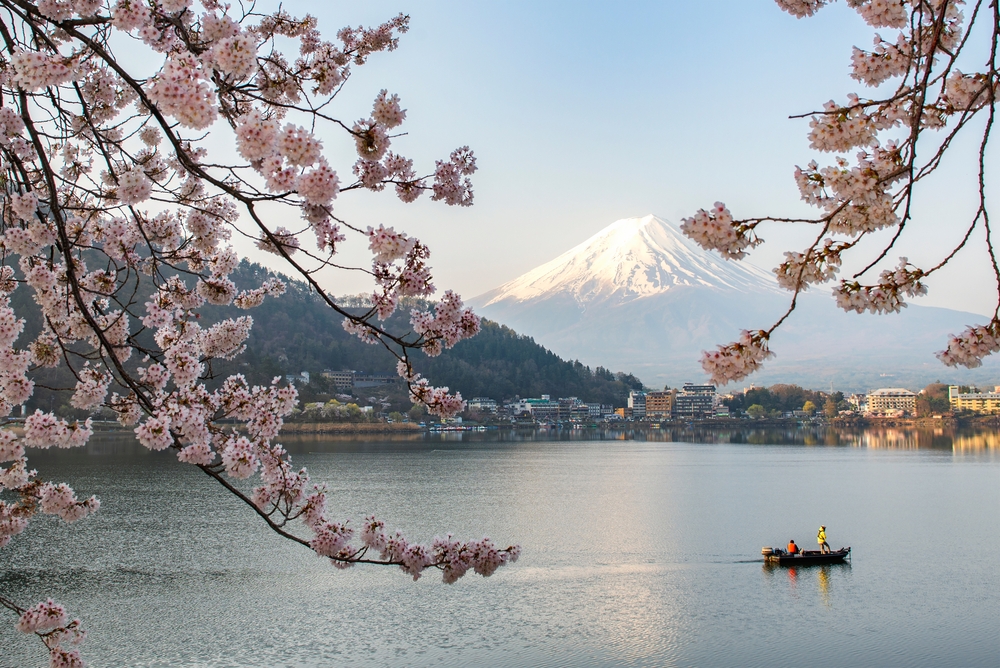
To the north of Mount Fuji lie the five lakes formed by ancient lava flows: Kawaguchiko, Yamanakako, Saiko, Shojiko and Motosuko. This region, known as Fuji Go-ko, is an ideal base for observing the sacred mountain from different angles while enjoying a variety of activities.
Lake Kawaguchiko remains the most accessible and the most developed in terms of tourism. Its shores are home to numerous museums, including the Itchiku Kubota art museum devoted to traditional kimonos, and offer remarkable views of Mount Fuji. A cable car takes you up to Mount Kachi Kachi for a 360-degree panorama of the lake and mountains. In summer, you can hire bikes or pedalos to explore the surrounding area at your own pace.
Lake Yamanakako, the largest of the five, has a more peaceful atmosphere. Here, water sports enthusiasts can enjoy sailing, kayaking and stand-up paddling. The fields of flowers that line its shores burst with colour in spring and summer, making for exceptional photographic compositions with Mount Fuji in the background. Lake Saiko, Lake Shojiko and Lake Motosuko, which are less frequented, offer the chance to immerse yourself in nature and discover the volcano in a more intimate setting. Lake Motosuko offers the view reproduced on the 1,000 Japanese yen banknotes.
4. The Chureito pagoda: the iconic viewpoint
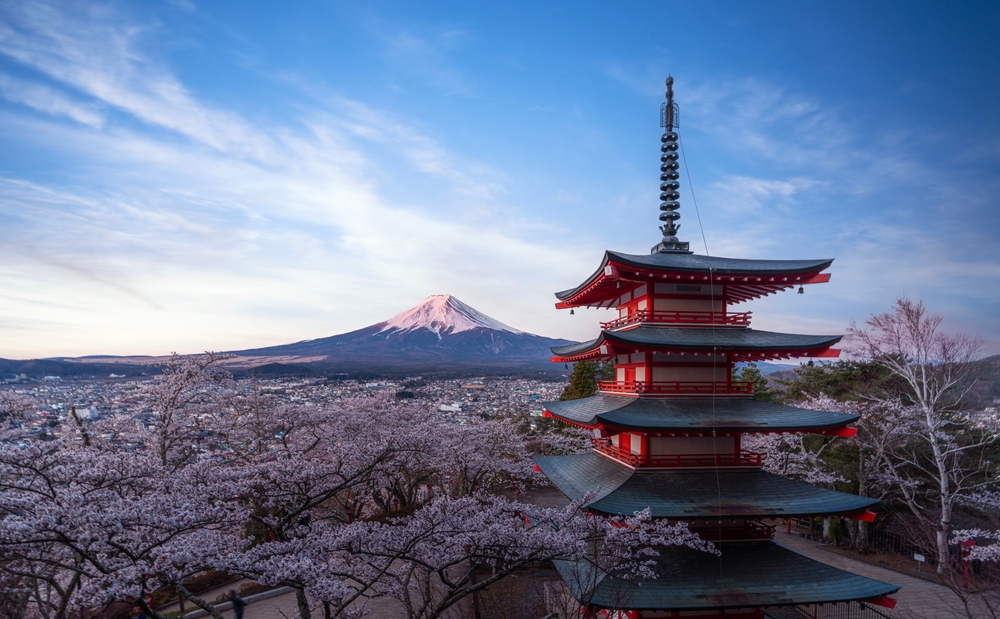
Perched high above Arakurayama Sengen Park in the town of Fujiyoshida, the Chureito pagoda (located at 3650 Arakura, Fujiyoshida, Yamanashi 403-0011, Japan, rated 4.5/5 on Google for over 50,000 reviews) offers without doubt the most iconic view of Mount Fuji. This five-storey vermilion pagoda, erected in 1963 as a peace memorial, has become one of Japan’s most famous photographic spots.
To reach this exceptional viewpoint, you have to climb around 400 steps from the entrance to the Arakura Sengen sanctuary. The effort is amply rewarded by a spectacular panorama combining the red pagoda, snow-capped Mount Fuji and, depending on the season, cherry blossom trees (late March to mid-April) or flaming maples (November). To avoid the crowds, it’s best to visit early in the morning or late in the afternoon. On a clear day, the site offers incomparable photographic opportunities, particularly at sunrise when the first rays of sunlight illuminate the summit of the volcano.
5. Hakone and its hot springs
Less than an hour’s drive from Mount Fuji, the Hakone region offers the perfect combination of views of the volcano and relaxation in traditional Japanese hot springs, known as onsen. This renowned spa destination offers views of Mount Fuji from Lake Ashi, a crater lake formed 3,000 years ago by a volcanic eruption. A cruise aboard a tourist pirate ship offers unique views of the volcano as you cross this body of water surrounded by mountains.
The Owakudani valley, an active volcanic area, fascinates visitors with its sulphurous fumaroles and boiling water springs. The Hakone cable car takes you over this spectacular valley before taking you to various observation points on Mount Fuji. The many ryokan (traditional inns) in Hakone offer thermal baths, and some even have direct views of Mount Fuji. After a day’s exploring or climbing, relaxing in an onsen while gazing at the sacred mountain is a deeply soothing and authentically Japanese experience.
6. Shrines and temples around Mount Fuji
Mount Fuji has a profound spiritual dimension in Japanese culture, which explains the presence of numerous shrines and temples at its foot. The Fujisan Hongū Sengen Taisha shrine (5-1 Miyacho, Fujinomiya, Shizuoka 418-0067, Japan, rated 4.4/5 on Google out of 8,000 reviews), founded in the Heian period, remains Japan’s main Sengen shrine. This imposing religious complex traditionally protects the mountain from eruptions and is the spiritual starting point for pilgrimages to the summit.
Its traditional architecture, vermilion gates and pavilions surrounded by centuries-old forests invite meditation and provide an insight into the sacred bond between the Japanese and their iconic mountain. Further north, the Kitaguchi Hongu Fuji Sengen shrine marks the traditional entrance to the Yoshida Trail. These religious sites bear witness to the importance of Mount Fuji in Japanese Shintoism and Buddhism, and a visit to them is an invaluable way of exploring the region.
7. The village of Oshino Hakkai and its pure water springs
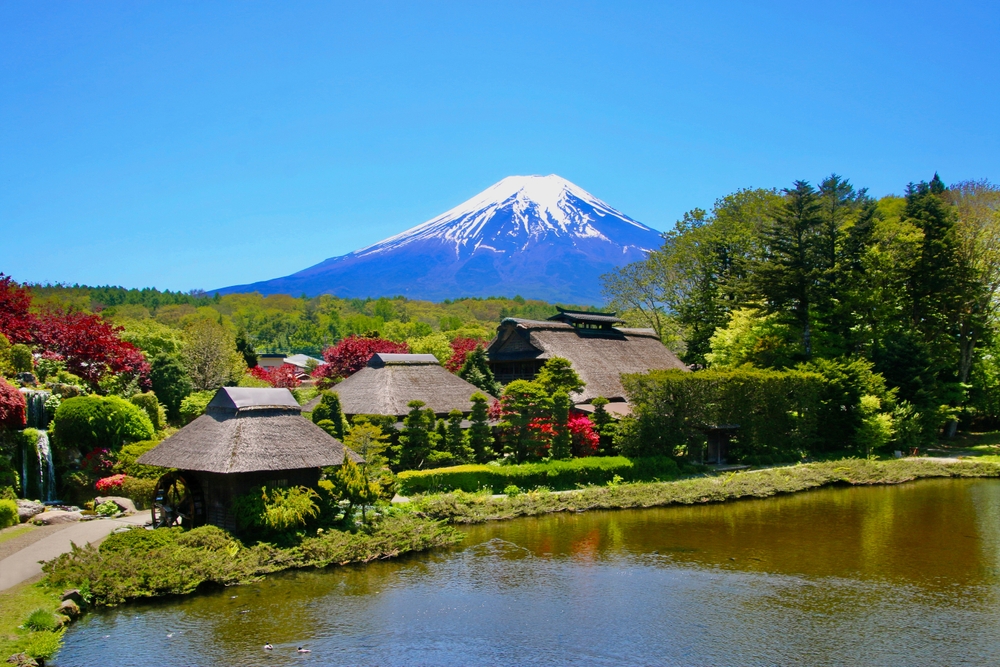
Situated between Mount Fuji and Lake Kawaguchiko, the picturesque village of Oshino Hakkai (Shibokusa, Oshino, Minamitsuru District, Yamanashi 401-0511, Japan, rated 4.2/5 on Google out of 15,000 reviews) charms visitors with its traditional atmosphere and its eight pools of crystal-clear water. These springs are fed by the meltwater from Mount Fuji, filtered naturally for years through the layers of lava, and are listed as a Japanese natural site and national monument.
Traditional thatched houses, ancient water mills and manicured gardens recreate the atmosphere of rural Japan in days gone by. The exceptional transparency of the water in the ponds allows you to watch trout and koi carp swimming in the depths. Several shops offer local specialities prepared with this pure water, including sobas (buckwheat noodles) and homemade tofu. Oshino Hakkai offers a peaceful contrast to the busier tourist sites and a chance to appreciate the natural beauty that surrounds Mount Fuji.
8. Practical tips for visiting Mount Fuji
To make the most of your visit to Mount Fuji, good planning is essential. From Tokyo, allow around 2? hours by train and bus to reach the Five Lakes region or Hakone. The JR Pass allows you to take the JR line to Otsuki, then the Fujikyu line to Kawaguchiko station. There are also direct buses from Shinjuku to Kawaguchiko, which take around 2? hours. For greater flexibility, hiring a car offers the advantage of being free to explore the various viewpoints and surrounding villages.
If you’re planning to climb Mount Fuji, make sure you’re properly equipped with warm, layered clothing, sturdy hiking boots, a headlamp for night-time ascents, plenty of water and energy snacks. Temperatures at the summit often drop below 5°C even in summer, and the wind can be violent. Book your mountain hut several months in advance and familiarise yourself with the symptoms of altitude sickness. Don’t forget your passport to register your ascent with the local authorities.
For those who want to admire Mount Fuji without climbing it, plan to spend several days in the region to increase the number of viewpoints and your chances of seeing the mountain on a clear day. Mornings generally offer the best visibility before clouds envelop the summit in the middle of the day. Don’t forget to download specific Mount Fuji weather applications to check visibility forecasts in real time.
9. Where to stay near Mount Fuji?
The Mount Fuji region offers a wide range of accommodation to suit all budgets. Kawaguchiko is home to the majority of hotels, ryokans and inns, with the advantage of easy access to transport and activities. Many establishments offer rooms with a view of Mount Fuji, so you can admire the mountain as soon as you wake up. Traditional ryokans offer an authentic experience with tatami mats, futons, kaiseki meals (refined Japanese cuisine) and private or communal thermal baths.
For those on a tighter budget, the youth hostels and guesthouses around Lake Kawaguchiko offer excellent value for money and make it easy to meet other travellers. Hakone is more appealing to those looking for a top-of-the-range spa experience, with luxurious ryokans featuring private onsen. Fujiyoshida, which is less touristy, offers the chance to stay closer to the mountains in a more local atmosphere. Whichever option you choose, book well in advance, especially during the peak summer season and cherry blossom season.
10. Alternative activities around Mount Fuji
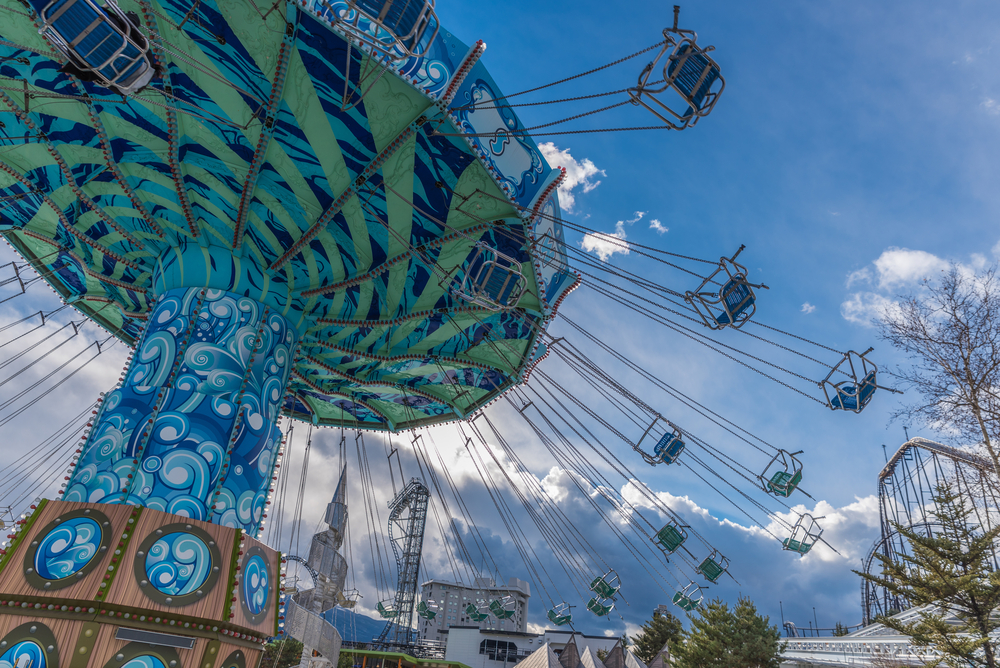
As well as climbing and contemplating the volcano, the Mount Fuji region offers many activities to enrich your stay. Lava caves, such as the Fugaku wind cave or the Narusawa ice cave, allow you to explore the bowels of the volcano in natural tunnels formed by ancient flows. These caves maintain cool temperatures all year round and feature spectacular ice formations even in summer.
The Fuji-Q Highland theme park, located at the foot of the mountain, offers some of the most extreme roller coasters in Japan, with Mount Fuji as a spectacular backdrop. Thrill-seekers will appreciate this unique combination of majestic nature and adrenalin. For a more Zen experience, the pine and cypress forests surrounding the lakes invite you to take meditative walks in the Japanese tradition of shinrin-yoku (forest bathing). In winter, a number of ski resorts, including Snow Town Yeti and Fujiten Snow Resort, offer downhill runs with views of the snow-covered volcano.
In conclusion, a visit to Mount Fuji is much more than a simple tourist excursion: it’s an immersion in Japanese culture and spirituality, an encounter with nature’s breathtaking beauty and, for those who dare to climb it, an unforgettable personal challenge. Whether you choose to climb its slopes during the climbing season, admire its perfect silhouette from the Chureito pagoda or the five lakes, relax in the onsen of Hakone or explore the traditional villages at its foot, Mount Fuji is sure to fill you with wonder and leave a lasting impression on your memory of your trip to Japan.
FAQ: Everything you need to know about Mount Fuji
How much does it cost to climb Mount Fuji?
Since 2024, climbing Mount Fuji has required a compulsory contribution of 2,000 yen (around €12) per person. To this must be added the cost of transport to the fifth station (around 2,800 yen return from Kawaguchiko), and the cost of a night in a mountain refuge if you wish to watch the sunrise (between 7,000 and 10,000 yen including meals). All in all, you should budget around 12,000 to 15,000 yen for the full ascent.
Can you visit Mount Fuji in a day from Tokyo?
Yes, it is quite possible to visit the Mount Fuji area in a day from Tokyo, in particular to admire the volcano from Lake Kawaguchiko, the Chureito pagoda or Hakone. On the other hand, the ascent requires at least one night’s stay, ideally in a mountain refuge, to enjoy the sunrise at the summit. Organised excursions from Tokyo are a practical option for seeing the main sites in a day without worrying about transport.
Is Mount Fuji dangerous to climb?
Climbing Mount Fuji is difficult, mainly because of the altitude, the considerable difference in altitude (around 1,400 metres from the fifth station) and the changeable weather conditions. During the official season (July-September), the trails are well maintained and signposted, there are plenty of refuges and the rescue services are operational. However, altitude sickness can affect some climbers, so it’s important to acclimatise gradually and stay well hydrated. Out of season, the climb becomes dangerous due to snow, ice and storms.
When is the best time to see Mount Fuji?
For the best visibility, choose winter (December-February) when the skies are generally clear and Mount Fuji is magnificently snow-covered. Mornings offer the best chance to see the mountain before clouds form in the middle of the day. Spring (April-May) combines fine weather with cherry blossom, while autumn (October-November) is a season of flamboyant colours. The rainy season (June) and summer (July-August), although a good time for climbing, offer more uncertain visibility.
Do I need to book in advance to visit Mount Fuji?
If you are planning to climb the mountain, booking is essential and has been compulsory since 2024 via the official online system. Mountain huts must be booked several months in advance, particularly for weekends in July and August. To simply admire Mount Fuji from the surrounding area, no booking is necessary, but it is advisable to book your accommodation and transport well in advance during the peak tourist season (April-May and July-August).
200 audioguided tours for cities all around the world
Download