Visit the Aigues-Mortes salt marshes
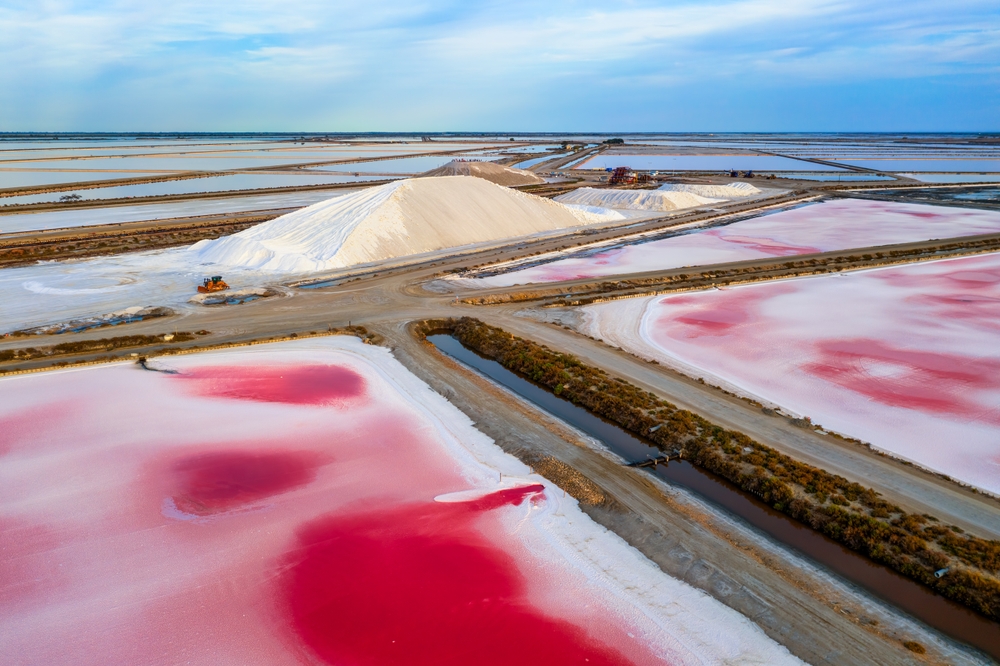

In the heart of the Camargue region of Gard, the salt marshes of Aigues-Mortes offer an extraordinary natural spectacle where the water is adorned in shades of pink and mauve as far as the eye can see. Covering more than 10,000 hectares, this exceptional site is one of the largest salt marshes in the Mediterranean and a must-see during your stay in the Occitanie region. With its traditional salt production, remarkable biodiversity and surreal landscapes, a visit to the salt works promises a unique experience in contact with unspoilt nature and a thousand-year-old industrial heritage.
Download the audio tour to discover Aigues-Mortes on foot and on your own
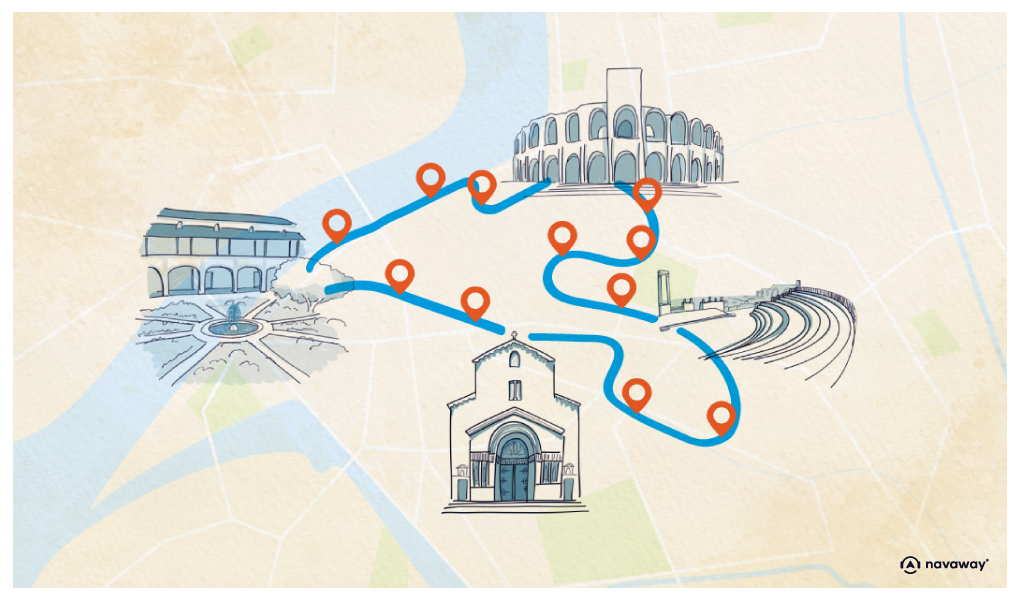
For a rewarding way to explore Aigues-Mortes and the surrounding area, we recommend following an audio tour that will allow you to discover all the treasures of this fortified medieval city. Although the town doesn’t yet have a dedicated tour on Navaway, you can visit nearby Arles with our audio tour of 18 places of interest that will immerse you in the region’s Roman and Camargue history. This self-guided tour allows you to explore at your own pace while enjoying captivating audio commentary on each remarkable site.
See also the Camargue guide :
- Visiting Aigues-Mortes: 8 must-dos
- Visiting the Camargue: 12 must-sees and must-dos
- Visiting Saintes-Maries-de-la-Mer: 15 must-sees
- The 18 must-sees to discover Occitania
- 20 must-see weekend ideas around Montpellier
1. Discover the salt marshes on a miniature train: a family experience not to be missed
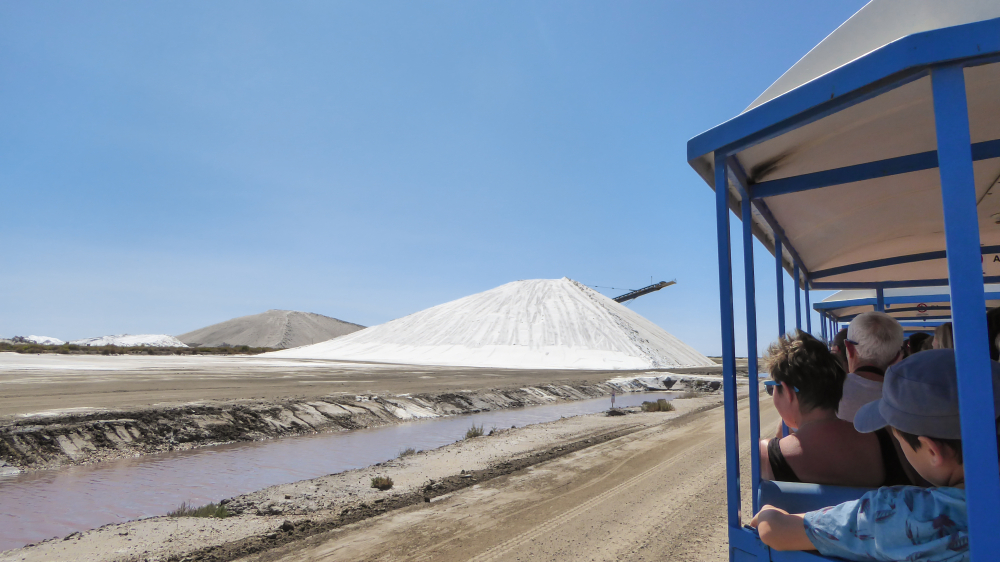
The Salins d’Aigues-Mortes tourist train is the most popular and accessible way to discover this extraordinary site. Climb aboard this little tourist train for a journey of around 1 hour 15 minutes that takes you to the heart of the salt works and reveals the secrets of Camargue salt production. The guided tour explains the salt production process, from the evaporation of seawater to the harvesting of the precious white crystals.
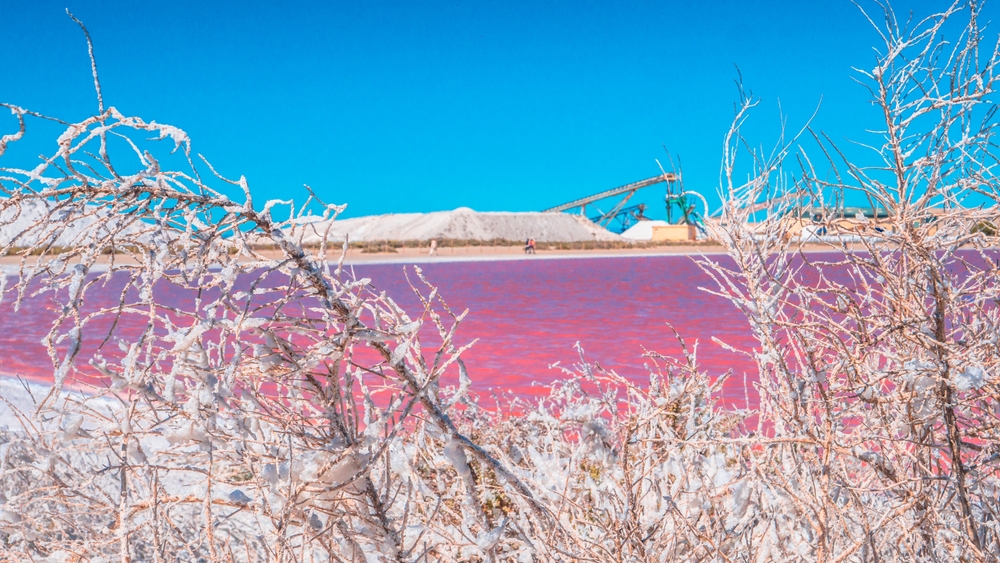
Along the way, you’ll pass through extraordinary landscapes where the pools of water take on hues ranging from soft pink to deep red, depending on the concentration of salt and the presence of micro-organisms. The train makes a number of strategic stops, allowing you to admire the famous camelles, mountains of white salt several metres high, and to observe the rich birdlife that inhabits the area. Audio commentaries enhance the experience, detailing the thousand-year-old history of salt production and the ecological importance of the site.
Adults pay €13.40, while children aged 5 to 13 pay €9.40. A family pass is also available for €41.60 (2 adults + 2 children). Tours run frequently from March to November, with more frequent departures in high season. To get the most out of your visit, choose late morning or late afternoon when the light sublimates the colours of the pools. Don’t forget your camera, and remember to protect yourself from the sun, as there is little shade along the way.
2. Exploring the salt marshes by bike: a sporting and ecological adventure
For visitors looking for a more active and intimate experience, discovering the Aigues-Mortes salt marshes by bike offers an attractive alternative to the little train. This option allows you to explore the site at your own pace, while enjoying considerable freedom of movement. Several signposted routes of varying degrees of difficulty wind their way through the salt marshes, offering exceptional views of this unique landscape.
There are two options: a free ride on an electric bike or mountain bike, ideal for those who want to explore on their own (costing around €25 including bike hire), or a guided mountain bike outing, where you benefit from the expertise of a passionate guide who knows the site and its wildlife inside out (costing around €20 if you bring your own bike). Guided outings generally last 2 to 3 hours and give you access to less-frequented areas where birdwatching is particularly rewarding.
The cycle paths are accessible to all abilities, although a minimum level of fitness is recommended due to the heat, which can be intense in summer. Remember to bring plenty of water, sun cream and a hat. Spring and autumn offer the most pleasant conditions for this activity. As you pedal through this surreal setting, you’ll be able to take plenty of breaks to photograph the scenery, watch the birds and soak up the special atmosphere of these amphibious lands.
3. Admire the pink flamingos and the site’s exceptional biodiversity
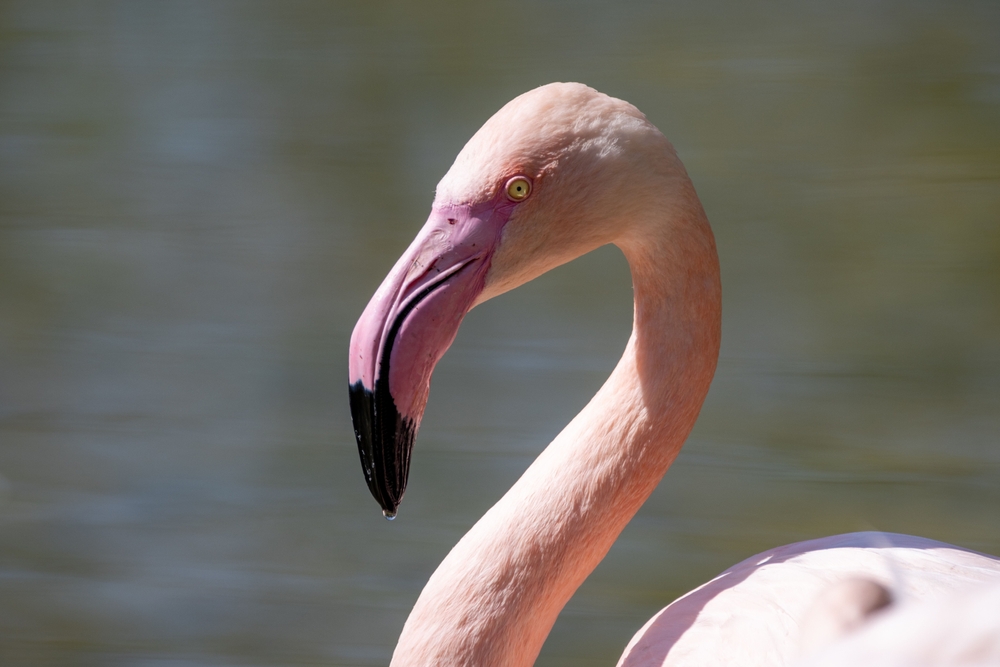
The Aigues-Mortes salt marshes are Europe’s leading pink flamingo reserve, welcoming up to 10,000 individuals at any one time, depending on the season. These elegant wading birds with their flamboyant pink plumage find the salt ponds an ideal habitat, rich in food. Their characteristic colour comes from the shrimps and micro-algae that they consume in large quantities in these salt-laden waters. Watching these colonies of flamingos gracefully evolve in the pink lagoons is one of the highlights of your visit.
But the ornithological wealth of the site is not limited to pink flamingos. More than 200 bird species have been recorded on the salt marsh, including 157 protected species. Depending on the time of year you visit, you may see elegant avocets, recognisable by their curved beaks, common terns nesting on the salt islets, grey herons, little egrets and even birds of prey such as the marsh harrier. Spring and autumn are migration periods, offering exceptional opportunities for birdwatching.
To maximise your chances of observation, take binoculars with you and favour the early morning or late afternoon hours when the birds are most active. Strictly observe the tranquillity instructions by staying on the marked paths and avoiding excessive noise. The salt marsh ecosystem, classified as a Natura 2000 site, is also home to a diverse terrestrial fauna including reptiles, amphibians and even mammals such as the red fox. This remarkable biodiversity testifies to the ability of the salt marshes to support life despite extreme environmental conditions.
4. Understanding the salt harvesting process and meeting the salt producers

A visit to the salt marshes of Aigues-Mortes offers a fascinating insight into an age-old know-how that has endured since Antiquity. Salt production in the Camargue dates back to Roman times, and harvesting techniques have changed relatively little over the centuries, although mechanisation has considerably increased the volumes produced. Every year, the salt works produce over 500,000 tonnes of salt, mainly for food, road clearing and the chemical industry.
The salt-making process is based on the natural evaporation of seawater under the combined action of the sun and the mistral, the powerful wind that frequently blows in the Camargue. The seawater is channelled into increasingly small, shallow basins, where it gradually concentrates into salt as it evaporates. This circuit can take several months, with the water passing through different stages of salinity, which explains the variations in colour of the basins. The pink pools contain a high concentration of Dunaliella salina, a micro-algae that produces beta-carotene to protect itself from the intense sun.
Sauniers, the salt professionals, keep a close eye on this delicate process and intervene at just the right moment to harvest the salt when it reaches the perfect crystallisation point. During guided tours, some of the salt workers share their passion and expertise, explaining the subtleties of their trade and the challenges posed by the vagaries of the climate. The salt museum, included in the tour, presents the history of salt production and the different stages of production in a fun and educational way. It’s a must-see if you want to fully understand the economic and cultural importance of this activity for the region.
5. Photograph the camelles, those spectacular salt mountains

The camelles are undoubtedly one of the most photogenic sights in the Aigues-Mortes salt marshes. These impressive mountains of salt, which can reach 20 to 25 metres in height and several hundred metres in length, create an almost unreal landscape reminiscent of eternal snow dunes under the Camargue sun. The word “camelle” comes from the Provençal word “camelo”, meaning camel, in reference to the hummocky shape of these heaps.
These monumental accumulations are the result of decades of salt harvesting. Every year, thousands of tonnes of salt extracted from the basins are added to these gigantic heaps, protected from the elements by tarpaulins until they can be marketed. The dazzling whiteness of the camelles contrasts magnificently with the intense blue of the Mediterranean sky and the rosy hues of the surrounding basins, creating striking photographic compositions that are particularly popular on social networks.
To get the best shots of the camelles, choose low-angled morning or evening light, which accentuates the volumes and creates beautiful cast shadows. Mistral days, when the sky is a deep blue without a single cloud, also offer ideal conditions. Some of the viewpoints accessible from the mini-train or cycle routes allow you to photograph the camelles with the ramparts of Aigues-Mortes in the background, creating a composition that harmoniously blends medieval heritage and natural landscapes. Don’t hesitate to play with the reflections in the pools for original, poetic images.
6. Visit the salt museum and the salt products shop
The salt museum, located on the site of the Aigues-Mortes salt marshes, is a fun and instructive part of your visit. This modern museum retraces the thousand-year history of salt production in the Camargue, from Roman antiquity to contemporary industrial techniques. Through explanatory panels, models, traditional tools and video projections, you’ll discover every aspect of this activity that has shaped the region’s economy and landscape for centuries.
The museum also presents the ecological dimension of the saltworks, explaining how these artificial basins have over time become a unique ecosystem harbouring exceptional biodiversity. Interactive exhibits explain why the water in the ponds takes on its characteristic pink colour and how salt is formed through crystallisation. Children will particularly appreciate the fun features that make the visit accessible to all ages.
At the end of the tour, you can visit the saltworks shop to discover and buy the full range of Camargue salts produced on the site. You’ll find the famous fleur de sel, the fine salt that forms on the surface of the ponds and is harvested by hand, the grey salt, rich in minerals and trace elements, as well as numerous flavoured versions with Provencal herbs, Espelette chilli pepper or seaweed. The shop also sells salt-based cosmetics, natural soaps and various regional souvenirs. It’s the ideal place to take home an authentic piece of the Camargue and prolong the memory of this memorable visit.
7. Combine a visit to the salt marshes with a visit to Aigues-Mortes
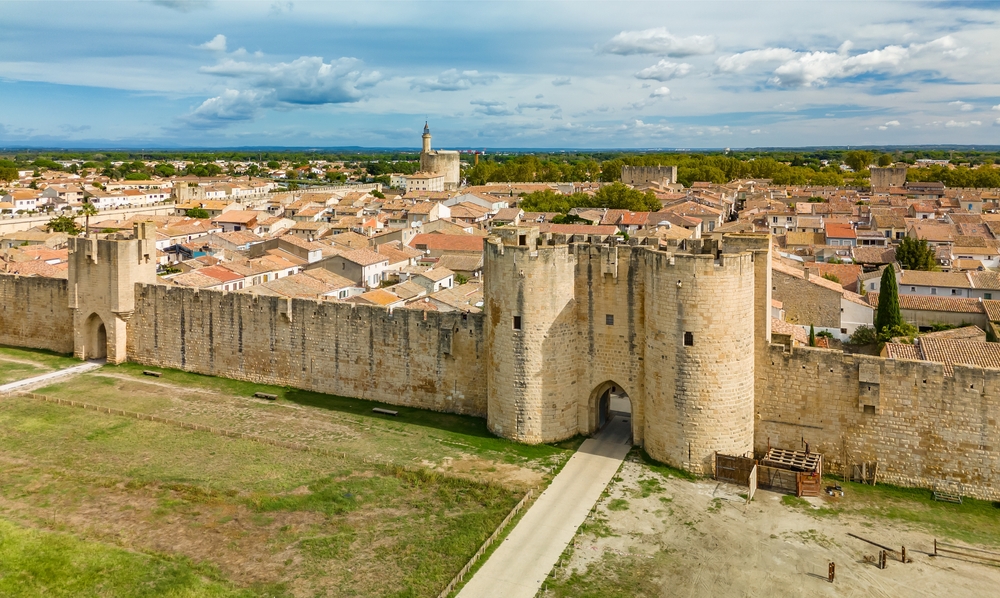
The immediate proximity of the salt marshes to the medieval city of Aigues-Mortes makes for a particularly rewarding full day out, combining exceptional nature with a remarkable historical heritage. After exploring the surreal landscapes of the salt marshes in the morning, devote your afternoon to discovering this unique fortified town. Founded by Saint Louis in the 13th century as a port of embarkation for the Crusades, Aigues-Mortes has kept its ramparts and Tour de Constance intact.
The complete tour of the ramparts of Aigues-Mortes (Place Anatole France, 30220 Aigues-Mortes, rated 4.5/5 on Google out of more than 2,900 reviews) offers an unforgettable walk along 1,640 metres of ramparts, with uninterrupted views of the salt marshes on one side and the old town on the other. A visit to the Tour de Constance, a massive keep used as a prison for Protestants after the revocation of the Edict of Nantes, will plunge you into moving pages of French history.
In the historic centre, stroll around Place Saint-Louis, where the statue of the founding king is enthroned, visit the Notre-Dame-des-Sablons church and the Pénitents chapels, and take advantage of the many terraces to sample the local specialities. This complementary blend of nature and culture makes Aigues-Mortes and its salt marshes a destination of choice in the Occitanie region. For an even more complete immersion in the region’s heritage, don’t hesitate to follow our audio-guided itinerary to Arles, another jewel of the Camargue, just 30 kilometres away.
Practical information for visiting the Aigues-Mortes salt marshes
Opening times
The Aigues-Mortes salt marshes are open all year round, with opening times varying according to the season. From March to May and from September to October, the site is open from 10am to 6pm. During the high summer season from June to August, opening times are extended from 9am to 7pm to allow visitors to make the most of the long sunny days. In winter, from November to February, the site is open from 10am to 5pm, Monday to Friday only. The site is closed on 25 December, 1 January and on annual maintenance days.
Rates
Adult tickets for the mini-train tour cost €13.40. Children aged 5 to 13 benefit from a reduced rate of €9.40, while children under 5 enter free of charge. A special family pass at €41.60 allows 2 adults and 2 children to visit the site together. A preferential rate of €9.40 applies to disabled visitors. Guided walking tours cost €22 per adult and €14.50 per child. Bike hire for the self-guided tour costs around €25, while the guided mountain bike tour costs €20 if you bring your own bike.
How to get there
Les Salins d’Aigues-Mortes is located Route du Grau-du-Roi, 30220 Aigues-Mortes. By car from Montpellier, follow the A9 towards Nîmes, take exit 26 towards Gallargues, then follow the D62 and D979 towards Aigues-Mortes. Free parking is available on site. From Nîmes, take the D979 towards Le Grau-du-Roi. The site is around 5 kilometres from the centre of Aigues-Mortes, easily accessible on foot or by bike from the ramparts. There are also Edgard bus services to the town from the main towns in the region.
Visiting tips
To make the most of your visit to the Aigues-Mortes salt marshes, choose spring and autumn, when the temperatures are pleasant and the light ideal for photography. Summer guarantees the most intense pink colour in the ponds thanks to the proliferation of Dunaliella salina stimulated by the strong sunlight, but be prepared for heat and crowds. Make sure you bring sun protection (cream, glasses, hat), plenty of water and comfortable shoes. Pets are not allowed on site. Online booking is strongly recommended in high season to guarantee your place. Photographers will particularly appreciate the morning and sunset lights, which sublimate the colours of the pools.
In conclusion, a visit to the Aigues-Mortes salt marshes is a truly unique experience, combining exceptional natural discovery with immersion in a thousand-year-old industrial heritage. Whether you opt for a ride on a small family train, a sporty exploration by bike or an in-depth guided tour, you’ll be amazed by the unreal-coloured landscapes, the site’s wealth of birdlife and your understanding of the remarkable work of the salt workers. This escapade in the heart of the Camargue Gardoise combines perfectly with the discovery of the medieval city of Aigues-Mortes, and is a must for any stay in the Occitanie region. To further enhance your exploration of the region, consider following the Navaway to Arles itinerary, which will allow you to discover the other treasures of the Camargue in the best possible conditions.
FAQ : Frequently asked questions about the Aigues-Mortes salt marshes
When is the best time to see the pink salt flats?
The ponds are at their most intense pink during the summer, from June to September, when the concentration of Dunaliella salina is at its highest due to the strong sunlight. Spring and early autumn also offer beautiful pink hues, but with more pleasant weather conditions and fewer visitors. In winter, the ponds tend towards bluer tones.
Can you visit the salt marshes for free?
Access to the Salins d’Aigues-Mortes site is subject to a charge, and requires the purchase of a ticket for one of the packages on offer (mini-train, bicycle, guided tour). However, it is possible to observe the salt marshes free of charge from the area around the site, particularly from the ramparts of Aigues-Mortes, which offer a panoramic view of the basins. There are also several roads on the outskirts of the site that allow visitors to see the salt marsh landscape without entering the site.
How long does the mini-train tour last?
The mini-train tour lasts around 1 hour 15 minutes and includes several stops where you can get off to admire the scenery, take photos and watch the birds. There is a full commentary on the route, and you’ll discover all the different facets of the saltworks: pools of different colours, salt pans, local biodiversity and the salt-making process.
Are the salt marshes accessible to people with reduced mobility?
Yes, the Salins d’Aigues-Mortes mini-train is accessible to wheelchair users on request. The salt museum and shop are also adapted for visitors with reduced mobility. However, cycle tours and certain walking routes may present difficulties for people with mobility problems.
Can you see pink flamingos all year round?
Flamingos are present at the Salins d’Aigues-Mortes site throughout the year, but their numbers vary considerably depending on the season. Spring and autumn are the periods of greatest concentration, with sometimes more than 10,000 individuals present at any one time. In summer and winter, the colonies are generally less numerous but can still be observed. The best times to observe them are early in the morning and late in the afternoon.
200 audioguided tours for cities all around the world
Download