Visit Sortelha, Portugal’s famous medieval village
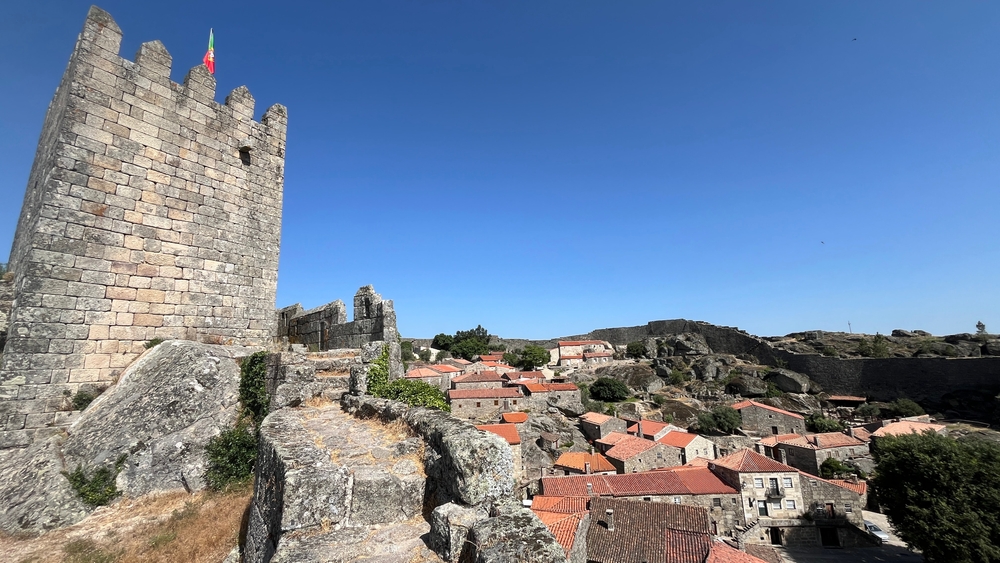

Perched 760 metres above sea level on an impressive granite massif, Sortelha is one of Portugal’s best-preserved medieval gems. This historic village in the Beira Alta region, located in the Guarda district, seems frozen in time. Its intact walls, fortified castle and cobbled streets transport visitors back to the heart of the Portuguese Middle Ages. Listed as one of Portugal’s Historic Villages, Sortelha offers an authentic and immersive experience of Lusitanian medieval history, far from the usual tourist trails.
See also the Portugal guide:
- Discover and visit Porto, the belle of the Douro
- Visit Lisbon, the capital of the seven hills
- Explore Coimbra, a historic university town
- Top 6 things to do in Coimbra
- Live and feel Coimbra’s Fado
- Visit Sintra near Lisbon, Portugal
- Visiting Madeira: 10 things to do and see in Portugal
- The 8 most beautiful beaches in Porto to discover
1. Sortelha Castle and its imposing walls
Sortelha Castle (Castelo de Sortelha, 6320 Sortelha) is the historic heart of the village. Built in 1228 during the reign of Sancho II, this Romanesque-Gothic castle majestically dominates the surrounding landscape. Its citadel, located at the southern end of the fortified perimeter, houses a massive square keep pierced by three loopholes. The building was listed as a National Monument in 1910, testifying to its exceptional heritage importance.
The medieval walls, built in an irregular oval shape, follow the natural configuration of the rocky terrain. They were built using a double parallel wall technique, with the space between the two walls filled with stones and gravel. These fortifications were used to protect the village during conflicts with the neighbouring kingdom of Leon. Access to the castle is through a vaulted gateway partially carved into the rock, topped by the famous Varanda de Pilatos (Pilate’s Balcony), a machicolated balcony decorated with the royal coat of arms of Manuel I and armillary spheres. A fascinating feature: a mill game board carved into the rock near the keep bears witness to the leisure activities of medieval soldiers.
2. The medieval gates at the entrance to the fortified village
Sortelha has four historic gates that were once used to communicate with the outside world. The main one, the Town Gate (Porta da Vila), is the monumental entrance to the village. This 13th-century Gothic gateway is topped by the famous Varanda de Pilatos, from which missiles were fired at attackers through openings known as mata-cães. The defensive architecture of this gateway bears witness to Sortelha’s strategic importance on the Portuguese border defence line.
The Porte Neuve (Porta Nova) has a unique feature: on its threshold, two grooves carved into the stone represent medieval metric measurements. The larger corresponds to a “vara” (around 110 cm) and the smaller to a “cubit” (around 67 cm). These standards were used by traders at fairs, ensuring fairness in transactions at a time when metric systems were not standardised. The False Gate and the small Betrayal Gate (Porta da Traição), located within the castle walls, complete this ingenious defensive system. Each passageway offers different views of the granite houses and cobbled streets that wind through the village.
3. Nossa Senhora das Neves parish church
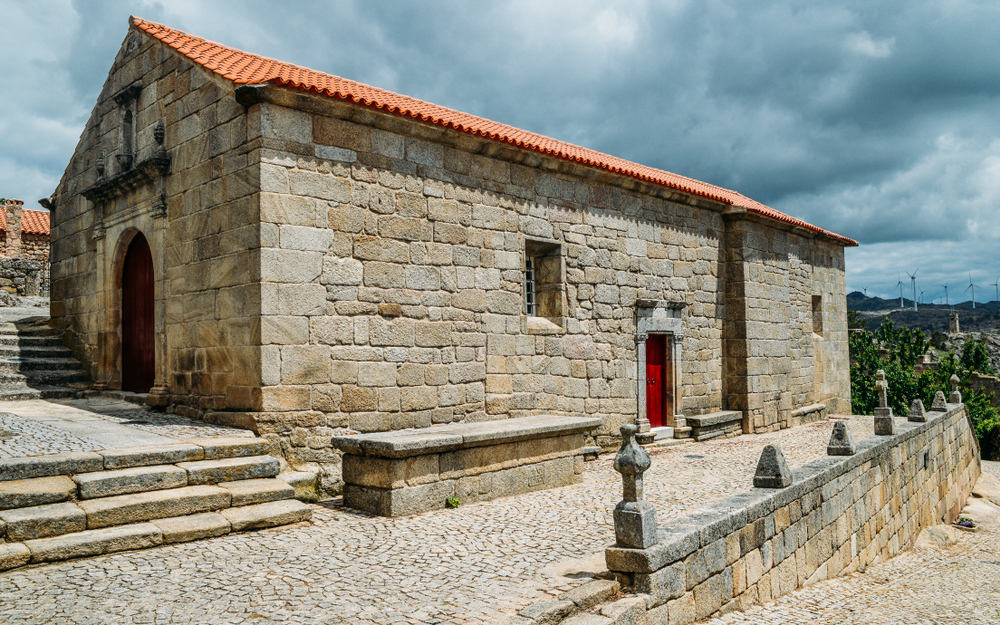
The parish church of Sortelha (Igreja Matriz de Sortelha, 6320 Sortelha), dedicated to Our Lady of the Snows (Nossa Senhora das Neves), dates back to the 16th century, or more precisely to 1573 according to the inscription engraved on its portal. This religious building is a blend of Romanesque and Gothic styles, with a few Manueline additions that bear witness to the different phases of construction and renovation over the centuries. Its sober granite architecture blends in perfectly with the village’s medieval surroundings.
Inside, visitors can admire a remarkable 14th-century Hispano-Arab ceiling, a rare testimony to the Mudéjar influence in the region. The Baroque high altar, richly carved and gilded, contrasts with the austerity of the stone walls and is one of the church’s artistic gems. The building also houses a number of religious statues and liturgical ornaments that trace the history of popular devotion in Sortelha. The church’s sober exterior conceals a wealth of artistic treasures that deserve an in-depth visit to appreciate the village’s rich religious heritage.
4. The historic chapels of São Sebastião and Santiago
The village of Sortelha is home to two medieval chapels that bear witness to the religious fervour of its inhabitants over the centuries. The chapel of São Sebastião (Capela de São Sebastião, 6320 Sortelha) and the chapel of Santiago (Capela de Santiago, 6320 Sortelha) are an integral part of the village’s religious heritage. These small granite buildings, built in the traditional style of the region, served as places of prayer for the locals and pilgrims who passed through Sortelha on the ancient route to Santiago de Compostela.
Although modest in size, these chapels reveal the importance of faith in everyday medieval life. They were often dedicated to saints who protected against disease (Saint Sebastian) or were associated with pilgrimage (Saint James). Their simple architecture and harmonious integration into the urban fabric of the village illustrate the way in which religious buildings gave rhythm to space and social life in medieval times. Today, they are silent witnesses to Sortelha’s spiritual history and are well worth a visit to understand the religious organisation of medieval Portuguese villages.
5. The Passos da Via Sacra (Baroque Way of the Cross)
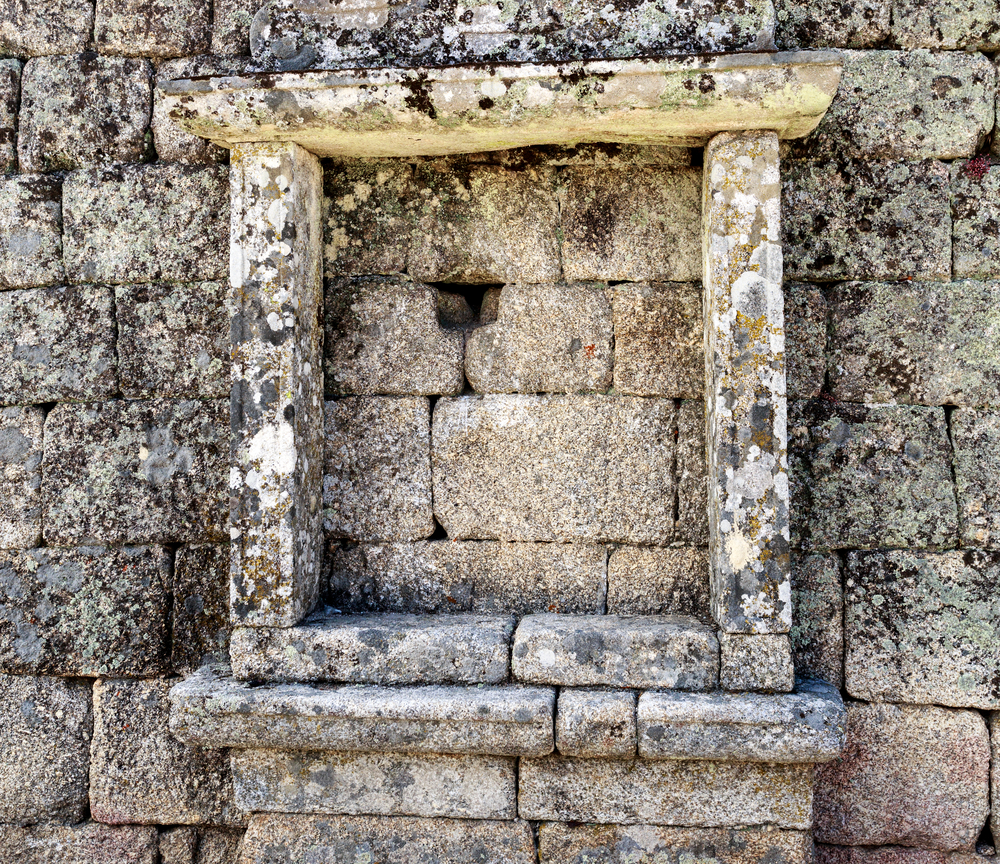
In 1742, five Stations of the Cross (Passos da Via Sacra) were built through the village of Sortelha, illustrating the Baroque influence in local religious architecture. These similar monuments feature niches with lintels richly decorated with Baroque motifs typical of 18th-century Portugal. Each “passo” marks a stage in the Way of the Cross, inviting the faithful to meditate and pray as they follow a spiritual path through the medieval streets of the village.
These stations form a popular devotional itinerary that transforms the village into a veritable place of inner pilgrimage. Strategically located in different parts of Sortelha, they create a link between sacred and secular spaces, between the fortified castle and the places of worship. Visitors can follow this historic route, which also offers magnificent views of the village’s granite architecture and the surrounding Beira Alta landscapes. This Via Sacra is a precious testimony to Portuguese Baroque piety and the importance of the Catholic religion in structuring the village.
6. Misericorde church and hospital
The former Hospital of Mercy and its associated church (Igreja da Misericórdia) form a remarkable architectural ensemble that bears witness to the organisation of charitable works in the modern era. The Confraternities of Mercy, founded in Portugal in the 16th century, played an essential role in assisting the poor, the sick and pilgrims. In Sortelha, this hospital welcomed travellers and needy locals, offering medical care and spiritual assistance in one place.
The adjoining church, although more modest than the parish church, has interesting architectural features with its thick granite walls and discreet bell tower. The hospital complex illustrates the importance of religious institutions in medieval and modern social life, where the Church took on functions that are now the responsibility of the State. A visit to this complex will give you a better understanding of how solidarity and public health were organised in Portuguese villages in the past, while at the same time allowing you to appreciate the sober, functional architecture of these charitable buildings.
7. The pillory and the old town hall
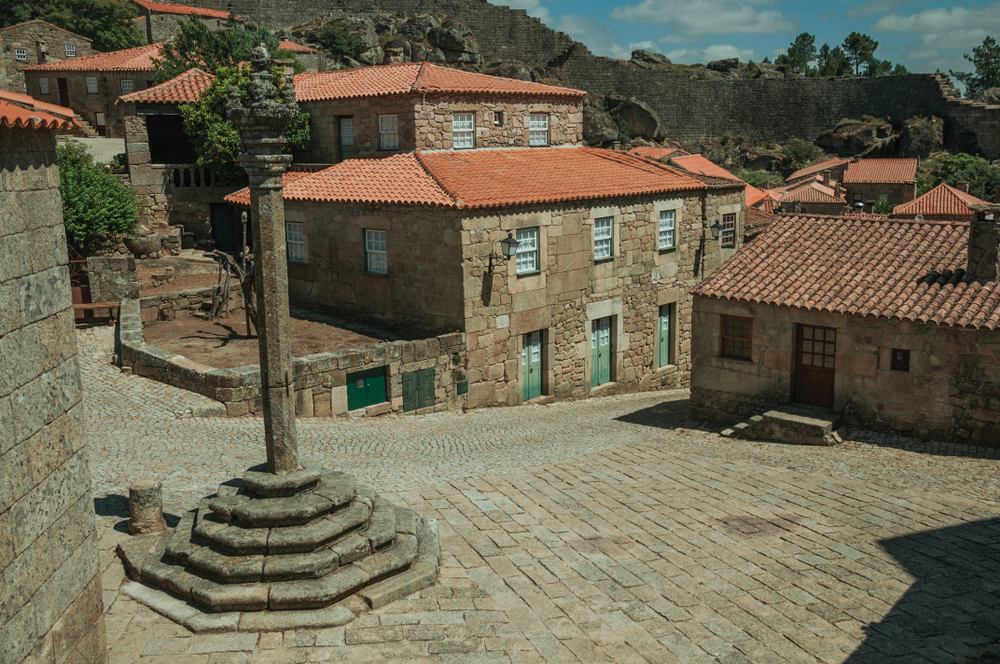
Just before the main entrance to the village, on the Largo do Corro, stands a magnificent Manueline pillory (Pelourinho de Sortelha, 6320 Sortelha) crowned with an armillary sphere, the emblematic symbol of the reign of Manuel I. This pillory, erected in the early 16th century, represented municipal authority and local justice. It was the place where convicts were publicly displayed and royal and municipal edicts were posted. Its presence bears witness to the administrative autonomy enjoyed by Sortelha as a medieval municipality.
Nearby is the former town hall (Casa da Câmara e Cadeia), also dating from the Manueline period. This building once housed the town council’s meeting rooms and the local prison. Its sober granite architecture, typical of the region’s administrative buildings, contrasts with the more refined Manueline decorative elements of the pillory. Together, they form a coherent civic space that illustrates the organisation of municipal power in the modern era. These perfectly preserved monuments give visitors a real insight into how local institutions functioned in medieval and Renaissance Portugal.
8. Narrow cobbled streets and authentic granite houses
Sortelha’s irresistible charm lies above all in its cobbled streets winding between centuries-old granite houses. These traditional dwellings, generally built on a single storey, blend harmoniously into the natural rock outcrops, following the rugged topography of the terrain. Medieval architects took advantage of the constraints of the granite site to create an organic village where each house seems to be sculpted from the rock itself. The thick stone walls ensured excellent thermal insulation, essential at this altitude of 760 metres.
Strolling through these narrow streets, visitors will discover many fascinating architectural details: door lintels engraved with dates and family coats of arms, mullioned windows, external stone staircases, vaulted passageways… It all adds up to an authentic medieval atmosphere, enhanced by the almost total absence of modern buildings within the walls. Some houses have been carefully restored and converted into tourist accommodation or craft workshops, keeping the village alive while preserving its exceptional historic character. This architectural authenticity makes Sortelha one of the best-preserved medieval villages on the Iberian Peninsula.
9. Exceptional views from the ramparts
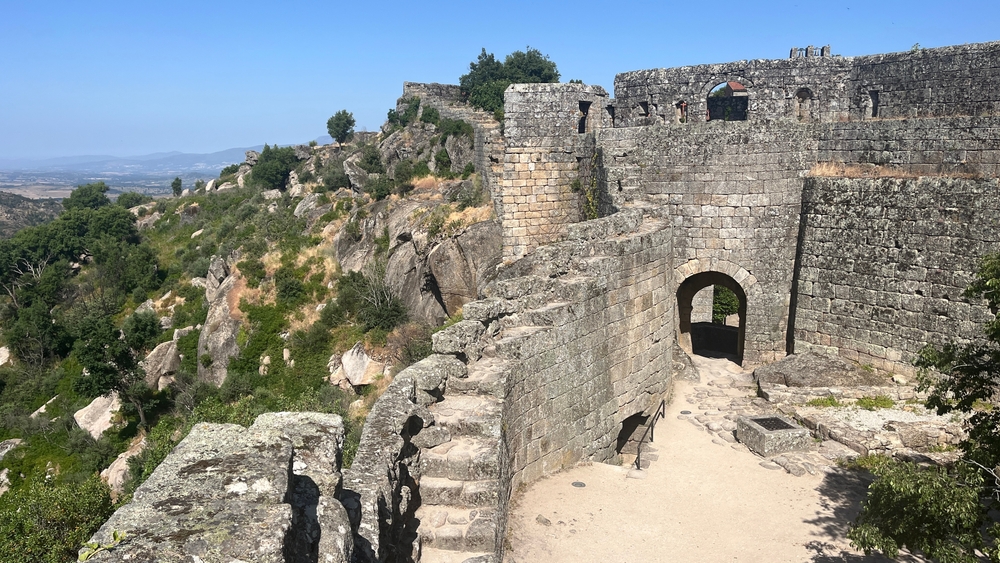
Sortelha’s strategic position, perched 760 metres above sea level on a granite spur, offers breathtaking panoramic views over the Beira Interior region. From the ramparts, and particularly from the castle keep, visitors can contemplate an awe-inspiring landscape that stretches as far as the eye can see: lush green valleys dotted with giant boulders, centuries-old chestnut forests, white villages clinging to the hills, and on a clear day, you can even see the Serra da Estrela mountains in the distance.
From these vantage points, it’s easy to understand why this location was chosen as the site of a defensive fortress: visual control over the valley was total, making it impossible for an enemy to approach without being detected. At sunrise or sunset, the spectacle becomes even more magical when the golden rays illuminate the granite rocks and rooftops of the village, creating a fairytale atmosphere. These panoramas are one of the highlights of any visit to Sortelha, offering exceptional photographic opportunities and a deep connection with the rugged beauty of the Portuguese countryside.
10. The gastronomic heritage of Beira Alta
A visit to Sortelha is also an opportunity to discover the traditional gastronomy of Beira Alta, a mountainous region renowned for its authentic local produce. Local specialities reflect an ancestral rural way of life and the use of available natural resources: chestnuts, game, goat’s and sheep’s cheeses, mountain honey, rye bread… Restaurants in the village and surrounding area serve hearty, tasty dishes such as cabrito assado (roast kid), enchidos (traditional cold meats) and chanfana (goat stew simmered in red wine).
The cheeses of the Serra da Estrela, produced in the neighbouring mountains, are among the most famous in Portugal. Queijo da Serra, a creamy soft cheese made from raw sheep’s milk, is a veritable regional gastronomic institution. Visitors can also sample some excellent wines from the Beira Interior region, whose high-altitude vineyards produce vintages of character. To accompany your coffee, don’t miss the doces conventuais, traditional egg and sugar pastries inherited from monastery recipes. This culinary wealth adds an essential sensory dimension to the experience of discovering Sortelha’s cultural heritage.
11. Historic villages to discover
Sortelha is part of a network of twelve Historic Villages of Portugal (Aldeias Históricas de Portugal), a heritage enhancement programme that highlights outstanding medieval fortified villages. A number of other historic villages in the immediate vicinity are well worth a visit. Belmonte, 17 kilometres to the west, is the birthplace of Pedro Álvares Cabral, the navigator who discovered Brazil in 1500. The village boasts an impressive medieval castle and a large Jewish community, whose heritage can be seen in the Jewish Museum and the Bet Eliahu synagogue.
To the north, around 20 kilometres away, Sabugal boasts another remarkable castle with a pentagonal keep that is unique in Portugal. Castelo Rodrigo, Castelo Mendo, Almeida, Marialva, Linhares da Beira and Monsanto complete the network of fortified villages along the ancient border between Portugal and Spain. Each has its own character and distinctive architectural features. A tour lasting several days allows you to discover these medieval gems nestling in the mountainous landscapes of the Beira Interior, creating a real journey back in time through the history of the Reconquista and the formation of the Kingdom of Portugal.
12. Serra da Malcata Nature Reserve
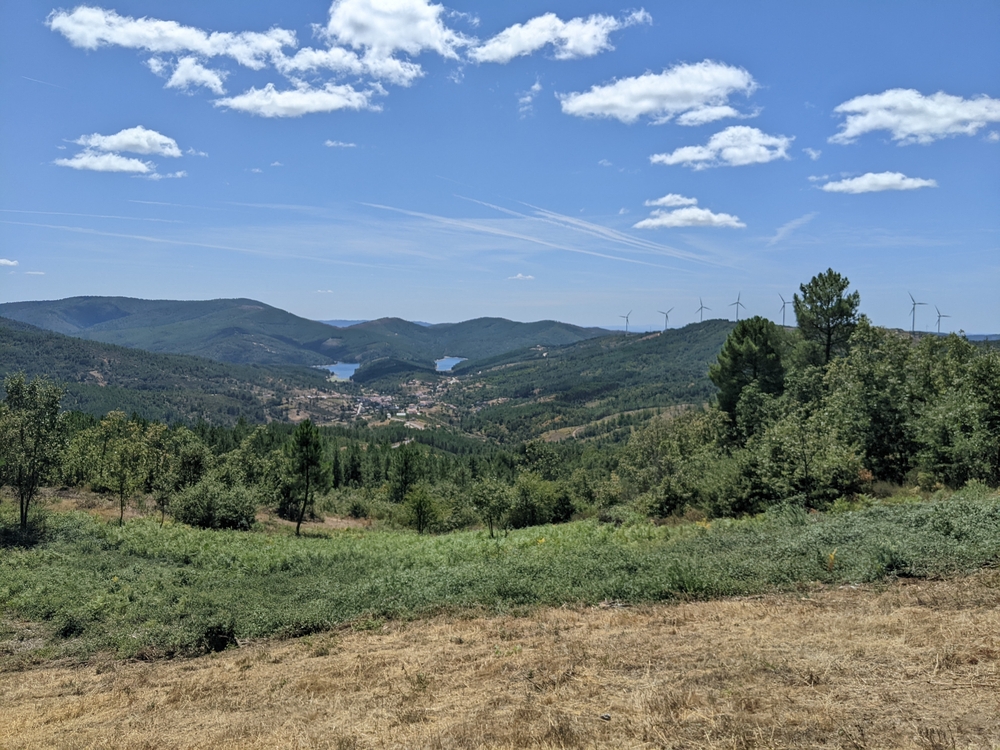
A few kilometres south-east of Sortelha lies the Serra da Malcata Nature Reserve (Reserva Natural da Serra da Malcata), created in 1981 to protect the habitat of the Iberian lynx, one of the world’s most endangered cats. This 16,348-hectare reserve boasts magnificent mountain scenery, with Mediterranean holm oak and cork oak forests, arbutus and broom scrub and exceptional flora and fauna. Signposted hiking trails allow you to explore this wild territory and enjoy spectacular panoramic views.
The reserve is home not only to the Iberian lynx (a discreet creature that is difficult to observe), but also to otters, genets, golden eagles, griffon vultures and numerous species endemic to the Iberian peninsula. Lovers of nature tourism and observation will find this reserve an ideal complement to the cultural visit to Sortelha. Interpretation centres provide information on the protected ecosystems and the efforts to conserve the Iberian lynx. This unique combination of medieval cultural heritage and natural riches makes the Sortelha region a complete destination for travellers in search of authenticity.
13. The old thermal baths of Termas Aguas Radium
Not far from Sortelha, in the village of Casteleiro on the road to Belmonte, was the former Termas Aguas Radium (rated 4.2/5 on Google for 356 reviews), considered to be one of the most radioactive thermal waters in the world. This spa, now closed, enjoyed its heyday at the beginning of the 20th century, when the curative properties of the radioactive waters were touted to treat a variety of ailments. The spa, with its architecture typical of the period, bears witness to a little-known part of the history of health tourism in the region.
Although the thermal baths are no longer in use, the site still retains its historical and architectural interest. The abandoned buildings, surrounded by lush vegetation, create a mysterious atmosphere that attracts lovers of urban exploration and unusual history. This former spa is a reminder of the days when people came from all over Europe to enjoy the supposed benefits of these exceptional waters. A visit to this site, alongside the medieval village of Sortelha, offers a fascinating contrast between two different eras in the region’s tourist and medical history.
14. Practical information for visiting Sortelha
How to get to Sortelha
Sortelha lies in the interior of Portugal, in the Guarda district, around 300 kilometres east of Lisbon and 200 kilometres south-east of Porto. Access is mainly by car, which also makes it easy to explore the other historic villages in the region. From Lisbon, the journey takes around 3? hours via the A1 and then the A23 towards Guarda, and then the N233 and N324 to Sortelha. From Porto, the journey takes around 2? hours via the A25 and A23.
For those using public transport, the nearest railway station is in Guarda, around 40 kilometres from Sortelha. Regional buses connect Guarda with the surrounding villages, but timetables are limited, so hiring a car is highly recommended if you want to explore the region freely. The nearest international airport is Porto-Francisco Sá Carneiro, followed by Lisbon-Portela. Once here, the historic village can be visited entirely on foot, and free parking is available outside the medieval walls.
Where to eat and sleep in Sortelha
Several authentic accommodation options are available in Sortelha itself or in the immediate vicinity. The village offers guest houses and B&Bs set in tastefully restored old stone mansions, providing an immersive experience in the medieval setting. La Casa da Cerca (rated 5.0/5 on Google) and O Cantinho da Ana (rated 4.9/5 on Google) are among the top-rated establishments. For a more luxurious stay, the Belmonte region offers comfortable hotels just a few kilometres away.
When it comes to eating out, a number of establishments offer traditional, high-quality cuisine. The village restaurants serve local specialities in stone-vaulted rooms or on terraces with panoramic views. It is advisable to book in advance, especially at weekends and during the high tourist season (July-August). Prices are still very affordable compared with Portugal’s coastal tourist areas. For a complete gastronomic experience, don’t hesitate to ask for the day’s recommendations and try the local wines from the Beira Interior region, which are the perfect accompaniment to the rustic dishes of the region’s cuisine.
Best time to visit
The best time to visit Sortelha is from spring to autumn (April to October), when the climate is pleasant and the days are long. Spring (April-May) offers lush green landscapes dotted with wild flowers, mild temperatures and ideal light for photography. Summer (June-August) is hot but bearable thanks to the altitude, with pleasantly cool evenings. Autumn (September-October) is enchanting with its autumn colours in the surrounding chestnut forests and fewer tourists.
Winter (November-March) can be cold at this altitude of 760 metres, with the risk of snow and frost, but the village takes on an even more medieval and mysterious atmosphere. Weekends are generally busier, especially when the Portuguese come to discover their heritage. For a more leisurely visit, opt for weekdays and avoid bank holidays. Whatever the season, bring good walking shoes for the cobbled streets and rocky paths, and a jacket for the evenings, which can be chilly even in summer.
In conclusion, Sortelha is a must-see destination for all lovers of medieval history and authenticity. This fortified village, miraculously preserved from the ravages of time and excessive modernisation, offers a unique travel experience in Portugal. Wandering through its cobbled streets, admiring its centuries-old walls and contemplating the breathtaking views from its castle, visitors take a real trip back in time to the Portuguese Middle Ages. The village’s rich heritage, combined with the rugged beauty of the surrounding countryside and the generous gastronomy of the Beira Alta, makes Sortelha much more than just a tourist attraction: it’s a living, moving testimony to Lusitanian history that’s well worth a visit on a trip to Portugal’s interior.
FAQ : Frequently asked questions about Sortelha
Is Sortelha accessible to people with reduced mobility?
The medieval village of Sortelha is difficult to access for people with reduced mobility due to its cobbled streets, steps and uneven terrain. The ramparts and castle have many steps and narrow passages. However, some external parts of the village, notably the panoramic viewpoints near the car park, remain accessible. It is advisable to check with the local tourist office to find out which areas are most accessible.
How long will it take to visit Sortelha?
A full visit to Sortelha takes between 2 and 3 hours, allowing you to explore the village at your leisure, visit the castle and churches, wander through the narrow streets and enjoy the views. For a more in-depth experience, including a meal at a local restaurant and possibly a visit to one or two of the other historic villages in the area (such as Belmonte or Sabugal), allow a full day. Photographers and history buffs can easily spend a full half-day in Sortelha to savour every detail.
Are there any guided tours available in Sortelha?
Guided tours of Sortelha are offered by the local tourist office and some agencies specialising in Portuguese historical heritage. These tours, generally available in Portuguese and English, reveal the village’s fascinating history, local legends and architectural details that might otherwise escape the notice of independent visitors. It is advisable to book in advance, especially during the peak tourist season. Audioguides are also available for a self-guided but documented discovery of Sortelha’s heritage.
Can I visit the inside of Sortelha Castle?
Yes, Sortelha Castle is open to the public and admission is free. Visitors are free to explore the fortified enclosure, climb to the top of the keep for exceptional panoramic views and discover the various architectural features, such as Pilate’s Balcony, the cistern and the loopholes. There is no furniture or permanent exhibition inside, as the castle has retained its character as an authentic medieval ruin. Access involves climbing stairs and walking on uneven surfaces, so appropriate footwear should be worn.
Do tourists visit Sortelha?
Sortelha remains a village relatively unspoilt by mass tourism, despite being one of Portugal’s Historic Villages. Visitor numbers remain moderate, especially during the week, allowing for a peaceful and authentic discovery. Weekends and public holidays attract more Portuguese visitors and a few foreign tourists, but the crowds are still incomparable with the country’s coastal destinations or major tourist cities. This relative tranquillity is one of Sortelha’s major charms, as it has managed to preserve its medieval atmosphere away from the hustle and bustle of tourism.
200 audioguided tours for cities all around the world
Download