
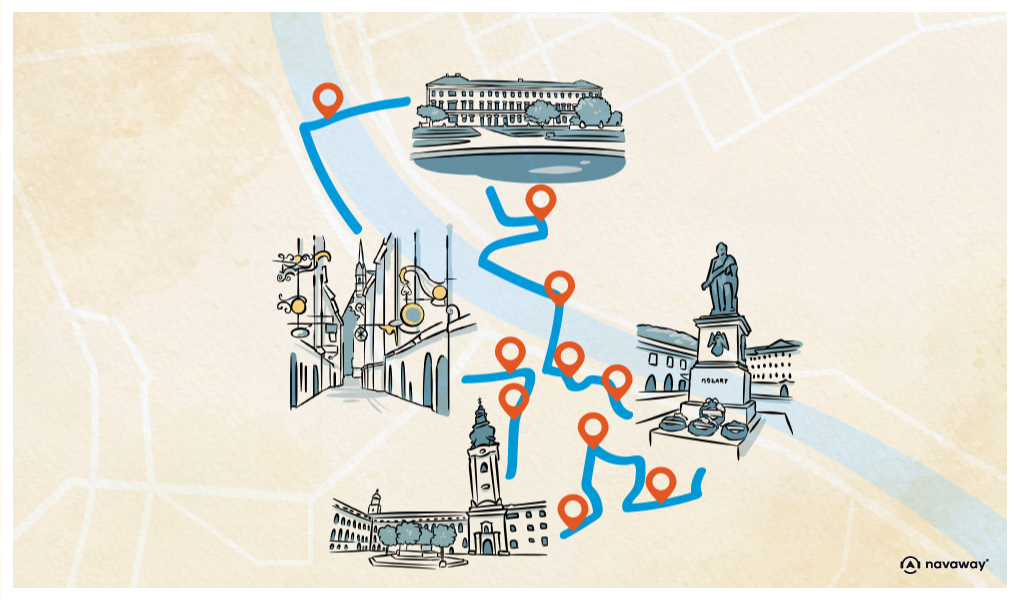
Histoire de Salzbourg
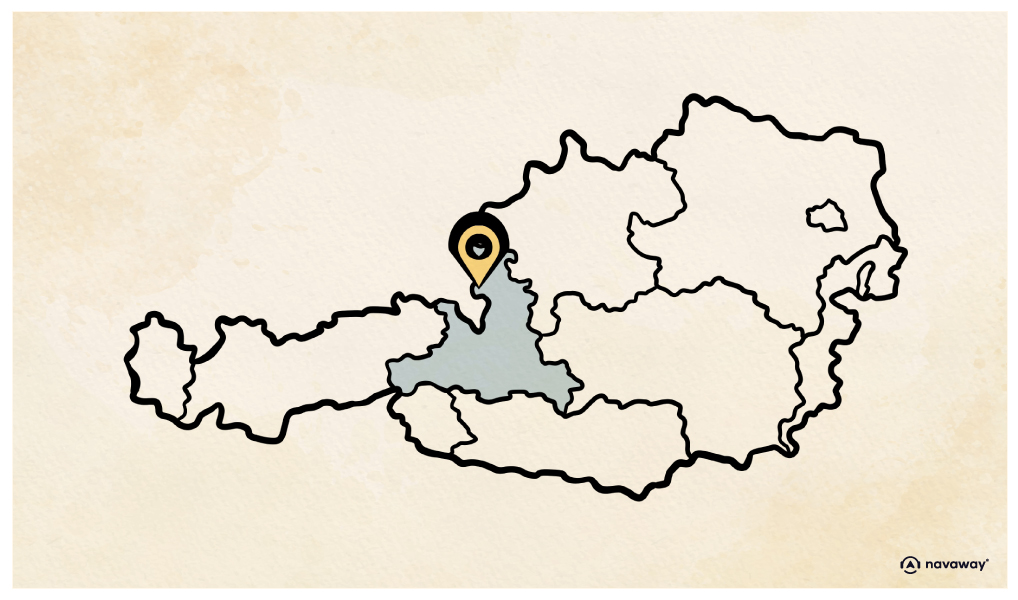

This point of interest is available as audio on the tour: Visit Salzburg, Meeting Mozart
Here’s a little break in the tour to delve into the history of the city often nicknamed the “Rome of the Alps.” Salzburg, a major Austrian city and capital of the state bearing the same name, has a rich and eventful past. Its name comes from the nearby salt mines, “Salz” means “salt” in German, which played a major role in the city’s economic rise, along with the fortress that was built here in the 11th century.
The area has been inhabited since the Neolithic period, first by the Illyrians and then by the Celts. In the 1st century BC, the Romans took over and renamed the settlement Juvavum. After the fall of the Roman Empire, the city was Christianized and governed by bishops, and later archbishops. It was during this time that St. Peter’s Abbey was founded. From the 13th to the 19th century, Salzburg was an independent city ruled by prince-archbishops.
Thanks to the thriving salt trade, the city grew and flourished. It also went through a significant Baroque transformation under the rule of Wolf Dietrich von Raitenau, Markus Sittikus von Hohenems, and Paris von Lodron. Inspired by the Italian Renaissance, the Baroque style reshaped much of the city’s architecture. Two Italian architects, Vincenzo Scamozzi and Santino Solari, were brought in to help craft the city into what we see today.
In 1803, Salzburg was handed over to the Grand Duchy of Tuscany, only to be annexed by Austria two years later, then taken by Bavaria four years after that, and finally returned to Austria in 1816. Got all that?
As you can see, Salzburg held on to its independence for centuries thanks to the power and wealth of its prince-archbishops, who left behind a city filled with stunning buildings, a rich cultural scene, and a strong defensive position thanks to its hilltop fortress. And of course, it became world-famous thanks to the genius of one of its most iconic residents: Wolfgang Amadeus Mozart. Today, Salzburg is Austria’s fourth-largest city and still shines brightly thanks to its remarkable architecture, artistic heritage, and enduring legacy.
Discover Salzburg with app
An interactive guide through the most beautiful streets, squares, and districts
25 fun audioguides full of historical facts, anecdotes, and legends

Comments