Visit Saint Stephen’s Basilica in Budapest
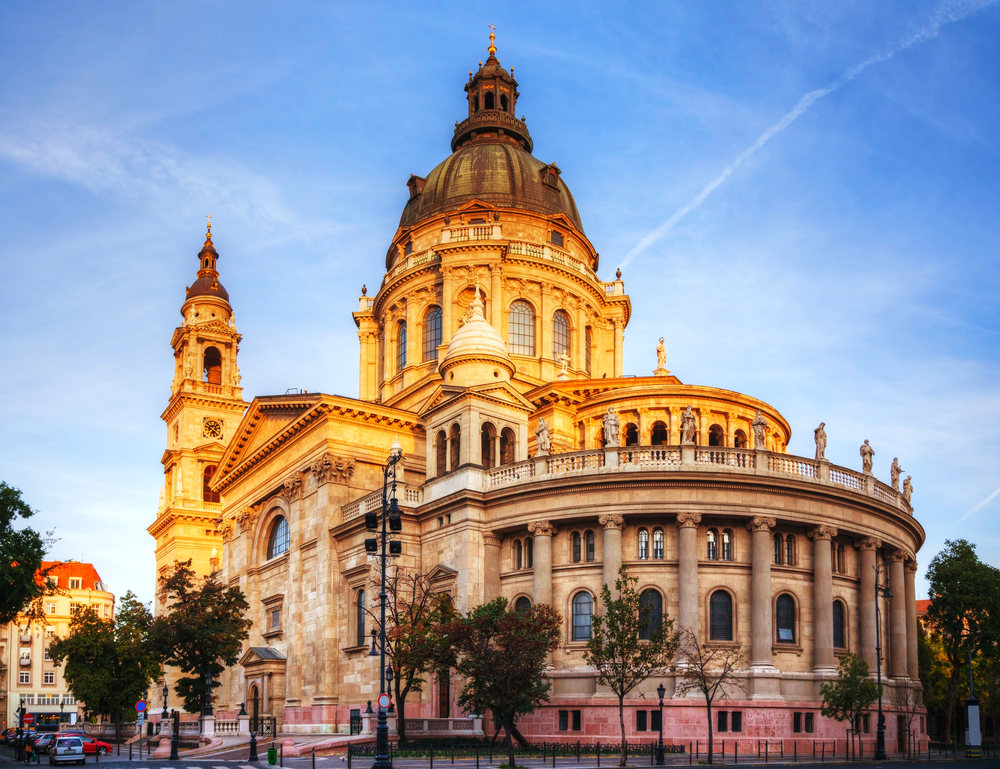

Towering 96 metres above the Budapest skyline, St Stephen’s Basilica (Szent István Bazilika in Hungarian) is one of the Hungarian capital’s most majestic monuments. This neo-classical architectural masterpiece, completed in 1905 after more than half a century of work, houses the country’s holiest relic: the mummified right hand of Saint Stephen, the first king of Hungary. Whether you’re passionate about history, architecture or simply in search of exceptional views, a visit to this basilica promises an unforgettable experience in the heart of Visit Budapest.
Also read the Budapest guide:
- Top 5 things to do in Budapest
- Things to do in and around Budapest
- Top 10 culinary specialities in Budapest
- Complete guide to bathing in Budapest (thermal baths)
History and architecture of the Basilica of Saint Stephen
Construction of Saint Stephen’s Basilica began in 1851 under the direction of architect József Hild, in a majestic neo-classical style. However, the building had a turbulent history: the collapse of the dome in 1868 meant that work had to start all over again. Miklós Ybl, one of the greatest Hungarian architects of the 19th century, finally carried out the project, incorporating neo-Renaissance influences. After 54 years of construction, marked by several interruptions and changes of architect, the basilica was inaugurated in 1905, the millennium of the founding of the Hungarian state.
The building has a Greek cross plan and reaches a height of exactly 96 metres, a symbolic height that recalls the year 896, when the Magyars arrived in Pannonia. This dimension is not insignificant: it places the basilica on a par with the Hungarian Parliament, illustrating the balance between spiritual and temporal power. The neo-classical façade, adorned with Corinthian columns and an imposing pediment, impresses with its perfect symmetry and detailed sculptures representing Hungarian saints.
Download the audio tour to discover Budapest on foot and on your own
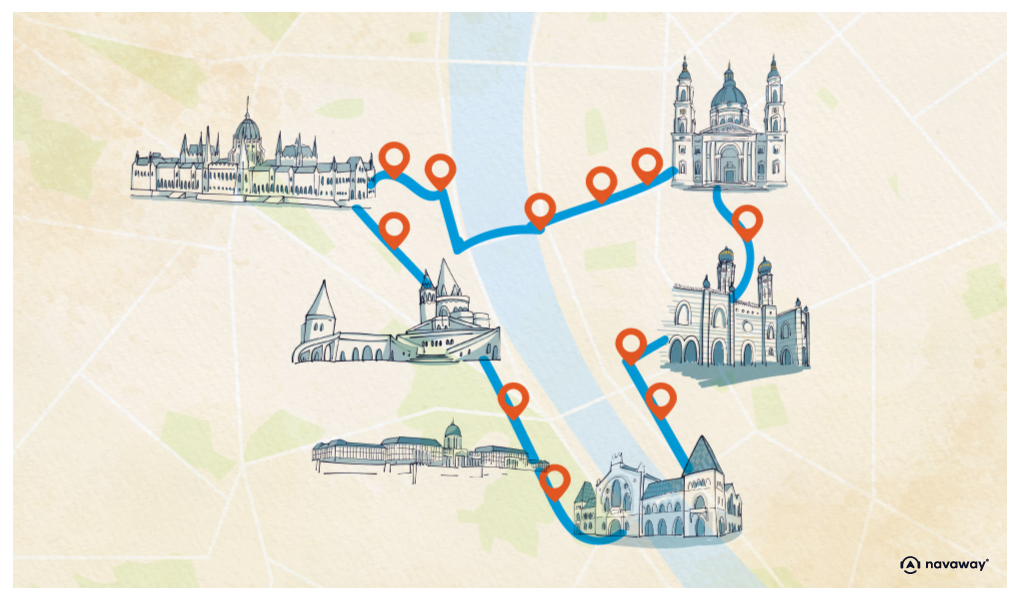
To explore Budapest in the best possible conditions and make sure you don’t miss out on any of its treasures, including the magnificent St Stephen’s Basilica, opt for the Navaway itinerary in Budapest. This 8.5 km audio tour takes you to 23 of the Hungarian capital’s major places of interest in 3 hours 45 minutes, with fascinating historical commentary and captivating anecdotes. The application guides you step by step through the emblematic districts of Buda and Pest, allowing you to visit the city at your own pace while benefiting from enriching explanations about each monument.
What can you see inside Saint-Etienne’s Basilica?
1. The main nave and its sumptuous decorations
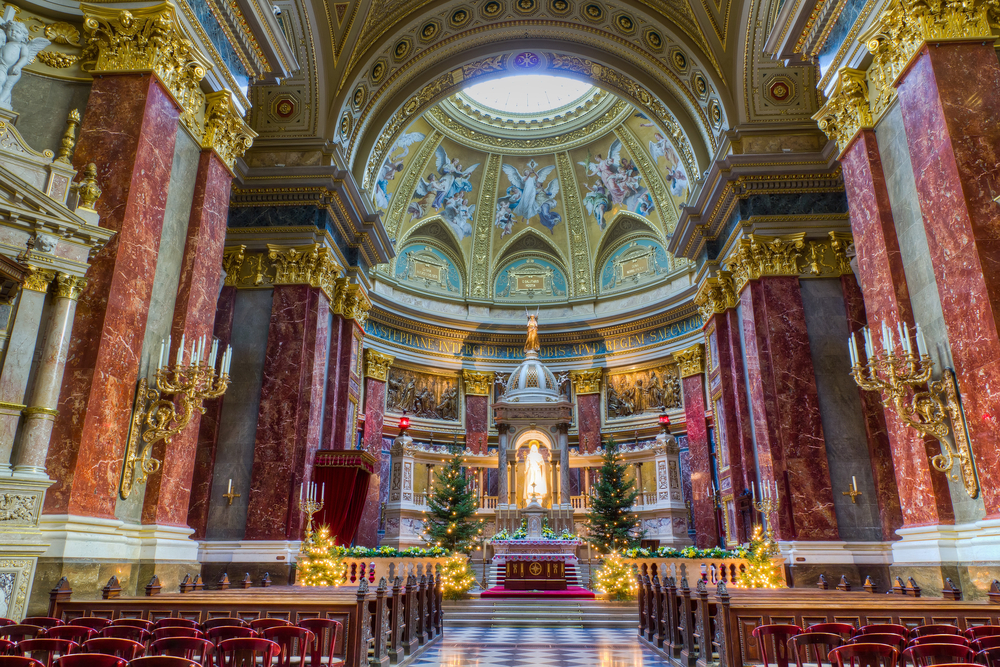
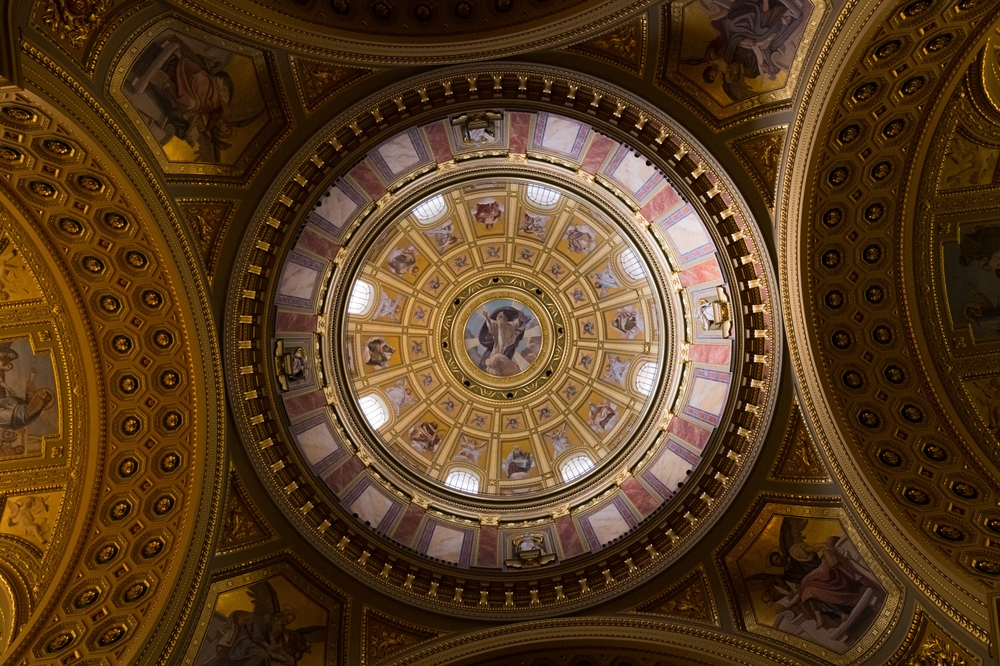
As you cross the threshold of the basilica, you are immediately struck by the majesty of the main nave, which can hold up to 8,500 people. The eye naturally wanders to the ceiling, richly decorated with frescoes depicting scenes from the life of Saint Stephen and biblical stories, created by the greatest Hungarian masters. Columns of imported marble support the imposing structure, while coloured stained glass windows filter the light, creating a unique spiritual atmosphere. The walls are adorned with sparkling Byzantine mosaics that catch the natural light and bring the sacred representations to life.
2. The Sainte-Dextre, sacred relic of Saint Stephen
The basilica’s most precious treasure is to be found in a side chapel: the Sainte-Dextre, the mummified right hand of Saint Stephen I, the first canonised king of Hungary. Preserved in a gold reliquary adorned with precious stones, this relic of vital importance to Hungary’s national identity is displayed behind protective glass. Every year on 20 August, the Hungarian bank holidays, the relic is carried in a procession through the streets of Budapest, attracting thousands of worshippers and visitors. The chapel that houses it is decorated with gilding, creating a particularly solemn atmosphere conducive to meditation.
3. The dome and panoramic terrace
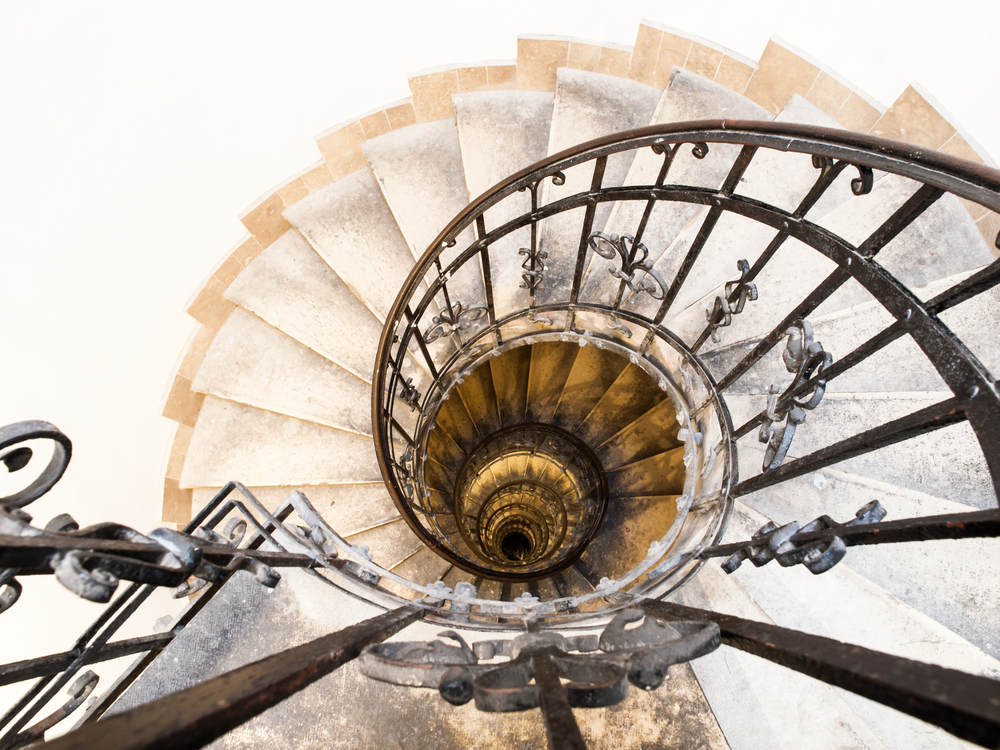
One of the highlights of a visit to Saint-Etienne’s Basilica is undoubtedly access to the panoramic terrace at the foot of the dome, 96 metres above the ground. To get there, you can either climb the 364 steps (a challenging but rewarding climb) or take the lift (at an additional cost). Once at the top, you can enjoy an absolutely spectacular 360-degree view of Budapest: the Danube winding its way between Buda and Pest, the Hungarian Parliament, Buda Castle on the hill, the Chain Bridge and the entire expanse of the city. This unique perspective helps you understand how the capital is organised and is one of the best views of Budapest. Choose the late afternoon to admire the sunset over the city, a magical moment you won’t forget.
Let the Navaway tour be your guide as you explore Budapest, taking you through the city’s most beautiful monuments with detailed explanations and practical advice.
4. The treasury and its liturgical objects
The basilica’s treasury is well worth an in-depth visit for lovers of sacred art and religious history. Here you will discover an exceptional collection of liturgical objects dating from different periods: finely chiselled chalices in gold and silver, monstrances inlaid with precious stones, chasubles embroidered with extraordinary meticulousness, elaborate reliquaries and illuminated manuscripts of rare beauty. Some of the pieces date back to the Middle Ages, and bear witness to the refinement of Hungarian craftsmanship. This collection is a veritable journey through the history of religious art in Hungary, offering a fascinating insight into the country’s rich ecclesiastical heritage.
5. The monumental organ and concerts
The basilica houses a majestic historic organ built in the 19th century, considered to be one of the most remarkable in Hungary. Fully restored, this instrument boasts a powerful yet subtle sound that resonates magnificently under the vaults of the building. Concerts are regularly organised, particularly in the evenings, offering visitors and music lovers a unique musical and spiritual experience. These organ recitals, often accompanied by sacred chants, allow visitors to appreciate the exceptional acoustics of the basilica and create a truly transcendent atmosphere. Consult the programme in advance to make sure you don’t miss these special moments.
6. The side chapels and their works of art
As you wander around the basilica, be sure to explore the various side chapels that line the nave. Each has its own character and houses remarkable works of art: sculptures of Hungarian saints, paintings depicting biblical scenes and finely crafted Baroque altars. These more intimate spaces offer peaceful places of meditation away from the tourist crowds of the main nave. The architectural details, the play of light through the stained glass windows and the artistic quality of the decorations all deserve a moment’s rest to fully appreciate their beauty.
7. The crypt and its funerary monuments
Located beneath the building, the crypt of the basilica contrasts in its sobriety with the splendour of the upper levels. It contains several tombs and funerary monuments commemorating illustrious figures from Hungarian history, including Cardinal József Mindszenty, a major figure in the Hungarian Catholic Church in the 20th century. This more austere atmosphere invites contemplation and reflection on the country’s complex history. The crypt is a moving reminder of the central role played by the Church in Hungary’s difficult times.
8. The bell in the south tower
The basilica’s south tower is home to Hungary’s largest bell, cast in 1990 to replace the original destroyed during the Second World War. Weighing around nine tonnes, this imposing bell resonates powerfully at major religious celebrations and national events, its deep tone carrying for miles around. It symbolises both the faith of the Hungarian people and the resilience of a monument that has survived the upheavals of history. Its chimes punctuate daily life in the district and remind the people of Budapest of the importance of this sacred site.
Opening times of the Basilica of Saint-Etienne
The Basilica of Saint-Etienne is open to visitors throughout the year at the following times:
- Monday to Saturday: 9am – 5.45pm (last entry at 5.15pm)
- Sunday: 1pm – 5.45pm (last entry at 5.15pm)
- Panoramic terrace and treasure trove: daily from 9am to 7pm (last entry at 6.30pm)
- Box office: open every day from 9.00 am to 6.30 pm
These times may vary for special religious ceremonies or events. It is advisable to check the updated timetable before your visit, particularly if you plan to come on a bank holiday or during the festive season.
Prices and tickets to visit the basilica
Here are the different ticket options available for visiting Saint Stephen’s Basilica in 2025:
1. Church ticket only
- Adult price: 2,400 Ft (approx. €6-7)
- Group rate (15 people or more): 1,600 Ft per person
- This ticket includes access to the main nave and a free tour of the interior of the basilica.
2. Panoramic terrace ticket + treasure
- Adult price: 4,500 Ft (approx. €11-12)
- Group rate (15 people or more): 3,600 Ft per person
- This ticket gives access to the panoramic terrace at the top of the dome and to the treasure.
3. All in One” combined ticket
- Adult price: 6,200 Ft (around €15-16)
- Group rate (15 people or more): 4,700 Ft per person
- This complete ticket includes access to the church, the panoramic terrace and the treasury
Tickets can be bought at the ticket office or online via specialised platforms. Buying online often means avoiding queues, particularly during the peak tourist season (May to September). Reduced fares are generally available for students and senior citizens on presentation of proof.
To make the most of your stay in Budapest, consider following the Navaway route, which includes St Stephen’s Basilica among its 23 must-see points of interest in the city.
How do I get to the Basilica of Saint-Etienne?
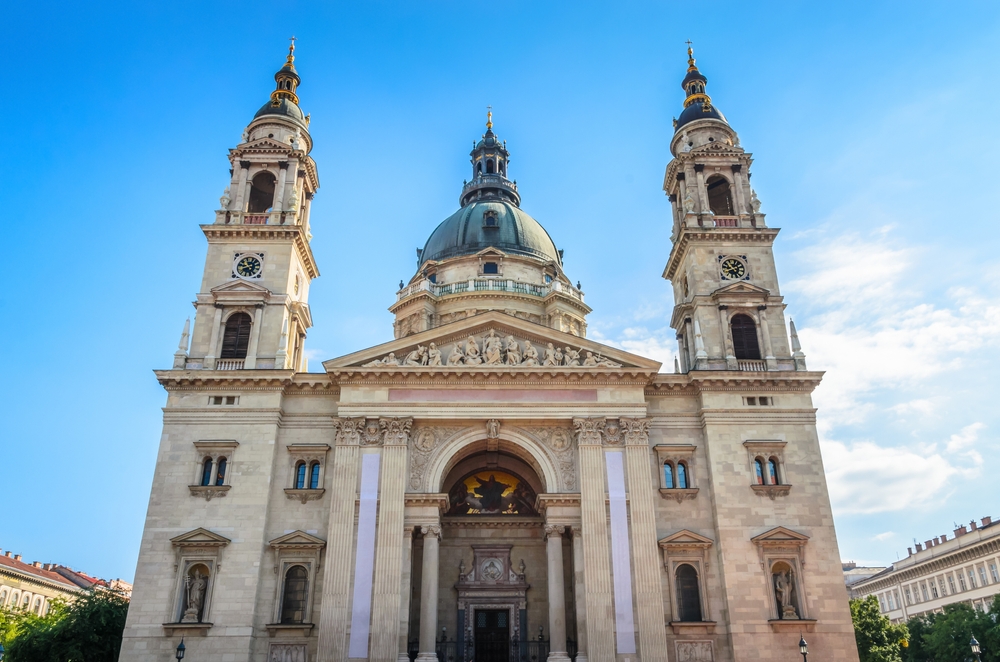
Saint Stephen’s Basilica enjoys a particularly convenient central location in the heart of Budapest, in the Pest district. The exact address is Szent István tér 1, 1051 Budapest (rated 4.7/5 on Google for over 80,000 reviews). There are several options for getting to this emblematic monument:
1. By metro
The quickest and most efficient way to get to the Basilica is by metro. Two lines serve the nearest stations: line M3 (blue) with a stop at Arany János utca, and line M1 (yellow) with a stop at Bajcsy-Zsilinszky út. From these stations, it’s about a 5-minute walk to the basilica. Budapest’s metro network is modern and well signposted, and operates from 4.30am to around 11pm.
2. By bus
A number of bus routes stop in the immediate vicinity of the basilica: bus 9 stops at Arany János utca, while bus 16 stops at Deák Ferenc tér, putting you just a few minutes’ walk from your destination. Buses run frequently during the day and are a comfortable alternative to the metro.
3. By tram
The tram offers a picturesque option for exploring Budapest on your way to the basilica. Tram 2, which runs along the Danube and offers superb views of the river, stops at Kossuth Lajos tér (about a 10-minute walk to the basilica). Lines 47 and 49 stop at Deák Ferenc tér, which is much closer to your destination.
4. On foot
If you are staying in the centre of Budapest or visiting other monuments in the area, walking is still the best way to discover the city and its architectural treasures. The Basilica is about a 10-minute walk south-east from the Hungarian Parliament, and 15 minutes from the Chain Bridge. This walk allows you to enjoy Budapest’s unique atmosphere and make unexpected discoveries along the way. What’s more, the Navaway tour naturally guides you to St Stephen’s Basilica as you explore the capital.
5. By taxi
Official Budapest taxis (such as Főtaxi) are available throughout the city and are a convenient, if more expensive, option. Make sure you only use official taxis recognisable by their yellow colour and sign. Travel time and fares vary depending on your point of departure and traffic conditions.
Practical advice for your visit
1. Best time to visit
To get the most out of your visit to the Basilica of Saint-Etienne, it’s best to visit on weekdays, particularly in the mornings when it opens (9.00 am) or in the late afternoon. These times will enable you to avoid the peak tourist numbers, which are generally concentrated between 11am and 3pm. Weekends and school holiday periods naturally attract more people. If you want to climb up to the panoramic terrace, the late afternoon offers particularly good light for photography and allows you to admire the sunset over Budapest, a truly magical sight.
2. Dress code
As Saint-Etienne’s Basilica is an active place of worship, a respectful dress code is required to enter. Make sure your clothes cover the shoulders and knees: long trousers, skirts below the knee, and avoid tank tops, short shorts and low-cut clothes. In summer, remember to bring a shawl or light jacket if you’re wearing lighter clothes. This respect for tradition makes it easier for you to get in and helps maintain the sacred atmosphere of the place.
3. Recommended length of visit
You should allow between 45 minutes and 1? hours for a full tour of Saint-Etienne’s Basilica, depending on your interest in the architectural details and the different areas. If you also want to visit the panoramic terrace and the treasury, you’ll need to allow more than 2 hours if you don’t want to be in a hurry. This time will allow you to enjoy the works of art at your leisure, climb up to the dome, admire the view and perhaps take part in a moment of contemplation.
4. Photography
Photography is generally permitted inside the basilica for personal use, but the use of flash is strictly forbidden in order to preserve the works of art and not disturb other visitors. Tripods are not permitted either. From the panoramic terrace, you can take magnificent photos of Budapest without restriction, so don’t forget your camera or smartphone!
5. Accessibility
The Basilica of Saint-Etienne has made efforts to improve its accessibility for people with reduced mobility. There are ramps for entering the building and a lift to the panoramic terrace (for the price of a ticket). However, some areas, such as the crypt, may be difficult to access. We recommend that you ask the staff on site about the facilities available.
6. Guided tours and audio guides
Guided tours in several languages (including French) are organised on a regular basis, providing a much richer understanding of the basilica’s history and architecture. Audioguides are also available for hire on site. For an even more complete experience of Budapest, the Navaway audioguide tour integrates the basilica into an overall tour of the city with detailed explanations.
7. Attend a mass or concert
The Basilica of Saint-Etienne remains an active place of worship, where masses are celebrated daily. Attending a religious ceremony allows you to discover the building in its original function and enjoy a particularly moving atmosphere. Organ and classical music concerts are also held regularly, especially in the evenings. Check the programme in advance on the official website or at the tourist office to reserve your seats.
Anecdotes and historical facts
1. 54 years in the making
The construction of the Basilica of Saint Stephen was spread over 54 particularly eventful years, from 1851 to 1905. The catastrophic collapse of the dome in 1868 meant that the foundations and supporting structure had to be completely rebuilt. Successive architects had to consolidate each level to guarantee the solidity of the whole, giving the building a remarkable robustness that enabled it to withstand the trials of the twentieth century, particularly the bombings of the Second World War.
2. The Sainte-Dextre, a priceless royal relic
The relic of the right hand of Saint Stephen, the first king of Hungary, who died in 1038, is one of the country’s most important national symbols. Preciously preserved over the centuries despite invasions and wars, it has been moved several times to protect it. Now displayed in a sumptuous gold reliquary, it is taken out in solemn procession every 20 August on the Hungarian bank holidays, attracting tens of thousands of people who come to pay their respects.
3. The symbolic number 96
The basilica’s exact height of 96 metres is by no means a coincidence: it commemorates the year 896, the date when the Magyar tribes settled in Pannonia under the leadership of the chief Árpád, an event that founded the Hungarian nation. This symbolic height is also found in the Hungarian Parliament, located on the other bank of the Danube, illustrating the equality of religious and civil power in the organisation of the State. This architectural and symbolic symmetry testifies to the importance attached to the balance of power in modern Hungary.
4. Refined neo-Renaissance architecture
The style of the basilica skilfully blends neoclassicism and neo-Renaissance influences, the work of three successive architects. Miklós Ybl, who took over the work after the collapse of the dome, imprinted his particularly elegant vision on the building. The majestic Corinthian columns, finely sculpted ornamentation, sparkling Byzantine mosaics and harmonious fusion of styles create an architectural ensemble of rare coherence, despite the changes in teams over the decades.
5. Resilience in the face of bombing
During the Second World War, Budapest was subjected to violent bombardments that seriously damaged many of its monuments. One shell miraculously passed through the dome of the basilica without exploding, sparing the interior from certain destruction. However, many stained glass windows were blown out and several walls damaged. Restoration work carried out between 1983 and 2003 restored the building to its original splendour, while preserving certain visible traces of these tragic events as historical testimony.
6. The biggest bell in Hungary
The south tower of the basilica houses the country’s largest bell, cast in 1990 to replace the one destroyed during the war. Weighing more than nine tonnes, it resonates powerfully at major religious and national celebrations, its deep tone carried for miles around. This new bronze symbolises the rebirth and continuity of the Hungarian spiritual tradition after the trials of the 20th century. Its chimes punctuate the life of the district and serve as a reminder of the central importance of this sacred place in the hearts of the people of Budapest.
What can you do around Saint-Etienne basilica?

Saint Stephen’s Basilica lies at the heart of a district that is particularly rich in tourist and cultural attractions. After your visit to this majestic building, there are many ways to continue your discovery of Budapest:
1. Széchenyi Square and its terraces
Just a stone’s throw from the Basilica is the magnificent Place Széchenyi (also known as Place Roosevelt), lined with elegant art nouveau buildings and offering breathtaking views of the Danube and the Chain Bridge. It’s the ideal place to take a break on a terrace, sip a Viennese coffee or simply take in the bustle of the city. The Navaway route guides you naturally through these emblematic places.
2. Andrássy Avenue and its palaces
Andrássy Avenue, a UNESCO World Heritage Site, begins near the Basilica and stretches 2.3 km to Heroes’ Square. This prestigious thoroughfare, lined with sumptuous neo-Renaissance palaces, luxury boutiques, historic cafés and theatres, is one of Budapest’s most beautiful promenades. Take a stroll along this avenue to admire the exceptional architecture and elegant atmosphere.
3. The Hungarian Parliament
Around 15 minutes’ walk north of the basilica stands the majestic Hungarian Parliament, one of the most beautiful parliamentary buildings in the world. With its spectacular neo-Gothic façade, 268 metres long and 96 metres high (the same height as the Basilica!), it dominates the banks of the Danube. Guided tours take in its sumptuous interiors adorned with gold and marble, as well as the jewels of the Hungarian Crown.
4. The Jewish Quarter and the Great Synagogue
A ten-minute walk to the east is Budapest’s historic Jewish quarter, with its famous ruin bars, vintage shops and moving memorials. The Great Synagogue, the largest in Europe, impresses with its Moorish architecture and houses a museum tracing the history of the Hungarian Jewish community. The district also offers a lively nightlife and numerous restaurants serving authentic cuisine.
5. The Chain Bridge
The first permanent bridge linking Buda and Pest, the Chain Bridge (Széchenyi lánchíd) is a 10-minute walk south of the basilica. Inaugurated in 1849, it is one of Budapest’s most recognisable symbols, with its imposing stone lions guarding each end. Crossing the bridge on foot offers spectacular views of the Danube and the Buda Castle on the hill on the other bank.
6. Traditional cafés and restaurants
The area surrounding the basilica is packed with historic cafés and restaurants serving traditional Hungarian cuisine. Enjoy an authentic goulash, langos (fried doughnuts), or sample local pastries such as kürtőskalács (spit cake). The adjacent streets also offer plenty of dining options to suit all budgets.
To make sure you don’t miss out on any of these marvels and make the most of your time, take the Navaway tour of Budapest, which takes you through the city’s must-sees with informative commentary.
In conclusion, Saint Stephen’s Basilica is a must-see on any visit to Budapest. This neo-Renaissance architectural masterpiece, the result of half a century of painstaking work, embodies Hungarian faith, history and national identity. From the majesty of its richly decorated nave to the breathtaking panoramic view from its dome, not forgetting the veneration of the Holy Exeter and the discovery of its precious treasure, every element of this basilica tells a part of the soul of Budapest. Its central location makes it an ideal starting point for exploring the Pest district and its many surrounding attractions. Whether you are passionate about history, religious architecture or simply looking for exceptional views of the Hungarian capital, this visit will leave you with lasting memories. Don’t hesitate to continue your discovery of Budapest with the Navaway audioguide tour, which will take you through the 23 major places of interest in this fascinating city.
FAQ : Your questions about Saint-Etienne Basilica
Do I need to book my ticket in advance to visit the Basilica?
Advance booking is not compulsory, but is strongly recommended in high season (May to September) to avoid long queues, particularly between 11am and 3pm. Buying your tickets online saves you time and ensures you get in at the time you want.
How long does it take to climb to the top of the dome?
If you take the stairs (364 steps), allow around 15-20 minutes to reach the panoramic terrace, depending on your pace. The lift is quicker (around 2-3 minutes) but sometimes requires a short wait. Then allow 20-30 minutes to take full advantage of the 360-degree view over Budapest.
Is the basilica free to visit?
Access to the main nave may be free for certain events or masses, but the suggested contribution is around 2,400 Ft. To access the panoramic terrace and the treasury, and to take full advantage of all the areas, you will need to buy a ticket. Prices are reasonable, given the richness of the heritage on display.
Is the basilica accessible to people with reduced mobility?
Yes, there are ramps into the basilica and a lift to the panoramic terrace. Some areas, such as the crypt, may present difficulties, but the on-site staff are on hand to provide information and assist you with your visit.
Can I attend a mass in the basilica?
Absolutely, the Basilica of Saint-Etienne is an active place of worship where masses are celebrated daily. Mass times are posted at the entrance and are also available on the official website. Attending a mass gives you the opportunity to discover the building in its primary spiritual dimension and to enjoy a particularly moving atmosphere.
What’s the best time of day to photograph the Basilica?
When photographing the exterior, the morning offers beautiful light on the main façade. Inside, the natural light coming through the stained glass windows is particularly beautiful in the middle of the day. For views from the panoramic terrace, late afternoon and sunset (between 5pm and 7pm depending on the season) offer exceptional light conditions and magnificent colours over Budapest.
Are there concerts in the basilica?
Yes, the basilica regularly hosts organ and classical music concerts, particularly in the evenings. These musical events provide an opportunity to appreciate the exceptional acoustics of the building and its historic organ. Check the programme in advance on the official website or at the tourist office to reserve your seats, as these concerts are very popular.
200 audioguided tours for cities all around the world
Download