Visiting the Millau Viaduct: information, activities and practical advice
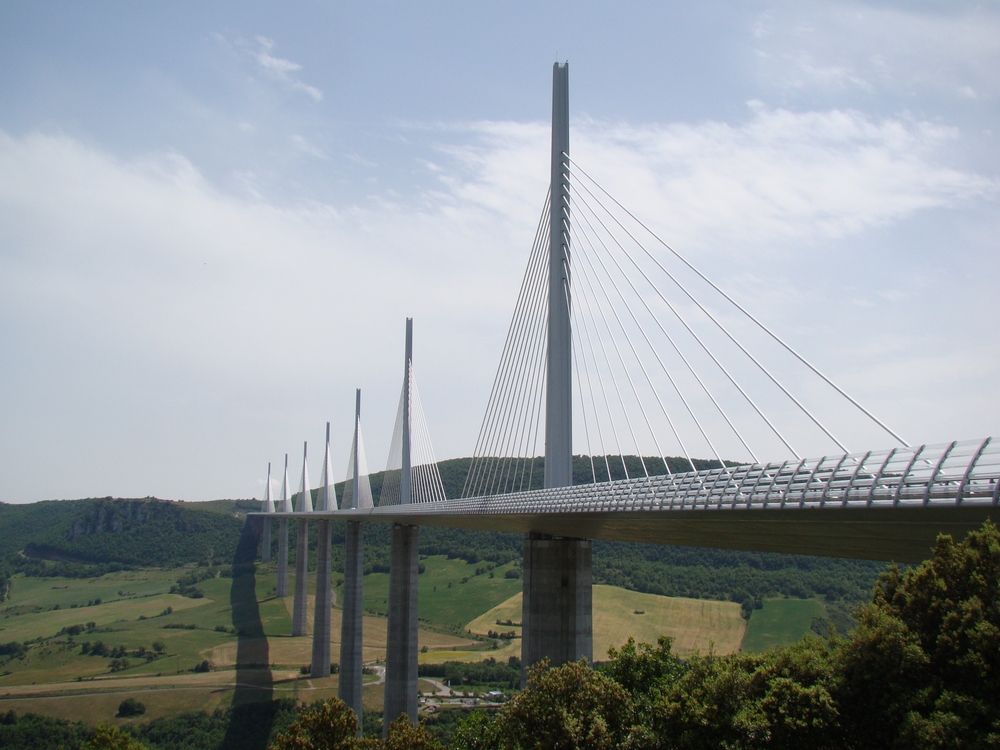

Inaugurated in 2004, the Millau Viaduct is one of the most spectacular architectural feats of the 21st century. The joint work of British architect Norman Foster and French engineer Michel Virlogeux, this cable-stayed bridge majestically spans the Tarn valley for 2,460 metres. With its 343-metre-high P2 pylon, it is taller than the Eiffel Tower and offers a breathtaking spectacle to travellers on the A75 motorway. Much more than just an engineering structure, the Millau Viaduct has become a must-see tourist attraction in Aveyron, attracting hundreds of thousands of visitors every year, fascinated by its elegance and sheer size.
Also in the Aveyron guide :
- The 18 must-sees to discover Occitania
- 110 most beautiful places to visit in France
- 20 must-see weekend ideas around Montpellier
- Top 10 must-see things to do in Occitanie
- The most beautiful villages to discover in Occitanie
- 12 waterfalls in Occitanie where you can swim in the heart of nature
1. History and construction of the Millau Viaduct
The story of the Millau Viaduct began in the 1980s, when the French authorities noted the chronic saturation of the RN9 through the town of Millau. During the summer months, traffic jams paralysed traffic between the north and south of the country. The solution gradually became apparent: to create an audacious bypass that would cross the Tarn valley in a single stretch. After years of studies and an international competition launched in 1996, the project designed by Norman Foster and Michel Virlogeux was chosen. These two giants of architecture and engineering designed a structure that was both technical and aesthetic, capable of blending harmoniously into the landscape of the Grands Causses.
Work began in December 2001, involving hundreds of workers, engineers and technicians. Building the Millau Viaduct was a titanic challenge: seven monumental piers had to be erected, the tallest reaching 245 metres, and then the 36,000-tonne steel deck had to be laid using hydraulic jacks. This innovative method involves gradually pushing the deck from both ends until it connects the seven pylons. Each stage is meticulously calculated to guarantee the stability of the whole structure in the face of the violent winds that sweep across the valley. The Millau Viaduct was inaugurated on 14 December 2004 by President Jacques Chirac, marking the culmination of three years’ work and a €320 million investment financed by the Eiffage group under a 78-year concession.
Meeting the technical challenges
To design this giant of steel and concrete, the teams had to overcome exceptional constraints. The deck rests on seven guyed pylons that guarantee its rigidity while giving it a remarkable visual lightness. Wind tunnel tests were used to test the structure’s resistance to winds of up to 205 km/h, ensuring the safety of motorists even in the most extreme conditions. The multi-span design of the Millau Viaduct, inspired by the most modern techniques, has made it a benchmark throughout the world. Even today, engineers and architects from all over the world come to study this achievement, which combines performance, durability and beauty.
2. Guided tours of the Millau Viaduct
To fully appreciate the complexity and beauty of the Millau Viaduct, there’s nothing like a guided tour of the site. The Aire du Viaduc de Millau, located at the foot of the viaduct, offers a number of ways to discover this architectural masterpiece from different angles. The most popular tour is the “Sentier des Explorateurs”, a 40-minute walk along the old construction site tracks. Accompanied by an audio guide available in five languages (French, English, Spanish, German and Italian), you can get up close to the pylons and discover the secrets behind the construction of this giant. The detailed explanations provide a better understanding of the scale of the technical challenge faced by the teams building the Millau Viaduct.
Admission to the Explorers’ Trail is €6 for adults, €4 for children aged 6 to 17 and students, and €14 for a family pass (two adults and their children or grandchildren aged 6 to 17). Admission is free for children under 6. Visits must be booked in advance, with several time slots available throughout the day, depending on the season. In addition, the Espace Viaduc Expo, also located on the site, offers a free multimedia exhibition retracing the history of the construction through models, documentary films and interactive installations. This immersive space allows visitors to immerse themselves in the daily lives of the workers, understand the technical choices made and measure the environmental impact of the Millau Viaduct, an architectural feat.
Opening times
Opening times vary according to the season. From January to the end of March, reception is open from 9am to 4.50pm (last admission at 4.20pm). From 1 April to 5 July, opening times are from 9am to 5.50pm (last admission at 5.20pm). During the high tourist season, from 6 July to 31 August, you can visit the Millau Viaduct from 9am to 6.45pm (last admission at 6.15pm). Then, from 1 September to 2 November, opening times return to 9.00am – 5.50pm, before shortening again from November to the end of December, closing at 4.50pm. The site is only closed on 1 January and 25 December. It is strongly recommended that you book your visit online to avoid queues, especially during the summer.
3. The best views of the Millau Viaduct

Admiring the Millau Viaduct from different vantage points allows you to fully appreciate the majesty of this exceptional structure. The first essential stop is the Aire du Viaduc de Millau, accessible from the A75 motorway (exit 45 from the north). This equipped rest area offers a breathtaking frontal view of the structure and is the best place to take spectacular souvenir photos. From this vantage point, you can see all seven pylons in a single view, and appreciate the sheer size of the void that spans them. A signposted path, the Sentier du Belvédère, climbs to the top to offer an even more impressive bird’s-eye view of the Millau Viaduct and the Tarn valley.
Another remarkable viewpoint is the Millau and Viaduct Viewpoint (rated 4.7/5 on Google for 412 reviews), located high above the town. This panoramic viewpoint offers a 360-degree view of the viaduct, the town of Millau and the Grands Causses. The listed village of Peyre, one of the Most Beautiful Villages in France, also offers a unique angle from which to photograph the Millau viaduct in its natural setting. The Pont Lerouge, accessible on foot or by car from the town centre, offers an exceptional view at sunset, when the last rays illuminate the guyed cables and steel deck. Finally, from the terrace of the Millau Belfry, a historic monument in the heart of the town, you can enjoy a distant but complete panorama of the structure.
Photo tips
Amateur and professional photographers alike will be delighted by the Millau Viaduct. To capture the best images, favour the golden hours of sunrise and sunset, when the low-angled light sublimates the lines of the structure. On foggy or low cloudy days, the viaduct seems to float in the air, offering mysterious and enchanting shots. Don’t forget your telephoto lens to capture the details of the guyed cables and pylons. From the road leading to La Cavalerie, there are several small car parks where you can stop in complete safety to immortalise the viaduct in its natural setting.
4. Crossing the Millau Viaduct by car
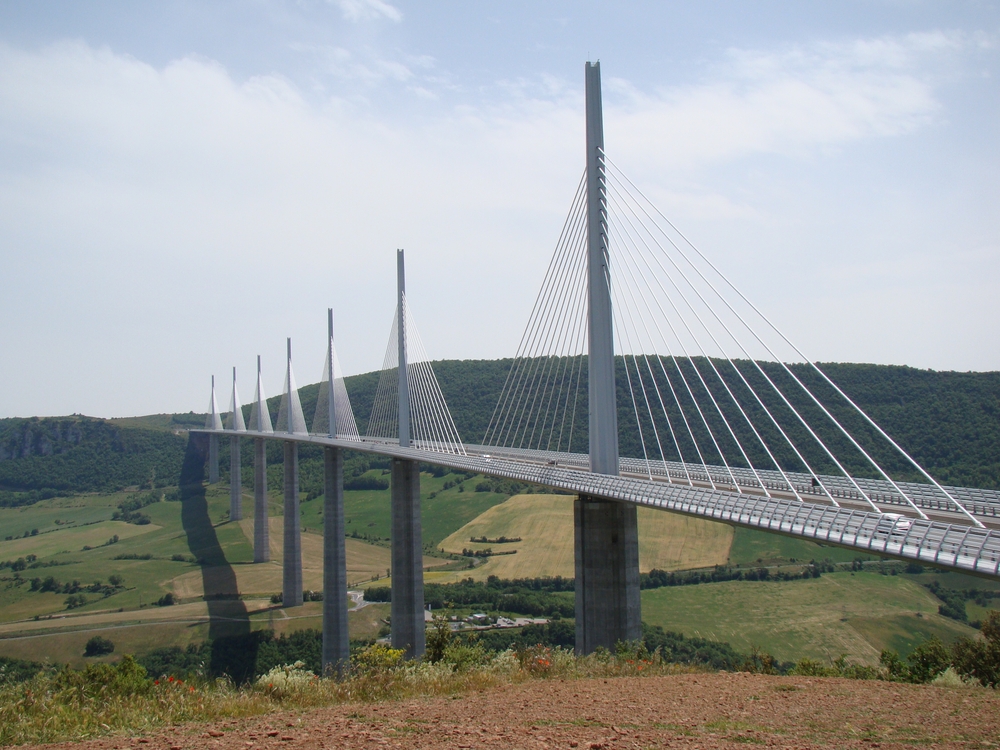
Driving over the Millau Viaduct is a unique and unforgettable experience. This 2,460-metre-long structure is crossed on the A75 motorway, a major route linking Clermont-Ferrand to Béziers. As you travel on the deck suspended more than 270 metres above the Tarn valley, you will experience a striking sensation of floating and weightlessness, enhanced by the visual lightness of the structure. On a clear day, the panorama of the Causses du Larzac, the Causse Rouge and the surrounding mountains is absolutely breathtaking. On the other hand, during foggy spells, it’s not unusual for clouds to cling to the deck, creating an unreal atmosphere where you’re literally flying through the clouds.
Vehicles using the A75 must pay a toll to cross the Millau Viaduct. The toll rate varies according to the category of vehicle and the season. For a passenger car (class 1), the charge is around €12 in normal periods and up to €18 in the high summer season. Motorcyclists and vehicles with trailers are also subject to this toll. You can pay in cash, by credit card or with an electronic toll tag for faster passage. If you wish to avoid this cost, there is an alternative: branch off through the Millau conurbation onto the D992, although this option considerably lengthens the journey time and does not allow you to enjoy the unique experience of crossing the Millau Viaduct.
Safety rules and driving tips
When crossing the Millau Viaduct, scrupulously observe the speed limits (110 km/h maximum) and keep a safe distance. Weather conditions can change rapidly, particularly the wind, which can be violent on the deck. Patrols are on duty at all times and will intervene in the event of a breakdown or incident. Please note that it is strictly forbidden to stop or park on the viaduct for safety reasons. If you wish to take photographs or admire the view, use the areas provided before or after crossing the Millau viaduct.
5. What can you do around the Millau Viaduct?
The Millau region is full of exceptional activities and natural sites to discover after a visit to the viaduct. Thrill-seekers can go paragliding from the surrounding cliffs to fly over the Millau Viaduct and enjoy a breathtaking aerial view. Several paragliding schools offer tandem first flights with experienced instructors, offering a unique perspective on this architectural feat. Bungee jumping is also available on the Sainte-Eulalie viaduct, just a few kilometres from Millau, for those looking for a maximum adrenalin rush. Prices for bungee jumping start at around €50, making for an unforgettable experience.
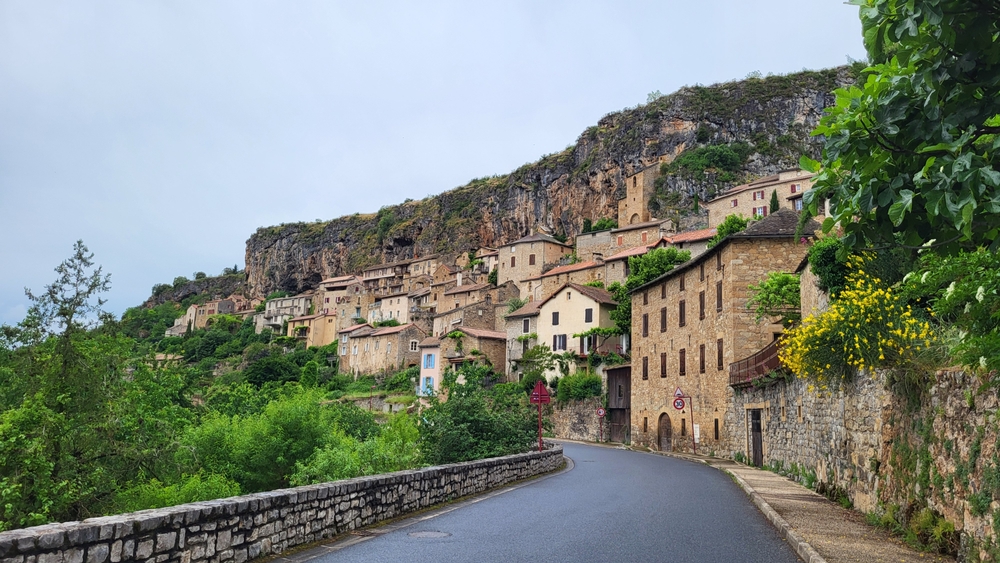
The Gorges du Tarn is another of the region’s major attractions, only a ten-minute drive from Millau. These spectacular gorges are ideal for a wide range of outdoor activities, including canoeing, kayaking, hiking, rock-climbing or simply driving along the scenic route that winds its way along the river. The medieval village of Peyre, listed as one of France’s Most Beautiful Villages, is also well worth a visit for its troglodyte houses and cave church. Twenty kilometres away, the natural site of the Cité de Pierres at Montpellier-le-Vieux offers a lunar landscape of dolomitic rocks sculpted by erosion. Finally, the caves at Roquefort-sur-Soulzon, around 25 kilometres from the Millau Viaduct, are the perfect place to discover the famous blue-veined cheese and taste this exceptional product in its natural maturing caves.
The town of Millau
Millau itself is well worth a visit, with its picturesque historic centre, lively squares and architectural heritage. The Millau Belfry (1 Place de la Fraternité, 12100 Millau, rated 4.1/5 on Google out of 40 reviews), an ancient 12th-century keep, dominates the town and offers a panoramic view of the viaduct and surrounding area from its summit. The Millau museum retraces the history of glove-making, a traditional activity that has made the town famous for centuries. The market halls, the medieval Pont Vieux (rated 4.5/5 on Google out of 317 reviews) and the cobbled streets of old Millau provide a charming backdrop for a walk. Don’t miss the Place du Maréchal Foch, the beating heart of the town, where a colourful market is held several times a week. For lovers of nature and wide open spaces, the Grands Causses Regional Nature Park offers unspoilt landscapes ideal for hiking, mountain biking and wildlife watching, just a few minutes from the Millau Viaduct.
6. Practical information for visiting the Millau Viaduct
The Millau Viaduct (12400 Millau, France, rated 4.6/5 on Google out of 5,955 reviews) is accessible all year round, 24 hours a day, 7 days a week. The Aire du Viaduc de Millau, the starting point for guided tours and the exhibition area, is located on the A75 between exits 45 and 46. Access is free from the north before the toll (exit 45) or from Millau via the D992. To get there from Millau town centre, allow around 10 minutes by car heading north. If you are arriving by train, Millau SNCF station is served by regional lines from Béziers and Clermont-Ferrand. From the station, shuttle buses or taxis take you to the viaduct site in around 15 minutes. Travellers arriving by plane will land at Rodez Aveyron airport, around 70 kilometres away, from where it is possible to hire a car or take a bus to Millau and the viaduct.
On site, the Aire du Viaduc de Millau has a large free car park, toilet facilities, shaded picnic areas and a children’s play area. There’s even a dog agility course where your four-legged friends can stretch their legs. The Viaduc Expo area, open every day (opening times vary according to the season), features free multimedia exhibitions retracing the epic story of the construction of the Millau Viaduct. Documentary films, interactive models and explanatory panels take visitors behind the scenes of this extraordinary project. The site is fully accessible for visitors with reduced mobility, with adapted walkways and reserved parking spaces in the immediate vicinity of the facilities. Visitors are advised to allow at least two hours on site to take full advantage of the guided tour, the exhibition and the panoramic views of the Millau Viaduct.
Where to eat and stay
L’Aire du Viaduc de Millau has a restaurant serving local produce and specialities from Aveyron. There is also a souvenir shop where you can buy local produce, books on the history of the viaduct and related items. For a more elaborate meal or an overnight stay, Millau offers a wide choice of hotels, bed & breakfasts and restaurants. Establishments located in the town centre allow you to combine a visit to the viaduct with a discovery of Millau’s heritage. A number of campsites and self-catering cottages are also available in the surrounding area for lovers of nature and tranquillity. It is advisable to book your accommodation in advance, especially during the peak summer season, when the Millau Viaduct is at its busiest.
7. Millau Viaduct anecdotes and records
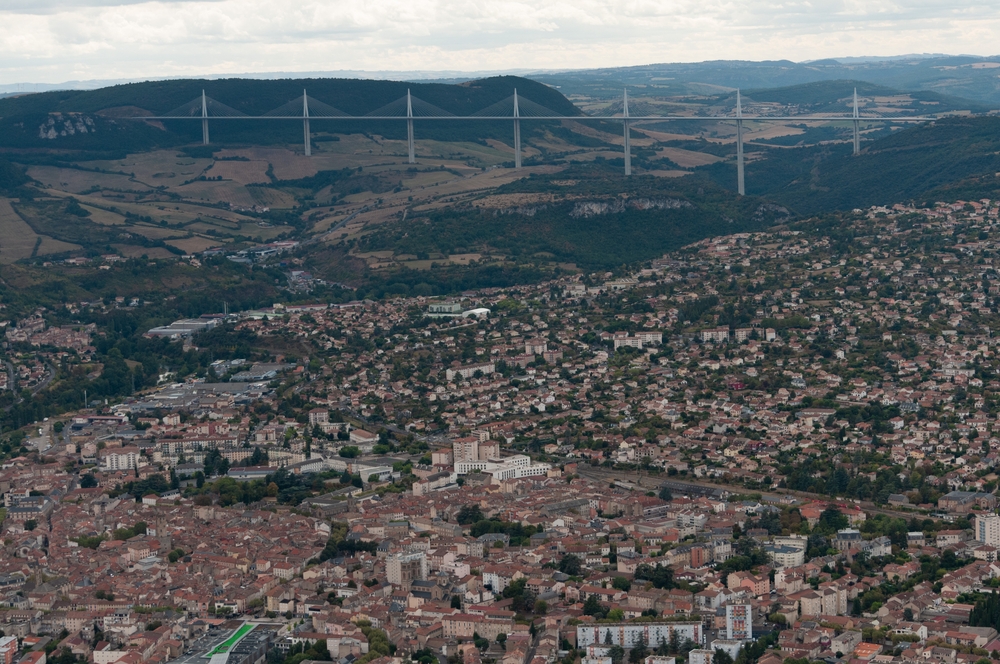
The Millau Viaduct holds a number of world records that testify to its exceptional nature. With its P2 pylon rising to 343 metres, it is the highest road bridge in the world, surpassing the Eiffel Tower by almost 20 metres. The deck, 270 metres above the river Tarn at its highest point, offers a breathtaking sensation of vertigo as you cross. The construction of this giant required 127,000 cubic metres of concrete, 19,000 tonnes of steel for the piers and 36,000 tonnes of steel for the deck. The seven pylons, varying in height from 77 to 246 metres, support 154 guy wires that ensure the stability of the whole structure in the face of climatic constraints, particularly the wind, which can blow at over 200 km/h in the Millau Viaduct valley.
During construction, there were no fatal accidents, which is a remarkable achievement for a project of this scale. The teams worked in sometimes extreme conditions, suspended dozens of metres above the void. The deck was put in place using an innovative push-pull technique, enabling the 36,000 tonnes to be advanced progressively from the two ends to the final junction, which was achieved with millimetre precision. This delicate operation required several months of painstaking work and complex calculations. Today, the Millau Viaduct is used daily by between 10,000 and 12,000 vehicles, a figure that can double during the summer months. The viaduct has transformed the local economy, attracting hundreds of thousands of tourists every year from all over the world to admire this architectural masterpiece that has become the emblem of the Aveyron region.
An award-winning project
The Millau Viaduct has received numerous international awards for its technical and aesthetic excellence. In 2006, it received the Outstanding Structure Award from the International Association of Bridges and Structures. Architects and engineers around the world regard this structure as a benchmark in cable-stayed bridge design. The viaduct is regularly studied in engineering and architecture schools, both for its technical qualities and for its successful integration into the landscape. Norman Foster himself has said that the Millau viaduct represents one of his most accomplished creations, combining structural performance and visual grace in perfect balance.
In conclusion, visiting the Millau Viaduct is much more than just admiring a bridge: it’s discovering a technical and architectural feat that pushes back the limits of modern engineering. Whether you choose to drive over it to experience the unique sensation of floating above the Tarn valley, admire it from one of the many panoramic viewpoints that surround it, or take part in a guided tour to discover all its secrets, the Millau Viaduct will leave you with an unforgettable memory. Combined with the discovery of the charming town of Millau, the Gorges du Tarn and the exceptional landscapes of the Grands Causses, your stay in this region of Aveyron promises to be rich in emotion and discovery. Don’t wait any longer to plan your visit to this giant of steel and concrete, which has fascinated and amazed travellers from all over the world since 2004.
FAQ: your questions about the Millau Viaduct
Is the Millau Viaduct free to visit?
The Viaduc Expo area, which features multimedia exhibitions on the history and construction of the viaduct, is completely free and open to all. There is, however, a charge for guided tours of the Sentier des Explorateurs (€6 for adults, €4 for children and students, €14 for families). The outdoor viewpoints, such as the Aire du Viaduc and the panoramic lookouts, are also freely accessible.
How much does it cost to drive across the Millau Viaduct?
The toll for a passenger car varies between €12 and €18, depending on the time of year. Prices are higher in the high summer season (July-August). It is possible to avoid the toll by going via Millau on the D992, but this considerably increases the journey time.
When is the best time to visit the Millau Viaduct?
The Millau Viaduct can be visited all year round, with each season offering a different spectacle. Spring and autumn are particularly pleasant, with mild temperatures and moderate visitor numbers. In summer, you can enjoy long, sunny days, but tourist numbers are at their highest. Winter sometimes offers enchanting scenery, with the viaduct emerging from the mist or overlooking a snow-covered valley, although the weather can be more difficult.
Can you walk on the Millau Viaduct?
No, for obvious safety reasons, pedestrians are strictly forbidden from walking on the deck of the Millau Viaduct. The viaduct is only accessible by motor vehicle via the A75 motorway. To see the structure up close, you can take the Sentier des Explorateurs, which runs along the foot of the pylons and offers a unique view of the structure.
Are there any activities for children at the Millau Viaduct?
Yes, the Aire du Viaduc de Millau site has a play area for children, as well as an agility course for dogs. The guided tour of the Sentier des Explorateurs is suitable for families, and children under 6 are entitled to free admission. The Viaduc Expo area features interactive installations that captivate young visitors and give them a fun way to understand the technical prowess of the viaduct.
Is the Millau Viaduct accessible to people with reduced mobility?
Yes, the entire Aire du Viaduc de Millau site is accessible to people with reduced mobility. Reserved parking spaces are available in the immediate vicinity of the facilities, and the walkways are designed to allow wheelchair access. The Viaduc Expo area is also fully accessible. For guided tours of the Sentier des Explorateurs, we recommend that you contact the site directly beforehand to find out about the accessibility requirements for your particular situation.
200 audioguided tours for cities all around the world
Download