
Le Havre Beach

This point of interest is available as audio on the tour: Visit Le Havre, The Ocean Gateway
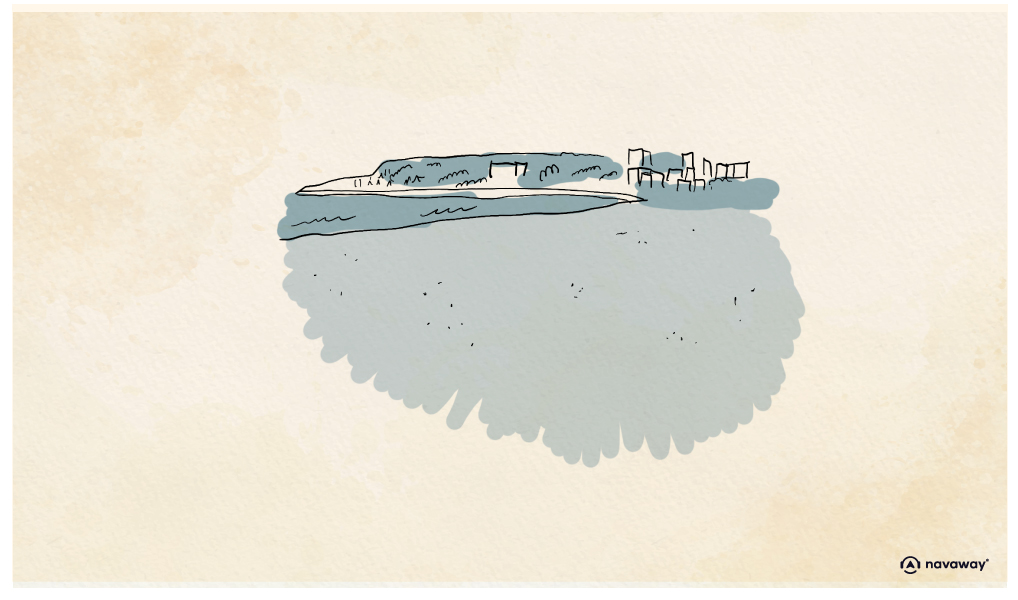
Le Havre may be famous for its bold architecture and bustling port, but it’s also home to a wide beach along the English Channel that draws crowds every summer, whether for a swim, a surf, or soaking up the sea breeze.
With its beachside restaurants, long stretches of pebbles, and sports areas, it’s the perfect place to relax with friends or family, only a short walk from the city centre.
What’s more, Le Havre is part of the Alabaster Coast, a natural stretch of coastline running 130 kilometres from Dieppe to Le Havre, including Étretat, Fécamp, and Saint-Valery-en-Caux. The name comes from alabaster, a white mineral used in sculpture and stonework, and it’s a nod to the milky-white colour of the sea when it crashes against the high chalk cliffs. S
ea bathing in France actually began in Normandy in 1824. Dieppe was the country’s first seaside resort, drawing in Parisian aristocrats who came in search of the beach’s supposed healing powers. It wasn’t long before other coastal towns followed, such as Étretat, Deauville, and further north, Le Touquet-Paris-Plage and Boulogne-sur-Mer.
In the south, places like Cannes became popular a bit later, and Biarritz joined the trend nearly a century afterward. The idea of sea bathing originated in England in the late 1600s, when doctors began prescribing it to treat everything from rheumatism to nervous disorders and even mental illness. But it wasn’t until 1936, when paid holidays were introduced in France, that working-class families began heading to the seaside too.
Swimming became a leisure activity, not just a medical treatment, and Normandy quickly became one of the country’s favourite coastal getaways. Today, Le Havre’s 2-kilometre pebble beach offers everything from water sports to sunbathing, though the pebbles might not be the comfiest! Interestingly, those very pebbles once helped fuel the local economy. In the 19th century, they gave rise to a whole industry: pebble collecting.
The stones were used in construction, to reinforce regional roads, and even exported as far as the United States and Japan. After World War II, American forces cleared a large part of the beach to gather pebbles for reconstruction work, revealing a layer of fine sand underneath. Over time, the tides brought the pebbles back, and it’s now forbidden to take them, in order to preserve this natural feature.
So, it may not be the softest beach in France, but this is how it’s always been, shaped by nature and history. Now go ahead, take a deep breath, and enjoy the fresh sea air!

Discover Le Havre with app
An interactive guide through the most beautiful streets, squares, and districts
18 fun audioguides full of historical facts, anecdotes, and legends

Comments