Visiting the Dune du Pilat: guide and practical information
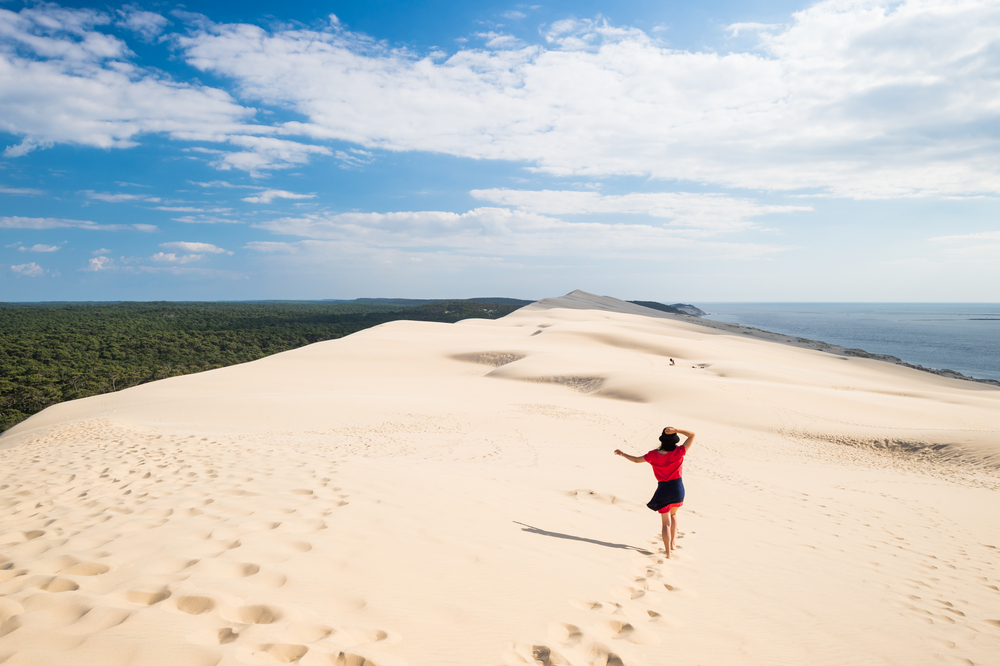

A majestic sand giant rising more than 100 metres above the Arcachon Basin, the Dune du Pilat is an exceptional natural site that attracts more than a million visitors every year. Set between the Atlantic Ocean and the Landes forest, this geological marvel has been shaped by the wind and tides to offer breathtaking panoramas. Whether you’re a hiking enthusiast, a nature lover or simply looking for a moment of escape, the Dune du Pilat promises an unforgettable experience in the heart of the Gironde. Get ready to climb the highest dune in Europe and discover one of the most spectacular landscapes in the Nouvelle-Aquitaine region.
200 audioguided tours for cities all around the world
DownloadSee also the Arcachon guide :
- Visit Arcachon in 1 day: 19 things to do and see on foot
- 20 must-see weekend ideas around Bordeaux
- 15 not-to-be-missed excursions around Bordeaux
- Nouvelle-Aquitaine: Must-sees and must-dos
- The most beautiful beaches near Bordeaux
The Dune du Pilat, an exceptional sand giant
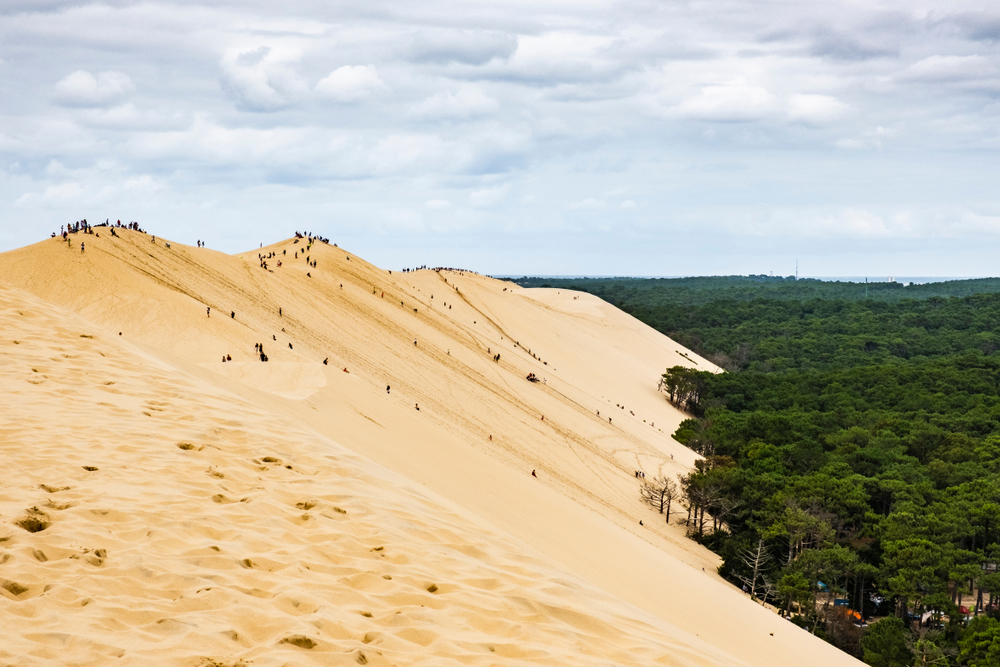
The Dune du Pilat is a unique geological phenomenon on the European coastline. With its impressive dimensions – 110 metres high, 616 metres wide and almost 3 kilometres long – it represents around 60 million cubic metres of sand. This shifting mountain, shaped by the natural elements over thousands of years, offers a striking contrast between the Landes pine forest, the blue immensity of the ocean and the golden expanse of fine sand.
Located at the entrance to the Arcachon Basin, in the commune of La Teste-de-Buch, the dune is constantly evolving under the action of the wind and tides. It moves inexorably inland, gradually swallowing up vegetation at a rate of 1 to 5 metres per year. This perpetual movement testifies to the power of the elements and the living character of this site, classified as a Grand Site de France.
1. Climbing Europe’s highest dune
Climbing the Dune du Pilat is the must-do experience of your visit. There are two options for climbing this colossus of sand. From Easter to All Saints’ Day, a seasonal staircase with 160 steps makes the climb from the main car park much easier. This temporary installation allows you to reach the summit in around fifteen minutes, even if the effort is still sustained.
For a more authentic experience, you can climb directly into the sand, an adventure that will put more strain on your calves but offer you a unique connection with the natural element. Whatever you choose, the reward at the top is exceptional: a 360-degree panoramic view of the Atlantic Ocean, the Arcachon Basin with the Banc d’Arguin and the Cap Ferret peninsula, and the immense Landes forest stretching as far as the eye can see.
2. The ridge and the panorama of the Arcachon basin
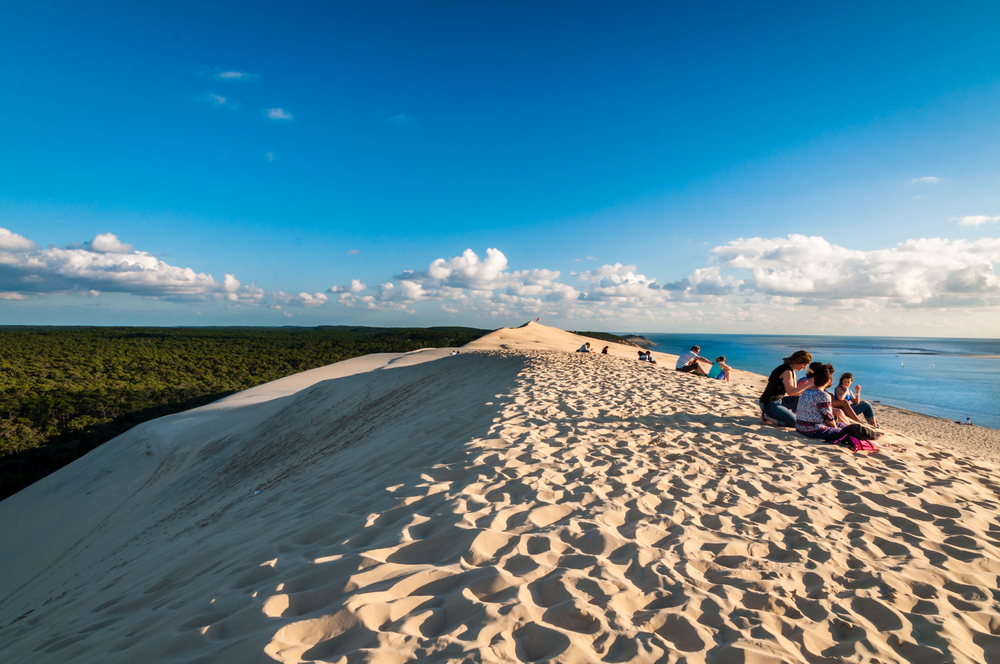
Once at the summit, take time to walk along the crest of the dune. This aerial walk of almost 3 kilometres offers changing views as you go. On one side, the majestic waves of the ocean crash onto the beach; on the other, the calmer waters of the Arcachon Basin, dotted with boats and bordered by oyster-farming villages.
The spectacle varies according to the time of day and weather conditions. Sunrise sets the landscape ablaze in shades of pink and gold, while sunset transforms the dune into a natural theatre of flamboyant colours. On windy days, the sand flies away and sculpts new shapes, reminding us that this landscape is constantly evolving. For the best experience, bring good shoes or walk barefoot, avoiding the hottest hours when the sand becomes scorching hot.
3. Observation of protected flora and fauna
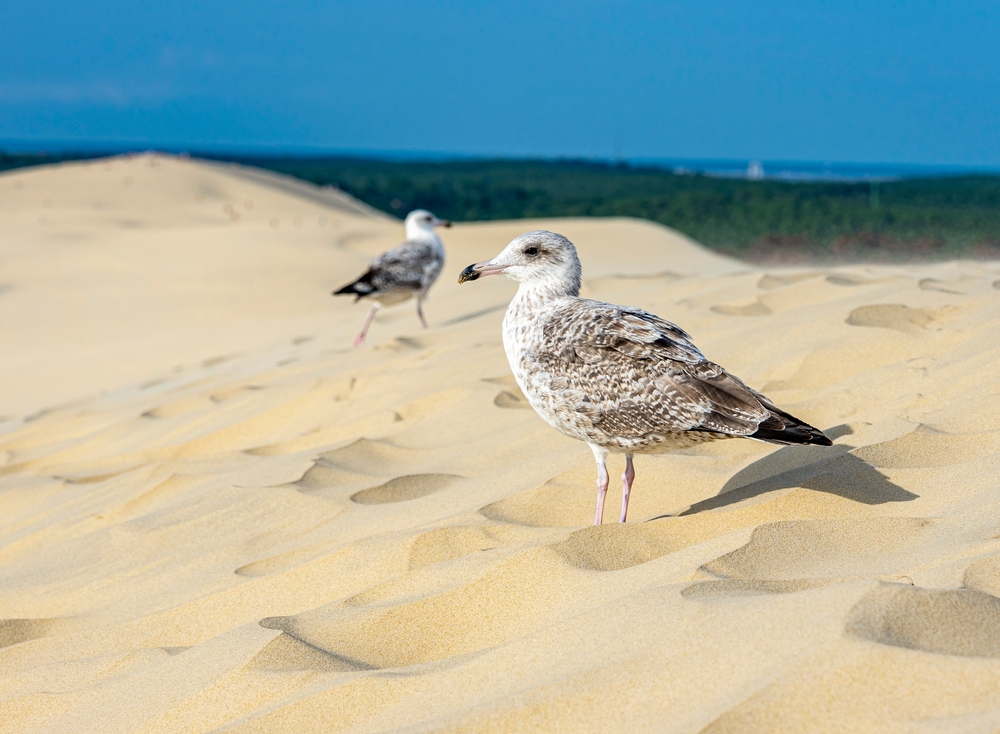
The Dune du Pilat and its surroundings are home to a remarkable biodiversity despite the harsh environmental conditions. At the foot of the dune, the Landes forest offers a rich ecosystem where maritime pines and cork oaks provide refuge for numerous animal species. Migratory birds regularly stop off in this protected area, offering birdwatchers the chance to make some fascinating observations.
On the slopes of the dune itself, an endemic flora bravely clings to the sand. The oyats, these resistant grasses, play a crucial role in fixing the sand and partially stabilising the dune. Educational panels line the marked trails, inviting you to discover this fragile biodiversity while respecting the environment. Opposite the dune, the Banc d’Arguin National Nature Reserve is a sanctuary for seabirds, particularly the cautious terns that nest there in summer.
4. The interpretation area and heritage discovery
Before or after your ascent, take the time to visit the interpretation area located near the car park. This educational area, housed in a modern, environmentally-friendly building, explains the geological formation of the dune, how it has changed over the centuries and the issues involved in preserving it.
Temporary exhibitions, explanatory panels and interactive displays explain how this sand mountain was formed around 4,000 years ago, the result of the gradual accumulation of marine sediments under the combined action of winds and currents. You’ll also discover traces of human occupation found on the site, testifying to the presence of populations as far back as the Gallo-Roman era. This visit adds a whole new dimension to the experience, helping you to take responsible action to preserve this fragile natural treasure.
5. Sunset from the dune
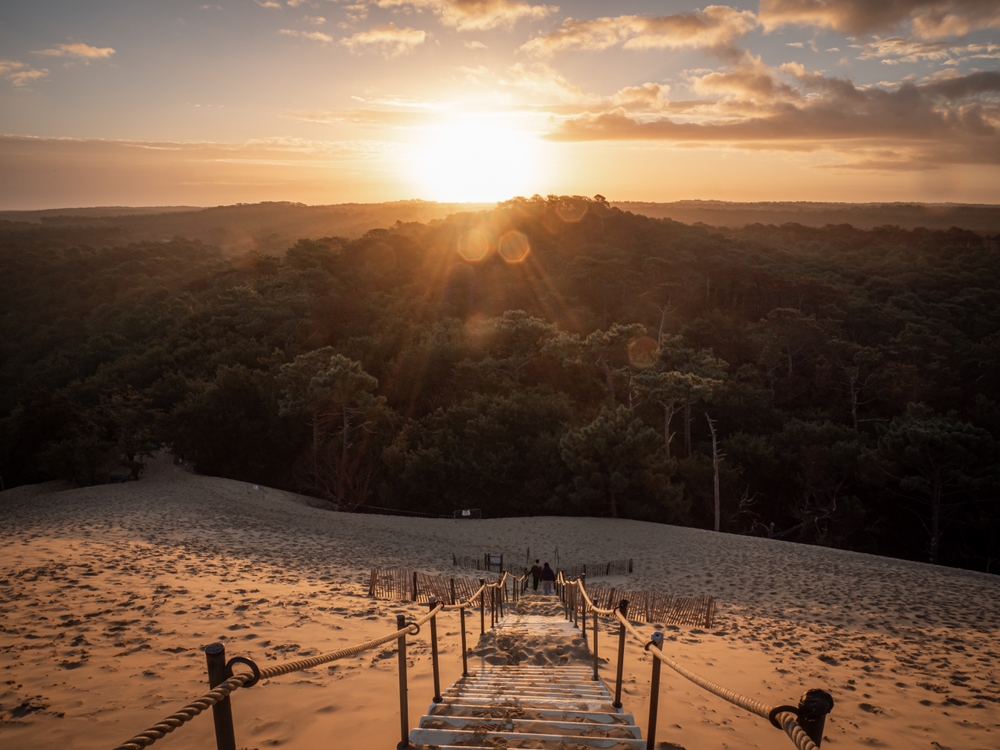
Watching the sun set from the crest of the Dune du Pilat is one of the most memorable experiences you can have in the Arcachon Basin. At the end of the day, when the heat dies down and the crowds thin out, the dune is transformed into a natural amphitheatre facing the Atlantic horizon.
The golden hues of the sand mingle with the changing reflections of the pool, creating a unique play of light. The ocean is adorned in shades of orange and purple, while the silhouettes of the Banc d’Arguin and Cap Ferret stand out against the light. It’s a moment of suspended contemplation and serenity. Plan to arrive around an hour before sunset to choose your spot and take full advantage of this free natural spectacle. Don’t forget a jumper or jacket, as the sea breeze can cool off quickly in the evening.
6. Sports and thrills
The Dune du Pilat offers an exceptional playground for thrill-seekers and sports enthusiasts. Paragliding is one of the most spectacular experiences: several schools offer first flights in two-seater aircraft, allowing you to fly over the dune and the Arcachon basin for 10 to 20 minutes. You take off directly from the top of the dune, with your feet in the sand, for an unforgettable flight carried along by the updrafts.
The more adventurous can also opt for a microlight or helicopter flight, offering a unique aerial perspective of this exceptional landscape. If you want to keep your feet firmly planted on the ground, the sandy slopes are a delight for young and old alike: running or rolling down the slopes is a refreshing and fun way to get a feel for the area. Hiking enthusiasts will love the signposted trails through the surrounding forest, while cyclists will enjoy the cycle paths linking the dune to the rest of the Arcachon basin, in particular to Arcachon and Cap Ferret.
History and formation of the Dune du Pilat
A geological formation dating back thousands of years
The history of the Dune du Pilat goes back some 4,000 years, to when sea levels stabilised after the last ice age. The formation of this sand giant is closely linked to that of the Banc d’Arguin, the sandbank opposite the dune at the entrance to the Arcachon basin. Over the centuries, ocean currents and prevailing winds have accumulated millions of cubic metres of sediment, gradually creating this geological phenomenon that is unique in Europe.
Today’s dune was actually built between 1826 and 1922, during which time the coastline retreated by more than 500 metres. Year after year, the westerly winds, laden with sand particles, sculpted this shifting mountain that continues to evolve before our very eyes. Traces of fossilised soil, known as palaeosols, sometimes appear in the form of black lines on the sides of the dune, bearing witness to the ancient forests swallowed up by the advancing sand.
A site steeped in history
Beyond its geological dimension, the Dune du Pilat bears traces of human presence dating back to Antiquity. Archaeological digs have revealed remains of Gallo-Roman occupation, including a possible lookout post dating back to the 2nd century. This strategic position was used to keep watch over the sea and land routes linking the various regions of the era.
More recently, during the Second World War, a number of blockhouses were erected on the coast to keep watch over the Atlantic. Some of these military buildings are now buried under the shifting sands of the dune, a testament to the inexorable advance of the sand. The origin of the name “Pilat” comes from the Gascon “pilhar”, meaning “heap” or “mound”, a name that perfectly reflects the identity of this emblematic site on the Aquitaine coastline.
Practical information for visiting the Dune du Pilat
How to get to the Dune du Pilat
The Dune du Pilat is located in the commune of La Teste-de-Buch, around 60 kilometres west of Bordeaux and 8 kilometres south of Arcachon. There are several ways to get to this exceptional site. By car, from Bordeaux, take the A63 and then the A660 towards Arcachon, before following the D259 to the car park on the dune. The journey takes around 50 minutes outside busy periods.
If you prefer public transport, take the train from Bordeaux Saint-Jean station to Arcachon station (40 minutes by TGV, 1 hour by TER). From Arcachon station, the Baïa 1 bus service to Plage de la Salie takes you directly to the “Dune du Pilat” stop in around 25 minutes. This environmentally-friendly option means you don’t have to worry about parking and you can admire the scenery along the way. Cyclists will appreciate the well-developed cycle paths linking Arcachon to the dune, for a ride of around 10 kilometres through the forest.
Parking and rates
Access to the Dune du Pilat is free all year round and possible at any time. However, there is a charge for parking in the main car park, with rates varying according to the length of your visit (2024 rates for cars): €7 for 4 hours, €9 for 8 hours and €11 for 12 hours. Payment is made at the automatic pay stations by credit card. A €15 annual pass is also available for regular visitors.
All of this revenue goes towards managing and preserving the Grand Site de la Dune du Pilat. The main car park has around 700 spaces, but can quickly reach maximum capacity during the peak summer season, particularly between 11am and 5pm. To avoid the crowds and parking problems, it’s best to visit early in the morning or at the end of the day. If you come by bus, bike or on foot, access to the dune is free, helping to limit the environmental impact of your visit.
Best times to visit
The timing of your visit has a major influence on your experience of the Dune du Pilat. Summer, from June to September, offers the best weather conditions, with maximum sunshine and pleasant temperatures. However, it is also the busiest time of the year, with sometimes more than 10,000 visitors a day. To enjoy the site in the best possible conditions, choose the morning (before 10am) or evening (after 6pm) time slots, which are particularly ideal for admiring the sunrise or sunset.
The shoulder seasons of spring (April-May) and autumn (September-October) are ideal times to visit the dunes. The number of visitors drops significantly, temperatures remain mild, and the low-angled light of spring and autumn sublimates the landscapes. Winter offers a more intimate and wild experience, with few visitors and sometimes spectacular weather conditions. Whatever the season, check the weather forecasts and the real-time visitor tool available on the official website to make the most of your visit.
Advice and equipment
A successful visit to the Dune du Pilat requires a few precautions and the right equipment. Make sure you wear comfortable, light clothing in summer, with a windbreaker for the summit, where the breeze can be cool even in fine weather. In winter, dress warmly, using several layers. As for footwear, the choice is yours: light trainers for the ascent of the staircase, or walk barefoot in the sand for a unique sensory experience (although beware of the hot sand in midsummer).
It’s essential to take plenty of water, a cap or hat and high-protection sun cream with you, as the sun beats down hard on the dunes and there are no shady areas. Sunglasses are also essential, as the sand reflects off the sun. If you want to have a picnic, you can do so facing the Bay of Arcachon, but remember to take all your rubbish with you to protect the environment. You can swim on the beach at the foot of the dune on the ocean side, but be careful as the currents can be strong and there is no permanent lifeguard.
What to do around the Dune du Pilat
Discover the Arcachon basin
The Dune du Pilat is an excellent starting point for exploring the riches of the Arcachon Basin. A few kilometres to the north, the town of Arcachon is well worth an in-depth visit, with its four distinct districts: the Ville d’Hiver with its sumptuous Belle Époque villas, the lively Ville d’Été with its seafront and beaches, not forgetting the port and its seafood restaurants. For an in-depth look at Arcachon, take the Navaway audio tour, which takes you through the town’s iconic sites.
Download the audio tour to discover Arcachon on foot and on your own
The Navaway app offers you a complete 3.2km tour of Arcachon, punctuated by 19 fun audio guides. This 1.5-hour walk takes you through the fascinating history of this seaside resort, from the majestic Ville d’Hiver to the lively beaches, via the port and its oyster huts. Thanks to interactive navigation, you can explore Arcachon at your own pace while enjoying enriching historical commentary and captivating anecdotes. An original and practical way to visit Arcachon on your own.
Explore the Banc d’Arguin and Cap Ferret
Facing the Dune du Pilat, the Banc d’Arguin stretches out like a wild paradise accessible only by boat. This National Nature Reserve, made up of sandbanks that emerge at low tide, is a sanctuary for many species of seabird. Several companies offer boat trips from Arcachon or from the foot of the dune, allowing you to discover this unspoilt site and observe terns, gravelots and other waders in their natural habitat.
On the other side of the basin, the Cap Ferret peninsula offers a totally different atmosphere, between authentic oyster-farming villages and wild ocean beaches. Climb the 258 steps of the Cap Ferret lighthouse for an exceptional panoramic view of the dune, the basin and the ocean. Stroll through the picturesque villages of L’Herbe and Le Canon, where colourful fishermen’s cottages line the sandy lanes. Cap Ferret can be reached by road (around 1 hour from the dune via the north of the basin) or by boat from Arcachon (30-minute crossing).
Oyster farming villages and ports
The Arcachon Basin is home to numerous oyster-farming villages where you can sample the famous Arcachon oysters direct from the producers. The port of Biganos, located at the far end of the basin, offers a peaceful stopover with its cabanes tchanquées (cabins on stilts) and hiking trails along the salt meadows. At Andernos-les-Bains, take advantage of the 232-metre pedestrian jetty jutting out into the basin, perfect for a sunset stroll.
The village of Gujan-Mestras is also worth a visit for its lively port and its many oyster-farming huts, where you can enjoy platters of seafood and freshly-baked oysters. For an authentic experience, don’t miss the local markets, particularly the one in Arcachon, held several times a week, where you can find local produce and specialities. The whole of the basin is ideal for exploring by bike, thanks to a well-developed network of cycle paths, allowing you to explore at your own pace.
In conclusion, the Dune du Pilat is an exceptional natural site that’s well worth a visit when you’re in the Nouvelle-Aquitaine region. With its breathtaking panoramas, varied sporting experiences and rich heritage, this sandy mountain offers much more than a simple climb. Whether you come for a few hours or take the opportunity to explore the whole of the Arcachon Basin, the magic of this unique place will leave a lasting impression. To extend your discovery of the region, don’t hesitate to follow the Navaway itinerary in Arcachon, which will guide you through the treasures of this beautiful seaside resort, the perfect complement to a day spent on the dune.
Frequently asked questions
How long does it take to visit the Dune du Pilat?
Allow at least 2 hours for a complete visit to the Dune du Pilat: 15-20 minutes for the ascent, 1 hour to enjoy the panorama and walk along the ridge, and the time for the descent. If you want to take a longer walk along the beach or through the surrounding forest, allow half a day. Sunset lovers will happily add an extra hour to enjoy this unique spectacle.
Is there a charge for visiting the Dune du Pilat?
No, access to the Dune du Pilat is completely free and possible at any time, day or night, all year round. The main car park, on the other hand, charges €7 for 4 hours, €9 for 8 hours and €11 for 12 hours. If you come by bus, bike or on foot, parking is free. Proceeds from the car park go towards maintaining and preserving the site.
Can children visit the Dune du Pilat?
Absolutely! The Dune du Pilat is a delight for children, who love to climb up and down the sand. The seasonal staircase (April to November) makes it much easier to climb with young children. But make sure you bring plenty of water, sun cream and suitable clothing. Children particularly enjoy running or rolling in the sand, which is guaranteed to give them a thrill. Keep a close eye on them at the summit, where the wind can be strong, and avoid the hottest hours in summer.
When is the best time to visit the Dune du Pilat?
The shoulder seasons (April-May and September-October) offer the best compromise between pleasant weather conditions and moderate crowds. Summer guarantees fine weather but attracts large crowds, particularly between 11am and 5pm. To avoid the summer rush, visit early in the morning before 10am or late in the day after 6pm. Winter offers a wilder, more intimate experience, with few visitors, but bring warm clothing. Whatever the season, check the real-time visitor tool before your visit.
Is it possible to swim near the Dune du Pilat?
Yes, there is a lovely beach at the foot of the dune on the ocean side, perfect for a swim after the effort of the climb. However, beware: the currents can be strong and there is not permanent lifeguard surveillance along the entire beach. Choose the supervised areas in summer and check the swimming conditions before jumping in. The temperature of the Atlantic Ocean remains cool even in summer (18-22°C), so you can cool off after climbing the dunes in the sun!
Are there any sporting activities on the Dune du Pilat?
The Dune du Pilat offers a wide range of sporting activities and thrills. Paragliding is one of the most spectacular, with several schools offering tandem first flights from the summit. You can also opt for a microlight or helicopter flight for a unique aerial perspective. Hiking enthusiasts will love the marked trails in the surrounding forest, while cyclists will enjoy the cycle paths linking the dune to Arcachon and Cap Ferret. Even a simple plunge into the sand is a great thrill, especially for children!
Can I bring my dog to the Dune du Pilat?
Dogs are allowed on the Dune du Pilat, but they must be kept on a lead to protect the local flora and fauna, as well as for the safety of all visitors. In summer, avoid bringing your pet with you during the hottest hours of the day, as the sand becomes very hot and can injure its paw pads. Make sure you bring plenty of water for your pet, and opt for morning or evening visits. On the beach at the foot of the dune, find out about the areas where dogs are allowed, which may vary according to the season.
200 audioguided tours for cities all around the world
Download