Visiting the Ain: 15 not-to-be-missed things to do

Nestling between Lyon and Switzerland, the Ain is a department with a thousand facets, well worth a visit. With its listed medieval villages, Jura peaks, crystal-clear lakes and exceptional Gothic heritage, this part of the Auvergne-Rhône-Alpes region has something to surprise you at every turn. Whether you’re a keen mountain walker, a history buff or simply looking for a natural getaway, the Ain will win you over with its diversity and authenticity.
From the cobbled streets of Pérouges to the spectacular waterfalls of the Bugey and the peaceful ponds of the Dombes, every corner of the Ain tells its own unique story. The department also offers a generous gastronomy, with its famous Bresse chickens, distinctive cheeses and Bugey wines. Ready to discover this little-known gem? Here’s our selection of the 15 must-do things to do in the Ain.
Also in the Ain guide:
- 5 of the most beautiful villages around Lyon to visit this autumn
- Visiting the Jura: 16 must-sees
- 12 unusual romantic weekends in the Rhône-Alpes region
- Where can you swim around Lyon?
- The Most Beautiful Villages in France: 15 listed villages to visit
- 20 must-see weekend ideas around Lyon
1. Pérouges, the medieval city
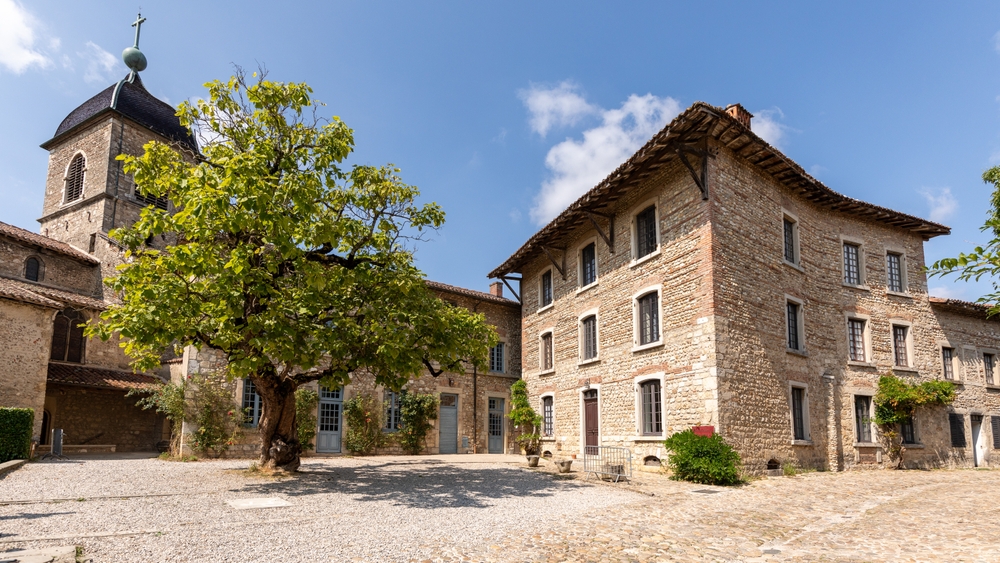
Classed as one of the Most Beautiful Villages in France, Pérouges is an absolute must when you visit the Ain. This fortified medieval town, perched on a hill, seems to have survived the centuries without a single wrinkle. As soon as you enter the Porte d’En-Haut, you’ll be transported back to the Middle Ages.
Take a stroll through the cobbled streets, admire the stone houses with their flower-decked facades, and soak up the unique atmosphere. The Place du Tilleul, the heart of the village, is lined with remarkable medieval buildings. Don’t miss the church-fortress of Sainte-Marie-Madeleine and its heritage treasures. Gourmets will want to stop off at the famous Auberge de Pérouges to sample the famous sugar galette, a local speciality for generations.
Pérouges has been the setting for many films and TV series, including “Les Trois Mousquetaires” and “Angélique, marquise des anges”. This inhabited village still has around eighty residents who carry on the traditional crafts. Access to the village is free all year round.
2. The Royal Monastery of Brou in Bourg-en-Bresse
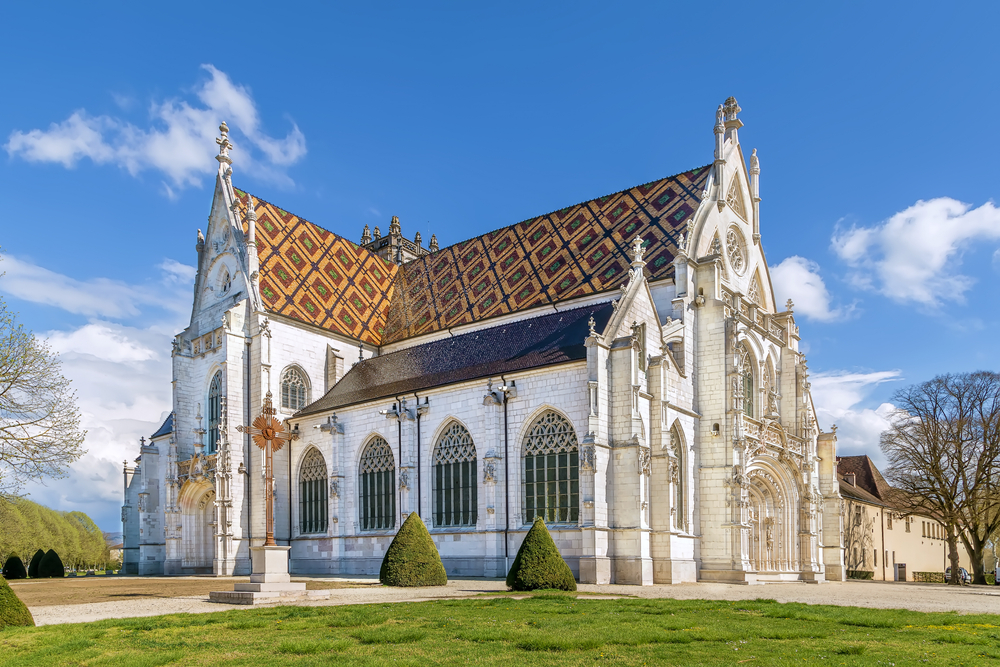
A veritable jewel of flamboyant Gothic architecture, the Royal Monastery of Brou is without doubt one of the most beautiful monuments in the Ain region. Located in Bourg-en-Bresse, this architectural masterpiece was built in the early 16th century by Marguerite of Austria in memory of her husband Philibert le Beau.
The monastery church will amaze you with its fine sculptures, soaring vaults and, above all, its three princely tombs in Carrara marble, considered to be masterpieces of Renaissance sculpture. The cloisters, perfectly preserved, invite contemplation and offer a haven of peace in the heart of the city. The municipal museum housed in the monastery boasts a fine collection of Flemish and French paintings from the 16th to the 20th centuries.
(63 Boulevard de Brou, 01000 Bourg-en-Bresse, rated 4.6/5 on Google out of 3,200 reviews)
3. The Parc des Oiseaux at Villars-les-Dombes
In the heart of the Dombes region with its thousand ponds, the Parc des Oiseaux de Villars-les-Dombes is one of the largest bird parks in Europe. Covering 35 hectares within a 380-hectare nature reserve, this exceptional site is home to almost 3,000 birds representing over 300 species from all over the world.
The visit, which takes around 4 to 5 hours, takes you through various themed areas that reproduce the natural habitats of birds: the valley of birds of prey, the pink flamingo lagoon, the South American pampas, and the area devoted to Humboldt penguins. The free-flying bird shows are particularly impressive and will delight young and old alike.
The park also offers an elevated trail with panoramic views over the Dombes region and, on a clear day, Mont Blanc. A perfect day out for families who want to combine discovery, wonder and awareness of species protection.
(Parc des Oiseaux, 01330 Villars-les-Dombes, rated 4.2/5 on Google out of 6,400 reviews)
4. The Glandieu waterfall
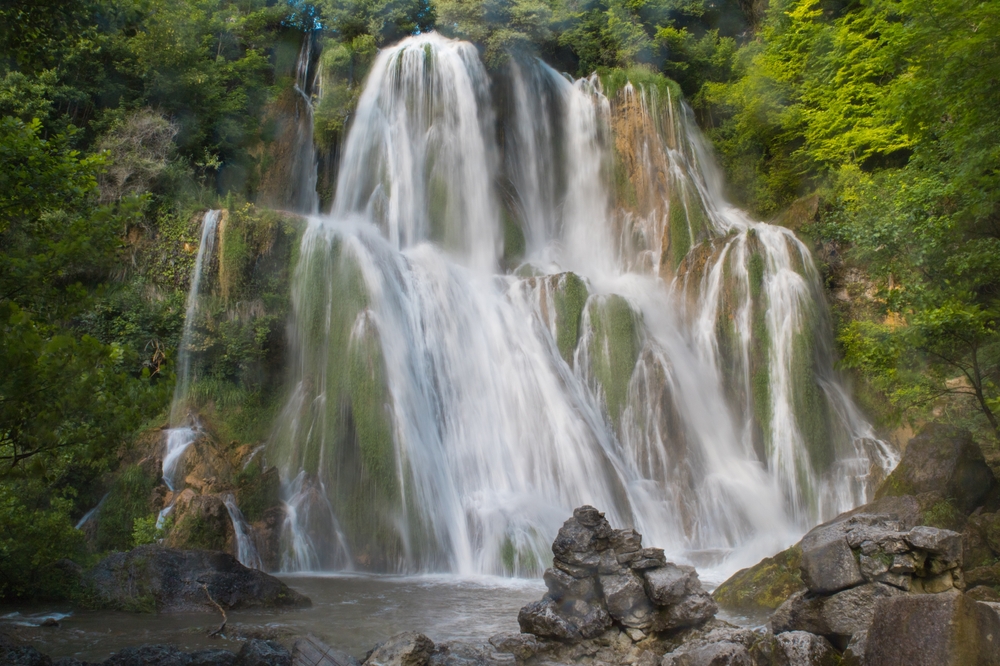
A breathtaking natural spectacle, the Glandieu waterfall is one of the most beautiful waterfalls in the Ain. Located at Brégnier-Cordon in the Bugey region, this waterfall gushes over 60 metres directly from the roadside, making it one of the most accessible in the region.
Listed as a sensitive natural area, the waterfall changes its appearance with the seasons. Impressive in spring when the snow melts and after stormy rains, it can be reduced to a mere trickle in summer. In winter, the spectacle is just as magical when the water freezes into a glistening curtain of ice.
An educational trail, the “Water Trail”, allows visitors to discover the site and its ecological riches. Swimming is strictly prohibited to preserve this fragile ecosystem. There is a small car park nearby where you can park and admire this natural jewel.
(Hameau de Glandieu, 01300 Brégnier-Cordon, rated 4.5/5 on Google out of 2,100 reviews)
5. Le Grand Colombier
The highest point in the southern Jura massif, the Grand Colombier offers one of the finest panoramic views in the region. At an altitude of 1,534 metres, this mythical summit is a favourite with hikers and cyclists who come to challenge its vertiginous slopes.
On a clear day, the 360-degree view from the summit is simply breathtaking: Lake Geneva, Geneva, the Bernese Alps, Mont Blanc, La Vanoise, Les Bauges, the Belledonne massif and even the Jura massif are all revealed before your eyes. The site has several orientation tables to help you identify the surrounding peaks.
For cyclists, the ascent of the Grand Colombier is a must, made famous by the Tour de France. The two sides offer different challenges: the side from Culoz is renowned for its fearsome gradients (up to 22%!), while the side from Artemare is more regular. In winter, the site is transformed into a Nordic area popular with cross-country skiers.
6. The Cerdon caves
A veritable journey to the centre of the earth, the Cerdon caves are an exceptional natural site straddling the communes of Labalme and Cerdon. This 3,700-metre-long underground network has been hollowed out by water over millions of years, creating galleries, majestic chambers and spectacular geological formations.
A visit to the caves combines geological discovery with a journey back in time: the site is also home to a remarkable prehistoric archaeological site. An 80-minute tour takes you through the mountain, emerging in the fresh air after admiring the stalactites, stalagmites and limestone draperies. The constant temperature of 12°C inside provides welcome coolness in summer.
Outside, the prehistoric leisure park extends the experience with hands-on workshops: flint knapping, propulsor firing, fire lighting… A fun, educational outing ideal for all the family.
(Grottes du Cerdon, 01450 Labalme, rated 4.6/5 on Google out of 2,800 reviews)
7. Lake Nantua
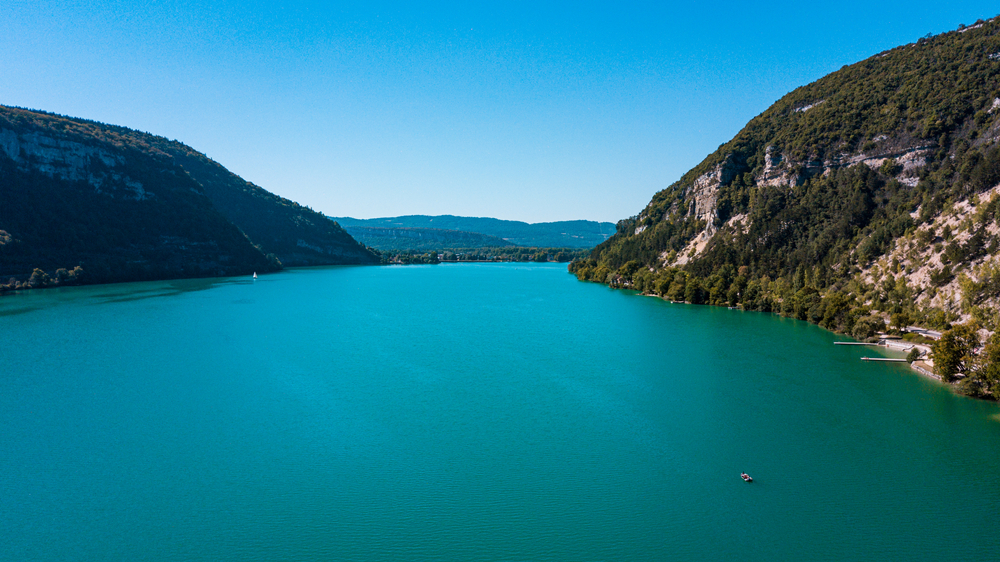
Nestling in the heart of the Haut-Bugey mountains, Nantua Lake is a natural lake of glacial origin that stretches for 2.7 kilometres. Its deep blue waters, framed by limestone cliffs and lush green forests, have made it a popular holiday destination since the 19th century.
The lake offers a wide range of water sports: swimming on the supervised beach, pedal boats, paddle boats, canoeing and even scuba diving for those who love the underwater world. The walk around the lake (around 7 km) is a pleasant stroll accessible to all, offering numerous viewpoints over this enchanting stretch of water.
Anglers will appreciate the lake’s wealth of fish life: pike, perch, trout and Arctic char all thrive here. The town of Nantua, which borders the lake, is renowned for its pike quenelles, a must-taste gastronomic speciality in one of the local restaurants.
8. The Retord plateau
Perched at an altitude of over 1,000 metres, the Retord plateau is a veritable natural balcony overlooking the Alps. This vast expanse of meadows and forests, easily accessible from Lyon or Geneva, offers an exceptional playground for lovers of nature and outdoor activities.
In winter, the plateau is transformed into a renowned Nordic area with over 100 kilometres of cross-country ski trails, signposted snowshoe routes, and even biathlon and dog-sledding opportunities. This family-friendly resort is particularly suitable for beginners and children.
In summer, the plateau reveals its other charms: hiking through the flower-filled mountain pastures, mountain biking on the many trails, climbing on the surrounding cliffs, and paragliding to admire the panorama from the air. Biodiversity here is remarkable, with a well-preserved flora and fauna for the most observant visitors to discover.
9. Châtillon-sur-Chalaronne
Châtillon-sur-Chalaronne, which has been awarded the “Petite Cité de Caractère” label, is a charming medieval town in the heart of the Dombes region. Crossed by the river Chalaronne and its flower-filled canals, the town has preserved a remarkable architectural heritage that bears witness to its rich past.
Stroll through the narrow streets lined with half-timbered houses, admire the 15th-century covered market where the traditional market is still held every Saturday morning, and stroll along the shady banks. The remains of the ramparts and fortified gates are a reminder of the strategic importance of the town in the Middle Ages.
Don’t miss the Miniature Train Museum, one of the largest in Europe, with over 200 metres of animated models depicting scenes from railway life. The old medieval hospital and its 18th-century apothecary are also well worth a visit.
(Place de la République, 01400 Châtillon-sur-Chalaronne, rated 4.3/5 on Google out of 1,200 reviews)
10. The Valserine and its gorges
A tumultuous river that rises in the Jura mountains, the Valserine has carved spectacular gorges in the limestone over the millennia. This wild valley offers breathtaking scenery and remarkable natural sites.
The route along the Valserine reveals several geological curiosities: the pertes de la Valserine, where the river disappears into the karstic subsoil, the Pont du Diable, a natural arch spanning the river, and the Pont des Pierres, a rock formation sculpted by erosion. These sites are accessible via signposted hiking trails that wind along the river.
The Valserine is also popular with fly fishermen, who come to tease the brown trout in its crystal-clear waters. The gorges offer an ideal setting for canyoning in the summer season, with several routes to suit different levels of ability.
11. Miribel-Jonage Park
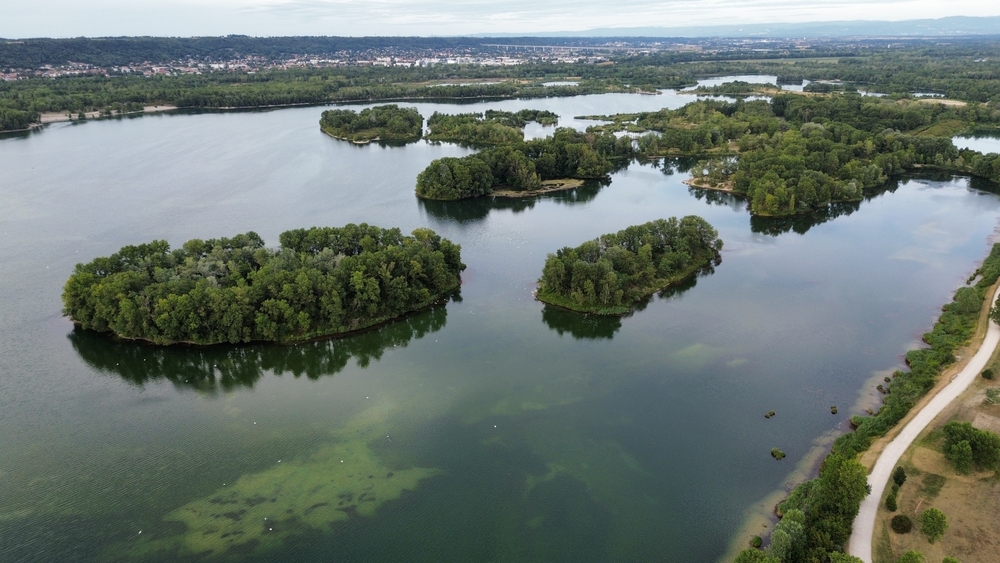
Just outside Lyon, the Grand Parc de Miribel-Jonage is a veritable green lung covering 2,200 hectares. Built on an artificial island, this urban nature park combines biodiversity conservation and leisure activities to delight visitors.
The park offers a multitude of activities: supervised swimming on several sandy beaches, water sports (sailing, canoeing, windsurfing), tree climbing, 18-hole golf course, mountain biking, horse riding, fishing… There’s something for everyone!
The park also plays a major ecological role, acting as a buffer zone in the event of flooding from the Rhône and as a reservoir of drinking water for the Lyon conurbation. A number of bird-watching stations provide opportunities to observe the many species of birds that have made this haven of biodiversity their home.
12. Lake Sylans
Nestling in a cluse in the heart of the Bugey region, Lac de Sylans is a small natural jewel of glacial origin. This peaceful 17-hectare lake is surrounded by wooded cliffs, giving it a wild, unspoilt charm.
The lake is a paradise for anglers, with a varied population of fish including pike, carp, roach, perch, bream and corgon. Fishing from the shore or in a boat is particularly pleasant in this bucolic setting. Boats can be hired on site to explore the lake and enjoy the peaceful surroundings.
In summer, the lake also offers opportunities for swimming in its refreshing waters. A path runs around the lake (approx. 3 km), making for a leisurely family stroll while admiring the reflections of the cliffs on the water. The site has picnic areas to extend the day.
13. Lavours Marsh Nature Reserve
The largest alkaline peat bog in France, the Lavours Marsh Nature Reserve covers 500 hectares at the foot of the Grand Colombier mountain. This exceptional wetland is home to remarkable biodiversity and is a bird site of European importance.
A stilted trail over a kilometre long, accessible to all, allows visitors to discover this fragile ecosystem without disturbing it. Educational panels along the way explain the formation of the marsh and its unique flora and fauna. Observatories and telescopes allow you to admire the many species of birds that nest or stop over in the marsh.
Among the emblematic species are the bittern, the purple heron, the marsh harrier and even the rare whip-poor-will. In spring, thousands of wild orchids bloom, providing a colourful spectacle for visitors. Guided tours are organised regularly by the reserve’s managers.
(Réserve naturelle de Lavours, 01350 Ceyzérieu, rated 4.7/5 on Google for 650 reviews)
14. Bugey’s villages of character
Beyond Pérouges, the Ain has other charming villages well worth a visit. The Bugey, a mountainous region in the south of the department, is home to a number of architectural and heritage gems.
At Ars-sur-Formans, the neo-Byzantine basilica and the shrine dedicated to the Curé d’Ars attract thousands of pilgrims every year. Belley, the former capital of the Bugey region, boasts the cathedral of Saint-Jean-Baptiste and its town houses. The medieval village of Trévoux, former capital of the principality of Dombes, offers a fascinating walk around its castle, ramparts and timber-framed houses.
Don’t forget Ambronay and its thousand-year-old Benedictine abbey, renowned for its baroque music festival, or Meximieux and its medieval arcades. Each village tells its own story, revealing the authentic soul of the Ain.
15. The Bugey vineyards and the Wine Route
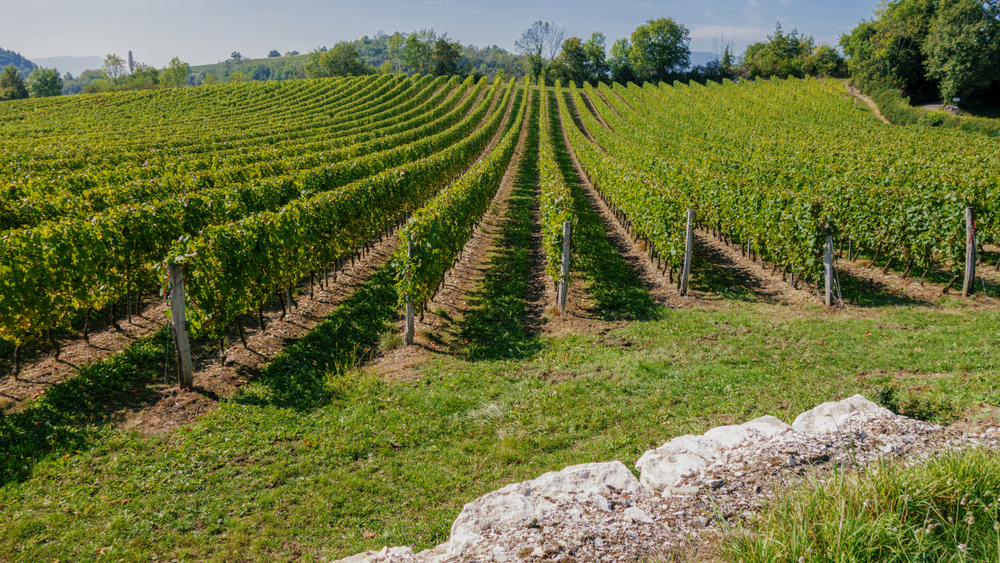
Although little known to the general public, the Bugey vineyards produce top-quality wines, which have been AOC wines since 2009. On the steep hillsides overlooking the Rhône and its tributaries, winegrowers cultivate local grape varieties that produce remarkable white, red, rosé and, above all, sparkling wines.
The Bugey Wine Route winds its way through wine-producing villages: Montagnieu and its terraced vineyards, Cerdon famous for its ancestral rosé method, Manicle and its vaulted cellars, and Vongnes and its panoramic viewpoint over the vineyards. Numerous wine estates open their doors for tastings to help you discover their expertise.
Combine this oenological discovery with visits to troglodytic cellars, meetings with passionate winegrowers, and gourmet stops in local inns where Bugey wines sublimate regional specialities. An authentic, friendly experience that reveals a little-known side of the Ain.
How do I get to the Ain?
The Ain enjoys a privileged geographical location, making it easily accessible from major French and European cities. There are several options for getting to the department, depending on your point of departure and your preferences.
By plane, Lyon-Saint-Exupéry international airport is the nearest gateway, just 40 kilometres from Bourg-en-Bresse. From here, you can hire a car or take the shuttle bus to the main towns in the département. Geneva airport, in Switzerland, is also an interesting alternative for accessing the north of the Ain.
By train, Lyon Part-Dieu station receives TGV trains from all over France. From Lyon, there are regular TER services to Bourg-en-Bresse, Ambérieu-en-Bugey, Bellegarde-sur-Valserine and Nantua. The journey from Lyon to Bourg-en-Bresse only takes around an hour.
By car, the motorway network makes it easy to reach the Ain: the A42 links Lyon to Pont-d’Ain, the A40 crosses the département towards Geneva and Chamonix, while the A39 runs down towards the Jura and Franche-Comté. Once you’re here, the car is still the most practical means of transport for getting around and discovering the department’s many sites of interest.
Where to stay in the Ain?
The Ain has a wide range of quality accommodation to suit all budgets and all styles of stay. Whether you’re looking for a comfortable hotel, an authentic rural gîte, a cosy bed and breakfast or a nature campsite, you’re sure to find what you’re looking for.
Bourg-en-Bresse, the department’s prefecture, has the largest number of hotels, with establishments of all categories. The town is an excellent base from which to explore the département. Rates are generally reasonable, but remember to book in advance during the summer months or for major events.
For a more authentic experience, opt for a stay in one of the many gîtes ruraux or chambres d’hôtes dotted around the charming villages. The Dombes, Bugey and Pays de Gex regions offer great opportunities for character accommodation, often in tastefully renovated old farmhouses. These accommodations offer a privileged contact with the locals and a chance to discover local traditions.
Outdoor enthusiasts will love the campsites set beside lakes or in the heart of nature, particularly in Nantua, on the Hauteville-Lompnes plateau, or in the Dombes region. Some campsites offer mobile homes or chalets for hire, for added comfort.
Finally, for a romantic break or a special occasion, a number of prestigious châteaux and residences open their doors to visitors, offering an exceptional setting and top-of-the-range services. Some towns, such as Pérouges, Divonne-les-Bains and Belley, also have charming hotels in historic buildings.
Use an accommodation comparator to find the option best suited to your needs and budget. Whatever you choose, the warm welcome and hospitality of the Ain will make your stay unforgettable.
In conclusion, the Ain is a destination that deserves to be better known, far from the beaten tourist track. With its exceptional heritage, unspoilt nature, generous gastronomy and varied activities, the département offers a range of experiences that will appeal to all types of traveller. Whether you’re here for a weekend getaway or a longer holiday, the Ain offers authentic moments and memorable discoveries. So, are you ready to explore this jewel of the Auvergne-Rhône-Alpes region?
FAQ : Visiting the Ain
When is the best time to visit the Ain?
The Ain is a great place to visit all year round. Spring (April-June) and autumn (September-October) offer mild temperatures ideal for hiking and cultural visits. Summer is perfect for enjoying the lakes and water sports. Winter transforms the Bugey mountains into a playground for Nordic sports enthusiasts.
How many days does it take to visit the Ain?
To discover the main sites in the Ain, plan to spend at least 3 or 4 days. An extended weekend will allow you to visit Pérouges, the Brou monastery and the Parc des Oiseaux. For a more complete exploration, including Bugey, the lakes and nature activities, a week is not too much.
Is the Ain suitable for families with children?
Absolutely! The Ain is a family destination par excellence. The Parc des Oiseaux, the Cerdon caves with their prehistoric workshops, the lakeside leisure centres and the many nature activities will appeal to children of all ages. What’s more, the area has remained untouched by mass tourism, guaranteeing authentic discoveries.
What are the gastronomic specialities of the Ain not to be missed?
The Ain is a land of gastronomy. Don’t miss the Bresse AOC chicken, the pike quenelles from Nantua, the waffles and galettes from Pérouges, the local cheeses (Bleu de Gex, Comté), the frog with parsley sauce, and of course the Bugey wines, especially the traditional Cerdon. The Bugey charcuterie is also well worth a visit.
Can you visit the Ain without a car?
Although the car is the most practical way of exploring the département, some sites can also be explored by public transport. The TER network serves the main towns (Bourg-en-Bresse, Bellegarde, Nantua, Ambérieu). However, to access the hilltop villages and natural sites and make the most of your stay, car hire is strongly recommended.
200 audioguided tours for cities all around the world
Download