Top 10 things to do in Sardinia

Sardinia, the second largest island in the Mediterranean, remains a jewel in the crown of European tourism. With its crystal-clear beaches, mysterious archaeological sites and centuries-old traditions, the Italian island offers a unique experience for travellers in search of authenticity. From the capital Cagliari to the wild coves of the Gulf of Orosei, via thousand-year-old nuraghi and perched medieval villages, Sardinia reveals unsuspected treasures at every turn of the road. Whether you’re a fan of idleness on heavenly beaches, a lover of ancient history or an epicurean in search of Mediterranean flavours, this generous island will win you over. Here is our selection of the 10 must-see things to discover during your stay in Sardinia.
See also the Cagliari guide :
- Top 9 culinary specialities in Cagliari
- Top 5 things to do in Cagliari
- Top 5 best hotels to stay in Cagliari
- The 12 most beautiful beaches in Cagliari
- Discover the 13 most beautiful places to visit in Sardinia
1. Explore Cagliari, the authentic Sardinian capital
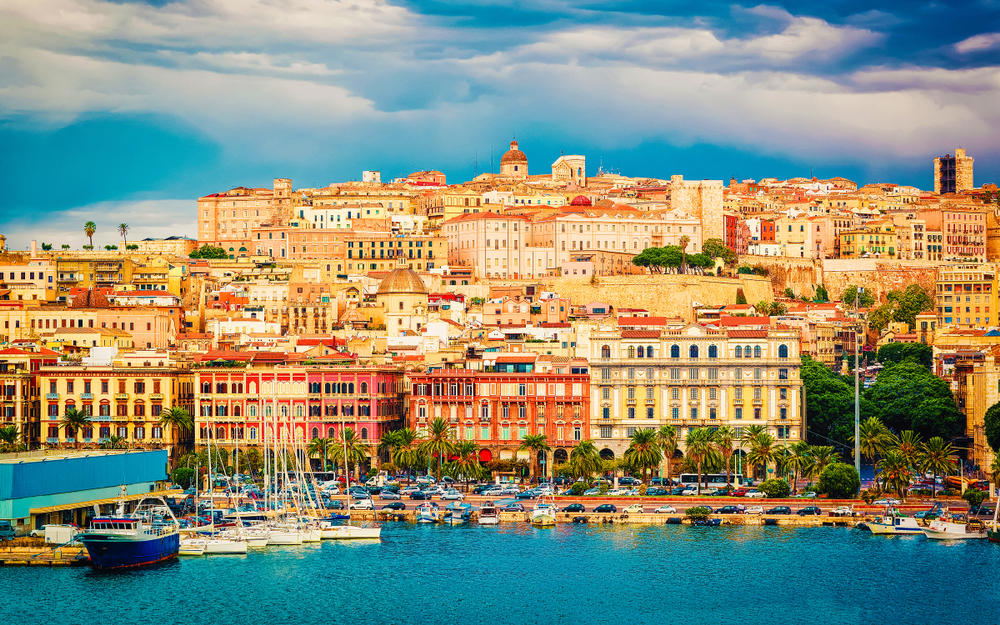
The capital of Sardinia, Cagliari is much more than just a gateway to the island: it’s a vibrant Mediterranean city well worth spending a few days in. Perched on seven hills overlooking the Gulf of Angels, the city boasts an exceptional historical heritage, with its medieval quarter of Castello, imposing Pisan fortifications and Roman remains.
The historic heart of Cagliari is best explored on foot, strolling through the narrow streets of the Castello, where Santa Maria Cathedral and the medieval towers stand proudly. The Bastion of Saint Remy, a magnificent monumental staircase surmounted by a triumphal arch, offers spectacular views of the whole city, the port and the sea in the distance from its panoramic terrace. History buffs won’t want to miss the National Archaeological Museum, one of the richest in Italy, which traces the fascinating Nuraghic civilisation. In the lively Marina district, Via Roma, lined with beautiful Liberty facades, is an invitation to the traditional Italian passegiata, a stroll at the end of the day when elegantly dressed Sardinians stroll between terraces and shops.
Download the audio-guided tour to discover Cagliari on foot and on your own
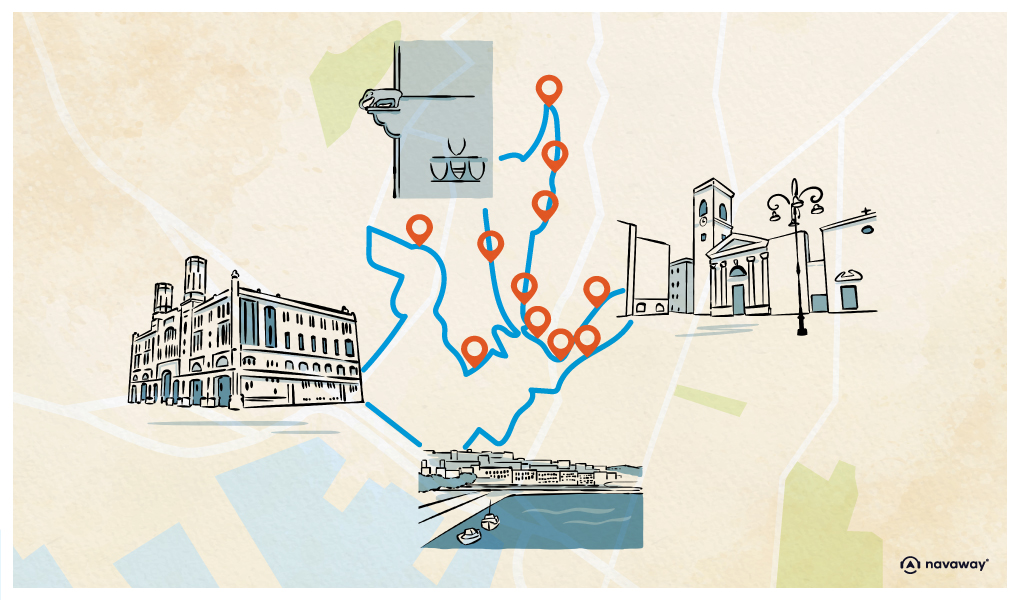
For an in-depth, no-holds-barred discovery of the Sardinian capital, opt for the audioguided tour of Cagliari available on the Navaway app. This intelligent itinerary takes you through 17 of the city’s major places of interest, from the Palazzo Bacarela to the Bastion of Saint Remy, via the medieval towers and the cathedral. Each stop is accompanied by fun audio guides and historical anecdotes to enhance your exploration. The interactive navigation adapts to your position, allowing you to start the tour from any point on the route. Thanks to this carefully designed itinerary, you’ll discover Cagliari’s hidden treasures while enjoying complete freedom in the pace of your visit.
2. Lounging on the island’s heavenly beaches
Sardinia is world-famous for its beaches, considered to be among the most beautiful in the entire Mediterranean. Immaculate white sand, crystal-clear waters in shades of turquoise and emerald, secret coves nestling between pink granite cliffs: the island offers a breathtaking diversity of coastal landscapes.
Near Cagliari, Poetto beach stretches over seven kilometres of fine sand, offering all the amenities for a relaxing day out with the family. Further north, the Costa Smeralda reveals popular spots such as Spiaggia del Principe, famous for its fine sand and turquoise waters framed by characteristic granite rocks. But it’s undoubtedly in the north-west that you’ll find the absolute pearl: La Pelosa, near Stintino, with its shallow waters of unreal blue and the islet of Asinara in the background. This beach regularly features in international rankings of the world’s most beautiful beaches. For those seeking more tranquillity, the south-east coastline between Villasimius and Capo Carbonara is home to wild coves accessible only on foot, rewarding hikers with breathtaking panoramas.
3. Discover the mysterious nuraghi and the Su Nuraxi site

The nuraghi are one of Europe’s greatest archaeological mysteries and are the emblem of Sardinia. These imposing cone-shaped stone towers date back to the Bronze Age and are dotted around the island in their thousands. There are around 7,000 of them, impressive reminders of the Nuragic civilisation that flourished between 1900 and 730 BC.
The most spectacular and best-preserved site is undoubtedly Su Nuraxi in Barumini, the only Sardinian monument listed as a UNESCO World Heritage Site. Discovered in the 1950s by archaeologist Giovanni Lilliu, this Nuragic complex features a massive central tower surrounded by four secondary towers and a village of around fifty circular houses. The exact function of these structures remains enigmatic: religious temples, military fortresses, community gathering places? The mystery persists and feeds the imagination of visitors. A guided tour of the site, located around 60 kilometres north of Cagliari, provides an insight into the architectural ingenuity of this vanished civilisation. Other remarkable Nuragic sites such as Su Mulinu in Villanovafranca and the Palmavera complex near Alghero are also well worth a visit for archaeology enthusiasts.
4. Sailing in the La Maddalena archipelago
Off the coast of the Costa Smeralda, the La Maddalena archipelago is a natural tableau of striking beauty. This protected marine national park comprises seven main islands and around sixty rocky islets emerging from electric blue waters. It is one of the most precious natural jewels in the Mediterranean.
The main island of La Maddalena can be reached by ferry from Palau in just 20 minutes. From the picturesque port of La Maddalena, there are numerous boat trips to explore the neighbouring islands. The island of Spargi is home to the splendid Cala Corsara, accessible only by sea, with its immaculate sand and translucent waters ideal for snorkelling. The island of Budelli is home to the famous Spiaggia Rosa, whose slightly pink sand is the result of the erosion of millions of shells and corals. Although swimming is now prohibited to preserve this fragile treasure, the view from the boat is still memorable. The island of Caprera, linked to La Maddalena by a causeway, is worth a visit for its nature park and the house-museum of Giuseppe Garibaldi, the hero of Italian unification who lived there in his final years. A full day will not be too much to appreciate the magic of this archipelago where nature reigns supreme.
5. Explore the Gulf of Orosei and its inaccessible coves
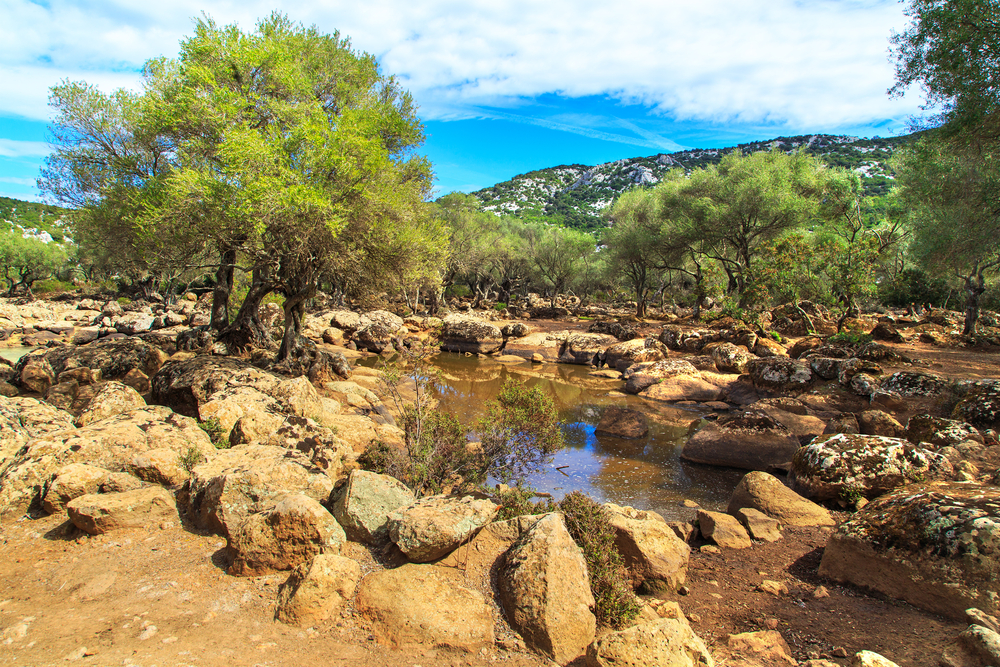
The Gulf of Orosei, on the east coast of Sardinia, is one of the wildest and most spectacular coastlines in the whole of the Mediterranean. Dominated by imposing limestone cliffs plunging sheer into the deep blue sea, this unspoilt territory is home to some of the island’s most beautiful beaches, often accessible only by boat or by demanding hiking trails.
From the seaside resort of Cala Gonone, there are numerous sea excursions to discover the pearls of the gulf. Cala Luna, nestling at the foot of vertiginous cliffs, offers a crescent of golden sand bordered by natural caves. Cala Goloritzé, a listed national monument, boasts a natural rock arch, a 143-metre limestone spire and crystal-clear waters in incredible shades of blue. This emblematic cove is also accessible by a 90-minute hiking trail from the Golgo plateau for the more sporty visitors. Cala Mariolu, with its polished white marble pebbles and transparent water, is a diver’s paradise. Discovering the gulf can also include a visit to the Bue Marino caves, once home to the Mediterranean monk seal, now extinct. Allow a whole day for this unforgettable maritime escapade, with several swimming stops in these heavenly coves.
6. Visit Alghero and the Neptune grotto
On the north-west coast of Sardinia, Alghero boasts a unique charm inherited from centuries of Catalan domination. Nicknamed the “Barceloneta sarda”, this fortified town has retained a strong Catalan identity, perceptible in its architecture, the language still spoken by some of its inhabitants and the local cuisine.
The medieval historic centre of Alghero, surrounded by ramparts overlooking the sea, is an inviting place to stroll along its cobbled streets, where Catalan dialects echo. The bastions offer magnificent views of the sunset, particularly from the terraces of the restaurants set up along the fortifications. Santa Maria Cathedral and the many Gothic churches bear witness to the city’s rich past. But the must-do excursion from Alghero is a visit to Neptune’s Grotto, 24 kilometres away on the promontory of Capo Caccia. This spectacular karstic cavern, accessible either by boat from the port of Alghero or by a vertiginous staircase of 656 steps cut into the cliff, reveals a fairytale underground world. Stalactites and stalagmites are reflected in an interior salt lake, creating a striking play of light. The limestone concretions have taken millions of years to form, sculpting fantastically shaped stone columns and draperies. The constant temperature of 15°C inside the cave provides welcome coolness on hot summer days.
7. Marvel at Porto Cervo and the Costa Smeralda
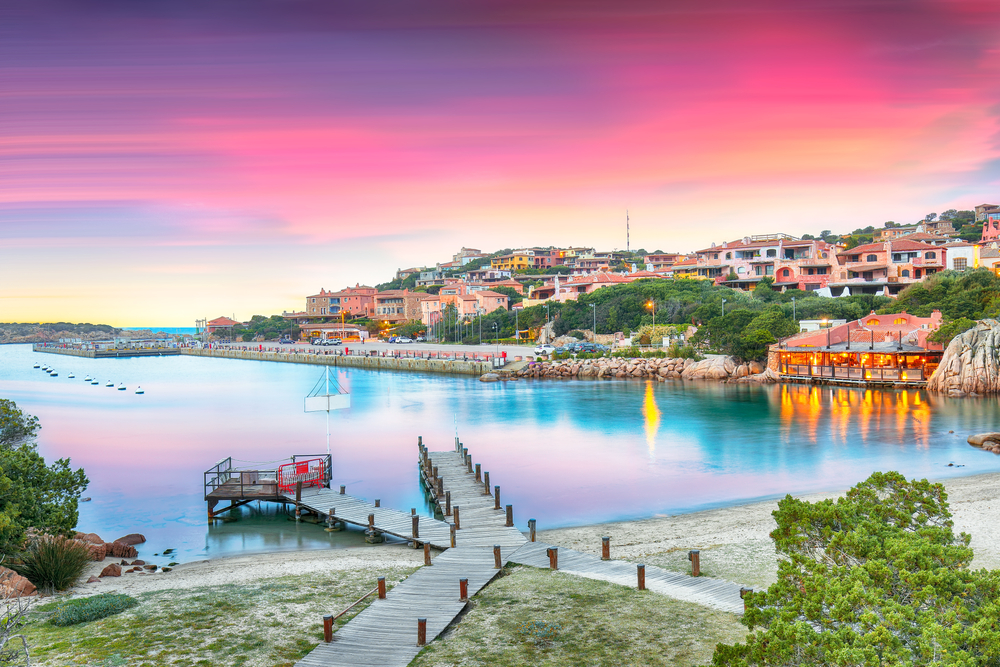
The Costa Smeralda, on the north-east coast of Sardinia, epitomises the glamorous face of the island. Ever since Prince Karim Aga Khan discovered this stretch of coastline in the 1960s and decided to make it an elite destination, the Emerald Coast has attracted celebrities, luxury yachts and lovers of the Mediterranean dolce vita.
Porto Cervo, the unofficial capital of the Costa Smeralda, fascinates visitors with its unique architecture inspired by traditional Sardinian villages, but built using noble materials. The marina is home to some of the world’s most beautiful yachts, worth tens of millions of euros. International designer boutiques line the elegant streets of the centre. But beyond the ostentatious glitz, the region is home to some real natural treasures. The beaches of Capriccioli, Principe and Liscia Ruja are among the most beautiful in Sardinia, with their turquoise waters and characteristic pink granite rock formations. The mountainous hinterland also offers some great getaways, particularly in the Porto Conte nature park. Although the prices charged on the Costa Smeralda may put a damper on modest budgets, a day’s excursion allows you to appreciate the exceptional natural beauty of this stretch of coast, without necessarily frequenting the posh establishments.
8. Discover the Roman remains of Nora and Tharros
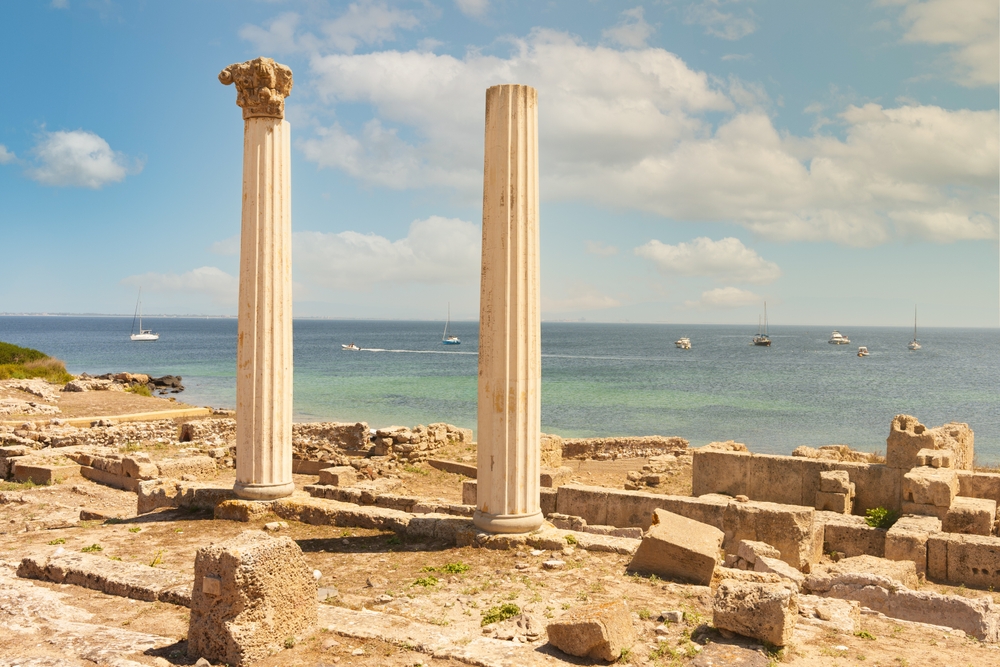
Sardinia has preserved remarkable evidence of Roman occupation, with two major archaeological sites that take visitors back in time to antiquity. These open-air museums offer a fascinating insight into the daily life of the Romans who settled on the island over two thousand years ago.
The site of Nora, located near Pula some thirty kilometres south of Cagliari, occupies a spectacular position on a rocky promontory surrounded by the sea. Founded by the Phoenicians in the 9th century BC and later developed by the Carthaginians and Romans, Nora was one of the most important cities in ancient Sardinia. There is a remarkably well-preserved Roman theatre, thermal baths with polychrome mosaics, temples, cobbled streets and even the remains of a forum. To the west of the island, on the Sinis peninsula near Oristano, the site of Tharros offers an equally striking setting. The ruins of this ancient Punic and then Roman city face the sea, with columns still standing, thermal baths, a network of streets and the foundations of houses. The immediate proximity of the beach means you can combine a cultural visit with a refreshing swim. The advantage of these two sites is that they can be explored freely, allowing you to fully immerse yourself in the atmosphere of the place as you please.
9. Savour authentic Sardinian cuisine
Sardinian cuisine is clearly distinguished from continental Italian cuisine by its rustic character, powerful flavours and the combined influence of the sea and the mountains. Products from the pastoral interior and treasures from the Mediterranean combine to create a unique culinary identity that would be unforgivable not to explore.
Pane carasau, the very thin, crusty bread traditionally prepared by shepherds, is served with every Sardinian meal. Fresh pasta comes in many forms: malloreddus, small striped gnocchi generally served with a sausage and saffron sauce, culurgiones, ravioli stuffed with potatoes, mint and pecorino cheese, or fregola, a kind of Sardinian couscous often prepared as a soup with seafood. Spit-roasted suckling pig, or porcheddu, is the island’s signature meat dish, cooked for hours until the skin is crisp and the flesh melts. Cheeses take centre stage, especially pecorino sardo DOP, a hard sheep’s milk cheese with an intense aroma. Thrill-seekers can try casu marzu, a cheese colonised by living larvae, a controversial but traditional speciality. On the seaside, the bottarga (bottarga) of Cabras mullet is a gastronomic treasure. Finally, it’s impossible to leave Sardinia without tasting the séadas, fritters filled with fresh cheese and topped with honey, and without enjoying a glass of Cannonau, the island’s robust red wine, or Vermentino for the whites. To discover this culinary wealth, visit local markets such as San Benedetto in Cagliari, or family-run trattorias inland.
10. Hiking in the mountainous hinterland and Barbagia
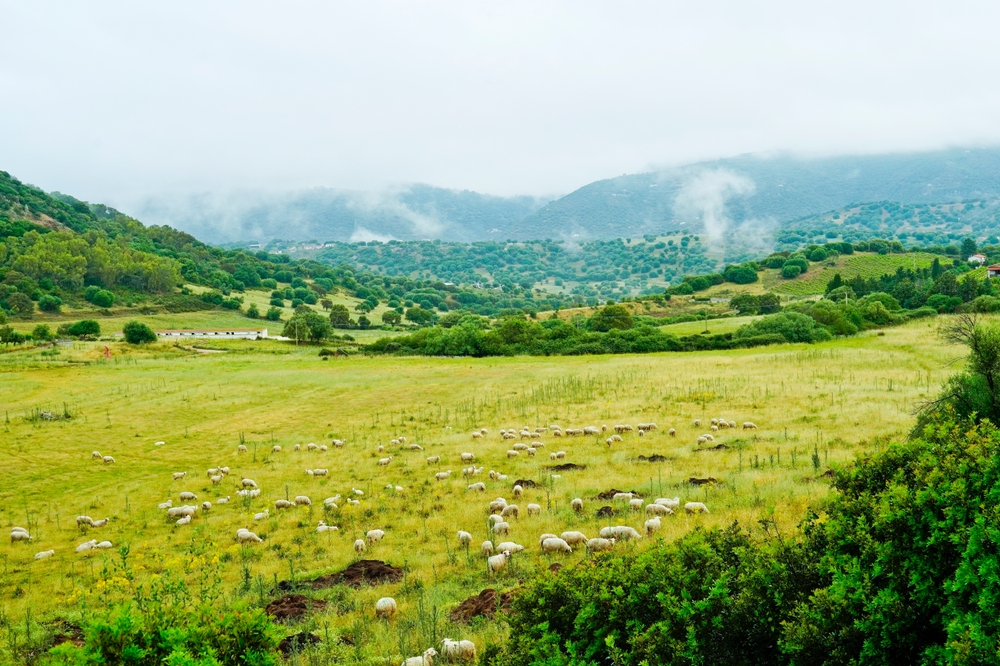
Far from the postcard image of paradise beaches, the mountainous interior of Sardinia reveals a totally different face of the island, wild and authentic. The Barbagia region, in the heart of Sardinia, takes its name from the Romans, who described its inhabitants as “barbarians” because of their fierce resistance to domination. Even today, this unspoilt area embodies the very soul of Sardinia.
The Gennargentu massif, the highest point on the island at 1,834 metres at Punta La Marmora, offers spectacular mountain scenery where Sardinian mouflons still roam freely. Numerous hiking trails criss-cross these mountains covered in Mediterranean maquis, holm oak forests and crystal-clear springs. The route leading to the Gola di Gorropu, one of Europe’s deepest canyons with vertical walls over 500 metres high, is a memorable hike for thrill-seekers. The villages of Barbagia, such as Orgosolo, famous for its engaged mural frescoes covering the façades, or Fonni, the highest village in Sardinia, are a good place to discover the agro-pastoral traditions that are still alive and well. Folk festivals, colourful traditional costumes and local crafts bear witness to a culture that has been fiercely preserved. This inland Sardinia, less visited but oh so endearing, offers a cultural and landscape counterpoint that is essential for understanding the true identity of the island, far beyond the tourist clichés of the coastline.
In conclusion, Sardinia reveals itself as a destination of unsuspected richness, much more than just a string of idyllic beaches. With its unique archaeological heritage, medieval villages steeped in history, unspoilt wilderness and delicious gastronomic traditions, the island offers an extraordinarily varied range of experiences. Whether you devote a week or more to exploring it, each day has its own share of discoveries and wonders to offer. Alternate between seaside pleasures, cultural visits and escapades in the mountainous hinterland to take in all the facets of this extraordinary Mediterranean island. And to kick off your Sardinian tour in style, start by discovering the capital Cagliari with the Navaway audio tour, which will reveal all the secrets of this thousand-year-old city perched on seven hills. Sardinia is waiting to reveal its hidden treasures and offer you unforgettable memories under the Mediterranean sun.
Frequently asked questions
When is the best time to visit Sardinia?
The ideal time to visit Sardinia is from May to September, when you can make the most of the beaches and water sports. May, June and September offer an excellent compromise with pleasant temperatures, fewer tourists and lower prices. July and August are high season, with many tourists and high prices, particularly on the Costa Smeralda. April and October, with their mild climate and lush green landscapes, are also a good time to visit for cultural discoveries and hiking.
Getting around Sardinia
Renting a car is the best way to explore Sardinia in complete freedom. The island has a decent road network, although some mountain roads are narrow and winding. Public transport is available but limited, particularly for reaching beaches and isolated sites. To visit Cagliari, it’s best to walk and use urban public transport, as parking in the city centre can be tricky. There are numerous car rental agencies at Olbia, Cagliari and Alghero airports.
How many days does it take to visit Sardinia?
A minimum stay of one week allows you to discover Sardinia’s main must-sees, but the island amply deserves two weeks for a more complete and relaxed exploration. With seven days, you can combine a visit to Cagliari, some heavenly beaches, the Su Nuraxi site and an excursion to the Gulf of Orosei or the La Maddalena archipelago. With two weeks, add the Costa Smeralda, Alghero, the mountainous hinterland and more time to enjoy the beaches without running.
What culinary specialities are not to be missed in Sardinia?
Sardinian cuisine is characterised by its robust flavours and local produce. Don’t miss porcheddu (roast suckling pig), culurgiones (stuffed ravioli), pane carasau (crusty bread), pecorino sardo (sheep’s milk cheese), bottarga (mullet bottarga), malloreddus (saffron pasta) and séadas (cheese and honey fritters). As for drinks, try Cannonau (red wine) and Vermentino (white wine). Local markets and traditional trattorias are the best places to discover these authentic specialities.
Can you visit Sardinia with children?
Sardinia is perfect for family holidays. Shallow beaches such as Poetto near Cagliari offer a safe environment for children. There are plenty of fun activities on offer, including boat trips, snorkelling in the crystal-clear waters, visits to fascinating archaeological sites such as the nuraghi, and easy hikes suitable for younger visitors. The Sardinians’ warm welcome for families and child-friendly catering round off the attractions of this ideal family destination.
200 audioguided tours for cities all around the world
Download