12 not-to-be-missed things to do in Haute-Loire: Le Puy, gorges de l’Allier & villages
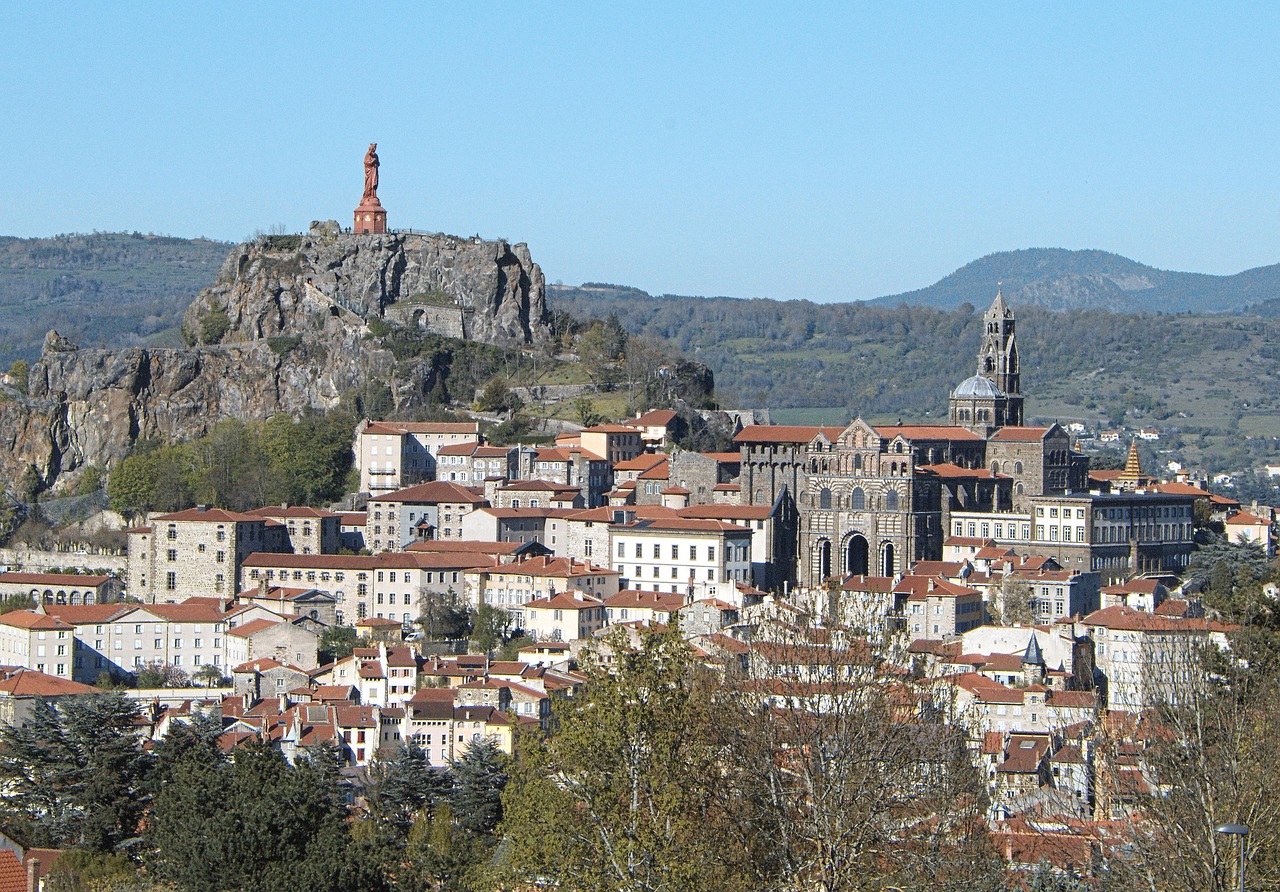

With its volcanic plateaux, wild gorges and stone villages, the Haute-Loire is a concentrate of authentic Auvergne: a destination that can be experienced as much by taking your time in the narrow streets as by escaping along the trails. Here’s a complete, highly detailed guide to the 12 must-do things to do in the Haute-Loire, with practical ideas for organising your days, varying the atmosphere (heritage, nature, local produce) and avoiding “catalogue visits”.
If you’re coming for a short break, you can also put together a simple itinerary: 2 days around Le Puy-en-Velay, then 1 or 2 days in the countryside (gorges, plateaux, villages). And if you’ve got a week, the Haute-Loire lends itself very well to “slow travel”: loop stages, stop off at an inn, change valleys, take your time.
You can also read in the Le Grau-du-Roi guide :
- 18 must-do things to do in Auvergne
- Perched castles in Auvergne-Rhône-Alpes: 13 jewels to visit
- The 7 most beautiful villages around Clermont-Ferrand
- 20 must-see weekend ideas around Lyon
- 12 unusual romantic weekends in the Rhône-Alpes region
- 20 must-see weekend ideas around Lyon
1. Le Puy-en-Velay: get lost in a show town built on lava
You can come to the Haute-Loire to “do nature”, and then fall in love with its heritage: Le Puy-en-Velay has this gift. The town is built around volcanic peaks, and the feeling is immediate: wherever you are, there’s a rock, a statue, a chapel, a rise, a viewpoint. The historic centre is best visited on foot, alternating between narrow streets, squares, staircases and belvederes.
A simple and effective idea: start early (before the crowds arrive), have a coffee in one of the squares, then take in the must-sees at your own pace: the cathedral (pilgrimage atmosphere, dark stonework), the staircases linking the different levels of the old town, and the viewpoints that give you the impression of overlooking an amphitheatre of rooftops. In a single afternoon, you can already get a real sense of a “long journey”, without having to travel many kilometres.
2. Notre-Dame cathedral: where the road begins
Notre-Dame cathedral is not just “a monument to be seen”: it is a place of departure, a crossroads of stories, a spiritual anchor. Navaway reminds us that the cathedral is the starting point of the pilgrimage route to Santiago de Compostela, and that it is one of the powerful images associated with Puy-en-Velay.
To make the most of it: go inside, let your eyes adjust (the light is often softer), then take a few minutes to observe the architecture rather than “tick off” the visit. Then go outside and look at the cathedral from different angles: in Le Puy, the outside is just as important as the inside, as the whole town serves as a backdrop for the monuments.
3. The chapel of Saint-Michel d’Aiguilhe: a short climb, an immense memory
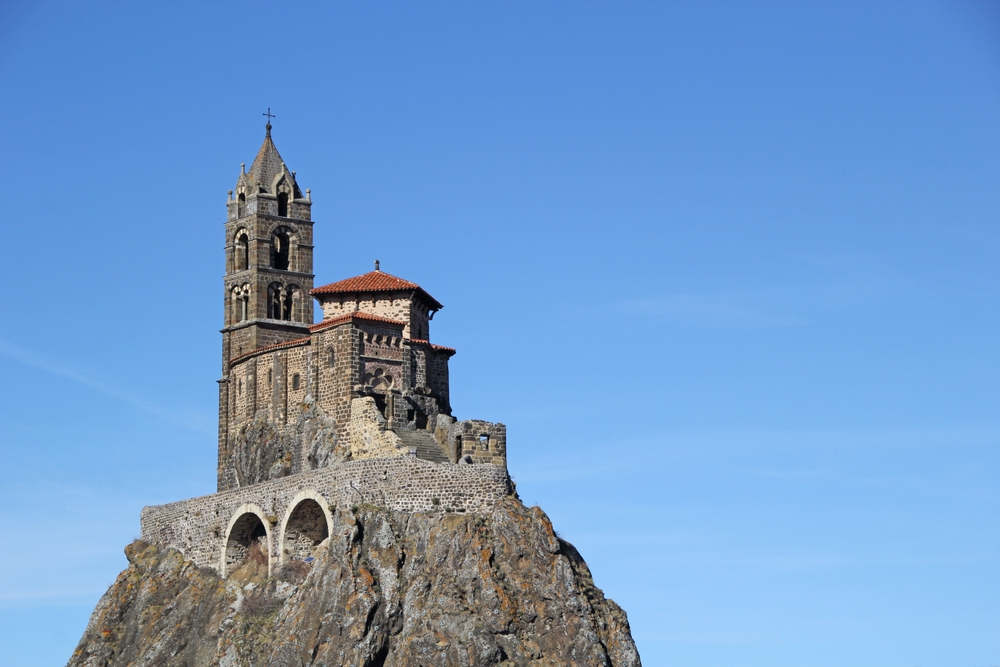
If there was only one image to bring back, it would be this one: a chapel perched on a rocky outcrop. Navaway explicitly cites the chapel of Saint-Michel d’Aiguilhe “perched on its rock” as one of the emblems of Le Puy-en-Velay.
The climb is short but quite striking: you quickly move from the city to a feeling of verticality. The trick is to go when the light is good (morning or end of day): the volcanic relief “catches” the light and the contrast is spectacular. Take the time to look down too: it’s not just a “chapel”, it’s a natural setting.
4. Polignac: a fortress on a volcanic vent
For a more ‘medieval’ take on the volcanic landscape, head for Polignac. The Navaway article on perched castles cites the fortress of Polignac and points out one striking feature: a 32-metre keep and an impressive defensive system. [Source](https://navaway.fr/chateaux-perches-auvergne-rhone-alpes/)
What makes this visit so special is the combination of geology and architecture: the fortress doesn’t just ‘sit’ on a rock, it seems to be an extension of the lava column. When you’re there, take the time to walk around the outside of the fortress before you enter: this way you’ll understand why the location was strategic, and you’ll be able to enjoy more ‘cinematic’ views.
5. Château de la Rochelambert: a romantic troglodyte castle
Another atmosphere, another setting: the Château de la Rochelambert (in Saint-Paulien) is mentioned by Navaway as one of the perched castles, with a Google rating of 4.7/5 (118 reviews) and a rare cultural detail: Jean Cocteau is said to have used it as the setting for La Belle et la Bête, and George Sand is said to have stayed there.
In practical terms, it’s an excellent half-day idea when you want to take a break between two large ‘natural’ boulders. The site has a very photogenic dimension: stone, cliff, volumes, and that feeling of a castle ‘in’ the rock rather than ‘on’ the rock. If you like atmospheric places, this one ticks all the boxes.
6. La Chaise-Dieu: the Gothic abbey and the plateau of silence
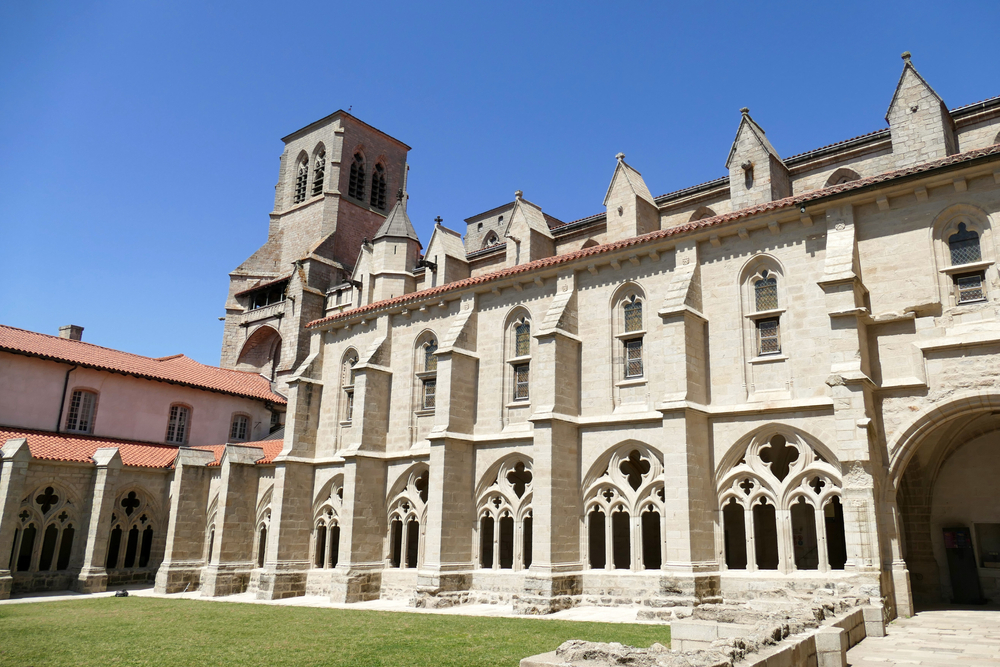
A complete change of pace: at La Chaise-Dieu, you come for the abbey… but also for the feeling of a plateau, of fresh air, of distance. Navaway describes it as perched on a plateau in the Haute-Loire, and highlights the beauty of its Gothic abbey.
A good idea is to combine the visit with a short loop around the village: a few streets, a viewpoint, a café or a picnic break, depending on the season. Here, everything is conducive to slowing down. And if you like the atmosphere of “old stones + light”, choose a visit when the sun is low: the Gothic style is even more striking.
7. The Allier gorges: the Haute-Loire version of a “green grand canyon”.
When we think of gorges in France, we often think of Verdon or Ardèche. But in the Haute-Loire, the Allier gorges offer a different aesthetic: wilder, more railway-like, more secretive. Navaway describes them as an imposing landscape between Lozère and Haute-Loire.
Do as you please: viewpoints (easy), hiking (flexible), or simply a panoramic route with ‘breathing’ stops. If you like contemplative journeys, the idea is not to follow on from one another too much: choose 2 or 3 stops, take the time to listen to the river, observe the walls, and let your throat “do the work”.
8. Blesle: a medieval village on a human scale
If you’re looking for a day out in the village, Blesle is the place to go. Navaway describes it as one of the most beautiful medieval villages in the Haute-Loire, with a Benedictine abbey founded around 880, a church with an octagonal bell tower, cobbled streets and a peaceful atmosphere at the bottom of the valley. [Source](https://navaway.fr/les-7-plus-beaux-villages-autour-de-clermont-ferrand/)
Practical tip: come without a “battle plan”. You can enjoy Blesle by walking slowly, looking at the details (stones, openings, passageways), making a loop that naturally returns to the centre. It’s also a great stop-off if you’re travelling with someone who doesn’t like “big visits”: here, you can breathe.
9. Lavaudieu: Romanesque cloister and a gentle valley
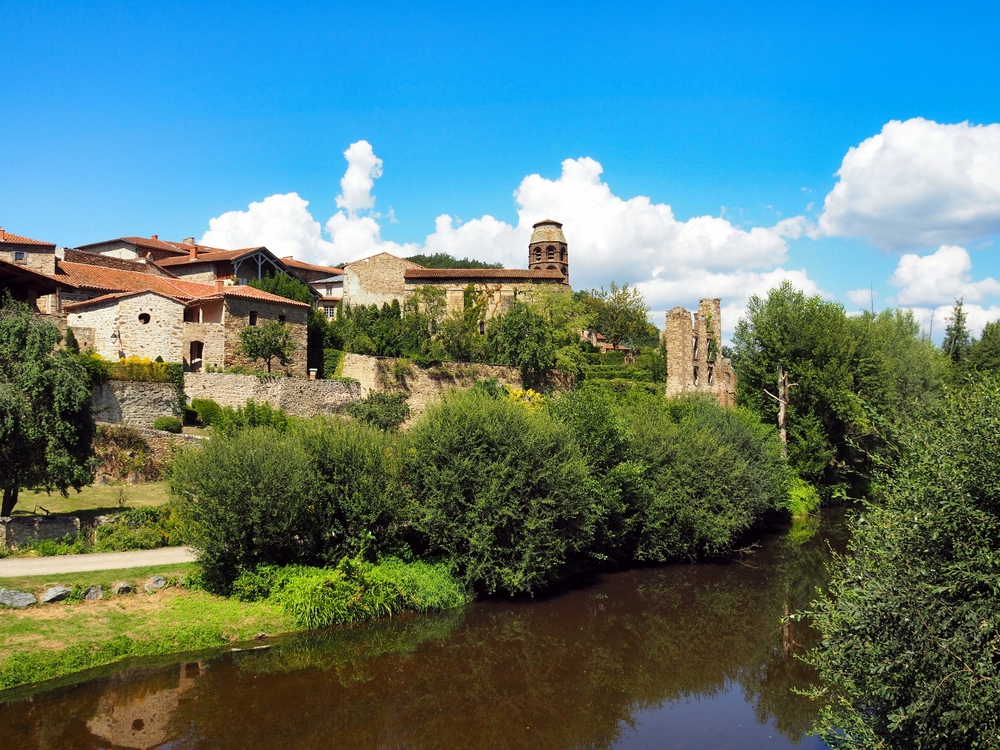
Lavaudieu, another village mentioned by Navaway, is described as a “Romanesque gem” in the Haute-Loire, with a complete Romanesque cloister (said to be unique in the region) and a refectory with a 14th-century fresco.
What makes Lavaudieu so special is the combination of heritage and peace and quiet. Even in summer, if you choose your schedule carefully, you can enjoy a very serene visit. Here’s an idea: take the heritage tour, then give yourself 30 minutes with no objective in mind (just walk around, look at the river, sit down).
10. Taking in the sights at Le Puy: rocks, staircases, belvederes
Coming back to Le Puy (even after a first visit) is often a good idea: the town can be read in layers. The first time, you see the “great monuments”. The second time, you notice the logic of the staircases, the views that respond to each other, and the way in which the peaks structure the town. Navaway clearly groups these symbols together (cathedral, path, perched chapel) in its presentation.
If you had to add just one gesture: look for the viewpoints that are “a little out of the way” (those where there are no crowds). They’re often not signposted as a must-see, but they’re the ones that give you the best memories: a bench, a view over the rooftops, and the volcanic landscape in the background.
11. Hiking without pressure: the right pace in Haute-Loire
The Haute-Loire is a perfect place for walking… but what makes it so enjoyable is that you don’t have to aim for the “big time”. You can alternate: a short panoramic walk one day, a heritage visit the next, then a longer hike after that. The department lends itself well to these alternations, as the distances remain reasonable if you organise your zones (Puy / plateaux / valleys).
Comfort tip: always have an ‘easy plan B’ option (walk, village, viewpoint) in case the weather, fatigue or timing changes. This is often what turns a ‘stressful’ holiday into a ‘smooth’ one.
12. A taste of the Haute-Loire: market, local produce and meal at the end of the day
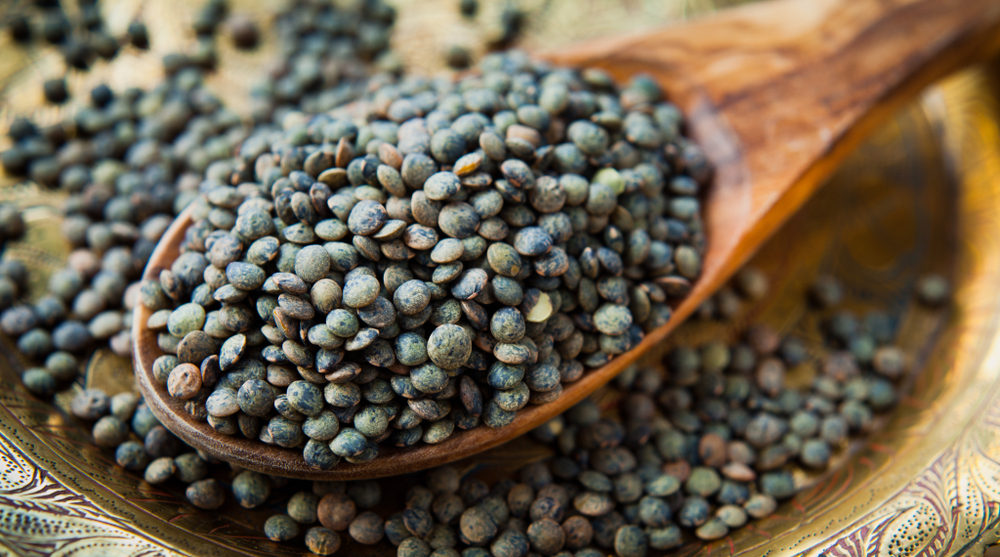
A must-see isn’t necessarily a place: it’s also a time. In the Haute-Loire, it’s a good idea to incorporate local produce into your trip: a morning market, a cheese and sausage break, lentils and mountain dishes, then an early dinner after a day out. Even if you’re not aiming for a ‘gastronomic route’, this rhythm gives the trip a coherent feel.
Tip: after a big visit (Puy, château, abbey), don’t necessarily go far away again. Instead, make the end of the day short and gourmet: that’s what avoids fatigue and gives the stay a real taste of holiday.
In conclusion, the Haute-Loire stands out for its ability to offer, within a reasonable area, some very strong contrasts: the volcanic peaks and heritage of Le Puy-en-Velay, the monastic atmosphere of the La Chaise-Dieu plateau, the vertigo of the Allier gorges, and the gentleness of villages like Blesle or Lavaudieu. If you organise your trip so that it alternates between a “major site” and a “slow break”, you’ll not only have seen the must-sees, but above all you’ll have experienced a destination.
FAQ – Preparing your stay in Haute-Loire
When is the best time to visit the Haute-Loire?
Spring and autumn are ideal for combining villages, heritage and walks without the heat or crowds. Summer is also very suitable if you start your visits early (particularly in Le Puy) and if you leave time for nature breaks during the day.
What to do in the Haute-Loire in 3 days?
An efficient structure: 1 day in Le Puy-en-Velay, 1 day of “perched castles” (Polignac + Rochelambert), and 1 day of “calm” (La Chaise-Dieu or a village like Blesle/Lavaudieu). The villages of Blesle and Lavaudieu are cited as charming stops by Navaway.
What are the nature must-haves?
The Allier gorges are one of Navaway’s great nature classics, between Lozère and Haute-Loire. [Source](https://navaway.fr/choses-incontournables-auvergne/)
200 audioguided tours for cities all around the world
Download