Visiting Tenerife: 10 Things to do
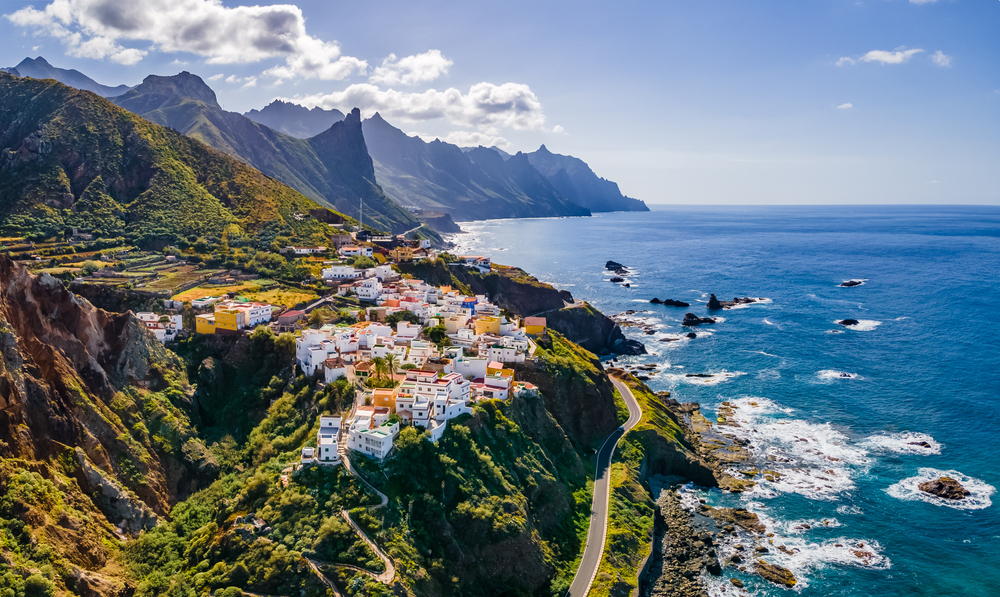

Fancy discovering one of the most beautiful islands in the Canaries? Tenerife, nicknamed “the island of eternal spring”, combines spectacular volcanic landscapes, black sand beaches, authentic villages and unspoilt nature. Between the majestic Teide volcano, the breathtaking cliffs of Los Gigantes and the lush forests of the Anaga rural park, the island offers exceptional diversity. Whether you’re a hiking enthusiast, a history buff or simply looking to relax in the sun, visiting La Oratava promises an unforgettable experience. Here is our selection of the 10 must-sees and must-dos during your stay.
200 audioguided tours for cities all around the world
DownloadRead more in the La Orotava guide :
- Top 5 things to do in La Orotava
- Top 5 best hotels to stay at in La Orotava
- The 13 best destinations to spend winter in the sun
1. Teide National Park, Tenerife’s volcanic jewel
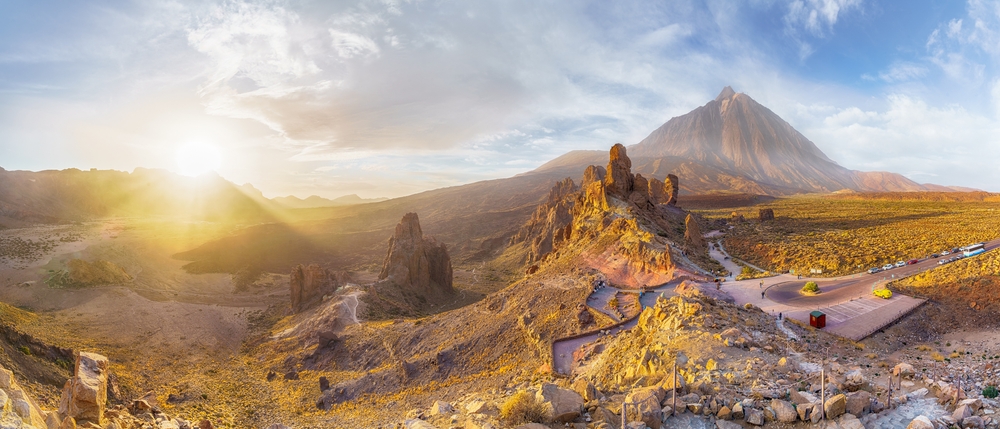
It’s impossible to visit Tenerife without discovering its emblem: the Teide National Park. Listed as a UNESCO World Heritage Site since 2007, it is home to Spain’s highest peak at an altitude of 3,718 metres. The lunar landscape surrounding the volcano creates a unique, almost unreal atmosphere, with rivers of petrified lava, spectacular rock formations and breathtaking views.
There are several options for reaching the summit. The cable car takes you from the base station (2,356 metres) to La Rambleta (3,555 metres) in just 8 minutes. From here, you can enjoy exceptional views over the whole island and, on a clear day, the neighbouring islands of the archipelago. If you’re feeling more sporty, you can tackle the climb on foot, a hike that takes around 6 to 7 hours and requires a free permit issued by the park (200 permits are available every day).
Astronomy enthusiasts will particularly appreciate this place, recognised as one of the best stargazing spots in the world thanks to its Starlight-labelled skies. Numerous night-time excursions are organised to contemplate the celestial vault from the heights of the volcano. Don’t forget to pack warm clothes: even in summer, temperatures can be cool at over 3,000 metres.
Practical information: The park is accessible all year round. The cable car generally runs from 9am to 5pm (times vary according to weather conditions). Allow a full day to take full advantage of the site.
2. La Orotava, authentic Canary Islands on a mountainside
Nestling in a lush valley to the north of Tenerife, La Orotava is one of the most beautiful villages on the island. This historic town boasts remarkably well-preserved colonial architecture, cobbled streets lined with houses with carved wooden balconies and flower-filled patios. The historic centre is a veritable open-air museum testifying to the cultural richness of the Canaries.
Download the audio tour to discover La Orotava on foot and on your own
To explore La Orotava in the best possible conditions, opt for the Navaway audio tour. This 2.5 km route takes you to 16 of the town’s major places of interest in around 1 hour. Stroll past the famous Casa de los Balcones, a 17th-century stately home housing the Canaries’ most important collection of handicrafts, and the church of Nuestra Señora de la Concepción, considered to be the most beautiful Baroque church in the archipelago, with its dome inspired by Florence Cathedral.
Don’t miss a stroll through the magnificent Victoria Gardens, the former plantation of the Marquis de la Quinta Roja, or a visit to the Hijuela del Botánico, the botanical garden annex founded in 1788. The authentic charm of La Orotava can also be found in its traditional crafts, such as the making of flower carpets on Corpus Christi, a celebration that attracts thousands of visitors every year. As you explore the different districts, let yourself be guided by the Navaway tour, which will reveal all the hidden treasures of this emblematic city.
Good to know: The gardens have specific opening times. The Botanical Gardens are open Monday to Friday from 9am to 6pm and at weekends from 10am to 3pm. The Victoria Gardens are open weekdays from 9am to 8pm and weekends from 9.30am to 8.30pm.
3. The Los Gigantes cliffs, an impressive natural spectacle
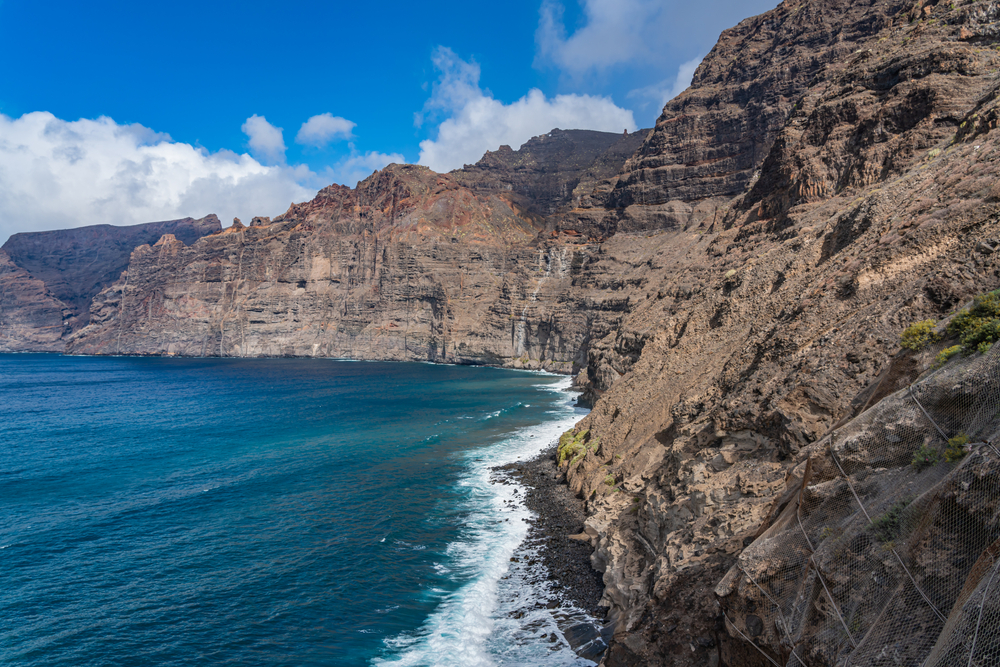
On the west coast of Tenerife stand the impressive cliffs of Los Gigantes, vertiginous walls plunging sheer into the Atlantic Ocean. These basalt walls are up to 600 metres high, creating a breathtakingly beautiful landscape that fully justifies their name of “giants”.
The best way to appreciate the majesty of these cliffs is by boat. Many companies offer trips departing from the port of Los Gigantes or Puerto de Santiago. These cruises not only allow you to admire the cliffs from their base, but also to observe the dolphins and whales that regularly frequent these waters. Short-finned pilot whales and common dolphins are particularly common in this area, making Tenerife one of the few places in Europe where cetaceans can be seen all year round.
For those who prefer to stay on land, there are several viewpoints offering spectacular vistas. The Mirador Archipenque and Los Guios beach are excellent spots from which to photograph these stone giants. La Arena beach, with its black volcanic sand, offers a unique swimming experience at the foot of the cliffs.
Practical tip: Book your boat trip for the morning, when the light highlights the cliffs and the chances of spotting cetaceans are greatest.
4. The Anaga rural park, a lush green setting
At the north-eastern tip of Tenerife, the Anaga rural park offers a striking contrast with the volcanic landscapes of the south. This biosphere reserve, classified by UNESCO in 2015, is home to the highest concentration of endemic species in Europe. Its laurel forests, remnants of the Tertiary era, create a mystical atmosphere that is often shrouded in mist.
The Anaga mountain range boasts a network of hiking trails that are among the most spectacular on the island. The Barranco de Afur and Taganana trails are among the most popular, offering breathtaking panoramic views of the ocean and steep valleys. These trails pass through lush vegetation where giant ferns and ancient trees create a setting worthy of a fantasy film.
Be sure to visit the Cruz del Carmen interpretation centre, where you can learn all about the unique geological and ecological history of this region. The picturesque villages of Taganana and Afur, accessible by winding roads, will allow you to discover the authenticity of rural Canarian life. These isolated hamlets have preserved their traditions and typical architecture.
Please note: Make sure you bring appropriate clothing, as the climate can be damp and cool, especially at altitude. A waterproof jacket is recommended, even in summer.
5. San Cristóbal de La Laguna, cultural and university heritage
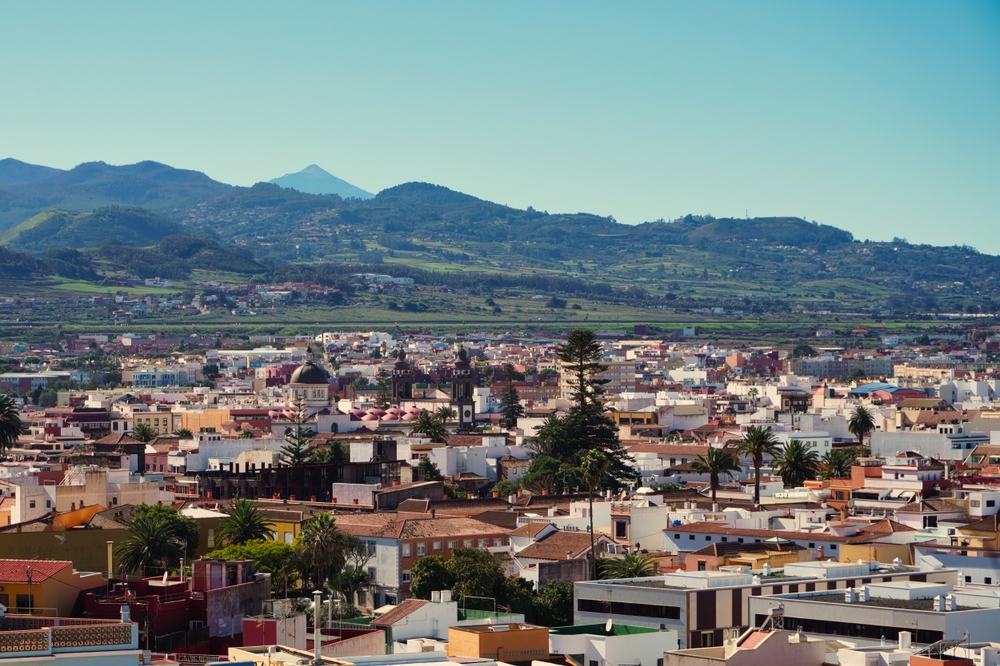
The former capital of Tenerife, San Cristóbal de La Laguna has been a UNESCO World Heritage Site since 1999. This university town with its colonial charm has a unique grid layout, inherited from the time of the Spanish conquest and used as a model for Latin American cities.
The historic centre of La Laguna is best explored on foot. Stroll through the narrow streets lined with stately homes with colourful facades, visit the Cathedral of Nuestra Señora de los Remedios and admire the many churches and convents that bear witness to the town’s rich religious past. Calle San Agustín is home to some magnificent examples of traditional Canary architecture.
La Laguna’s lively atmosphere is due to its large student population. Tapas bars, trendy cafés and craft shops line the main streets. The municipal market, housed in a modernist building, is a must for discovering local flavours and the authentic atmosphere of everyday Canarian life.
Tip: The city is easily accessible from Santa Cruz de Tenerife by tram (line 1), so there’s no need to worry about parking in the historic centre.
6. The village of Masca and its spectacular gorges
Perched 650 metres above sea level in the heart of the Teno Rural Park, the village of Masca is one of the most photographed sites on Tenerife. This mountain hamlet, accessible by a spectacular winding road, seems to defy the laws of gravity, nestling at the bottom of a vertiginous gorge surrounded by craggy peaks.
The real attraction of Masca lies in the Barranco de Masca hike, a demanding but unforgettable route down through the gorges to the eponymous beach. The 9-kilometre round trip takes around 6 hours and requires a good level of fitness. The trail winds between rock faces and lush vegetation, offering breathtaking scenery. On arrival, the reward is a secluded beach of black pebbles where you can bathe in the crystal-clear waters of the Atlantic.
For those who prefer not to walk back up the beach, boats run between Masca beach and Los Gigantes at around 1.30pm, 2.30pm, 3.30pm and 4.30pm. You are strongly advised to book this trip in advance, as the number of daily visitors is limited to preserve the site. The village itself is also worth a visit for its traditional Canarian architecture and restaurants serving local specialities.
Important information: This hike requires prior booking and good hiking boots. Bring plenty of water and sun cream.
7. Santa Cruz de Tenerife, the island’s vibrant capital
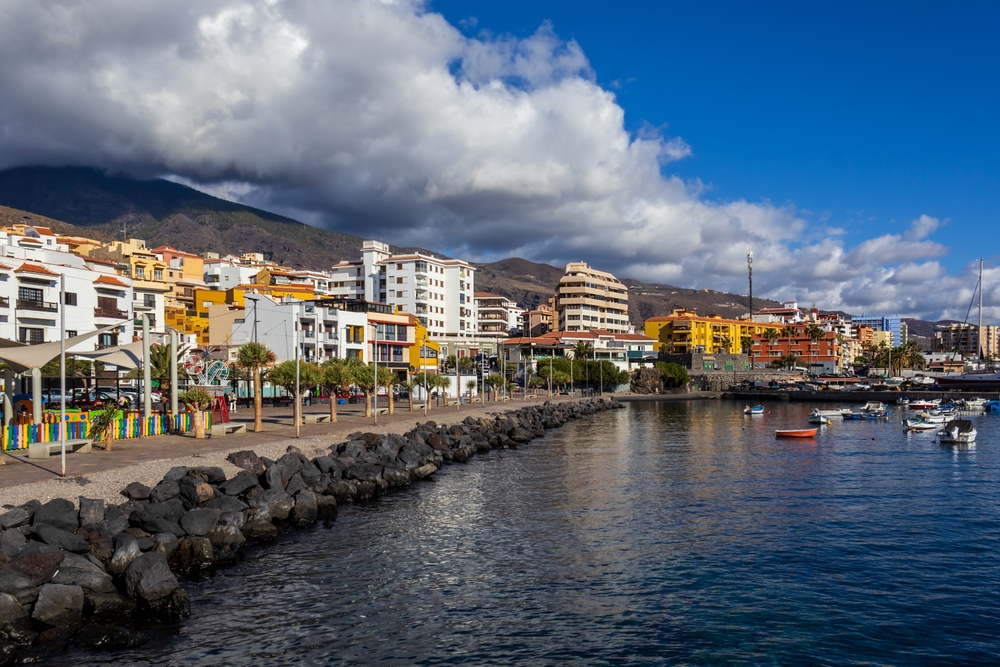
Santa Cruz, the administrative capital of Tenerife, has a dynamic, urban feel that contrasts with the island’s natural landscapes. This port city blends modernity and tradition, with its wide palm-lined avenues, lively squares and open-air shopping centre.
The old town centres around the Plaza de España and the Plaza de la Candelaria, lined with remarkable historic buildings. Don’t miss a visit to the Auditorio de Tenerife, an architectural masterpiece by Santiago Calatrava whose futuristic forms evoke a frozen wave. The Mercado de Nuestra Señora de África is a must for discovering local produce and crafts in an authentic Canarian atmosphere.
Santa Cruz is also famous for its carnival, considered to be the second biggest in the world after Rio. For several weeks in February and March, the city is transformed into a huge party, with float parades, the election of the Carnival Queen and murga (satirical group) competitions attracting thousands of visitors from all over the world. If you’re lucky enough to visit Tenerife at this time of year, don’t miss this colourful event.
Shopping tip: The Calle del Castillo, the main shopping street, has many duty-free shops thanks to the Canaries’ advantageous tax status.
8. The heavenly beaches of southern Tenerife
While the north of Tenerife has a lush green landscape, the south of the island attracts visitors with its sunny beaches and particularly mild climate all year round. The diversity of the beaches is one of the island’s major assets, ranging from golden sand imported from the Sahara to the characteristic black volcanic sand.
Playa de Las Teresitas, near Santa Cruz, is one of the most spectacular beaches, with its golden sand protected by a seawall. This artificial beach, created in the 1970s, stretches for 1.3 kilometres and offers calm waters ideal for family bathing. At Costa Adeje and Los Cristianos, the developed beaches offer all the services you need: sun lounger hire, water sports activities and numerous seaside restaurants.
For a more authentic experience, opt for the wild beaches. Playa de Benijo, in Anaga Park, offers a spectacular setting with its rocks rising out of the ocean, even if the currents are sometimes strong. El Bollullo, just a short walk away, has black sand and a peaceful atmosphere far from the tourist hotspots. Surf lovers will particularly appreciate El Médano, a well-known spot where the constant winds provide ideal conditions for kitesurfing and windsurfing.
Safety: Always check swimming conditions before setting off, especially on wild beaches where currents can be dangerous.
9. Corona Forestal nature park
Surrounding the Teide National Park, the Corona Forestal is the largest forested area in the Canaries, covering 46,613 hectares. This natural park, protected since 1988, offers a striking contrast between Canary pine forests and arid volcanic landscapes, creating panoramas of exceptional beauty.
The Canary pines that dominate this park have a remarkable feature: their ability to capture moisture from the clouds thanks to their long needles. This phenomenon creates a unique microclimate that allows a diversity of vegetation to flourish. Hiking trails wind through these majestic forests, offering exceptional panoramic views of the whole island, Teide and the ocean.
The Los Órganos de La Orotava route is one of the most spectacular, winding through rock formations and wooded areas. More experienced hikers can tackle the Pico Guajara loop, a demanding 8.5-kilometre hike with a 700-metre positive gradient that rewards efforts with 360-degree panoramic views of the island. Accessible via the TF-21 road linking La Orotava to Vilaflor, the park lends itself perfectly to a day’s exploration in the heart of nature.
Equipment: Take plenty of water, energy snacks and appropriate clothing, as weather conditions can change rapidly at altitude.
10. Garachico and Puerto de la Cruz, pearls of the north
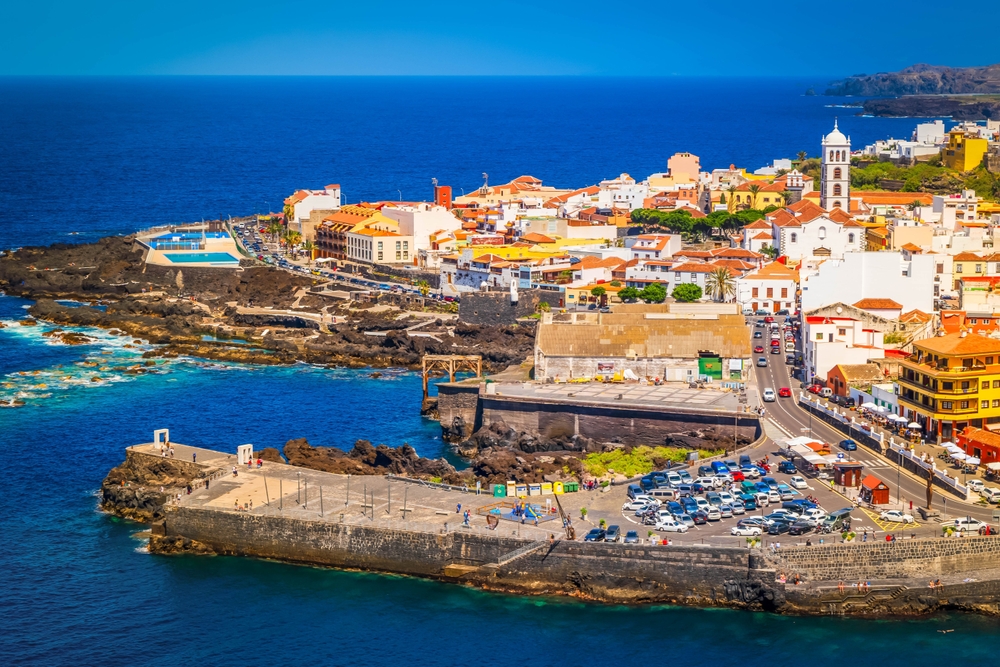
The north of Tenerife is home to two coastal towns of incomparable charm that are well worth a visit. Garachico, once a prosperous port destroyed by a volcanic eruption in 1706, has risen from the ashes to become one of the island’s most picturesque villages. Its natural pools, “El Caletón”, formed by cooled lava, are a unique attraction where you can swim surrounded by volcanic rock formations.
Garachico’s historic centre boasts some magnificent examples of colonial architecture, including the Castillo de San Miguel, a 16th-century fortress that now houses a museum, and the San Francisco convent. The cobbled streets invite you to stroll between stately homes with carved wooden balconies and Baroque churches. The Plaza de la Libertad, the beating heart of the village, is home to cafés and restaurants serving local specialities.
Puerto de la Cruz, the island’s historic seaside resort, has a slightly retro atmosphere and an authentic character that has been preserved despite the influx of tourists. Lago Martiánez, a complex of seawater pools designed by the artist César Manrique, offers an original alternative to black sand beaches. The botanical garden, founded in 1788, is home to an impressive collection of tropical and subtropical plants. Don’t forget to stroll along the seafront promenade and visit the charming little fishing port, where a few colourful boats are a reminder of the town’s maritime past.
Gastronomic tip: The restaurants in Garachico harbour offer excellent freshly caught fish and seafood at reasonable prices.
In conclusion, a visit to Tenerife is a complete experience combining exceptional natural discoveries, cultural richness and Canarian authenticity. From the majestic Teide volcano to the charming streets of La Orotava, from the impressive cliffs of Los Gigantes to the mystical forests of Anaga, each place reveals a unique facet of this island of a thousand faces. Whether you’re a seasoned hiker, a history buff, a nature enthusiast or simply looking to relax in the sun, Tenerife will win you over with its diversity and unspoilt authenticity. Don’t hesitate to explore these 10 must-sees by following the Navaway audio-guided itineraries for an enriching and personalised discovery of the island.
FAQ : Everything you need to know to visit Tenerife
When is the best time to visit Tenerife?
Tenerife enjoys a pleasant climate all year round, hence its nickname of “the island of eternal spring”. Temperatures range from 18°C in winter to 28°C in summer. The ideal time to visit Tenerife is from March to June and from September to November, when the climate is mild and there are fewer tourists. The south of the island is generally drier and sunnier than the north. If you want to attend the famous carnival, plan your trip for February or early March.
How many days will it take to visit Tenerife?
To discover Tenerife’s main sites in comfort, plan to spend a minimum of 5 to 7 days. This will allow you to explore the Teide National Park, hike the Anaga massif, visit historic villages such as La Orotava and La Laguna, enjoy the beaches and take a whale-watching trip. If you’d like to explore the island in greater depth and take in a number of hikes, ten days would be ideal.
Getting around Tenerife
Renting a car is the most practical way of exploring Tenerife in complete freedom, particularly for accessing natural sites and mountain villages. Roads are generally in good condition, although can be winding in mountainous areas. The bus network (guaguas) serves the main towns and tourist areas well, providing an economical alternative. A modern tramway links Santa Cruz to La Laguna. To visit La Orotava and other historic centres, opt for the Navaway audioguide tours, which offer an immersive experience.
Do I need a special permit to climb to the top of Mount Teide?
Yes, to access the Teide crater (the final stretch to the summit at 3,718 metres), a free permit is required. Around 200 permits are issued daily by the National Park. It is strongly recommended that you apply several weeks in advance on the park’s official website. If you take the cable car up to La Rambleta (3,555 metres), no permit is required. Organised guided tours usually include this permit as part of their service.
Can you see dolphins and whales on Tenerife?
Absolutely! Tenerife is one of the few places in Europe where you can see cetaceans all year round. The waters off Los Gigantes are home to a resident population of short-finned pilot whales and common dolphins. Many companies offer boat trips departing from Los Cristianos, Puerto Colón or Los Gigantes. Morning trips generally offer the best viewing conditions. Favour operators with the “Blue Boat” label who respect the rules of responsible observation of marine animals.
What culinary specialities can you try on Tenerife?
Canary gastronomy has a lot to offer. Don’t miss the papas arrugadas (wrinkled potatoes) served with mojo sauces (red hot or green with coriander), gofio (roasted cereal flour used in many dishes), conejo en salmorejo (marinated rabbit), local goat’s cheeses and fresh fish. On the sweet side, try bienmesabe (an almond dessert) and quesadillas herreñas (cheese pastries). For an authentic experience, head to the guachinches, typical family restaurants in the north of the island offering home cooking and local wine at low prices.
200 audioguided tours for cities all around the world
Download