Visit Syracuse: 7 must-dos in Sicily
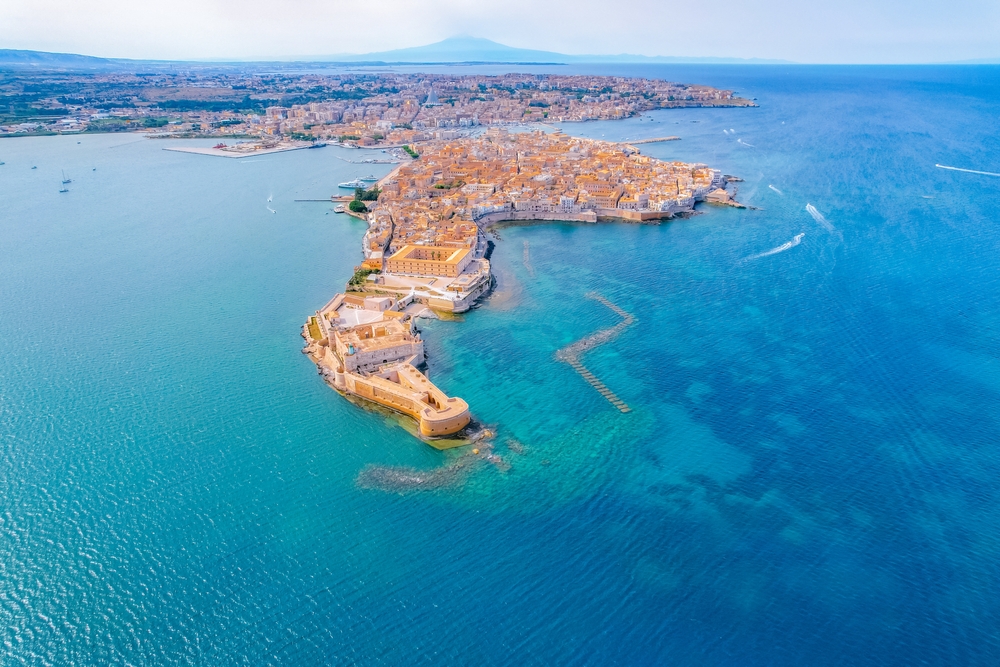

The baroque pearl of eastern Sicily, Syracuse is enchanted by its rich Greek and Roman heritage. This ancient city, once a rival to Athens, is home to some exceptional archaeological treasures that have been listed as a UNESCO World Heritage Site since 2005. From the historic island of Ortygia, with its bewitching narrow streets, to the archaeological park of Neapolis, where Greek tragedies still echo, Syracuse offers an unforgettable journey back in time. Discover the 7 must-see places to visit in Syracuse and immerse yourself in 2,700 years of Mediterranean history.
Also read the Sicily guide :
- Sicily’s 14 most beautiful villages to discover
- Top 6 things to do in Palermo
- What are the best hotels in Palermo?
- The 12 most beautiful beaches in Palermo
- Discover Selinunte, Sicily’s major archaeological site
- Top 10 culinary specialities in Palermo
- Find out how to get to Sicily from Toulon by Ferry
- Visiting Corleone in Sicily: practical information and advice
- Visiting Sicily: 10 must-sees and must-dos
1. Explore the island of Ortygia, the historic heart of Syracuse
Theisland of Ortygia (Ortigia in Italian) is the fascinating historic centre of Syracuse, a veritable open-air museum where every stone tells the story of 2,700 years of history. Linked to the modern city by two bridges spanning the Darsena Canal, this small island of 1 km² is home to some of the city’s finest monuments.
Start your exploration at the Temple of Apollo, the oldest Doric temple in Sicily, built in the 6th century BC. Although only a few columns remain, this impressive vestige bears witness to the grandeur of Greek Syracuse. Then wander through the maze of medieval streets where Sicilian Baroque architecture blends with Spanish traces, creating a unique atmosphere.
In the splendid Piazza del Duomo, you will discover Syracuse Cathedral, a unique architectural masterpiece. Built on the remains of a Greek temple dedicated to Athena, it retains the Doric columns visible from both inside and out. Its 18th-century Baroque façade contrasts magnificently with the ancient framework. Not far away, the Fountain of Diana (Piazza Archimede, 96100 Syracuse, rated 4.5/5 on Google for 2,834 reviews) celebrates the city’s patron nymph with its refined Baroque sculptures.
Don’t miss the Fountain of Arethusa, one of Syracuse’s most emblematic landmarks. This freshwater spring miraculously gushes out of the sea, surrounded by papyrus, the only plant of its kind to grow naturally in Europe. According to legend, the nymph Arethusa, pursued by the god Alphaeus, was transformed into a fountain by Artemis in order to escape him.
Round off your visit to Ortigia with Castello Maniace (Piazza Federico di Svevia, 96100 Syracuse, rated 4.3/5 on Google out of 3,567 reviews), a 13th-century fortress on the southern tip of the island. This defensive castle offers spectacular views over the Ionian Sea and provides an insight into medieval military strategies. The Navaway audio tour allows you to discover all these jewels of Ortygia on your own, with captivating historical commentaries and unusual anecdotes.
2. Travel back in time at the Neapolis Archaeological Park
The Neapolis Archaeological Park (Parco Archeologico della Neapolis) is one of Sicily’s most impressive ancient sites. Located to the north of the modern city, this vast archaeological complex takes you back 2,500 years, to the time when Syracuse vied with Athens for supremacy in the Mediterranean.
The Greek theatre, carved directly into the rock of Mount Temenite in the 5th century BC, could seat up to 15,000 spectators. At 138 metres in diameter, it is one of the largest Greek theatres ever built. Every year, the INDA (National Institute of Ancient Drama) still stages performances here, perpetuating the tradition of Greek tragedies in their original setting. The acoustics are still exceptional: a coin tossed into the centre of the orchestra can be heard from the highest tiers.
Nearby is theAltar of Hieron II, the largest sacrificial altar in the Greek world known to date. Measuring 198 metres long and 23 metres wide, this colossal monument from the 3rd century BC could accommodate the simultaneous sacrifice of 450 bulls during the great festivals in honour of Zeus.
The Roman amphitheatre, built in the 3rd century AD, bears witness to Syracuse’s Roman period. Although partially destroyed for the construction of Spanish fortifications in the 16th century, the tiers of seats, the elliptical arena and the underground passages from which gladiators and wild beasts used to emerge can still be seen.
Don’t miss Denys’s Ear (Orecchio di Dionisio), an artificial grotto 23 metres high and 65 metres deep, famous for its extraordinary acoustics. Legend has it that the tyrant Denys the Elder imprisoned his enemies here and listened in on their conversations from an opening at the top. The cave’s acoustic properties are real: a simple whisper resonates amplified throughout the entire cavity. (Viale Paradiso, 14, 96100 Syracuse, open daily from 9am to 6pm, €13.50)
Download the audio tour to discover Syracuse on foot and on your own
For the best possible visit to Syracuse, download the Navaway app and let yourself be guided through the narrow streets of Ortygia and the ancient remains. The audio tour reveals the fascinating history of the city, from its foundation by Greek colonists from Corinth through the Roman, Byzantine and medieval periods to the Baroque period. Discover the legends of Archimedes and Arethusa, the secrets of Greek tyrants and the mysteries of the Christian catacombs. Interactive navigation, entertaining commentary and unusual anecdotes turn your visit into a real historical adventure.
3. Descend into the catacombs of San Giovanni
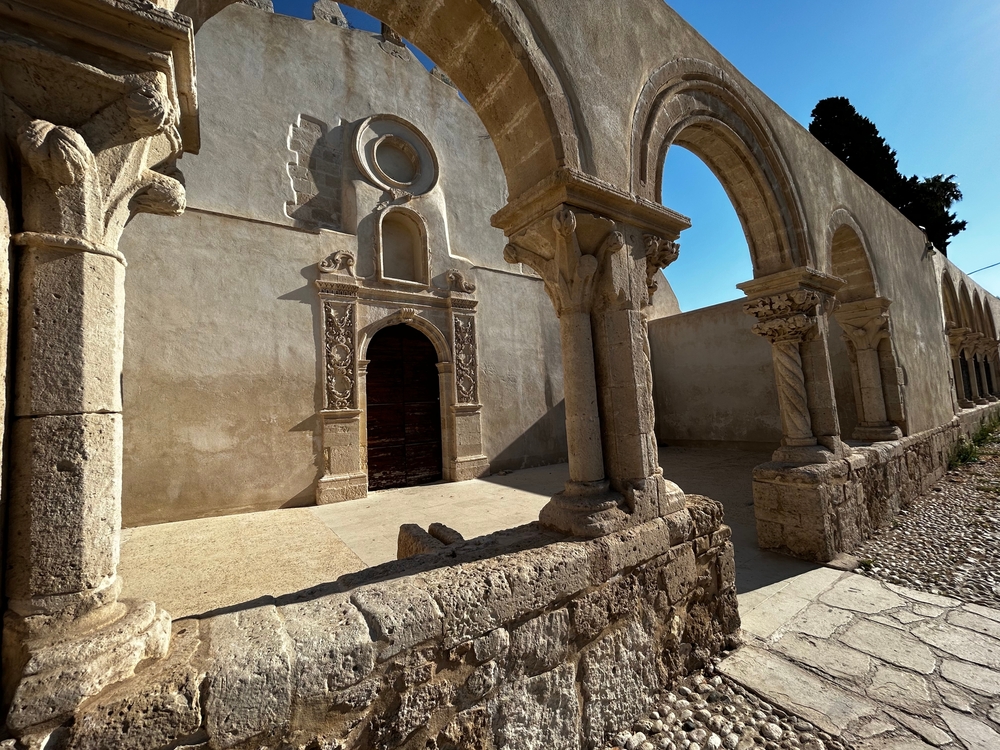
The Catacombs of San Giovanni are the largest Christian underground network in Sicily, and one of the largest in Europe after those in Rome. Located beneath the ruined church of San Giovanni Evangelista, these underground galleries, dug out between the 3rd and 5th centuries, cover thousands of square metres.
The guided tour (obligatory) takes you through a labyrinth of corridors, chapels and burial chambers where thousands of Christians were laid to rest during the first centuries of Christianity. The wall niches (loculi) and arcosolium tombs bear witness to the different social classes of the time. You will also discover the crypt of Saint Marcian, the first bishop of Syracuse and martyr of the 2nd century, considered to be one of the most sacred places in Sicilian Christianity.
The paleochristian frescoes, although partially erased by time, reveal primitive Christian symbols: the fish (ichthys), the anchor of hope, the Good Shepherd and biblical scenes. The constant temperature of 16°C offers a welcome refuge on Sicilian summer days. (Via San Giovanni alle Catacombe, 1, 96100 Syracuse, open Tuesday to Sunday, 9.30am to 12.30pm and 2.30pm to 5.30pm, €8)
4. Dive into history at the Paolo Orsi Archaeological Museum
The Paolo Orsi Regional Archaeological Museum is one of the most important archaeological museums in Europe and a must-see when visiting Syracuse. Located in the modern Villa Landolina, opposite the sanctuary of the Madonna delle Lacrime, this exceptional museum traces 5,000 years of Sicilian history, from prehistory to the Byzantine era.
The museum is divided into four chronological sections. Section A presents Sicilian prehistory, with remains from the Palaeolithic to the Early Bronze Age, including the impressive skeletons of extinct dwarf elephants. Section B reveals Sicily’s Greek colonies, including statues, ceramics and everyday objects from Megara Hyblaea, Sicily’s first Greek colony.
Section C, devoted to the sub-colonies of Syracuse (Akrai, Kasmenai, Camarina), features architectural treasures, sculptures and votive terracottas. Don’t miss the famous Archaic statue of the Venus Landolina (2nd century BC), a masterpiece of Hellenistic sculpture discovered in the villa gardens. Section D covers the Hellenistic and Roman periods, with mosaics, sarcophagi and everyday objects.
Allow at least 2 to 3 hours for a complete visit. An audio guide (€5) is also available to help you understand the collections. (Viale Teocrito, 66, 96100 Syracuse, open Tuesday to Saturday 9am to 7pm, Sundays and public holidays 9am to 2pm, closed on Mondays, admission €10, free for under-18s)
5. Bathing on the heavenly beaches around Syracuse
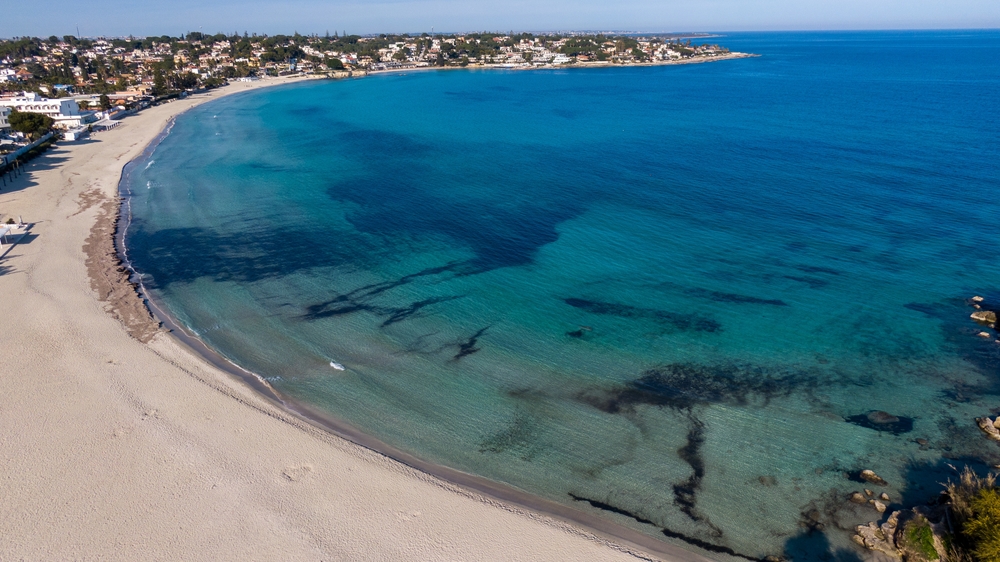
But there’s more to Syracuse than its historical treasures: the surrounding coastline offers magnificent beaches with the crystal-clear waters of the Ionian Sea. Avoid the north of Syracuse, the polluted industrial zone around Augusta. Favour the south and its enchanting spots.
Fontane Bianche, 15 km south of Syracuse, is the region’s most popular beach. Its pristine white sand and shallow turquoise waters make it a paradise for families. The beach stretches for more than a kilometre and has a number of lidos (bathing establishments) offering sun loungers and parasols for hire, as well as restaurants and bars.
The wilderArenella beach, 10km to the south, nestles in a small protected bay. Its somewhat difficult access means that it is less busy, even in high season. The water is particularly clear, ideal for snorkelling. The small coves ofOgnina, to the immediate south of Syracuse, offer an intimate setting with a view of Ortygia. These small pebbled and rocky beaches appeal to locals for their authenticity.
Even further south, the beaches of the Vendicari Nature Reserve (30 km from Syracuse) are among the most beautiful in Sicily. Golden sandy beaches, protected dunes and shallow, clear waters create a heavenly environment. The beach at Calamosche, nestling between two rocky promontories, offers a spectacular setting that is often ranked among the most beautiful beaches in Italy. It is a 15-minute walk from the car park, which preserves its tranquillity.
6. Sailing around the island of Ortygia
A boat trip around Ortygia offers a unique perspective on Syracuse and allows you to discover sea caves inaccessible from land. These one-hour to one-and-a-half-hour cruises usually depart from the port of Syracuse or directly from the quays of Ortygia.
The maritime route follows the medieval ramparts and fortifications that protected the town from invasion from the sea. You can admire Castello Maniace from a unique angle, majestically dominating the southern tip of the island. The boat then enters a number of sea caves carved out of the limestone cliffs by erosion. The most famous, the Grotta dell’Amore (Grotto of Love), takes its name from its heart-like shape. The light filtering through the openings creates a magical play of reflections on the turquoise water.
The guides recount the maritime legends of Syracuse, in particular that of Arethusa and Alpheus, explain the naval history of the city, which had one of the most powerful fleets in Antiquity, and point out the remains of the ancient Greek dockyard. Some excursions include a stop for a swim in secluded coves. Booking is recommended in high season (July-August). Allow €15-25 per person, depending on duration and services.
7. Hiking in the Cavagrande del Cassibile Nature Reserve
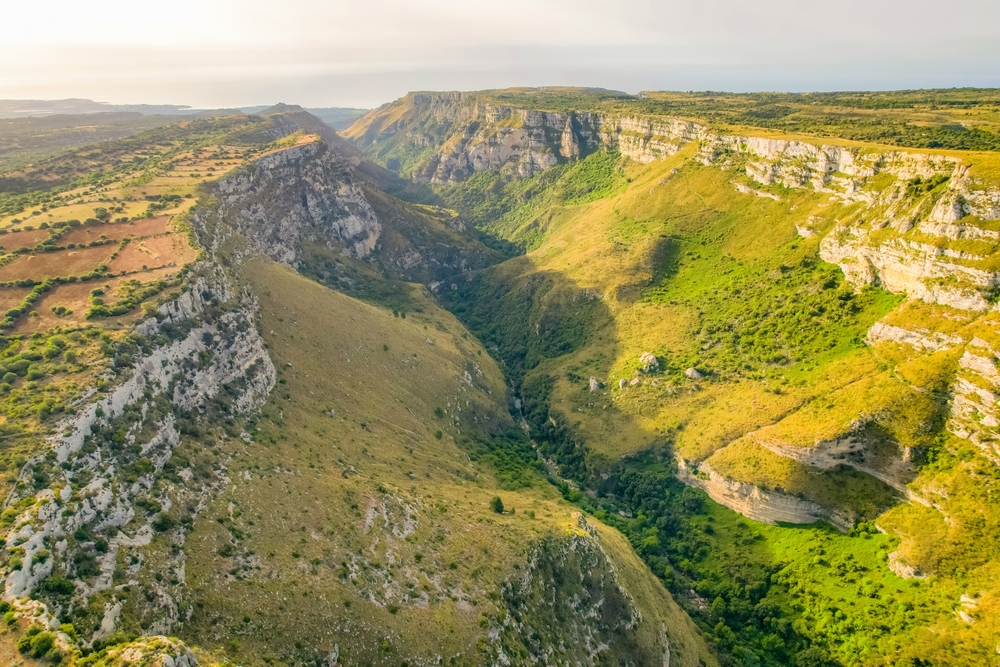
An hour’s drive from Syracuse (40 km to the south-west), the Riserva Naturale Orientata Cavagrande del Cassibile offers a spectacular natural escape from the hustle and bustle of the city. This vertiginous canyon, carved out by the Cassibile river over a distance of 10 kilometres, reaches depths of up to 250 metres in the limestone cliffs.
The most visited natural site is near the village of Avola Antica. From the viewpoint at the summit, the panorama of the gorge is impressive. The descent path (not officially signposted since the fire in 2014, but still passable) winds for 45 minutes through the Mediterranean vegetation to the bottom of the canyon. Make sure you bring good hiking boots, as the path is rocky and steep.
The reward awaits at the bottom: a series of natural pools (laghetti) with crystal-clear, refreshing waters formed by the Cassibile river. These tiered pools are a bathing paradise, particularly popular in summer when temperatures rise above 35°C. The water, fed by underground springs, remains cool all year round (around 16-18°C). Bring a picnic and plenty of water, as there are no refreshment points on site.
The rich Mediterranean flora and fauna includes foxes, martens, Bonelli’s eagles and over 30 species of wild orchid. The remains of ancient cave dwellings and rock necropolises bear witness to human occupation dating back to the Bronze Age. Avoid summer weekends when crowds can be high. Free access, parking at the summit (2-3€).
In conclusion, Syracuse combines an exceptional concentration of historical, cultural and natural wonders in a small area. From the baroque island of Ortigia to the majestic archaeological park of Neapolis, from the mysterious Palaeochristian catacombs to the white sandy beaches and the wild Cavagrande Gorge, each day reveals a new face of this thousand-year-old city. Syracuse is well worth a 3 or 4-day visit to take in the sights without rushing, and to soak up the unique atmosphere of this Sicilian gem where time seems to stand still.
FAQ
How many days will it take to visit Syracuse?
Ideally, you should allow 3 to 4 days to visit Syracuse in comfort. One full day is enough to explore Ortygia, and another to visit the Neapolis Archaeological Park and the Paolo Orsi Museum. Allow an extra day for the catacombs, the beaches and a boat trip. A fourth day will allow you to discover the Cavagrande Reserve or explore certain sites in greater depth.
When is the best time to visit Syracuse?
The best periods are spring (April-May) and autumn (September-October). Temperatures are pleasant (20-25°C), tourist numbers are moderate and prices are lower. Summer (June-August) is very hot (30-35°C) and crowded, but still ideal for enjoying the beaches. Winter (November-March) offers attractive prices, but some sites have reduced opening hours.
How do I get to Siracusa from Catania airport?
Catania-Fontanarossa airport is 60 km from Syracuse (1 hour’s drive). By bus, Interbus offers direct connections every hour (duration 1h15, fare around €6-7). If you’re hiring a car, take the E45 motorway and then the SS114 (cost €50-60 for 3 days’ hire). Taxis cost €80-100 per journey. Car hire gives you more freedom to explore the surrounding area.
Where to park in Syracuse and Ortygia?
Access to Ortygie by car is limited. Use the Talete car park at the entrance to the island (Via Elorina, cost around €1-1.50/hour or day pass €10-12). There are other car parks near the Neapolis Archaeological Park (free or pay parking depending on the area). In summer, arrive early in the morning to find a space easily. The entire centre of Ortygia can be visited on foot (30-40 minutes from one end to the other).
Can you visit Syracuse with children?
Absolutely! Syracuse lends itself wonderfully to family visits. Children love exploring the narrow streets of Ortygia, climbing the Roman amphitheatre, testing the acoustics of the Ear of Denys and swimming in the natural pools of Cavagrande. The beaches of Fontane Bianche and boat trips to the sea caves are also very popular. The Paolo Orsi Museum captivates even the youngest visitors with its prehistoric dwarf elephant skeletons.
200 audioguided tours for cities all around the world
Download