Spain’s 6 must-see deserts

Spain is often celebrated for its sunny beaches, tasty tapas and flamboyant cities. Yet few travellers are aware that the Iberian Peninsula and its islands are home to some strikingly austere landscapes: the deserts of Spain. From lunar landscapes to ochre-coloured badlands and dunes swept by the trade winds, these arid territories are an unknown but deeply fascinating face of one of Europe’s most popular destinations. If you’re looking to discover Spain from an unexpected angle, these six deserts are just what you need.
From the semi-deserts of Navarre to the Andalusian badlands, from the Atlantic dunes of the Canaries to the almost Martian landscapes of Murcia, Spain’s deserts are astonishingly varied. Some have served as natural backdrops for cult films, while others are home to protected nature parks, thousand-year-old megalithic sites or improbable electronic music festivals in the middle of nowhere. In this article, we take you on a tour of Spain’s 6 most remarkable deserts, with all the practical advice you need to explore them.
Also read the Granada guide :
- What are the best things to do in Granada?
- Top 5 best hotels to stay in Granada
- Top 10 culinary specialities in Granada
- Visit the Alhambra in Granada
- Little-known regions of Spain: 9 destinations to visit
- What to do in the Basque Country
- The 7 most beautiful villages on the Spanish coast
- Visiting Spain
1. Bardenas Reales Desert: a biosphere reserve in Navarre
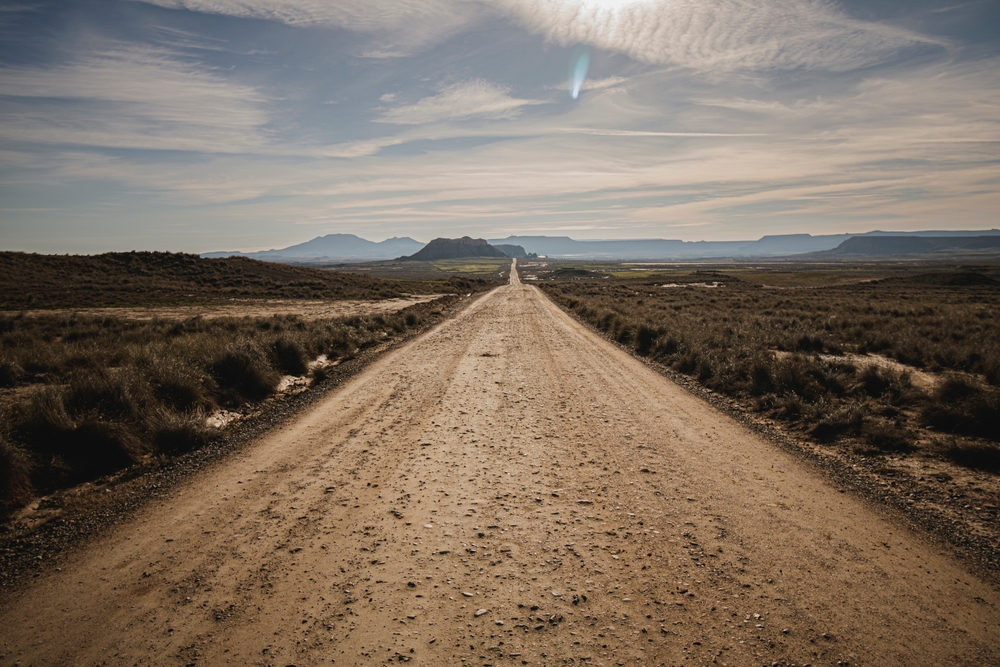
On the southern edge of Navarre, halfway between Pamplona and Logroño, the Bardenas Reales are one of the most spectacular natural sights on the Iberian Peninsula. This vast semi-arid area of 42,000 hectares stretches for some forty kilometres from north to south, revealing a landscape of badlands shaped by millennia of wind and river erosion. In 2000, UNESCO recognised the exceptional ecological importance of this site by classifying it as a biosphere reserve, thus confirming its unique heritage value in Europe.
The Bardenas Reales desert is made up of three distinct zones. The Bardena Blanca, the best known and most visited, is the one that most captures the imagination: its almost lunar-white clay formations, fairy chimneys and rocky peaks such as Castildetierra – a true emblem of the region – offer breathtaking panoramas. There is also the Bardena Negra, covered in scrubby vegetation, and El Plano, a vast agricultural plain at its centre. The whole area is criss-crossed by hiking, cycling and 4×4 trails, making it an ideal destination for nature-lovers. More surprisingly, this landscape has been used as a backdrop for several film shoots, including the Game of Thrones series.
The easiest way to reach the Bardenas Reales is by car from Tudela (30 km away), Pamplona (around 1? hours) or Logroño (around 1 hour). Entrance to the nature park is free, but it is advisable to obtain a map of the trails from the park’s visitor centre. If you’d like to combine a visit to the desert with a visit to a major city in northern Spain, a road trip to San Sebastián is an excellent complement: the “Pearl of the Cantabrian” is less than two hours’ drive from Bardenas Reales.
2. Tabernas Desert: Europe’s only true desert
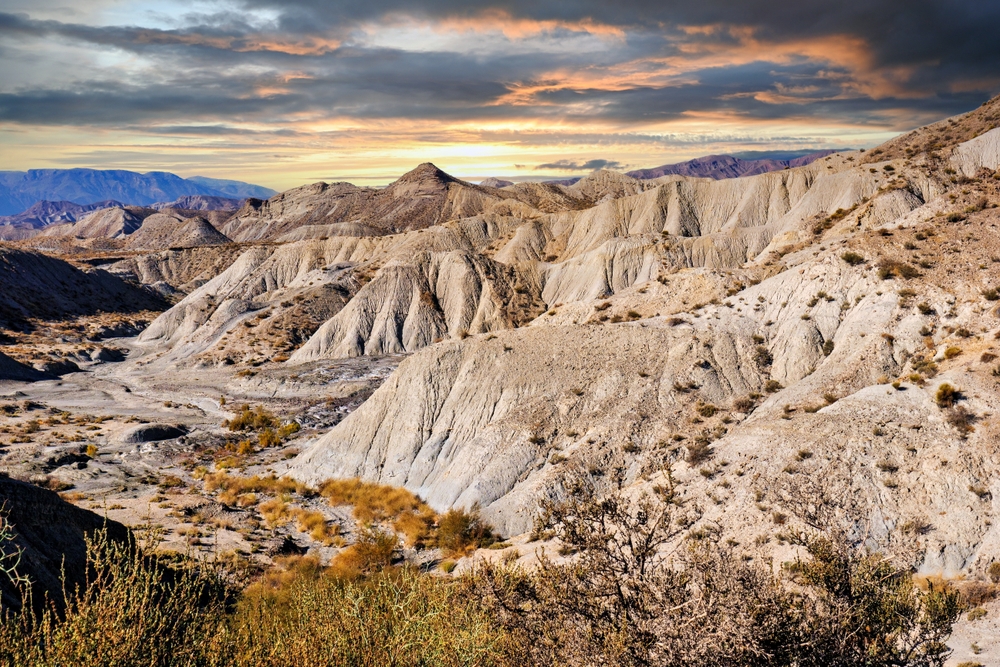
Some thirty kilometres north of Almería, in the Andalusian province of the same name, lies the Tabernas Desert. With its 280 km² of arid land, it is recognised as the only true desert in Europe: its annual rainfall is less than 200 mm, and summer temperatures regularly exceed 40°C. The site is part of the Deserts and Steppes of Almería biosphere reserve, classified by Unesco. Its formations of ramblas (dry gullies), canyons carved out of the marl and tabular reliefs create an enchantingly rugged landscape, irresistibly reminiscent of the American West or the landscapes of North Africa.
This Spanish desert attracted Hollywood producers very early on, attracted by the intense light and natural scenery. Since the 1960s, more than 300 films have been shot here, including Sergio Leone’s spaghetti westerns – led by The Good, the Bad and the Ugly – as well as scenes fromIndiana Jones, Conan the Barbarian and, more recently, Game of Thrones. This cinematic tradition has left its mark on the landscape, with two theme parks well worth a visit.
Mini Hollywood (A-92 km 464, 04200 Tabernas, rated 4.2/5 on Google for over 5,000 reviews) recreates the atmosphere of the Wild West with its ghost town decor, cowboy shows and zoo. A few miles away, Fort Bravo – Texas Hollywood (A-92, km 468, 04200 Tabernas, rated 4.3/5 on Google for over 3,000 reviews) offers a similar experience, with a greater emphasis on live shows and historical re-enactments. Both sites will delight adults and children alike, making the Tabernas Desert a family destination in its own right.
The Tabernas Desert is ideally located for exploring Almería and the Andalusian Costa. If you’re planning a trip to southern Spain, don’t forget to include a visit to Malaga, the flamboyant Andalusian capital just a 2-hour drive away. With the Navaway audio tour, you can explore the historic centre of Malaga at your own pace, from the cathedral to the port and the Picasso museum, for the perfect cultural immersion before or after your getaway to the arid lands of Tabernas.
3. Los Monegros Desert: the wild steppe of Aragon
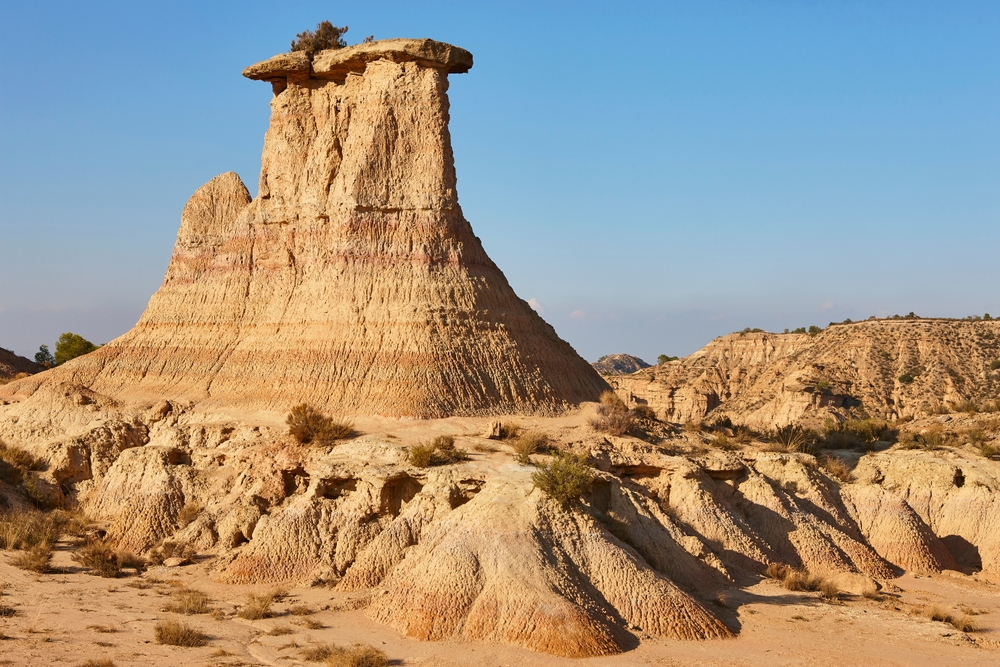
Between the provinces of Huesca and Zaragoza, in the region of Aragon, lies a vast semi-arid area often overlooked by French travellers: the Los Monegros desert. Covering some 275,000 hectares, it is one of the largest arid expanses on the Iberian Peninsula, although its desert character is more semi-arid than truly climatic. Specialists point out that this region was once much greener, and that it is the gradual deforestation and unsustainable intensive farming that have transformed these Aragonese plains into near-desert territory over the centuries.
Los Monegros is an ideal playground for hiking, cycling and wildlife-watching enthusiasts. The fauna is particularly remarkable: bustards, red kites, kestrels and various species of reptiles have all adapted to this hostile environment. The steppe flora – lavender, dwarf rosemary, esparto grass – forms a discreet but rich carpet of vegetation. A few white villages scattered across the plain are a reminder that these lands, despite their aridity, have been inhabited since ancient times. Please note: summer temperatures can exceed 45°C in July and August, so we strongly advise you to plan your visit for spring or autumn.
Los Monegros is also known far beyond its borders for an extraordinary cultural event: the Monegros Desert Festival. Every summer, this electronic music festival transforms the Aragonese desert into one of Europe’s most unusual stages, attracting thousands of festival-goers from all over the world to dance under an exceptional starry sky. For those wishing to combine a visit to the Monegros with a visit to a major city, Zaragoza is around 50 km away, and Barcelona, less than two hours away, offers a striking contrast between the bustle of the city and the serenity of the arid landscape.
4. Gorafe Desert: the Grand Canyon of Andalusia
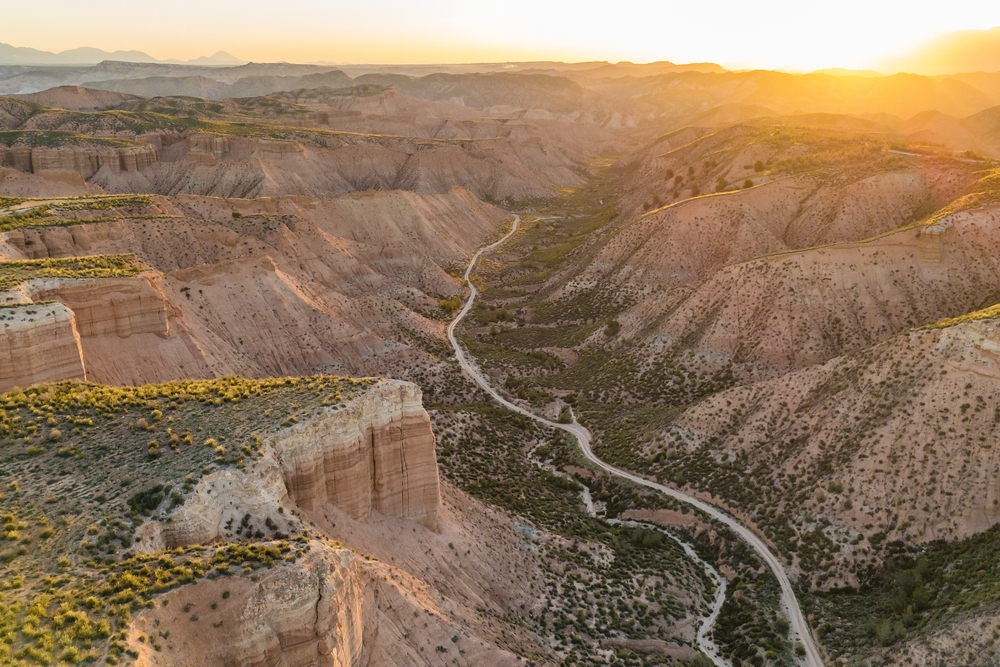
An hour and a half’s drive north-east of Granada, nestling in the province of Granada in the heart of Andalusia, the Gorafe desert is probably the least known but one of the most spectacular of Spain’s deserts. Nicknamed Los Coloraos because of its intense red rock formations, this desert lies at the heart of the Guadix-Baza depression and reveals a panorama of canyons, gullies and cliffs in shades of ochre, rust and saffron that are irresistibly reminiscent of the great expanses of the American West – and particularly the Grand Canyon. In fact, it’s one of Spain’s most popular deserts for outdoor sports: hiking, mountain biking, horse riding and 4×4 excursions are particularly popular.
As well as its spectacular scenery, the Gorafe desert is also home to an exceptional archaeological treasure trove. The region is home to Spain’s largest megalithic park, with more than 240 dolmens and Neolithic tombs scattered across the surrounding gorges and hills. This unique prehistoric heritage, which is in the process of being declared a UNESCO World Heritage Site in 2020, gives the site a cultural and historical dimension not found anywhere else in the country. Educational panels have been installed along the paths to enable visitors to explore this megalithic park on their own, either on foot or by all-terrain vehicle. The village of Gorafe (04840 Gorafe, Province of Granada) is the ideal base for all your explorations.
To reach the Gorafe desert, the city of Granada is the ideal starting point, around 1? hours’ drive away via Guadix. Once you’ve explored these extraordinary arid landscapes, it would be a shame not to extend your adventure by discovering one of Andalusia’s most beautiful cities. Visiting Granada is an experience in itself: from the Alhambra – one of Europe’s most visited jewels – to the Albaicín district and its white streets, to the Sacromonte and its troglodyte caves, the city is full of fascinating sites to explore.
Download the audio tour to discover Granada on foot and on your own
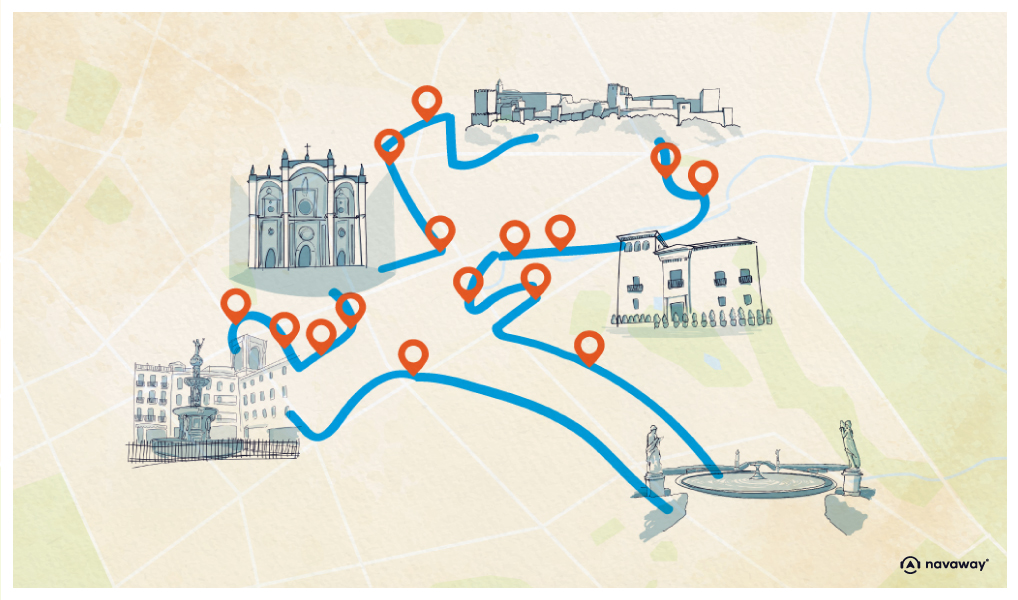
Navaway offers a complete audio-guided tour of Granada that lets you visit the city on your own. By downloading the app, you can enjoy interactive navigation through the city’s 23 most emblematic places of interest, with historical commentary, anecdotes and a few mysteries carefully distilled along the way. The tour takes you from the Plaza de la Trinidad to the Albaicín quarter, via the Renaissance cathedral, the Royal Chapel and the gardens at the foot of the Alhambra. No guide, no timetable, no pressure: you explore Granada at your own pace, guided by a voice and navigation designed to give you time to savour every moment. The tour can also be prepared the day before your excursion to the Gorafe desert!
5. Fuerteventura desert: the great dunes of the Canaries
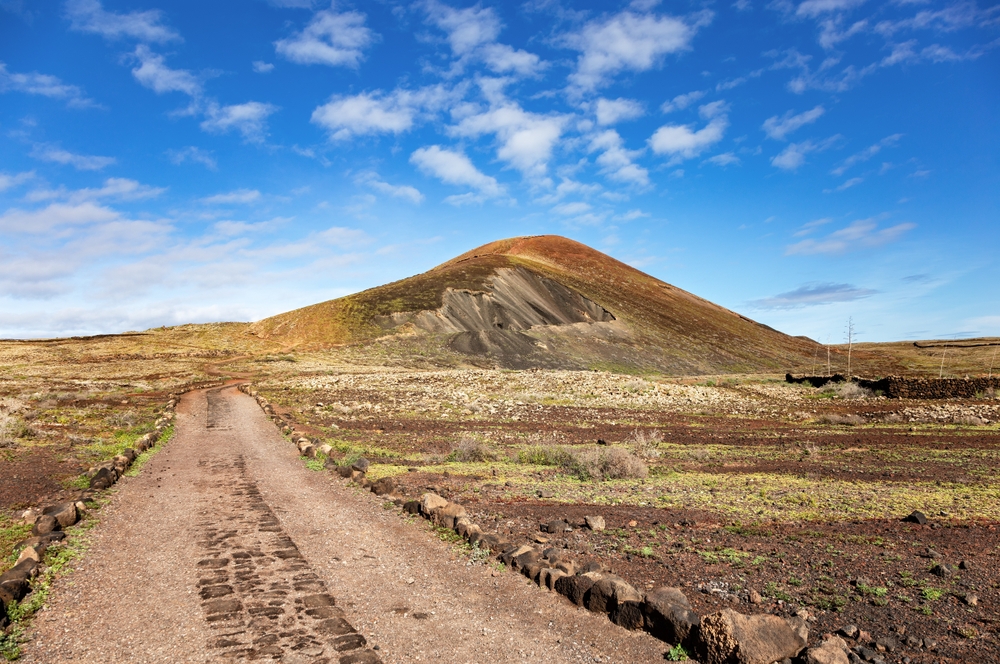
Off the coast of Africa, just 100 km from Mauritania, the island of Fuerteventura is the second largest of the Canary Islands and by far the one that most resembles a desert. Its magnificently austere landscape – rocky plains, volcanic plateaux, immense beaches battered by the trade winds – has earned it the status of UNESCO Biosphere Reserve since 2009. But it is above all the Corralejo dunes that make this Spanish island desert so famous. This natural park of over 600 hectares, located at the northernmost tip of the island, unfurls an ocean of golden sand through which the wind constantly blows, sculpting the dunes into ever-changing shapes in a hypnotic natural ballet.
The Corralejo Natural Park (Corralejo, 35650 La Oliva, Fuerteventura) offers several ways to explore it. On foot, along the dunes, the spectacle is breathtaking, especially at the end of the day when the low-angled light turns the sand to gold. Thrill-seekers can venture inland on a buggy or quad bike. But Fuerteventura is also, and above all, the world mecca for windsurfing and kitesurfing: its constant winds and immense beaches attract thousands of windsurfers from all over the world every year, particularly to Sotavento and Jandía. And don’t miss the Montaña Roja volcano, 300 metres high in the south of the park, whose crater offers a 360° view of the dunes, the sea and the island.
Direct flights to Fuerteventura are available from many French airports. If your stay in the Canaries also takes you to Gran Canaria, be sure to make the most of your visit to Las Palmas, the capital of the Canaries. With the Navaway tour dedicated to Las Palmas, you can explore the historic district of Vegueta, Santa Ana Cathedral and the Las Canteras seafront on your own, to complete your island getaway perfectly.
6. Mahoya Desert: the lunar landscapes of Murcia
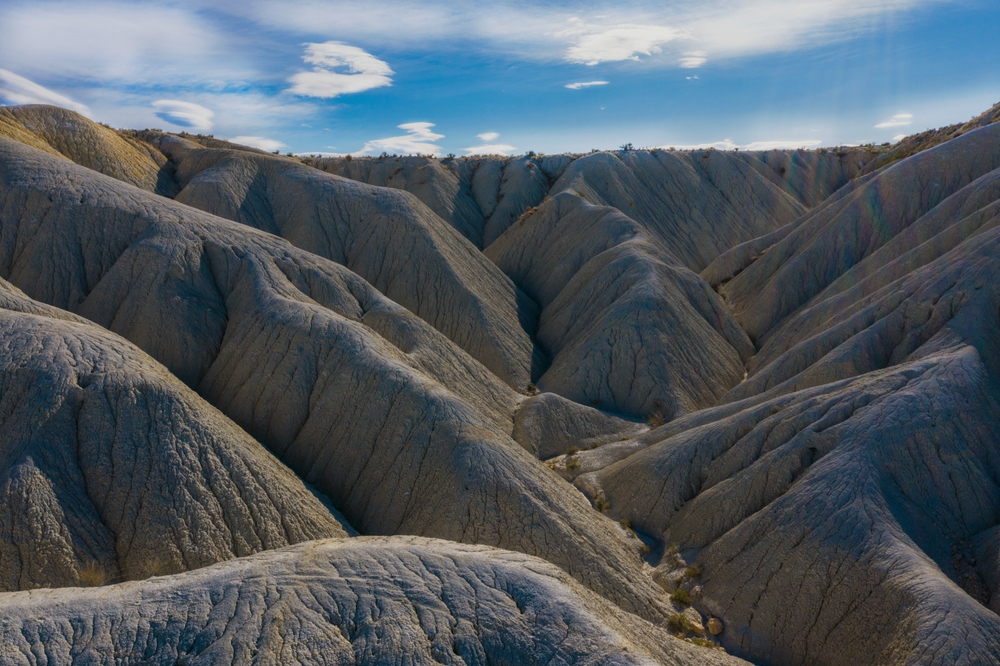
On the border between the Region of Murcia and the province of Alicante, in the vicinity of the small town ofAbanilla (30160 Abanilla, Region of Murcia), lies the smallest but most unusual desert in Spain: the Mahoya Desert, also known as the Abanilla Desert. Although its modest size – just a few dozen square kilometres – sets it apart from the great Spanish deserts, its landscapes are no less striking. Eroded clay formations, deep gullies, reliefs sculpted by the rare but intense rains: the Mahoya desert offers a visual spectacle akin to that of the Moon or the planet Mars, which has earned it the nickname of the “Palestine of Murcia”. The climate is extremely dry and hot in summer, with temperatures that can exceed 40°C.
Despite its small size, the Mahoya Desert is perfect for an accessible and exotic hike. A number of signposted trails allow you to cross the badlands on foot in just a few hours, with spectacular views of the gorges and multicoloured rock formations. The main route starts from the village of Mahoya, skirting the rambla de la Parra to reach the Baños de Fortuna, a Roman thermal bath still in use. The more intrepid will prefer to explore by mountain bike or 4×4 to reach the most remote areas. It’s worth noting that the area is frequently chosen by film and advertising crews for its particularly photogenic natural backdrops.
The Mahoya Desert can be reached in less than an hour from Alicante or Murcia, making it an excellent day trip for those staying on the Costa Blanca. If you’re visiting the region, take the opportunity to Visit Alicante with the Navaway audio tour: wander through the barrio de la Santa Cruz, climb the Santa Bárbara castle and stroll along the Explanada de España guided by 17 informative audio guides. The City of the Sun is well worth spending half a day in before or after your exploration of the Mahoya Desert.
In conclusion, the deserts of Spain are far more than just a few clichés of scorched earth. From the majestic Bardenas Reales Biosphere Reserve to the windswept dunes of Fuerteventura, the Holywood plateau of Tabernas, the infinite steppe of Los Monegros, the red canyons of Gorafe and the lunar badlands of Mahoya, each of these Spanish deserts tells a unique geological and human story. What these unusual destinations have in common is that they offer a complete change of scenery, just a few hours’ drive from Spain’s major cities. So don’t hesitate to combine an excursion to one of these deserts with a visit to a nearby city – and if your adventure takes you to Granada, let yourself be guided through this magnificent Andalusian city on the Navaway audio tour to explore Granada on foot, for a travel experience as culturally rich as it is unforgettable.
Frequently asked questions about the deserts of Spain
What is the largest desert in Spain?
The largest desert in Spain in terms of surface area is the Los Monegros desert, in Aragon, which extends over some 275,000 hectares between the provinces of Huesca and Zaragoza. However, this is a semi-arid desert, not a climatic desert as such. If we are talking about Europe’s only true desert in the climatic sense of the term, it is the Tabernas desert, in the province of Almería, which takes that title, with its 280 km² and less than 200 mm of annual rainfall.
Where is Europe’s only true desert?
The only climatic desert in Europe is in Spain, in the province of Almería (Andalusia): the Tabernas Desert. With less than 200 mm of rain a year and torrid summers of over 40°C, it meets the criteria for a true desert. It lies around 30 km north of the city of Almería, within easy reach by car from the main Andalusian cities of Málaga and Granada.
Can families visit the deserts of Spain?
Absolutely! Several of Spain’s deserts are particularly well-suited to family visits. The Tabernas Desert has two theme parks – Mini Hollywood and Fort Bravo – which will delight children with their cowboy shows and re-enactments of the Wild West. The Bardenas Reales are ideal for family hikes and bike rides. Fuerteventura, with its Corralejo dunes and board sports accessible to all, is also an ideal destination for families. The key is to plan your visit outside the summer months to avoid the extreme heat.
When is the best time to visit the deserts of Spain?
The best time to visit Spain’s deserts is generally in spring (March to May) orautumn (September to November). In summer, temperatures can reach 40 to 45°C in some deserts, such as Tabernas or Los Monegros, making visits to the open air strenuous and even dangerous. In spring, the steppe vegetation sometimes blooms briefly, offering unexpectedly contrasting landscapes. Winter is also pleasant in the southern deserts (Andalusia, Murcia), with mild temperatures and plenty of sunshine.
How do I get to the deserts of Spain from France?
Access depends on the desert you’re aiming for. For the Bardenas Reales (Navarre), the route from the Basque Country or Bordeaux takes just a few hours. For the Tabernas Desert or the Gorafe Desert (Andalusia), a flight to Malaga, Almería or Granada, followed by a hire car, is the most practical solution. There are direct flights to Fuerteventura from many French airports. For Los Monegros (Aragon) and the Mahoya desert (Murcia), a flight to Barcelona or Alicante followed by car hire is the most efficient combination.
200 audioguided tours for cities all around the world
Download