8 must-sees and must-dos in Liguria
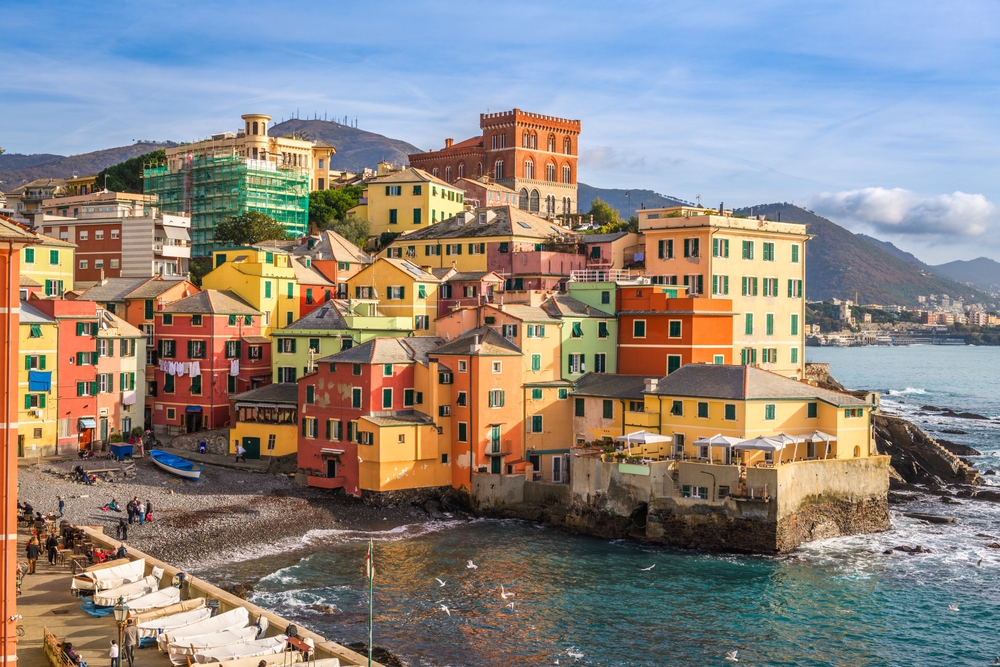

Nestled between sea and mountains, Liguria is one of Italy’s most spectacular regions. This circular coastal strip, stretching from the French border to Tuscany, offers a concentration of natural beauty, colourful villages and heritage treasures. From Genoa to the famous Cinque Terre, via the pearl of Portofino, the Italian Riviera fascinates with its diversity. With its medieval streets, turquoise coves and gastronomic specialities, each stop reveals a new face of this authentic region. Here are the 8 must-do things to do in Liguria for an unforgettable trip to the heart of Northern Italy.
200 audioguided tours for cities all around the world
DownloadAlso read the Genoa guide :
- Top 5 things to do in Genoa
- Top 5 hotels to stay in Genoa
- Italian lakes by motorhome: advice, areas, itineraries
- Discovering Puglia: The 15 must-sees
1. Genoa, the maritime capital of Liguria
It’s impossible to visit Liguria without stopping off in Genoa, its vibrant and historic capital. A former maritime republic and rival of Venice, Genoa reveals an exceptional heritage as you wander through its narrow streets and majestic palaces. The historic centre, one of the largest and best preserved in Europe, is home to the famous Rolli Palaces, a UNESCO World Heritage Site. These 16th-century aristocratic residences, with their sumptuous facades and magnificent courtyards, bear witness to the city’s past grandeur.
TheGenoa Aquarium is one of the city’s major attractions (Ponte Spinola, 16128 Genoa, rated 4.2/5 on Google out of 44,000 reviews). Located in the rehabilitated old port, it is the largest aquarium in Europe, with 70 tanks displaying over 12,000 animals of 600 different species. The tour lasts around 2? hours and immerses visitors in marine ecosystems from all over the world. Don’t miss San Lorenzo Cathedral, with its Gothic façade in black and white marble, or the picturesque Boccadasse district, a former fishing village with colourful houses.
Download the audio tour to discover Genoa on foot and on your own
Explore Genoa at your own pace with the Navaway audio tour. This route takes you through the historic streets, emblematic squares and hidden treasures of the Ligurian capital. With 26 points of interest with commentary, you’ll discover the fascinating history of this ancient maritime republic as you stroll through its authentic districts. The app guides you step by step so you don’t miss out on any of Genoa’s must-sees.
2. The Cinque Terre, jewels of the Ligurian coast
The Cinque Terre is undoubtedly one of the most spectacular destinations in Liguria, if not the whole world. This UNESCO World Heritage-listed national park brings together five villages clinging to the cliffs that plunge into the Mediterranean: Monterosso al Mare, Vernazza, Corniglia, Manarola and Riomaggiore. Each has its own unique character, with brightly-coloured houses that contrast beautifully with the deep blue of the sea and the green of the terraced vineyards.
Vernazza is considered by many to be the most beautiful of the five villages, with its small natural harbour and restaurant-lined square. Manarola offers breathtaking views, especially at sunset from the promontory of Punta Bonfiglio. Corniglia, the only village not directly on the sea, perches on a rocky spur 100 metres above sea level and can be reached by climbing 382 steps. For hiking enthusiasts, the coastal path linking the villages offers exceptional panoramic views. Allow around 5 to 6 hours to cover the entire route between Monterosso and Riomaggiore. Don’t forget to try the local wine, Sciacchetrà, a sweet white wine produced on the vertiginous terraces.
3. Portofino, the pearl of the Italian Riviera
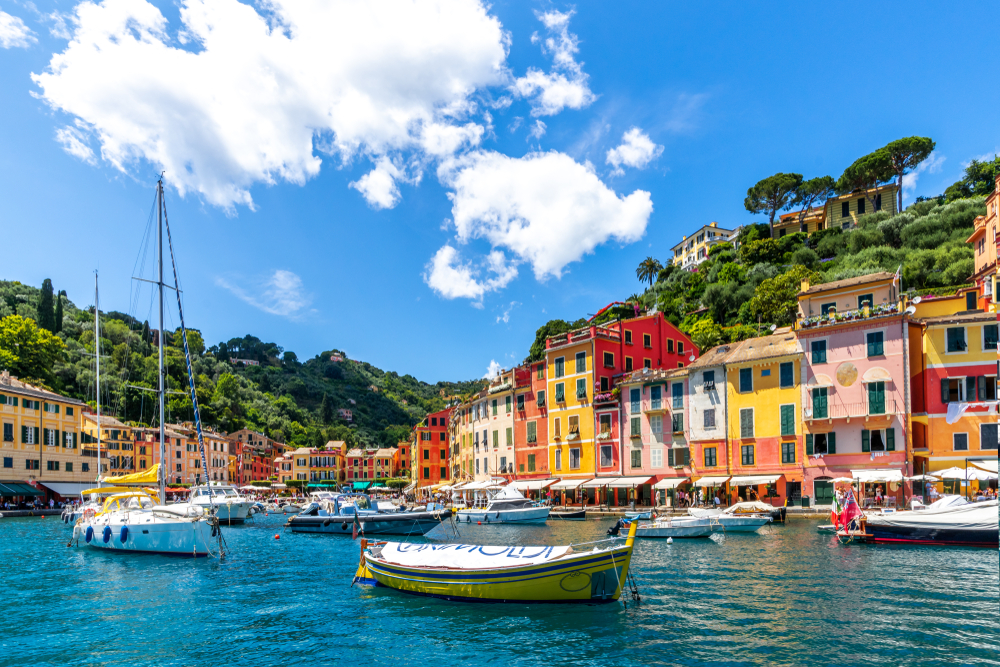
Portofino embodies the glamour of the Italian Riviera. This small coastal village, nestling at the end of a horseshoe-shaped bay, has become synonymous with elegance and refinement. The Piazzetta, lined with pastel-fronted houses and chic restaurants, forms the beating heart of the village. The marina is home to luxury yachts in a picture-postcard setting that has attracted celebrities and artists from all over the world since the 1950s.
As well as its glamorous image, Portofino also offers some magnificent natural discoveries. A stroll to Castello Brown (Via alla Penisola, 16034 Portofino, rated 4.3/5 on Google out of 750 reviews), a medieval fortress perched on a hillside, rewards visitors with breathtaking panoramic views over the village and bay. Another not-to-be-missed excursion is the Portofino lighthouse, accessible via a coastal path that takes around 40 minutes. For diving enthusiasts, Portofino’s protected marine reserve boasts some exceptional underwater treasures, including the famous Christ of the Abyss, a statue immersed at a depth of 17 metres in the bay of San Fruttuoso.
4. Sanremo, the city of flowers
Sanremo, nicknamed the City of Flowers, is one of the most elegant seaside resorts on the Ponente Riviera. Famous for its Italian Song Festival, held every year since 1951, the town has a Belle Époque atmosphere with its palaces, lush gardens and Art Nouveau casino. La Pigna, the old medieval quarter, forms a maze of narrow streets and staircases that climb up to the sanctuary of the Madonna della Costa, from where the view embraces the entire bay.
The Casino di Sanremo (Corso degli Inglesi, 18, 18038 Sanremo, rated 4.0/5 on Google out of 1,200 reviews), inaugurated in 1905, is a remarkable architectural monument that hosts concerts and cultural events in addition to its gaming rooms. The Villa Nobel is also well worth a visit: it was here that the famous Swedish scientist spent the last years of his life. Nature lovers will love the coastal cycle path that runs for several kilometres alongside the sea, and the flower market is testimony to the horticultural tradition for which Sanremo is famous. The town is also the finishing point of the Milan-Sanremo cycle race, one of the most prestigious classics on the professional calendar.
5. La Spezia and Porto Venere
La Spezia is an excellent base from which to explore the Cinque Terre and discover an authentic port town, less touristy than its neighbours. Its historic centre, with the Via del Prione lined with ancient palaces and shops, is an invitation to stroll. The Museo Tecnico Navale, one of the most important naval museums in the world, traces Italy’s maritime history through models, navigational instruments and even submarines. The covered market, housed in an Art Nouveau building, offers a taste of local life, with stalls selling fresh produce and Ligurian specialities.
Just 16 kilometres from La Spezia, Porto Venere is well worth a visit. This fortified village, which is also a UNESCO World Heritage Site, has a fascinating array of colourful tower-houses lining the harbour. The church of San Pietro, perched on a rocky promontory, offers one of the most photographed panoramas in Liguria. Lord Byron’s grotto, carved out by the sea at the foot of the church, owes its name to the British poet who came here to meditate and bathe. Opposite Porto Venere, the archipelago formed by the islands of Palmaria, Tino and Tinetto can be explored by boat, revealing sea caves, secret coves and crystal-clear waters perfect for swimming.
6. Savona and its Priamar fortress
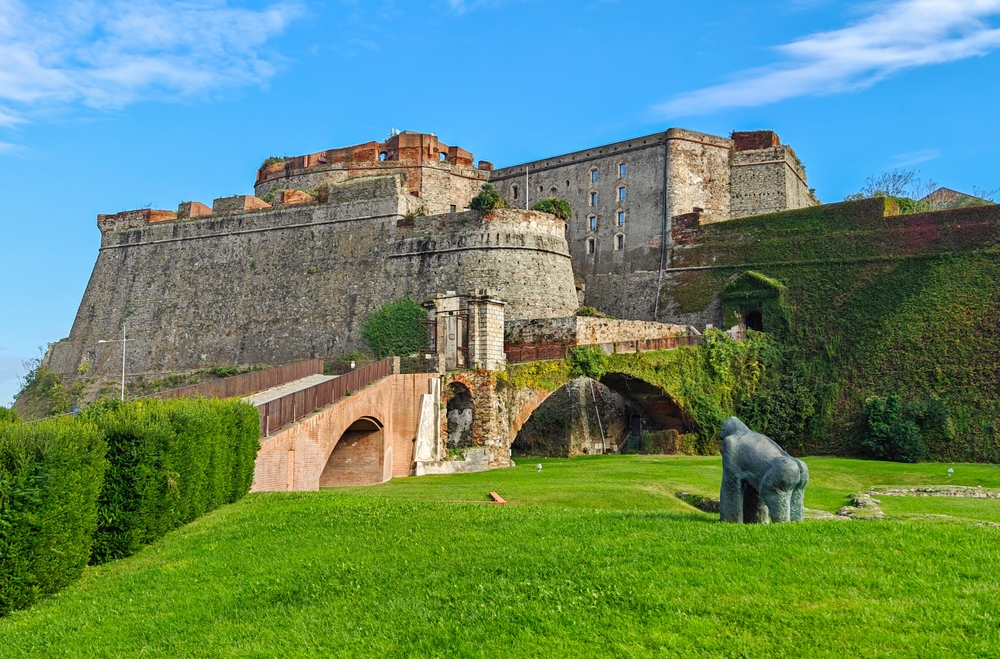
Savona is a port city steeped in history, and for a long time was Genoa’s great rival. The Priamar Fortress, an imposing citadel built in the 16th century by the Genoese on the ruins of the medieval quarter, dominates the city and the port. Today, the fortress houses several museums, including the remarkable Archaeological Museum, which displays remains from Roman times through to the Middle Ages. The ramparts offer a pleasant walk with magnificent views of the sea and the old town.
Savona’s historic centre is home to other treasures, including the Cathedral of the Assumption and the Sistine Chapel (note that this is not the Vatican Chapel!), built in the 16th century and decorated with Renaissance frescoes. The Pancaldo and Leon Pancaldo Towers, remains of the ancient medieval fortifications, mark the entrance to the old port. Savona is also an important Mediterranean cruise port, with many ships calling here. The city’s fine sandy beaches are less crowded than those of neighbouring resorts, making it a popular destination for families and Italian holidaymakers.
7. Ventimille and Val Nervia
Ventimille, less than 10 kilometres from the French border, is an ideal gateway to Liguria. The town is divided into two parts: the modern city on the seafront and the medieval old town perched on the hillside. Ventimiglia Alta, the historic quarter, reveals a labyrinth of cobbled streets, vaulted passageways and the Cathedral of the Assumption. The Albintimilium archaeological site preserves the remains of the Roman town, including a well-preserved 2nd-century amphitheatre. The Balzi Rossi, on the border with France, are exceptional prehistoric caves that have yielded remains from the Palaeolithic period.
Take the Strada Provinciale 64 up the Val Nervia and you’ll discover an undiscovered Liguria, far from the tourist crowds. The village of Dolceacqua is particularly attractive, with its Doria castle dominating the old houses spanning the Nervia torrent via a medieval bridge with a single arch. Claude Monet immortalised this setting in several paintings. Apricale, listed as one of Italy’s most beautiful villages, is characterised by its alleyways adorned with murals and its timeless atmosphere. Pigna has kept its medieval character intact, with the church of San Michele Arcangelo and its remarkable façade of alternating black and white stone. These hilltop villages offer splendid views of the surrounding valleys and the Mediterranean in the distance.
8. Albenga and its medieval heritage
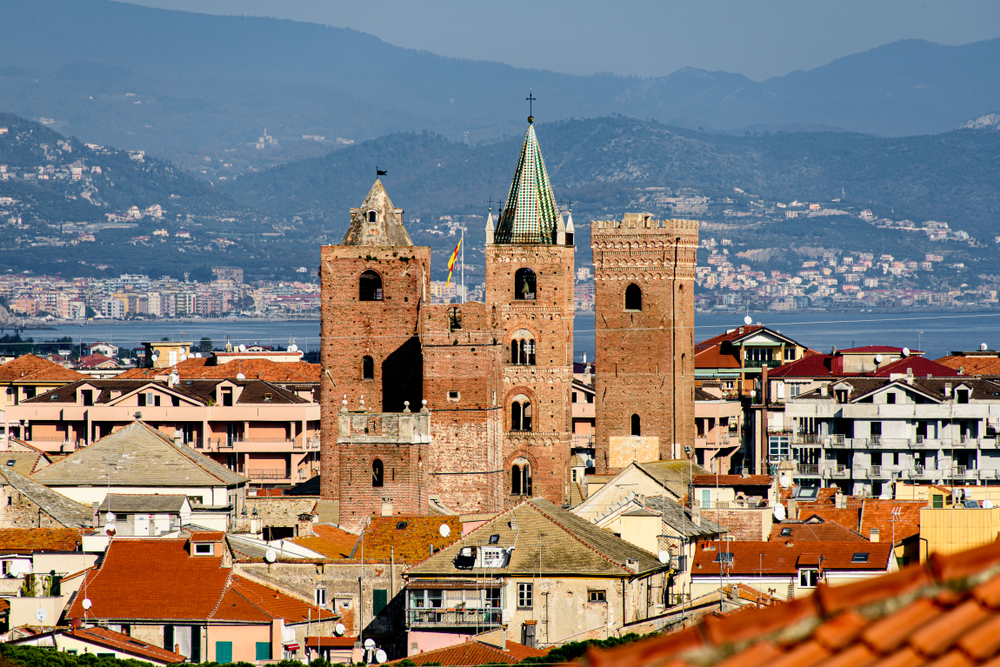
Albenga rounds off this tour of Liguria’s must-sees in style. This medieval town, one of the oldest in the region, was founded by the Romans under the name of Albingaunum. The historic centre retains its medieval layout, with a remarkable concentration of towers, palaces and churches. The Cathedral of San Michele, built in the fifth century and then remodelled in the Middle Ages, boasts an exceptional early Christian baptistery, the oldest and best preserved in Liguria, with its blue Byzantine mosaics.
Remains of the Roman necropolis and amphitheatre can still be seen along the Via Julia Augusta, an ancient Roman road that is still passable in places. The Albenga Naval Museum exhibits the remains of a Roman shipwreck discovered offshore, laden with amphorae and crockery. The three medieval towers in the town centre (Torre Civica, Torre del Comune and Torre Costa) bear witness to Albenga’s past prosperity. Don’t miss the Palio, a medieval horse race that pits the city’s various districts against each other and continues a centuries-old tradition. Opposite the coast, the island of Gallinara is a nature reserve accessible by boat, a sanctuary for herring gulls and a diver’s paradise with a seabed rich in marine life.
Travelling through Liguria from west to east, from Ventimiglia to La Spezia, passing through the legendary villages of Cinque Terre and the sophistication of Portofino, you will have crossed one of the most beautiful regions in Italy. This land wedged between sea and mountains offers remarkable diversity, combining exceptional historical heritage, breathtaking scenery and the Mediterranean art of living. Whether you’re a hiking enthusiast, a history buff, an epicurean in search of authentic gastronomy or simply in search of natural beauty, Liguria will seduce you and make you want to come back. Don’t hesitate to use Navaway’s audio tours to explore Genoa and other Italian cities in an independent and enriching way.
FAQ – Visiting Liguria
When is the best time to visit Liguria?
The best time to visit Liguria is from April to October. May, June and September offer the best compromise, with a pleasant climate, fewer crowds and ideal temperatures for hiking. July and August are very busy, particularly in Cinque Terre. Spring reveals the region decked out in flowers, while autumn allows you to enjoy the still-warm sea and the grape harvest.
Getting around Liguria
The most convenient way to get around Liguria is by train. A coastal line links all the main towns from Ventimiglia to La Spezia, with stops in every village on the Cinque Terre. Tickets are affordable and trains are frequent. To explore the hinterland and hilltop villages such as those in Val Nervia, a car is preferable. Beware, parking can be difficult in the historic centres and on Cinque Terre, where it is very limited.
How many days does it take to visit Liguria?
For a first discovery holiday, allow at least 5 to 7 days. This will allow you to visit Genoa (2 days), Cinque Terre (2 days), Portofino and the surrounding area (1 day), plus one or two other stops such as Sanremo or Savona. For more in-depth exploration, including the hinterland and moments of relaxation, 10 to 15 days would be ideal. The region lends itself well to a road trip or a touring holiday by train.
What are the culinary specialities of Liguria?
Liguria is the birthplace of pesto alla genovese, a sauce made with basil, pine nuts, parmesan and olive oil. Other must-try specialities include focaccia (flat bread with olive oil), farinata (chickpea flour cake), trofie al pesto (pasta with pesto), pansotti (ravioli with herbs), capponada (fish salad), acciughe (Monterosso anchovies) and fresh seafood. As for sweets, don’t miss amaretti (almond biscuits) and pandolce (sponge cake with candied fruit).
200 audioguided tours for cities all around the world
Download