The 10 must-see volcanoes in Auvergne

Auvergne is home to France’s largest regional nature park, an exceptional volcanic area that is a UNESCO World Heritage Site. From majestic peaks to spectacular craters and lakes nestling in the heart of the mountains, this region offers unique landscapes shaped by millions of years of volcanic activity. Whether you’re a seasoned hiker or just a nature lover, the volcanoes of the Auvergne promise unforgettable discoveries. Get your hiking boots ready and set off to conquer these sleeping giants that tell the geological story of our planet.
Also in the Clermont-Ferrand guide:
- Culinary specialities to try in Clermont-Ferrand
- Top 5 things to do in Clermont-Ferrand
- Top 5 hotels to stay in Clermont-Ferrand
- Discover Auvergne’s volcanoes through 6 not-to-be-missed museums
- Sleeping in the Auvergne volcanoes: 8 places to stay
- 18 must-do things to do in Auvergne
- Top 10 places to visit in Le Mont-Dore
1. Puy de Dôme
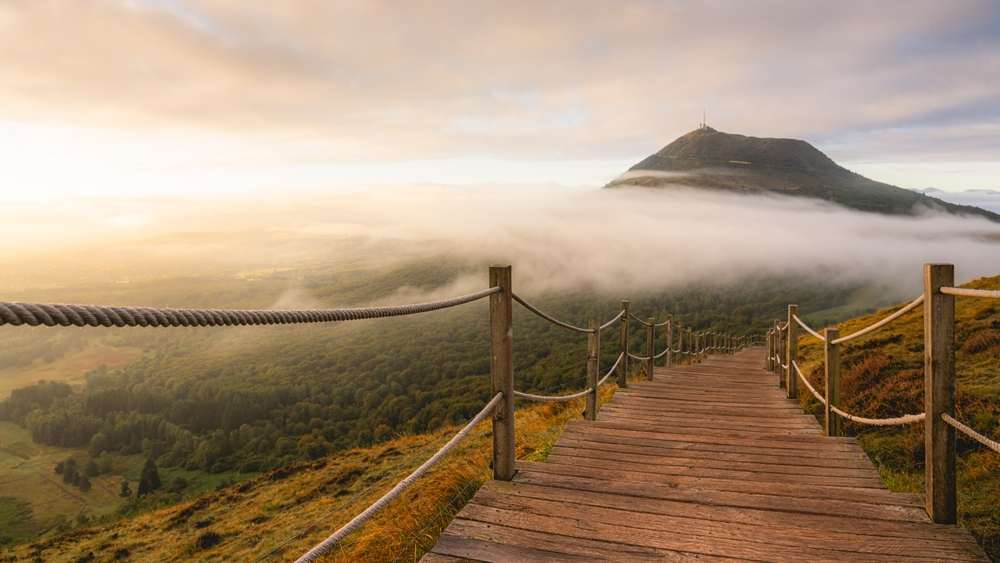
It’s impossible to talk about Auvergne’s volcanoes without mentioning Puy de Dôme, the region’s emblem. Reaching an altitude of 1,465 metres, this giant of the Chaîne des Puys can be seen from Visiter Clermont-Ferrand, the capital of Auvergne. A UNESCO World Heritage Site, it offers a breathtaking 360-degree panorama of the Regional Nature Park, the Limagne Plain and the entire Chaîne des Puys.
There are two options for reaching the summit. If you prefer comfort, you can take the Panoramique des Dômes, a cogwheel train that takes you to the summit in just 15 minutes. If you’re more sporty, you’ll prefer the Chemin des Muletiers, a historic trail that winds its way up the sides of the volcano. Whatever your method of ascent, the reward is worth the effort: at the summit, you’ll discover the remains of the Temple de Mercure, the largest mountain sanctuary in Roman Gaul.
The site is perfectly equipped to welcome visitors with a host of activities: paragliding, mountain biking, zip-lining and climbing will delight thrill-seekers. The Puy de Dôme is a must-see when visiting Clermont-Ferrand and the surrounding area, offering total immersion in the volcanic world of Auvergne.
2. Puy de Sancy
At 1,886 metres, the Puy de Sancy holds the prestigious title of highest peak in the Massif Central. This majestic peak dominates the Monts Dore and offers spectacular views of the Chaîne des Puys and the Monts du Cantal and Forez. Access to the summit is made easy by a cable car that drops you off just a stone’s throw from the goal, so all you have to do is climb a flight of steps for around 20 minutes to reach the summit.
The walks around Puy de Sancy are some of the most beautiful in the Auvergne. The trails take you past unique geological formations, ancient solidified lava flows and emerald crater lakes. Nature lovers will be delighted by the diversity of the scenery: bubbling waterfalls, forests of ancient fir trees and breathtaking panoramas follow one another along the paths.
The site can be enjoyed in all seasons. In summer, the hiking trails invite you to explore and contemplate, while in winter, the nearby ski resorts of Le Mont-Dore and Super-Besse offer plenty of slopes for winter sports enthusiasts. There’s no shortage of activities: climbing, zip-lining, mountain biking and even paragliding for the more adventurous. The Puy de Sancy epitomises the majesty of the Auvergne volcanoes.
3. Le Puy Mary
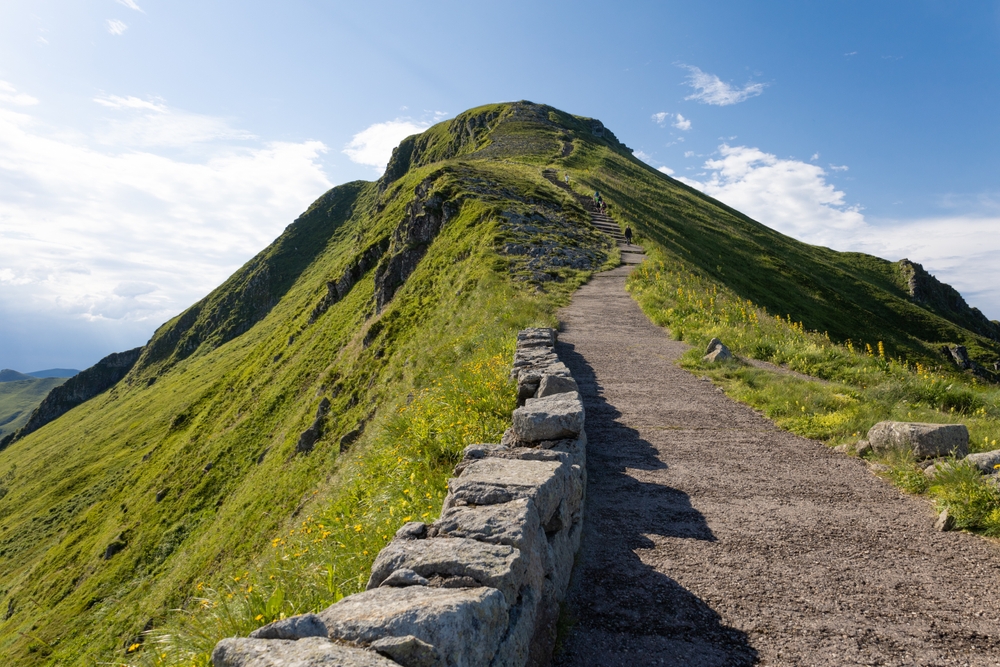
At the heart of the Monts du Cantal lies Puy Mary, Europe’s largest stratovolcano. Reaching a height of 1,783 metres, this pyramid-shaped giant was awarded the prestigious Grand Site de France label in 2012. Although it’s not the highest in the massif, its distinctive silhouette makes it one of the most photogenic and recognisable volcanoes in the Auvergne.
Climbing Puy Mary is an unforgettable experience for hikers. The most accessible start is from the Col de Peyrol, the highest road pass in the Massif Central. A well-maintained path takes around 1? hours to reach the orientation table at the summit. From up there, you can enjoy an exceptional 360-degree panoramic view of the glacial valleys that radiate around the volcano like the petals of a flower.
On a clear day, the lucky ones will even be able to see the snow-capped peaks of Mont Blanc in the distance. The walks around Puy Mary offer a variety of itineraries to suit all abilities, from family walks to more technical circuits. The site is also renowned for its unspoilt flora and fauna, including marmots, chamois and remarkable alpine flora.
4. Le Puy de la Vache
At just 8,400 years old, Puy de la Vache and its twin Puy de Lassolas are among the youngest volcanoes in Auvergne. Located in the commune of Saint-Genès-Champanelle, these twin volcanoes stand out for their perfectly preserved crater in the shape of a gaping maw, and their slag flows in shades ranging from bright red to deep black.
The hike to Puy de la Vache is one of the most spectacular in the region. The path takes you through an old quarry where you can see volcanic bombs, solidified lava projectiles ejected during eruptions. But be warned: the climb is demanding, with a significant difference in altitude and a number of high steps that put your legs to the test. But the effort is well worth it!
At the summit, perched at an altitude of 1,167 metres, you’ll be faced with the majestic Puy de Dôme standing proudly in front of you. The panorama embraces the entire southern part of the Chaîne des Puys, offering a unique perspective on this line of UNESCO-listed volcanoes. Lava flows from the Puy de la Vache and the Puy de Lassolas have formed the Lac d’Aydat, adding to the charm of this exceptional geological site.
5. Le Puy Griou
Puy Griou is distinguished from other Auvergne volcanoes by its special rock: phonolite, which gives it its characteristic greenish-grey colour. Rising to 1,690 metres in the Cantal massif, this summit is shrouded in local legend. It is said that a benevolent fairy protects the flocks and watches over the region from the heights of Le Griou, adding a mystical touch to this already impressive volcano.
Visitors have two options for discovering Puy Griou. Drivers can take advantage of a nearby car park to admire the panorama effortlessly. Keen hikers will prefer the ascent from the village of Mandailles, a vertiginous climb but one that holds surprises at every turn. The trail passes through lush green forests before leading to high-altitude pastures where Salers cows graze peacefully.
The view from the summit is absolutely magnificent: you overlook the Cantalien puys and the Mandailles cirque, a natural amphitheatre carved out by glaciers. The Puy de Griou also overlooks the valleys of the Cère and Jordanne, two rivers that flow on either side of this volcanic ridge. In fine weather, the panorama stretches as far as the snow-capped peaks of the Alps, offering a natural spectacle of rare beauty.
6. Puy de Lemptégy
Puy de Lemptégy occupies a unique position among the volcanoes of the Auvergne. Located in the commune of Saint-Ours-les-Roches, this extinct volcano is around 30,000 years old and boasts an extraordinary feature: its crater is perfectly visible from the inside. This exceptional feature is explained by the exploitation of the volcano’s slag, which was used to rebuild the French towns devastated during the Second World War.
Today, Puy de Lemptégy has become a veritable open-air book on volcanology. The site is not served by public transport, but is easily accessible in 25 minutes by car from Clermont-Ferrand station. What makes this volcano unique is the opportunity to literally explore the heart of a natural volcano, an experience you won’t get anywhere else in France.
You can visit the site on foot or on a mini-train, following a fun trail of around 3 kilometres. You’ll discover the different geological layers, volcanic chimneys, bombs and multicoloured slag that bear witness to the intense activity of the past. Enthusiastic guides will explain the mechanisms behind the eruptions and the fascinating history of this site. Puy de Lemptégy is located opposite the famous Vulcania park, so you can combine scientific discovery with hands-on exploration.
7. Le Puy de Lassolas
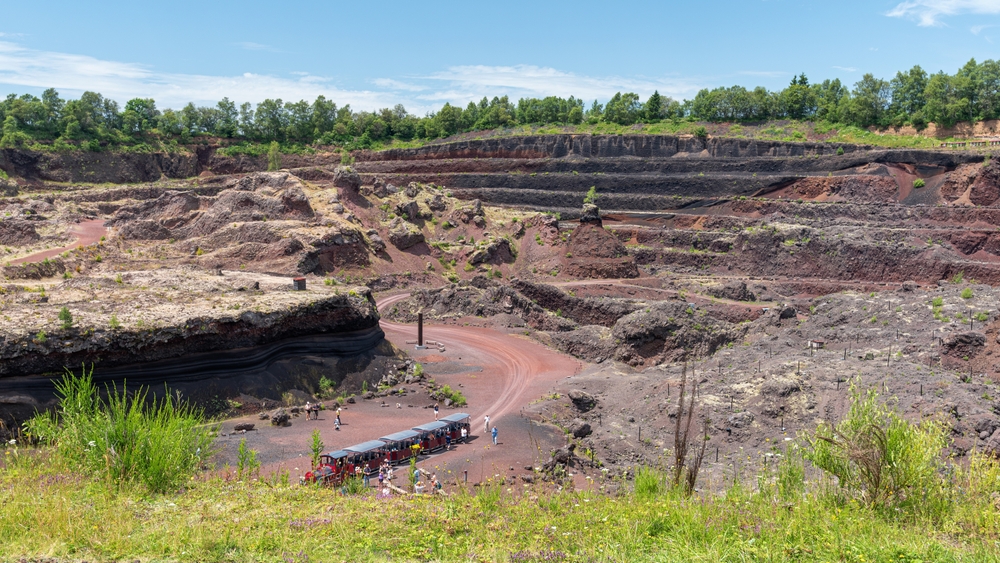
Puy de Lassolas, a basalt volcano perched at an altitude of 1,188 metres in the commune of Saint-Genès-Champanelle, shares a common history with its twin, Puy de la Vache. Born around 8,500 years ago, it owes its name to the Auvergne word “lassourias”, meaning “the burnt”, a direct reference to the red and black slag that scatters its flanks and bears witness to its tumultuous volcanic past.
These twin volcanoes have a remarkable geological feature: their ancient lava flows have joined together, preventing their craters from forming completely. This volcanic union gave rise to Lake Aydat, the largest natural lake in the Auvergne, a veritable jewel set between the two sleeping giants. This unique geological phenomenon perfectly illustrates the power and creativity of nature.
Whether you reach the Puy de Lassolas by car or by hiking, you’ll be rewarded with a spectacular view of the Chaîne des Puys and the Monts Dore. The panorama also takes in the Massif du Sancy, the glacial valleys sculpted by the ages and the picturesque villages nestling in the hollows of the relief. Here’s a practical tip: choose a winter visit rather than a summer one, as the volcanic pozzolan can make the ground particularly slippery in summer, especially after a rainstorm.
8. Le Puy de la Nugère
Located just 20 kilometres from Clermont-Ferrand, Puy de la Nugère is an 11,000-year-old strombolian volcano. Reaching a height of 994 metres, the volcano is carved into the side by an old quarry and is famous for having given rise to a material that is emblematic of the region: Volvic stone. These trachy-andesite flows have shaped local architecture and are an essential part of the Auvergne’s heritage.
Although the Puy de la Nugère may not appear to be the most spectacular volcano in the Chaîne des Puys, it can lay claim to being the cradle of modern volcanology. Its bowels contain an underground extraction gallery, originally dug to contain an epidemic that was ravaging the region. Today, this gallery releases a large quantity of water at Les Goulets, giving rise to the world-famous Volvic waters.
You can reach the site by car or hike from the Col de la Nugère. The trail passes through a magnificent forest of undergrowth before reaching the crater, literally plunging you into the heart of the region’s historical and cultural heritage. This walk offers a wonderful immersion in the geological and human history of the Auvergne, where nature and industry have come together harmoniously over the centuries.
Download the audio tour to discover Clermont-Ferrand on foot and on your own
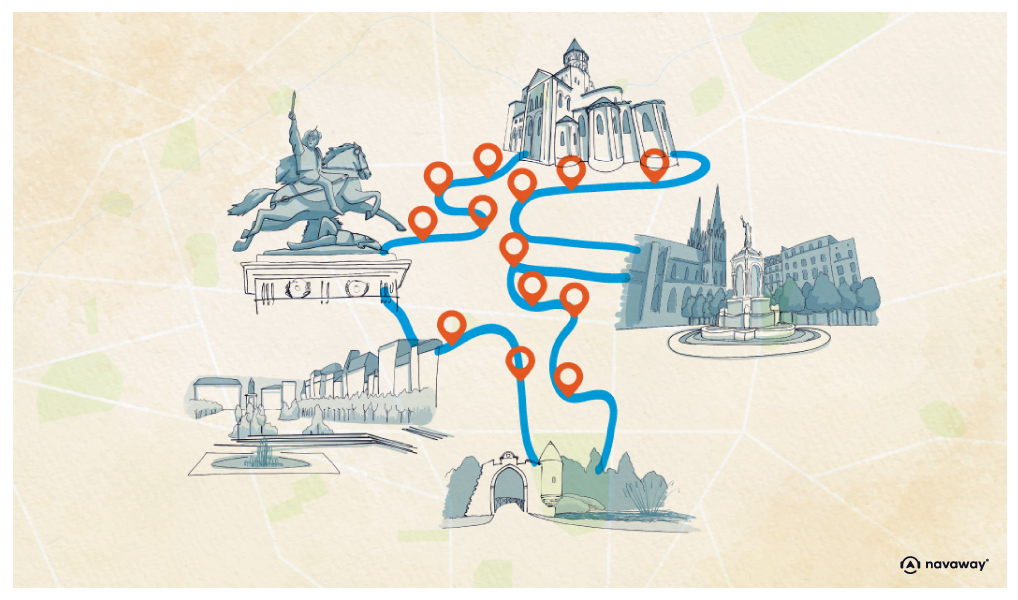
To complete your exploration of the Auvergne volcanoes, be sure to visit Clermont-Ferrand, the capital of Auvergne and the ideal starting point for your excursions. Thanks to the Navaway app, discover the city at your own pace with an audio-guided tour of Clermont-Ferrand that will take you through the city’s 21 major points of interest. Let yourself be guided on your urban exploration before setting off to conquer the volcanic giants that surround the city.
9. Le Puy de Montchal
Despite being just 7,000 years old, Puy de Montchal is one of the youngest volcanoes in mainland France. Situated in the Monts Dore at an altitude of 1,407 metres in the commune of Besse-et-Saint-Anastaise, this volcano is part of a remarkable geological complex. It is one of four volcanoes in the region to have undergone successive eruptions, alongside Puy de Montcineyre and the maars of Estivadoux and Pavin.
The crater of the Puy de Montchal, now entirely covered in majestic conifers, offers few views of the surrounding area, but creates an absolutely enchanting forest setting. It’s the ideal place for a pleasant excursion into the forest, away from the hustle and bustle of the tourist trade. In summer, the flower-filled meadow that borders the volcano transforms the landscape into a veritable impressionist painting, with its bright splashes of colour contrasting magnificently with the dark green of the fir trees.
Take advantage of your visit to Puy de Montchal to visit Lac Pavin, a mysterious maar nestling in the middle of lush vegetation. Born of the explosive encounter between a rising lava and a phratic sheet, this almost perfectly circular lake fascinates scientists and visitors alike. Although swimming is prohibited, the site offers magnificent views and a wide range of outdoor sports in an unspoilt natural setting.
10. Le Puy de la Tache
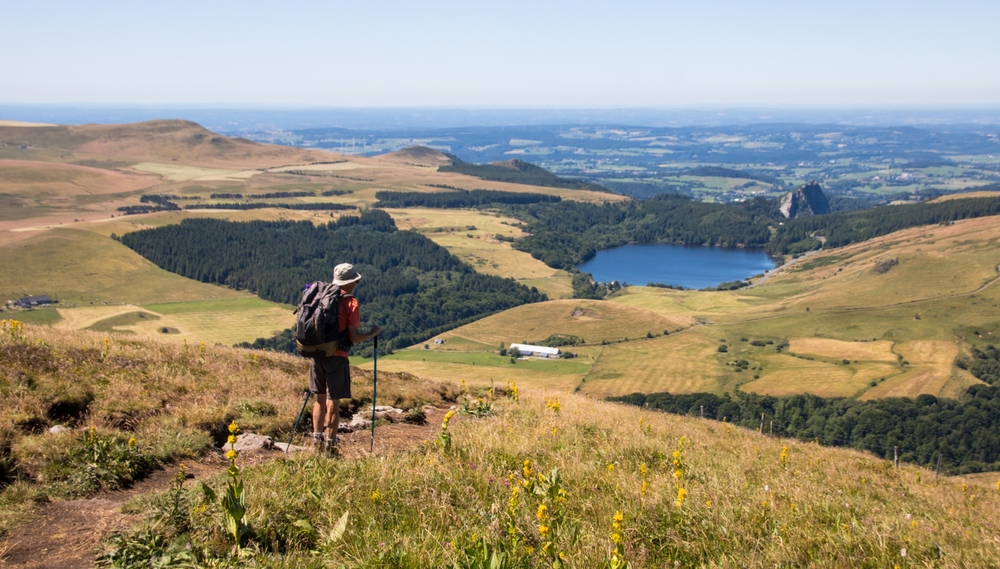
Perched at an altitude of 1,629 metres on the crests of the Sancy, the Puy de la Tache occupies a strategic position between the Guéry and Chambon lakes. This strombolian volcano is unique in that it is both volcanic in origin and independent of neighbouring puys, making it a fascinating geological site for volcanology enthusiasts and hikers in search of tranquillity.
Access to Puy de la Tache is made easier by the proximity of the Col de la Croix Morand, which is accessible by car. The hike starts on the opposite side of the pass from a typical Auvergne buron, renowned for its delicious regional dishes. Be sure to stop here before or after your ascent to sample authentic Auvergne gastronomy, including the famous truffade, local cheeses and traditional charcuterie.
The hike takes less than two hours to the summit of Puy de la Tache. Your arrival is marked by a traditional cairn, a pile of stones that has guided walkers for centuries. The panorama alone is worth the effort: a breathtaking view of the Puy de l’Angle, the Puy de Monne and the Puy du Barbier in the heart of the Massif Adventif. Don’t forget your camera to capture the lush green pastures, deep valleys and spectacular rock formations that characterise this unique volcanic landscape. Don’t forget to use the Navaway itinerary to make the most of your journey between the different volcanic sites in the region.
In conclusion, the volcanoes of the Auvergne are an exceptional natural heritage and well worth a visit. From the majesty of Puy de Dôme to the intimacy of Puy de Montchal, the grandeur of Puy de Sancy and the originality of Puy de Lemptégy, each volcano tells its own unique geological story. These sleeping giants offer not only breathtaking panoramas, but also a multitude of activities to suit all tastes and abilities. Whether you’re a keen hiker, a geology enthusiast or just a lover of beautiful landscapes, the volcanic Auvergne promises unforgettable discoveries. Don’t hesitate to visit Clermont-Ferrand and let yourself be guided by the Navaway audio tour for a complete exploration of this fascinating region.
Frequently asked questions
When is the best time to visit the Auvergne volcanoes?
The best period is from May to October, with a preference for June and September, when the climate is ideal, there are fewer tourists and the scenery is magnificent. Summer is the perfect time to enjoy hiking, while winter transforms some sites into ski resorts.
How long does it take to visit the Auvergne volcanoes?
To discover the 10 must-see volcanoes, plan at least 4 or 5 days. This will allow you to hike leisurely, enjoy the panoramic views and immerse yourself in the unique atmosphere of each volcanic site. A week’s stay is ideal for a complete exploration.
Are the Auvergne volcanoes accessible to families with children?
Yes, several volcanoes offer easy access for families. The Puy de Dôme with its train, the Puy de Sancy with its cable car and the Puy de Lemptégy with its fun tour are particularly recommended for children. Short, accessible walks can be made along the footpaths.
Do you have to be sporty to visit the Auvergne volcanoes?
No, the volcanoes of the Auvergne are suitable for all abilities. Some sites offer mechanised access (train, cable car), while others offer hikes of varying difficulty. An average level of fitness is sufficient for most of the climbs, although some peaks require more stamina.
Where to stay to visit the Auvergne volcanoes?
Clermont-Ferrand is an ideal base, offering a wide choice of accommodation and quick access to the main volcanoes. Villages such as Le Mont-Dore, Super-Besse, Orcines and Saint-Nectaire also offer charming accommodation in the heart of the volcanoes, perfect for total immersion in the Auvergne countryside.
200 audioguided tours for cities all around the world
Download