9 must-do activities to discover the Frioul Islands
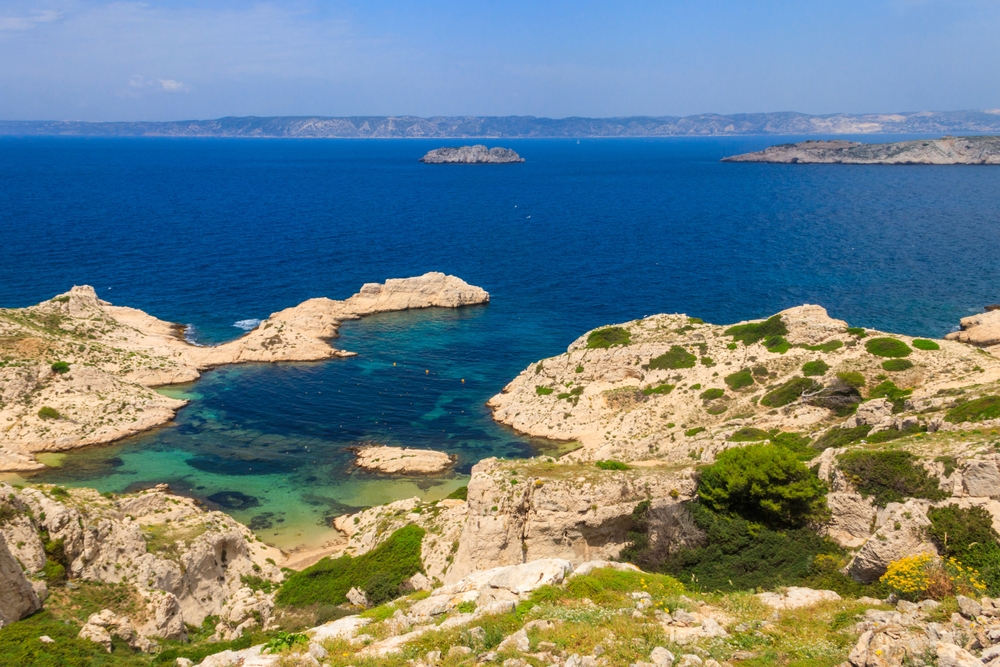

Just a stone’s throw from Marseille’s Old Port, the Îles du Frioul emerge from the Mediterranean like a jewel case of unspoilt nature. This mythical archipelago, made up of four islands bathed in sunshine and caressed by the Mistral wind, offers a breathtaking escape just a stone’s throw from the city of Marseille. With its turquoise waters, secret coves, historic relics and wild paths, the Frioul Islands promise an unforgettable day out for travellers in search of authenticity and Mediterranean beauty. Discover the must-dos for exploring this little paradise in Marseille.
See also the Marseille guide :
- 20 not-to-be-missed excursions around Marseille
- The 9 most beautiful districts to visit in Marseille
- The 10 most beautiful beaches in Marseille
- What to do in Marseille Top 6 activities + Good tips
- The 5 best straw huts around Marseille
- Travel back in time with a visit to the Marseille History Museum
- Visit the Château d’If in Marseille
- Visiting the MUCEM in Marseille, practical information
- Top 11 culinary specialities in Marseille
- Visit and discovery of Notre-Dame de la Garde in Marseille
- What are Marseille’s most beautiful creeks?
- Top 5 events in Marseille
1. Discover the island of Pomègues
The island of Pomègues stretches for almost three kilometres and is the largest island in the Frioul archipelago. It is also one of the wildest and most authentic, offering visitors a real journey back in time. Its jagged coastline, sculpted by sea spray and the Mistral wind, reveals landscapes of raw, fascinating beauty.
The vegetation, although tested by the Mediterranean drought, has adapted spectacularly to this hostile environment. You’ll discover golden immortelle, wild thyme and endemic plants that perfume the sea air. The hiking trails wind around the cliffs, offering majestic views of the crystal-clear waters and the silhouette of Marseille in the distance.
Pomègues’ military heritage bears witness to its strategic role in the defence of Marseille. The Fort de Pomègues, the Cap Caveaux battery and the Tour de Pomeguet stand proudly as vestiges of a tumultuous past. These buildings, which have now been reclaimed by time and nature, tell the story of the island and its importance in protecting the port of Marseille. If you want to visit Marseille and the surrounding area, a trip to Pomègues is a must.
2. Visit the legendary Château d’If
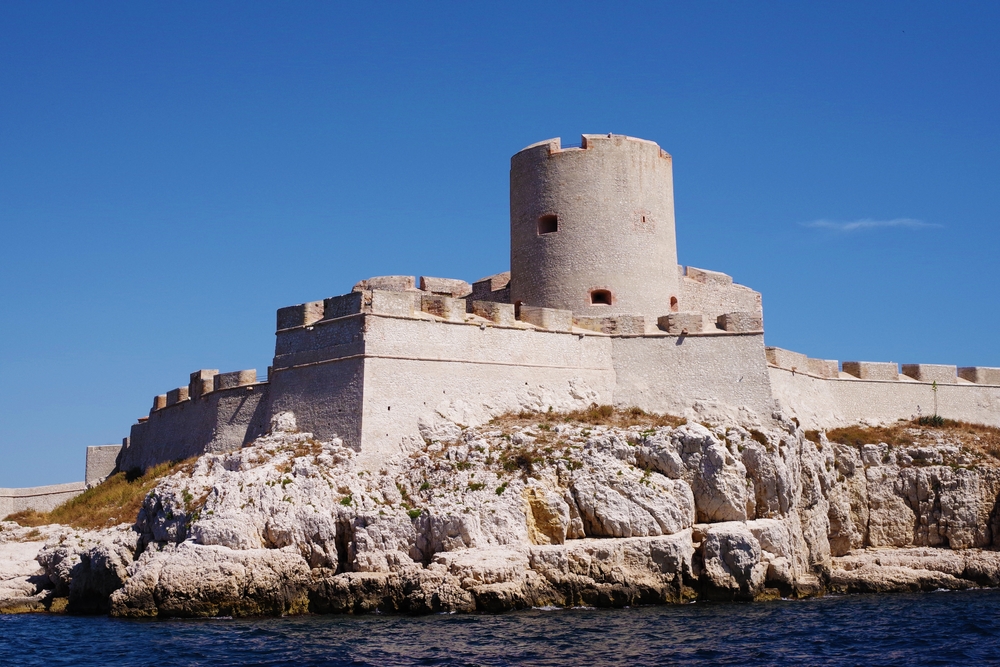
On the islet of If, it’s impossible to miss the imposing silhouette of the Château d’If, which has stood since the 16th century. This fortress, which in all weathers slashes the horizon from the mainland, is probably the most famous monument in the archipelago. Built on the orders of François I to protect access to the port of Marseille, it quickly became a feared state prison.
The Château d’If owes much of its international renown to Alexandre Dumas’ novel “The Count of Monte Cristo”. It was here that the hero, Edmond Dantès, was unjustly imprisoned before making a spectacular escape. This literary legend has turned the château into a must-see destination for all lovers of history and literature. A visit to the monument reveals the prisoners’ cells, some of which still bear the marks of their stay, as well as the dungeons where historical figures were locked up. The panoramic view of Marseille harbour and the archipelago from the sentry walk is absolutely breathtaking. Access to the Ile d’If is subject to a charge, and requires the purchase of a boat ticket from the Vieux-Port.
Download the audio tour to discover Marseille on foot and on your own
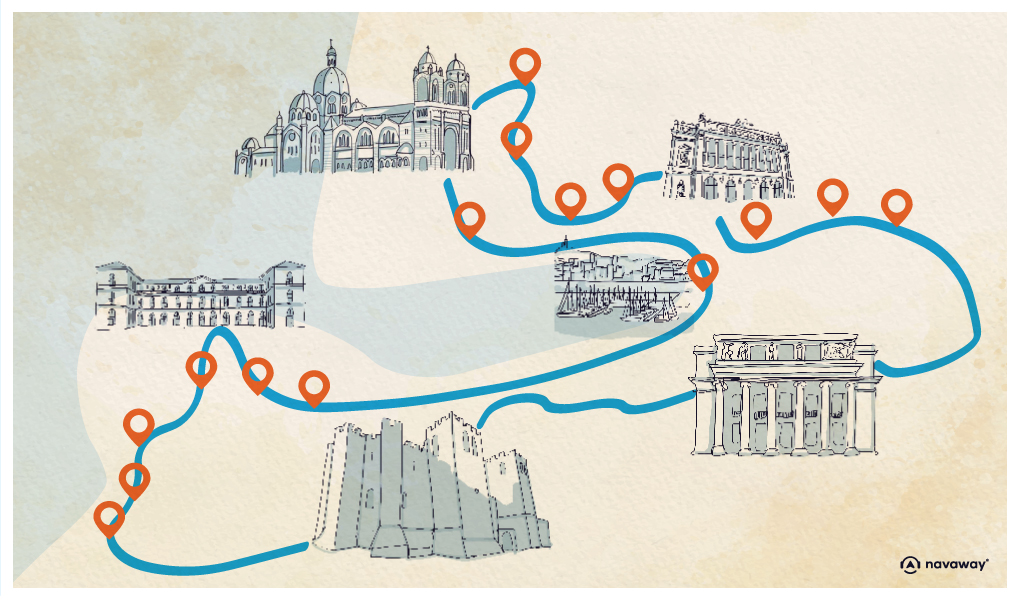
To extend your discovery of the city of Marseille after your getaway to the Îles du Frioul, let yourself be guided through the historic streets of Marseille on the Navaway audio tour. This immersive 7.3km walk takes you through 24 major places of interest, from the Old Port to the Canebière and the Panier district. With its historical commentary enriched by local anecdotes, the Navaway app transforms your visit into a unique and personalised experience. Perfect for rounding off your day on the islands and exploring all the treasures of Marseille’s capital on your own.
3. Exploring the island of Ratonneau
The island of Ratonneau stretches for more than two kilometres and has a more urban feel than its neighbours. With two magnificent calanques and three welcoming beaches, it’s the ideal stop-off point for families and visitors looking for seaside relaxation. Its small marina and lively quayside offer restaurants, bars and an authentic Mediterranean atmosphere.
But Ratonneau is more than just a seaside resort. The island boasts a remarkable historical heritage that bears witness to its eventful past. Before it became a holiday resort, Ratonneau served as a military base and quarantine zone during the epidemics that ravaged Mediterranean ports. The Fort of Ratonneau, perched on the heights, offers an exceptional view of the archipelago and the sea. The Cap de Croix battery, another military vestige, is a reminder of the island’s strategic importance in the defence of Marseille.
The small chapel built for the sailors, visible from several points on the island, bears witness to the faith and solidarity that united these men of the sea. One of Ratonneau’s most fascinating monuments is the Caroline Hospital, which we’ll look at in more detail later. If you’d like to explore the Marseilles region in greater depth, don’t hesitate to use the Navaway tour itinerary, which will guide you through all the city’s emblematic districts.
4. Hiking the archipelago trails
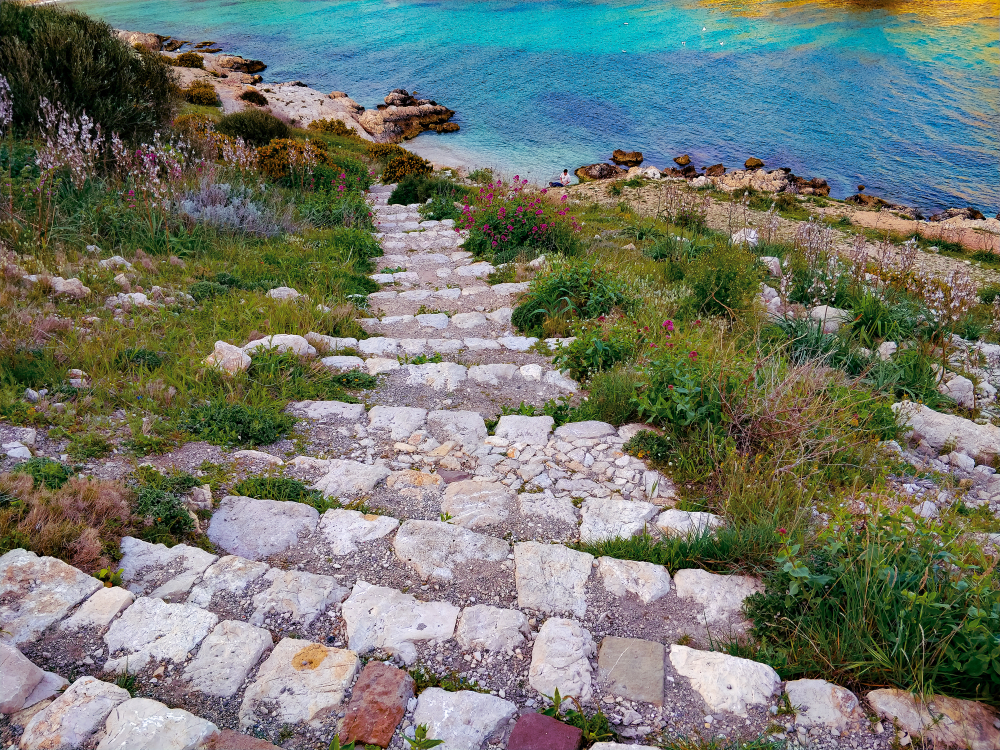
The Friuli Islands offer an exceptional playground for hiking enthusiasts. Even if the arid climate can sometimes prove trying at the height of summer, the footpaths that criss-cross the archipelago reveal breathtaking panoramas. To make the most of these walks, choose the shoulder seasons: spring and autumn offer ideal conditions, with colourful nature and mild temperatures.
The path linking the Berry dike to the Cavaux battery on the island of Pomègues is one of the most spectacular. For almost an hour, you’ll think you’re at the end of the world, far from the hustle and bustle of the city. The route reveals astonishing geological phenomena and exceptional fauna: the gabians (Provençal golands) will accompany you with their characteristic cries.
In Ratonneau, the walk that stretches between Plage Saint-Estève and Hôpital Caroline is a key itinerary. Along the way, you’ll discover the Maison des Pilotes, an emblematic building resembling the prow of a ship, which houses the pilots of the Grand Port Maritime de Marseille. These signposted trails allow you to appreciate the diversity of the islands’ landscapes: sheer cliffs, secret coves, fragrant garrigue and breathtaking views over the Mediterranean. Don’t forget good walking shoes, plenty of water and sun protection. To complete your discovery of the region, take a look at the Navaway tour of Marseille.
5. Bathing in the calanques and secret beaches
The limestone silhouette of the Frioul archipelago is an obsession for lovers of beaches and idleness. You can’t visit the islands without exploring the many creeks and sandy coves. These natural treasures, carved out of a wild and picturesque environment, invite you to enjoy long sunbaths and refreshing swims in exceptionally pure waters.
The Calanque de la Crine, on the island of Pomègues, is undoubtedly the most beautiful. Set back and difficult to access, it rewards courageous walkers with a spectacle worthy of the finest tropical beaches. Its turquoise blue waters and succession of secret coves have earned it the nickname of the “beach of Tahiti”. This unspoilt cove offers rare tranquillity and an exceptional seabed for snorkelling.
The calanques of Escondelle (on the island of Pomègues), Morgiret and Saint-Estève (on the island of Ratonneau) are also well worth a visit. The calanque at Saint-Estève is home to the archipelago’s only fully supervised beach during the summer months. Accessible in a thirty-minute walk from the port or by tourist train, it even offers a guided underwater trail to discover the Mediterranean flora and fauna. Its turquoise waters make it an ideal spot to spend a lazy day sipping cocktails and soaking up the sun in Marseille.
Behind the port of Frioul lies the less-frequented but equally charming Grand Soufre beach. Pleasant, protected from the Mistral and easy to get to, it offers a quiet alternative to the more popular beaches. At the Pointe de Brigantin, a narrow cove with a gravel beach welcomes the first arrivals in an intimate setting.
6. Visit the Caroline Hospital
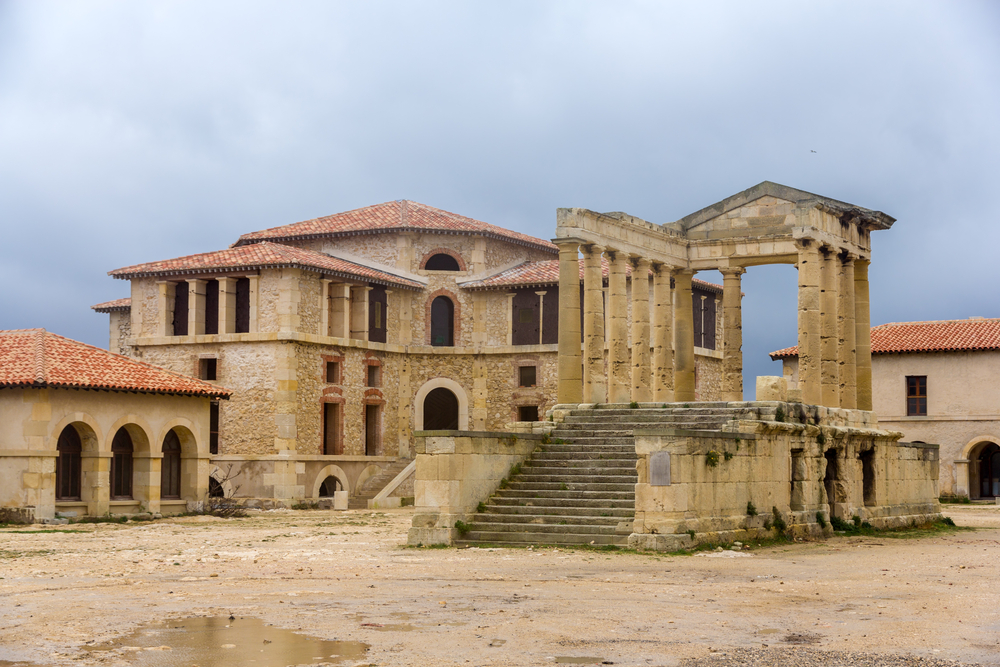
The Caroline Hospital is a fascinating discovery on your exploration of the Frioul Islands. This nineteenth-century lazaretto bears witness to a time when sailors constantly called at the archipelago. These warriors of the seas protected the city of Marseille at the risk of their lives, sometimes bringing with them contagious diseases that threatened the entire population.
That’s why architect Michel-Robert Penchaud built this monumental hospital on the island of Ratonneau between 1823 and 1828. The establishment housed sick or injured sailors, isolating them from the mainland to prevent the spread of epidemics such as the plague and cholera. The building’s imposing architecture, with its long galleries and interior courtyards, effectively isolated patients while providing them with relatively advanced care for the time.
Today, the Hôpital Caroline stands as a majestic reminder of Marseille’s health and maritime past. Although partially in ruins, the site retains a unique atmosphere and offers a remarkable view over the harbour. Renovation projects are regularly mooted to preserve this exceptional heritage. A visit to the Caroline Hospital is a perfect complement to a walking tour of Ratonneau, and provides a fascinating insight into the history of these islands, which played a crucial role in protecting Marseille’s health.
7. Water sports
The Frioul Islands are an exceptional playground for water sports enthusiasts. Diving, snorkelling, kayaking or jet ski hire: there’s no shortage of activities in these crystal-clear Mediterranean waters. Marseille is regarded as the cradle of scuba diving in France, thanks in particular to the Calanques National Park, with its exceptionally rich seabed.
If you have to choose just one water sports activity to do in the Îles du Frioul, scuba diving is the one to go for. The seabed around the archipelago is home to a remarkable biodiversity: groupers, octopus, moray eels, corbs and swarms of multicoloured fish swim between the posidonia meadows and rocky drop-offs. Experienced divers will love the wrecks that lie at the bottom of the Mediterranean, silent witnesses to the region’s maritime history.
The Tiboulen dive site on Ratonneau Island is particularly popular with the locals. This spot offers ideal conditions: it is remarkably sheltered from the wind and its underwater relief is striking. Beginners will find shallow areas for their first bubbles, while experienced divers can explore more technical areas. For snorkelling, the calanque of Saint-Estève offers a guided underwater trail, perfect for discovering the Mediterranean flora and fauna with the whole family. Kayaks allow you to explore the most remote coves and reach areas inaccessible on foot. After your sporty day on the islands, let yourself be guided around Marseille by the Navaway itinerary to discover the city’s treasures.
8. Take a boat trip
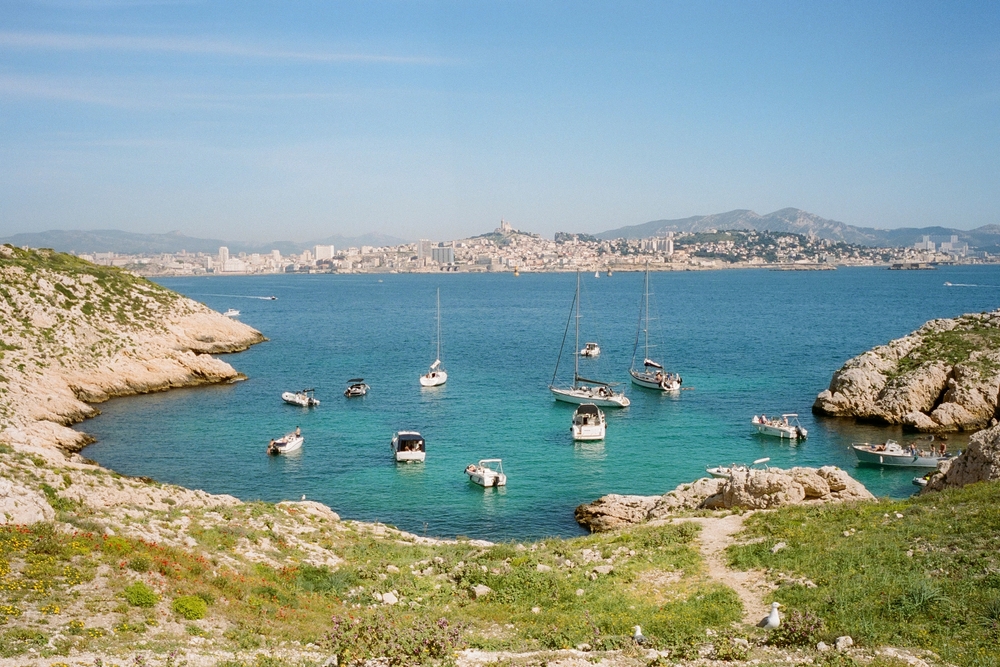
To discover the Frioul Islands from a different angle, there’s nothing like a boat trip. From Marseille’s Vieux-Port, there are several options for taking to the deep, welcoming waters of the archipelago. Regular shuttle services run all day long, but for a more authentic and memorable experience, opt for a trip aboard a renovated sailing boat or trawler.
These private excursions allow you to swim from cove to cove, discover secret coves inaccessible from land, and benefit from the expertise of a local captain who will passionately share the history of the islands and their anecdotes. Some trips even offer a meal on the deck of the boat or in the water, for a convivial experience in a small group. Imagine enjoying a traditional Marseilles bouillabaisse while gazing at the Château d’If bathed in the setting sun.
For the romantics, don’t miss the sunset cruises, which offer a magical view of the Cité Phocéenne. As daylight fades, Marseille gradually lights up in the twilight, creating an unforgettable light show from the open sea. The Basilica of Notre-Dame de la Garde, the Mucem and the Old Port are all bathed in light, creating a picture worthy of the most beautiful postcards. You can also admire the Planier lighthouse, which has been guiding sailors for generations. Boat hire with or without a skipper, full-day or half-day outings: there’s a whole range of options to suit your wishes and your budget.
9. Attend the Monte Cristo Challenge
If your stay in Marseille coincides with the month of June, you may be lucky enough to witness one of the most spectacular sporting events on the Mediterranean: the Défi Monte-Cristo. This famous white-water swimming race is much more than just a competition: it’s a real human and sporting experience, unique in Europe, which attracts thousands of participants and spectators every year.
The Défi de Monte-Cristo offers a range of races to suit all abilities. The flagship event starts from the legendary Château d’If or the island of Degaby and finishes on the beaches of the Prado, a distance of around 5 kilometres in the middle of the Mediterranean Sea. To take part in this adventure, you not only have to be an experienced swimmer, but also know how to deal with the sea currents, the cold water and the unpredictable weather conditions. For many swimmers, it’s the challenge of a lifetime.
The event is spread over four days, packed with performances and emotions. More than five thousand participants of sixty different nationalities come to battle the waves and the forces of nature. Shorter races are also organised for beginners and families, allowing everyone to enjoy this unique experience at their own level. For spectators, the beaches of the Prado and the quays of the Vieux-Port offer great vantage points from which to cheer on the swimmers and vibrate to the rhythm of this exceptional event. The festive, supportive atmosphere that reigns throughout the days makes the Défi Monte-Cristo a not-to-be-missed event in Marseilles this summer, celebrating sport, the sea and the literary legacy of Alexandre Dumas.
In conclusion, the Îles du Frioul offer an incomparable getaway on the outskirts of Marseille. With its exceptional historical heritage, unspoilt nature, heavenly beaches and water sports, the archipelago is a destination in its own right that deserves much more than just a stopover. Whether you’re a history buff with a visit to the Château d’If and the Hôpital Caroline, a nature enthusiast with hiking trails and secret calanques, or a fan of lounging on beaches with an authentic Mediterranean feel, the islands will win you over. Don’t forget to extend your discovery by exploring Marseille with the Navaway audio tour, which will reveal all the hidden treasures of the city. A day on the Frioul Islands is the promise of a timeless journey, where the raw beauty of nature blends with the fascinating stories of a thousand years of history.
Frequently asked questions
How do I get to the Îles du Frioul from Marseille?
The Îles du Frioul can only be reached by boat from Marseille’s Old Port. Regular shuttle services run all day, from 6.30am to 11pm in high season. The crossing takes around 25 to 30 minutes. You can buy your tickets directly from the ticket offices on the Quai des Belges, or book online to avoid the wait. Several companies offer this service, including Frioul If Express. Fares vary according to the season, but remain affordable. Be sure to check the timetables, especially in low season when there are fewer round trips.
How long does it take to visit the Frioul Islands?
A full day is the ideal way to discover the Îles du Frioul without rushing. This will allow you to visit the Château d’If (allow 1h30 for the visit), swim in several calanques, hike to Pomègues or Ratonneau, and enjoy a leisurely lunch in one of the harbour restaurants. If you just want to swim and enjoy the beaches, half a day may be enough. If you’re more sporty and want to explore the whole archipelago on foot, you could even consider staying for two days by booking a hotel room on the island of Ratonneau.
Is there anything to eat on the Îles du Frioul?
Yes, there are several dining options available on the island of Ratonneau, around the port of Frioul. You’ll find restaurants serving Mediterranean specialities, including fresh fish and seafood. There are also snack bars and ice cream parlours for a refreshing break. However, the island of Pomègues has no restaurant facilities, so it’s advisable to pack a picnic if you’re planning to spend the day there. Don’t forget to bring plenty of water, as fountains are rare on the archipelago. Prices on the islands are slightly higher than in town, which is usual for island locations.
Are the Îles du Frioul accessible all year round?
The ferries operate all year round, but the frequency of service varies according to the season. In summer (June to September), departures are very regular, with boats leaving every hour or so. In winter, timetables are more limited, with only a few connections per day. Weather conditions can also have an impact on the service: in the event of heavy seas or violent mistral winds, crossings may be cancelled for safety reasons. It is therefore advisable to check the weather conditions before you leave and check the timetables with the shipping companies. Spring and autumn offer the best conditions for enjoying the islands, with fewer people and a pleasant climate.
200 audioguided tours for cities all around the world
Download