The 15 most beautiful gorges to visit in France

France abounds in natural wonders sculpted by time and water. Among these geological treasures, the gorges offer grandiose spectacles where dizzying cliffs, turquoise waters and lush vegetation combine to create breathtaking landscapes. From the imposing gorges of the Verdon to the red gorges of Daluis, via the wild gorges of the Tarn, each site reveals a unique beauty. Whether you’re a keen hiker, rock-climber, canoeist or simply a lover of unspoilt nature, these exceptional canyons promise unforgettable experiences in the heart of some of France’s most beautiful landscapes.
200 audioguided tours for cities all around the world
DownloadRead also:
- The Most Beautiful Villages in France: 15 listed villages to visit
- 6 nature destinations in France to relax at the weekend
- 8 ideas for last-minute getaways in France for an unforgettable weekend
- Discover the 8 best spas in France for relaxing
- France’s 10 most beautiful mountains to discover
- The 14 most impressive castles in France
- The 20 most beautiful beaches in France
- France’s most beautiful national and nature parks
- 110 most beautiful places to visit in France
1. The Verdon gorges
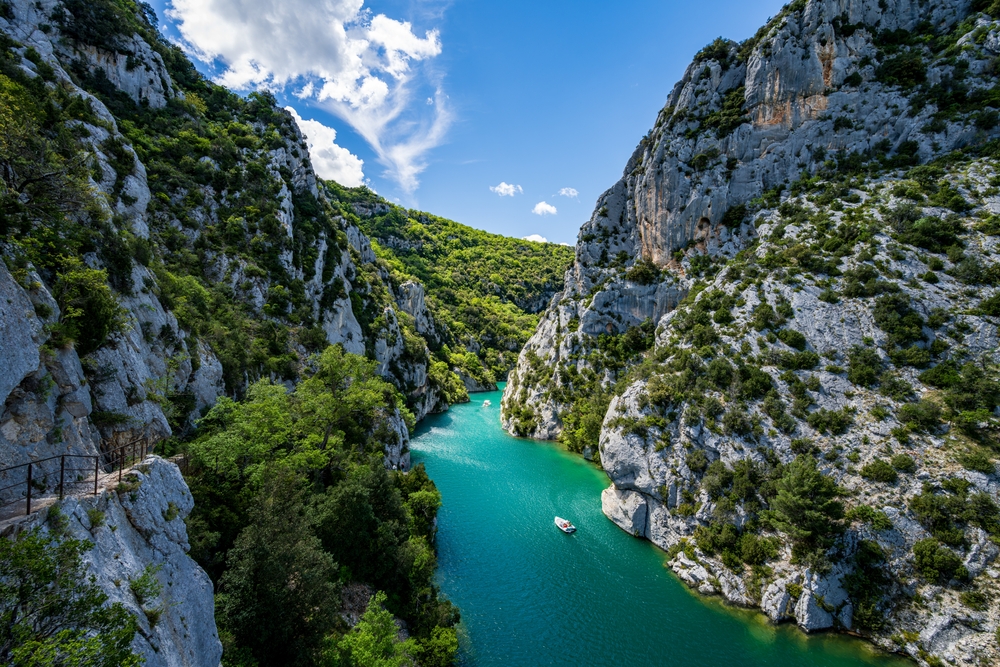
Considered to be France’s “Grand Canyon”, the Gorges du Verdon are Europe’s largest canyon, almost 25 kilometres long and with cliffs reaching 700 metres in height. Situated between the Alpes-de-Haute-Provence and Var departments, between Castellane and Moustiers-Sainte-Marie, they offer an absolutely breathtaking natural spectacle.
The emerald-green River Verdon winds its way through the bottom of the canyon before emptying into Lake Sainte-Croix. The translucent waters are perfect for swimming and water sports. There are two scenic routes through the gorge: the Route des Crêtes on the right bank and the Corniche Sublime on the left bank, offering spectacular viewpoints such as the Point Sublime and the Belvédère de l’Escalès.
The Gorges du Verdon are a paradise for outdoor enthusiasts: rock climbing on the limestone walls, hiking on the mythical Martel trail or the Imbut trail, canoeing on the turquoise waters, canyoning in the tributaries, paragliding above the canyon. Every year, the site attracts millions of visitors from all over the world to admire this geological wonder, classified as a Grand Site de France.
2. The Ardèche gorges
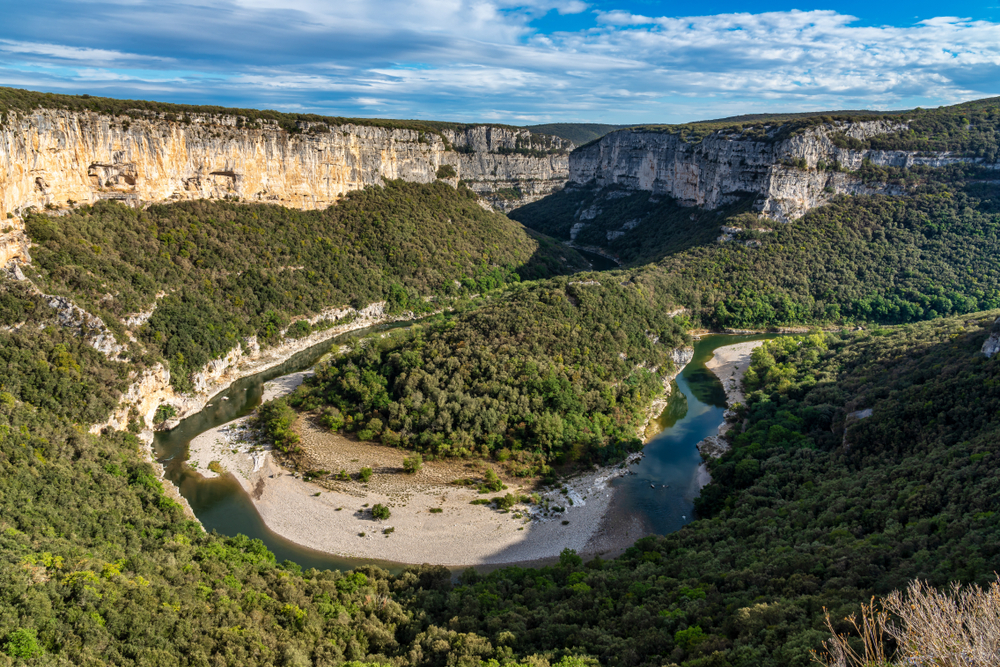
At the heart of a national nature reserve, the Ardèche gorges stretch for around 30 kilometres between Vallon-Pont-d’Arc and Saint-Martin-d’Ardèche. The site is dominated by the emblematic Pont d’Arc, a 54-metre-high natural arch that majestically spans the River Ardèche. This spectacular geological formation marks the entrance to the gorges and is one of the most photographed natural sites in France.
The gorges tourist route, also known as the panoramic route, winds along the cliffs and offers eleven lookouts with breathtaking views: the Serre de Tourre lookout, the Gaud lookout, the cathedral and the Templar balcony. The limestone walls, sculpted by erosion, form stone cathedrals where many species of rock birds nest.
The Ardèche gorges are world-famous for their canoeing and kayaking, a two-day adventure that includes a riverside bivouac. The site is also home to the Chauvet cave, a UNESCO World Heritage site containing the oldest known cave paintings in the world. Hikers can follow the Via Ardèche, an 8-kilometre footpath running alongside the gorges.
3. The Tarn gorges
Between Lozère and Aveyron, the Tarn gorges unfurl their spectacular meanders in the heart of the Grands Causses Regional Nature Park. For almost 53 kilometres, the river Tarn has carved out an impressive canyon between the Méjean and Sauveterre limestone plateaux, creating vertiginous cliffs up to 500 metres high. The sheer cliff faces alternate with pebble beaches and lush green cirques.
The region’s varied, unspoilt landscapes are home to charming, picturesque villages such as Sainte-Enimie, listed as one of France’s Most Beautiful Villages, and La Malène, with its Renaissance castle. These medieval villages with their lauze roofs retain an authentic charm and are ideal stopping-off points for discovering the local heritage. The gorges are also home to numerous perched castles and troglodytic hermitages, bearing witness to a rich history.
A trip down the Tarn gorges in a traditional boat with local boatmen offers a unique view of the cliffs and allows you to observe the flora and fauna. Thrill-seekers will enjoy canyoning, climbing the limestone walls or paragliding. The Causse Méjean cornice trail offers a spectacular hike 400 metres above the gorges.
4. The Kakuetta gorges
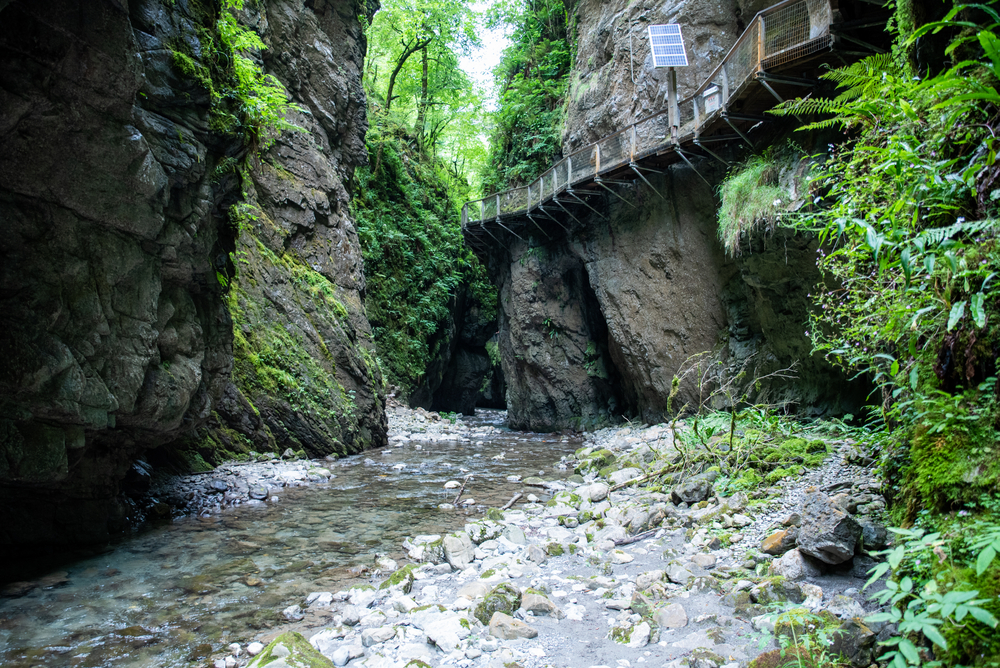
Hidden away in the heart of the Pyrénées-Atlantiques, the Kakuetta Gorge is one of the most spectacular canyons in the Basque Country. Located in the commune of Sainte-Engrâce in the Soule valley, these deep, narrow gorges stretch for around 2 kilometres. The limestone walls rise to a height of over 200 metres, creating a mysterious and impressive atmosphere.
The trail runs alongside the torrent that has sculpted these cliffs over thousands of years. Metal footbridges provide a safe passage over the crystal-clear waters. Lush vegetation covers the walls: mosses, ferns and lichens create a green setting in this mineral cathedral. The constant humidity and coolness of the gorge make it a particularly pleasant place to be on a hot summer’s day.
The tour, which is accessible to all, leads to an impressive 20-metre-high waterfall and leads into a grotto decorated with stalactites and stalagmites. The play of light on the damp walls creates a magical atmosphere. The site, open from March to November, is a must-see nature excursion in the Pyrenees. If you’re feeling more sporty, you can continue on to the Kakuetta chasm, which can only be explored with a professional guide.
5. The Hérault gorges
Designated a Grand Site de France, the Hérault gorges stretch across the south-east of the Séranne massif in Occitanie. Between arid land and limestone cliffs, the Hérault river has carved out a spectacular canyon offering exceptional panoramic views. The site boasts a remarkable wealth of natural and cultural resources, combining scenic beauty, historical heritage and villages full of character.
The medieval village of Saint-Guilhem-le-Désert, listed as one of the Most Beautiful Villages in France and a major stopover on the Pilgrim’s Way to Santiago de Compostela, towers majestically over the gorges. Its Romanesque abbey, founded in the 9th century and a UNESCO World Heritage site, is an architectural gem. The Pont du Diable, also a UNESCO World Heritage site, has spanned the Hérault since the 11th century and is one of the oldest medieval bridges in France still in use.
The Hérault gorges offer a wealth of activities, including swimming in the clear waters, canoeing and kayaking, hiking along the GR653 or the gorges path, and rock-climbing on the limestone cliffs. The pebble beaches nestling in the hollows of the meanders are popular havens of coolness in summer. The site’s exceptional biodiversity is home to many protected species, including birds of prey and remarkable Mediterranean flora.
6. The Gardon gorges
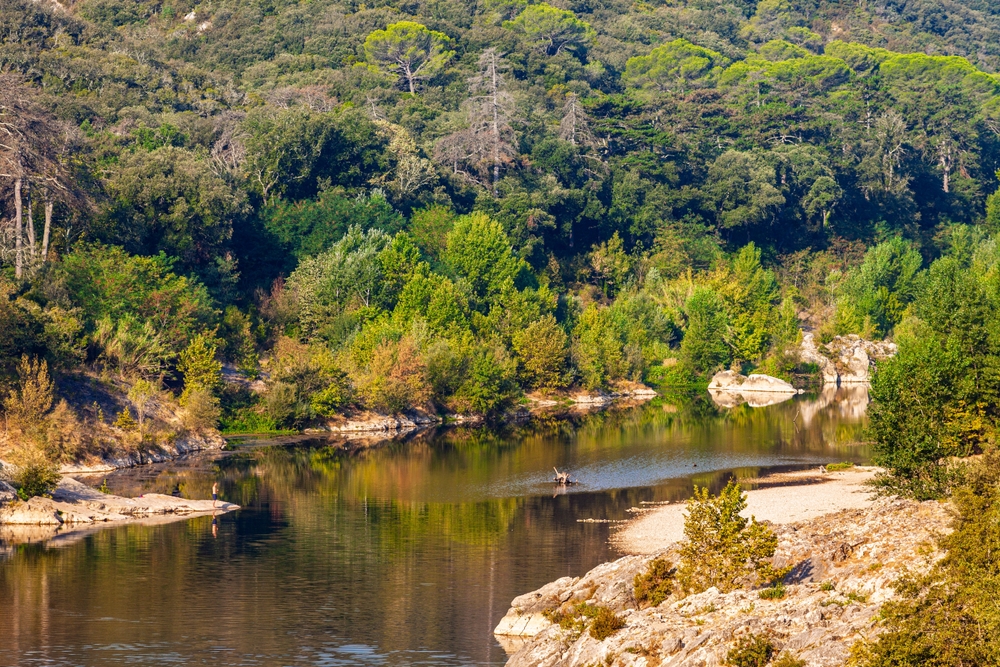
Situated in the Gard department, the Gardon gorges are inextricably linked with the famous Pont du Gard, a masterpiece of Roman architecture and a UNESCO World Heritage site. This monumental 49-metre-high aqueduct, dating from the 1st century, majestically spans the River Gardon and is one of the best-preserved ancient monuments in the world. The three tiers of arches are reflected in the clear waters, creating an unforgettable architectural and natural spectacle.
The gorges stretch from Collias to Remoulins for around 15 kilometres, offering an unspoilt natural setting in the heart of the Mediterranean garrigue. The steep limestone cliffs overlook the turquoise waters of the Gardon, a capricious river that can become torrential during the Cévennes floods. The site boasts remarkable biodiversity, with typically Mediterranean flora and fauna: holm oaks, Aleppo pines, thyme and rosemary perfume the air, while beavers, herons and kingfishers populate the riverbanks.
Canoeing is the best way to discover the Gardon gorges. The 8-kilometre route from Collias allows you to admire the Pont du Gard from the river, offering a unique perspective on this historic monument. The pebble beaches are perfect for swimming and picnicking. There are signposted hiking trails along the gorges, in particular the “sentier des garrigues” (scrubland trail), with its panoramic views. Themed guided tours are available to discover the local fauna, in particular the beavers that have re-colonised the site.
7. The Galamus gorges
On the border between the Catalan and Cathar regions, the Gorges de Galamus are a breathtaking sight where the road seems to defy the laws of gravity. Situated between the departments of Aude and Pyrénées-Orientales, these deep, narrow gorges were carved by the Agly river through the limestone rocks of the Fenouillèdes massif. The vertiginous cliffs sometimes narrow to just a few metres, creating an impressive atmosphere.
The road that crosses the gorge, cut into the side of the cliff in the 19th century, is a feat of engineering. Just 3 metres wide, it winds through spectacular passages where the rock towers over the void. This daring route offers breathtaking views of the canyon and the torrent below. The hermitage of Saint-Antoine-de-Galamus, clinging to the rock face, has dominated the gorge since the 8th century and is a remarkable spiritual site accessible after 100 steps carved into the rock.
Canoeing down the gorges on the waters of the Agly allows you to appreciate the full majesty of the site from a unique vantage point. The route alternates between calm passages and technical rapids, offering thrills and discovery of the wild beauty of the canyon. Climbers will love the numerous climbing routes on the limestone walls. The site is listed and protected to preserve its ecological wealth, particularly the colonies of griffon vultures that nest in the cliffs. The Galamus mill is a fine example of the region’s craft heritage.
8. The Jonte gorges
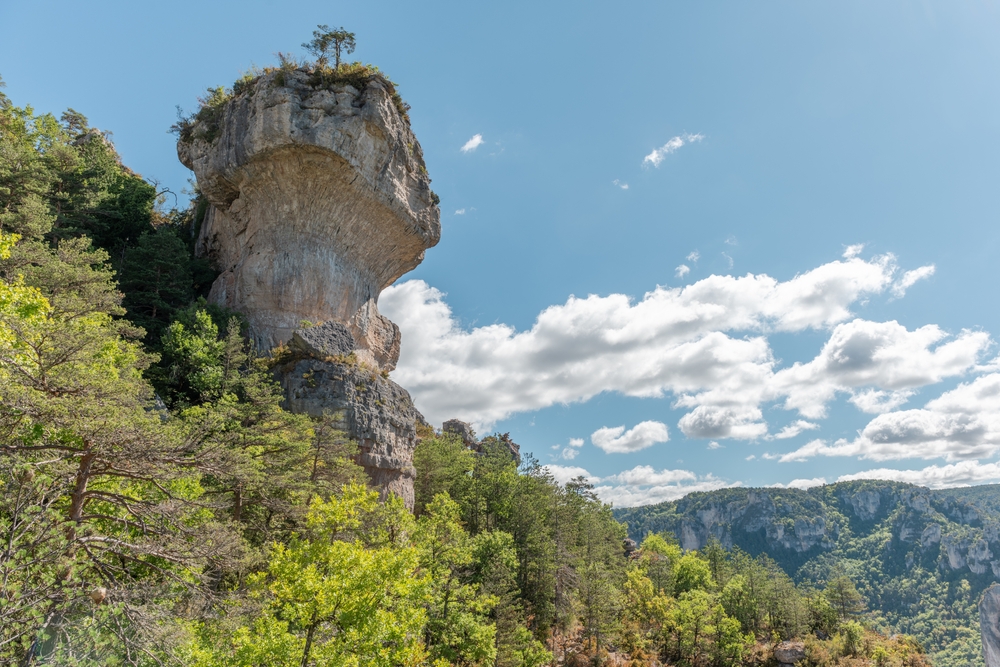
Between Lozère and Aveyron, the Jonte gorges are one of the natural gems of the Grands Causses Regional Nature Park. Stretching for around 20 kilometres between the Méjean causse and the Noir causse, these gorges are no less spectacular for being shallower than the neighbouring Tarn gorges. The dolomitic cliffs, in shades of orange and grey, create a mineral landscape of striking beauty, with rocky chaotic shapes.
The village of Le Rozier, nestling at the confluence of the Jonte and Tarn rivers, is the ideal starting point for exploring the gorges. The picturesque road along the river offers magnificent views of the cliffs and rock formations. The limestone walls are home to a colony of griffon vultures, successfully reintroduced in the 1970s, alongside black vultures, Egyptian vultures and golden eagles. Watching these majestic birds of prey in flight is a fascinating spectacle for birdwatchers.
The Jonte gorges offer an exceptional playground for climbing enthusiasts, with numerous equipped routes for all levels. Hikers will love the Croix trail, which climbs to a lookout point offering panoramic views of the gorges and the hilltop village of Peyreleau. The site boasts unspoilt tranquillity, far from the crowds of the neighbouring Tarn gorges, allowing visitors to immerse themselves completely in the wilderness of the Causses. The clear waters of the Jonte are home to trout and crayfish, making it a favourite with anglers.
9. Holzarte gorge
In the heart of the Basque Country and the Pyrénées-Atlantiques, the Holzarte gorges offer a grandiose natural spectacle and an unforgettable hike. Located in the commune of Larrau, these deep gorges were carved out by the Olhadoko Erreka torrent, which flows 180 metres below. The vertical cliffs rise up on either side of a narrow canyon, creating a dizzyingly wild atmosphere in the heart of a forest of beech and fir trees.
The site’s main attraction is the spectacular Holzarte footbridge, suspended 180 metres above the void. This 67-metre-long metal footbridge, built in 1920 for logging purposes, now allows hikers to cross the gorge in complete safety while enjoying a breathtaking view of the torrent. Crossing this footbridge, which sways slightly as you pass, is an impressive experience reserved for those who are not afraid of heights.
The walk to the Holzarte footbridge, accessible from Larrau, is around 10 kilometres round trip and takes 3-4 hours. The trail winds through magnificent primary forest, crosses pastures grazed by Manech ewes and offers superb views of the Pyrenean peaks. The route also reveals the remains of ancient forestry activity, with ancient wooden slides used to slide the trunks. Autumn, when the foliage takes on flamboyant colours, is a particularly spectacular time for this hike.
10. The Doubs gorges
On the natural border between France and Switzerland, the Doubs gorges are an exceptional natural site that has been awarded the Grand Site National label. Between the Franche-Comté region and the canton of Neuchâtel, the Doubs has carved out a spectacular canyon in the heart of the Jura massif, creating grandiose landscapes where limestone cliffs, deep forests and tumultuous waters come together in harmony. The site stretches for several kilometres, offering a succession of breathtaking panoramas.
The major attraction of the Doubs gorges is the impressive Saut-du-Doubs waterfall, 27 metres high. This majestic waterfall, located between the Villers and Moron lakes, displays all its power in a rocky amphitheatre where the mist created by the water froths. The spectacle is particularly breathtaking in spring when the snow melts and the flow of water reaches its maximum. Viewpoints on the French and Swiss sides offer complementary views of this natural wonder.
The Doubs gorges are best explored by bateau-mouche from Villers-le-Lac. This 45-minute cruise with commentary allows you to admire the breathtaking cliffs that dominate the river, the natural caves and the luxuriant vegetation that lines the walls. After docking at the foot of the waterfall, visitors can follow a path to various lookouts offering spectacular panoramic views. Hikers will also appreciate the Échelles de la Mort trail, a vertiginous path carved out of the rock in the 19th century, which skirts the gorge and offers breathtaking panoramic views. The site is home to some remarkable flora and fauna, including the boreal lynx, which has been reintroduced to the Jura massif.
11. The Héric gorges
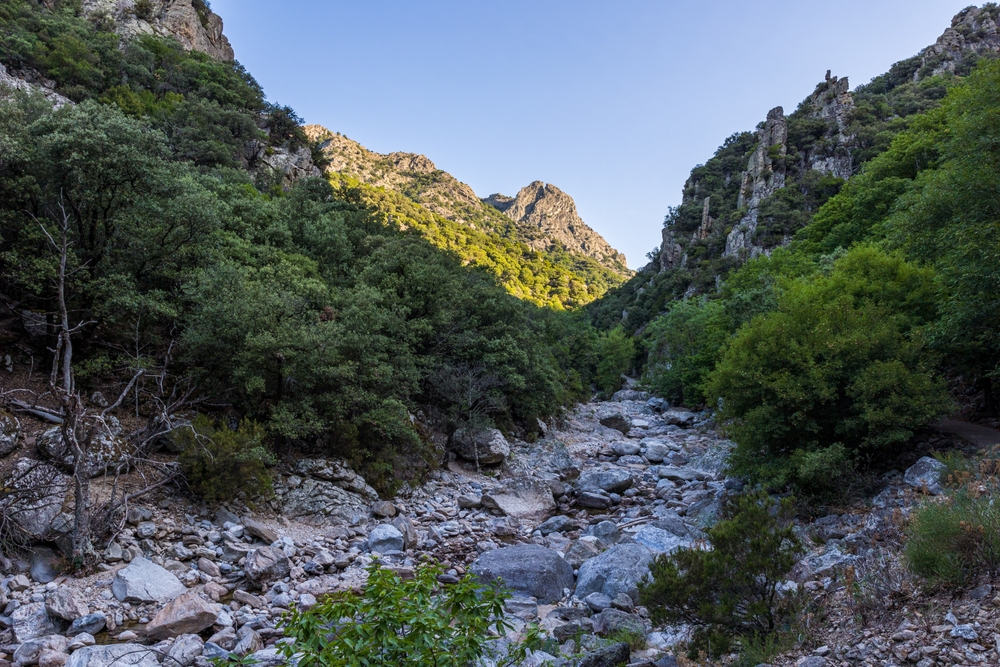
In the heart of the Parc Naturel Régional du Haut-Languedoc, in the Hérault department, the gorges d’Héric are an exceptional natural site still relatively unspoilt by mass tourism. Located in the communes of Mons-la-Trivalle and Rosis, these wild gorges were carved out of the metamorphic rocks of the Caroux massif by the Héric stream. Unlike the limestone gorges, the walls here are made of gneiss, an ancient rock with particularly photogenic grey and pink tones.
The Gorges d’Héric trail, around 6 kilometres long, follows the bed of the torrent through a succession of clear pools, waterfalls and giant potholes sculpted by erosion. The walk, which is both accessible and family-friendly, alternates between stretches along the water’s edge and more aerial sections overlooking the stream. The path winds between boulders of water-polished gneiss, crosses wooden footbridges and offers numerous swimming spots in cool, clear water, particularly popular on hot summer days.
The site is of major geological interest, with its basalt columns and rocky chaos shaped by millions of years of erosion. Mediterranean and mountain flora and fauna live side by side in this remarkable ecosystem: hundred-year-old chestnut trees, beech trees and holm oaks stand side by side, while salamanders, trout and aquatic insects populate the stream. The gneiss rock faces attract many climbers who appreciate the quality of the rock and the many equipped routes for all levels. The hamlet of Héric, accessible at the end of the hike, is home to a number of restored stone houses that bear witness to an ancient pastoral settlement.
12. The Aveyron gorges
Between Tarn-et-Garonne and Aveyron, the Aveyron gorges meander for over 60 kilometres from Laguépie to Montauban. The Aveyron river has carved out a spectacular limestone canyon with sheer cliffs, creating a landscape of contrasts that combines wild nature with an exceptional historical heritage. The site offers a succession of breathtaking panoramas where the dazzling white rock dominates the emerald waters of the Aveyron.
The route through the gorges reveals a remarkable medieval heritage, with numerous hilltop villages and châteaux dominating the valley. Saint-Antonin-Noble-Val, one of the Most Beautiful Villages in France, features narrow medieval streets and a remarkable 12th-century Romanesque house. Bruniquel castle stands proudly on its rocky outcrop, while the bastides of Puycelsi and Cordes-sur-Ciel crown the surrounding heights. These architectural gems bear witness to the valley’s strategic importance in the Middle Ages.
The Aveyron gorges are an ideal playground for outdoor activities. The calm waters of the river are ideal for canoeing and kayaking, offering an original way to explore the gorges and villages from the water. The 8-12 kilometre descent between Saint-Antonin and Cazals offers a varied route accessible to all. Cyclists will love the many mountain bike and road bike trails that criss-cross the gorges, including the V86 cycle route, which runs along former railway lines. The Grotte du Bosc, in Cajarc, is a magical underground setting where you can admire stalactites and stalagmites dating back thousands of years.
13. The Fier gorges
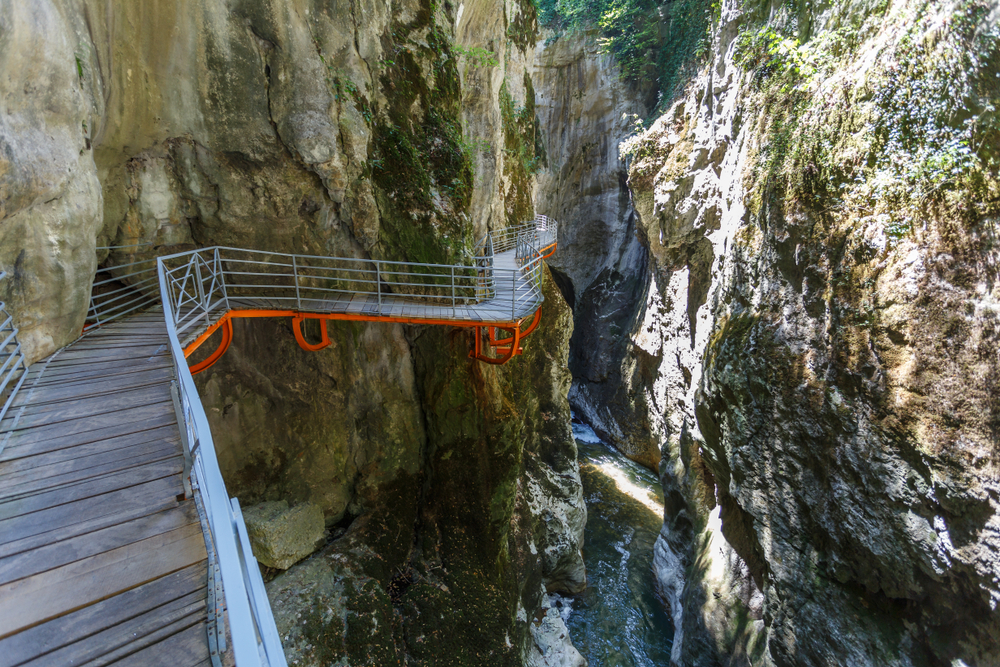
Located in Lovagny in Haute-Savoie, just 10 kilometres fromAnnecy, the Gorges du Fier is a remarkable natural site that has been open to visitors since 1869. This exceptional geological curiosity reveals a deep, narrow canyon where the Fier has carved out its bed in Urgonian limestone over thousands of years. The vertical walls sometimes narrow to less than 3 metres wide, while rising to heights of over 70 metres, creating an impressive and mysterious atmosphere.
The tour takes place on metal footbridges fixed to the rock face, suspended 25 metres above the tumultuous waters of the Fier. The 250-metre-long route takes in the giant potholes, circular basins carved out by swirling pebbles, and the impressive geological strata that tell the story of the formation of the Alps. The play of light on the damp, mossy walls creates an enchanting atmosphere, enhanced by the roar of the water echoing through the narrow canyon.
The Gorges du Fier site is also of major palaeontological interest, with the discovery of the “sea of rocks”, a chaos of limestone blocks resulting from a gigantic prehistoric landslide. The geological trail provides an insight into the phenomena of karstic erosion and the formation of the gorges. Nearby, the Château de Montrottier, a 13th-century medieval fortress perched on a rocky promontory, offers an enriching cultural complement to the visit. A combined visit to the gorges and the castle is a great way to spend a full day discovering the natural and historical heritage of Haute-Savoie.
Download the audio tour to discover Annecy on foot and on your own
After exploring the magnificent gorges of Haute-Savoie, continue your discovery by visiting Annecy, the Venice of the Alps. Navaway offers you a complete audio-guided itinerary with 20 points of interest to explore the old town, the romantic canals, the castle and the lakeside on your own. The app guides you step by step through the picturesque streets and reveals the history and anecdotes of this exceptional Alpine city.
14. The red gorges of Daluis
In the Alpes-Maritimes, between the communes of Daluis and Guillaumes, the Daluis gorges offer a geological spectacle that is absolutely unique in France. Nicknamed the “Colorado Niçois”, these spectacular gorges are distinguished by the intense wine-red colour of their rock faces. This exceptional hue comes from pelites, sedimentary rocks rich in iron oxide dating from the Permian period, around 250 million years ago. The striking contrast between the flamboyant red of the cliffs, the deep blue of the sky and the green of the vegetation creates a landscape of extraordinary beauty.
Route départementale 2202 winds through the heart of the gorges for around 6 kilometres, offering a succession of breathtaking panoramas. Cut into the cliffside, it passes through 17 tunnels carved into the rock and crosses the famous Pont de la Mariée, an elegant work of art spanning the Var. The vertiginous walls rise to over 900 metres, creating an impressive canyon where the Var river has carved its bed over millions of years. The route offers natural viewpoints from which to admire the majesty of the site.
The site is classified as a Regional Nature Reserve to protect its exceptional geological and ecological wealth. The gorges are home to remarkable biodiversity, with flora adapted to the extreme conditions: lavender, juniper and Scots pine colonise the slopes. Birds of prey, notably the golden eagle, the short-toed eagle and the peregrine falcon, nest on the inaccessible cliffs. Hikers can follow the path to the ancient village of Amen, which offers a view of the gorges from high above and an appreciation of the sheer size of the canyon. The site is also a photographer’s paradise, particularly at sunrise and sunset when the raking rays cast a magical glow over the red cliffs.
15. The Sioule gorges
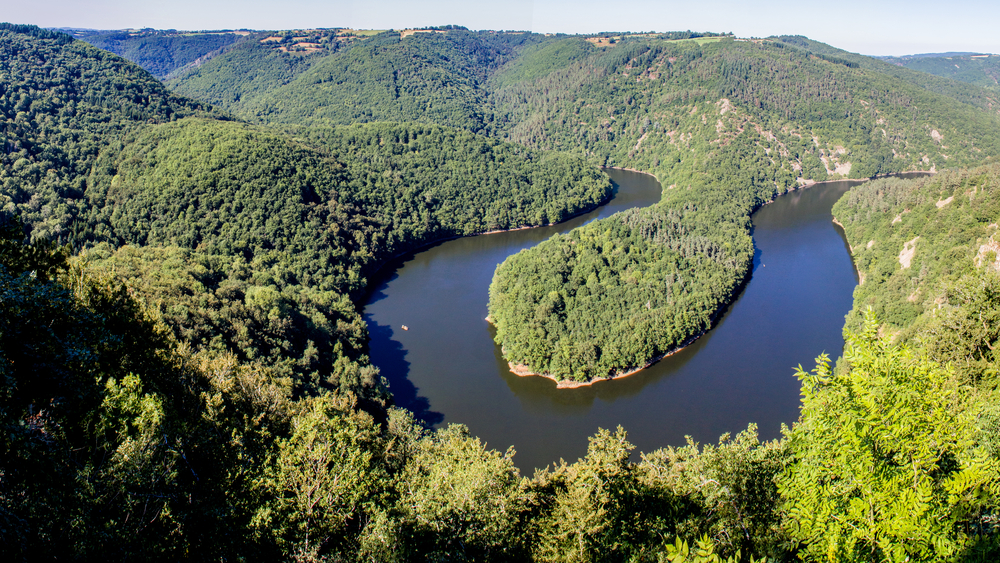
Between the Puy-de-Dôme and Allier departments, the Sioule gorges meander through the heart of the Massif Central. From the Queuille dam to Ébreuil, the Sioule river has carved out deep, verdant gorges offering spectacular scenery that has been classified as a Natura 2000 Zone and a Natural Zone of Ecological, Faunistic and Floristic Interest. The basalt cliffs alternate with wooded slopes, creating an unspoilt natural setting of great ecological wealth.
The Queuille meander is one of the most famous viewpoints in the Auvergne. From the lookout point, the panorama takes in a perfect meander of the Sioule, which forms a green peninsula 200 metres below. This iconic landscape, photographed by thousands of visitors every year, symbolises the wild beauty of the Auvergne gorges. The Château-Rocher de Queuille, a medieval fortress perched on the edge of the precipice, also offers a breathtaking view of the gorges.
The Sioule gorges are a paradise for anglers, with a large population of fario trout and grayling in the clear, oxygenated waters. Canoeists and kayakers will enjoy the varied courses, which alternate between technical rapids and calm sections where you can admire the scenery. The Fades viaduct, a vertiginous railway structure towering 132 metres above the Sioule, is one of the highest railway bridges in Europe and makes for an impressive sight. Numerous hiking trails criss-cross the gorges, including the GR4, which follows the river for several kilometres, allowing visitors to discover the natural and heritage treasures of this unspoilt region.
In conclusion, France’s gorges are exceptional nature destinations, combining scenic beauty, geological wealth and a wide range of outdoor activities. From the turquoise waters of the Verdon to the red cliffs of Daluis, from the canyons of the Pyrenees to the meandering Doubs, each site reveals a unique character shaped by millions of years of erosion. Whether you’re an experienced hiker, a white-water sports enthusiast, a geology buff or simply in search of unspoilt nature, these 15 spectacular gorges offer unforgettable experiences in the heart of France’s most beautiful landscapes. Don’t hesitate to consult our audio-guided tours to discover the surrounding towns and regions and enhance your exploration of these natural wonders.
FAQ – The most beautiful gorges in France
When is the best time to visit the gorges in France?
The ideal period is from May to September, when you can make the most of water sports and hiking. Spring offers abundant waterfalls thanks to the melting snow, while summer is ideal for swimming. Autumn has a lot to offer in terms of flamboyant colours and fewer visitors. Avoid winter, when some sites are closed and weather conditions can be difficult.
What activities are available in the French gorges?
The gorges offer a multitude of activities: canoeing, hiking, climbing, canyoning, swimming, via ferrata, mountain biking, fishing, paragliding and wildlife watching. Each site offers specific activities adapted to its configuration. The Verdon and Ardèche gorges are particularly well known for canoeing, while the Jonte gorges are excellent for vulture-watching.
Are the gorges accessible to families with children?
Many gorges offer family-friendly facilities: easy paths, safe footbridges, picnic areas and supervised swimming beaches. The Fier, Kakuetta and Héric gorges offer routes that are accessible even to young children. For canoeing, opt for short, calm stretches with children who can swim. Always check access conditions and safety recommendations before your visit.
Do I need to book in advance to visit the gorges?
For very popular sites such as the Gorges du Verdon in high season, it is strongly recommended to book accommodation and supervised activities several weeks in advance. Some sites, such as the Fier and Kakuetta gorges, require an entrance ticket, which is best booked online. For canoeing and kayaking, booking 2-3 days in advance is generally sufficient outside July and August. Hiking trails are freely accessible, but make sure you leave early to avoid the crowds and the heat.
200 audioguided tours for cities all around the world
Download