Morocco: 4 Atlas peaks for an unforgettable hike

Morocco’s Atlas Mountains offer hiking and adventure enthusiasts breathtaking panoramas and unforgettable sporting challenges. From vertiginous peaks peaking at over 4,000 metres to lush green valleys sheltering authentic Berber villages, these mountains promise total immersion in Morocco’s wilderness. Whether you’re an experienced hiker or simply love to get away from it all, discover four emblematic peaks in the Atlas Mountains that guarantee a memorable climb and memories to last a lifetime.
Read also the Marrakech guide :
- 10 little-known palaces and gardens to discover in Marrakech
- Top 9 culinary specialities in Marrakech
- Marrakech: 15 incredible things to do around the red city
- Hammams and Turkish baths in Marrakech: complete guide
- The 6 most beautiful oases to explore near Marrakech
- Visiting Morocco: Top 10 must-sees
1. Mount Toubkal: the roof of North Africa
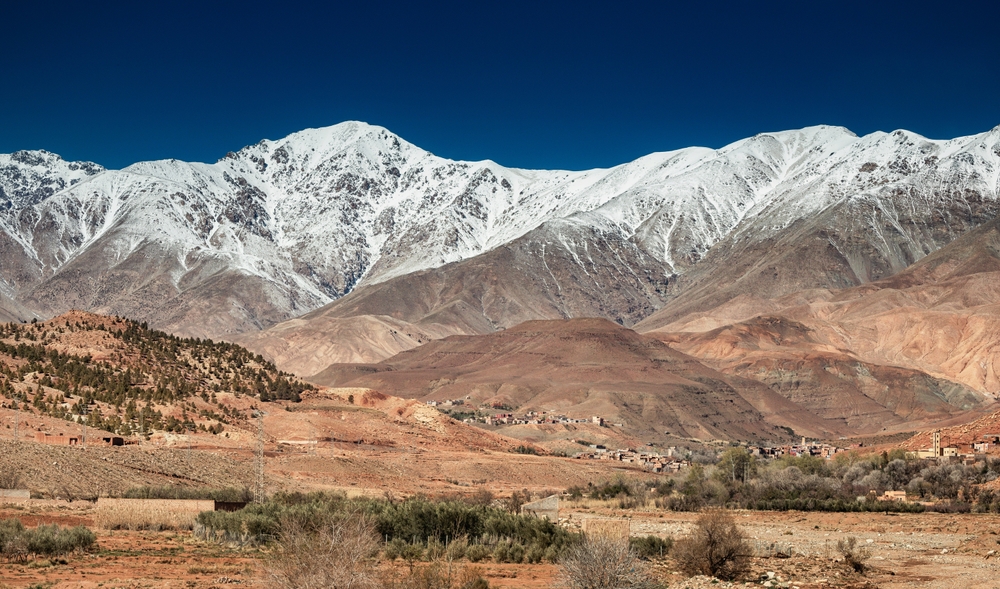
A true emblem of the High Atlas, Mount Toubkal, at 4,167 metres above sea level, is the highest point in Morocco and the whole of North Africa. Situated around 70 kilometres south of Marrakech, this mineral giant attracts thousands of hikers every year in search of adventure and a challenge to surpass themselves.
The ascent of Toubkal generally starts from the picturesque Berber village of Imlil, nestling at an altitude of 1,740 metres. This starting point, only an hour and a half’s drive from Marrakech, offers exceptional panoramic views of the surrounding valleys. From here, a well-marked path winds through spectacular scenery to the Toubkal refuge, perched at 3,207 metres, where most hikers spend the night before the final ascent.
The summit of Toubkal offers breathtaking 360-degree views. On a clear day, you can see the whole of the High Atlas range, the green valleys dotted with Berber villages, and even the Sahara desert in the distance. Although classified as a medium-difficulty route, it is still physically demanding because of the altitude and the positive difference in altitude of almost 2,500 metres. It is important to note that since 2019, the presence of an official guide is compulsory to climb this mythical summit.
Download the audio tour to discover Marrakech on foot and on your own
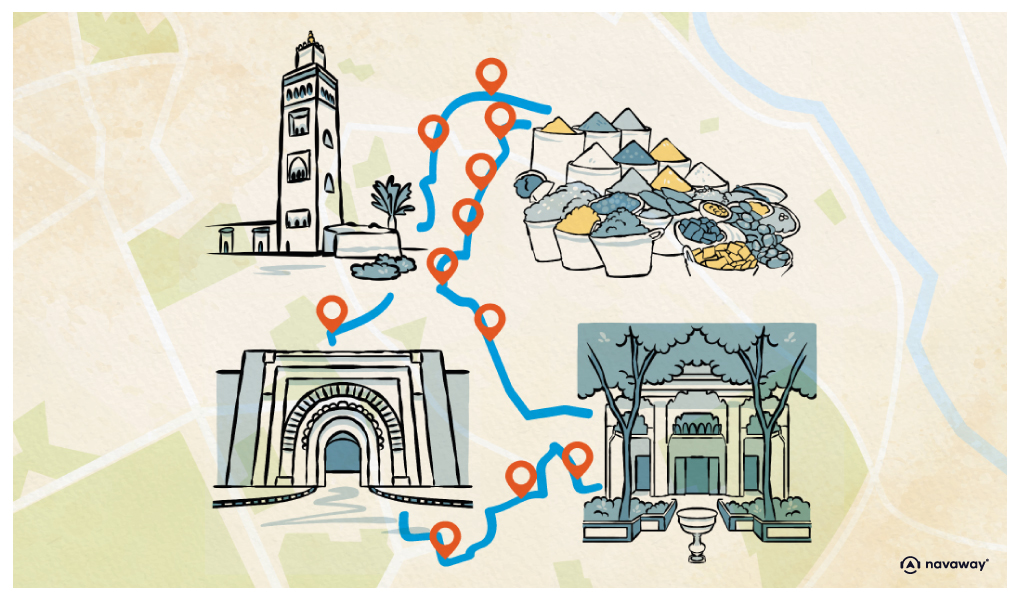
Before setting off on your assault on Toubkal, take time to discover the treasures of Marrakech with the Navaway audio tour. This immersive tour plunges you into the heart of the ochre city, between fragrant souks, sumptuous palaces and secret gardens. Perfect for acclimatising before your mountain adventure, this tour of Marrakech reveals the fascinating history of this imperial city, which serves as a gateway to the Atlas Mountains.
2. Mount M’Goun: serenity in the heart of the central Atlas mountains
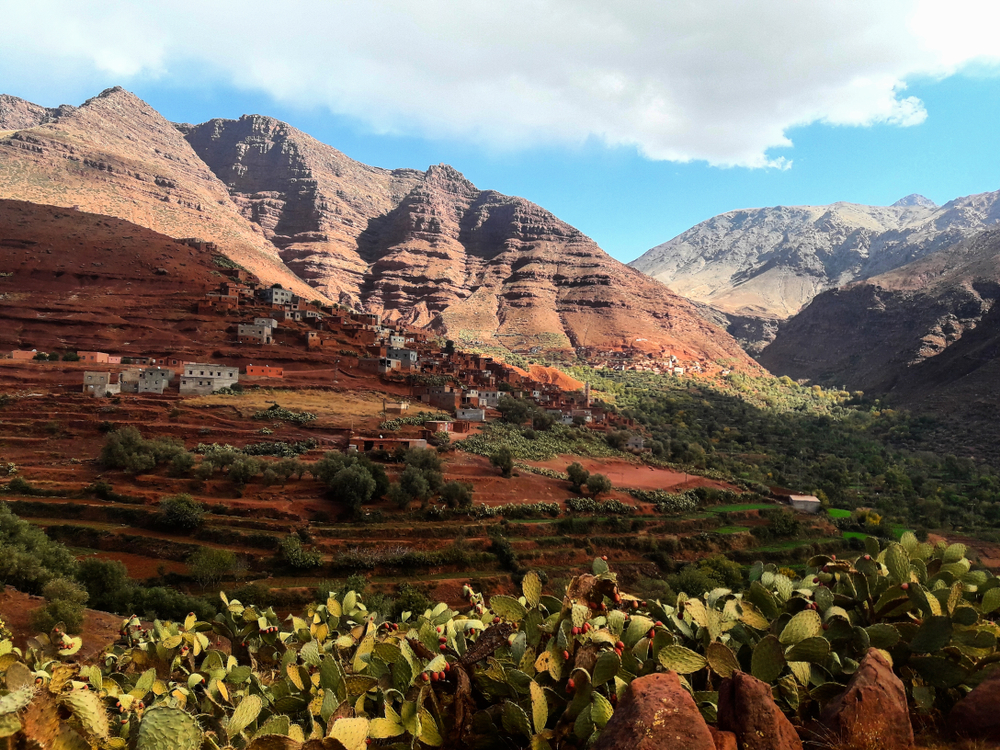
At 4,071 metres, Mont M’Goun stands proudly as Morocco’s second highest peak after Toubkal. Situated on the eastern slopes of the central Atlas mountains, this massif offers an authentic hiking experience, less frequented than its illustrious neighbour, but just as spectacular.
The ascent of M’Goun offers remarkable panoramic views of the whole of the High Atlas and the Djebel Siroua. The route generally starts from the famous Roses Valley, renowned for its Damask rose crops and bucolic landscapes. The route then passes through the village of Aït Moussa before crossing the Tagharat pass, offering plunging views over breathtaking gorges and high plateaux dotted with traditional sheepfolds.
This trek, which is classified as moderately difficult, nevertheless requires excellent physical condition and gradual acclimatisation to the altitude. The entire trek generally lasts between 5 and 7 days, allowing total immersion in the Berber culture of the mountain villages. To make the most of this adventure and discover the cultural subtleties of the region, we strongly recommend hiring a local Berber guide. These experienced guides share not only their knowledge of the terrain, but also the legends and ancestral traditions that make up the soul of these mountains.
On the way to the summit, don’t miss the authentic Berber villages where time seems to stand still. Let Navaway guide you to enrich your understanding of this fascinating region, even from the heights of the Atlas Mountains.
3. Mount Ouanoukrim: the little-known Berber jewel
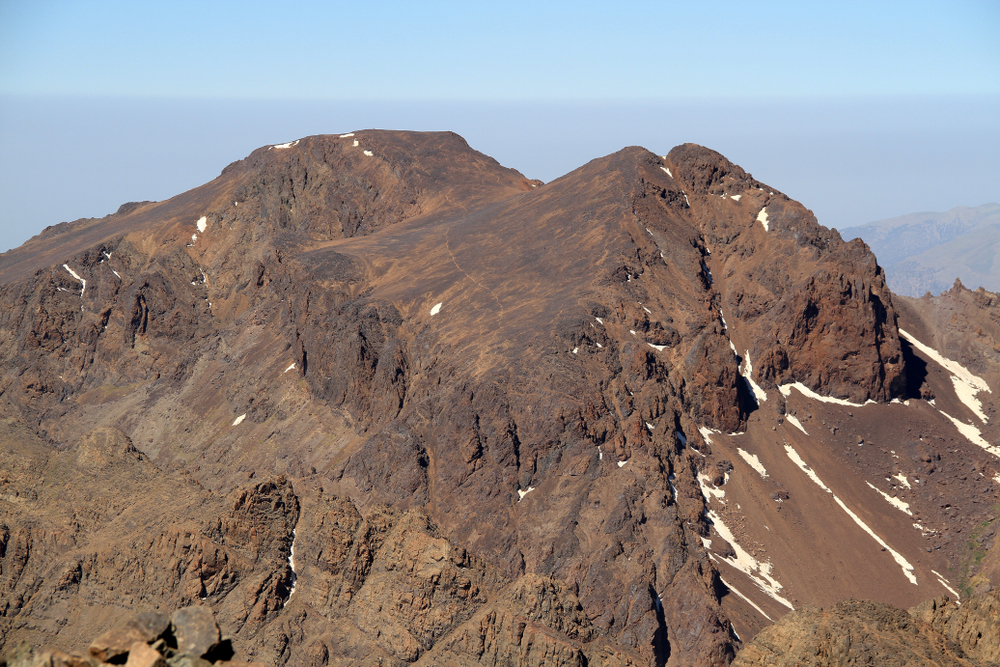
At an altitude of 4,088 metres, Mont Ouanoukrim (also spelt Ouanoukrim or Timesguida Ouanoukrim) is Morocco’s third-highest peak and a great challenge for experienced hikers. Situated in the immediate vicinity of Toubkal, this lesser-known summit offers an equally rewarding experience, with breathtaking panoramas and more moderate visitor numbers.
The ascent of Mont Ouanoukrim generally starts from the Tacheddirt refuge, a picturesque Berber hamlet perched at an altitude of 2,300 metres. The trail then crosses the magnificent Aït Mizane valley, offering breathtaking views of cultivated terraces and traditional villages clinging to the mountainsides. This approach allows you to admire the wild beauty of the High Atlas while discovering the ancestral way of life of the Berber populations.
Although the hike is not technically very difficult, the high altitude and steep rocky sections require good physical condition and appropriate acclimatisation. The summit of Ouanoukrim offers a unique view of the Toubkal massif and the immensity of the Atlas valleys. The most courageous can even consider climbing Toubkal and Ouanoukrim together on a multi-day trek, a demanding but unforgettable adventure.
Hiring a local Berber guide is highly recommended to navigate these high-altitude trails safely and to gain an enriching cultural insight into this unspoilt region. Before embarking on your adventure, consider visiting Marrakech with Navaway to gain a better understanding of the Moroccan heritage that surrounds you.
4. Mount Siroua: the volcanic beauty of the Anti-Atlas
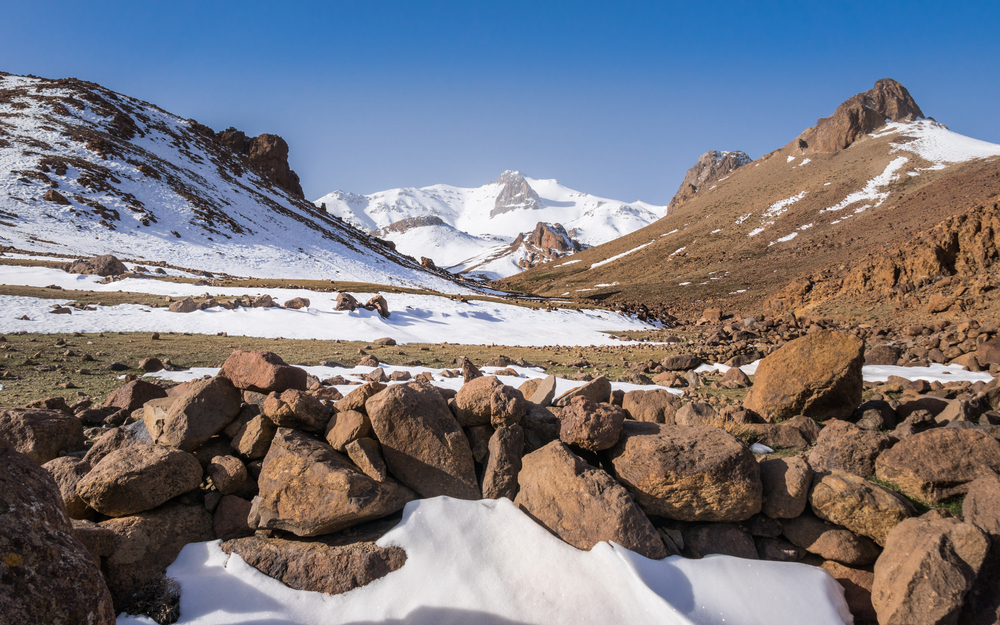
Change of scenery with Mount Siroua (or Djebel Sirwa), a fascinating volcanic peak rising to an altitude of 3,305 metres in the Anti-Atlas. Located around 200 kilometres south of Marrakech, between the High Atlas and the Anti-Atlas, this massif offers radically different landscapes, marked by its volcanic origin and unique geological formations.
The climb up Siroua is distinguished by its diversity of landscapes. The most popular routes start from the small town of Taliouine, famous for its production of saffron of exceptional quality. The trail winds through valleys dotted with traditional Berber villages, where the hospitality of the locals remains legendary. Along the way, you’ll discover spectacular volcanic formations, petrified lava flows and a flora that is uniquely adapted to this semi-desert environment.
The summit of Mount Siroua reveals an extraordinary 360-degree panorama of the surrounding mountain ranges, from the High Atlas in the north to the arid expanses of the Anti-Atlas in the south. This medium-level hike is accessible to walkers in reasonable physical condition, and generally only takes 2 to 3 days to complete.
As well as climbing the summit, the Siroua region is well worth a visit to discover the authentic Berber villages nestling in the valleys. These high-altitude hamlets offer a fascinating insight into traditional Berber culture, with the opportunity to share a mint tea with the locals and sample the local culinary specialities. A local guide will greatly enrich your experience by facilitating exchanges with the local people and revealing the secrets of this unspoilt volcanic massif.
To best prepare for your expedition to the Atlas Mountains and discover the essence of Moroccan culture, explore the Navaway tours that will guide you in your discovery of Morocco.
In conclusion, the four peaks of the Moroccan Atlas – Toubkal, M’Goun, Ouanoukrim and Siroua – each offer a unique and memorable hiking experience. From the roof of North Africa to the volcanic landscapes of the Anti-Atlas, from verdant valleys to authentic Berber villages, these mountains reveal Morocco’s exceptional diversity. Whether you’re looking for a sporting challenge or a deep cultural immersion, these mythical peaks promise unforgettable memories. Don’t forget to acclimatise yourself by first discovering the wonders of Marrakech with the Navaway audio tour, your ideal companion for independent and rewarding exploration before setting off to conquer the peaks.
FAQ : Hiking in the Moroccan Atlas mountains
When is the best time to go hiking in the Atlas Mountains?
The ideal period for hiking in the Atlas Mountains is from April to June and from September to November. During these months, temperatures are mild and weather conditions are generally stable. Summer (July-August) can be very hot at lower altitudes, while winter (December-March) brings snow and cold on the summits, reserving climbs for experienced hikers in winter conditions.
Do I need a guide to climb Toubkal?
Yes, since 2019, the presence of an official guide is compulsory for the ascent of Mount Toubkal. These guides can be hired in Imlil and will accompany you throughout your trek. Apart from the regulatory aspect, their presence considerably enriches the experience through their knowledge of the terrain, Berber culture and local weather conditions.
What level of physical fitness is required?
Climbing the peaks of the Atlas mountains requires a good level of general fitness, although no technical mountaineering skills are required. The main challenge lies in the altitude and the steep gradients. Prior physical preparation with regular hiking and cardio exercise is recommended. Gradual acclimatisation to the altitude is also essential to avoid altitude sickness.
How many days should you allow for each ascent?
For Toubkal, allow 2 to 3 days (return journey from Imlil). The M’Goun generally requires 5 to 7 days for a complete trek. Ouanoukrim can be done in 2 to 3 days, often combined with Toubkal. The Siroua requires 2 to 3 days. These times include the necessary acclimatisation time and allow you to take full advantage of the landscapes and cultural encounters.
What equipment do you need for these high-altitude hikes?
Essential equipment includes: hiking boots, layered clothing (multi-layer system), waterproof and windproof jacket, warm sleeping bag (comfort temperature -5°C minimum), walking poles, sunglasses and high-protection sun cream, headlamp, water bottle or water bag, and first-aid kit. In winter, add crampons and gaiters. Don’t forget that temperatures can drop drastically at night at altitude.
200 audioguided tours for cities all around the world
Download