Montagne Noire walks: Top 5 of the most beautiful routes
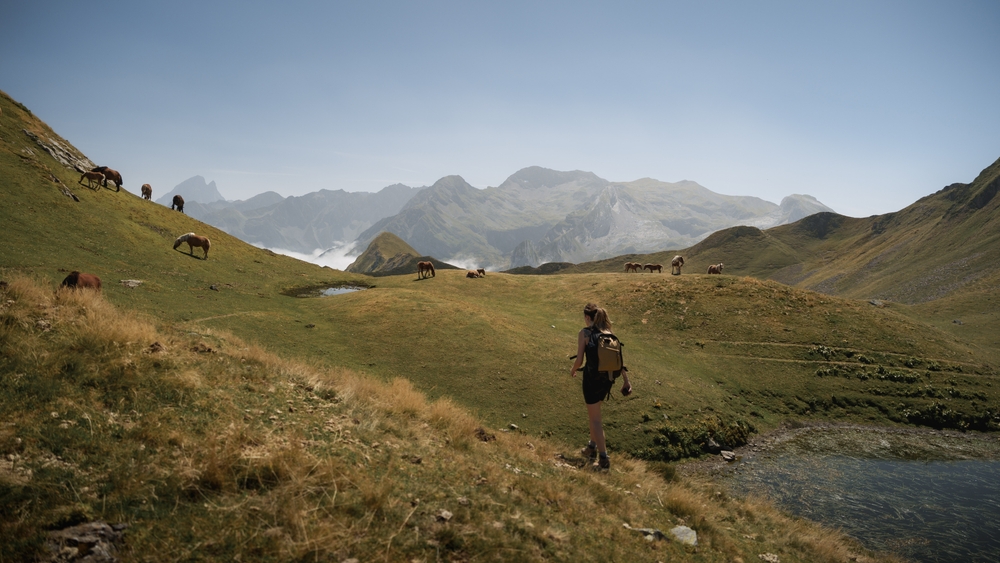

Nestling between the Tarn, Aude, Hérault and Haute-Garonne, the Montagne Noire offers an exceptional playground for hiking enthusiasts. This ancient massif, eroded by time, reveals breathtaking landscapes where spectacular waterfalls, panoramic peaks and medieval villages follow one another along the paths. Whether you’re a beginner or an experienced hiker, the Montagne Noire has a variety of itineraries in store for you, enabling you to discover all the natural and cultural riches of this unspoilt region. Here is our selection of the 5 best walks to do in the Montagne Noire for a total immersion in this fascinating corner of the southern Massif Central.
Also in the Carcassonne guide:
- Visit Carcassonne in 1 day: 27 things to do and see on foot
- Carcassonne’s culinary specialities
- Top 7 activities in Carcassonne
- Top 3 events in Carcassonne
- Visiting the Pyrenees: 20 must-dos
- The 16 most beautiful lakes in the Pyrenees
- Pyrenees: 6 mountain refuges not to be missed
- Secret walks in the Pyrenees: wild horses and lakes
- The 6 best ski resorts in the Pyrenees
- France’s 10 most beautiful mountains to discover
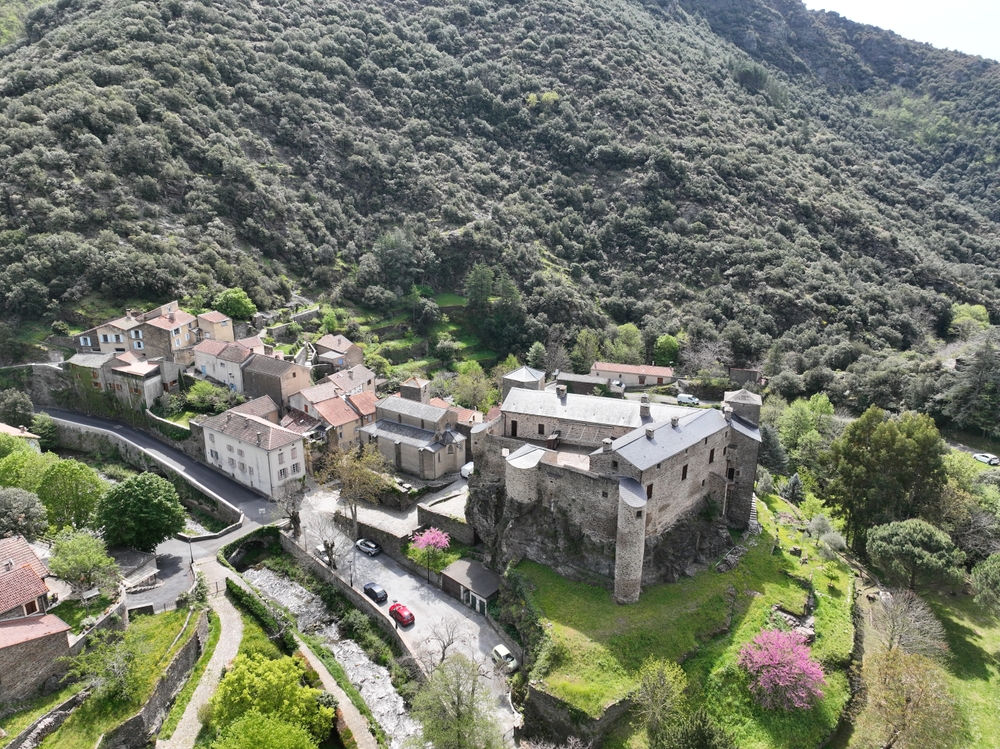
1. The Cubserviès waterfall from Roquefère
Duration: approx. 4 hours 45 minutes
Distance: 14 to 16 km
Difference in altitude: 660 to 700 m
Difficulty: Difficult
Let’s start our discovery of the most beautiful walks in the Montagne Noire with a must: the Cubserviès waterfall. At an impressive 90 metres high, it’s one of the highest waterfalls in Europe! This natural wonder is a demanding but hugely rewarding hike.
The starting point is the charming village of Roquefère, a veritable jewel of the Montagne Noire, with its characteristic schist houses. This little perched hamlet is well worth a visit before setting off on your hike: its medieval castle, ancient wash-house and cobbled streets will immerse you in a timeless atmosphere.
The route winds its way through the varied landscapes of the Sambrès plateau, where water is everywhere. You’ll pass through dense deciduous forests, skirt crystal-clear streams and climb steep paths. Some technical sections require good physical condition and appropriate equipment: hiking boots, walking sticks and plenty of provisions are essential.
The reward comes at the bend in the path: suddenly, the Cubserviès waterfall appears in all its splendour. The spectacle is breathtaking, especially after periods of rain when the flow is generous. A promontory in the hilltop hamlet of Cubserviès offers an exceptional view of this vertiginous waterfall tumbling down the rocky cliff face.
This hike in the Montagne Noire passes through a sensitive natural area in the Aude, demonstrating the ecological wealth of the massif. On the way back, don’t hesitate to stop off in Roquefère for a bite to eat and chat with the locals about the hidden treasures of their beautiful region.
2. The Pic de Nore, highest point of the Montagne Noire
Duration: approx. 4.5 hours
Distance: 14 to 18 km
Difference in altitude: 530 to 685 m
Difficulty: Medium
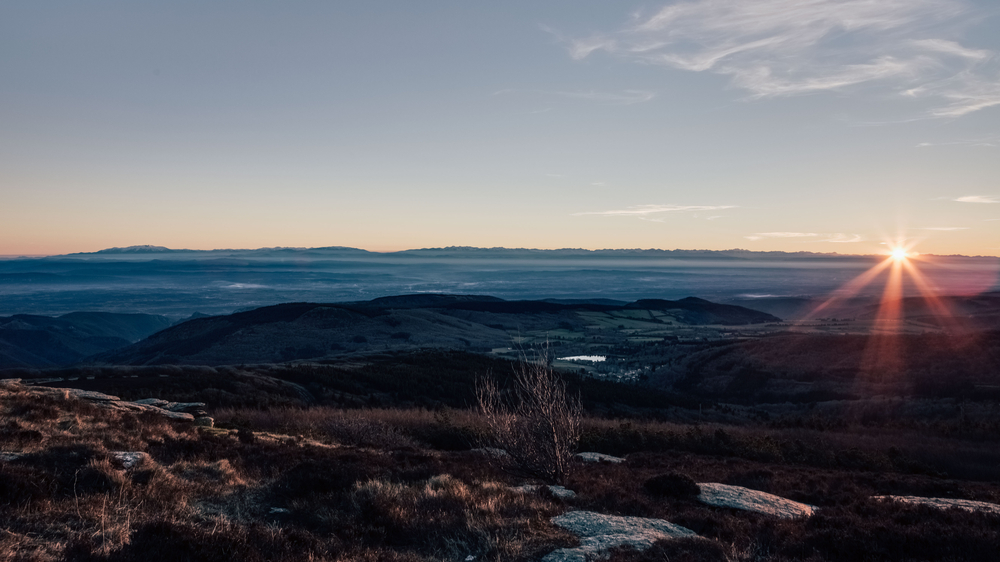
No list of the best walks in the Montagne Noire would be complete without a climb to the Pic de Nore. Reaching an altitude of 1,211 metres, this emblematic peak offers an absolutely exceptional 360° panorama of the whole region. On a clear day, the view stretches from the Pyrenees to the Mediterranean, via the Cévennes and the Lauragais plain.
This walk starts from the village of Pradelles-Cabardès, nicknamed the “black pearl of the Montagne” for its dark stone houses. This small, typical Aude village is the ideal starting point for climbing to the top of the Montagne Noire.
The loop route passes through picturesque villages such as Bourdials, Raissac and Laviale before beginning the final climb to the summit. The well-marked path winds through forests of beech and fir, then gradually opens out onto landscapes of moorland and granite rock as the altitude increases.
Despite its modest altitude compared with the great Alpine peaks, the Pic de Nore should not be underestimated. The cumulative height difference is considerable and some sections of the trail can be steep. Bring good shoes, walking poles and plenty of water, as the sun beats down hard on the bare ridges.
At the summit, you’ll find a few telecommunications installations, but the real treasure is the breathtaking panorama that rewards your efforts. In summer or winter, on foot, by bike or on snowshoes, the Pic de Nore can be explored and offers a different spectacle every time, depending on the light and the season.
On the way back, don’t miss a visit to the curious ice houses of Pradelles-Cabardès, witness to a time when ice was stored in these stone buildings to keep it fresh all summer. The village also has a number of gîtes and restaurants where you can recharge your batteries after a fine day’s walking.
3. The Rigole de la Montagne by the Saint-Denis lake at Saissac
Duration: approx. 3 hours
Distance: 10 km
Difference in altitude: 247 m
Difficulty: Medium
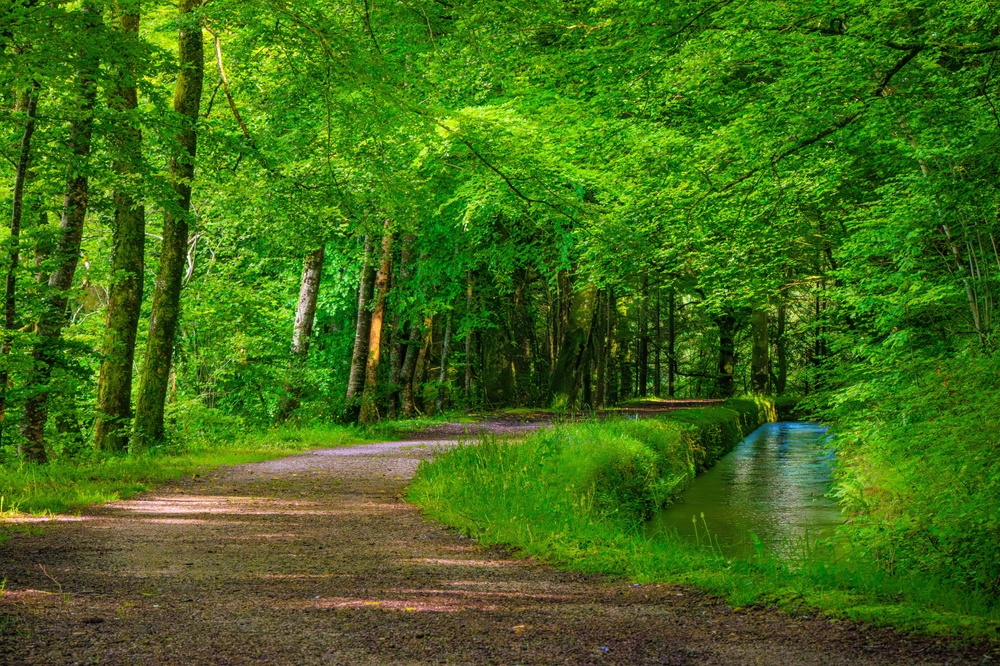
This walk in the Montagne Noire offers a perfect balance between natural discovery and historical heritage. The route takes in an exceptional work of art: the Rigole de la Montagne, a canal built in the 17th century to supply the famous Canal du Midi with water from the heights of the Montagne Noire.
The route departs from Saissac, a magnificent hilltop village in the Aude region that’s well worth taking the time to discover. Dominated by its imposing Cathar castle, Saissac offers a remarkable panorama of the valley and is an ideal gateway to the Montagne Noire.
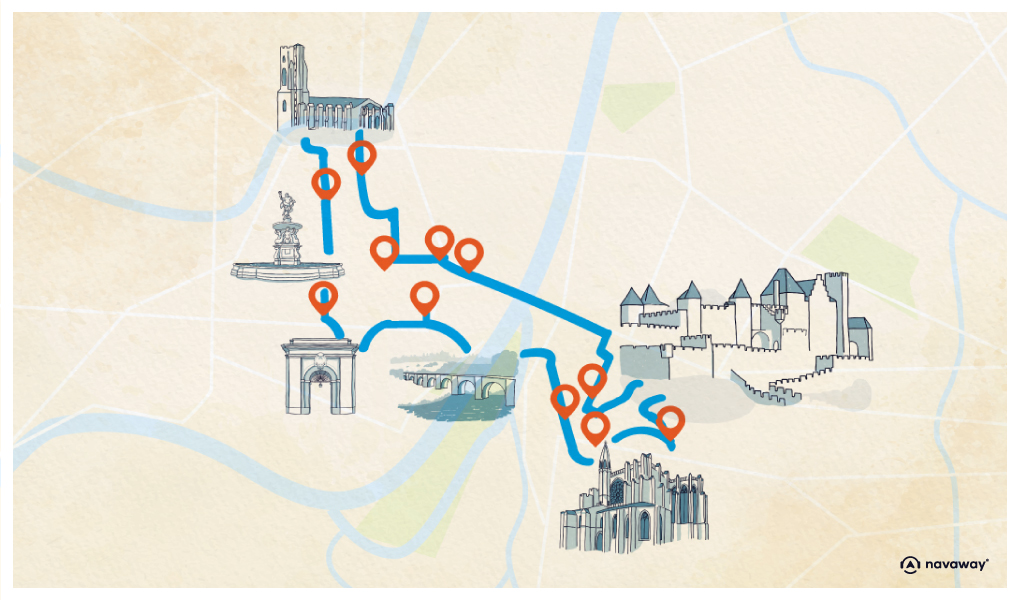
Download the audio tour to discover Carcassonne on foot and on your own
If you want to extend your stay in the region, we recommend visiting Carcassonne on the Navaway audio tour. Just a 30-minute drive from Saissac, the medieval city of Carcassonne awaits you with its 27 remarkable places of interest. Let yourself be guided through the ramparts of this UNESCO World Heritage site and discover its fascinating history on your own.
The walk itself begins with a pleasant stroll along the Bassin de Saint-Denis, an artificial reservoir created to regulate the flow of the Rigole. The trail then follows this ingenious canal, built by Pierre-Paul Riquet, for almost 3 kilometres, its waters flowing quietly through the forest. The route is easy and accessible, with little change in altitude, making it an ideal half-day outing.
The route passes through undulating countryside typical of the Montagne Noire, alternating between wooded areas and clearings. Water accompanies your walk from start to finish, creating a soothing and refreshing atmosphere, particularly welcome on hot summer days.
On the way back, take time out to visit Saissac and its remarkable château. This medieval fortress, one of the oldest in the region, is a moving reminder of the Cathar era. The village’s cobbled streets, half-timbered houses and views over the valley are also well worth a visit.
4. The four châteaux of Lastours
Duration: 1h10 to 2h depending on the route chosen
Distance: 5 to 8 km
Difference in altitude: 180 to 265 m
Difficulty: Easy to medium
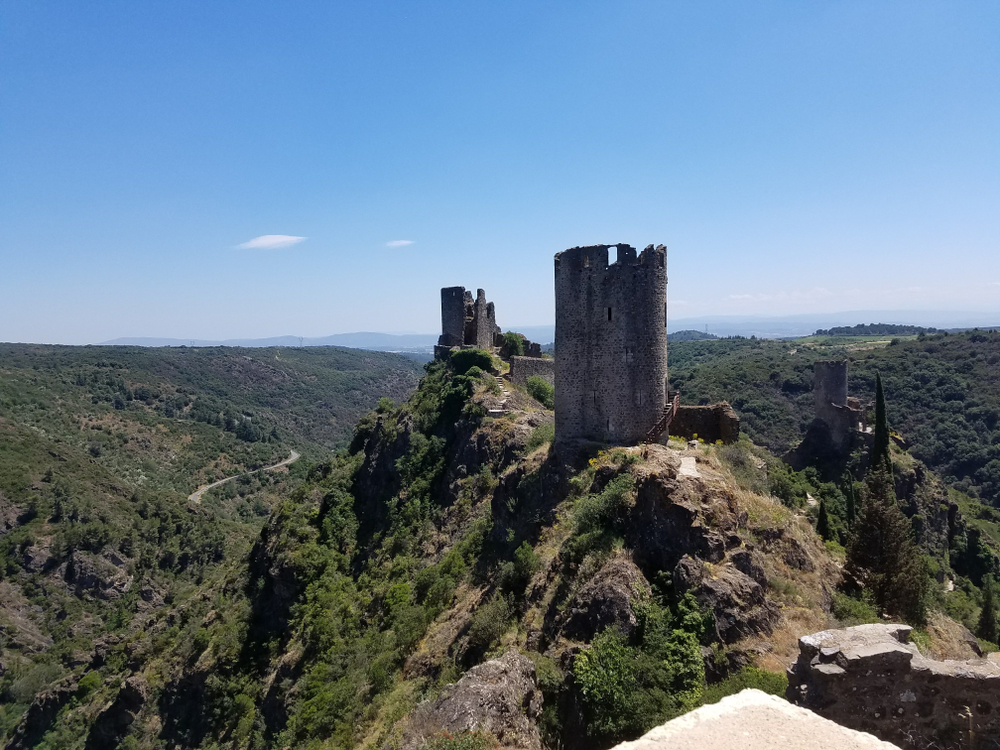
This is undoubtedly the most spectacular heritage walk in our selection. The Lastours castles site, a candidate for UNESCO classification, is an exceptional group of four medieval fortresses perched on a rocky ridge overlooking the Grésillou gorges: Cabaret, Surdespine, Tour Régine and Quertineux.
Departure is from the village of Lastours, a charming hamlet nestling in the heart of the Montagne Noire. There are several itineraries to choose from, from the shortest (around 1 hour 10 minutes) to the most complete (up to 2 hours), allowing everyone to choose according to their level and their desires.
The old miners’ path takes you through a fascinating landscape where nature has reclaimed its rights from the old industrial installations. The Grésillou stream accompanies your progress through a green and refreshing setting. The trails are well laid out and signposted, making them accessible to families with children who are used to walking.
The highlight of the show comes at the belvedere of the four châteaux, where you can enjoy an uninterrupted view of this fortified complex, the only one of its kind in France. The four towers stand proudly on their rocky spur, silent witnesses to the Cathar history and medieval struggles that marked the region. The panorama is particularly stunning at the end of the day, when the low-angled light highlights the architecture of the fortresses.
After your hike, we strongly recommend a visit to the châteaux of Lastours (Route des quatre châteaux, 11600 Lastours, rated 4.6/5 on Google out of 2800 reviews). Access to the monuments allows you to explore these exceptional remains up close and gain a better understanding of their history thanks to an archaeological exhibition presenting 25 years of excavations. Price: €8 per adult, €3.50 for children aged 6 to 15.
This easy hike in the Montagne Noire harmoniously combines natural discovery and immersion in Cathar history, for an outing that’s accessible to all and rich in emotion. Don’t forget to extend your visit with a stroll through the medieval village of Lastours, where you can sample the local specialities at some of the best restaurants.
5. The Hautpoul footbridge from Mazamet
Duration: approx. 5 hours 20 minutes
Distance: 15.9 km
Difference in altitude: 734 m
Difficulty: Difficult
Let’s finish our round-up of the best walks in the Montagne Noire with a spectacular route that’s sure to give you a thrill: crossing the Hautpoul footbridge. This demanding hike from Mazamet combines industrial heritage, a medieval village and vertiginous passages.
Mazamet, the starting point for this loop, is well worth a visit. In the 19th century, this town in the Tarn department of France became famous for its woollen washing and weaving, and made its fortune thanks to the textile industry. Its rich past can still be seen today in its architecture and museums.
The route quickly climbs to the medieval village of Hautpoul, an ancient Cathar site that served as a lookout for the entire valley. This perched hamlet, a veritable eagle’s nest clinging to the cliffs, offers a remarkable first panorama of Mazamet and the Montagne Noire. Its cobbled streets, stone houses and Romanesque church are well worth a visit.
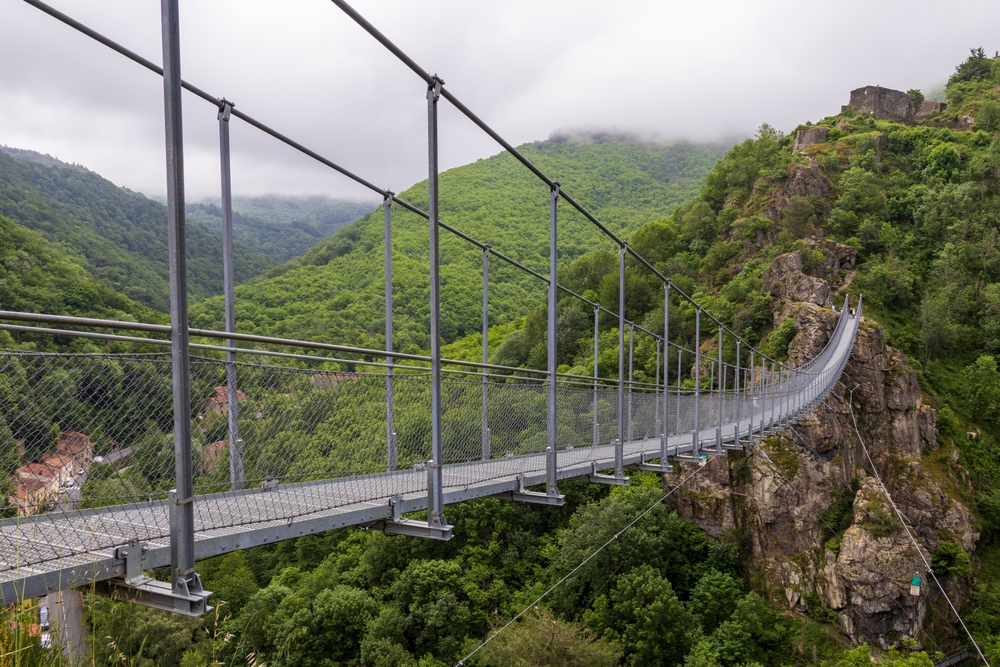
The highlight of the walk comes when you cross the Hautpoul footbridge (free access 24 hours a day, rated 4.5/5 on Google for over 2,600 reviews). Suspended 70 metres above the Arnette gorges, this 140-metre-long metal footbridge, the only one of its kind in the Occitanie region, guarantees a vertiginous experience! The view down over the valley is breathtaking, but beware if you are afraid of heights.
The rest of the route takes you to the Lac des Montagnès, an ideal spot for a refreshing break. This lake, nestled in a green setting, offers a soothing backdrop after the excitement of the bridge. Take the opportunity to relax on the banks of the lake before starting the ascent to Mazamet.
This challenging hike in the Montagne Noire requires good physical condition and is not suitable for beginners. The successive changes in altitude, the length of the route and some exposed sections require mountain experience. Bring good shoes, walking poles, plenty of water and food.
On your return to Mazamet, be sure to visit the Textile Museum to learn more about the town’s industrial history, or sample the local specialities in one of the town centre restaurants. This demanding walk will have enabled you to discover all the diversity of the Montagne Noire, with its unspoilt countryside and remarkable heritage.
In conclusion, the Montagne Noire is a destination of choice for hikers in search of unspoilt, authentic landscapes. These five itineraries will have introduced you to the exceptional diversity of this massif: spectacular waterfalls, panoramic peaks, remarkable hydraulic structures, medieval fortresses and vertiginous footbridges. Each hike reveals a different facet of this land shaped by history and the elements, where the human footprint blends harmoniously with a generous natural environment. Whether you’re an occasional hiker or a seasoned walker, the Montagne Noire has some unforgettable moments and lasting memories in store for you. Don’t hesitate to extend your stay to discover Carcassonne, the medieval jewel at the gateway to this enchanting massif, and let yourself be guided by our audio-guided itineraries for an enriching visit in complete freedom.
Frequently asked questions about hiking in the Montagne Noire
When is the best time to go hiking in the Montagne Noire?
The Montagne Noire is ideal for hiking all year round, but the best periods are spring (April-May) and autumn (September-October). In summer, it’s best to set off early to avoid the heat, especially on exposed routes such as the Pic de Nore. Winter offers magnificent scenery, but some trails may be snow-covered or slippery at higher altitudes.
What level of ability do you need for these hikes in the Montagne Noire?
The level required varies according to the hike. The châteaux of Lastours and the Rigole de la Montagne are suitable for beginners and families. The Pic de Nore requires an average level of fitness. The Cubserviès waterfall and the Hautpoul footbridge are reserved for experienced hikers because of their steep gradients and some technical sections.
Where can I find maps and guidebooks for hiking in the Montagne Noire?
The tourist offices in Carcassonne, Mazamet and the surrounding towns offer detailed topographical guides. IGN TOP 2344 ET (Montagne Noire Est) and 2345 OT (Montagne Noire Ouest) maps are essential. Many applications, such as Visorando and AllTrails, also offer downloadable GPX tracks for each of these walks.
Is there accommodation close to the trailheads?
Yes, every departure point has accommodation options. Mazamet and Carcassonne offer the widest choice of hotels and restaurants. Villages such as Saissac, Lastours, Pradelles-Cabardès and Roquefère offer gîtes, chambres d’hôtes and small family-run hotels. It is advisable to book in advance, especially during the high summer season.
Are these tours suitable for children?
Some walks are suitable for children who are used to walking. The circuit of the Lastours castles (short version) and the Rigole de la Montagne are accessible from the age of 8-10. On the other hand, the Cubserviès waterfall, the Pic de Nore and especially the Hautpoul footbridge require a good deal of walking experience and are not recommended for young children because of the height difference and some exposed sections.
200 audioguided tours for cities all around the world
Download