Making the most of Central Park during your stay in New York
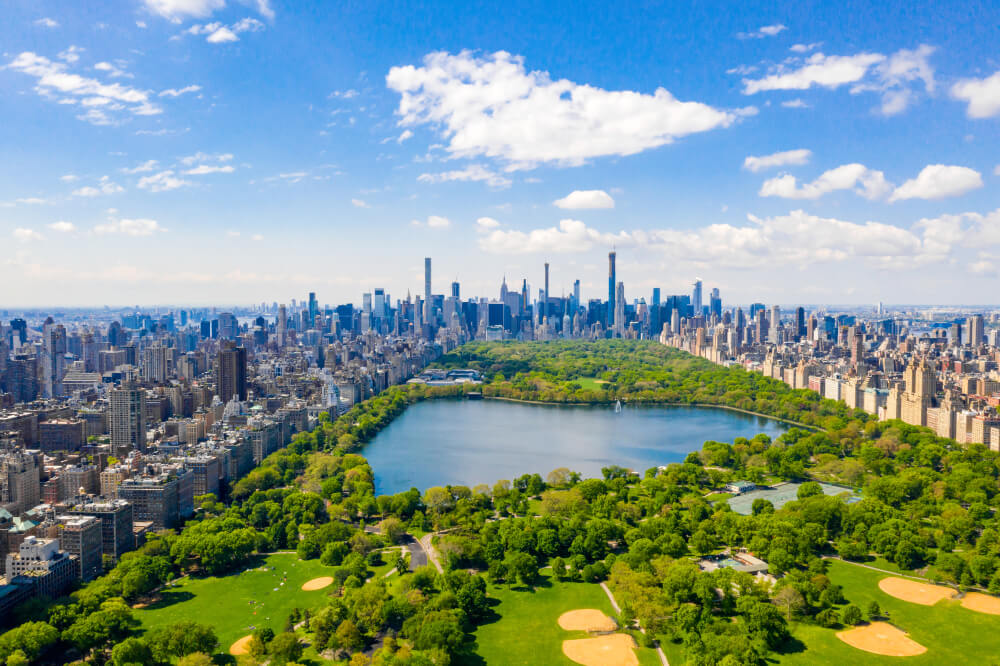

A veritable green lung in the heart of Manhattan, Central Park covers 341 hectares and offers an exceptional natural interlude in the hustle and bustle of New York. Designed by Frederick Law Olmsted and Calvert Vaux in 1858, this iconic park welcomes more than 42 million visitors every year. With its man-made lakes, romantic bridges, lush green lawns and historic monuments, Central Park embodies the soul of New York and invites you to discover its unique landscape heritage. Whether you’re a morning jogger, an architecture enthusiast or just a stroller, the park holds treasures at every turn along its winding paths.
Also read the New York guide :
- Night tour of New York City
- Top 10 culinary specialities in New York
- Top 7 activities in New York
- The FRIENDS Experience NYC: immersion in the cult series
- Top 8 best hotels in New York
- Metropolitan Museum of Art: New York’s most important museum
- All you need to know about the Statue of Liberty
1. Bethesda Terrace and its emblematic fountain
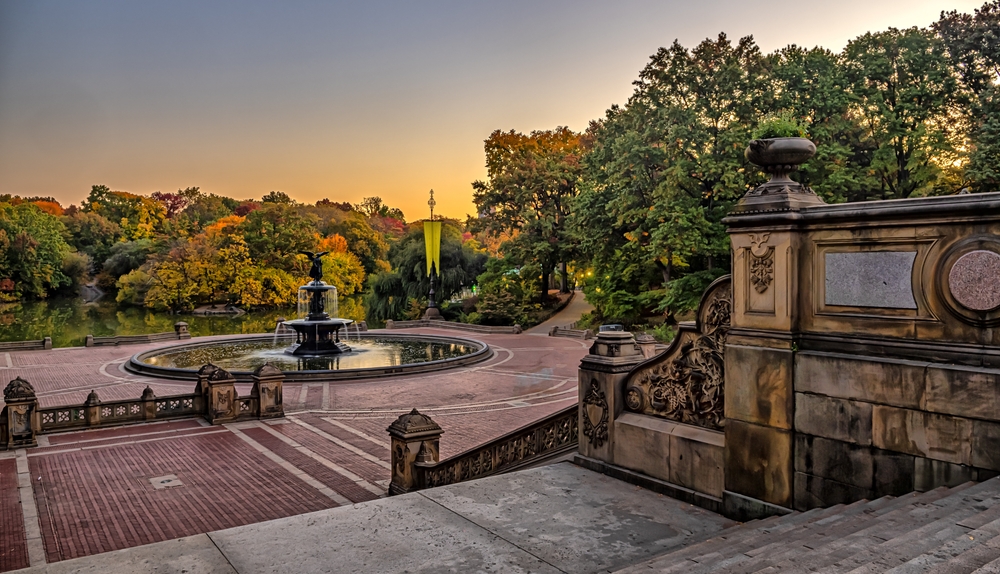
At the heart of Central Park stands Bethesda Terrace, considered to be the architectural jewel of the park. This monumental terrace, designed in the 1860s, reveals a neoclassical elegance that contrasts harmoniously with the surrounding greenery. The famous Bethesda Fountain (Central Park, New York, NY 10024, United States) sits majestically in the centre, adorned by the statue of the Angel of the Waters, symbolising the purity brought by the Croton aqueduct.
The exceptional acoustics of the arcades beneath the terrace regularly transform this venue into an improvised stage for street musicians. The floral motifs carved into the vaulted ceilings bear witness to remarkable craftsmanship. Bethesda Terrace is a privileged meeting point and offers panoramic views over The Lake, particularly photogenic at sunrise and sunset.
2. Bow Bridge, New York’s most romantic bridge

Bow Bridge (Central Park, New York, NY 10024, United States) fascinates with its elegant cast-iron curve that has spanned The Lake since 1862. This 18-metre bridge is one of the most photographed structures in Central Park, thanks in particular to its ornamental railings and its strategic position offering unique views of the Manhattan skyline.
In spring, the cherry blossom trees lining the shores create a picture-postcard setting. Autumn adorns the landscape with warm hues reflected in the calm waters of the lake. Film buffs will recognise this iconic location, immortalised in numerous Hollywood films. For an authentic experience, visit Bow Bridge early in the morning when the morning mist still envelops the waters.
3. Strawberry Fields, John Lennon’s memorial
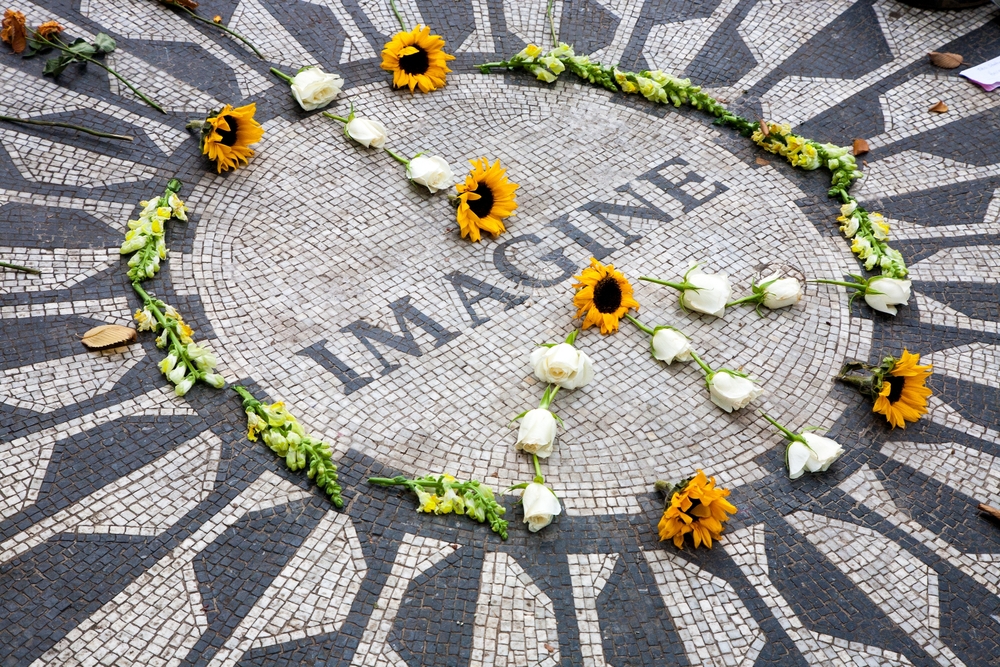
Strawberry Fields (Central Park, New York, NY 10023, United States, rated 4.8/5 on Google for over 15,000 reviews) is a poignant tribute to John Lennon, who was murdered in 1980 in front of his flat in the Dakota Building, just opposite the park. This peaceful 1 hectare area, inaugurated in 1985 thanks to funding from Yoko Ono, is an invitation to meditation and contemplation.
The “Imagine” mosaic, imported from Naples, marks the centre of the memorial and attracts admirers from all over the world who lay flowers and candles there every day. Musicians regularly perform Beatles songs, creating a nostalgic atmosphere. This emotionally-charged site is a testament to the artist’s lasting cultural impact, and an essential stop-off point for understanding New York’s contemporary history.
4. The Mall and Literary Walk, the majestic alleyway
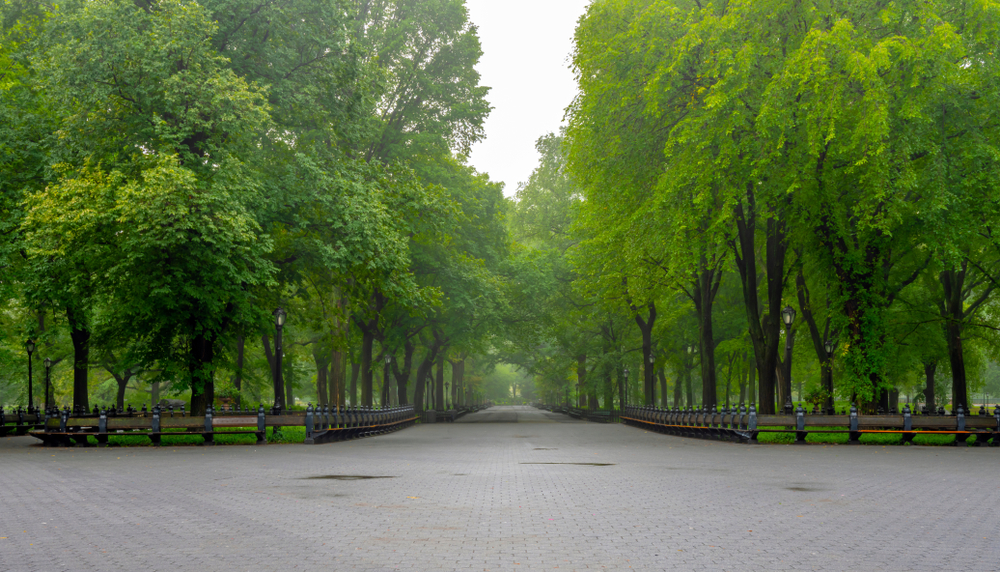
The Mall (Central Park, New York, NY 10024, United States) is the only straight avenue in Central Park. This 400-metre walkway, lined with majestic elms forming a natural canopy of vegetation, is reminiscent of the great European avenues and provides a theatrical setting for walkers and street artists.
Literary Walk, at the southern end of The Mall, features statues of great literary figures such as Shakespeare, Robert Burns and Walter Scott. This concentration of monuments transforms the promenade into an open-air museum celebrating culture and the arts. At weekends, the entertainment is in full swing, with dance performances, charcoal portraits and musicians enlivening this cultural artery of the park.
5. Belvedere Castle, the panoramic castle
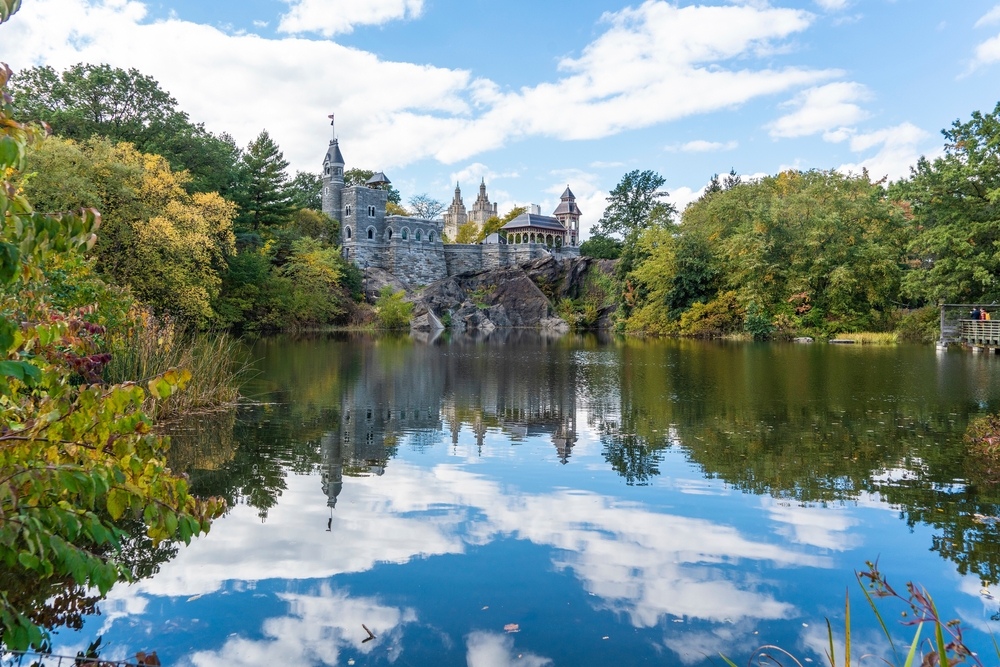
Perched on the highest point of the park, Belvedere Castle (Central Park, New York, NY 10024, United States) offers spectacular views of the surrounding area. Built in 1869 in a whimsical Victorian Gothic style, this miniature castle by Calvert Vaux originally served as an architectural folly before becoming a meteorological observatory in 1919.
From its terraces, you can look out over The Great Lawn, Turtle Pond and the Delacorte Theatre, where summer performances of Shakespeare in the Park take place. Inside, there is a park information centre and exhibitions on local wildlife. The panoramic view over Manhattan, framing skyscrapers and greenery, is a perfect illustration of the harmony between nature and urbanism that characterises Central Park.
6. Central Park Zoo, an encounter with wildlife

Central Park Zoo (830 5th Ave, New York, NY 10065, United States, rated 4.4/5 on Google for over 31,000 reviews) is home to over 130 species spread over 2.6 hectares in the heart of the park. Officially opened in 1934, this compact urban zoo has three distinct climate zones: tropical, temperate and polar, offering remarkable diversity despite its small size.
The sea lions are the star attraction, with their daily feeding sessions captivating young and old alike. The Arctic section features penguins and polar bears in carefully reconstructed habitats. The adjacent Tisch Children’s Zoo allows young visitors to approach and feed domestic animals, creating an interactive experience that families love. Opening times vary according to the season, so check the official website before your visit.
7. The Great Lawn, the immense central lawn
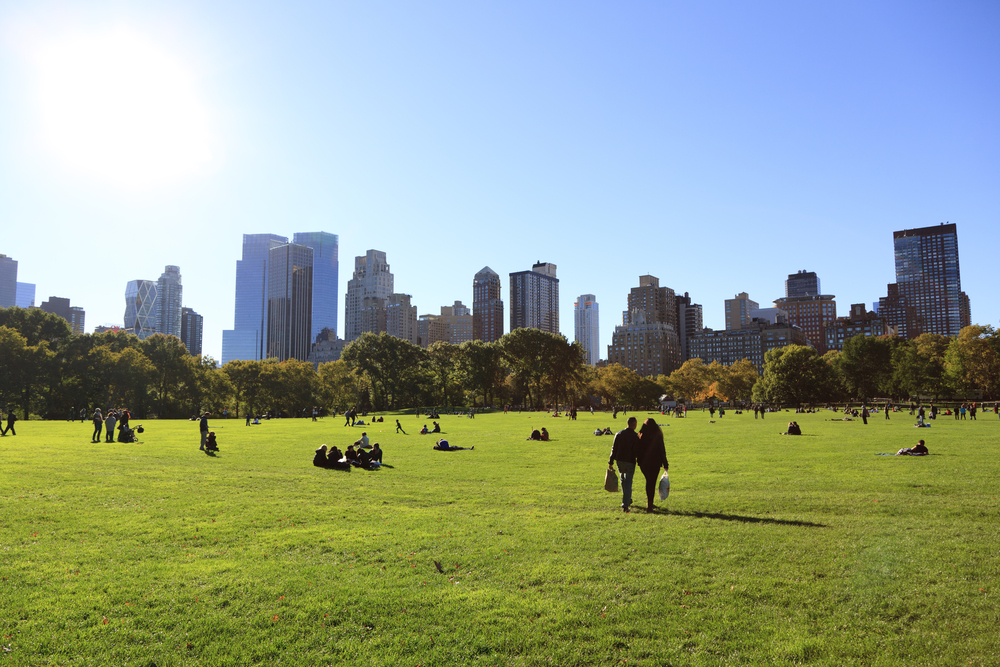
Covering 22 hectares in the centre of the park, The Great Lawn (Central Park, New York, NY 10024, United States) is the largest open space in Central Park. Laid out in the 1930s on the site of an old reservoir, this vast lawn hosts concerts, festivals and sporting events that give the park its rhythm.
Summer transforms The Great Lawn into a stage for prestigious shows, attracting tens of thousands of spectators to free concerts by the New York Philharmonic and the Metropolitan Opera. Eight baseball and softball fields line the periphery, testifying to the importance of sport in New York culture. On sunny days, New Yorkers and tourists alike take advantage of the space to picnic, sunbathe or simply admire the skyline that frames this haven of greenery.
8. Alice in Wonderland, the enchanted sculpture
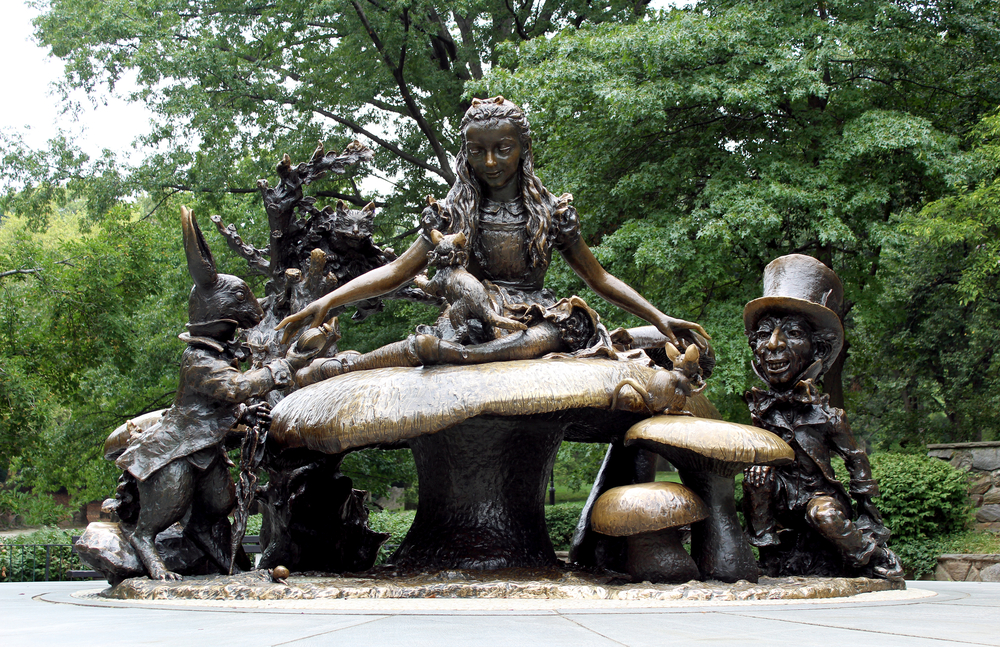
The statue of Alice in Wonderland (Central Park, East 74th St, New York, NY 10021, USA) has been delighting visitors since 1959. This bronze sculpture by José de Creeft, commissioned by the philanthropic publisher George Delacorte in memory of his wife, depicts Alice surrounded by the Mad Hatter, the March Hare and the Cheshire Cat.
Unlike most of the sculptures in Central Park, this one was designed to be climbed and touched by children. The surfaces polished by decades of stroking are testament to its timeless popularity. The meticulous details of the sculpture, from the mushrooms to the secondary characters, invite close observation and will delight fans of Lewis Carroll’s tale. This interactive work is a perfect illustration of Central Park’s family vocation.
9. Jacqueline Kennedy Onassis Reservoir, the world’s largest lake
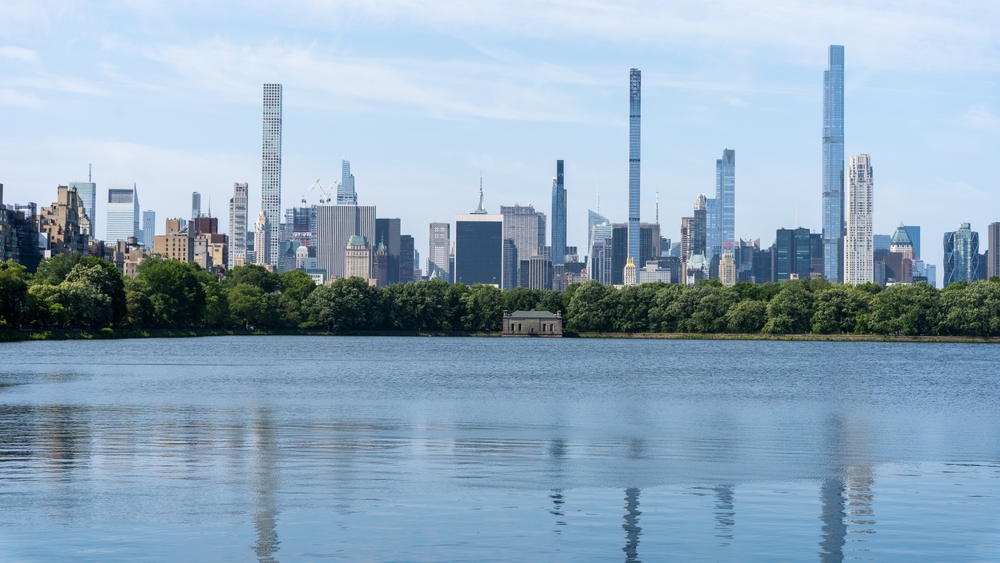
Renamed in 1994 in honour of the former First Lady, the Jacqueline Kennedy Onassis Reservoir (Central Park, New York, NY 10024, United States) covers 43 hectares and is the largest body of water in the park. Built between 1858 and 1862, the reservoir was originally part of New York’s water supply system.
The surrounding 2.5-kilometre path is a favourite with New York joggers and offers spectacular views of the Manhattan skyline. Dawn and dusk are particularly beautiful here, when the lights of the city are reflected in the calm waters. Ducks, Canada geese and grey herons are regular visitors to the reservoir, offering birdwatching opportunities in the heart of the metropolis. This haven of tranquillity is a testament to the harmonious coexistence of nature and urban development.
10. Conservatory Garden, the French garden
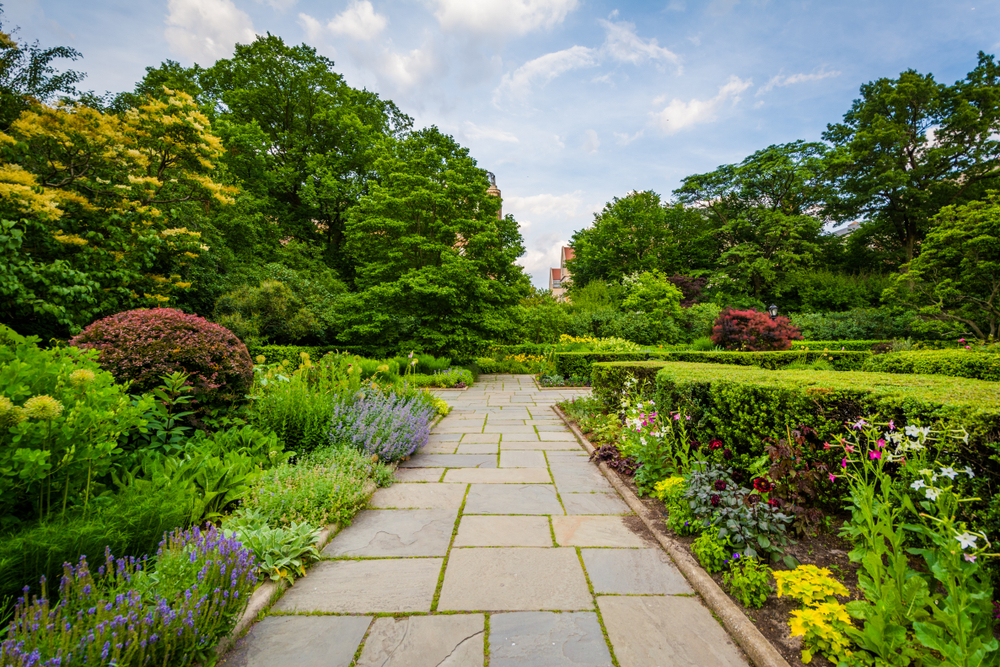
The Conservatory Garden (5th Ave & 105th St, New York, NY 10029, United States, rated 4.7/5 on Google for over 4,000 reviews) is Central Park’s only formal garden. Opened in 1937, this 2.4 hectare garden is divided into three distinct sections reflecting English, Italian and French landscape styles, creating a refined horticultural mosaic.
The English garden features perennial beds in a romantic, natural style, while the Italian garden has a strict geometry with its central lawn and trimmed hedge borders. The French garden delights in spring with its 20,000 tulips, and in summer with its magnificent rosebushes. Unlike the rest of the park, which is often busy, the Conservatory Garden offers a peaceful, contemplative atmosphere, ideal for escaping the hustle and bustle of the city. The entrance is via the monumental Vanderbilt Gate, a forged gate dating from 1894.
How to get to Central Park
Central Park stretches from 59th to 110th Street, between 5th Avenue and Central Park West, in the heart of Manhattan. There are several transport options for easy access to this green lung of New York.
By metro
The New York Underground serves Central Park via several strategic stations. Lines A, B, C and D lead to 59th Street-Columbus Circle station, the south-west entrance to the park. The N, R and W lines join 5th Avenue/59th Street to access the south-east entrance. On the east side, the 4, 5 and 6 lines serve 86th Street station, while the B/C line stops at 81st Street-Museum of Natural History on the west side.
By bus
The M1, M2, M3, M4 and M5 bus routes run along 5th Avenue and Central Park West, offering numerous access points. These buses allow you to admire the park from the street before choosing your entry point.
Cycling with Citi Bike
Citi Bike stations surround Central Park, allowing you to explore its 10 kilometres of cycle paths. This ecological and economical option is perfect for exploring the whole park in just a few hours.
Best time to visit Central Park

Central Park reveals different charms in different seasons, offering a unique experience at every time of year. Each season transforms the landscape and atmosphere of the park, creating distinct moods that appeal to visitors and New Yorkers alike.
Spring, the cherry blossom
From April to June, Central Park is decked out in brilliant colours as cherry trees, magnolias and tulips bloom. The mild temperatures, fluctuating between 15 and 22°C, are ideal for long walks. However, this period attracts many visitors, particularly at weekends.
Summer, the festive high season
July and August transform Central Park into a cultural stage with free concerts, open-air film screenings and Shakespeare performances. The lawns fill up with picnickers and sunbathers. Temperatures can reach 30°C, requiring sun protection and regular hydration.
Autumn, the spectacle of colour
September to November is undoubtedly the most photogenic time to visit Central Park. The foliage turns gold, orange and red, creating a sumptuous natural spectacle. The pleasant temperatures, between 10 and 20°C, and the lower number of visitors make this a particularly popular time of year.
Winter, snowy charm
December to March offers a magical atmosphere when snow covers the park. The Wollman Rink and Lasker Rink open their doors for skating. The sometimes sub-zero temperatures require winter equipment, but the winter beauty of the park rewards courageous visitors.
History of Central Park
The story of Central Park began in 1857, when New York City launched a competition to transform 341 hectares of marshy and rocky land into a public green space. Frederick Law Olmsted and Calvert Vaux won the competition with their “Greensward Plan”, a revolutionary vision of a democratic park accessible to all city dwellers.
The titanic construction
Between 1858 and 1873, more than 20,000 workers radically transformed the landscape. They moved 5 million cubic metres of earth, planted 270,000 trees and created artificial lakes. This colossal undertaking also necessitated the destruction of Seneca Village, a prosperous African-American community established on the site, a dark episode in the park’s history that led to the expulsion of more than 1,600 residents.
The golden age and the decline
Central Park was at its height at the end of the 19th century, a symbol of urban sophistication. However, the 1960s and 1970s marked a period of neglect due to the city’s budget crises. The park deteriorated considerably, becoming synonymous with insecurity and neglect.
The renaissance
The creation of the Central Park Conservancy in 1980 initiated a spectacular renaissance. This non-profit organisation gradually restored the park, investing over a billion dollars in renovation work. Today, Central Park shines as a model of public-private partnership management, attracting more than 42 million visitors a year.
Practical tips for visiting Central Park
Visiting Central Park in New York requires a little preparation if you are to make the most of this unique experience. Here are some essential recommendations for making the most of your discovery of Manhattan’s green lung.
1. Download an interactive map
Central Park covers 341 hectares with hundreds of paths and trails. A mobile app with a GPS map makes it easy to find your way around and locate key sites quickly. Several free apps offer themed tours tailored to different points of interest.
2. Favour early mornings
Visiting Central Park early in the morning, before 9am, allows you to avoid the crowds and enjoy a more serene atmosphere. The morning light sublimates the landscapes and photographers particularly appreciate these magical moments. What’s more, you’ll come across the park’s regulars: joggers, tai chi practitioners and dog walkers.
3. Bring comfortable shoes and water
Exploring Central Park involves several kilometres of walking on a variety of surfaces. Comfortable walking shoes are essential. You should also bring a reusable bottle of water, as drinking fountains are dotted around the park, but shops are limited and expensive.
4. Respect the park rules
Central Park applies strict rules to preserve its ecosystem. It is forbidden to feed wild animals, pick flowers or climb trees. Bicycles must use designated cycle paths and respect pedestrians. The park is closed from 1am to 6am for safety reasons.
5. Adapting your visit to the weather
New York is subject to major climatic variations. In summer, bring sun cream and a hat. Winter requires warm clothing and gloves. Spring and autumn call for layers, as temperatures vary significantly between morning and afternoon. Check the forecast before your visit to adapt your equipment.
In conclusion, a visit to New York’s Central Park is much more than just a stroll through a city park. This landscaped masterpiece embodies American history, combining carefully orchestrated nature with an exceptional cultural heritage. From the terraces of Bethesda to the lawns of Sheep Meadow, from the romantic bridges to the memorials, every corner tells a unique story. Whether you have a few hours or a whole day, Central Park promises an unforgettable escape from the hustle and bustle of New York. Let yourself be guided by your desires, stroll without restraint and discover why this legendary park has captured the imagination of millions of visitors for over 150 years.
Frequently asked questions
How long does it take to visit Central Park?
The ideal time to visit Central Park varies according to your expectations. Allow at least 2 to 3 hours to discover the main sites, such as Bethesda Fountain, Bow Bridge and Strawberry Fields. Half a day allows you to explore more of the park and enjoy the peaceful atmosphere. Enthusiasts can easily devote a whole day to walking the 10 kilometres of trails, visiting the zoo and lingering in the various gardens.
Is access to Central Park free?
Yes, Central Park is completely free and open to the public every day from 6am to 1am. No ticket is required to enter the park or most of its attractions. However, some specific activities, such as the Central Park Zoo, bicycle hire, horse-drawn carriage rides and guided tours, are subject to a charge. This free admission reflects the original democratic vision of Olmsted and Vaux, who wanted to create a space accessible to all.
Is Central Park safe at night?
Although Central Park is much safer than it used to be thanks to restoration and surveillance efforts, it is not advisable to walk there alone late at night. The park is officially closed from 1am to 6am. If you are attending a night-time event such as a concert or film screening, stay in the well-lit and busy areas. The immediate vicinity of the park on Central Park South and near Columbus Circle remains busy and safe even in the evening.
Can you picnic in Central Park?
Absolutely! Picnicking is one of Central Park’s favourite activities. Sheep Meadow and The Great Lawn are particularly popular for spreading out a blanket and enjoying a meal al fresco. However, respect the park’s rules: take your rubbish with you, use the bins provided and avoid glass bottles. Some areas, such as Conservatory Garden, prohibit food in order to preserve the tranquillity of the gardens.
Where can I find toilets in Central Park?
Central Park has 16 toilet blocks strategically located throughout the park. The most accessible toilets are near Bethesda Terrace, Belvedere Castle, Central Park Zoo and the Conservatory Garden. Maps of the park available at the various information points show the precise location of the toilets. Most are open during park opening hours, but some close in winter.
200 audioguided tours for cities all around the world
Download