Little-known regions of Spain: 9 destinations to visit

There’s much more to Spain than Barcelona, Madrid and Seville. As well as the top destinations, the country hides authentic regions where ancestral traditions, spectacular landscapes and exceptional heritage await you. Discover 9 little-known Spanish regions that are well worth a visit.
See also the Spain guide :
- Visiting Spain
- Top 10 most beautiful places to visit in Spain
- The 8 unusual flavours of Spanish cuisine
- Discover the Spanish Basque Country in 10 must-sees
- The 7 most beautiful villages on the Spanish coast
1. Castilla-La Mancha and its picturesque mills
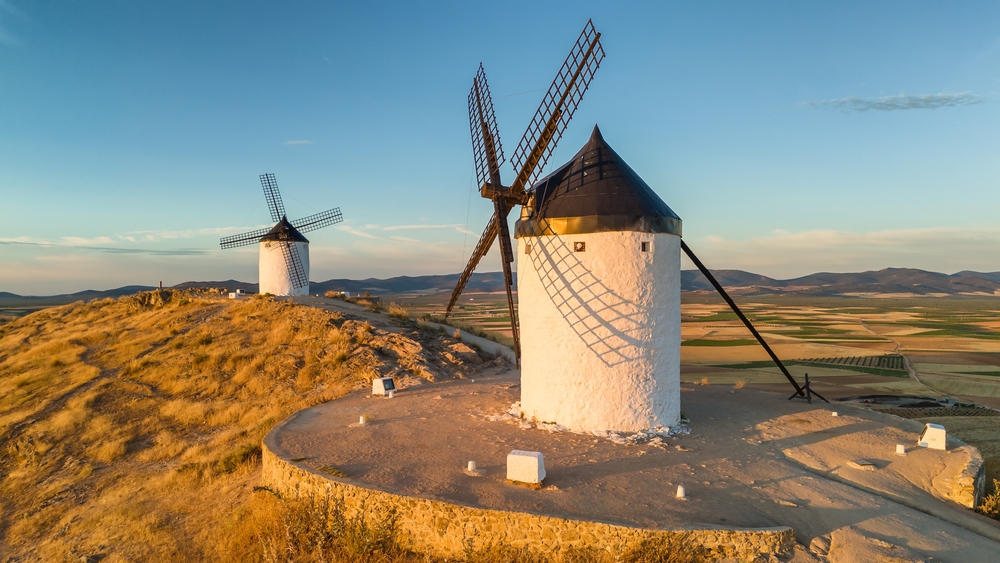
In the heart of Spain, Castilla-La Mancha immediately evokes the adventures of Don Quixote. This authentic region plunges you into the very essence of Spain, with its emblematic windmills, generous vineyards and villages perched on arid hills. A UNESCO World Heritage Site, the Consuegra windmills, dating from the 16th century, proudly dominate the Manchegian landscape.
The region is made up of five fascinating provinces. Visiting Toledo, the former Spanish capital, is an unforgettable experience, with its medieval historic centre. Cuenca surprises with its famous houses suspended over the gorges of the Río Huécar, offering a unique architectural spectacle. Don’t miss the Roman villa of Noheda, home to the country’s largest Roman mosaic, an exceptional example of ancient art.
Download the audio-guided tour to discover Toledo on foot and on your own
Explore Toledo, a UNESCO World Heritage Site, thanks to a comprehensive audio guide that will take you to 24 major places of interest. Wander through the labyrinth of medieval streets and discover the cultural wealth of this city of three cultures, a symbol of the coexistence of Christians, Jews and Muslims.
Food lovers will love the famous manchego cheese and the renowned wines of Ciudad Real. Attend traditional festivities such as Holy Week to soak up the authentic atmosphere of this little-known Spain.
2. Extremadura, the beating heart of Spain
Extremadura remains one of Spain’s most fascinating little-known regions. Situated on the borders of Portugal, this land of conquistadores has preserved an exceptional Roman heritage. Mérida, its archaeological jewel, boasts one of the best-preserved ancient theatres and amphitheatres in Europe. The Mérida National Museum of Roman Art (Calle de José Ramón Mélida, 2, 06800 Mérida, rated 4.6/5 on Google out of 13,428 reviews) offers a captivating insight into the history of Roman Lusitania.
Download the audio tour to discover Mérida on foot and on your own
Discover ancient Augusta Emerita thanks to an audio tour of 18 points of interest that will reveal all the secrets of this exceptional Roman city. Let yourself be guided through the streets of Mérida to fully appreciate its thousand-year-old heritage.
Cáceres, a UNESCO-listed city, is fascinating for its well-preserved medieval centre, where Renaissance palaces and stately homes tell the story of nine centuries of history. The Monfragüe National Park will delight nature lovers with its breathtaking cliffs overlooking the Tagus, a paradise for vulture and eagle spotters. Extremegian gastronomy celebrates Iberian bellota ham and pimentón de la Vera, the emblematic Spanish spice.
3. Aragon, between desert and high mountains
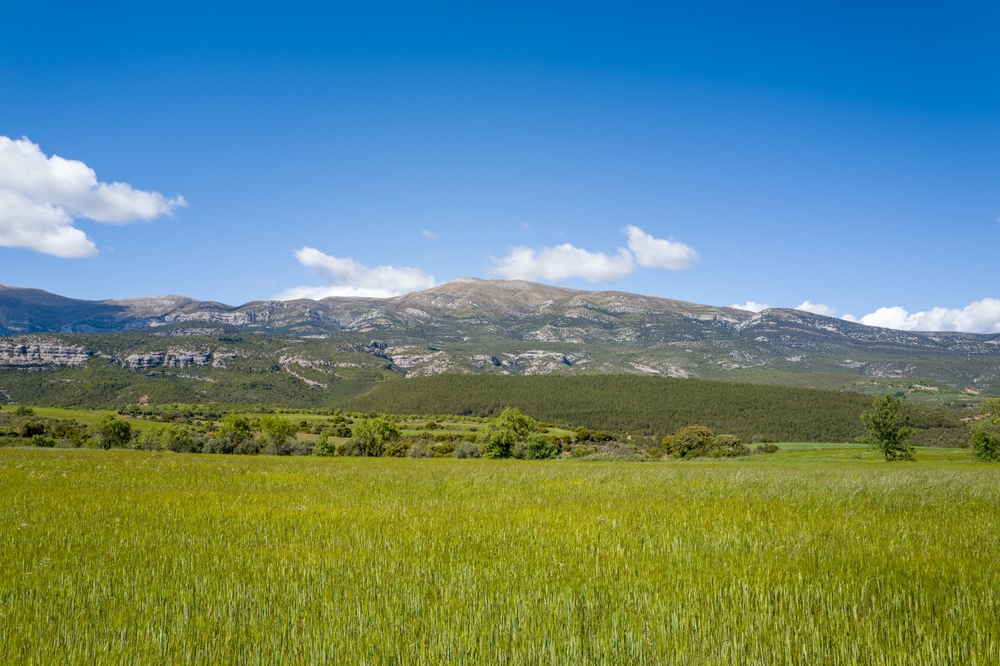
Aragon boasts a mosaic of contrasting landscapes, from Pyrenean peaks to stretches of desert. The Ordesa and Monte Perdido National Park, a UNESCO World Heritage Site, is one of Europe’s most spectacular natural gems. Its vertiginous canyons, roaring waterfalls and glacial cirques attract hikers and mountaineers from all over the world.
Zaragoza, the capital of Aragon, impresses with the Basilica of Our Lady of the Pilar, a Marian shrine on the banks of the Ebro. The Aljafería Palace, a former Moorish palace transformed into a Christian fortress, bears witness to the richness of the Mudéjar past. To the south, the Los Monegros desert offers a lunar landscape unique in Europe, covering 2,700 km². This arid zone is fascinating for its geological formations and its biodiversity adapted to extreme conditions.
Medieval villages such as Alquézar and Aínsa, perched on rocky outcrops, still retain their old-world charm. The Formigal ski resort welcomes winter sports fans in an exceptional Pyrenean setting.
4. Galicia, kingdom of Santiago de Compostela
Galicia, a land of legends and pilgrimages, unfurls its verdant landscapes between the Atlantic Ocean and the mountains. Santiago de Compostela, the arrival point of the European pilgrimage routes, dazzles with its Romanesque and Baroque cathedral, a UNESCO-listed architectural masterpiece. The historic centre, with its cobbled streets and majestic squares, is an invitation to stroll and contemplate.
The rías, deep estuaries that cut through the coastline, offer spectacular maritime panoramas. La Coruña, a dynamic port city, boasts the oldest working Tower of Hercules, a Roman lighthouse listed as a World Heritage Site. Vigo, Galicia’s economic capital, has a lively port and the Cíes Islands, nicknamed the “Galician Caribbean”.
The Sierra O Courel reveals unspoilt mountain landscapes where pallozas, traditional Galician dwellings with thatched roofs, still stand. Galician cuisine celebrates seafood, particularly pulpo a la gallega (Galician-style octopus) and the fresh, aromatic wines of Albariño.
5. The medieval charm of Castilla y León
Castilla y León is the historic heart of Spain, a land of majestic castles and cathedrals. This vast region is home to nine UNESCO sites, outstanding examples of Romanesque, Gothic and Mudejar art. Burgos Cathedral, a Gothic masterpiece inspired by French cathedrals, impresses with its architectural finesse and delicate sculptures.
Download the audio-guided tour to discover Salamanca on foot and on your own
Salamanca, a Renaissance jewel nicknamed “the Golden One”, shines with its harmonious Plaza Mayor and its university, founded in 1218 and one of the oldest in Europe. Discover this emblematic university town on an audio tour of 21 points of interest that will reveal the soul of this city of learning. Let yourself be guided through the golden streets of Salamanca to appreciate its architectural wealth.
Segovia fascinates with its perfectly preserved Roman aqueduct and its fairytale Alcázar, which inspired Walt Disney. Ávila, surrounded by intact medieval walls, retains a mystical atmosphere linked to Saint Teresa. The vineyards of Ribera del Duero and Rueda produce internationally acclaimed wines of excellence. Don’t miss the chance to taste roast suckling pig, the quintessential Castilian speciality.
6. Murcia, a little-known Mediterranean gem
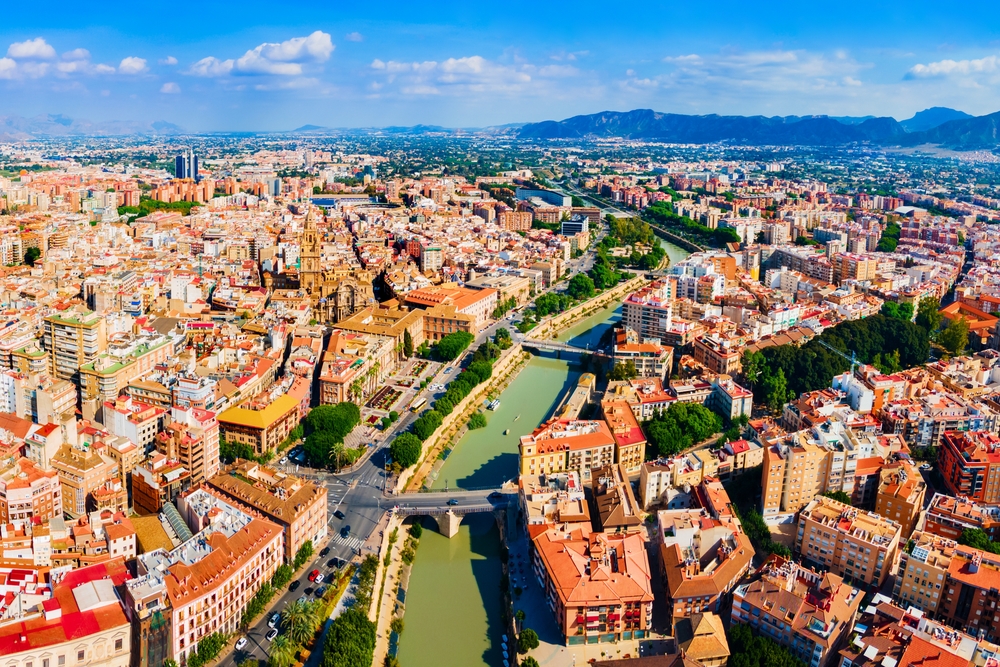
Murcia remains one of Spain’s little-known regions, the most unspoilt by mass tourism. Wedged between Valencia and Andalusia, it offers a seductive cocktail of culture, nature and gastronomy. The city of Murcia charms with its flamboyant Baroque cathedral and its Casino, a sumptuous nineteenth-century palace with an eclectic decor.
Cartagena, a former Punic and then Roman city, boasts an impressive ancient theatre that is part of the Roman Theatre Museum (Pl. del Ayuntamiento, 9, 30201 Cartagena, rated 4.7/5 on Google out of 8,943 reviews). The natural harbour, one of the deepest in the Mediterranean, has shaped the city’s maritime history.
The Costa Cálida deserves its name with 320 days of sunshine a year. The Mar Menor, Europe’s largest saltwater lagoon, offers ideal conditions for water sports. The Sierra Espuña, a mountainous natural park, contrasts with the coastline and offers hiking trails through the Aleppo pines. Murcian cuisine celebrates the vegetables of the huerta and Caldero rice, a traditional fisherman’s dish.
7. La Rioja on the Spanish wine route
La Rioja immediately conjures up images of great Spanish wines. This small wine-growing region produces some of the country’s finest vintages, notably from the Tempranillo grape variety. More than 600 bodegas open their doors to wine tourists, offering tastings in century-old cellars or in bold contemporary architecture.
Logroño, the regional capital, has a lively old town and Calle Laurel, a paradise for tapas and pintxos. The grape harvest festivities in September transform the town into a joyous festival celebrating the harvest. The monastery of San Millán de la Cogolla, a UNESCO-listed Romanesque and Mudéjar complex, is considered to be the cradle of the Spanish language.
Haro, the wine capital of Rioja Alta, is home to the most prestigious bodegas in its Barrio de la Estación. Laguardia, a fortified medieval village, dominates the vineyards from its promontory. The vineyards stretch as far as the eye can see, offering bucolic panoramas, particularly in autumn when the leaves turn gold and purple.
8. Asturias between sea and mountains
Asturias epitomises green Spain, a lush land wedged between the Cantabrian Ocean and the peaks of Europe. The Picos de Europa National Park, classified as a biosphere reserve, boasts spectacular alpine scenery, including the Naranjo de Bulnes massif, a symbol of the Asturian mountains. Hiking trails cross vertiginous gorges such as the Cares gorge, nicknamed “la garganta divina”.
Oviedo, the capital of Asturias, boasts an exceptional pre-Romanesque heritage with the church of Santa María del Naranco (Ctra. de los Monumentos, s/n, 33012 Oviedo, rated 4.7/5 on Google for 7,234 reviews) and San Miguel de Lillo, both of which have been listed by UNESCO. These 9th-century jewels bear witness to Asturian art that is unique in Europe.
The Asturian coastline alternates between wild beaches and picturesque fishing villages. Cudillero, perched on the side of a cliff, charms with its colourful amphitheatre houses. Llanes captivates with its beaches framed by cliffs and its Cubos de la Memoria, a work of contemporary art by Ibarrola. Asturian gastronomy celebrates the fabada, a comforting dish of white beans and cold meats, accompanied by local cider served according to an ancestral ritual.
9. Cantabria and its patchwork of landscapes
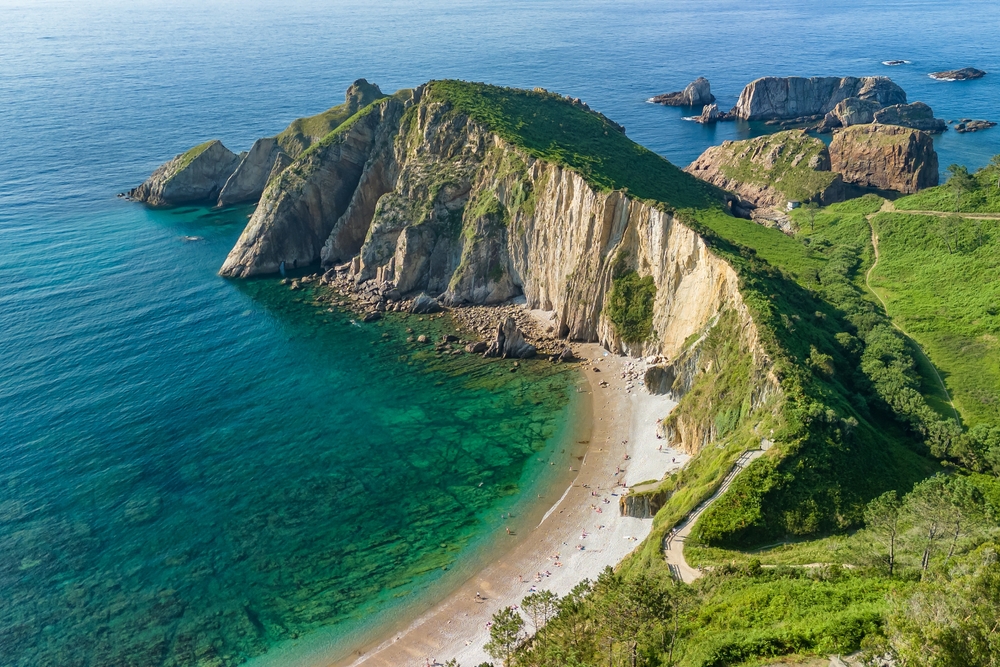
Cantabria completes our tour of Spain’s little-known regions, with a diversity of landscapes concentrated in a small area. Santander, the elegant capital, unveils its majestic bay dominated by the Palacio de la Magdalena (Av. de la Reina Victoria, s/n, 39005 Santander, rated 4.7/5 on Google out of 18,756 reviews), a former royal summer residence.
The Altamira caves, nicknamed the “Sistine Chapel of cave art”, are home to exceptional Palaeolithic paintings dating back 15,000 years. Although the original is closed, you can admire these prehistoric masterpieces at the replica of the Altamira Museum (Av. Marcelino Sanz de Sautuola, s/n, 39330 Santillana del Mar, rated 4.5/5 on Google out of 8,932 reviews).
Santillana del Mar, a medieval village nicknamed “the town of three lies” (neither holy, nor flat, nor on the seafront), has a captivating architectural heritage. The Las Dunas de Liencres nature park boasts a remarkable dune ecosystem. Comillas surprises with its modernist heritage, including Gaudí’s El Capricho (Barrio Sobrellano, s/n, 39520 Comillas, rated 4.6/5 on Google out of 12,543 reviews). The sobaos and quesadas, traditional pastries, are a real treat, as is the mariscada, a Cantabrian seafood feast.
In conclusion, these nine little-known Spanish regions reveal an authentic Spain far removed from the usual tourist circuits. From Castilla-La Mancha to the windmills of Don Quixote to the peaks of the Picos de Europa, each region reveals its unique identity shaped by history, geography and tradition. Whether you’re a lover of medieval architecture, a mountain hiker, an experienced wine tourist or simply a curious explorer, these unspoilt destinations will offer you unforgettable experiences. Don’t hesitate to take the Navaway audioguide itineraries to discover Spanish cities on your own during your regional escapades. Secret Spain awaits you to reveal its hidden treasures and let you experience authentic moments at the heart of its exceptional cultural and natural diversity.
FAQ : Little-known regions of Spain
When is the best time to visit these little-known regions of Spain?
Spring (April-June) and autumn (September-October) are the ideal times to explore these regions. The temperatures are pleasant, the sites less crowded and the scenery particularly beautiful. Summer can be very hot in Castilla-La Mancha, Extremadura and Murcia, while winter is ideal for visiting the cities and discovering the snow-covered Aragonese Pyrenees.
How do you get around these little-known regions of Spain?
The car remains the most practical means of exploring these regions in complete freedom, particularly for access to remote villages and natural parks. Spain’s rail network serves major cities such as Zaragoza, Logroño, Oviedo and Santander. Regional buses take you to secondary destinations. For an in-depth look at the historic centres, we recommend audio-guided walking tours.
What gastronomic specialities are not to be missed in these regions?
Each region has its own culinary treasures: manchego cheese and wines from Castilla-La Mancha, Iberian ham from Extremadura, suckling pig from Castilla y León, Galician seafood, pulpo a la gallega, Rioja wines, Asturian fabada with cider, and anchovies from Cantabria. And don’t miss out on regional pastries such as Cantabrian sobaos or quesadas.
Are these regions suitable for families with children?
Absolutely! These regions offer a wealth of family activities: easy hikes in the nature parks, quiet beaches in Cantabria and Asturias, visits to medieval castles, discovering the windmills of Castilla-La Mancha, wildlife watching in Monfragüe Park. Children are fascinated by medieval villages, and museums often offer specially adapted fun tours.
Do people speak English in these little-known regions of Spain?
English is less widely spoken than in major tourist destinations such as Barcelona or Madrid. In the main cities and major tourist sites, you will generally find English-speaking staff. However, in rural areas and small villages, knowledge of a few words of Spanish will be appreciated and will make it easier to talk to the locals, who are renowned for their warm hospitality.
200 audioguided tours for cities all around the world
Download