An emblematic walk in the Pic Saint Loup near Montpellier
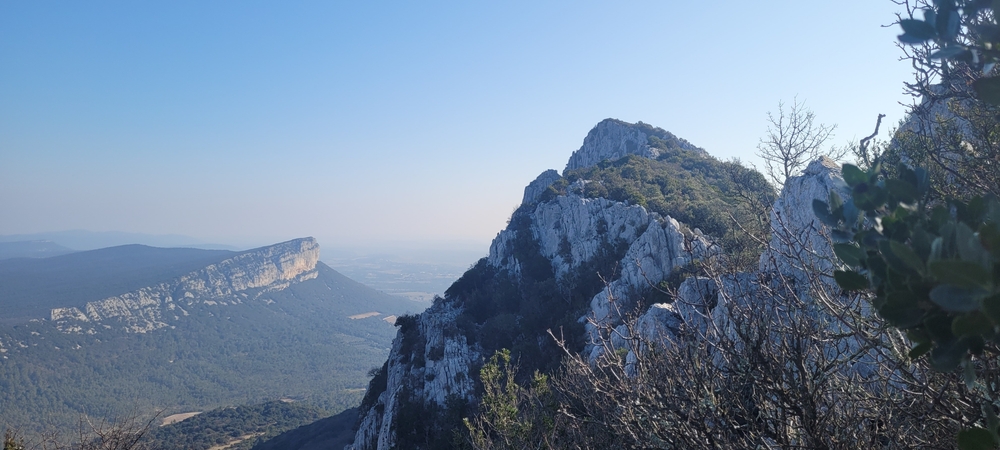

Towering majestically above the Languedoc garrigue at an altitude of 658 metres, the Pic Saint Loup is one of the most emblematic hikes in Occitanie. Located just 25 kilometres north of Montpellier, this emblematic peak attracts thousands of hikers every year to admire its exceptional panoramic views over the Cévennes, the Mediterranean and the Hérault hinterland. Between medieval legends, famous vineyards and steep paths, hiking the Pic Saint Loup promises an unforgettable adventure in the heart of an exceptional terroir.
Download the audio-guided tour to discover Montpellier on foot and on your own
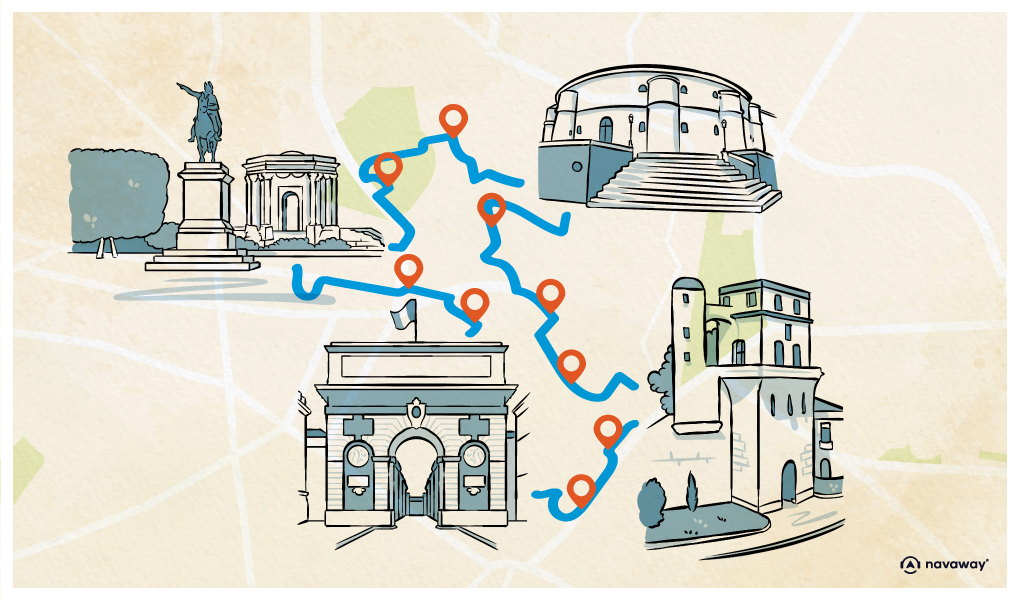
Before or after your ascent of the Pic Saint Loup, take the time to discover the city of Montpellier thanks to a complete audio tour. This 3.5km route takes 1? hours to explore the 19 must-see places of interest in the “Surdouée”, from the Place de la Comédie to Saint-Pierre Cathedral, via the Écusson and the Promenade du Peyrou. Interactive navigation and rich audio commentary accompany you throughout your visit for an immersive experience at the heart of this Mediterranean metropolis.
Also read the Montpellier guide :
- Top 5 activities in Montpellier
- Top 10 culinary specialities in Montpellier
- 20 must-see weekend ideas around Montpellier
- Excursions around Montpellier: top 20 things to do
- 9 relaxing gardens and parks in Montpellier
- The 6 best beaches in Montpellier
- The 10 best bike rides in and around Montpellier
- Visiting the Hérault: 15 places not to be missed
- What to do around Montpellier with your family?
- The 12 most beautiful walks in Hérault
How do I get to the Pic Saint Loup?
Access to the Pic Saint Loup is mainly from the charming village of Cazevieille, the official starting point for the most popular hike. From Montpellier, head towards Saint-Martin-de-Londres on the D986, then follow the signs for Cazevieille. Free parking is available at the entrance to the village (GPS coordinates: N 43°46’12.5” – E 3°47’32.2”), at the foot of the massif. Please note, however, that this car park can quickly fill up during the high season and at weekends, so it’s advisable to arrive early in the morning.
If you don’t have a car, take the 108 bus from Montpellier to Saint-Mathieu-de-Tréviers. From there, a car-sharing or taxi service can take you to the start of the trail. If you’d like to visit Montpellier before or after your hike, there are plenty of architectural and cultural treasures to discover.
1. The path from Cazevieille: the classic route
The route from Cazevieille is the most popular and accessible walk in the Pic Saint Loup. This signposted 5.5-kilometre round trip trail has a positive gradient of 345 metres, and takes between 2 and 3 hours to complete, depending on your pace. The route starts gently through fragrant scrubland before gradually winding its way up through stony terrain. Rocky sections become more frequent as you approach the summit, requiring particular care and good hiking boots.
As you climb, the landscape gradually reveals itself, offering magnificent views of the valley and surrounding villages. Although the trail is relatively short, there are steep sections that can prove demanding, particularly in hot weather. Bring plenty of water, a hat and sun cream, as shade is scarce for much of the route. Once at the top, you’ll be rewarded with an absolutely breathtaking 360-degree panorama stretching from the Cévennes to the Mediterranean.
2. Hiking from Saint-Mathieu-de-Tréviers
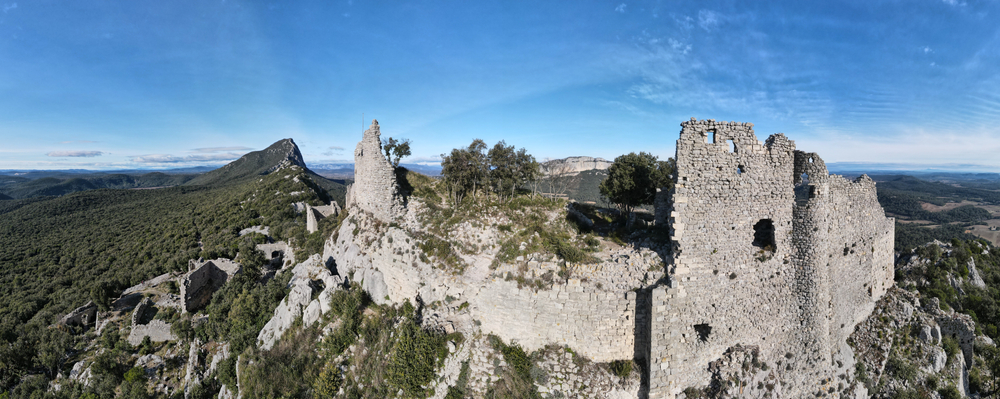
For more experienced walkers looking for a longer, more challenging route, the itinerary starting from Saint-Mathieu-de-Tréviers is an excellent alternative. This 13-kilometre loop has a positive gradient of around 450 metres and takes around 5 hours to complete. The trail passes through a variety of landscapes, alternating between scrubland, holm oak forest and rocky passages, before reaching the summit of the Pic Saint Loup on a different path from the one at Cazevieille.
This route offers the advantage of discovering a less-frequented side of the massif and taking advantage of a longer immersion in the Languedoc countryside. Although the route is more demanding, it rewards the effort made with varied panoramas and a welcome feeling of solitude, which is particularly welcome in high season. Don’t forget to check the weather conditions before setting off, and to inform someone of your itinerary for safety reasons.
3. Level of difficulty and precautions to be taken
The Pic Saint Loup hike falls into the “moderate to sustained” category in terms of difficulty. Although the gradient is manageable (345 metres from Cazevieille), the stony terrain and rocky sections require a good level of fitness and a degree of caution. The paths can become slippery in wet weather, and some steep sections require you to pace yourself carefully. This walk is not recommended for young children or people with mobility problems.
Take hiking boots with good grip, which are essential for this type of terrain. Bring at least 1.5 litres of water per person, more in summer, as well as energy snacks. A hat, sun cream and sunglasses are essential, as there is a lot of exposure to the sun. In summer, opt for an early start to avoid the afternoon heat. Finally, always check the weather forecast before setting off, and don’t attempt the climb in the event of a thunderstorm or strong wind, as the summit is particularly exposed.
4. What can you see at the summit of Pic Saint Loup?
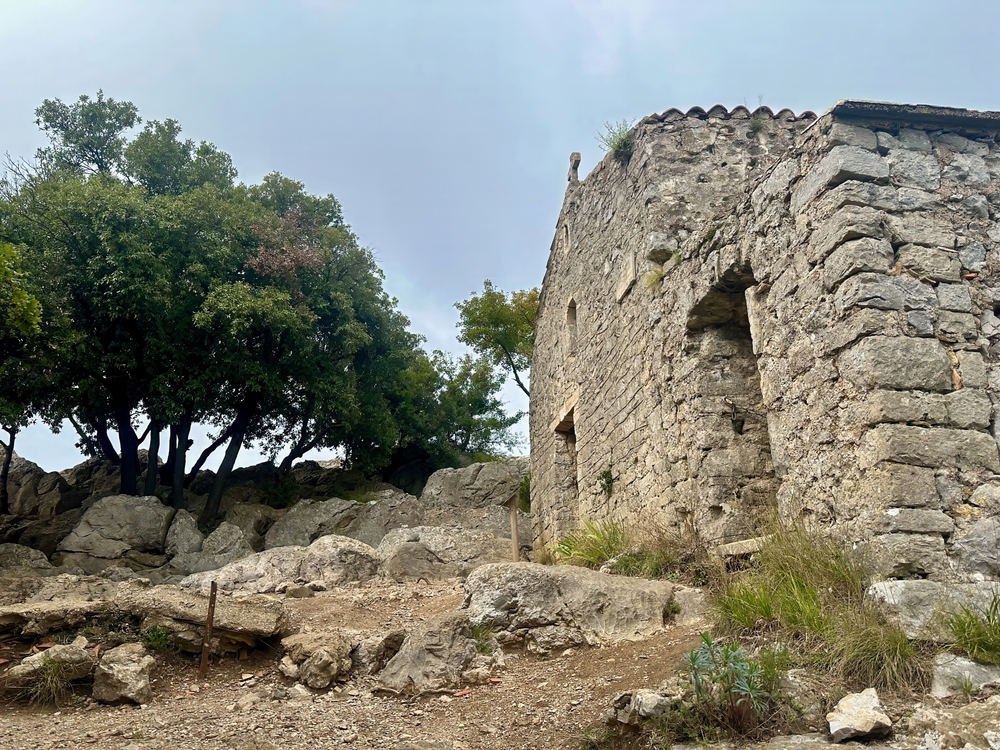
Once you reach the summit of the Pic Saint Loup, at an altitude of 658 metres, you’ll discover an imposing metal cross and an orientation table that will help you identify the various remarkable points in the panorama. To the north you can see the Cévennes and the Aigoual massif, to the east the garrigues and Mont Ventoux on a clear day, to the south the Etang de Thau and the Mediterranean, and to the west the foothills of the Pyrenees. This breathtaking view alone justifies the effort involved in the climb.
On the summit plateau, you can also see the remains of an ancient chapel dedicated to Saint-Joseph, testimony to the religious fervour that once animated these parts. The current cross, installed at the end of the 20th century, replaced several earlier structures destroyed by the weather. Take the time to sit back, contemplate the landscape and imagine the medieval legend of the three brothers who gave their name to this majestic peak. In good weather, visibility can reach over 100 kilometres in all directions.
5. The legend of the Pic Saint Loup
The legend of the Pic Saint Loup dates back to the Middle Ages and tells the tragic story of three knight brothers: Guiral, Alban and Thieri Loup. All three of them were madly in love with the beautiful Bertrade, and decided to go on the crusades in the Holy Land, each hoping to win her heart with their exploits. While they were away, Bertrade couldn’t stand the waiting and the uncertainty, so she decided to enter a convent. On their return, the three brothers were dismayed to learn that their beloved had given up the world.
Torn apart by grief, the three knights each chose to retire as hermits to a different peak in the region. Thieri Loup settled on the peak that today bears his name, the Pic Saint Loup, Guiral chose the Pic Saint-Guiral near Mont Aigoual, and Alban the Mont Saint-Baudile. The three brothers spent the rest of their lives in prayer and contemplation, until their deaths. This romantic and tragic legend has survived the centuries, giving the Pic Saint Loup a poetic dimension that adds to the charm of its discovery.
6. The Pic Saint Loup vineyards
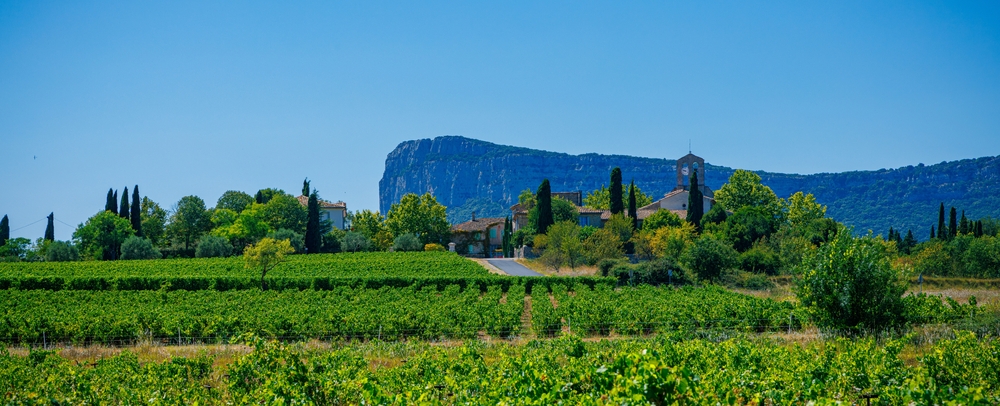
At the foot of the Massif lies the Pic Saint Loup vineyard, an exceptional wine-growing area that was awarded its Appellation d’Origine Contrôlée (AOC) in January 2017. This recognition crowns decades of hard work by the region’s winegrowers to produce top-quality red and rosé wines. The king grape variety of the appellation is Syrah, which must account for at least 50% of the blend for red wines and 30% for rosés. The cool, windy terroir of Pic Saint Loup allows Syrah to express itself fully, giving rise to elegant, well-structured wines.
The appellation’s winegrowers’ union was set up in 1931, but it wasn’t until 1955 that it was awarded the VDQS label, and then 1985 that it became part of the Coteaux du Languedoc AOC, that it finally obtained its own AOC. Today, around thirty winegrowing estates produce these renowned wines, which appeal to wine lovers the world over. After your walk, don’t hesitate to visit one of these estates for a tasting and discover the subtleties of this unique terroir, marked by the Mediterranean climate and the influence of the nearby Cévennes.
7. The best time to hike in Pic Saint Loup
The Pic Saint Loup can be climbed all year round, but certain periods are better than others for making the most of the experience. Spring (April to June) is undoubtedly the ideal season: the temperatures are pleasant, the garrigue is in bloom and fragrant with thyme, rosemary and broom, and the days are long enough. Autumn (September to November) also offers excellent conditions, with milder temperatures than in summer and magnificent light that sublimates the landscapes.
Summer can be very hot, and the climb demanding under the scorching sun, although an early start (before 8am) can avoid the midday heat. Winter offers special conditions, with temperatures that are cool but pleasant for the effort, and sometimes even a summit dusted with snow that creates magical landscapes. Beware, however, of the mistral wind, which can blow very hard at the summit, making the experience unpleasant and even dangerous. Always check the weather forecast before setting off, and adapt your equipment accordingly.
8. Other activities around the Pic Saint Loup
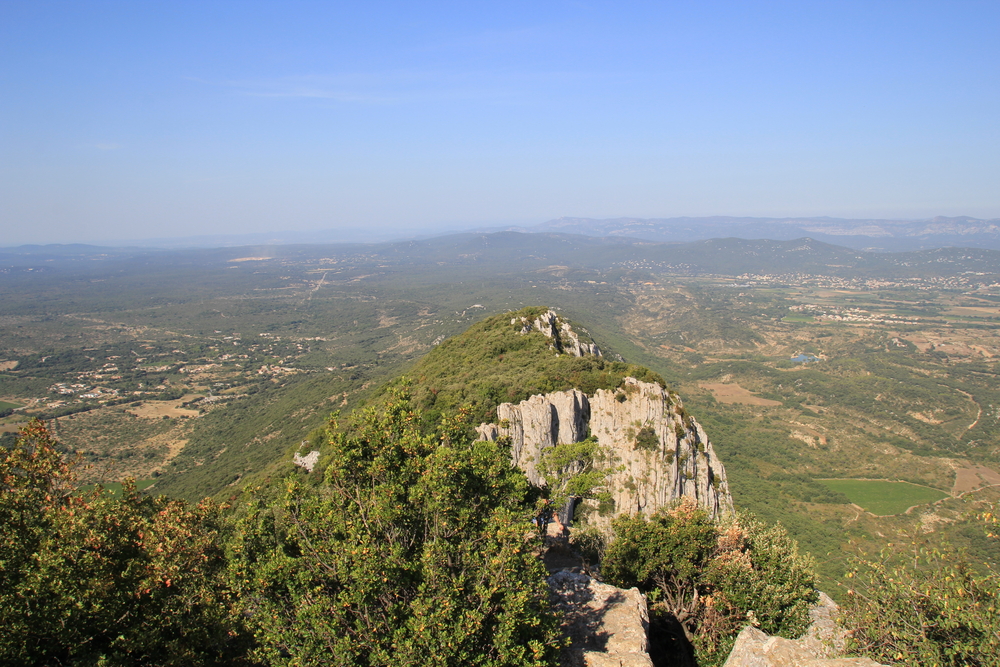
Hiking may be the main activity at the Pic Saint Loup, but the massif and its surroundings offer many other possibilities for nature lovers and thrill-seekers. Climbing attracts many climbers to the north face of the peak, where there are several routes of varying difficulty. Mountain bikers can also enjoy the many trails that criss-cross the surrounding garrigue. For road cyclists, the ascent of the Col de Fambétou from Saint-Mathieu-de-Tréviers is a popular sporting challenge.
The region’s picturesque villages are also well worth a visit. Saint-Martin-de-Londres, with its medieval streets and Romanesque church, is a charming place to stop. The Demoiselles caves, some twenty kilometres away, are a fascinating underground excursion. For wine tourism enthusiasts, there are numerous wineries offering tours and tastings. Finally, don’t miss the market in Saint-Martin-de-Londres on Friday mornings, where you’ll find all the produce of the Languedoc region. Let the Navaway Montpellier itinerary be your guide as you explore the region, to help you make the most of your stay.
9. Where to eat and sleep in the area?
After the effort, the comfort! There are a number of establishments in the vicinity of the Pic Saint Loup where you can grab a bite to eat and recharge your batteries. In Cazevieille itself, you’ll find a small grocery shop for last-minute provisions. Saint-Mathieu-de-Tréviers offers more choice, with several restaurants and cafés where you can sample local specialities. For a more elaborate gastronomic experience, head to one of the wineries’ restaurants, which combine local wines with refined regional cuisine.
When it comes to accommodation, the region offers a wide range of options. Charming chambres d’hôtes nestling in restored farmhouses welcome you for an authentic immersion in the Languedoc art of living. There are also a number of rural gîtes where you can stay with family or friends in a bucolic setting. For those who prefer hotel comfort, Saint-Martin-de-Londres and the surrounding villages offer a number of quality establishments. And if you want to take advantage of the bustle of the city, Montpellier is just 30 minutes away and offers a wide choice of accommodation to suit all budgets, with the added bonus of being able to visit the city before or after your walk.
10. Practical tips for a successful hike
To ensure that your walk around the Pic Saint Loup is an unforgettable experience, here are a few practical tips to bear in mind. First of all, arrive early at the Cazevieille car park, especially at weekends and during school holidays, as spaces are limited and quickly taken up. Download a mapping application such as VisoRando or Komoot to follow the route even if there is no network (remember to download the map before you set off). Always let someone know where you’re going and what time you’ll be back.
Respect the fragile environment of the garrigue: stay on the marked paths, don’t pick plants and take away all your rubbish. In summer, be particularly vigilant about fire hazards and never smoke on the trail. Dogs are allowed but must be kept on a lead to avoid disturbing the local wildlife and other walkers. Finally, adapt your pace to that of the slowest member of the group and don’t hesitate to take regular breaks to enjoy the scenery and hydrate. The mountains will still be there tomorrow – safety first!
In conclusion, the Pic Saint Loup hike alone embodies all the magic of the Occitanie region: breathtakingly sumptuous landscapes, unspoilt nature imbued with the scents of the Mediterranean, a rich history steeped in romantic legends, and an exceptional wine-growing terroir. Whether you’re a beginner or an experienced hiker, this accessible but demanding climb will reward you with unforgettable panoramas and a total immersion in the soul of the Languedoc. Once you’ve conquered this iconic peak, extend your discovery of the region by taking theMontpellier itinerary, which will reveal all the treasures of the Languedoc capital. The Pic Saint Loup awaits you, ready to offer you one of the most beautiful walks in the south of France.
FAQ
How long does it take to climb the Pic Saint Loup?
The climb from Cazevieille takes between 2 and 3 hours round trip, depending on your pace, for a distance of 5.5 km and a difference in altitude of 345 metres. Allow around 1h to 1h30 for the ascent and 45 minutes to 1h for the descent.
Is the Pic Saint Loup hike difficult?
The route is classified as moderate to sustained. The gradient is accessible, but the stony terrain and rocky sections require a good level of fitness and suitable footwear. It is not recommended for young children.
Where can I park for the Pic Saint Loup hike?
The main car park is at the entrance to the village of Cazevieille (GPS: N 43°46’12.5” – E 3°47’32.2”). It’s free but can fill up quickly, especially at weekends. We recommend arriving early in the morning.
When is the best time to go hiking in the Pic Saint Loup?
Spring (April to June) and autumn (September to November) offer the best conditions, with pleasant temperatures. Summer can be very hot, so opt for an early start. Winter is possible, but beware of the wind.
Can you hike the Pic Saint Loup with children?
The hike is not recommended for young children due to the stony terrain and rocky passages. However, teenagers who are used to walking and are in good physical condition can do it with caution and under supervision.
What is the legend of the Pic Saint Loup?
The legend tells the story of three knight brothers, Guiral, Alban and Thieri Loup, all in love with the beautiful Bertrade. When they returned from the Crusades, they discovered that their beloved had entered a convent. Torn apart by grief, each of them retired as hermits to a different peak in the region.
Are there water points on the course?
No, there are no water points on the route. It is essential to bring at least 1.5 litres of water per person, or more in summer. You should also bring energy snacks.
Is it possible to climb the Pic Saint Loup in summer?
Yes, but the heat and lack of shade can make summer climbing a real challenge. We strongly recommend that you set off very early in the morning (before 8am), equip yourself with sun cream, a hat and sunglasses, and take plenty of water with you.
Are dogs allowed on the trail?
Yes, dogs are allowed, but they must be kept on a lead to respect the local wildlife and other hikers. Don’t forget to bring water for your four-legged friend.
What can you see at the summit of Pic Saint Loup?
At the summit, you’ll discover a metal cross, an orientation table and the remains of an ancient chapel. Above all, you’ll enjoy an exceptional 360-degree panorama of the Cévennes, the Mediterranean, Mont Ventoux and the Languedoc garrigues.
200 audioguided tours for cities all around the world
Download