Discover the Gavarnie circus in the heart of the Occitanie region
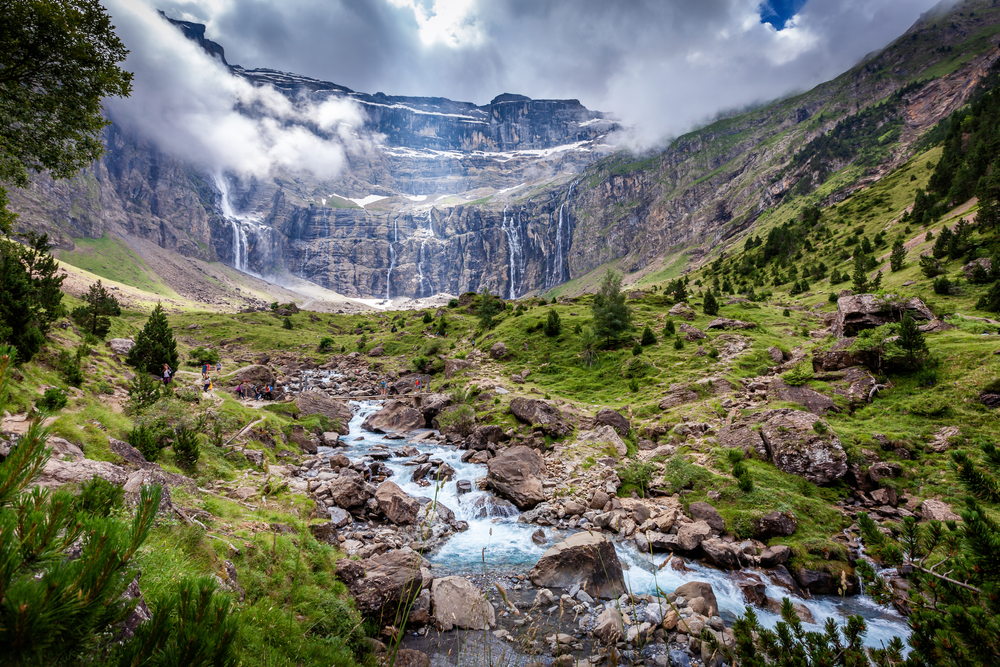

Nestling in the heart of the Hautes-Pyrénées in the Occitanie region of France, the Cirque de Gavarnie is an unforgettable experience for all nature lovers. Listed as a UNESCO World Heritage Site since 1997, this natural jewel fascinates visitors with its colossal dimensions: limestone walls rising to a height of over 1,500 metres, a circumference of 6.5 kilometres and the 422-metre Grande Cascade, one of the highest waterfalls in Europe. With hikes accessible to all and breathtaking panoramas, the Cirque de Gavarnie offers an imposing natural spectacle shaped by glaciers over the millennia. Whether you’re an experienced hiker or just a stroller, this glacial cirque conceals treasures well worth exploring.
See also the Occitanie guide :
- Visiting the Pyrenees: 20 must-dos
- France’s 10 most beautiful mountains to discover
- 6 must-see Pyrenees mountain huts
- The 18 must-sees to discover Occitania
- Secret Pyrenees Rides: Wild Horses & Lakes
- Montagne Noire walks: Top 5 of the most beautiful routes
- Explore the exceptional site of the Orgues of Ille-sur-Têt
1. How do I get to the Cirque de Gavarnie?
Access to the Cirque de Gavarnie begins with the village of Gavarnie, around 50 kilometres south of Lourdes. There are several options for reaching this exceptional natural site, depending on your point of departure and transport preferences.
By car from major cities
From Toulouse, allow around 2? hours via the A64 motorway to Tarbes, then the D921 departmental road to Gavarnie. From Bordeaux, allow 3? hours for the journey. The D921, the only access road to the village of Gavarnie, is open all year round but requires extra vigilance in winter. Consult Inforoute 65 for real-time traffic conditions, particularly during snowy spells.
When you arrive in Gavarnie, you must park in the pay car parks at the entrance to the village (€8 per 24 hours), with access to the centre regulated to protect the site. There is a dedicated service area for motorhomes (€10 per 24 hours).
By public transport
Bus route 965 runs from Lourdes to Gavarnie via Luz-Saint-Sauveur in summer and winter. This environmentally-friendly option means you can reach the Cirque de Gavarnie without a car, while enjoying the Pyrenean scenery along the way. For information on seasonal timetables, contact the Vallées de Gavarnie tourist office.
2. The village of Gavarnie: a must-see starting point
The village of Gavarnie, situated at an altitude of 1,350 metres, is the gateway to the cirque of the same name. This charming mountain village of around 130 permanent residents comes alive particularly during the summer season to welcome the thousands of visitors who come to admire this natural masterpiece. The traditional Pyrenean architecture, with its stone houses and picturesque lanes, is an inviting place to stroll before setting off on the hike to the cirque.
In the heart of the village, the church of Notre-Dame-du-Bon-Port is well worth a visit for its 14th-century fortified bell tower. Built at a time when Gavarnie was an important stopover on the Pilgrim’s Way to Santiago de Compostela, it bears witness to the religious and historical past of this Pyrenean valley. Pilgrims used to stop here before crossing the pass to Spain, a tradition that continues to this day.
In the village you’ll find a range of shops, restaurants and accommodation to help you organise your stay. The family-run inns and hotels offer authentic mountain cuisine, while the sports shops allow you to hire or buy the equipment you need for your hikes. Don’t hesitate to talk to the locals and the local guides, who have a real passion for their area and will be able to point you in the direction of the best trails for your level of ability.
3. The Grande Cascade: jewel of the circus

The Grande Cascade de Gavarnie is the cirque’s star attraction, with its 422-metre free-fall, making it one of the highest waterfalls in Europe. Fed by melting snow and glaciers, it unleashes all its power in spring and early summer, offering a breathtaking visual and audio spectacle. Its roar can be heard several hundred metres away, announcing the proximity of this impressive natural phenomenon.
There are several viewpoints from which to observe the waterfall. From the Hôtellerie du Cirque, an easy 1? hour walk from the village, you can enjoy an already spectacular panorama of the entire cirque and its waterfall. The more courageous can continue for a further 45 minutes on a steeper path (200 metres ascent) to reach the foot of the waterfall itself, an unforgettable experience where you can feel the full force of the water gushing from the bowels of the mountain.
The flow of the waterfall varies considerably according to the season. In spring, when the snow melts, the spectacle reaches its peak with a flow that can exceed 100 cubic metres per second. In summer, the flow diminishes but remains impressive, while in winter the waterfall is transformed into a cascade of ice, creating magical crystalline formations much appreciated by photographers and mountaineers.
4. Hiking trails for all levels
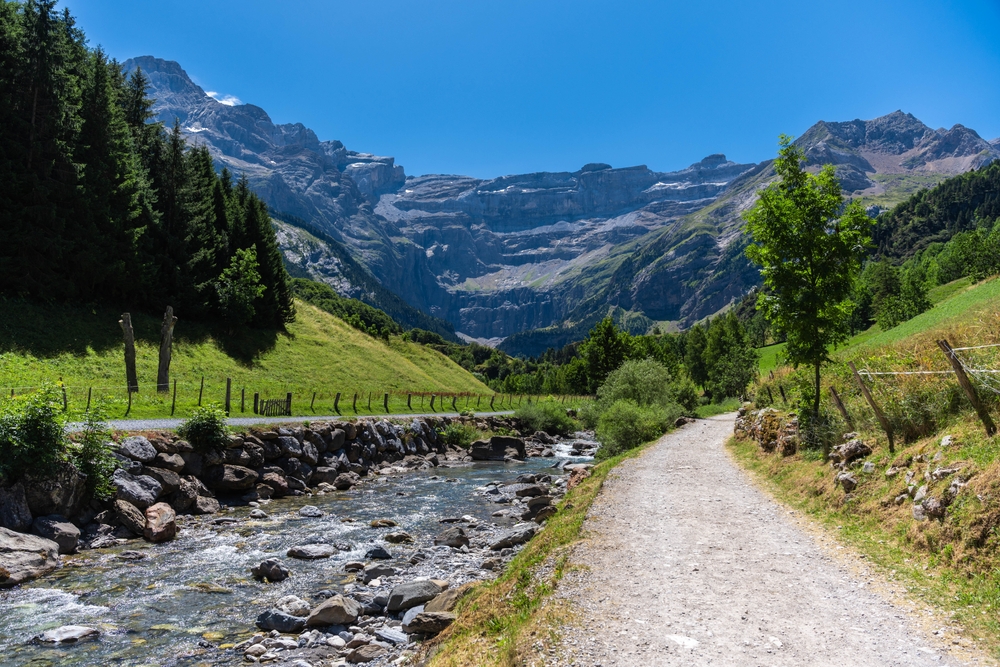
The Cirque de Gavarnie lends itself to many different types of hike, from family walks to technical climbs for experienced hikers. Each trail offers a unique perspective on this giant of stone, allowing visitors to appreciate the geological diversity and rugged beauty of the Pyrenees.
The main path: accessible to all
The classic route from the village of Gavarnie to the Hôtellerie du Cirque is a family-friendly 8-kilometre round trip (around 3 hours) with just 200 metres of ascent. This wide, well-marked trail runs alongside the Gave de Pau and through lush green pastures before reaching the heart of the cirque. Suitable for families with children, and up to a certain point even accessible to people with reduced mobility, the trail offers increasingly spectacular views of the limestone walls.
Along the way, there are several picnic areas where you can take a break and enjoy the scenery. Information panels line the trail, explaining the geological formation of the cirque, the local flora and fauna, and the history of Pyrenean tourism in the valley. In high season, you may come across pack donkeys offering rides for the young or the tired.
The Bellevue plateau: an exceptional panorama
For hikers looking for an alternative, less crowded viewpoint, the ascent to the Bellevue plateau offers a bird’s eye view of the cirque. This medium-difficulty route takes around 4 hours round trip and climbs more steeply (400 metres ascent). The reward is well worth the effort: from this vast grassy plateau, you can see the entire rocky amphitheatre, the Grande Cascade and the border peaks topping out at over 3,000 metres.
This trail passes through a variety of ecosystems, from hooked pine forests to alpine meadows, offering remarkable biodiversity. With a bit of luck and discretion, you’ll be able to spot marmots, isards and birds of prey that inhabit these heights. The Bellevue plateau is also an excellent spot for photographing the cirque in different light conditions, particularly in the late afternoon when the sun illuminates the limestone strata.
The Corniche des Espugues: for experienced hikers
Experienced hikers can take the Corniche des Espugues trail, a spectacular technical route carved into the side of a cliff. This demanding route (6 to 7 hours, 800 metres ascent) requires a good level of fitness and a fear of heights. The path, sometimes narrow and exposed, winds along the sides of the cirque, offering breathtaking views of the valley below.
This hike allows you to discover the cirque from a radically different angle, by penetrating the intimacy of its cliffs. The ledge sections give the impression of walking on air, with the void on one side and the rock face on the other. It’s also on this path that you get the best view of the different geological layers that make up the cirque, like pages in a book recounting millions of years of earth’s history.
5. La Brèche de Roland: between legend and reality
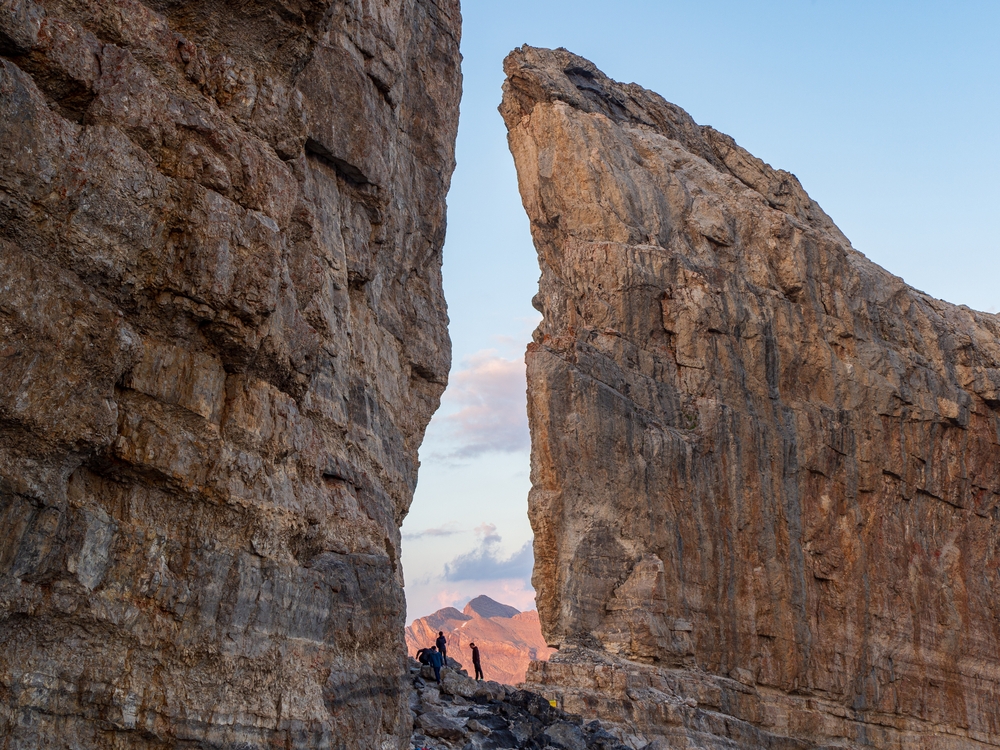
The Brèche de Roland is one of the most fascinating natural sights in the Gavarnie cirque. This spectacular gash in the rocky ridge, 40 metres wide and 100 metres high, lies at an altitude of 2,807 metres on the Franco-Spanish border. Visible from the cirque, it intrigues all visitors with its almost perfect geometric shape, as if a giant had sliced through the mountain with a sword.
According to legend, the knight Roland, nephew of Charlemagne and hero of the Chanson de Roland, created this breach by striking the rock with his sword Durandal to break it before his death at the Battle of Roncesvalles in 778. In his desperate attempt to prevent his magic weapon from falling into the hands of the Saracens, he is said to have split the mountain. This epic story contributed to the fame of the site, fascinating 19th-century Romantic writers and poets such as Victor Hugo.
Access to the Brèche de Roland is a demanding alpine hike reserved for experienced mountaineers. From the Sarradets refuge (2,587 metres), which can be reached after a 5-6 hour walk from Gavarnie, it takes another 1? hours of technical climbing to reach this legendary pass. Once there, the panorama encompasses both the French side and the Spanish cirque of Ordesa, offering an absolutely breathtaking 360-degree view.
6. Discover the surrounding peaks
The Cirque de Gavarnie is dominated by a crown of prestigious peaks that attract climbers and mountaineering enthusiasts from all over the world. These limestone giants, sculpted by glacial erosion, offer a variety of climbs for all levels of mountaineer.
Le Taillon: sentinel of the circus
At 3,144 metres, Le Taillon is one of the cirque’s most emblematic peaks. Recognisable by its characteristic trapezoidal shape, it marks the border between France and Spain. Climbing it via the normal route requires a good level of fitness and mountaineering skills, including a final section on glacier requiring crampons and ice axe. From the summit, the panoramic view of the Gavarnie cirque and the Mont Perdu massif is well worth the effort.
The Marboré peak: roof of the circus
At an altitude of 3,248 metres, the Pic du Marboré dominates the entire limestone massif. Its technical ascent requires confirmed mountaineering experience and is generally completed over two days, with an overnight stay at the Brèche de Roland or Sarradets huts. The route passes through striking mineral landscapes and offers breathtaking views of both sides of the Pyrenees. At the summit, the orientation table helps you identify the countless peaks that make up the Pyrenean range.
Mont Perdu: the third highest peak in the Pyrenees
At 3,355 metres, Mont Perdu (Monte Perdido in Spanish) is the third highest peak in the Pyrenees and the highest in the limestone massif. Located on Spanish territory but visible from the Gavarnie cirque, it owes its name to the fact that it remains “lost” or hidden in the mist for much of the year. Its ascent is a popular goal for mountaineers, generally approached from the Spanish side of the Ordesa cirque. The ensemble formed by Mont Perdu and the three cirques (Gavarnie, Troumouse and Estaubé on the French side, Ordesa, Anisclo and Escuain on the Spanish side) has been declared a UNESCO World Heritage Site in recognition of its exceptional geological and scenic value.
7. Discover the circus in winter
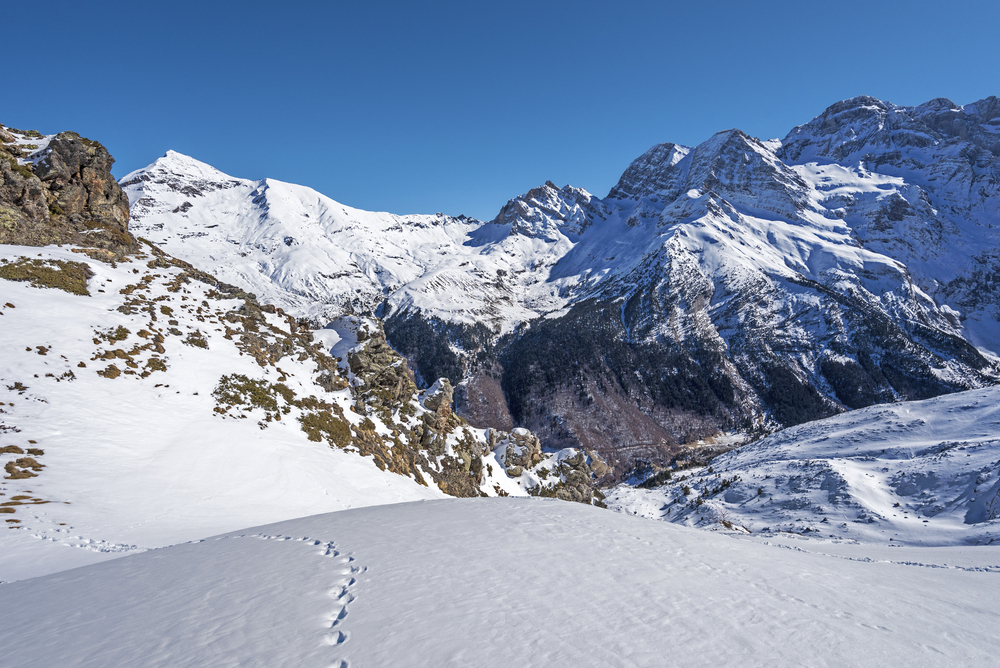
Visiting the Cirque de Gavarnie in winter is a radically different experience from the summer months. When the snow covers the paths and whitens the rock faces, the cirque takes on a magical, silent atmosphere. The winter conditions transform this already grandiose landscape into a breathtaking picture of whiteness and purity.
Snowshoe trekking
Snowshoes are the ideal way to explore the cirque during the cold season. There are eleven signposted routes of varying levels for exploring the snow-covered site in complete safety. Family route no. 2, which forms a loop opposite the cirque, offers a first approach accessible to all. For the best and safest experience, we recommend that you set off accompanied by a professional guide, who will be able to choose the best route according to the snow conditions and your level.
Snowshoeing through fresh snow is a unique experience. The hushed silence of winter, disturbed only by the crunch of snow underfoot, invites contemplation. The landscapes frozen by the cold reveal a raw beauty, with the Grande Cascade transformed into an ice sculpture and the walls of the cirque streaked with frozen flows. This is also the ideal time to observe the tracks of wildlife in the snow and perhaps spot isards and chamois descending to lower altitudes.
Ski touring and winter mountaineering
Experienced ski tourers will find the Gavarnie cirque an exceptional playground. There are three signposted routes through this majestic winter landscape, with gradients ranging from 500 to 1,200 metres. These routes require excellent physical condition, knowledge of avalanche risks and appropriate safety equipment (avalanche transceiver, shovel, probe). The powder descents facing the cirque are among the most exhilarating experiences for ski mountaineers.
Winter mountaineering also attracts many climbers to the icefalls that form in the cirque. These ephemeral frozen columns offer ice climbing routes for all levels, from beginner to expert. However, these winter activities should only be undertaken by trained and equipped climbers, ideally supervised by mountain professionals.
8. The neighbouring cirques: Troumouse and Estaubé
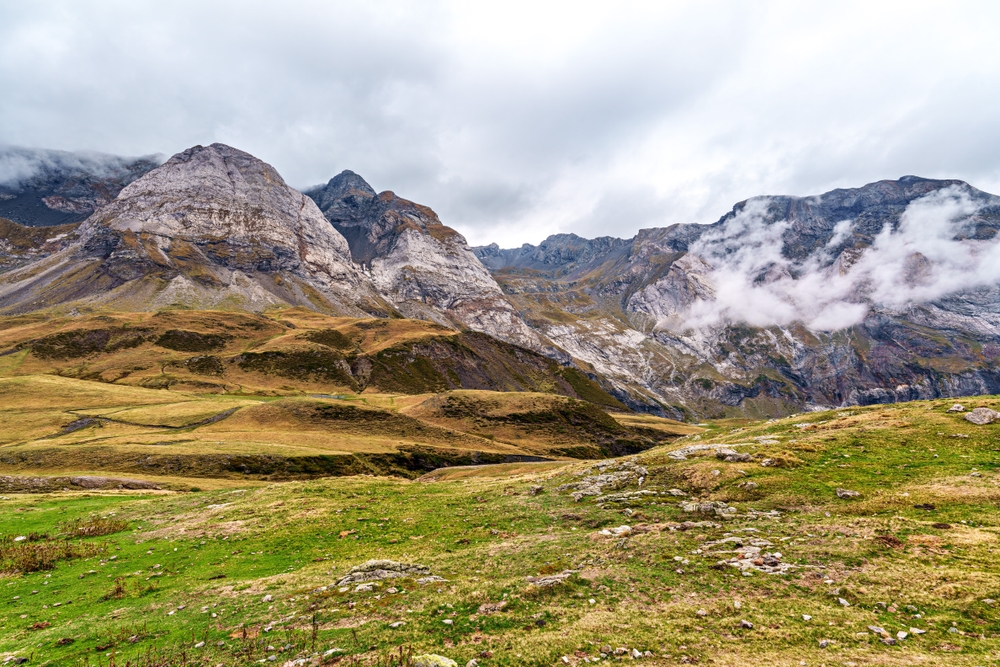
The Gavarnie cirque is just one of the three majestic glacial cirques that make up this exceptional part of the Pyrenees. Its two neighbours, Troumouse and Estaubé, are also well worth a visit to complete your discovery of this unique natural heritage.
The Troumouse cirque: the largest
Accessible from the village of Gèdre, the cirque de Troumouse impresses by its dimensions, even more imposing than those of Gavarnie. At 10 kilometres in circumference, it is the largest glacial cirque in Europe. A winding road leads up to Lac des Gloriettes at an altitude of 1,668 metres, the starting point for hikes in the cirque. During the summer season, a small tourist train takes you the last few kilometres to the Auberge de la Munia, making it easily accessible to families and less sporty visitors.
The cirque de Troumouse is characterised by its wilder, less-frequented character than Gavarnie. Its high-altitude pastures are still home to many herds during the summer, perpetuating the age-old pastoral traditions of the Pyrenees. There are several hiking trails to explore this grandiose site, including the complete cirque tour (around 6 hours), which offers changing views of this natural amphitheatre. Troumouse is particularly popular with geologists for its limestone strata, which tell the story of the formation of the Pyrenees.
The Estaubé circus: a well-kept secret
More private and less accessible than its two illustrious neighbours, the cirque d’Estaubé is an ideal destination for hikers looking for tranquillity. It can be reached from the Lac des Gloriettes by walking up the Gave d’Estaubé for around 2 hours. Although smaller in scale, the cirque is no less spectacular, with walls over 1,000 metres high and peaks reaching 3,000 metres.
The Cirque d’Estaubé is an unspoilt, authentic place. The fact that there are no roads to the bottom of the cirque has meant that the environment has remained totally unspoilt, with nature reigning supreme. The green pastures contrast magnificently with the grey rocky bars, creating a picture of raw beauty. For birdwatchers, this is a great place to spot griffon vultures, bearded vultures and golden eagles nesting on the cliffs.
9. Where to stay near the Cirque de Gavarnie?
Accommodation near the Cirque de Gavarnie offers a wide range of options to suit all budgets and tastes, from wilderness camping to the comfort of a hotel with spa. Spending one or more nights on site allows you to make the most of the site, and in particular to discover the cirque in the early hours of the morning when the low-angled light sublimates the relief.
Hotels and inns in the village
The village of Gavarnie boasts a number of charming hotels that combine comfort with mountain authenticity. The Hôtel du Cirque et de la Cascade, a 4-star establishment in the heart of the village, offers rooms with a view of the cirque and a gourmet restaurant featuring local produce. Le Taillon, a family-run hotel renowned for its warm welcome, offers a friendly atmosphere much appreciated by hikers. Hôtel Le Marboré, with its typical Pyrenean architecture, has comfortable rooms and a restaurant serving generous traditional cuisine.
For more economical accommodation without sacrificing authenticity, the Auberge du Maillet offers single rooms as well as 25-person dormitories, perfect for groups or hikers on a budget. These establishments fill up quickly in the high season (July-August), so it is advisable to book several months in advance to guarantee your accommodation.
Campsites and alternative solutions
There are a number of serviced campsites in Gavarnie and surrounding villages such as Gèdre and Luz-Saint-Sauveur. Camping Le Pain de Sucre in Gèdre offers beautiful mountain views and spacious pitches for tents, caravans and motorhomes. These campsites generally have modern sanitary facilities, children’s play areas and sometimes swimming pools, making for a comfortable stay in the heart of nature.
For total immersion in the mountains, several guarded refuges line the trails around the cirque. The Sarradets hut (2,587 m), the Brèche de Roland hut and the Espuguettes hut are ideal for touring hikers. These Club Alpin Français huts offer meals and dormitory accommodation in an authentic mountain atmosphere. Booking is compulsory and strongly recommended several weeks in advance for peak periods.
10. Gastronomy and local specialities
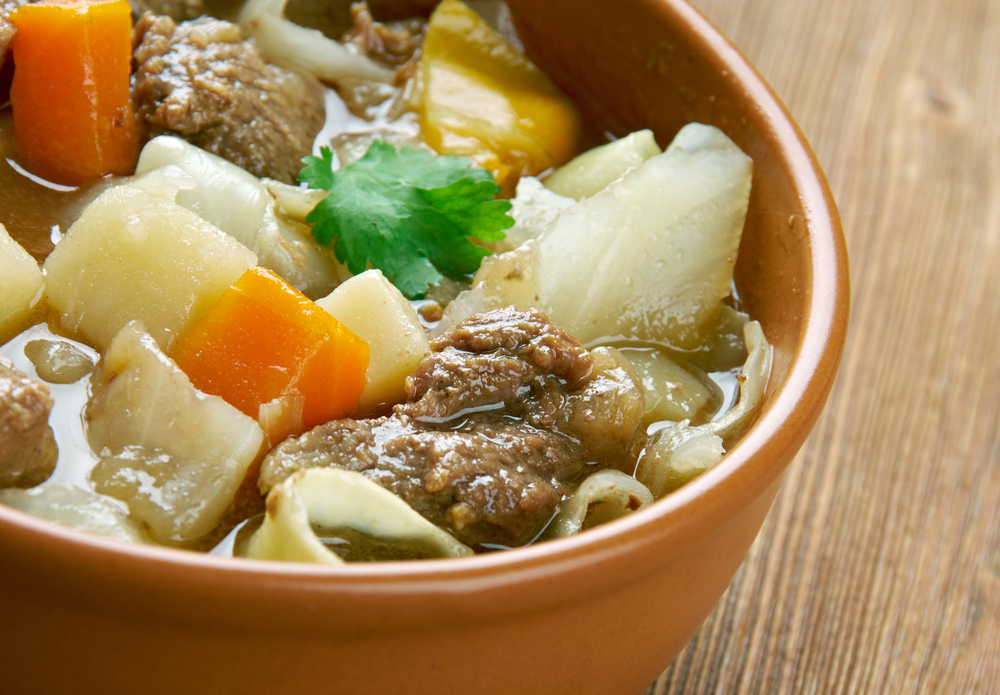
Discovering the Cirque de Gavarnie is the perfect way to explore the flavours of the Pyrenees. The local gastronomy, generous and comforting, draws its inspiration from the mountain’s pastoral and agricultural traditions. The restaurants of Gavarnie and the surrounding villages perpetuate these ancestral recipes, sublimating them with exceptional products.
Garbure, a hearty soup made with vegetables, confit and white beans, is the signature dish of the Pyrenees. Served steaming hot after a day’s hiking, it warms both body and soul. Barèges lamb, reared in the mountain pastures, is a tender, fragrant meat that can be enjoyed roasted or in a navarin. Ewe’s milk cheeses such as Barousse or Bethmale are the perfect accompaniment to a plate of local charcuterie, including Bigorre black ham and ventrèche.
Don’t leave the region without trying the croustade aux pommes, a traditional dessert of thin sheets of crisp pastry topped with apples, prunes and Armagnac. Local patisseries also offer gâteau à la broche, a spectacular spit-roasted speciality whose shape is reminiscent of the stalactites in Pyrenean caves. To accompany these dishes, Madiran and Jurançon wines, produced on the hillsides at the foot of the Pyrenees, are the perfect accompaniment to regional cuisine.
11. UNESCO heritage and environmental protection
The Cirque de Gavarnie benefits from exceptional dual protection that recognises its universal value. Since 1997, it has been listed as a UNESCO World Heritage Site as part of the “Pyrenees – Mont Perdu” cross-border property, which includes the three French cirques (Gavarnie, Troumouse, Estaubé) and three Spanish canyons (Ordesa, Anisclo, Escuain). This international recognition underlines the geological, ecological and cultural importance of this site, where nature and traditional human activities have coexisted harmoniously for thousands of years.
The Pyrenees National Park, created in 1967, also ensures the protection of this exceptional natural area. Strict rules govern human activities in the park to protect the fauna, flora and landscapes. Dogs are only allowed on the main path as far as the Hôtellerie du Cirque and must be kept on a lead. Bivouacking is regulated (authorised from 7pm to 9am only, and more than an hour’s walk from the park boundary). These measures, far from hindering the discovery of the site, guarantee its survival for future generations.
During your visit, adopt good eco-responsible habits: stay on the signposted paths so as not to damage the fragile vegetation, take away all your rubbish (even organic), don’t pick flowers or plants, and don’t disturb the wild fauna. These simple gestures help to minimise the impact of the 1.5 million visitors each year on this fragile ecosystem. By following these rules, you are helping to preserve this natural jewel that has fascinated mankind since the dawn of time.
12. Best time to visit Cirque de Gavarnie
The Cirque de Gavarnie can be visited all year round, with each season offering a different experience and landscape. The choice of season depends on your expectations, your level of hiking and the activities you wish to enjoy.
Spring (May-June) is an ideal time to observe nature in full renaissance. The melting snow generously feeds the Grande Cascade, which then reaches its maximum flow, offering an impressive visual and aural spectacle. The meadows are decked out in a thousand colours as rhododendrons, gentians and anemones bloom. The crowds remain moderate, allowing you to enjoy the site in relative tranquillity. Beware, however, that some of the high altitude paths may still be snow-covered and require special equipment.
Summer (July-August) is the peak tourist season, with large numbers of visitors, particularly at weekends and during the school holidays. The weather conditions are generally favourable, all the paths are clear and all the tourist infrastructure is in full operation. This is the ideal time of year for families and for hiking to the Brèche de Roland or the surrounding peaks. To avoid the crowds, opt for early morning departures or weekday visits.
Autumn (September-October) probably offers the best compromise between favourable weather conditions and reasonable visitor numbers. The autumn colours transform the beech and pine forests into a festival of warm hues (ochre, russet, gold) that contrast magnificently with the grey of the limestone cliffs. Temperatures remain pleasant during the day, although the nights become cooler. The first snowflakes can appear as early as October at higher altitudes, marking the transition to winter.
Winter (December-March) transforms the cirque into an enchantingly beautiful realm of ice and snow. The Grande Cascade freezes into a spectacular cascade of ice, the rock faces are adorned with frosted lace, and the silence of the winter mountain creates an almost mystical atmosphere. This is the domain of snowshoers, cross-country skiers and experienced mountaineers. Access to the cirque requires special equipment and experience of snow-covered mountains, but rewards visitors with a unique and privileged experience.
In conclusion, the Cirque de Gavarnie remains one of the most precious natural treasures in France and the Pyrenees. This cathedral of stone, shaped by thousands of years of glacial erosion, offers breathtaking panoramas accessible to all. Whether you choose the family hike to the Hôtellerie du Cirque, the sporting climb to the Brèche de Roland, or the winter snowshoeing expedition, this UNESCO site promises an unforgettable experience. Take the time to explore the neighbouring cirques of Troumouse and Estaubé to appreciate the rich geology and landscape of this exceptional massif. And to extend your discovery of Occitanie and its natural wonders, don’t hesitate to explore the Navaway audioguide tours available in Pyrenean towns such as Toulouse and other destinations in the region, which will allow you to continue your cultural and heritage journey on your own.
Frequently asked questions about the Cirque de Gavarnie
How long does it take to visit the Cirque de Gavarnie?
For the classic hike to the Hôtellerie du Cirque, allow 3 hours round trip (8 km, 200 m ascent). If you wish to reach the foot of the Grande Cascade, add a further 1? hours. For a full visit, including the alternative viewpoints, allow a whole day.
Is hiking in the Cirque de Gavarnie accessible to children?
Yes, the main path to the Hôtellerie du Cirque is perfect for families with children. The path is wide and well-maintained, with a moderate gradient. Pack donkeys are also available for younger children. On the other hand, access to the foot of the waterfall has some steeper sections that are less suitable for very young children.
Can you visit the Cirque de Gavarnie in winter?
The cirque can be visited all year round, and is particularly beautiful in winter with its snow-covered landscapes. Snowshoes are essential when the snow covers the paths. Eleven signposted routes allow you to explore the site in complete safety. We recommend that you take a professional guide with you for your first winter discovery.
Do I have to pay to go to the Cirque de Gavarnie?
Access to the circus itself is free. Only parking in the village of Gavarnie is subject to a charge: €8 per 24 hours in the car parks at the entrance to the village, or €10 for camper vans in the dedicated serviced area. As the village is closed to car traffic, these car parks are compulsory.
When is the best time to see the Grande Cascade at its best?
Spring (May-June) and early summer (July) are the ideal times to admire the Grande Cascade in all its power. The melting snow and glaciers generously feed the waterfall, which can reach a flow of over 100 cubic metres per second, creating a roar that can be heard several hundred metres away.
Can you take your dog to the Cirque de Gavarnie?
Dogs are only allowed on the main path between the village and the Hôtellerie du Cirque, and must be kept on a lead. Dogs are not allowed beyond this point, as you are entering the heart of the Pyrenees National Park, where the presence of dogs could disturb the wildlife. These rules are designed to protect the cirque’s fragile ecosystem.
Where can we eat on site?
The village of Gavarnie has several restaurants, crêperies and bars where you can eat before or after your hike. L’Hôtellerie du Cirque, located at the foot of the cirque, a 1h30 walk from the village, also has a restaurant open from May to October (depending on snow conditions) from 12 noon to 2.30pm, 7 days a week, without booking. Takeaway meals are also available. But don’t forget to bring water and snacks for the hike.
What’s the difference between the three circuses?
Gavarnie is the most famous and most visited, renowned for its Grande Cascade and Brèche de Roland. Troumouse is the largest (10km in circumference) and wildest, with a more pastoral character. Estaubé is the smallest and most confidential, accessible only on foot, offering an authentic, unspoilt atmosphere. The three cirques, although different, share the same geological origin and together form an exceptional natural heritage.
200 audioguided tours for cities all around the world
Download