Excursions around Lille: 14 ideas for day trips
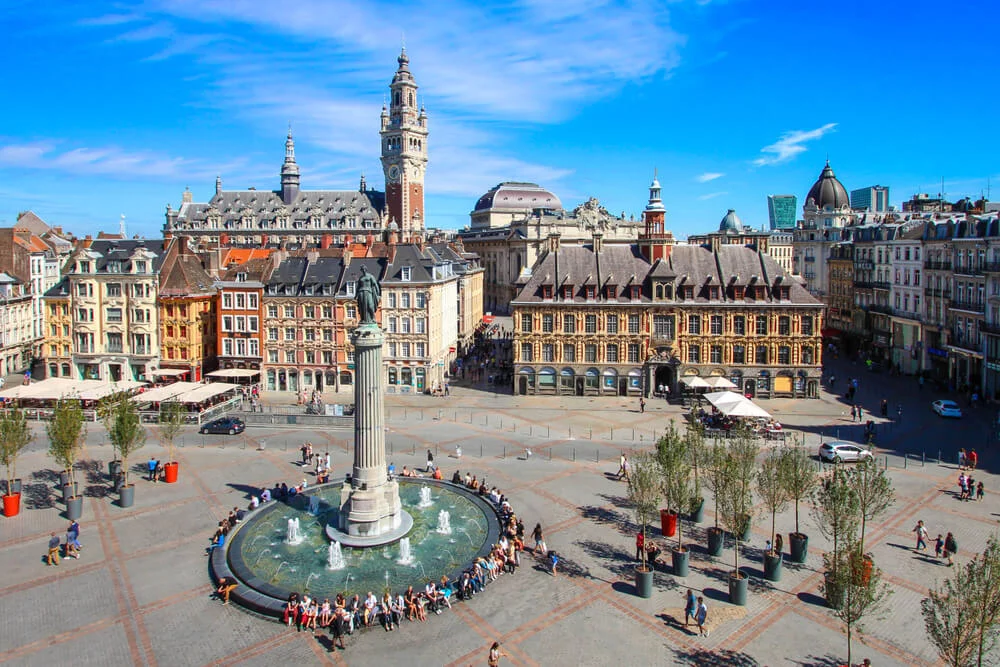

Looking to get away from the capital of Flanders for a day? The Lille region is full of things to discover, from the charming Flemish towns of Belgium to the beaches of the Côte d’Opale and the historic sites of the Great War. Whether you’re an architecture enthusiast, a history buff, a nature lover or just looking for a change of scenery, these 14 excursions around Lille promise unforgettable discoveries less than two hours away. Put on your walking shoes and let us guide you through the most beautiful destinations in Hauts-de-France and Belgium.
Also read about the Lille guide:
- What to do in Lille Top 7 activities + Good tips
- 20 must-see things to do in Hauts-de-France
- Top 11 culinary specialities in Lille
- Top 4 events in Lille
- Top 5 best hotels in Lille
- 20 not-to-be-missed excursions around Brussels
- Top 6 things to do in Calais
- The most beautiful villages to visit around Lille
1. Bruges, the Venice of the North
Distance: 115 km (1h15 by car)
Recommended time: Full day
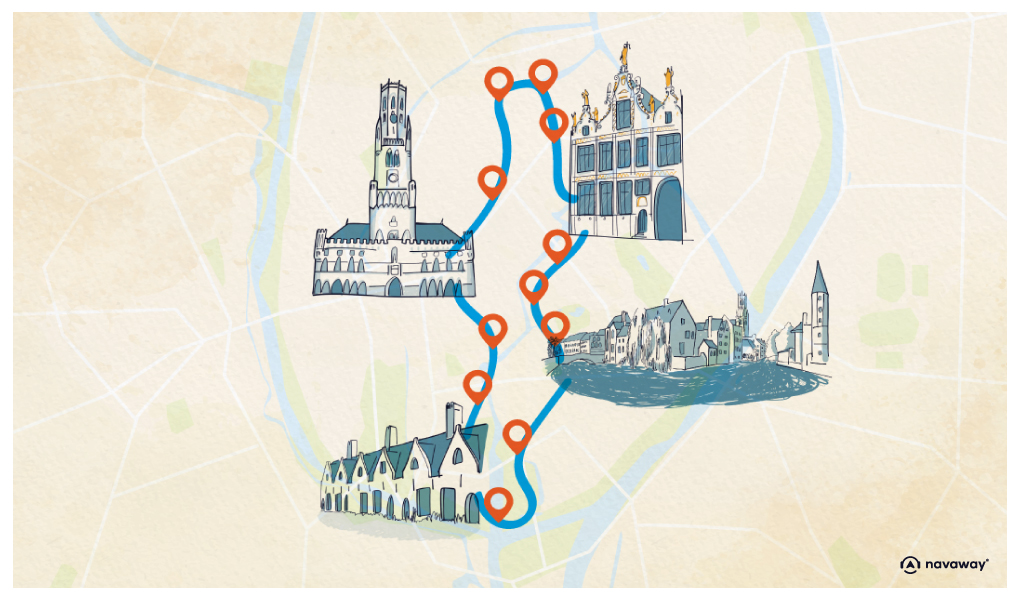
First excursion around Lille, and certainly one of the most magical: Bruges, this Belgian medieval gem listed as a UNESCO World Heritage Site. Nicknamed the Venice of the North for its romantic canals winding between red brick facades and gabled houses, Bruges is a timeless city that instantly charms its visitors.
Start your visit at the Grote Markt, dominated by the imposing 83-metre-high belfry. Don’t hesitate to climb its 366 steps for an exceptional panoramic view of the city. Then stroll along the Quai du Rosaire (Rozenhoedkaai), probably the most photographed spot in Bruges, with its picture-postcard view of the canals and the belfry. A boat trip on the canals will allow you to admire the city from a different angle and discover nooks and crannies inaccessible on foot.
Don’t miss the Beguinage, a haven of peace founded in the 13th century, or Notre-Dame church, home to Michelangelo’s famous Madonna and Child. Art lovers will love the Groeninge Museum and its Flemish Primitives, while gourmets will delight in one of the many artisan chocolate shops for which the city is famous. For a gourmet break, take a seat on the terrace of the Place du Bourg and enjoy a Belgian waffle or mussels and chips accompanied by a local beer.
2. Ghent, Flanders’ best-kept secret
Distance: 70 km (1 hour by car)
Recommended time: Full day
Less well known than Bruges but just as fascinating, Ghent is an excursion around Lille not to be missed. This dynamic student city brilliantly blends medieval heritage with a bohemian atmosphere, offering an authentic and lively ambience far from the hordes of tourists.
The historic heart of Ghent is centred around the Graslei and Korenlei quays, lined with superb guild houses dating back to the Middle Ages. These facades, with their varied architectural styles, are majestically reflected in the waters of the Lys, creating a picture perfect for photography enthusiasts. From the Saint-Michel Bridge, you can enjoy a breathtaking view of the city’s three emblematic towers: the Belfry, Saint-Bavon’s Cathedral and Saint-Nicolas Church.
St Bavo’s Cathedral is well worth a visit: it houses the altarpiece of the Mystic Lamb by the Van Eyck brothers, considered one of the masterpieces of Flemish art. The Castle of the Counts (Gravensteen), an imposing medieval fortress in the heart of the city, will plunge you into the history of the Counts of Flanders. Then explore the picturesque Patershol district with its narrow cobbled streets, perfect for finding a traditional restaurant where you can enjoy a waterzooi, the typical Ghent stew. Finish your day with a stroll through the trendy Sint-Pietersnieuwstraat district, home to students and local artists.
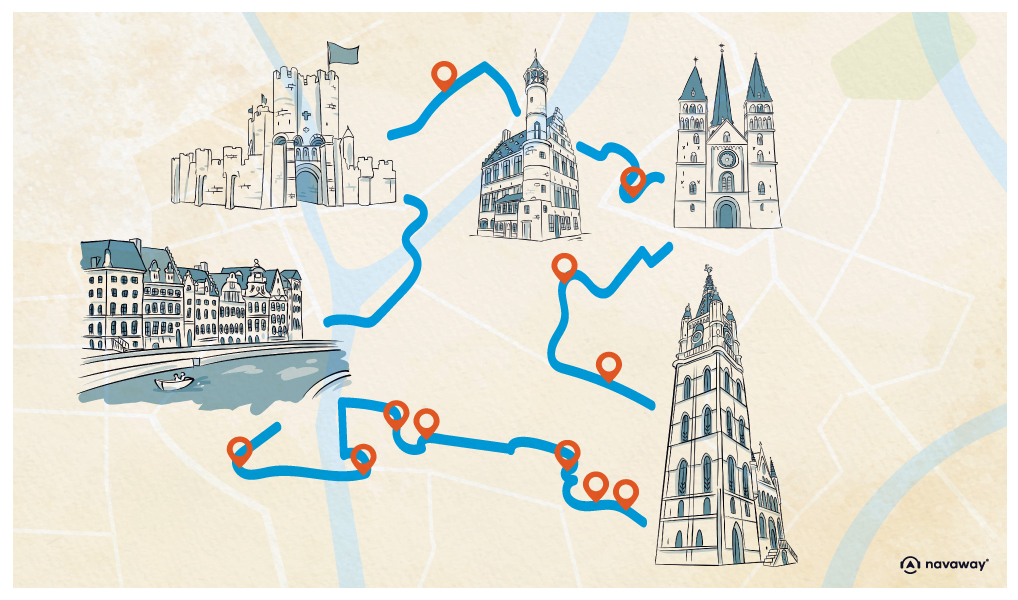
Download the audio-guided tour to discover Ghent on foot and on your own
For a fun and rewarding way to explore Ghent, opt for the Navaway audio tour. This 2h70 guided tour takes you through 19 major places of interest, from the romantic quays and medieval castle to the lively squares and Gothic churches. Thanks to the audio guides available on your smartphone, discover the historical anecdotes and secrets of this Flemish city at your own pace.
3. Arras and its Wellington quarry
Distance: 52 km (45 minutes by car)
Recommended time: Half to full day
Among the excursions around Lille, Arras stands out for its exceptional Flemish architecture and its heritage linked to the First World War. This Pas-de-Calais town boasts one of the most beautiful Grand-Place squares in France, surrounded by 155 Flemish Baroque facades with elegant gables that create an architectural ensemble of rare harmony.
The Arras Belfry, a UNESCO World Heritage Site, rises to 75 metres and offers a panoramic view of the town after climbing its 232 steps. But the most moving visit is to the Carrière Wellington (rue Arthur Delétoille, 62000 Arras, rated 4.6/5 on Google out of more than 4,500 reviews). 20 metres underground, this network of underground galleries bears witness to the 1917 Battle of Arras. British soldiers dug miles of tunnels to prepare for the offensive, creating a veritable underground city. The immersive guided tour, lasting around 1 hour 15 minutes, plunges you into the daily lives of the soldiers, with poignant accounts and period artefacts.
Continue your tour at Saint-Vaast Abbey, now home to the Musée des Beaux-Arts, with collections ranging from Antiquity to the 20th century. Take a stroll through the medieval cellars (les Boves) that run beneath the town and were once used as warehouses and shelters. Those with a sweet tooth won’t want to miss the rats of Arras, delicious chocolates in the shape of… a reference to a local legend.
4. Amiens and its hortillonnages
Distance: 120 km (1h30 by car)
Recommended time: Full day
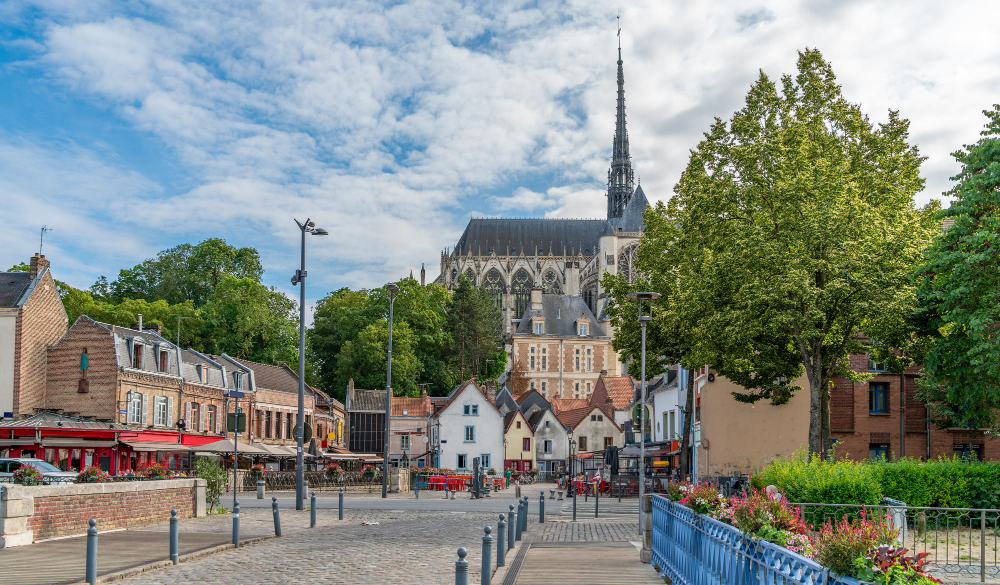
Head for the Somme to discover Amiens, a city with an exceptional heritage dominated by its Gothic cathedral, the largest in France. This architectural marvel, a UNESCO World Heritage Site, impresses with its colossal dimensions and the finesse of its sculpted façade. In summer, don’t miss the “Chroma” night-time show, which illuminates the façade in a thousand colours and brings the medieval sculptures to life.
But Amiens is also a unique nature experience with the hortillonnages, floating gardens spread over 300 hectares of canals and green islets. Explore this labyrinth of vegetation by electric boat or canoe-kayak for a bucolic stroll through the heart of the city. The hortillonnages are still farmed by a handful of market gardeners who continue this age-old tradition, and you may be able to buy their fresh vegetables directly from your boat.
The Saint-Leu district, nicknamed the “Little Venice of the North”, is also well worth a stroll, with its colourful houses, weeping willow-lined canals and many lively restaurants and bars. Fans of Jules Verne will want to visit the house where the writer lived out his last twenty years, now a museum (2 rue Charles-Dubois, 80000 Amiens, rated 4.3/5 on Google for over 1,800 reviews). If you’re travelling with the family, the Amiens zoological park, one of the finest in France, will delight young and old alike with its 200 animal species.
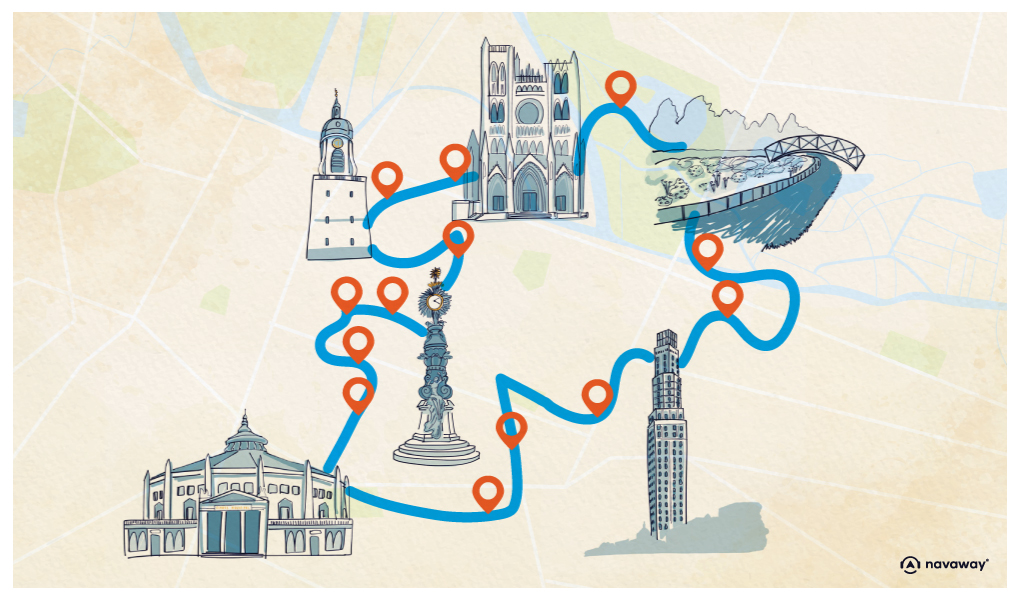
Download the audio tour to discover Amiens on foot and on your own
Navaway offers you the chance to visit Amiens on a 7.4 km audio tour that will take you past 27 major points of interest in around 3 hours 15 minutes. From the majestic cathedral to the charming hortillonnages, via the Saint-Leu district and the home of Jules Verne, let yourself be guided as you explore the heart of the Somme valley, with enlightening commentary at every stage.
5. Dunkirk and the beach at Malo-les-Bains
Distance: 80 km (1 hour by car)
Recommended time: Full day
For a seaside excursion around Lille, head for Dunkerque and its famous Malo-les-Bains beach, nicknamed “the Queen of the Northern beaches”. This beautiful stretch of fine sand, lined with colourful cabins and Belle Époque Anglo-Norman villas, is the ideal setting for a relaxing day by the North Sea. In summer, enjoy water-based activities such as sand yachting and kitesurfing, while in the off-season an invigorating stroll along the dyke will allow you to admire the comings and goings of ships in the harbour.
As well as its beach, Dunkirk has a rich heritage to discover. The belfry of the town hall, a UNESCO World Heritage Site, stands 58 metres high and is open to visitors. The port museum will plunge you into the city’s maritime history, with three historic ships moored in the basin. But the must-see is the Memorial of Remembrance dedicated to Operation Dynamo in May-June 1940, when more than 300,000 Allied soldiers were evacuated from the beaches of Dunkirk under German bombardment. This moving museum, housed in the former headquarters of Admiral Abrial, recounts this crucial episode of the Second World War (rue des Chantiers de France, 59140 Dunkerque, rated 4.6/5 on Google out of more than 3,000 reviews).
If you visit Dunkerque in February or March, you may be lucky enough to catch the famous Dunkerque Carnival, one of France’s wildest popular festivals, where the people of Dunkerque march to music and throw herrings into the crowd!
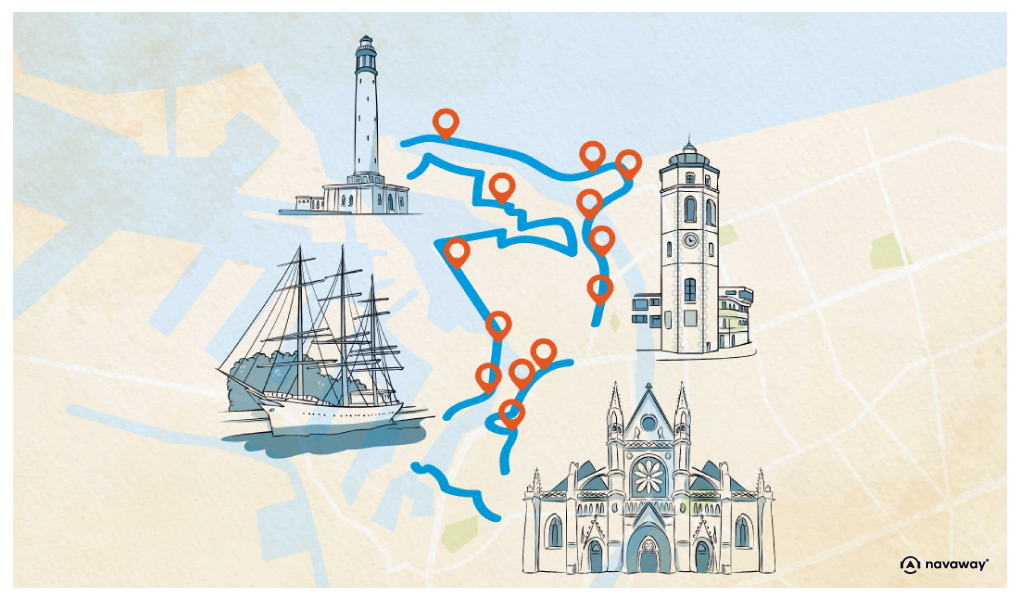
Download the audio tour to discover Dunkirk on foot and on your own
To make sure you don’t miss out on anything of Jean Bart’s city, follow the Navaway itinerary, which takes you on a 7.8km tour of 22 places of interest in 3 hours 10 minutes. From the historic fortifications to the emblematic port, via places of remembrance and the seafront, discover all the facets of Dunkirk thanks to the audio guides that enhance each stage of your walk.
6. The Audomarois marshes at Saint-Omer
Distance: 60 km (50 minutes by car)
Recommended time: Half to full day
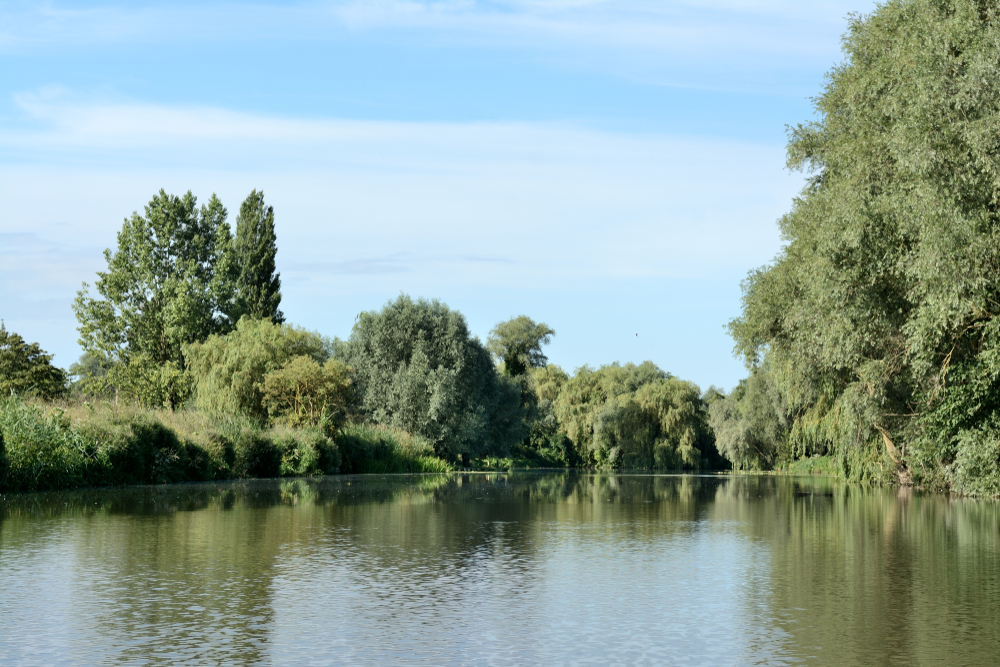
Classified as a biosphere reserve by UNESCO, the Audomarois marshland is an exceptional nature excursion around Lille. This vast 3,700-hectare marshland, France’s last remaining market garden marsh, extends over 15 communes and offers a unique landscape of floating gardens, canals and wet meadows. More than 170 kilometres of navigable waterways criss-cross this unspoilt area where nature has retained its rights.
The best way to discover the Audomarois marshes is to climb aboard a bacôve, a traditional flat-bottomed boat, for a guided tour of the watergangs (canals). Several service providers offer tours lasting an hour or more, allowing you to observe the marsh’s exceptional flora and fauna. You may come across grey herons, kingfishers or marsh harriers, and discover how market gardeners still grow their vegetables on these fertile islets accessible only by boat. You can also hire boats, canoes or kayaks to explore this aquatic labyrinth at your own pace.
Take advantage of your visit to discover Saint-Omer, a town of art and history well worth a visit, with its Notre-Dame cathedral and rich architectural heritage. Don’t miss the local library, housed in a former Jesuit college dating from the 18th century, which holds over 200,000 documents, including some precious medieval manuscripts (40 rue Gambetta, 62500 Saint-Omer, rated 4.5/5 on Google for over 200 reviews).
7. Lens and the Louvre-Lens
Distance: 35 km (35 minutes by car)
Recommended time: Half to full day
Lens, a former mining town, was brilliantly reinvented in 2012 with the opening of the Louvre-Lens, a branch of the famous Paris museum. The bold contemporary architecture of this museum, designed by the Japanese agency SANAA, stands at the heart of a 20-hectare landscaped park on the site of a former mining pit. The Grande Galerie, an impressive 3,000 m² space bathed in natural light, presents a unique chronological journey through 200 masterpieces from Antiquity to the 19th century. Temporary exhibitions, always of the highest quality, complete this exceptional cultural offering (99 rue Paul Bert, 62300 Lens, rated 4.5/5 on Google out of more than 8,000 reviews).
But Lens is also the story of the Nord-Pas-de-Calais coalfield, a UNESCO World Heritage Site. Just a few kilometres away, the twin slag heaps of Loos-en-Gohelle, at 180 metres the highest in Europe, offer breathtaking views over the region. These man-made black mountains, evidence of the industrial era, are now adorned with greenery and are home to a surprising biodiversity. The Fosses 11/19 site in Loos-en-Gohelle, with its restored industrial buildings and emblematic headframe, offers a moving journey into the world of the black faces.
To complete this historical immersion, visit the Canadian memorial at Vimy and the preserved trench in the Memorial Park, poignant places of remembrance of the First World War located around ten kilometres from Lens.
8. The Opal Coast: from Cap Blanc-Nez to Cap Gris-Nez
Distance: 130 km (1h40 by car)
Recommended time: Full day
Among the most spectacular excursions around Lille, the Côte d’Opale and its two emblematic capes offer breathtaking scenery. The Caps et Marais d’Opale Regional Nature Park protects these chalk cliffs that proudly overlook the English Channel, creating a wild and grandiose setting worthy of the finest British coastlines.
Start at Cap Blanc-Nez, which rises 134 metres above the sea and on a clear day offers exceptional views of the English cliffs just 30 kilometres away. The coastal path winds along the cliffs, offering breathtaking views of the deep blue sea contrasting with the brilliant white of the chalk. This 5-kilometre walk will take you to Cap Gris-Nez, the closest point to England. Its lighthouse, which can be visited, offers a 360° panorama of the sea and surrounding land.
The Deux Caps site is a walker’s paradise, with signposted footpaths leading through a variety of landscapes: spectacular cliffs, wild dunes, crans (valleys carved out by erosion) and bright green meadows where flocks of sheep graze peacefully. The flora and fauna are exceptional, with many species of seabird nesting on the cliffs. On a windy day, you can watch the colourful kites dancing in the sky, practised by the many kitesurfing enthusiasts.
Take a lunch break in Wissant, a charming seaside resort nestling between the two capes, renowned for its seafood and relaxed atmosphere. Or drive on to Audresselles and Ambleteuse, authentic fishing villages with grey granite houses.
9. Boulogne-sur-Mer and Nausicaá
Distance: 125 km (1h30 by car)
Recommended time: Full day
Extend your discovery of the Côte d’Opale with a visit to Boulogne-sur-Mer, France’s leading fishing port, which combines historical heritage with maritime attractions. The old upper town, surrounded by perfectly preserved medieval ramparts, can be explored on foot, with its cobbled streets, old houses and the imposing domed Basilica of Notre-Dame dominating the city.
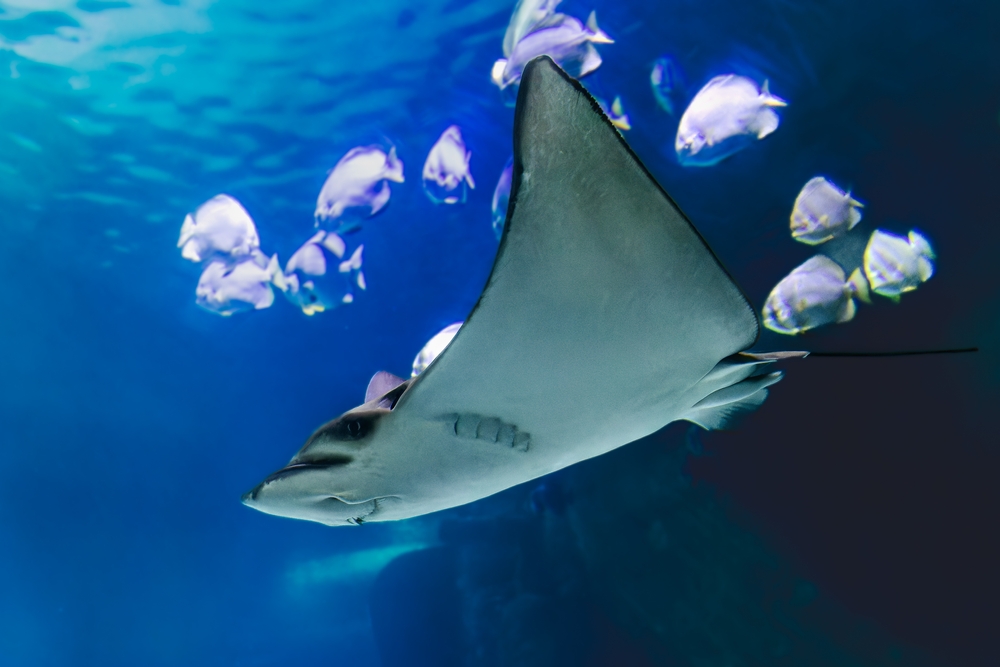
But Boulogne’s star attraction is Nausicaá, Europe’s largest aquarium (Boulevard Sainte-Beuve, 62200 Boulogne-sur-Mer, rated 4.5/5 on Google for over 26,000 reviews). This national marine centre offers a fascinating immersion into the world’s oceans, with over 60,000 marine animals from 1,600 different species. The giant 10-million-litre tank, the largest in Europe, brings you face to face with graceful manta rays, impressive sharks and schools of multicoloured fish evolving around a reconstructed shipwreck. Cape penguins, sea lions and hypnotic jellyfish complete this extraordinary aquatic journey. Allow at least 3 hours to fully enjoy the visit.
Boulogne town centre is also well worth a stroll, especially rue Thiers with its shops and fresh fish restaurants. Don’t miss the morning fish market on the Quai Gambetta to watch the arrival of the trawlers and the fish auction. For a panoramic view, climb up to the belfry of the town hall, which offers an unbeatable view of the town, the port and the sea.
10. Cassel and the Flanders Hills
Distance: 45 km (45 minutes by car)
Recommended time: Half day
Voted France’s favourite village in 2018, Cassel perched on Mount Cassel at an altitude of 176 metres offers an excursion around Lille full of Flemish charm. This typical Flanders village, with its brick houses, welcoming estaminets and emblematic mill, dominates the Flemish plain and on a clear day offers an exceptional 360° panoramic view all the way to Belgium and even the sea.
Stroll along the cobbled Grand Place, surrounded by beautiful Flemish houses with colourful facades, and push open the door of a traditional estaminet to sample a carbonnade flamande or a brown sugar tart accompanied by a local beer. The Moulin de Cassel, rebuilt exactly as it was when it was destroyed during the Second World War, is open to visitors and bears witness to the importance of milling in the region. The public garden laid out around the monument to Marshal Foch offers an exceptional panoramic view of the surrounding area.
Cassel also boasts a rich historical heritage, with its collegiate church of Notre-Dame, its Musée de Flandre housed in a former town house (26 Grand Place, 59670 Cassel, rated 4.4/5 on Google for over 350 reviews), and its fortifications, some of which are still standing. The village has been the scene of several historic battles, including one in 1677 when Louis XIV’s troops fought the Dutch.
The Monts de Flandre, of which Cassel is the highest point, offer beautiful walks through green hills dotted with windmills and typical villages. The Monts route takes you from Cassel to Steenvoorde, Boeschèpe and Bailleul, passing through surprisingly undulating countryside in this generally flat region.
11. Roubaix and the Villa Cavrois in Croix
Distance: 15 km (20 minutes by car)
Recommended time: Half day
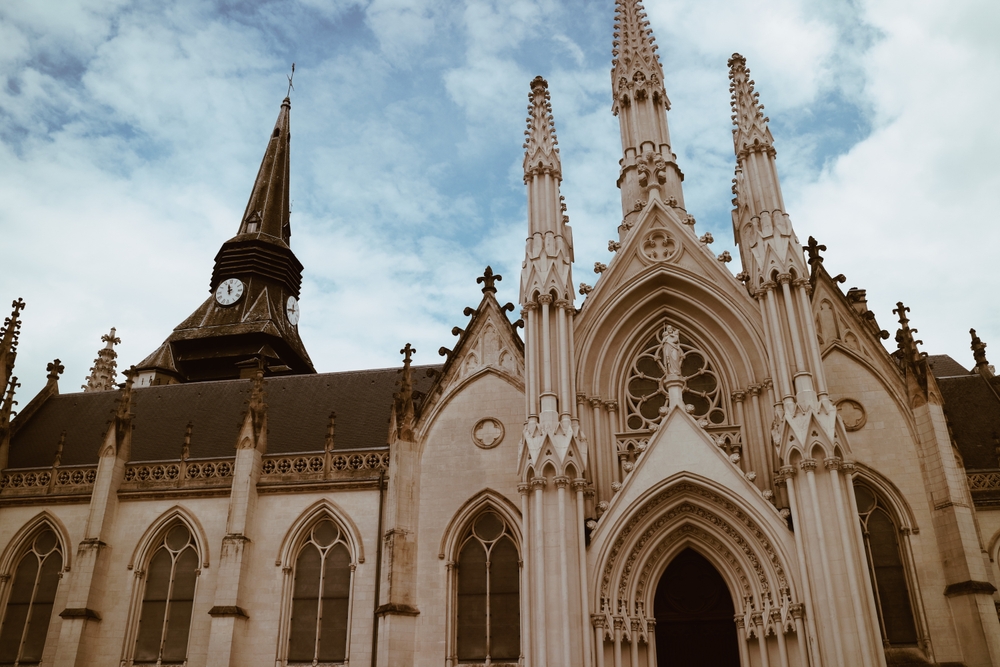
Just a stone’s throw from Lille, Roubaix and neighbouring Croix offer two major cultural visits. Start with the La Piscine museum in Roubaix (23 rue de l’Espérance, 59100 Roubaix, rated 4.6/5 on Google out of over 6,000 reviews), housed in a magnificent 1930s art deco swimming pool that has been converted into a museum. The swimming pool surrounded by cabins now houses an exceptional collection of decorative and fine arts, creating a unique setting for these works. The sculptures are reflected in the water of the pool, while the ceramics, textiles and paintings are displayed in the old cabins. A sculpture garden completes this surprising visit.
In Croix, don’t miss the Villa Cavrois (60 avenue du Président John Fitzgerald Kennedy, 59170 Croix, rated 4.5/5 on Google for over 5,500 reviews), a masterpiece of modernist architecture by Robert Mallet-Stevens. Built in 1932 for textile industrialist Paul Cavrois, this avant-garde 1,800 m² residence is a perfect illustration of the concept of the total work of art dear to its creator. After decades of neglect and meticulous restoration, the villa has been restored to its original splendour, with its art deco furniture and decor. The tour immerses you in the refined atmosphere of the 1930s, from the luminous reception room to the geometric garden, via the children’s bedrooms and the technological innovations of the period.
The Union district of Roubaix-Tourcoing is also well worth a visit, with its restored industrial architecture and cultural venues such as the Colisée and Le Fresnoy, the national studio for contemporary arts.
12. Ypres and the battlefields of the Great War
Distance: 45 km (45 minutes by car)
Recommended time: Full day
Head to Belgium for a trip around Lille that’s full of emotion and history. Ypres (Ieper in Flemish) was at the heart of some of the bloodiest battles of the First World War, and the entire town bears poignant witness to this devastating conflict. Completely destroyed and then rebuilt identically, Ypres has managed to preserve the memory of this tragic period while rediscovering its Flemish charm.
A must-see is the In Flanders Fields Museum, housed in the magnificent Halles aux draps (Cloth Halls) on the Grand Place (Grote Markt 34, 8900 Ypres, rated 4.6/5 on Google out of over 5,000 reviews). This modern, interactive museum traces the history of the region during the Great War through moving accounts, period objects and immersive reconstructions. Each visitor receives a personalised bracelet telling the story of someone who lived through the war in the region, creating a strong emotional link with this period.
Every evening at 8pm sharp under the Menin Gate, the Last Post ceremony pays tribute to the Commonwealth soldiers who fell in the Ypres Salient. This tradition has been maintained since 1928 (except during the German occupation of 1940-1944) and is a moving moment of remembrance. British war cemeteries dot the surrounding countryside, silent reminders of the sacrifice of hundreds of thousands of young soldiers. Tyne Cot, the largest Commonwealth cemetery in the world, with 12,000 white graves lined up as far as the eye can see, is a deeply moving place to visit.
If you have time, visit the Bellewaerde theme park to the east of Ypres, an original mix of theme park and zoo, perfect for a family outing.
13. Kortrijk, the little-known pearl of Flanders
Distance: 30 km (35 minutes by car)
Recommended time: Half to full day
Courtrai (Kortrijk in Dutch) is a real favourite when it comes to excursions around Lille, despite the fact that the French know little about it. This dynamic Flemish city on the banks of the Lys combines historic charm with creative modernity. Its Grand Place (Grote Markt), lined with lively terraces, is dominated by the UNESCO World Heritage-listed belfry and the beautiful Gothic town hall.
But the jewels of Kortrijk are undoubtedly the Broel Towers (Broeltorens), twin medieval towers that have spanned the River Leie since the 14th and 15th centuries. These remnants of the old fortifications make an exceptional photogenic backdrop, especially at sunset when their silhouettes are reflected in the calm waters of the river. The bridge that connects them offers an unbeatable view of these historic monuments.
The Kortrijk Beguinage (Begijnhof), a UNESCO World Heritage Site, is a haven of peace that takes you back in time, with its white houses surrounded by a green lawn and a chapel. These beguinages, typical of Belgium and northern France, were home to communities of pious women who lived according to religious rules without taking monastic vows. Stroll through the shopping streets of the centre, discover the church of Saint-Martin and its rich Baroque furnishings, and sit on a terrace to sample one of the many Belgian beers for which the country is famous.
14. Bergues, setting for the film Bienvenue chez les Ch’tis (Welcome to the Sticks)
Distance: 60 km (50 minutes by car)
Recommended time: Half day
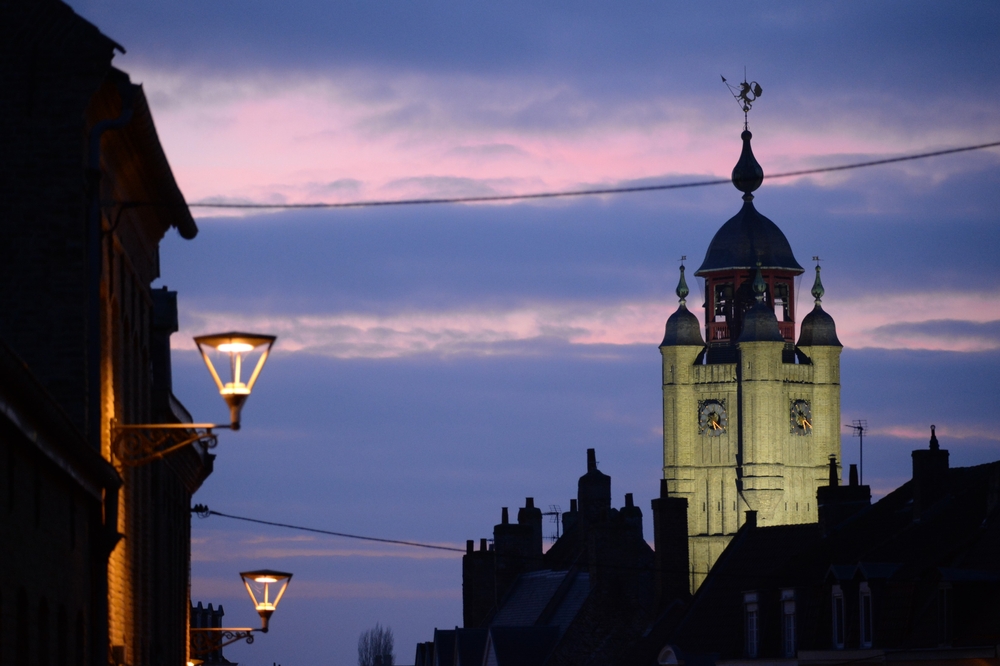
Round off these excursions around Lille with Bergues, the small fortified town made famous by the film “Bienvenue chez les Ch’tis”. Film fame aside, Bergues is well worth a visit for its remarkably well-preserved Flemish heritage. Entirely surrounded by ramparts and canals, this medieval town has retained its authenticity and charm of yesteryear.
The belfry, a UNESCO World Heritage Site, stands proudly at 47 metres high and, after climbing its 198 steps, offers a panoramic view of the town and the surrounding Flemish countryside. The Grand Place, with its typical red-brick houses and arcades, is an inviting place to stroll around. The church of Saint-Martin, rebuilt after its destruction in 1944, is home to some precious works of art, including several valuable Flemish paintings. The municipal museum, housed in the former Mont-de-Piété, boasts a fine collection of Flemish and French paintings (1 rue du Mont-de-Piété, 59380 Bergues, rated 4.3/5 on Google out of more than 600 reviews).
Fans of the film won’t want to miss the mythical post office (now a tourist office) and the Jacqueline bell, which rings every quarter of an hour. A walk along the ramparts will give you a good idea of the town’s defensive system, with its bastions, fortified gates and drawbridges. The Bergues Carnival, which takes place in February-March, perpetuates popular traditions with its colourful and festive procession typical of the North.
Take advantage of your visit to sample the local specialities in an estaminet: welsh, Flemish carbonnade or sugar pie, all washed down with a beer brewed in the region. The warm, friendly atmosphere of the Berguesians will make you understand why this town was chosen as the setting for the iconic film.
In conclusion, the Lille region is full of fascinating destinations that are well worth a day out. From the Flemish towns of Belgium steeped in history to the wild beaches of the Côte d’Opale, not forgetting the sites of remembrance of the Great War and natural treasures such as the Audomarois marshes, every excursion around Lille offers its share of discoveries and emotions. These 14 destinations will allow you to explore the cultural, historical and natural wealth of Hauts-de-France and border Belgium, while returning to the capital of Flanders in the evening. To complete your stay, don’t forget to visit Lille itself thanks to the Navaway audioguided itinerary, which will help you discover the 22 must-see places in the city on your own.
Frequently asked questions
What’s the best day out around Lille?
Bruges is often considered the most beautiful excursion from Lille, thanks to its perfectly preserved medieval centre, romantic canals and UNESCO World Heritage status. However, the Opal Coast, with its spectacular capes, offers breathtaking natural landscapes that are just as attractive to visitors in search of the great outdoors.
Can these excursions be made by public transport?
Yes, several destinations are accessible by train from Lille: Bruges, Ghent, Arras, Amiens and Courtrai all have good rail links. For natural sites such as the Capes or the Audomarois marshes, a car is preferable for greater flexibility. Lille tourist office also organises bus excursions to certain destinations.
Which excursion should you choose for a family outing?
For a family outing, Nausicaá in Boulogne-sur-Mer is a big hit with its giant aquariums that fascinate young and old alike. The Bellewaerde park near Ypres combines attractions and a zoo. For a day out in nature, the Audomarois marshes by boat or a hike in the Capes offer fun and educational experiences for children.
How long will it take to visit Bruges from Lille?
Allow a full day to enjoy Bruges to the full. The journey takes around 1 hour 15 minutes by car, which leaves 6 to 7 hours to visit the main monuments, take a boat trip on the canals, have lunch in a typical restaurant and stroll through the medieval streets without running.
When is the best time for these excursions?
Spring (April-June) and early autumn (September-October) are ideal, with pleasant temperatures and fewer tourists. Summer allows you to make the most of the beaches on the Opal Coast, but tourist sites such as Bruges are busier. Winter offers a special charm, especially for the Christmas markets, but some nature activities are limited.
200 audioguided tours for cities all around the world
Download