Discover the New Year’s concert in Vienna
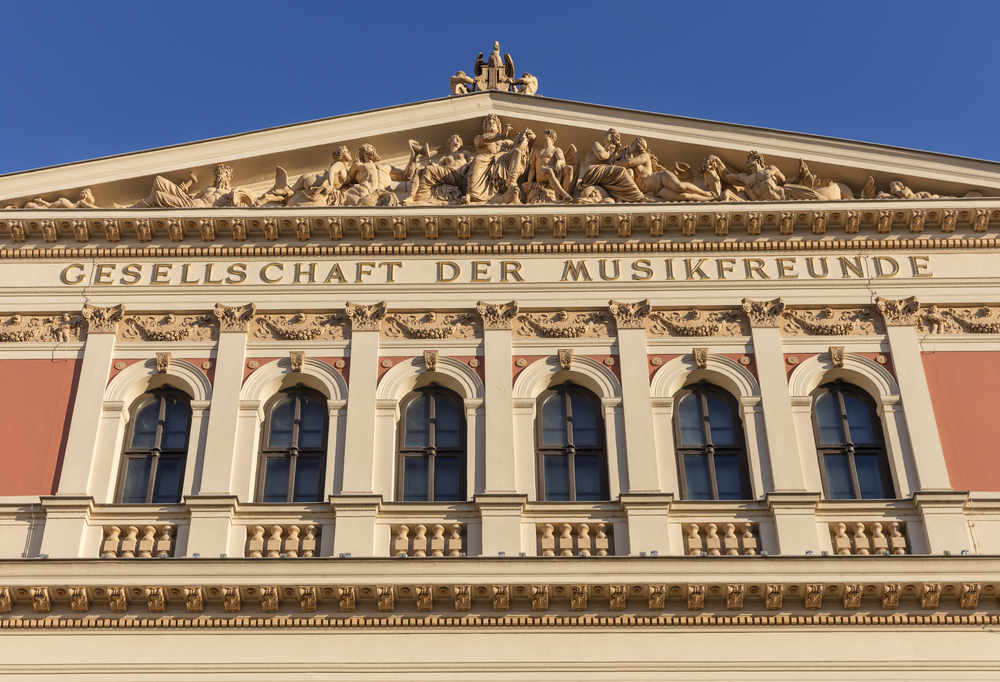

Every 1 January, the whole world turns its gaze to Vienna to witness one of the most prestigious musical events on the planet: the New Year’s Concert. For over eight decades, this Viennese tradition has thrilled millions of spectators in more than 90 countries. Broadcast live from the sumptuous Golden Hall of the Musikverein, this exceptional concert brings together the Vienna Philharmonic Orchestra for an enchanting programme consisting mainly of works by the Strauss family. With its lively waltzes, festive polkas and the legendary Radetzky March, the Vienna New Year’s Concert is the epitome of Austrian elegance and joie de vivre.
You can also read in the Vienna guide :
- Top 10 culinary specialities in Vienna
- Top 6 things to do in Vienna
- Top 5 best hotels in Vienna
- The 16 most beautiful places to visit in Austria
- A unique winter experience in Austria
- Best places to spend the Christmas holidays
A Viennese tradition born in 1939
The Vienna New Year’s Concert had its origins in 1939, when the conductor Clemens Krauss proposed for the first time a programme entirely dedicated to the Strauss dynasty. Initially scheduled for 31 December, this inaugural concert was intended to celebrate Viennese music and boost the population’s morale in a difficult historical context. It was an immediate success, and the tradition became a permanent fixture in the Austrian cultural landscape.
In 1941, the concert was moved to 1 January, a date it has retained ever since. This annual event quickly became one of the most eagerly awaited concerts in the world, a symbol of hope and renewal to start the year with music. Today, the Vienna New Year’s Concert is much more than just a musical event: it is a true cultural embassy for Austria around the world, conveying the values of refinement and tradition that characterise the Austrian capital.
The Musikverein: a prestigious setting for the concert
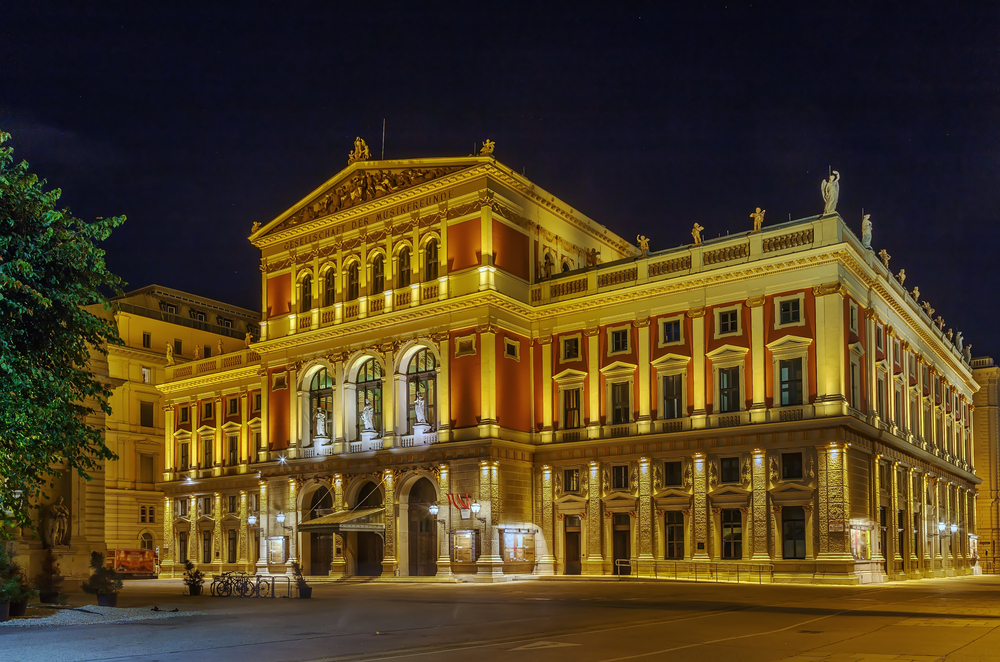
Vienna’s Musikverein, and more specifically its famous Golden Hall (Goldener Saal), has been the sumptuous setting for the New Year’s Concert since 1939. Inaugurated in 1870 by Emperor Franz Joseph I, this building, located at Musikvereinsplatz 1, 1010 Vienna, is considered one of the most beautiful concert halls in the world and boasts exceptional acoustics, renowned by the greatest musicians.
The Golden Hall takes its name from its sumptuous decoration: profuse gilding, caryatid statues representing the muses, a ceiling adorned with Apollo and majestic columns create an atmosphere that is both solemn and warm. With capacity for around 1,700 spectators, this historic hall is the ideal setting for a musical New Year’s Eve celebration. If you are lucky enough to attend the New Year’s Concert in Vienna, you will have an unforgettable experience in this temple of classical music.
The Strauss dynasty: at the heart of the musical programme
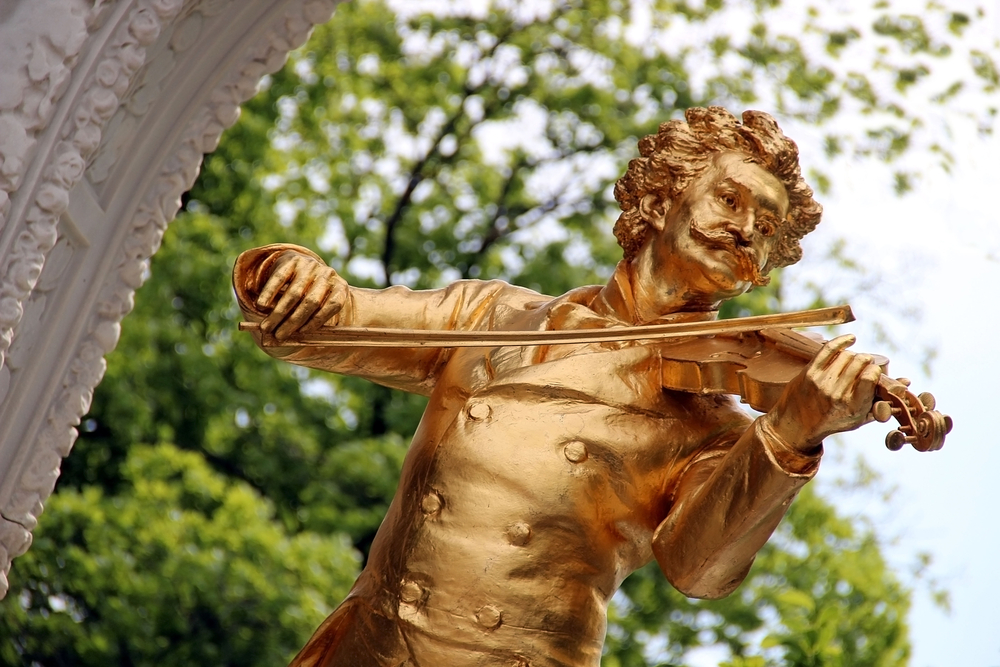
The programme for the Vienna New Year’s Concert focuses mainly on works by the Strauss family, a veritable musical dynasty that left its mark on Viennese culture in the 19th century. Johann Strauss II, nicknamed “the King of the Waltz”, occupies a prominent place with his rousing compositions that have travelled the world. His famous “Blue Danube” has become a veritable unofficial anthem of Austria and features regularly in the concert programme.
But Johann Strauss II is not the only member of this illustrious family to be celebrated at the New Year’s Concert in Vienna. His father, Johann Strauss I, composer of the famous Radetzky March which traditionally closes the concert in a festive and participatory atmosphere, and his brothers Josef Strauss and Eduard Strauss, also enrich the repertoire with their waltzes, polkas and marches. The programme occasionally includes works by other Austrian composers such as Franz von Suppé and Carl Michael Ziehrer, adding a touch of diversity while remaining true to the Viennese spirit.
The immutable ritual of the New Year’s Concert
Every New Year’s Concert in Vienna scrupulously respects certain traditions that are an integral part of the event. The concert always takes place on 1 January at 11.15 am (Vienna time) and lasts around two and a half hours. Two encore pieces are systematically performed at the end of the programme: firstly Johann Strauss II’s ‘The Blue Danube’, during which the conductor traditionally sends his best wishes to the audience and television viewers, and then the inevitable Radetzky March by Johann Strauss I.
This last piece gives rise to a unique moment when the audience in the Golden Hall beats time to the applause, guided by the conductor’s knowing gestures. This interaction between the orchestra and the audience creates an atmosphere of musical communion that perfectly sums up the spirit of the Vienna New Year’s Concert: elegance, joy and sharing. The venue’s floral decoration, made up of thousands of flowers donated by the town of Sanremo in Italy, adds a touch of freshness and colour to this winter event.
The conductors of the New Year’s Concert
Since its inception, the Vienna New Year’s Concert has been conducted by some of the world’s greatest conductors, each bringing his own personal vision and interpretation of the Straussian repertoire. For several decades, certain maestros have marked the history of the event with their recurring presence. Willi Boskovsky conducted the concert for 25 years (from 1955 to 1979), establishing a style of interpretation that remains a benchmark.
More recently, prestigious conductors such as Riccardo Muti (who conducted the concert in 2025), Zubin Mehta, Mariss Jansons, Gustavo Dudamel, Daniel Barenboim, Christian Thielemann and Franz Welser-Möst have had the honour of leading the Vienna Philharmonic Orchestra on this January 1st date. For the 2026 edition, Canadian conductor Yannick Nézet-Séguin will take the baton, promising a fresh and energetic interpretation of the Viennese repertoire. Every year, the choice of conductor arouses the interest and anticipation of music lovers the world over.
How to attend the New Year’s Concert in Vienna
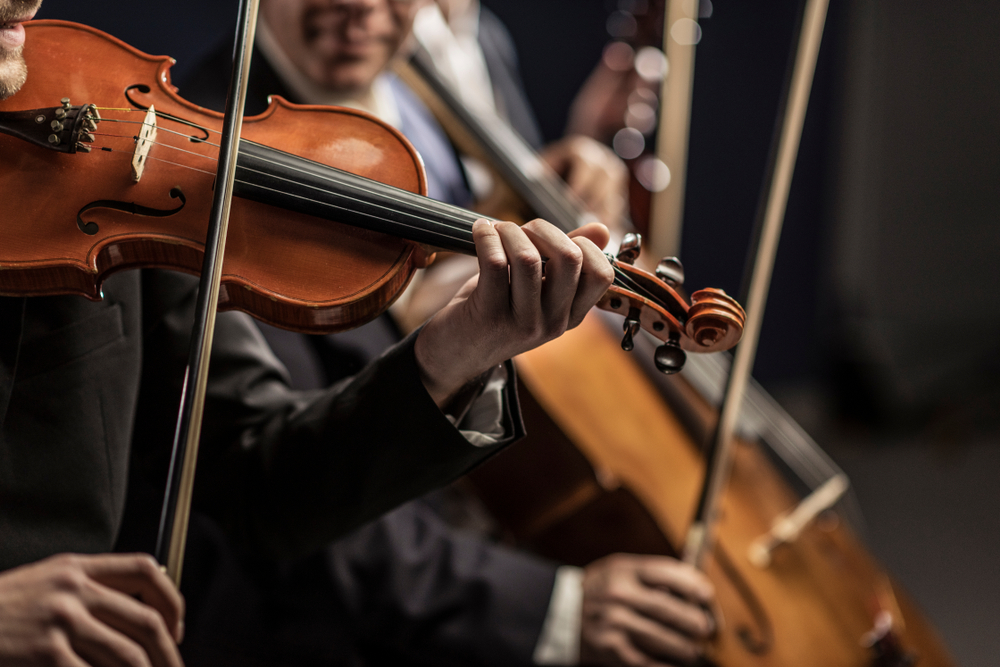
Attending the Vienna New Year’s Concert in the Musikverein’s Golden Hall is a dream come true for many classical music lovers. However, getting tickets is an uphill struggle, with demand far outstripping supply. Tickets are allocated by lottery each year, usually between January and February, for the following year’s concert. Entries can only be made via the Vienna Philharmonic’s official website.
Ticket prices for the Vienna New Year’s Concert vary considerably depending on the type of seat: from €35 for standing room to €1,200 for the best seats. There is also a New Year’s Eve Concert (30 December) and a Dress Rehearsal (31 December) which offer the same programme under similar conditions, with slightly lower prices. These two events are interesting alternatives for those who do not have tickets for the concert on 1 January, while offering a comparable musical experience in the exceptional setting of the Musikverein.
Watch the concert on television or online
If you can’t get tickets or prefer to experience the event from home, the New Year’s Concert in Vienna is broadcast live in over 90 countries around the world. In France, France 2 and France Musique traditionally broadcast the concert live from 11.15am on 1 January, with commentary on the works performed and the history of this legendary concert. The quality of the television coverage means that the beauty of the Golden Hall and the detail of the musical interpretations can be fully appreciated.
Numerous streaming platforms also offer broadcasts of the concert, sometimes on a delayed basis, enabling a worldwide audience to share in this special moment. For millions of people, watching the New Year’s Concert in Vienna has become a family tradition, marking the start of the New Year under the best musical auspices. This televisual accessibility has greatly contributed to making this event one of the most watched concerts in the world, with an estimated audience of several tens of millions.
Download the audio-guided tour to discover Vienne on foot and on your own
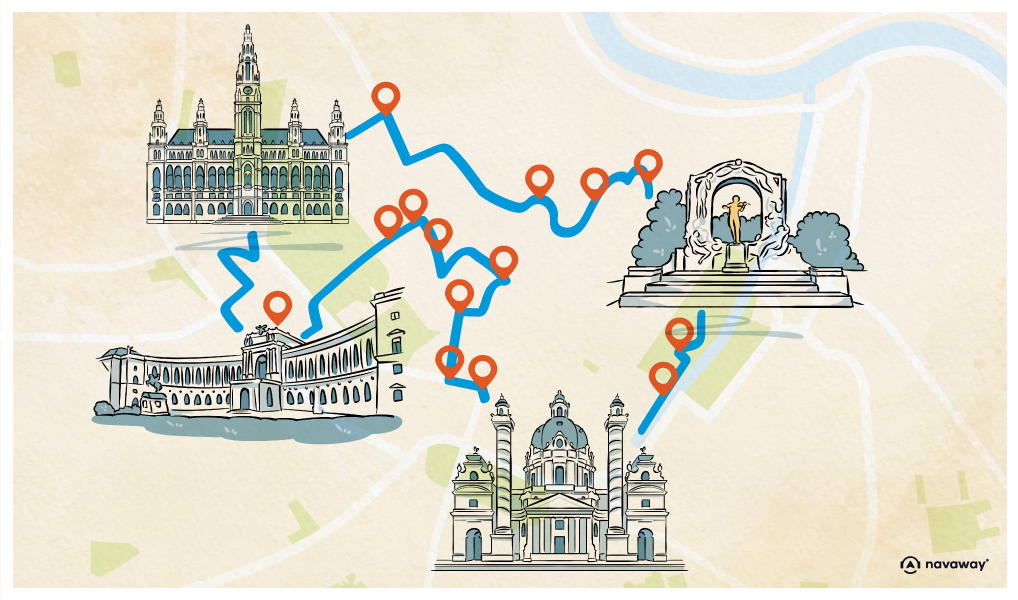
If you’re heading to Vienna to try your hand at the New Year’s Concert or simply to discover this magnificent imperial capital, why not take advantage of your stay to visit Vienna in depth? Navaway offers a comprehensive audio tour that will allow you to explore the city’s architectural, historical and cultural treasures at your own pace. From St Stephen’s Cathedral to the Hofburg Palace, via the charming alleyways of the historic centre, this route will help you discover the very essence of Vienna.
The Navaway application turns your smartphone into a personal guide that accompanies you on your discovery of Vienna. Thanks to 26 carefully selected points of interest with commentary, you’ll understand why Vienna was the beating heart of the Austro-Hungarian Empire for centuries. Between two visits, don’t hesitate to stop off at one of Vienna’s famous cafés to enjoy a slice of Sachertorte or an Apfelstrudel, veritable institutions of local gastronomy that you can also discover during your visit.
Vienna, much more than a New Year’s concert
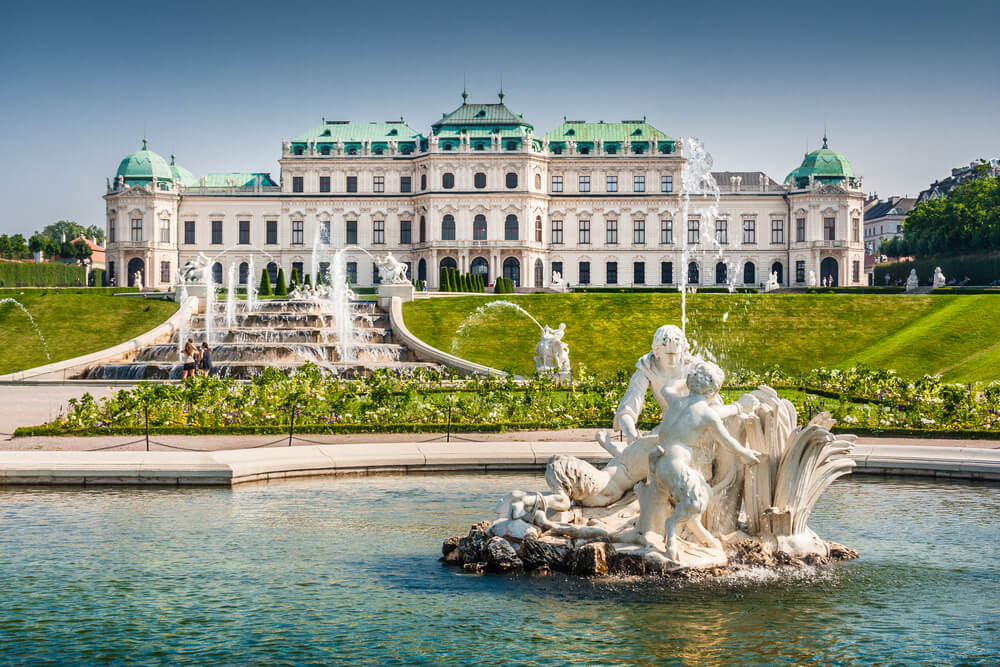
While the New Year’s Concert in Vienna is an exceptional event, the Austrian capital deserves to be discovered all year round for its countless treasures. An imperial city par excellence, Vienna is home to breathtakingly beautiful monuments such as Schönbrunn Palace, the former summer residence of the Habsburgs, and Belvedere Palace, which houses the world’s largest collection of works by Gustav Klimt, including the famous “Kiss”.
Art and culture lovers will be delighted by the city’s many museums, from the Kunsthistorisches Museum to the Albertina and the Museum Quarter. Visiting Vienna also means strolling along Ringstraße, the circular avenue that encircles the historic centre and is home to some of the city’s most beautiful buildings: the State Opera House, the Town Hall, the Parliament and the Burgtheater. Discovering these monuments takes on its full meaning when accompanied by the enlightened commentary of the Navaway tour.
Vienna’s musical heritage beyond the New Year’s Concert
Vienna is not only the city of the New Year’s Concert, it is also and above all the world capital of classical music. Mozart, Beethoven, Schubert, Brahms, Mahler… all these musical giants lived and composed in Vienna, leaving an indelible mark on the city’s cultural heritage. Even today, Vienna is home to more than 15,000 musical performances a year, from concerts in baroque churches to major shows at the State Opera, not to mention intimate recitals in historic salons.
In addition to the Musikverein, you can attend concerts in other prestigious halls such as the Konzerthaus or the Vienna State Opera, one of the most famous opera houses in the world. For music lovers, extending your stay after the New Year’s Concert in Vienna will allow you to immerse yourself in this exceptional musical universe. Don’t hesitate to use the Navaway audio tour to discover the emblematic places linked to the city’s musical history, from composers’ houses transformed into museums to the statues that pay tribute to them in Vienna’s parks and gardens.
Preparing your trip to the New Year’s Concert in Vienna
Organising a trip to Vienna for the New Year’s Concert requires meticulous preparation, particularly when it comes to accommodation. As the festive season is particularly popular, we strongly recommend that you book your hotel several months in advance. Vienna’s historic centre offers a wide choice of establishments, from luxurious palaces to more affordable boutique hotels, all within easy reach of the main sights and the Musikverein.
As far as transport is concerned, Vienna has an excellent metro, tram and bus network, making it easy to get around the city. The historic centre is particularly well suited to exploring on foot, which is the best way to appreciate the majestic architecture of the buildings and the unique atmosphere of the Viennese streets. To make the most of your visit, download the Navaway audioguide tour, which will give you an optimised itinerary for discovering the essentials of Vienna in one or more days, depending on the time you have available.
The magic of Vienna in winter
Visiting Vienna during the New Year offers the advantage of discovering the city in its winter finery. Even though the Christmas markets generally close before 31 December, the festive atmosphere persists and the city retains its illuminations, adding an enchanting touch to night-time strolls. The Viennese cafés, with their large, often fogged-up windows, invite you to take a comforting break over a hot chocolate or a glass of mulled wine (Glühwein).
Temporary ice rinks set up in front of certain emblematic monuments, such as the one at City Hall (Wiener Eistraum), generally remain open until March, offering a fun activity for all the family. For culture lovers, theatres and concert halls offer a particularly rich programme during this period. As well as the New Year’s Concert in Vienna, you can enjoy opera, ballet and other classical music concerts in the city’s many theatres.
In conclusion, the Vienna New Year’s Concert is much more than just a musical event: it’s a celebration of Austrian culture, a moment of universal sharing and a tradition that unites millions of music lovers around the world every year. Whether you’re lucky enough to attend the concert in the sumptuous Golden Hall of the Musikverein or watch it from the comfort of your television, you’ll experience an exceptional moment that resonates as a promise of joy and harmony for the year to come. And if you’re planning a trip to Vienna for the occasion, don’t forget to download the Navaway audio tour to discover all the treasures of this imperial city, which has so much to offer beyond its prestigious New Year’s concert.
Frequently asked questions about the New Year’s Concert in Vienna
When is the New Year’s Concert in Vienna?
The Vienna New Year’s Concert takes place every year on 1 January at 11.15am (local time). It is preceded by a New Year’s Eve concert on 30 December and a dress rehearsal on 31 December, both featuring the same programme in the Musikverein’s Golden Hall.
How can I get tickets for the New Year’s Concert?
Tickets are allocated by lottery via the Vienna Philharmonic’s official website. Registration generally takes place between January and February for the following year’s concert. Prices vary from €35 to €1,200 depending on the seat.
What is the programme for the New Year’s Concert in Vienna?
The programme for the Vienna New Year’s Concert consists mainly of waltzes, polkas and marches by the Strauss family (Johann Strauss father and son, Josef and Eduard Strauss). The concert traditionally ends with two encore performances: ‘The Blue Danube’ and the ‘Radetzky March’.
Can we watch the New Year’s Concert on television?
Yes, the New Year’s Concert in Vienna is broadcast live in over 90 countries. In France, you can watch it on France 2 and France Musique from 11.15am on 1 January. Numerous streaming platforms are also broadcasting the concert.
How long does the New Year’s Concert last?
The Vienna New Year’s Concert lasts around two and a half hours, including the interval. The concert starts at 11.15am and usually finishes at around 1.45pm, including the two traditional encore pieces that bring the event to a festive close.
Who is conducting the New Year’s Concert in Vienna?
Each year, a different conductor is invited to lead the New Year’s Concert in Vienna. For the 2026 edition, Canadian conductor Yannick Nézet-Séguin will have this honour. Conductors who have left their mark on the history of the concert include Willi Boskovsky, Riccardo Muti, Zubin Mehta and Daniel Barenboim.
200 audioguided tours for cities all around the world
Download