Discover the Musée d’Orsay in Paris: opening times, prices and practical advice
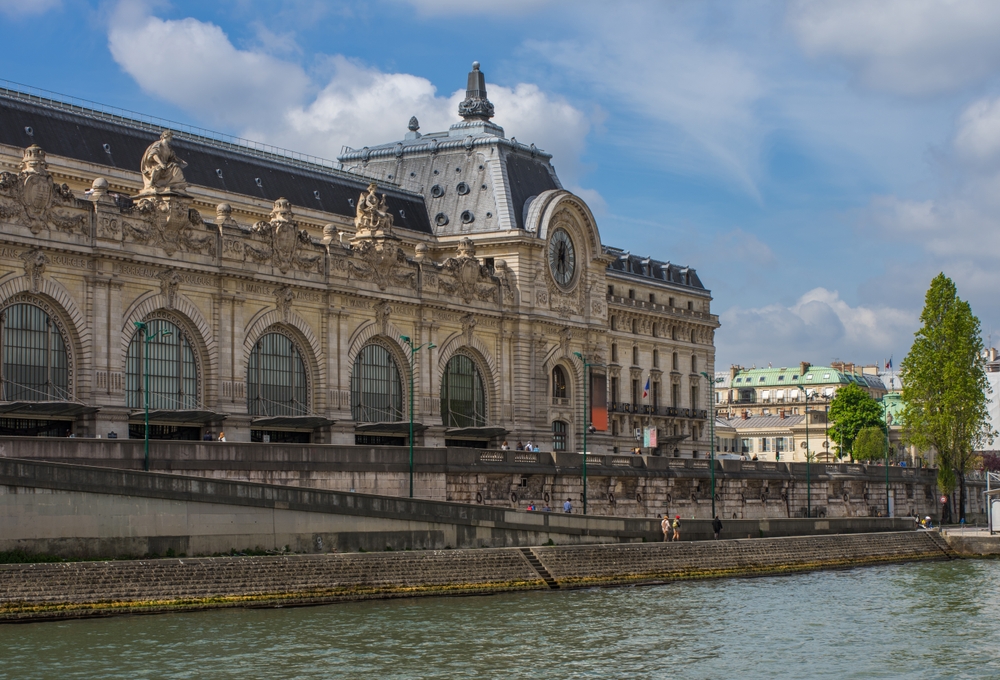

The Musée d’Orsay is one of the most emblematic museums in Paris. A former railway station transformed into a temple to Impressionism, this spectacular venue houses the world’s largest collection of Impressionist and Post-Impressionist works. With its Beaux-Arts architecture and masterpieces by Monet, Renoir and Van Gogh, a visit to the Musée d’Orsay is a must for anyone visiting Paris.
The fascinating history of the Musée d’Orsay
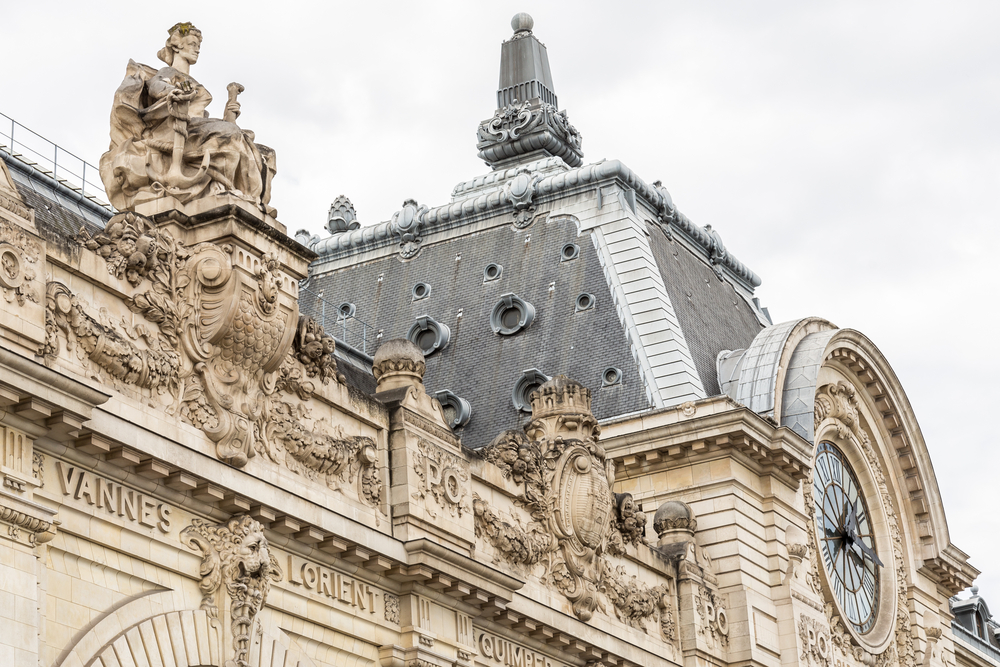
Before it became home to one of the world’s most prestigious collections, the Musée d’Orsay building had an eventful history. Designed by the architect Victor Laloux for the 1900 Universal Exhibition, the Gare d’Orsay was a remarkable architectural feat. Its metal framework concealed beneath a stone façade, its immense glass roofs and its modern installations made it one of the most innovative stations of its time.
In 1939, however, the station was closed because its platforms were too short to accommodate modern trains. The building was then used as a centre for sending parcels to prisoners of war during the Second World War, before being used as a film set, notably for Orson Welles’ “The Trial” in 1962. In the 1970s, threatened with demolition, the building narrowly escaped the shovels thanks to its classification as a Historic Monument.
The transformation into a museum began in 1979 at the instigation of President Valéry Giscard d’Estaing. The architects Renaud Bardon, Pierre Colboc and Jean-Paul Philippon of the ACT Architecture group won the competition, while the Italian architect Gae Aulenti redesigned the interior spaces. On 9 December 1986, the Musée d’Orsay finally opened its doors to the public, providing an exceptional showcase for works dating from 1848 to 1914.
See also the Paris guide :
- Discover the culinary specialities of Paris
- The 12 most beautiful walks in Paris to discover
- 40 free things to do and see in Paris
- 15 historic monuments not to be missed in Paris
- 20 must-see museums in Paris
- 10 emblematic bridges in Paris to cross on foot
1. Opening times and closing days
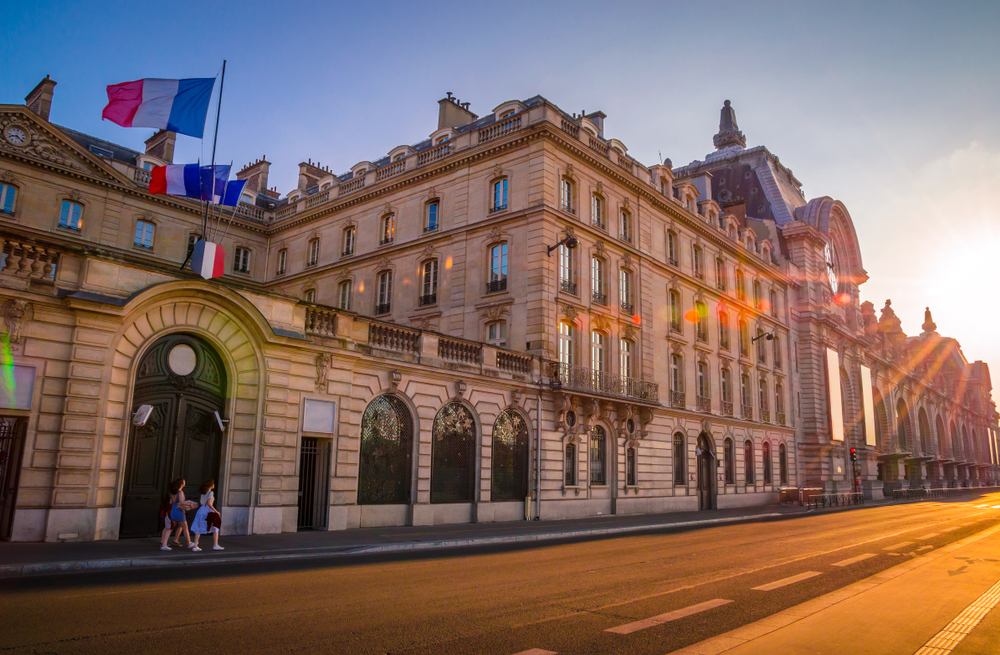
The Musée d’Orsay is open to visitors from Tuesday to Sunday, from 9.30 am to 6 pm. The last admission is at 5pm, while the rooms begin to close gradually from 5.30pm. Temporary exhibitions are open until 5.15pm. On Thursdays, the museum extends its opening hours with a nocturne until 9.45pm, offering a special atmosphere in which to admire the collections in a different light.
Please note that the museum is closed on Mondays, 1 May and 25 December. You should therefore plan your visit to take account of these weekly and exceptional closures.
2. Admission fees and free admission
Visitors to the Musée d’Orsay can choose from a range of ticket prices. The full-price ticket costs €14 on site and €16 online, and gives access to the permanent collections and temporary exhibitions. The reduced rate, available under certain conditions, is €11 on site. On Thursday evenings, during the nocturne from 6pm, a special rate of €10 is available (€12 online).
Under-18s, EU residents aged 18 to 25, and all visitors on the first Sunday of each month are entitled to free admission. Holders of the Education Pass and jobseekers are also entitled to free admission on presentation of proof of entitlement.
3. Essential works to discover
The Musée d’Orsay has over 3,000 works on display, including an exceptional concentration of Impressionist and Post-Impressionist paintings. Among the absolute masterpieces is Auguste Renoir’s “Le Bal du moulin de la Galette” (1876), famous for its shimmering light and joyful atmosphere. Édouard Manet’s “Le Déjeuner sur l’herbe” caused a scandal when it was exhibited in 1863, and remains one of the museum’s most emblematic canvases.
Vincent van Gogh takes pride of place with several major works, including “Starry Night on the Rhône” (1888), “Van Gogh’s Room in Arles” (1889) and his moving “Self-Portrait” (1889). Claude Monet enchanted visitors with his series of “Water Lilies”, “Saint-Lazare Station” (1877) and “Rouen Cathedral”, which perfectly illustrate the Impressionist quest for light.
Don’t miss Gustave Courbet’s daring and disturbing L’Origine du monde, Gustave Caillebotte’s strikingly realistic Les Raboteurs de parquet and Edgar Degas’s delicate sculpture Petite Danseuse de quatorze ans. Paul Cézanne, Paul Gauguin, Georges Seurat and Henri de Toulouse-Lautrec complete this pantheon of great masters.
4. How to get to the Musée d’Orsay
Located at 1 rue de la Légion d’Honneur in the 7th arrondissement of Paris (75007 Paris, rated 4.6/5 on Google for over 45,000 reviews), the Musée d’Orsay is remarkably accessible. The Musée d’Orsay RER C station takes visitors directly to the museum entrance. By metro, line 12 serves Solférino station, just a few minutes’ walk away.
Several bus routes stop nearby: routes 63, 68, 69, 73, 83 and 94. For cyclists, there are Vélib’ stations on Quai Anatole France and Boulevard Saint-Germain. If you’re coming by car, there are several pay-and-display car parks in the area, although we highly recommend using public transport to discover the capital.
5. The spectacular architecture of the old station
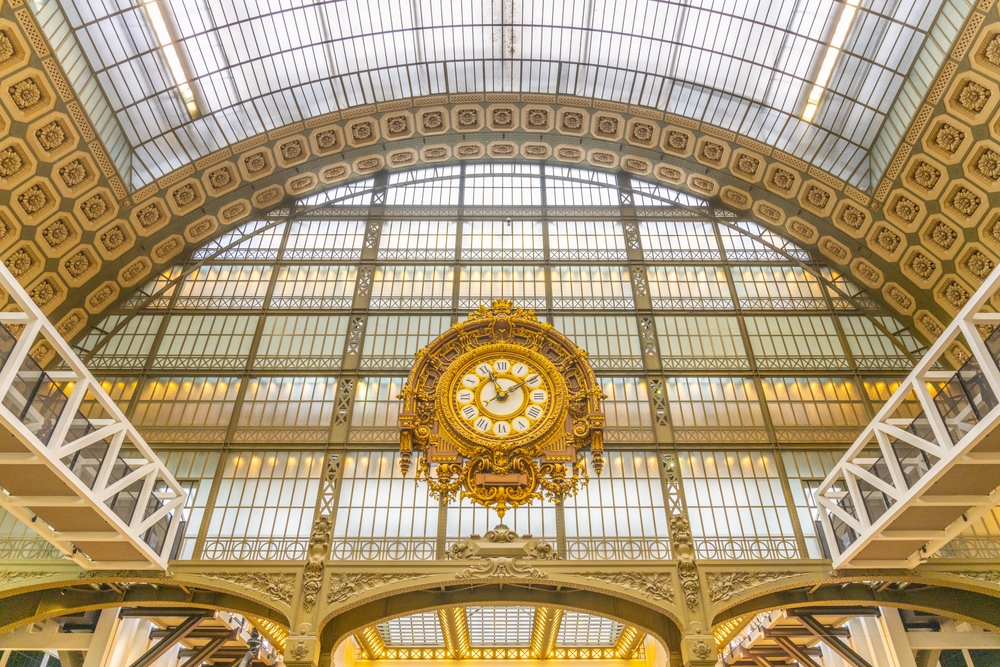
The architecture of the Musée d’Orsay is a work of art in itself. The central nave, 138 metres long, rises majestically under an immense glass roof that floods the space with natural light. The great original clocks, the most famous of which dominates the main hall, bear witness to the museum’s railway past and provide an exceptional photographic backdrop.
The Salle des Fêtes, on the upper floor, illustrates the splendour of the Belle Époque with its gilding, mirrors and sumptuous chandeliers. This former reception room of the hotel adjacent to the station has retained all its splendour and now hosts cultural events. The panoramic terrace on the fifth floor, near the monumental clock, offers a breathtaking view of the Seine and its emblematic monuments.
6. Impressionist and post-impressionist collections
The fifth floor of the museum houses the largest collection of Impressionist works in the world. This gallery contains almost 140 paintings, including Monet’s “Le Pont d’Argenteuil”, Pissarro’s “Paysage à Éragny” and Seurat’s “L’île de la grande Jatte”. The exhibition is presented chronologically and thematically, to help visitors understand the evolution of this revolutionary movement that shook up nineteenth-century academicism.
The Post-Impressionists also occupy a major place, with the colourful canvases of Gauguin, the structured compositions of Cézanne and the expressive works of Van Gogh. This section shows how these artists emancipated themselves from Impressionism to explore new pictorial avenues, paving the way for twentieth-century modern art.
Download the audio tour to discover Paris on foot and on your own
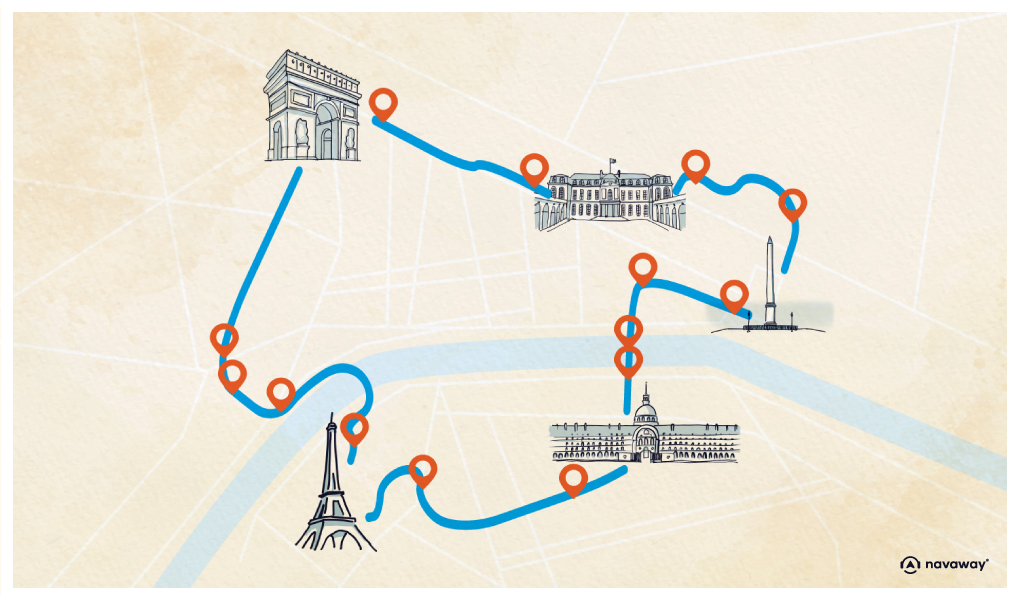
To complete your cultural visit of the capital, let yourself be guided through the most beautiful districts of Paris thanks to the Navaway audio tour. This 6.2 km tour takes you from the Champs-Élysées to the Hôtel des Invalides, via the Eiffel Tower, with 18 enriching audio commentaries on the history and architecture of the City of Light.
7. Monumental sculptures under the glass roof
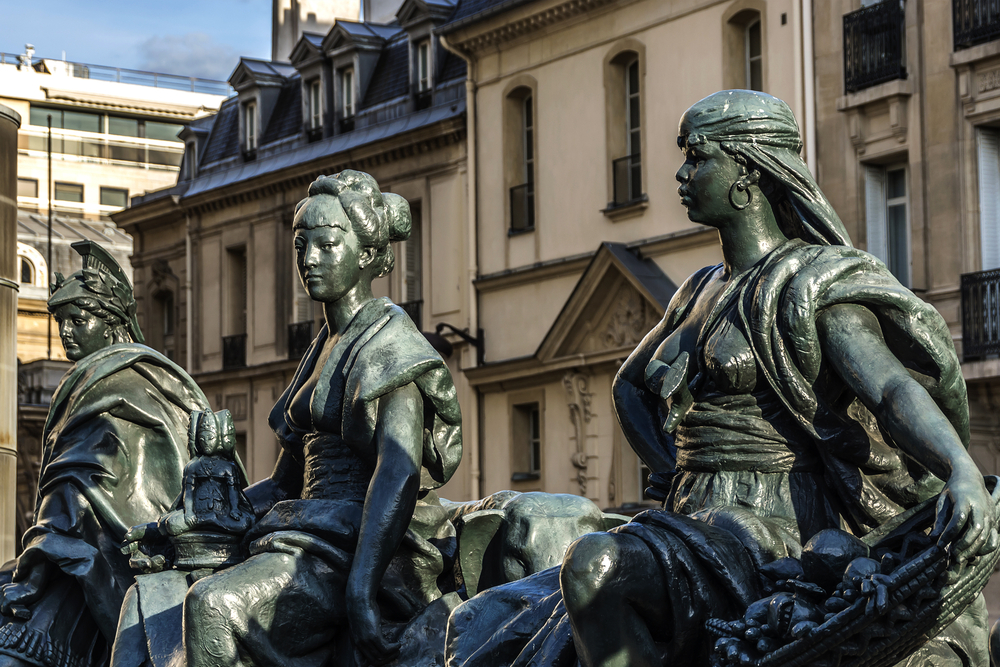
The museum’s central nave is home to more than 1,500 sculptures, all displayed in natural light. These monumental works, dating from the second half of the 19th century, illustrate the evolution of French sculpture, from Romanticism to Symbolism. Auguste Rodin, Jean-Baptiste Carpeaux and Camille Claudel are among the artists best represented.
Carpeaux’s “Ugolin” impresses with its dramatic power, while Claudel’s creations, such as “L’Âge mûr”, are touching in their sensitivity. François Pompon’s animal sculptures, including the famous “White Bear”, are seductive in their purity and modernity. This spectacular display under the glass roof allows visitors to appreciate every detail of the works while enjoying the exceptional architectural setting.
8. Decorative arts and Art Nouveau furniture
The Musée d’Orsay has a remarkable collection of decorative arts covering the period from the Second Empire to Art Nouveau. The dedicated galleries display furniture by the great names of the period: Louis Majorelle, Hector Guimard and Émile Gallé. These creations bear witness to the inventiveness of the artist-craftsmen who revolutionised the applied arts.
Highlights include Guimard’s “Banquette de fumoir”, with its characteristic plant-like curves, and Gallé’s “La Main aux algues et aux coquillages”, a masterpiece of Art Nouveau glassware. This section shows how Art Nouveau transformed everyday life by integrating art into every object, from furniture to lamps and crockery.
9. Temporary exhibitions
The Musée d’Orsay regularly enriches its cultural offering with high-quality temporary exhibitions. These events highlight a specific artist, an artistic movement or a particular theme, drawing on exceptional loans from international collections. The exhibition curators create stimulating dialogues between the works, enabling us to deepen our understanding of the history of art.
These exhibitions take place in dedicated spaces and are usually carefully designed. Tickets should be booked in advance for these events, which are often a great success. Visit the museum’s official website to find out about current and forthcoming events.
10. Practical tips to make the most of your visit

To get the most out of your visit to the Musée d’Orsay, it’s best to start early in the morning when the museum opens at 9.30am, or to finish late in the afternoon after 4pm. Tuesdays, when the Louvre is closed, are particularly busy, as are Sundays. Make sure you book your ticket online to avoid the queues, which can be very long in high season.
Start your tour on the fifth floor to admire the Impressionists, generally the most popular section, before gradually descending. Allow around 2 to 3 hours for a complete visit, more if you wish to explore certain sections in greater depth. Audioguides, available for hire, greatly enhance the visit by providing detailed explanations of the major works.
The museum has free cloakrooms where you can leave your bulky belongings. There is also a restaurant and café where you can take a break during your visit. For the best possible experience, the Navaway app also lets you discover other audioguided tours of Paris, allowing you to continue your exploration of the capital in a fun and independent way.
11. Museum services and facilities
The Musée d’Orsay has been designed to welcome visitors comfortably. There are free, compulsory cloakrooms for bulky objects on the ground floor. The museum is accessible to people with reduced mobility via entrance C, with lifts serving all levels and wheelchairs available on request.
The Restaurant du Musée d’Orsay, listed as a Historic Monument, occupies the hotel’s former dining room. Its Belle Époque decor makes it an exceptional place to have lunch in the heart of the museum. Café Campana, on the fifth floor, offers a lighter option with a breathtaking view over Paris. A bookshop offers catalogues, reproductions and souvenirs relating to the collections.
12. Combine the visit with the Musée de l’Orangerie
A combined ticket for the Musée d’Orsay and the Musée de l’Orangerie is a great deal for Impressionist enthusiasts. Located in the Tuileries gardens, the Musée de l’Orangerie houses Monet’s famous “Water Lilies” in two oval rooms specially designed by the artist. This complementary collection will give you a deeper understanding of the Impressionist movement.
The Musée de l’Orangerie also presents the Walter-Guillaume collection, with works by Renoir, Cézanne, Matisse, Picasso and Modigliani. These two Parisian institutions form a coherent journey through the art of the second half of the 19th century and the early 20th century. Allow an extra half-day for a leisurely visit to the Orangerie.
13. Photography and the graphic arts
The Musée d’Orsay has one of the largest collections of old photographs in the world, with almost 45,000 images. This section, which is sometimes unfamiliar to visitors, traces the history of photography from its origins to the early 20th century. Pioneers such as Nadar, Gustave Le Gray and Julia Margaret Cameron are represented here.
The graphic arts rooms display drawings, pastels and watercolours on a rotational basis for conservation reasons. Edgar Degas, with his pastel scenes of dancers, is one of the most popular artists in this section. These works on paper, which are more fragile than paintings, are exhibited for a limited time, but offer an intimate approach to the artists’ work.
14. The Musée d’Orsay for families
The Musée d’Orsay has a special programme for young visitors. Visits and workshops for children aged 6 to 12 allow them to discover the collections in a fun and interactive way. These activities, entitled “À petites touches”, combine observation of the works and artistic practice, encouraging a creative approach to art.
Free game books, available from reception, turn your visit into an educational adventure. Junior audio guides, specially designed for children, tell stories about the major works. During the school holidays, the “Vacances à Orsay” programme offers creative and fun activities so that families can enjoy the museum together.
15. The history of the collection
The Musée d’Orsay collection has its origins in the works of the Musée du Luxembourg, created in the 19th century to showcase contemporary art. After the Second World War, these works were transferred to the Louvre, but it soon became clear that a place dedicated to the period 1848-1914 was needed. The Musée d’Orsay project met this need by bringing together the national collections from this pivotal period.
Today, the museum holds around 480 Impressionist paintings and 600 Post-Impressionist canvases, making it the world’s leading institution in this field. Ongoing additions, thanks to donations and acquisitions, regularly complete the collections and fill in certain gaps. This dynamic policy ensures the vitality of the museum and the quality of its cultural offering.
In conclusion, a visit to the Musée d’Orsay is a must for any visitor to Paris. This temple to Impressionism combines spectacular architecture and must-see masterpieces in a unique setting. Between the luminous canvases of Monet, the vibrant scenes of Renoir and the intense works of Van Gogh, every visitor will find something to marvel at. To extend your discovery of the capital, don’t hesitate to follow the Navaway audio tours of Paris, which take you through the most beautiful districts of the City of Light, with fascinating commentaries on its history and heritage.
FAQ: your questions about the Musée d’Orsay
Do I need to book my ticket for the Musée d’Orsay in advance?
Online booking is highly recommended to avoid long queues, especially during the high tourist season and at weekends. If you buy a queue-jump ticket on the official website or via partner platforms, you’re guaranteed fast access to the museum. Visitors who are entitled to free admission can enter without a reservation on presentation of their proof of entitlement.
How long does it take to visit the Musée d’Orsay?
A full visit takes between 2 and 3 hours minimum. For art lovers wishing to delve deeper into certain sections or take advantage of the temporary exhibitions, allow half a day. If you don’t have a lot of time, concentrate on the Impressionist collections on the fifth floor, then work your way down according to your interests.
Can I take photos in the Musée d’Orsay?
Photographs without flash are permitted in the permanent collections for personal use. However, selfie poles and tripods are prohibited. Certain temporary exhibitions may be subject to specific photographic restrictions, which are indicated at the entrance to the rooms concerned. Respect for other visitors and the works of art is paramount.
Is the Musée d’Orsay accessible to people with reduced mobility?
The Musée d’Orsay is fully accessible to people with reduced mobility via entrance C, on the Quai Anatole France. There are lifts to all exhibition levels. Wheelchairs are available free of charge from reception on request. There are reserved parking spaces close to the accessible entrance. The entire tour has been designed to make it easier for all visitors.
When is the Musée d’Orsay free?
Admission is free for all visitors on the first Sunday of each month. Under-18s and residents of the European Union aged between 18 and 25 are entitled to free admission all year round on presentation of proof of age. Jobseekers and holders of the Education Pass also have free access to the collections on presentation of the required documents.
200 audioguided tours for cities all around the world
Download