Discover the Musée de l’Armée in Paris

Nestling in the heart of the Hôtel National des Invalides, the Musée de l’Armée in Paris is one of the largest military history museums in the world. With its exceptional collections spanning several centuries, from the Middle Ages to the present day, and its famous golden dome housing the tomb of Napoleon I, this emblematic site in the 7th arrondissement attracts millions of history-loving visitors every year. Whether you’re a lover of old weapons, fascinated by the world wars or simply curious to discover France’s military heritage, this comprehensive guide will help you prepare your visit to the Musée de l’Armée and explore its historical treasures.
What is the Musée de l’Armée in Paris?
The Musée de l’Armée, housed in the prestigious Hôtel des Invalides since 1905, is the result of the merger of the Musée d’Artillerie and the Musée Historique de l’Armée. With over 500,000 items in its collections, it is one of the capital’s most remarkable cultural institutions. This temple to French military history boasts an impressive collection of armour, weapons, uniforms, paintings and objets d’art that trace the development of combat techniques and the saga of France’s great military figures.
In addition to the permanent collections, the museum also houses the famous tomb of Napoleon Bonaparte under the majestic dome of Les Invalides, the Historial Charles de Gaulle, the Musée des Plans-Reliefs and the Musée de l’Ordre de la Libération. This diversity makes the Musée de l’Armée in Paris a must-see destination for anyone wishing to visit Paris and understand French military history in all its richness.
See also the Paris guide :
- 20 must-see museums in Paris
- Visiting the Musée du Louvre: works, opening hours & advice
- 15 historic monuments not to be missed in Paris
- 40 free things to do and see in Paris
- Visit Paris in 3 days: complete weekend guide
- Discover the culinary specialities of Paris
- The 12 most beautiful walks in Paris to discover
Why visit the Musée de l’Armée in Paris?
A visit to the Musée de l’Armée is a unique cultural experience that goes beyond the simple discovery of military artefacts. This place of remembrance plunges you into the heart of French history, giving you an insight into the great battles that have shaped Europe and allowing you to admire masterpieces of artistic craftsmanship. The exceptional architecture of the Hôtel des Invalides, commissioned by Louis XIV, is reason enough to visit.
The museum offers a fascinating insight into the evolution of military techniques, from medieval armour to the equipment used in contemporary conflicts. Napoleonic history buffs will be particularly delighted by the wealth of collections dedicated to the Emperor and the solemnity of the place where his remains are laid to rest. For those discovering the capital, the Musée de l’Armée fits perfectly into a tour of the 7th arrondissement, close to the Eiffel Tower and the Champs-Élysées, easily accessible thanks to Navaway’s audio-guided tours, which allow you to explore Paris at your own pace.
History of the Musée de l’Armée and the Hôtel des Invalides
The creation of the Hôtel des Invalides by Louis XIV
The history of the Musée de l’Armée is inseparable from that of the Hôtel National des Invalides. In 1670, the Sun King, Louis XIV, concerned about the fate of wounded and disabled soldiers in his armies, decided to build a hospice to house them. Entrusted to the architect Libéral Bruant, then to Jules Hardouin-Mansart for the dome, this royal foundation bears witness to the kingdom’s gratitude towards its servicemen. The building, completed in 1676, could house up to 4,000 residents in dignified conditions.
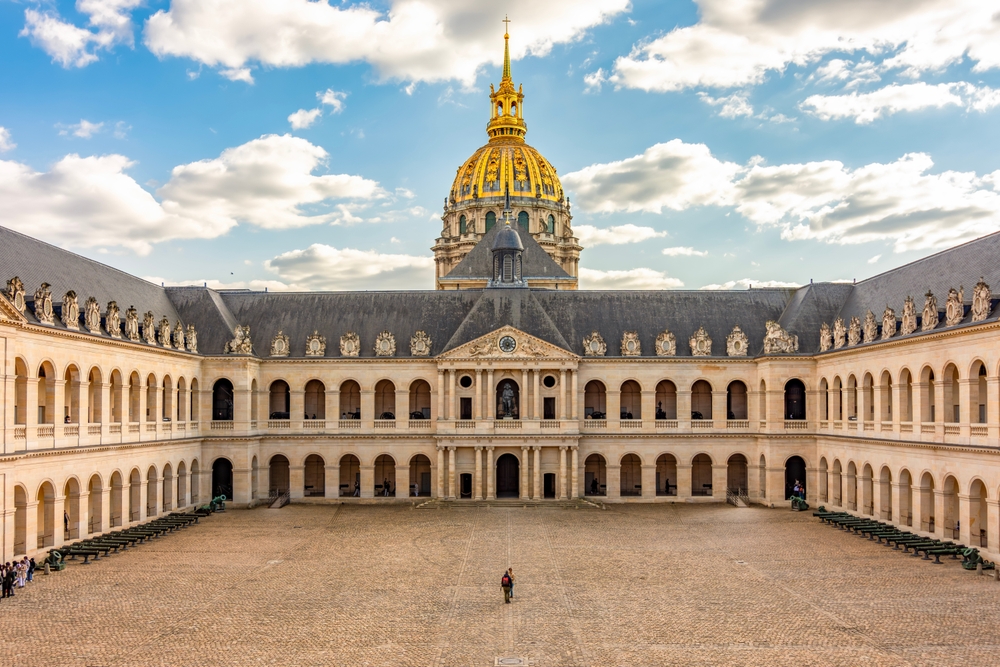
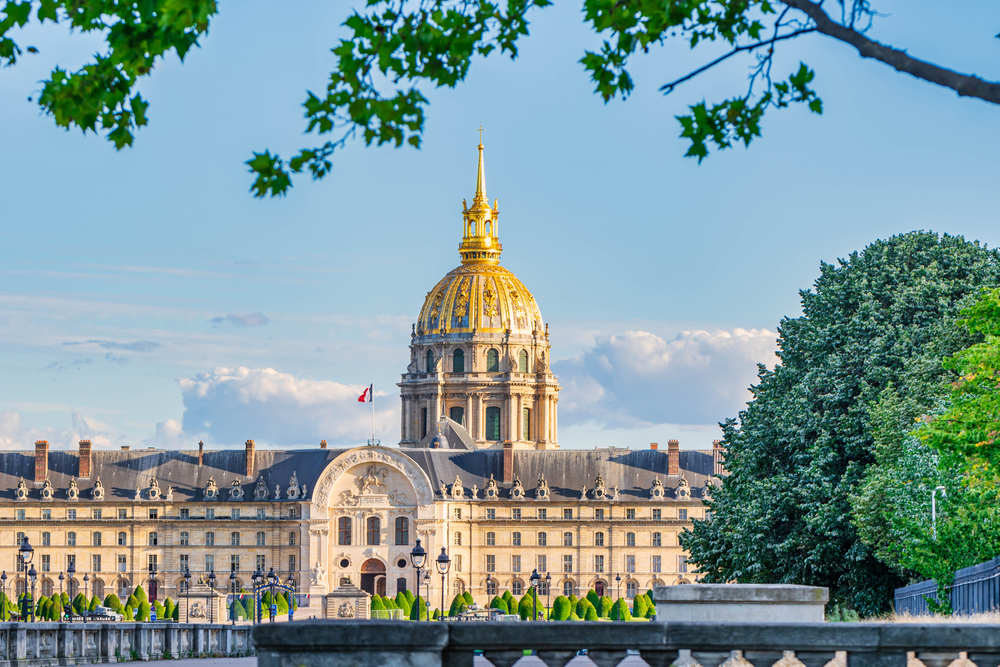
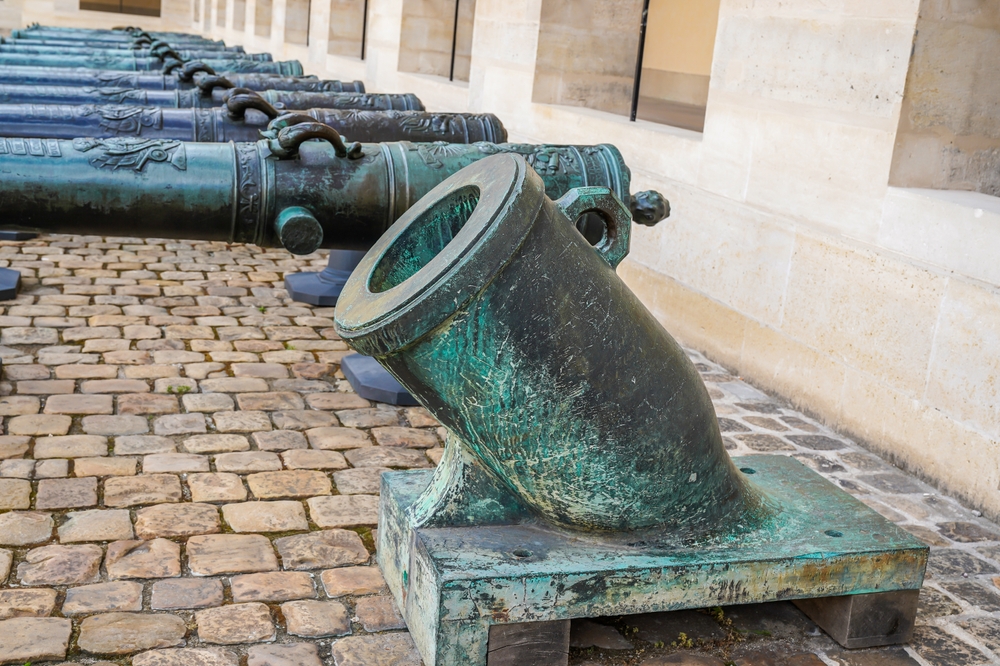
The majestic architecture of the Hôtel des Invalides, with its long 196-metre façade and famous 107-metre golden dome, reflects the grandeur of the reign of Louis XIV. The courtyard of honour, surrounded by arcades and adorned with historic cannons, provides an impressive backdrop that immediately immerses visitors in the military atmosphere of the place. This listed monument is one of the finest examples of French classical architecture.
The birth of the museum in 1905
The Musée de l’Armée as we know it today was officially created on 1 August 1905 from the merger of the Musée d’Artillerie, founded in 1796, and the Musée Historique de l’Armée, founded in 1896. The aim of the merger was to bring together in a single place the dispersed collections recounting French military history. As soon as it opened, the museum established itself as one of the world’s leading museums of military art and history.
Over the decades, the museum has constantly enriched its collections through donations, acquisitions and deposits. The various departments have gradually been structured to cover all periods of French military history, from the Middle Ages to contemporary conflicts. Today, the Musée de l’Armée in Paris holds more than 500,000 items, of which around 15,000 are on permanent display, making it an essential world reference for researchers, historians and enthusiasts.
Napoleon’s Return from the Ashes in 1840
A major event in the history of Les Invalides was the transfer of Napoleon I’s ashes. Having died in exile on the island of St Helena in 1821, the Emperor was initially laid to rest in a modest tomb far from France. In 1840, under the reign of Louis-Philippe, the King decided to repatriate the Imperial remains. On 15 December 1840, after a solemn journey, Napoleon’s coffin was received at Les Invalides in a grandiose ceremony.
It would be twenty years and the monumental work of the architect Visconti before the final tomb was completed. Inaugurated in 1861, this red porphyry sarcophagus rests in a circular crypt dug beneath the dome of the Invalides. Surrounded by twelve statues of Victory and bas-reliefs commemorating the Emperor’s achievements, Napoleon’s tomb is now one of the site’s major attractions, attracting visitors from all over the world to pay their respects before this symbol of French imperial grandeur.
The permanent collections of the Musée de l’Armée

1. The Department of Ancient Arms and Armour (13th-17th centuries)
The Musée de l’Armée’s antique department houses one of Europe’s most prestigious collections of arms and armour, covering the period from the Middle Ages to the Renaissance. Spread over several rooms, these exceptional pieces bear witness to the evolution of combat techniques and the art of weaponry. You’ll discover full suits of armour for knights, richly decorated swords, crossbows, chiselled shields and ornate helmets that illustrate the refinement of medieval craftsmanship.
Among the highlights is the armour of François I, King of France during the Renaissance, as well as a number of pieces of parade armour that belonged to the great European lords. These objects, often covered in engravings and gilding, go beyond their simple utilitarian function to become genuine works of art. The collection also includes Oriental and Asian weapons, offering an international perspective on ancient military art. For fans of medieval history, this section is a must-see when visiting the Musée de l’Armée.
2. Collections from Louis XIV to Napoleon III
The modern department traces French military history from the reign of Louis XIV to the fall of the Second Empire under Napoleon III. This crucial period, marked by numerous European conflicts and Napoleonic campaigns, is richly documented through uniforms, flags, firearms, cannons and the personal objects of France’s great generals. The display cases show the evolution of military uniforms, from the prestigious costumes of the King’s musketeers to those of Napoleon’s Grande Armée.
The section devoted to Napoleon Bonaparte occupies a special place, with numerous objects that once belonged to the Emperor: his famous bicorn, his coronation uniform, campaign maps and furniture from his various residences. Visitors can also admire historical paintings depicting the great battles of the imperial epic, such as Austerlitz, Jena and Wagram. This immersion in the world of Napoleon naturally continues with a visit to the tomb beneath the dome of Les Invalides, the highlight of the museum.
3. Spaces dedicated to the two world wars
The Musée de l’Armée devotes a large part of its exhibition space to the First and Second World Wars. These departments, which have been refurbished over the years to offer a modern, immersive scenography, help visitors to understand the scale of these conflicts, which turned the 20th century upside down. Objects from soldiers’ daily lives, uniforms from all the nations involved, heavy weaponry, models of tanks and aircraft, propaganda posters and archive documents make up an exceptional documentary collection.
Visiting these areas is particularly moving because it puts people at the centre of the story. Audio testimonies, photographs and films from the period give an insight into the reality of the front, the heroism of the combatants and the suffering they endured. The section on the French Resistance and Free France highlights the role of General de Gaulle, whose life and work are explored in greater detail in the Historial dedicated to him. These areas provide an essential collective memory for new generations, and are fully in line with the Musée de l’Armée‘s duty of transmission in Paris.
4. The Historial Charles de Gaulle
Inaugurated in 2008, the Historial Charles de Gaulle offers an innovative multimedia experience retracing the life and work of General de Gaulle, a major figure in contemporary French history. Designed around a modern scenography using archive images, audio testimonies and historical documents, this space offers a chronological journey from the appeal of 18 June 1940 to the presidency of the Fifth Republic.
The tour, divided into several themes, covers both the leader of Free France during the Second World War and the visionary statesman who overhauled the institutions of the Republic. Interactive terminals allow visitors to delve deeper into certain key events or speeches. This tour is a perfect complement to the discovery of the military collections, providing a contemporary perspective on the commitment and leadership of a figure who had a profound impact on the destiny of France.
5. The Museum of Relief Maps
Located in the attic of the Hôtel des Invalides, the Musée des Plans-Reliefs houses a unique collection of historical models of fortified towns and cities. Initiated in 1668 under Louis XIV by the minister Louvois, this collection was used for strategic and military purposes, enabling engineers and generals to study the kingdom’s fortifications. The relief plans, produced to a scale of 1/600, are impressive for their precision and level of detail.
Today, some fifteen of these monumental models are on display, representing towns such as Mont-Louis, Briançon, Besançon and Strasbourg. These exceptional examples of the military architecture of Vauban and his successors offer a fascinating insight into the art of French fortification. A visit to this little-known museum will be an invaluable addition to anyone wishing to explore the Musée de l’Armée in greater depth, and understand the strategic issues that have shaped the French landscape.
6. The Museum of the Order of the Liberation
Created in 1940 by General de Gaulle, the Order of the Liberation was awarded to the heroes of Free France who distinguished themselves by their exceptional bravery during the Second World War. The museum dedicated to this prestigious order presents the careers of the 1,038 Companions of the Liberation, as well as those of the five French communes and 18 military units honoured with this distinction.
Through personal objects, photographs, archive documents and personal accounts, the museum pays tribute to the men and women who embodied the French Resistance. Emblematic figures such as Jean Moulin, Pierre Brossolette and Germaine Tillion are honoured here. This place of remembrance, imbued with emotion and solemnity, perpetuates the memory of those who refused defeat and worked for the liberation of France. It is an important stop-off point for anyone wishing to understand the commitment and sacrifice of the heroes of Free France.
The Invalides dome and Napoleon’s tomb

The architecture of the golden dome
The dome of the Invalides, an architectural masterpiece by Jules Hardouin-Mansart, is one of the most emblematic symbols of Paris. Built between 1677 and 1706, this majestic monument rises to a height of 107 metres and features a dome gilded with gold leaf that glistens in the Paris sunlight. Originally conceived as the royal church of Les Invalides, the building reflects the splendour of the Grand Siècle and the ambition of the Sun King.
The interior of the dome impresses with its sumptuous decoration. The frescoes by Charles de La Fosse adorning the dome depict Saint Louis handing his sword to Christ, surrounded by angels and biblical figures. The architectural harmony, combining classical and baroque influences, creates a solemn atmosphere conducive to contemplation. The dome of Les Invalides has inspired many institutional buildings around the world, including the United States Capitol in Washington. Regular restoration work ensures that the splendour of this marvel, which has dominated the Parisian landscape for more than three centuries, is preserved.
The monumental tomb of Napoleon I
The monumental tomb of Napoleon Bonaparte lies in the centre of the dome of Les Invalides, in a circular crypt dug into the ground. The sarcophagus, made of red porphyry, a noble material chosen to evoke imperial grandeur, contains six interlocking coffins enclosing the Emperor’s remains. This complex arrangement testifies to the care taken to preserve the body since it was repatriated from St Helena in 1840.
All around the crypt, twelve allegorical statues of Victories, sculpted in white marble, eternally watch over Napoleon’s resting place. Ten bas-reliefs also adorn the walls, celebrating the Emperor’s great civil achievements: the Civil Code, religious pacification, centralised administration and economic development. Inscriptions on the floor recall the military victories that forged the Napoleonic legend: Austerlitz, Jena, Friedland and Wagram. This grandiose setting has made Napoleon’s tomb one of the most visited monuments in Paris, attracting millions of admirers from all over the world to pay homage to the man who left his mark on European history.
Other famous graves
While the tomb of Napoleon I takes pride of place under the dome of Les Invalides, other illustrious military figures are also buried here. In particular, there are the tombs of two marshals of the Empire: Turenne and Vauban, the genius of fortification, whose relief plans are on display in the museum. These graves honour the memory of those who served France with distinction.
The dome also contains the tombs of Joseph Bonaparte, Napoleon’s elder brother and King of Spain, and Jérôme Bonaparte, the Emperor’s younger brother. More recently, the ashes of Marshal Foch, supreme commander of the Allied forces in the First World War, and those of Marshal Lyautey, famous for his actions in Morocco, were transferred to Les Invalides. This prestigious military necropolis perpetuates the Nation’s tradition of gratitude to its great servants and completes the memorial dimension of the Musée de l’Armée in Paris.
Download the audio tour to discover Paris on foot and on your own
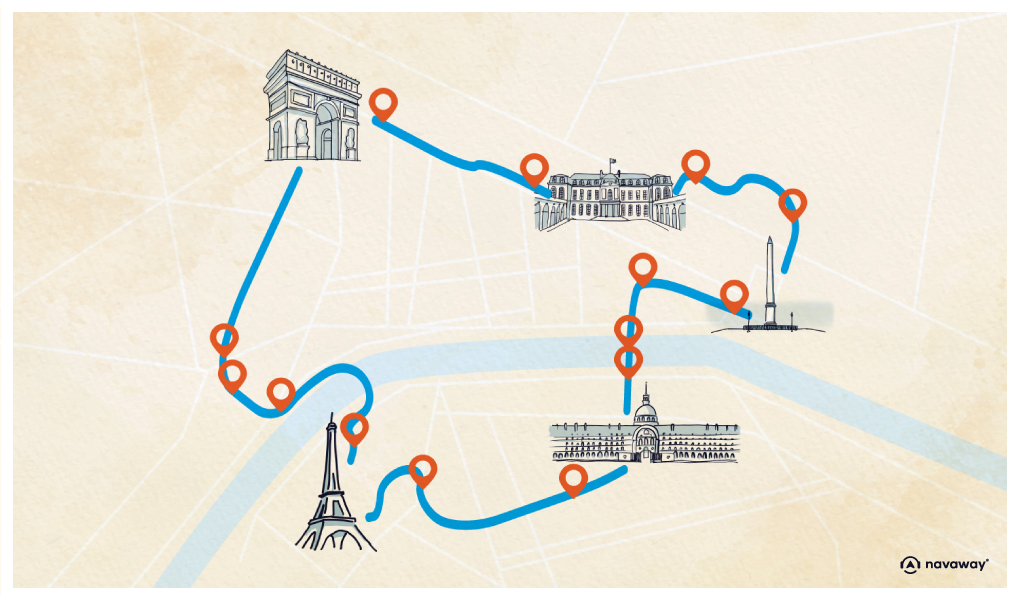
To enhance your discovery of the Musée de l’Armée and the Invalides, Navaway offers a complete audio tour of Paris. This itinerary takes you through the capital’s emblematic monuments, including the Hôtel des Invalides, offering captivating historical explanations and little-known anecdotes. Accessible on foot and completely autonomous, this audio tour adapts to your pace and lets you explore Paris while discovering its exceptional military heritage. It’s a modern, fun way to extend your cultural visit!
Practical information for visiting the Musée de l’Armée
Opening hours
The Musée de l’Armée opens its doors every day from 10am to 6pm, with last admission at 5.30pm. To give visitors the chance to extend their visit, the museum holds evening events on the first Friday of each month, opening until 10pm (with the ticket office closing at 9pm). The museum closes exceptionally three days a year: 1 January, 1 May and 25 December.
It is recommended that you allow at least 3 to 4 hours for a full visit to explore all the permanent collections, the Invalides dome, Napoleon’s tomb and the various related museums. Visitors in a hurry can concentrate their visit on the sections that interest them most, but the sheer breadth of the collections makes it worth spending half a day to appreciate them in all their richness. To avoid overcrowding, it is best to visit during the week, especially in the mornings when the museum opens.
Prices and tickets
The full price for admission to the entire Musée de l’Armée, including the permanent collections, temporary exhibitions and Napoleon’s tomb under the Invalides dome, is €17. A reduced rate of €12 is available under certain conditions for certain categories of visitor. Admission is free for under-18s, European Union citizens aged between 18 and 25, and people with disabilities and their carers.
Special packages are available: a €10 night ticket on the first Friday of the month from 6pm to 10pm, or a twin ticket with the Musée Rodin for €26. For those planning to visit several Paris museums, the Paris Museum Pass (from €70 for 2 days) includes access to the Musée de l’Armée and around fifty other cultural sites in the capital. You are strongly advised to book your tickets online on the museum’s official website so that you can enjoy unrestricted access and avoid queues, particularly during the peak tourist season.
How do I get to the Musée de l’Armée?
The Musée de l’Armée (129 Rue de Grenelle, 75007 Paris, rated 4.7/5 on Google for over 53,000 reviews) is located in the 7th arrondissement of Paris, in the heart of the Hôtel National des Invalides. There are several options for getting to this emblematic site easily. By metro, the nearest stations are Invalides (lines 8 and 13) and La Tour-Maubourg (line 8), both less than 10 minutes’ walk from the main entrance.
For those who prefer the RER, Invalides station (line C) offers direct access. Several bus lines also serve the site: lines 28, 63, 69, 82 and 93 stop in the immediate vicinity of Les Invalides. If you are coming by car, be aware that parking in this area is difficult and expensive. Pay car parks are available at Place Vauban and Avenue de Tourville. For a more pleasant experience, opt for public transport or enjoy a walk from the Champs-Élysées or the Eiffel Tower, following the Navaway audio-guided itineraries that will show you Paris from a new angle.
Accessibility and services
The Musée de l’Armée strives to make its collections accessible to as many people as possible. Special arrangements have been made for people with reduced mobility, with lifts and ramps providing access to most areas. A wheelchair can be borrowed free of charge from reception on request. For visually impaired or blind visitors, tactile tours are available by prior arrangement.
The museum also offers audio guides in several languages (French, English, Spanish, German, Italian, Russian, Chinese and Japanese) to accompany your visit and enhance your discovery of the collections. Theme-based guided tours are regularly organised by specialist lecturers. There is a free cloakroom where you can leave your personal belongings, and a left-luggage office where you can leave your luggage (subject to availability). Finally, a bookshop and a café-restaurant are available to help you make the most of your visit to the museum.
Tips for a successful visit to the Musée de l’Armée
1. Prepare your visit in advance
Before visiting the Musée de l’Armée in Paris, take the time to consult the official website to find out about current temporary exhibitions, any room closures and opening times. Book your tickets online to avoid queuing, especially during peak tourist periods (school holidays, weekends, summer). If you’re visiting Paris for the first time, make the museum part of a wider tour that includes Les Invalides and the 7th arrondissement.
Identify in advance the sections that interest you most: if you are fascinated by the Napoleonic era, concentrate on the modern department and Napoleon’s tomb; if you prefer the Middle Ages, go for the department of ancient arms and armour. This preparation will enable you to make the most of your time on site and ensure that you don’t miss any of the key exhibits. Don’t hesitate to consult the Navaway visitor guides, which offer themed itineraries for an in-depth look at Paris and its iconic monuments.
2. Favour off-peak times
To make the most of your visit, avoid peak times. Weekday mornings, from the opening at 10am, offer a quieter atmosphere in which to appreciate the collections without being rushed. Afternoons, particularly at the end of the day around 4pm-5pm, are also less busy. On the other hand, weekends, Wednesdays and school holiday periods attract large numbers of visitors, particularly to the sections devoted to Napoleon and the World Wars.
Night-time visits on the first Friday of the month are an excellent opportunity to discover the museum in a different atmosphere, with fewer people and a special ambience. The reduced rate of €10 also makes this an attractive option. If you have the flexibility to choose the day of your visit, Tuesdays and Thursdays are generally the least busy days. This strategy will allow you to take your time admiring the details of the armour, reading the explanatory labels and quietly meditating at Napoleon’s tomb.
3. Hire an audio guide or join a guided tour
The richness of the Musée de l’Armée’s collections deserves to be accompanied by detailed explanations to fully grasp their historical significance. The audio guide, available in several languages, is an excellent complement to the visit, helping you to understand the context of the objects on display, their use and their significance. The commentaries, tailored to different levels of knowledge, add considerably to the experience and reveal some captivating anecdotes.
For an even deeper immersion experience, opt for a themed guided tour led by a museum lecturer. These regularly scheduled tours cover a wide range of subjects: the life of Napoleon, Renaissance armour, the world wars, the architecture of Les Invalides, and more. The guide’s expert eye sheds valuable light on the collections and gives visitors the chance to ask questions. For families, there are tours adapted for children, making discovery fun and educational. Find out more about the programme when you make your reservation or when you arrive at the museum reception desk.
4. Don’t miss the Invalides dome
The Invalides dome and Napoleon’s tomb are the jewels in the crown of your visit. After browsing the museum’s collections, head to this section to admire the majestic architecture designed by Jules Hardouin-Mansart and pay your respects to the imperial sarcophagus. The solemn atmosphere of the place, enhanced by the beauty of the frescoes and the harmony of the proportions, creates a moment of emotion and reflection on the history of France.
Take time to observe the details: the twelve statues of Victories surrounding the tomb, the bas-reliefs commemorating the Emperor’s civil achievements, the inscriptions recalling his military victories. From the circular gallery overlooking the crypt, the view down onto the red porphyry sarcophagus offers an impressive perspective. Don’t forget to look up at the dome painted by Charles de La Fosse to appreciate the magnificence of the Baroque decoration. A visit to the dome is often the highlight of a visit to the museum, leaving a lasting impression on visitors from all over the world.
5. Extend your discovery in the 7th arrondissement
After exploring the Musée de l’Armée, make the most of your time in the 7th arrondissement to discover other remarkable sites nearby. The Eiffel Tower is just a 15-minute walk from Les Invalides, offering the opportunity to combine two of Paris’s most iconic monuments in a single day. The Rodin Museum, housed in an elegant town house surrounded by a sculpture garden, is also just a short walk away and offers an attractive twin ticket with the Musée de l’Armée.
The Quai Branly and its museum of the arts and civilisations of Africa, Asia, Oceania and the Americas, designed by architect Jean Nouvel, is also well worth a visit. For a gourmet break, the 7th arrondissement is full of pleasant restaurants and cafés. Finally, a stroll along the banks of the Seine or over the Alexandre III bridge will give you magnificent views of Paris. To plan your day easily and make sure you don’t miss any of the must-see sights, follow the Navaway audio tours, which guide you from one monument to the next as they tell you all about the capital’s fascinating history.
What to do around the Musée de l’Armée?
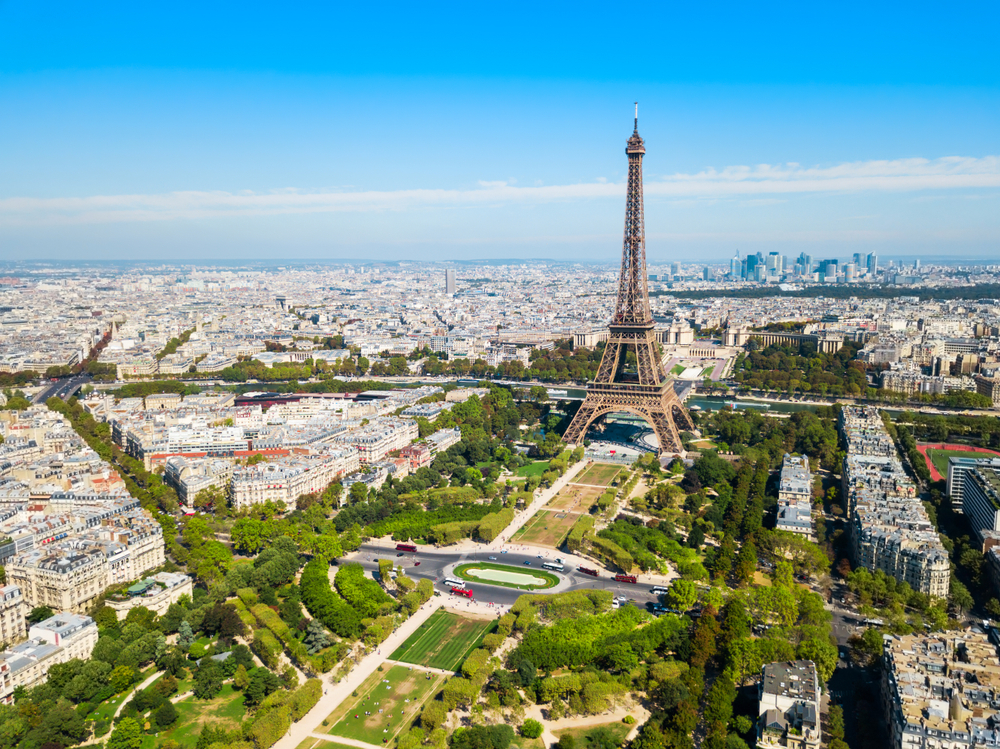
The 7th arrondissement of Paris, where the Musée de l’Armée is located, is home to some of the capital’s most emblematic monuments. Just a few minutes’ walk from Les Invalides, the Eiffel Tower dominates the skyline, attracting millions of visitors to admire the quintessential Parisian symbol. The Champ de Mars, a vast public garden stretching out in front of the Iron Lady, is the ideal setting for a stroll or picnic with a breathtaking view.
Heading up towards the Champs-Élysées, you’ll discover the Alexandre III bridge, considered to be the most beautiful bridge in Paris, with its gilded statues and Art Nouveau lampposts, then the Grand Palais and Petit Palais, remnants of the Universal Exhibitions. The Musée d’Orsay, housed in a converted former railway station, boasts the largest collection of Impressionist works in the world. Finally, the Saint-Germain-des-Prés district, with its historic cafés, bookshops and art galleries, is nearby. To organise your discovery of all these places and optimise your travel, Navaway itineraries offer themed tours of Paris, combining culture, history and captivating anecdotes.
In conclusion, the Musée de l’Armée in Paris is a must for anyone interested in French and European military history. From its collections of medieval weapons and armour to the majestic tomb of Napoleon I under the gilded dome of Les Invalides, not forgetting the areas dedicated to the world wars and the Historial Charles de Gaulle, this exceptional museum offers a captivating journey through the centuries. The grandiose architecture of the Hôtel des Invalides, the precious objects on display and the solemn atmosphere of the premises create an unforgettable cultural experience. Whether you’re a history buff, a lover of military art or just a curious visitor, a day spent at the Musée de l’Armée will give you a better understanding of France’s central role in European history. To extend this historical discovery and explore the capital further, don’t hesitate to follow the Navaway audio tours, which will take you through the streets, squares and emblematic monuments of Paris while telling you the fascinating stories that have shaped the City of Light.
Frequently asked questions
How long does it take to visit the Musée de l’Armée?
You should allow between 3 and 4 hours for a full visit to the Musée de l’Armée, including the permanent collections, Napoleon’s tomb under the Invalides dome, the Historial Charles de Gaulle and the related museums. If you wish to explore the collections in depth or take part in a guided tour, allow half a day. For an express visit to the highlights (antique armour, the Napoleonic collections and the Emperor’s tomb), a minimum of 2 hours is required.
Is the Musée de l’Armée free on the first Sunday of the month?
No, the Musée de l’Armée is not one of the national museums offering free admission on the first Sunday of the month. Admission to the permanent collections and Napoleon’s tomb is free all year round. However, admission is free for under-18s and young Europeans aged 18 to 25. An interesting option is the nocturne on the first Friday of the month (6-10pm) with a reduced rate of €10.
Can I take photos in the Musée de l’Armée?
Yes, photography is permitted in most areas of the Musée de l’Armée for personal use only and without flash. It is forbidden to use tripods, selfie poles or any professional equipment without prior authorisation. In some temporary exhibitions, photography may be prohibited. Signs clearly indicate this. Respect for other visitors and the works on display is essential, so avoid blocking passages or touching objects.
Does the Musée de l’Armée offer activities for children?
Yes, the Musée de l’Armée has developed a range of activities for families, with free game books available at reception for different age groups, giving children a fun way to discover the collections. Workshop tours and educational events are regularly organised during the school holidays. Audioguides also offer tours specifically designed for young visitors. Admission is free for under-18s, making the visit accessible to families.
Where can you eat near the Musée de l’Armée?
The museum has its own café-restaurant, L’Esplanade, located inside Les Invalides, offering fast food and lunch options in a pleasant setting. In the immediate vicinity, the 7th arrondissement abounds with restaurants, brasseries and cafés to suit all budgets. Rue Cler, the famous pedestrian market just a 10-minute walk away, offers a wide range of food and fresh produce options for an impromptu picnic on the Esplanade des Invalides or Champ de Mars.
Is the Musée de l’Armée accessible to people with reduced mobility?
Yes, the Musée de l’Armée is accessible to people with reduced mobility. Lifts and ramps provide access to most exhibition areas. Wheelchairs can be borrowed free of charge from reception on request (subject to availability). Admission is free for disabled visitors and their carers. Tactile and adapted tours are available by prior arrangement. We recommend that you contact the visitors’ service before your visit to help you organise your visit.
Can a visit to the Musée de l’Armée be combined with a visit to other museums?
Yes, there are several ways to combine your visit. A twin ticket for the Musée de l’Armée / Musée Rodin is available for €26, allowing you to discover two emblematic museums in the 7th arrondissement. The Paris Museum Pass (from €70 for 2 days) includes access to the Musée de l’Armée as well as over 50 other Paris museums and monuments, offering a cost-effective option for those wishing to visit several cultural sites. This pass also avoids queues at most of the venues included.
200 audioguided tours for cities all around the world
Download