Discover the Aiguilles de Bavella in Southern Corsica
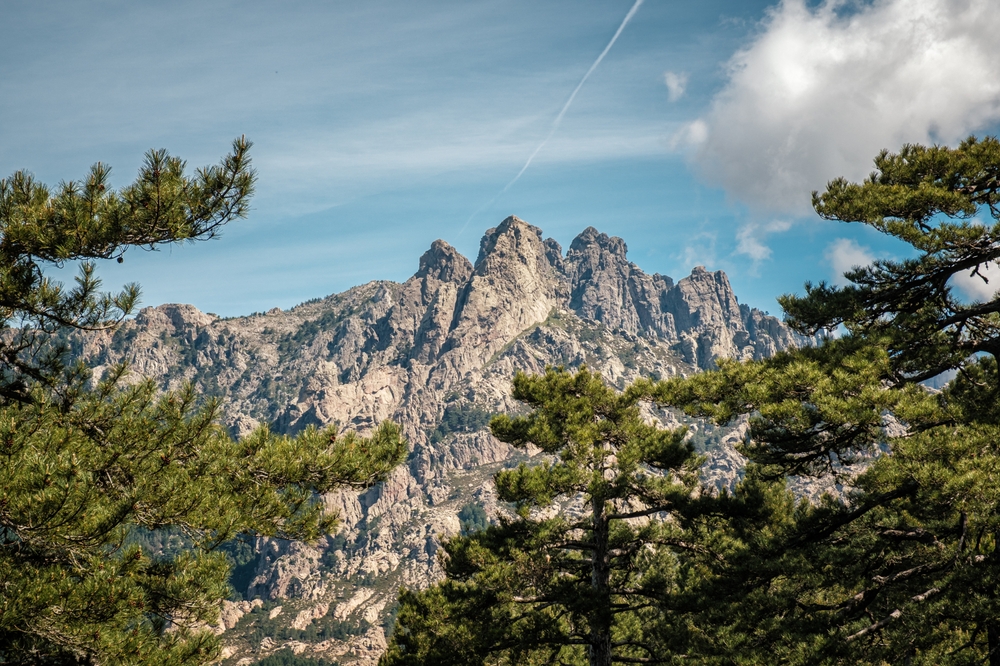

Rising like blades of red granite towards the Corsican sky, the Aiguilles de Bavella are undoubtedly one of the most spectacular landscapes in the whole of the Mediterranean. These jagged peaks, rising to an altitude of almost 1,900 metres, dominate the Laricio pine forest and the Col de Bavella (20122 Zonza, France, rated 4.7/5 on Google out of 600 reviews), the gateway to this exceptional massif. Whether you’re a seasoned hiker, a canyoning enthusiast, a climber or simply looking for unforgettable views, visiting the Aiguilles de Bavella in Corsica promises an extraordinary experience. This comprehensive guide tells you everything you need to know to organise your stay in this natural jewel of southern Corsica.
See also the AJACCIO guide :
- 15 excursions around Ajaccio
- The 10 most beautiful walks around Ajaccio
- Corsica’s 10 most beautiful waterfalls for swimming
- What to see and do in South Corsica around Ajaccio?
- Top 6 things to do in Ajaccio
- GR 20: discover Corsica’s legendary hike
- Visiting Corsica: what to see and do?
- Top 10 culinary specialities in Ajaccio
- The most beautiful villages in Corsica around Bastia
- The best places to visit in Haute-Corse
1. What are the Aiguilles de Bavella? Presentation of the site
The Aiguilles de Bavella (20122 Quenza, France, rated 4.8/5 on Google out of 800 reviews) are a granite massif of wild and impressive beauty, right in the heart of southern Corsica. These rocky walls of ochre and pinkish hues stand out against the sky like a crown of stone giants, offering a visual spectacle that even the most seasoned travellers won’t soon forget.
The Bavella massif lies in the Alta Rocca region, around 50 kilometres north of Porto-Vecchio and 10 kilometres from the village of Zonza. It is an integral part of the Parc Naturel Régional de Corse, giving it strict environmental protection and guaranteeing the preservation of its exceptional biodiversity. The needles themselves stretch from Punta di u Furnellu and Punta Muvrareccia – both at an altitude of 1,899 metres – to the Col de Bavella at 1,218 metres.
The granite that makes up these geological formations was formed over 250 million years ago. Sculpted by erosion over the millennia, it has given rise to these unique silhouettes characterised by their tafonis – cavities carved into the rock that give them their distinctive appearance. Among the needles grow larch pines with twisted trunks, a species endemic to Corsica that contributes to the almost mystical atmosphere of the site. Deer, mouflons and golden eagles populate these wild places, witnesses to a nature that is still preserved.
The site is also an essential section of the famous GR20, the long-distance hiking trail that crosses Corsica from north to south and is considered one of the most demanding in Europe. The alpine variant of the Aiguilles de Bavella is one of the most spectacular sections of this legendary trek.
2. How to get to the Aiguilles de Bavella
Access to the Aiguilles de Bavella is mainly via the D268, a winding, narrow mountain road that alone offers breathtaking panoramas. Dubbed by some as “the most beautiful mountain road in Corsica”, it winds through forests of laricio pine before leading to the Col de Bavella, the nerve centre of the site.
From Ajaccio
From Ajaccio, allow around 1h45 to 2h drive. Take the N193 towards Bocognano, then the N196 towards Propriano, and continue on the D268 to the Col de Bavella. Many organised excursions to the massif leave from the Corsican capital.
From Porto-Vecchio
From Porto-Vecchio, the journey is shorter: around 50 kilometres, or 1h to 1h15 depending on traffic. Head up towards Zonza on the D368 and then the D268. This road is particularly popular as it passes through some beautiful inland countryside.
Parking at Aiguilles de Bavella
Parking is one of the trickiest aspects of the visit, especially in high season. There are three pay car parks at the pass, with a total of around 150 spaces. In summer, prices range from €5 for 5 hours to €12 for the day. Payment is made in cash via parking meters. You are strongly advised to arrive early in the morning (before 9am in July and August) to find a space. An alternative is the Viseu car park, which costs less (around €1.50/hour) and is served by a shuttle bus that runs every 10 minutes to the pass. Watch out for illegally parked cars: the Regional Nature Park wardens regularly issue fines.
Please note: the road is open all year round, but may be closed in winter in the event of heavy snowfall. And beware of free-roaming animals – wild pigs, cows and goats frequently cross the road!
3. The best walks in the Aiguilles de Bavella
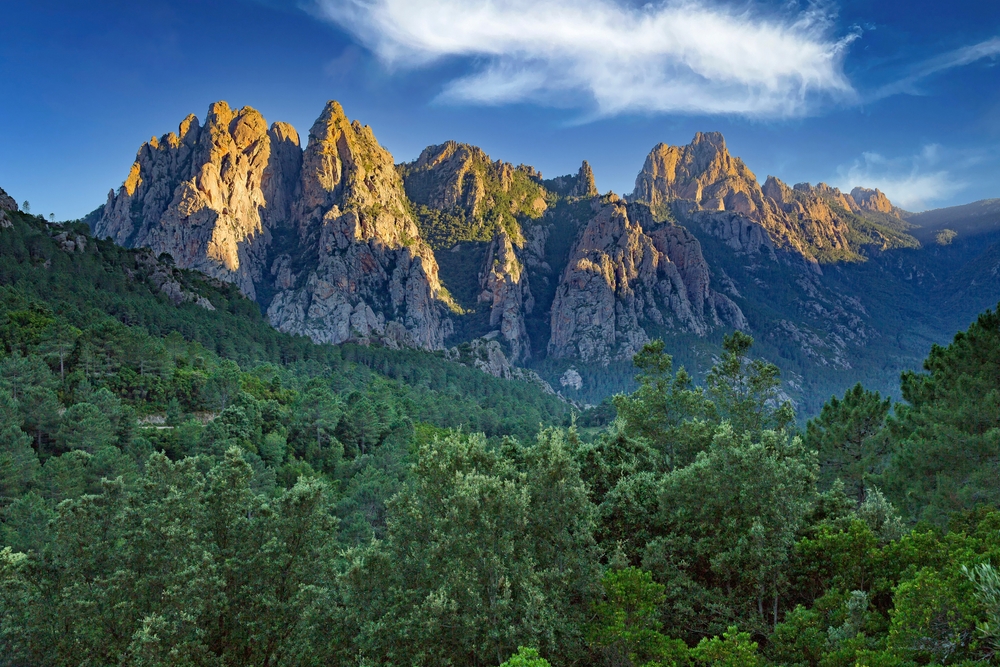
The Aiguilles de Bavella are first and foremost a paradise for hikers. There are several signposted trails leading from the pass, with varying levels of difficulty, so that everyone – families with children as well as experienced mountaineers – can find something to enjoy in this exceptional massif. Here are the main hikes that are a must when visiting the Aiguilles de Bavella in Corsica.
1. The bomb hole (U Cumpuleddu): a must-do hike
This is without doubt the most emblematic hike on the Aiguilles de Bavella. The Trou de la Bombe (U Cumpuleddu in Corsican) is a natural window cut into the granite rock, offering a 180-degree view of the Aiguilles and the surrounding valleys. This hole, several metres in diameter, perched in the rock face, is the photographic symbol of the massif.
The hike starts directly from the Col de Bavella car park. It covers around 5 to 6 km with a difference in altitude of 200 metres, and can be completed in 2? to 3 hours round trip. The overall difficulty is moderate, making it suitable for families with children aged 8-10 and over (provided you don’t go all the way to the top of the rocky window, which requires some climbing). The path is well signposted with orange markers. In summer, it’s best to set off early in the morning or late in the afternoon to avoid the crowds and enjoy the peace and quiet.
2. Tour des Aiguilles: the long circuit
For hikers wanting to explore the whole massif, the tour of the Aiguilles de Bavella is an unforgettable experience. This 8-kilometre circuit has a total ascent of around 500 metres and takes an estimated 6? hours. It’s a long mountain walk, requiring a minimum level of fitness and suitable equipment.
The route takes the alpine variant of the GR20 on the outward journey, passing between the needles through magnificent scenery, then returning via the south-facing slope. You’ll cross areas of laricio pine, granite corridors and a few technical sections (fixed chains installed at tricky spots). The reward: 360° views of the needles, the valleys and, on a clear day, the Tyrrhenian Sea. This route is possible almost all year round, but the winter snowy periods make it dangerous.
3. The alpine variant of the GR20: the challenge for seasoned walkers
For those tackling the GR20, the section via the Aiguilles de Bavella is one of the most demanding and beautiful parts of the trail. The Alpine variant covers around 10.9 km, with a positive ascent of 946 metres, and takes an estimated 5 hours 50 minutes. It starts at the Col de Bavella, climbs between the needles via passages equipped with chains, and then descends to the Asinau refuge.
This variant cannot be improvised: good physical condition, adequate equipment (hiking boots with reinforced ankles, poles, plenty of water) and favourable weather conditions are essential. If you’re just passing through and don’t want to do the whole GR20, you can still do this variant on the return journey from the pass to immerse yourself in the unique atmosphere of this legendary trail.
4. Canyoning and the natural pools of Bavella
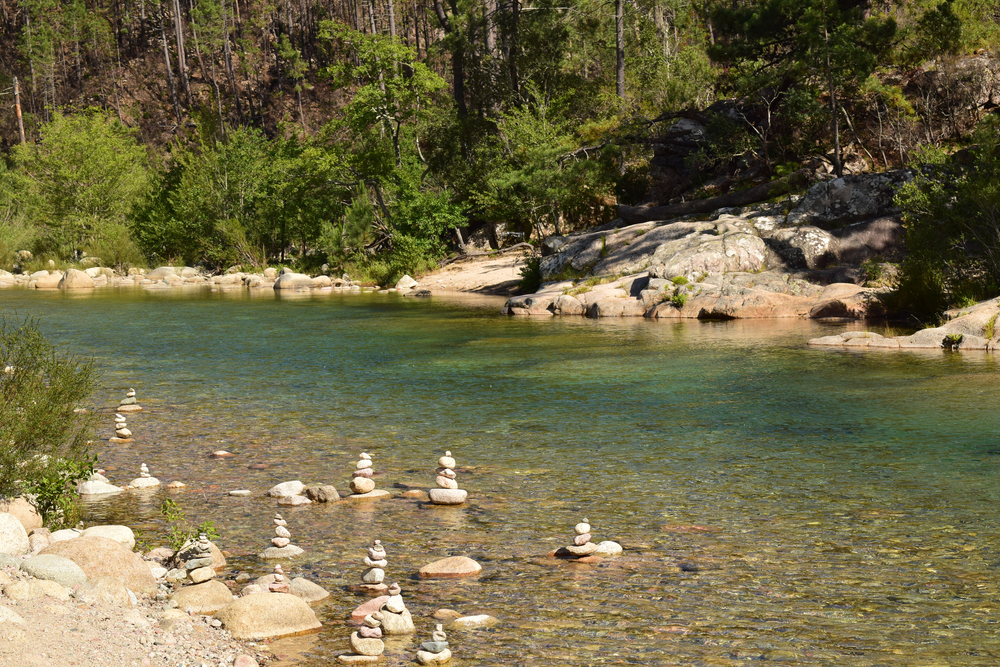
While hiking is the main activity in the Aiguilles de Bavella, canyoning has developed a worldwide reputation. The gorges and rivers descending from the massif offer some of the most beautiful water courses in the whole of the Mediterranean. The crystal-clear waters that weave their way between the red granite walls create natural pools of hypnotic blue-green, natural slides and spectacular waterfalls.
1. The Purcaraccia canyon: the ultimate jewel
The Purcaraccia canyon is unanimously considered to be one of the most beautiful canyons in Corsica, if not Europe. This iconic route features a series of emerald-blue pools, natural slides several dozen metres long, spectacular waterfalls and vertiginous jumps. The Purcaraccia is a ‘sporting’ canyon: it involves abseils, slides and swimming in cool water, making it an itinerary for those with a minimum of aquatic and physical fitness.
It is compulsory to be accompanied by a professional guide to access the Purcaraccia canyon – in fact, this rule applies to the whole of the Bavella massif. Several service providers offer supervised descents, including Corsica Madness (centre village Fontana, 20124 Zonza, rated 4.5/5 on Google out of 483 reviews), which has specialised in canyoning in the massif for many years. Expect to pay between €45 and €70 per person for a half-day or full day.
2. The Polischellu canyon: ideal for families
For those looking for an introduction to canyoning with children aged 7-8 and over, the Polischellu canyon (also spelt Pulischellu) is an excellent alternative. More accessible and less technical than the Purcaraccia, it nevertheless offers beautiful natural pools, small slides and jumps at reasonable heights. The surrounding landscape of granite cliffs and pine forests adds to the magic of the experience.
3. The Vacca canyon: for experienced adventurers
Less well known but just as impressive, the Vacca canyon is reserved for experienced canyoning enthusiasts. This wild, watery canyon is full of abseils and requires a solid technique as well as excellent physical condition. The scenery is absolutely breathtaking: deep gorges where the light barely filters through the granite walls, creating an almost subterranean atmosphere of striking beauty.
Whether you’re a beginner or an expert, canyoning in the Aiguilles de Bavella remains one of the most intense and memorable activities Corsica has to offer. To find out more about the most beautiful waterfalls accessible in the massif and on the island in general, consult our guide to the 10 most beautiful waterfalls in Corsica for swimming.
5. Other sporting activities at Aiguilles de Bavella
Hiking and canyoning are just two facets of a massif that is a veritable playground for all outdoor enthusiasts. The Aiguilles de Bavella offer an impressive range of sporting activities, making it one of the most complete outdoor destinations in the Mediterranean.
The via ferrata
The Bavella via ferrata is one of the oldest and most popular in Corsica. Equipped with cables, metal ladders and anchor points, it allows climbing enthusiasts with no climbing experience to climb Corsican granite in complete safety. There are several levels of route, from the most accessible for beginners to the most challenging sections reserved for experienced climbers. The views from the high points are absolutely spectacular and well worth the trip.
Long route climbing
For climbers, Bavella is quite simply a sanctuary. The massif boasts over 170 listed climbing routes, ranging from beginner to expert levels (grading from AD to ED). The rock – a granite with compact slabs adorned with tafonis – offers exceptional grip and a variety of holds. The long, multi-pitch routes allow you to soar several hundred metres above the ground in settings of incomparable wild beauty. Guided courses are organised by local guides for all levels throughout the season.
Electric mountain bikes
To discover the massif from a different angle, electric mountain biking has developed around Bavella in recent years. Local operators offer guided tours from the Bergeries de Luviu clearing, taking you through landscapes of forests and high-altitude meadows while enjoying nature at a gentler pace than hiking.
6. Notre-Dame des Neiges and the cultural heritage of Bavella
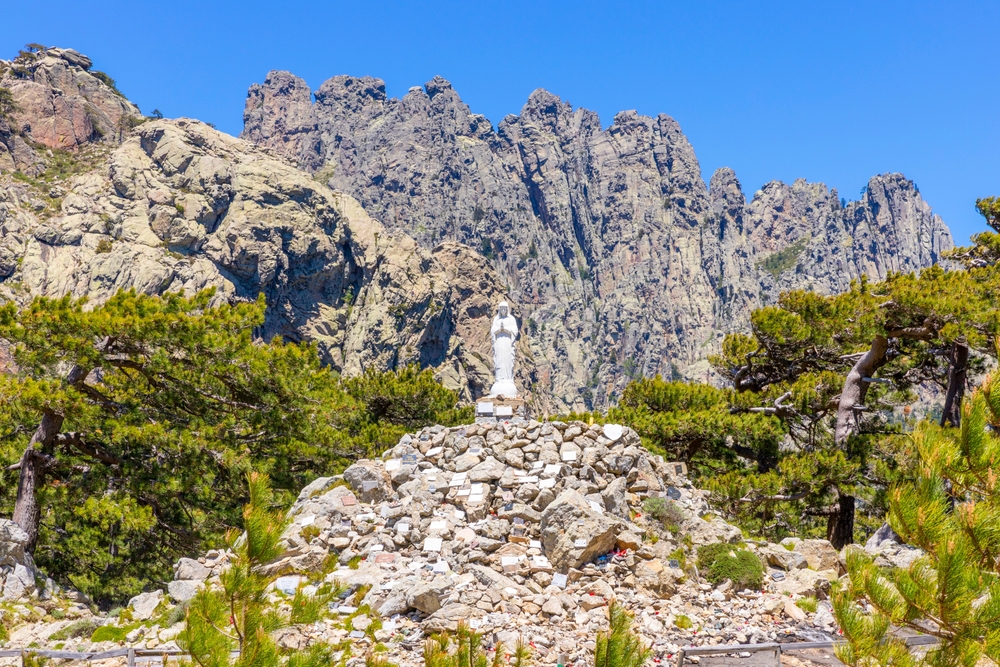
As well as its natural and sporting assets, Bavella also has a spiritual and cultural dimension that visitors should not miss. At the heart of the Col de Bavella, an immaculate statue of the Virgin Mary – Notre-Dame des Neiges – watches over the landscape from its rocky promontory. This statue, a symbol of Corsican devotion, is the starting point for an annual pilgrimage which takes place every summer on 4 August and brings together hundreds of faithful from all over southern Corsica.
The procession, led by priests from the diocese of Ajaccio, winds its way between the needles in a particularly striking atmosphere of contemplation. The sight of the white Virgin stands out against the pink granite of the needles and is one of the most emblematic photographs of the site. Even outside the pilgrimage, this area offers a welcome moment of serenity after the efforts of the hike.
Near the pass are the remains of ancient sheepfolds that bear witness to an ancestral pastoral tradition. The Alta Rocca, the region in which Bavella lies, is one of the last Corsican territories where transhumance was practised for a long time, with shepherds taking their flocks up to the high altitude summer pastures every summer.
7. Where to eat and sleep at Aiguilles de Bavella
Where to eat on the site
Food and drink on the Col de Bavella is limited, so pack a picnic if you’re planning a full day on the site. That said, there are a few places where you can eat on site. The restaurant Les Aiguilles de Bavella (Col de Bavella, 20124 Zonza, rated 4.5/5 on Google out of 1,972 reviews) offers traditional Corsican cuisine in a panoramic setting: charcuterie, cheeses and dishes cooked over an open fire, with a terrace offering a direct view of the peaks. The setting is authentic and the welcome warm.
The emblematic Auberge du Col de Bavella (Place de la Fontaine, 20124 Bavella, rated 4.4/5 on Google out of 1,851 reviews, tel: +33 4 95 72 09 87) is not to be missed. This self-catering restaurant offers traditional food all day long: Corsican charcuterie, brocciu cheese, wild boar stew, veal chop or beef steak… the flavours of deepest Corsica are present on every plate. Be sure to bring cash or a cheque, as the restaurant does not always accept bank cards (ask before you go).
Where to stay in Bavella and the surrounding area
For hikers doing the GR20 or wishing to sleep on site, theAuberge du Col de Bavella offers a gîte d’étape renowned for its comfort, renovated in 2012. There are dormitories with 4 to 8 beds (from €20/night) and a few rooms for 1 or 2 people, so you can rest after the hard work of the trail. Make sure you book in high season (July-August).
For those who prefer more comfort, the village of Zonza, 10 kilometres from the pass, offers a more complete range of accommodation: hotels, B&Bs, gîtes and campsites. Nestling at an altitude of 760 metres in a setting of Corsican forests, Zonza is a charming village in the Alta Rocca region that is well worth a visit in its own right. From Zonza, you can easily travel to Bavella, but also to the archaeological sites of Cucuruzzu and Capula or the natural pools of Cavu. The nearest airport is Figari-Corse du Sud, around 1h20 away.
8. When is the best time to visit the Aiguilles de Bavella?
The question of the best time to visit the Aiguilles de Bavella deserves a qualified answer, depending on the type of activity you are planning and your tolerance of crowds.
The high season runs from July to August. The weather conditions are ideal, with long days and mild temperatures allowing all activities to be enjoyed. On the other hand, the site is very busy: the car park is often full by 9am, the paths can turn into a procession, and the canyoning guides are packed. If you choose this period, make sure you leave early in the morning.
May, June and September-October are undoubtedly the best months to enjoy the Aiguilles de Bavella in the best conditions. Temperatures are mild (between 18 and 28°C), nature is vibrant, trails are well-maintained and visitor numbers are much more reasonable. In June, the Purcaraccia waterfalls are still well supplied with water, making canyoning particularly spectacular. In September, the golden hues of the forest make for an absolutely magnificent autumn landscape.
Winter (November to April) can bring snow to the col and the needles, making some trails dangerous or even inaccessible. However, for lovers of desert landscapes and wide open spaces, a winter visit on a sunny day offers a unique and unreal atmosphere, with the snow contrasting with the red granite.
9. Practical tips for visiting the Aiguilles de Bavella in Corsica
To make the most of your visit to the Aiguilles de Bavella, here are a few essential practical recommendations:
Equipment and safety
Even for the Trou de la Bombe hike, which is considered accessible, it is essential to wear hiking boots with notched soles – Corsican granite can be extremely slippery, especially in wet weather. Take plenty of water (at least 1.5 litres per person for half a day), a windbreaker for the higher altitudes, sun cream and a hat. For longer hikes, a survival blanket and first-aid kit are recommended.
Regulations and respect for nature
The Bavella massif is part of Corsica’s Regional Nature Park, which means that strict rules of good conduct apply. In particular, it is forbidden to stray from marked trails, light fires, pick plants or disturb wildlife. For canyoning activities, the presence of a professional guide approved by the Park is compulsory. Traffic regulations are also strict in the high season: some access routes may be restricted or subject to tolls.
Accommodation and booking
Book your accommodation and activities well in advance, especially for the July-August period. Stopover gîtes on the GR20 are fully booked several weeks before you arrive. For canyoning, the service providers’ slots are often fully booked in high season; remember to contact the operators as soon as you start planning your trip.
Combine with other visits to Corsica
Southern Corsica is full of treasures to discover beyond Bavella. Ajaccio, the imperial capital, is just 1 hour 45 minutes away and well worth a full day’s visit. To find out more about possible excursions from the Corsican capital, our guide to things to see and discover in Southern Corsica around Ajaccio will give you plenty of ideas for escapades. And if you’re a keen hiker, don’t forget to check out our full report on the GR20, of which Bavella is one of the most spectacular stretches.
Download the audio tour to discover Ajaccio on foot and on your own
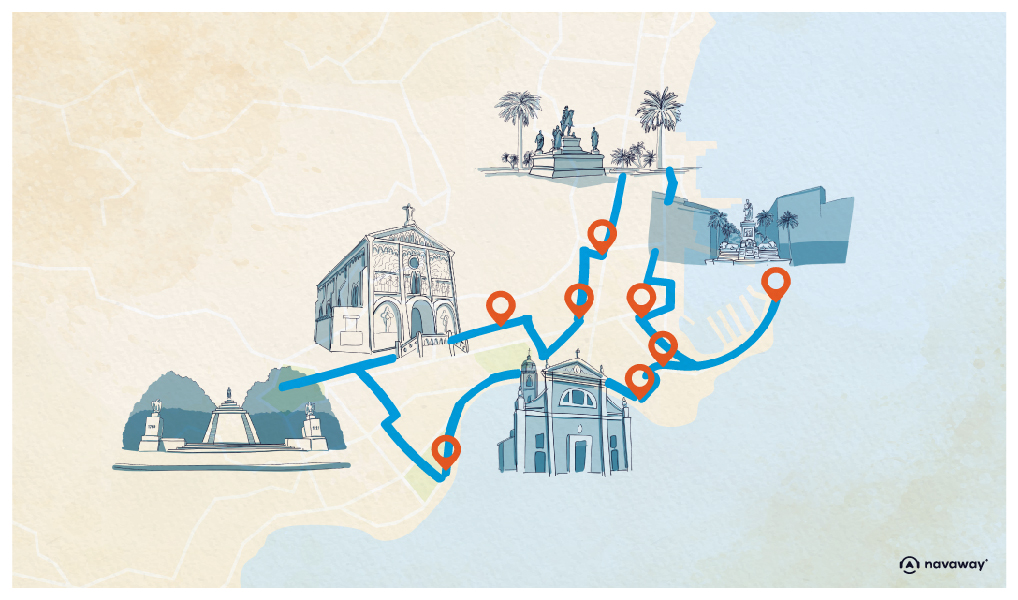
If your trip around the Aiguilles de Bavella includes a stopover in the Corsican capital, be sure to discover Ajaccio on the Navaway audio tour. This 6-kilometre, 2? hour walk takes you through 18 of the imperial city’s must-see landmarks: Maison Bonaparte, Place du Maréchal Foch, Santa-Maria Assunta cathedral, Port Tino Rossi… An audio guide packed with historical anecdotes and immersive commentary, available on smartphone, so you can visit Ajaccio at your own pace, with no time constraints.
In conclusion, the Aiguilles de Bavella are one of the most exceptional natural destinations in the Mediterranean. This rugged granite massif, nestling in the heart of Corsica’s Regional Nature Park, invites you to experience a profound communion with wild, unspoilt and magnificent nature. Whether you come to hike among the needles, abseil down the Purcaraccia gorge, climb the pink granite or simply contemplate this timeless landscape from the pass, Bavella is sure to leave you speechless. To extend this immersion in Corsican beauty, use the Navaway itinerary to visit Ajaccio during your stay on the Isle of Beauty – a city steeped in history that perfectly complements the natural change of scenery at Bavella.
FAQ – Visiting the Aiguilles de Bavella in Corsica
Is it possible to visit the Aiguilles de Bavella freely?
Access to the Aiguilles de Bavella is free for hikers on the signposted trails (free entry). However, access to the canyons and natural pools is regulated: the presence of an approved professional guide is compulsory. There is a charge for parking at the pass in high season (June to October).
Are the Aiguilles de Bavella accessible with children?
Yes, a number of activities are suitable for families. The Trou de la Bombe hike is suitable for children aged 8 and over (for the more technical sections). Canyoning in the Polischellu canyon is available from the age of 7-8 through specialist service providers. On the other hand, the alpine variant of the GR20 and the descent of the Purcaraccia are reserved for sporty adults and teenagers.
How long does it take to visit the Aiguilles de Bavella?
A full day is the minimum recommended to enjoy the site. Allow a morning for the Trou de la Bombe hike and an afternoon for a complementary activity (canyoning, climbing or via ferrata). If you’re a keen hiker and want to do the whole Aiguilles tour or several activities, two days are preferable, ideally with an overnight stay in Zonza or at the gîte du col.
How much does a day’s canyoning at Bavella cost?
Prices vary according to the service provider and the canyon. On average, you should expect to pay between €45 and €55 per person for a half-day of supervised canyoning. Some of the more technical routes or full days can cost between €70 and €80. Advance bookings are strongly recommended, especially from July to September.
Can you visit the Aiguilles de Bavella in winter?
The site is accessible all year round in theory, but the D268 road may be closed in the event of heavy snowfall. In winter, hiking trails may be covered in snow or ice, and most activity providers are closed from November to April. For winter visits, check the road and weather conditions with your local Météo France office beforehand.
200 audioguided tours for cities all around the world
Download