5 good reasons to discover Portugal by car


Portugal is one of Europe’s most popular destinations for a successful road trip. With its wild coastline, towns steeped in history and mountainous landscapes, this southern European country offers a rare diversity in a compact area. Travelling around Portugal by car gives you the freedom to explore at your own pace, from Lisbon to Porto, via the medieval villages of the interior and the golden beaches of the Algarve. Here are 5 good reasons why Portugal is an ideal destination for an unforgettable road trip.
Read also about the Portugal guide :
- Weekend in Lisbon: visit Lisbon in 2, 3 or 4 days
- 8 nature parks to discover in the heart of Portugal
- Visit Sintra near Lisbon, Portugal
- Visit Óbidos: Portugal’s charming medieval town
- 12 must-see museums in Lisbon
- Lisbon’s 10 best markets to discover
1. A high-quality road network for trouble-free journeys
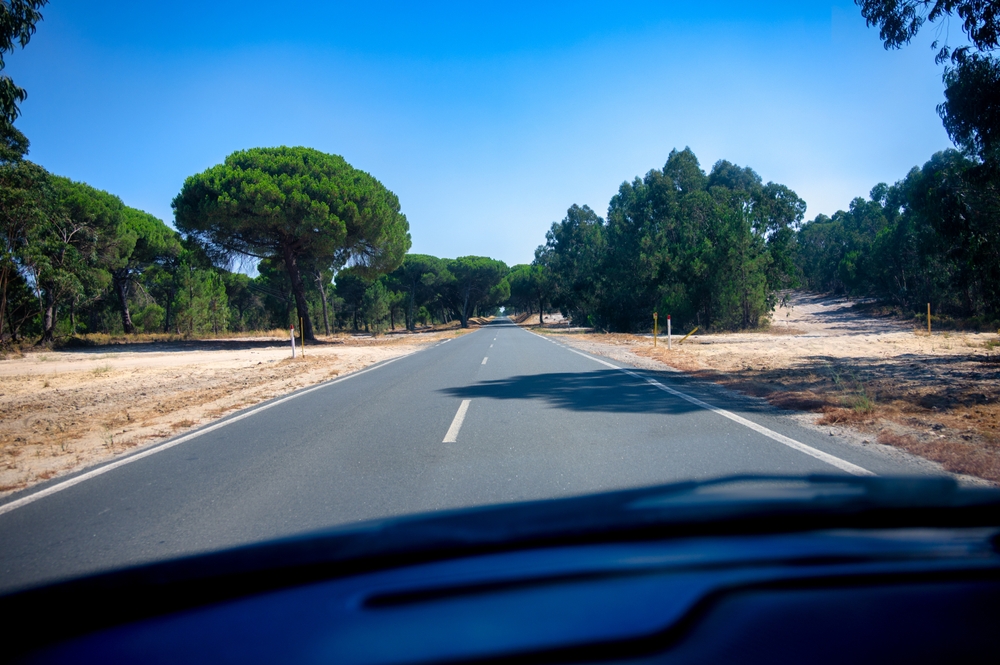
Portugal has a modern, well-maintained road network, ideal for getting around the country with complete peace of mind. Portugal’s motorways, known as “autoestradas”, link the country’s main cities such as Lisbon, Porto, Coimbra and Faro, offering wide, safe lanes. The quality of this infrastructure means that you can travel comfortably, even over long distances.
With a surface area of just 92,000 km², Portugal is easy to cross from north to south in just a few hours. This geographical compactness is a major advantage: you can visit Porto in the morning, make a stopover in the Douro valley in the middle of the day, then head for Coimbra in the late afternoon. The short distances between the sites of interest mean you can make the most of your time and discover more without spending hours on the road.
Portugal’s secondary roads are also well worth a visit. Although they are more winding, particularly in mountainous regions such as the Serra da Estrela, they offer spectacular panoramic views and take you to authentic villages untouched by mass tourism. Road signs are clear and efficient, and most European telephone plans work perfectly in Portugal, allowing you to use your GPS without worry.
2. Total freedom to explore at your own pace
Travelling by car in Portugal means above all total freedom of movement. No train timetables to keep to, no connections to make, no buses to wait for under the sun: you’re in complete control of your itinerary. This flexibility means you can adapt your itinerary to suit your current mood, your discoveries and your personal favourites.
Imagine driving along the Vicentine coast at sunset and coming upon a wild cove that beckons. In a car, you can stop instantly, enjoy the moment, and leave whenever you like. This spontaneity is impossible with public transport. If there’s a village that particularly appeals to you, there’s nothing to stop you staying an extra night. Conversely, if a place disappoints you, you can get back on the road without delay.
Road trips in Portugal also encourage authentic encounters with the locals. By venturing into the small villages of Alentejo or Minho, far from the usual tourist routes, you will discover the legendary hospitality of the Portuguese. These moments of exchange, over a cup of coffee or in a traditional tasca, give your journey its full meaning. The locals will be delighted to recommend their secret addresses and share their love of their region with you.
Download the audio-guided tour to discover Lisbon on foot and on your own
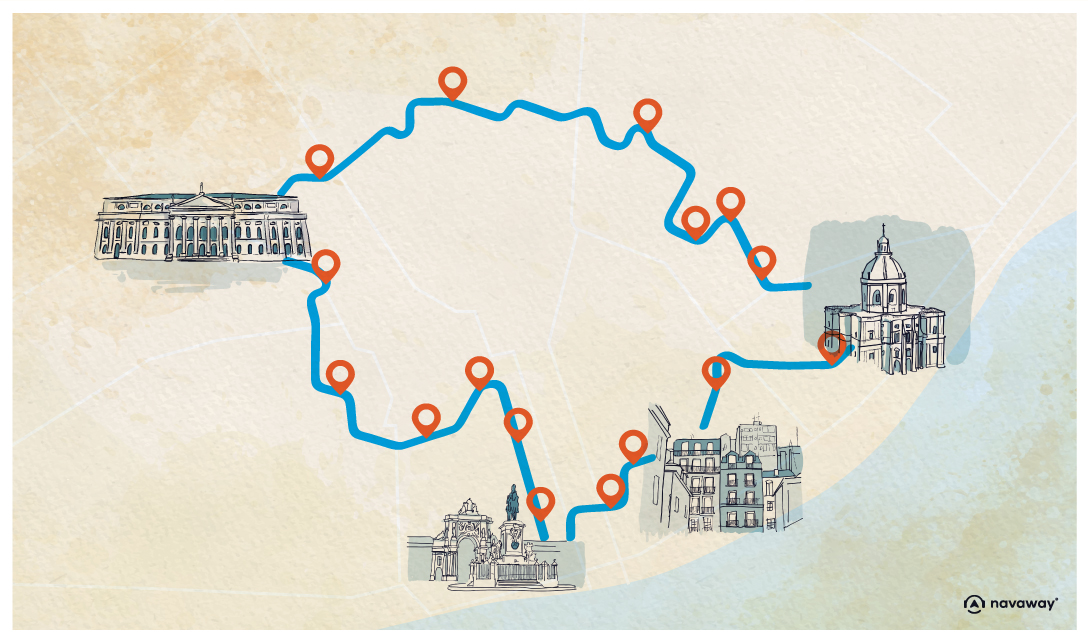
To explore the Portuguese capital in depth, the Navaway app offers you a complete audio tour of Lisbon. This 7km route takes you through the city’s emblematic districts, from Alfama to Bairro Alto, via Chiado. During the nearly 3-hour walk, discover 24 places of interest with captivating audio explanations that bring the history of each monument to life. Let yourself be guided on your visit by this Lisbon tour itinerary and enjoy a rewarding, self-guided exploration of the city of seven hills.
3. Privileged access to unusual sites and hidden villages
One of the greatest advantages of visiting Portugal by car is the opportunity to visit places that are off the beaten track, inaccessible or difficult to reach by public transport. The country is full of hidden treasures that don’t always feature in the standard tourist guides, but are often the most memorable moments of a trip.
Take the Peneda-Gerês National Park, in the north of the country. This unspoilt mountain area is home to wild landscapes of breathtaking beauty, with waterfalls, high-altitude lagoons and ancient stone villages. By car, you can drive deep into the heart of this natural park and discover spectacular panoramas far from the hustle and bustle of tourism. The village of Lindoso, with its incredible collection of granaries (espigueiros), is a fascinating stopover that absolutely requires a vehicle to get there.
In the Alentejo region, between Lisbon and the Algarve, the car becomes your best ally for exploring the white villages lost in the golden plains. Monsaraz, a small medieval town perched on a hill, offers a breathtaking view of Lake Alqueva and is well worth a visit. Further south, Marvão, a fortified village on the Spanish border, is an ideal place to visit after taking winding country roads through olive groves and vineyards.
The Tróia peninsula, accessible only by ferry or a long coastal road, remains an unspoilt paradise with its wild beaches and crystal-clear waters. Comporta, which has become famous for its rice fields and authenticity, also requires a car to fully enjoy its confidential beaches and restaurants serving freshly caught fish.
4. The diversity of landscapes concentrated on a single route

Portugal offers a natural and cultural diversity that is rare in Europe. In just one or two weeks on a road trip, you can cover a range of landscapes that seem to belong to different countries: wave-beaten Atlantic coasts, rugged mountains, lush green valleys, sandy beaches and volcanic landscapes.
Start your journey in Lisbon, the luminous capital with its tiled facades (azulejos) and emblematic yellow trams. Wander the steep streets of Alfama, taste the famous pastéis de nata in Belém, and soak up the melancholy atmosphere of fado in the historic quarters. Just 30 minutes away, Sintra plunges you into a fairytale world with its romantic palaces nestling in lush vegetation.
Continue north along the coast to Nazaré, renowned for its giant waves that attract surfers from all over the world. A diversion to Óbidos, a charming medieval village with cobbled streets and white houses lined with bougainvillea, is a must. Here you can sample the famous ginja served in a chocolate cup, an essential local tradition.
When you arrive in Porto, Portugal’s second-largest city, discover the Port wine cellars in Vila Nova de Gaia, cross the Dom Luís Bridge and lose yourself in the Ribeira district, a UNESCO World Heritage Site. Take advantage of your visit to follow the audioguide tour of Porto, which will reveal all the secrets of this authentic and endearing city.
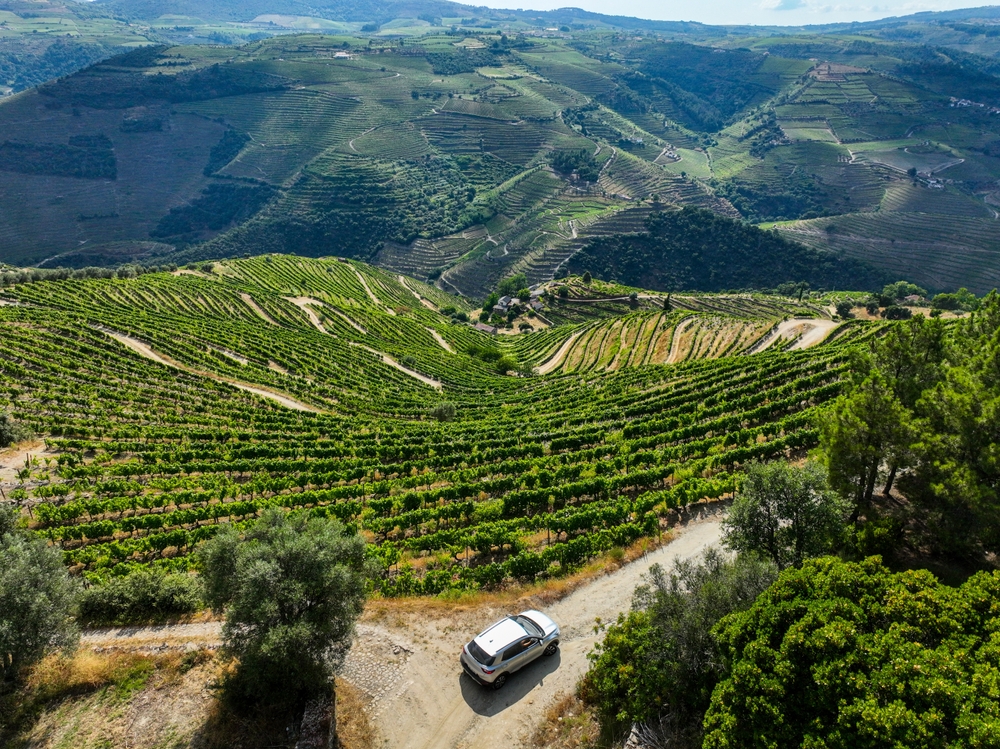
The Douro Valley, just an hour from Porto, is an unforgettable sight, with its terraced vineyards following the curves of the river. The panoramic roads of this wine-growing region will take you from quintas to miradors, each bend revealing a new picture worthy of a postcard. Peso da Régua and Pinhão are excellent bases from which to explore this legendary region.
Further south, Coimbra, the former capital of Portugal, will win you over with its historic university, one of the oldest in Europe, and its sumptuous Baroque library. For a complete immersion experience, let yourself be guided by theCoimbra audio tour, which will reveal the treasures of this university town steeped in history.
Finish your journey in the Algarve, Portugal’s southernmost region, famous for its ochre cliffs sculpted by erosion, its sea caves accessible by boat, and its dream beaches such as those at Lagos and Tavira. Cape Saint-Vincent, the most westerly point of continental Europe, offers a grandiose spectacle at sunset, the perfect moment to round off your Portuguese road trip.
5. An invitation to slow travel and disconnect
Visiting Portugal by car is an excellent introduction to slow travel, a philosophy of travel that favours the quality of experiences over the quantity of destinations selected. By taking your time and freeing yourself from the time constraints imposed by public transport, you give yourself the chance to live every moment of your trip to the full.
Slow travel means agreeing to stop for a long time at a local market to taste regional products, talk to producers and understand Portuguese culinary traditions. It means taking the time to hike in the wild landscapes of the Sintra-Cascais Natural Park or in the Serra da Estrela, the highest mountain in mainland Portugal, where the pure air and breathtaking views reconnect you with nature.
It also means savouring a meal lasting several hours in a family-run tasca, a small traditional restaurant where time seems to stand still. In Portugal, gastronomy is an integral part of the cultural experience: bacalhau (cod) prepared in a thousand different ways, grilled sardines, Alentejo sheep’s milk cheeses, Douro or Alentejo wines, and of course the countless pastries that are the pride of the country.
In the car, paradoxically, you save time that you can reinvest in exploring places in depth. No need to run from station to station or meticulously plan your journeys: your vehicle waits patiently while you soak up the atmosphere of a place. This flexibility also means you can make the most of the golden hours for photography, enjoy a stress-free sunset over the Atlantic Ocean, or stop on a headland to simply admire the scenery.
Portugal lends itself wonderfully well to this contemplative approach to travel. The pace of life here is naturally slower than elsewhere in Europe, and this Portuguese gentle way of life (saudade) becomes contagious. As you drive through the country, you instinctively adopt the relaxed pace that characterises Portuguese culture, where people take the time to live, savour and appreciate the small pleasures of everyday life.
In conclusion, travelling around Portugal by car is much more than just a means of transport: it’s a genuine travel philosophy that combines freedom, authenticity and in-depth discovery. From its impeccable roads and unspoilt villages to the breathtaking diversity of its landscapes and its invitation to slow travel, Portugal is the ideal destination for a successful European road trip. Whether you choose to explore the treasures of Lisbon, the authentic charms of Porto or the university history of Coimbra, your road trip in Portugal will remain engraved in your memory as a unique experience, rich in emotions and encounters. So, are you ready to get behind the wheel and set off to discover this small country with a thousand faces that never ceases to seduce travellers from all over the world?
FAQ : Visiting Portugal by car
When is the best time for a road trip in Portugal?
The best time to visit Portugal by car is from April to October, with a preference for May, June and September. These periods offer a pleasant climate, fewer tourists than at the height of summer, and temperatures that are ideal for exploring the country. Summer (July-August) can be very hot, particularly in the Alentejo and Algarve, but is still perfect for enjoying the beaches.
How long does a road trip to Portugal take?
A complete road trip in Portugal ideally requires 10 to 15 days to discover the main regions without being in too much of a hurry. One week allows you to concentrate on one part of the country (north or south), while three weeks gives you the chance to explore Portugal in depth, including less touristy regions such as Minho or the Upper Douro.
Do you have to pay for motorways in Portugal?
Yes, most Portuguese motorways charge tolls. The toll system operates either by manual payment at toll booths or by electronic toll collection (Via Verde). Some motorways, particularly in the Algarve, only use the electronic system. Hire agencies generally offer a Via Verde package to simplify toll collection. The cost of tolls remains reasonable compared with other European countries.
Is it easy to park in Portuguese towns?
Parking in major cities such as Lisbon and Porto can be tricky, especially in historic centres with narrow streets. It is advisable to use secure pay car parks or to choose accommodation with parking. In smaller towns and villages, parking is generally easier and often free. Parking zones are identified by different-coloured markings on the ground indicating the applicable regulations.
Do I need an international driving licence to drive in Portugal?
No, a driving licence from France or another EU country is sufficient to drive in Portugal. Non-EU nationals should check the specific regulations, but an international licence may be required in some cases. Make sure your licence is valid and also take your identity card or passport with you.
200 audioguided tours for cities all around the world
Download