Discover Lake Geneva in a motorhome: rental, areas, itineraries


Do you dream of exploring Lake Geneva in complete freedom? Motorhoming is undoubtedly the best way to discover this pearl nestling between France and Switzerland. From the turquoise waters of the Alps’ largest lake to the medieval villages dotting its shores, terraced vineyards and snow-capped peaks, Lac Léman offers breathtaking scenery. Whether you’re a lover of heritage, gastronomy or nature, this road trip promises unforgettable memories. Here’s our complete guide to a successful trip to Lake Geneva in a motorhome.
See also the Geneva guide:
- What are the best hotels to stay in Geneva?
- Top 7 things to do in Geneva
- Visiting Lake Geneva: what to do and what to see?
- The most beautiful lakes for swimming in France
- The 25 most beautiful places to visit in Switzerland
- The most beautiful villages to discover in Savoie
- Top 10 culinary specialities in Geneva
- The best things to do in winter!
Why discover Lake Geneva in a motorhome?
Travelling to Lake Geneva in a motorhome gives you total freedom to explore this exceptional region. Imagine waking up facing the sparkling waters of the lake, having breakfast with a view of Mont Blanc, then setting off to discover a medieval village before heading to a vineyard for a wine tasting. All this with no time constraints or hotel reservations!
Lake Geneva lends itself wonderfully well to this form of travel. Both its French and Swiss shores offer excellent facilities for motorhomes. You can easily travel between the spas on the French side, such as Évian-les-Bains and Thonon-les-Bains, and the cosmopolitan Swiss cities of Geneva, Lausanne and Montreux.
At the wheel of your vehicle, you’ll have a front-row seat to admire the lake’s changing panoramas: sometimes lined with white sandy beaches, sometimes dominated by the terraced vineyards of Lavaux, a UNESCO World Heritage Site. There’s no shortage of activities on offer: boating on the lake, hiking in the mountain pastures, wine tours, discovering medieval castles… There’s something for everyone!
1. Two-day itinerary: the French side of Lake Geneva
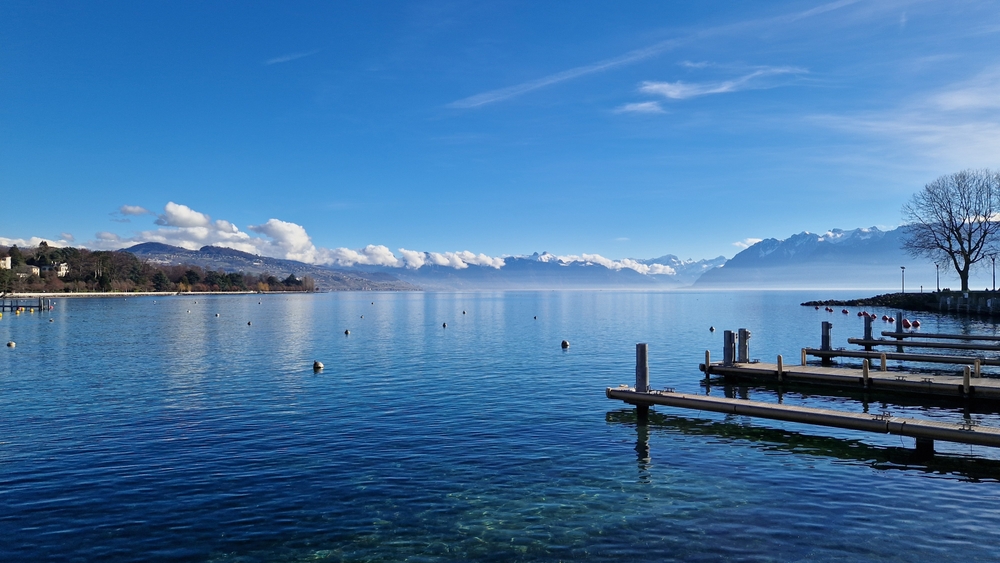
For those with a weekend to spare, the French side of the lake offers a concentration of charm and authenticity. Start your journey in Yvoire, listed as one of the most beautiful villages in France. This medieval gem, with its ramparts, 14th-century castle and flower-filled alleyways, is well worth a stopover of several hours. Stroll along its cobbled streets, visit the Garden of the Five Senses and enjoy the terraces overlooking the lake.
Continue on to Excenevex, home to one of the few fine sandy beaches on Lac Léman. This family-friendly seaside resort is ideal for a summer swim. A few kilometres away, Thonon-les-Bains welcomes you with its elegant Belle Époque architecture. This spa town offers some lovely walks, particularly around the port of Rives, where you can take a cruise on the lake.
Finish your tour at Évian-les-Bains, world-famous for its mineral water. Discover its casino, thermal baths and magnificent lakeside promenade. Weather permitting, climb up to the Cornettes de Bise, a border mountain offering exceptional views of the lake and the Alps.
2. Five-day itinerary: the Swiss side of Lake Geneva
The Swiss side of the lake deserves more time, as it is so full of treasures. Start your tour with the majestic Château de Chillon, located between Villeneuve and Montreux. This medieval fortress built on a rocky island is one of Switzerland’s most visited monuments. Its underground chambers, inner courtyards and murals will plunge you back into medieval history.
From Montreux, take the cogwheel train to the Rochers-de-Naye to admire a 360-degree panorama of the lake and the Swiss and French Alps. Then stroll back down to Montreux, famous for its jazz festival and Mediterranean lifestyle. Don’t miss the statue of Freddie Mercury, erected opposite the lake in tribute to the Queen singer who lived here.
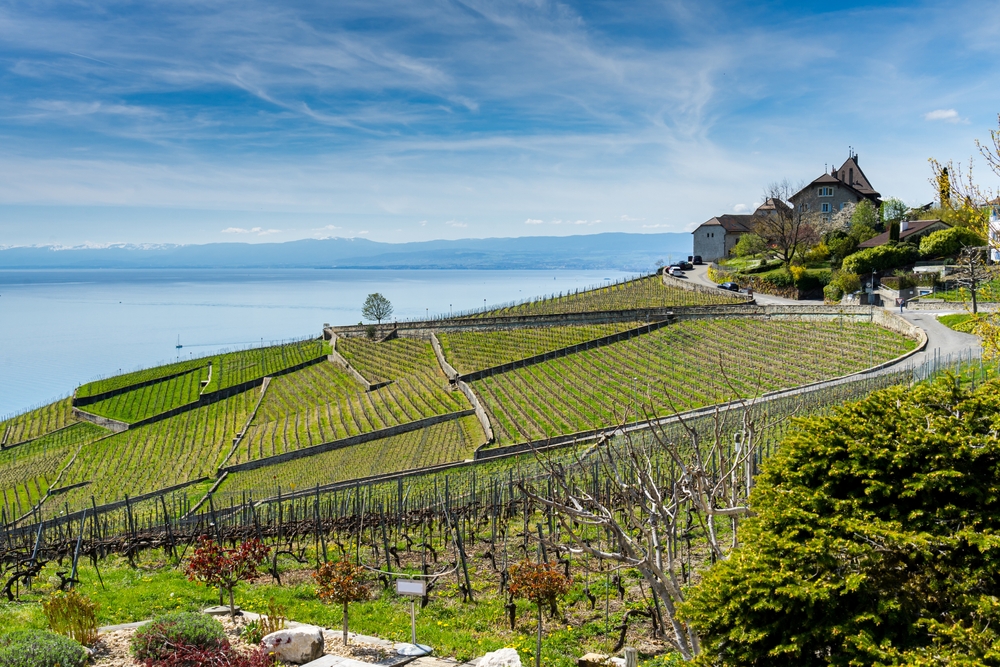
Continue on to Vevey, former home of Charlie Chaplin, where you can visit the dedicated museum. The town is also home to Nestlé’s headquarters and a charming historic centre. From here, take the road to the Lavaux vineyards, a veritable masterpiece shaped by man since the 12th century. These vertiginous terraces produce excellent white wines, which you can taste in the many cellars.
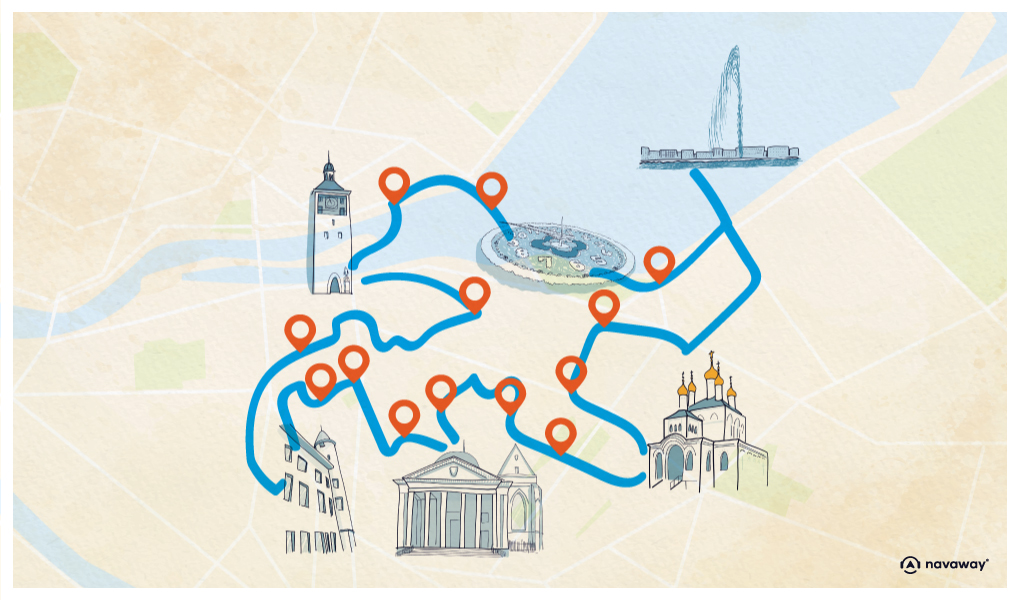
Continue on to Lausanne, Olympic capital and dynamic university town. Geneva is the final stop on your journey. The international city is home to the headquarters of the United Nations and numerous international organisations. Discover its emblematic jet d’eau, its clock in bloom, its hilltop old town and its world-famous museums. The Navaway app will guide you through the must-sees of this cosmopolitan city thanks to its audio tour of 24 points of interest.
Download the audio-guided tour to discover Geneva on foot and on your own
To make the most of your discovery of Geneva, let yourself be guided by the Navaway audio tour. In 6.2 km and around 2h30 of walking, you’ll discover 24 of the city’s most emblematic landmarks: from the Jet d’Eau to Old Geneva, via St Peter’s Cathedral, the Reformers’ Wall and the Flower Clock. Thanks to interactive GPS navigation and informative historical commentaries, you won’t miss a single secret of this international city.
3. One-week itinerary: a complete tour of Lake Geneva
With seven days to spare, treat yourself to the grand tour of Lake Geneva to experience its full diversity. Combine the two previous itineraries and add a few lesser-known nuggets. On the Swiss side, stop off in Nyon, a charming lakeside town with a castle overlooking the lake, a Lake Geneva museum and Roman remains.
Continue on to Rolle and Morges, two towns with old-fashioned charm that are well worth a visit. Morges hosts the Tulip Festival in spring, transforming its shores into an ocean of colour with more than 120,000 tulips. The town is also home to an impressive medieval castle housing several museums.
Don’t forget to stop off at Preverenges, which has one of the most beautiful white sandy beaches on the lake. This peaceful little village is ideal for a swimming break and a picnic. By taking your time, you can alternate cultural visits, wine tastings, water sports activities and moments of relaxation overlooking the Alps.
4. Where to hire a motorhome for Lake Geneva?
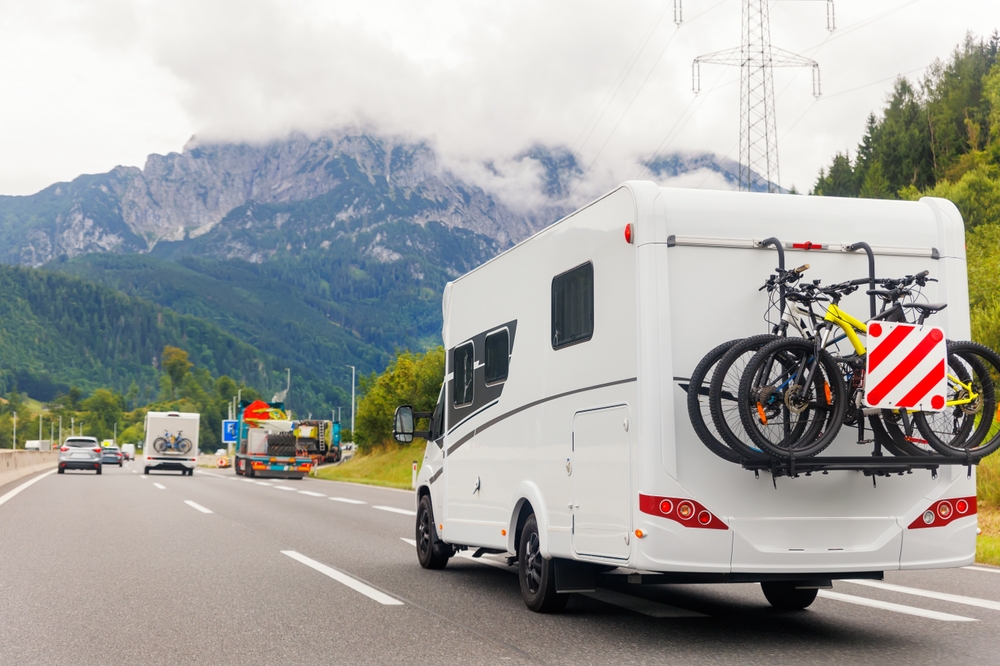
There are several options for hiring a motorhome and setting off to explore Lake Geneva. You can use a traditional agency close to your home or in the major towns near the lake, such as Geneva, Lyon or Annecy. This solution offers the advantage of proximity and allows you to inspect the vehicle before departure.
Another option is to travel to your destination by other means (train, plane, private car) and rent the motorhome on the spot. This option is ideal if you live a long way away and want to avoid long motorhome journeys. In this case, remember to book online in advance to guarantee availability of the model you want.
Finally, private hire platforms such as Yescapa and Wikicampers are becoming increasingly popular. They give you access to hundreds of motorhomes owned by private individuals or professionals, often at more attractive rates. It’s simple: select the vehicle according to your criteria (daily price, type of motorhome, equipment), check the reviews of previous renters, then send a booking request to the owner. Don’t forget to check that unlimited mileage is included and that international travel is permitted if you plan to cross the Swiss border.
5. The best motorhome parks around Lake Geneva
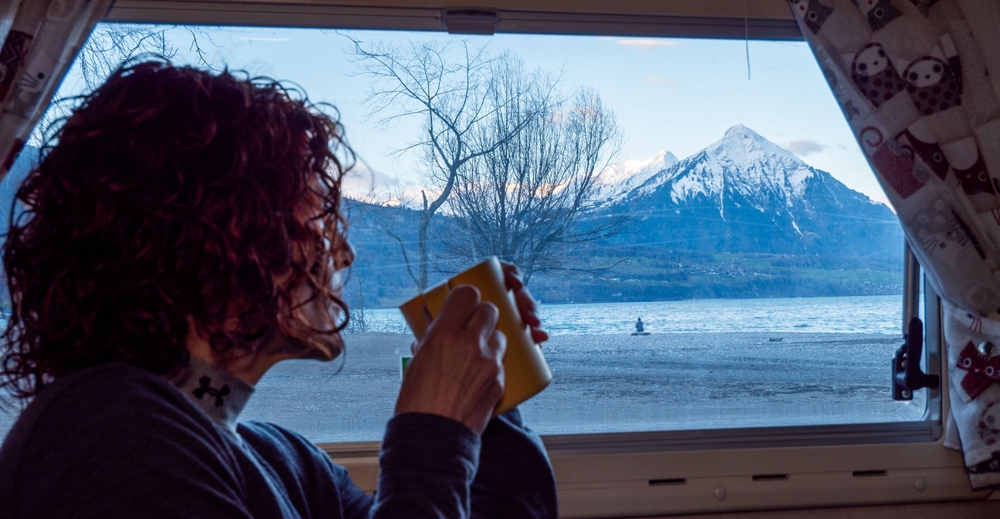
Finding somewhere to park is one of the biggest challenges on a motorhome road trip to Lake Geneva. Fortunately, the region has numerous public and private parking areas, as well as campsites equipped to accommodate these vehicles. On the French side of the lake, you’ll find areas at Excenevex, Yvoire, Thonon-les-Bains and Évian-les-Bains.
The Excenevex car park offers 20 level pitches with filling and emptying points, ideally located close to the beach. In Yvoire, parking is available on rue des Mollards, just a few minutes’ walk from the medieval village. Thonon-les-Bains has several options, including the three-star Camping Parc de la Dranse, 300 metres from the lake.
On the Swiss side of the border, there are also plenty of parking areas, but many of them charge a fee. In Lausanne, you can park in several city-centre car parks or opt for more out-of-the-way areas overlooking the lake. Geneva offers a few spaces, but parking there is generally expensive. In Montreux and Vevey, you’ll find that campsites on the outskirts of the town offer better value for money.
To locate these areas in real time and find out which ones are shared by other travellers, download dedicated mobile applications such as Park4night or Caramaps. These collaborative tools list free and paid car parks, motorhome parks and campsites. They also indicate the services available (water, electricity, emptying) and display user reviews. This saves precious time, so you don’t have to drive around for hours looking for a pitch!
6. Driving in France and Switzerland: the rules you need to know
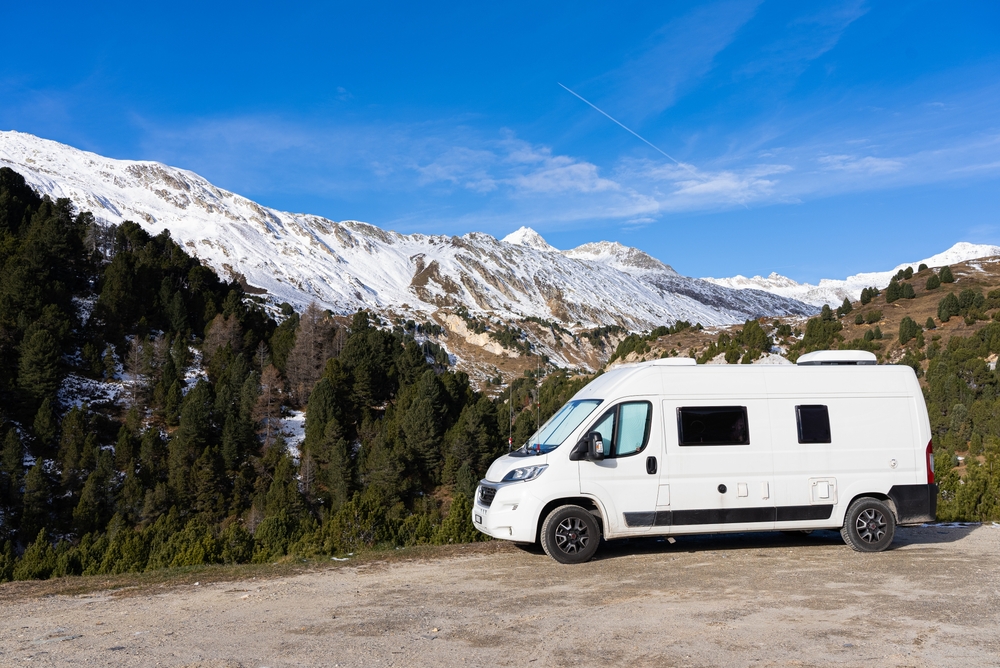
Traffic rules
Good news for French motorhome drivers: the French and Swiss highway codes are very similar! In both countries, you drive on the right and overtake on the left. Warning triangles and reflective jackets are compulsory on both sides of the border.
The main difference is that, in Switzerland, low beam headlights must be on at all times, even in broad daylight. Another distinctive Swiss feature is the absolute priority given to pedestrians at every pedestrian crossing. So be extra vigilant whenever a pedestrian approaches a crossing, or risk a hefty fine.
In mountainous terrain, a specific rule applies in the event of an impossible crossing: the vehicle coming up has priority, unless it is a camper van or a heavy vehicle. In this case, the HGV must always move back to let other road users pass, as it generally has more power to go uphill again.
Speed limits
Speed limits vary according to the weight of your motorhome. In France, vehicles weighing less than 3.5 tonnes follow the same rules as cars: 130 km/h on motorways, 110 km/h on dual carriageways, 90 km/h on trunk roads and 50 km/h in built-up areas. For motorhomes over 3.5 tonnes, the limits are reduced to 110 km/h on motorways, 100 km/h on dual carriageways and 80 km/h on other roads.
In Switzerland, motorhomes weighing less than 3.5 tonnes are limited to 50 km/h in built-up areas, 80 km/h outside built-up areas, 100 km/h on dual carriageways and 120 km/h on motorways. Above 3.5 tonnes, the motorway limit drops to 100 km/h, while the other limits remain unchanged. Be sure to keep strictly to these limits, as there are plenty of speed cameras and the fines are particularly dissuasive in Switzerland!
7. Motorway tolls and vignettes: how much should you budget?
On the French side, the motorway toll system works as usual. The cost varies according to the weight of your motorhome and the distance travelled. Allow for a substantial budget if you frequently use the motorways, particularly to reach Lake Geneva from remote regions.
In Switzerland, the system is completely different: there are no tolls, but you do have to buy a motorway tax sticker to drive on around twenty motorways. This annual sticker currently costs 40 Swiss francs (around €37) for vehicles weighing less than 3.5 tonnes. It is valid from 1 December of the previous year to 31 January of the following year, giving you around 14 months’ use.
For motorhomes over 3.5 tonnes, the charge is based on the total weight of the vehicle, and is considerably higher. You can buy this sticker at border crossings, Swiss post offices, motorway service areas, petrol stations and some garages. It must be affixed visibly to your windscreen. Failure to do so can result in a fine of 200 Swiss francs, so don’t neglect this formality!
8. When to go to Lake Geneva in a motorhome?
The climate of Lake Geneva is a blend of oceanic, continental, Mediterranean and mountain influences. This combination produces harsh winters, particularly at higher altitudes, and cool, rainy autumns and springs. To make the most of your motorhome road trip, opt for the summer period from May to September.
During these months, temperatures fluctuate between 20 and 28°C during the day, making both cultural visits and water sports activities enjoyable. The days are long, allowing you to make the most of your time. The terraces of restaurants and cafés are open, the local markets are in full swing, and the general atmosphere is festive and relaxed.
Bear in mind, however, that this high tourist season also means more people on the sites and higher prices for campsites and car parks. If possible, book your pitches in advance. Another point to bear in mind: despite the pleasant temperatures during the day, the nights can be chilly, especially at higher altitudes. Make sure you bring warm clothing and check that your motorhome has a good heating system.
If you can tolerate cooler temperatures and want to avoid the crowds, May-June and September are excellent compromises. Spring offers the spectacle of flowering, particularly in Morges with its tulip festival. Autumn brings flamboyant colours to the vineyards and coincides with the grape harvest, an ideal time for wine tourism.
9. Budget for motorhomes on Lake Geneva: what can you expect?
The cost of your motorhome adventure around Lake Geneva will depend on a number of factors. For vehicle hire, expect to pay between €80 and €150 per day, depending on the model, the season and the rental period. Private hire companies often offer more attractive rates than professional hire companies.
When it comes to parking, prices vary considerably between France and Switzerland, and between public areas and private campsites. In France, you’ll find free or low-cost parking areas (€5-15 per night). In Switzerland, you’ll need to budget more: 20 to 40 Swiss francs for a service area, and 30 to 60 Swiss francs for an equipped campsite.
Fuel is another major expense. Petrol and diesel are more expensive in Switzerland than in France, but the distances around the lake are still reasonable. With a vehicle that consumes around 10-12 litres per 100 km, you should expect to pay between €80 and €120 to drive all the way round the lake.
Add to that food expenses (you can cook in your motorhome to save money), visits to tourist sites (museums, castles, lake cruises), and the Swiss motorway tax sticker. For a one-week stay for two people, plan on an overall budget of between €1,200 and €2,000, depending on your level of comfort and activities.
10. Practical advice for a successful road trip
Before hitting the road, download the essential applications: Park4night and Caramaps to locate parking areas, Google Maps or Waze for navigation, and of course Navaway to discover Geneva and its hidden treasures thanks to geolocated audio guides.
Remember to take your valid identity card or passport with you when crossing the Swiss border, even if checks are rare. You should also bring your driving licence, vehicle registration document and insurance certificate. Before you leave, check that your insurance covers driving in Switzerland.
Equip yourself accordingly for camping: biodegradable cleaning products, headlamp, extension lead, adapter for Swiss sockets (type J), cable for filling up with water, hose for emptying waste water. Don’t forget the motorhome classics: chocks to level the vehicle, folding chairs and table to enjoy the outdoors.
As far as gastronomy is concerned, the tour of Lake Geneva is a permanent invitation to gustatory pleasures. On the French side, try the Savoyard fondue, raclette, lake fish (féra, perch, arctic char) and Savoy wines. On the Swiss side, don’t miss the half-and-half fondue (vacherin and gruyère), homemade chocolate, and excellent Lavaux wines such as Chasselas.
Finally, respect the environment and local populations. Only empty your waste water in the designated areas, don’t leave any rubbish behind, and keep noise to a minimum, especially at night. Lake Geneva is a fragile ecosystem that must be preserved for future generations.
If you follow these tips and let your curiosity guide you, your road trip to Lake Geneva in a motorhome will be remembered as one of your greatest adventures. With its thousand-year-old heritage, Alpine panoramas and gentle way of life, this region will surprise you at every turn. The shores of the largest Alpine lake are just waiting for you!
Take advantage of your visit to Geneva to discover the city in a different way, thanks to the Navaway audio tours. You won’t miss a single landmark in this international city, and you’ll understand its rich history and culture.
Frequently asked questions
Can I park my motorhome for free around Lake Geneva?
Yes, there are a few free parking areas, mainly on the French side (Excenevex, some car parks in Yvoire). In Switzerland, free parking is rarer and generally limited in time. The Park4night and Caramaps applications list these free spaces shared by the motorhome community.
How long does it take to drive around Lake Geneva in a motorhome?
A complete tour of the lake is around 180 km. Allow a minimum of 3 days to do the tour without too much hurry, and 5 to 7 days to make the most of the different towns and villages, and visit the main sites of interest. This time will also allow you to alternate days of discovery with moments of relaxation.
Is the Swiss motorway tax sticker compulsory for all motor caravans?
Yes, as soon as you use a motorway in Switzerland, the vignette is compulsory, whatever the weight of your vehicle. For motorhomes weighing less than 3.5 tonnes, it costs 40 Swiss francs. For heavier vehicles, the charge is calculated on the basis of total weight. Failure to obtain one will result in a fine of 200 Swiss francs.
What are the most beautiful towns to visit around Lake Geneva?
On the French side, don’t miss Yvoire (a listed medieval village), Évian-les-Bains and Thonon-les-Bains (Belle Époque spa towns). On the Swiss side, Geneva, Lausanne and Montreux are a must, as is the village of Vevey. The terraced vineyards of Lavaux, between Lausanne and Montreux, also offer exceptional UNESCO-listed scenery.
Is it possible to swim in Lake Geneva in a motorhome?
Absolutely! Lake Geneva has many public beaches where bathing is permitted and supervised in summer. Some of the best are: Excenevex beach (fine sand on the French side), Bains des Pâquis in Geneva, Preverenges beach and Vevey beach. However, the water remains cool even in summer (18-22°C), as the lake is fed by glacial meltwater.
200 audioguided tours for cities all around the world
Download