14 Cathar castles to visit in Occitanie

Occitanie is home to the fascinating remains of a tormented era: the Cathar castles, silent witnesses to the crusade against the Albigensians in the 13th century. Perched on vertiginous rocky spurs, these medieval monuments dominate the landscapes of Languedoc and Ariège, offering breathtaking panoramas. Although the term “Cathar castles” is a misnomer – most were rebuilt or occupied by the royal powers after the Crusades – these fortresses tell the dramatic story of Catharism and its repression. Let’s set off on a journey of discovery of these 14 Cathar castles that make up the exceptional heritage of the Occitanie region.
Also in the Carcassonne guide:
- The best culinary specialities in Carcassonne
- Top 7 activities in Carcassonne
- Top 5 best hotels in Carcassonne
- The 13 most beautiful villages around Narbonne to discover!
- Top 10 must-see things to do in Occitanie
- Visiting the Pyrenees: 20 must-dos
- Montagne Noire walks: Top 5 of the most beautiful routes
- The 16 most beautiful lakes in the Pyrenees
1. Quéribus Castle
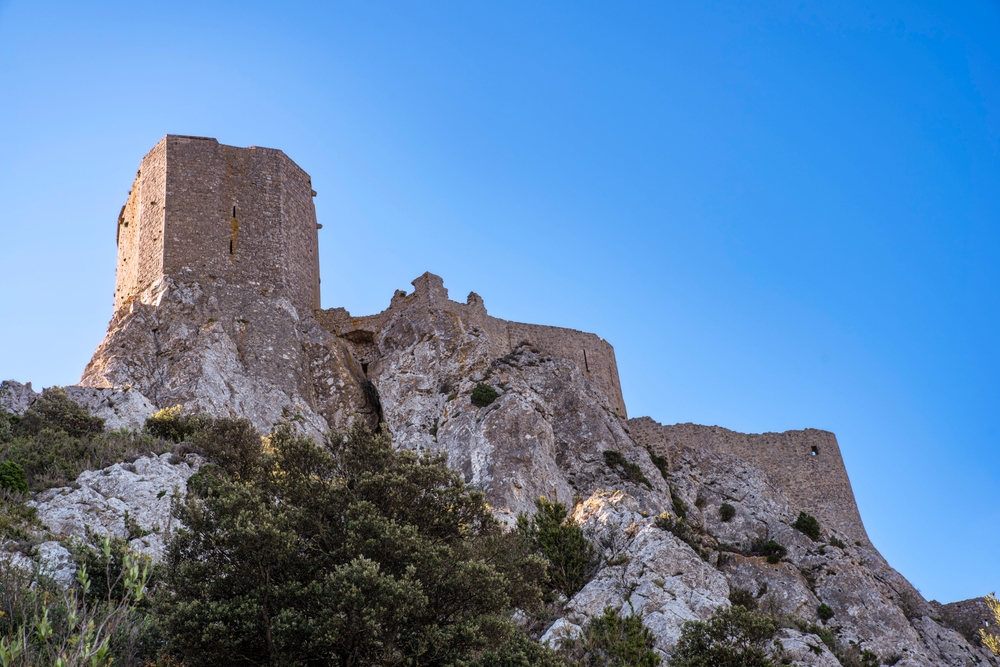
Perched at an altitude of 728 metres at the top of the Corbières mountains, the Château de Quéribus perfectly embodies the appellation “citadel of vertigo”. This spectacular fortress was the last stronghold of the Cathar resistance, falling only in 1255, eleven years after the fall of Montségur. Its strategic location offers breathtaking views over the plains of Roussillon, the Mediterranean and the Pyrenees, with Mont Canigou in the background.
A visit to the castle reveals a remarkable Gothic hall and an impressive keep. It takes around an hour to climb up to the top, where you can admire objects relating to everyday medieval life. Admission costs €7.50 for adults, €6 for students and €4.50 for children. The village of Cucugnan below, made famous by Alphonse Daudet in his Lettres de mon moulin, is also well worth a visit.
2. Lordat Castle
The Château de Lordat stands proudly on a rocky spur in the Ariège valley, offering an exceptional panorama. After the fall of Montségur in 1244, this fortress served as a refuge for the last Cathars, who were gradually decimated by persecution. The tragic history of this place makes it a poignant testimony to the repression of Catharism.
This site offers a wide range of summer events to delight families, including falconry shows, treasure hunts for children and historical re-enactments. The château is open all year round except from December to March. Admission is €4.50 for adults and €2.50 for children. On special days, the price is €10 for adults and €7 for children.
3. Peyrepertuse Castle
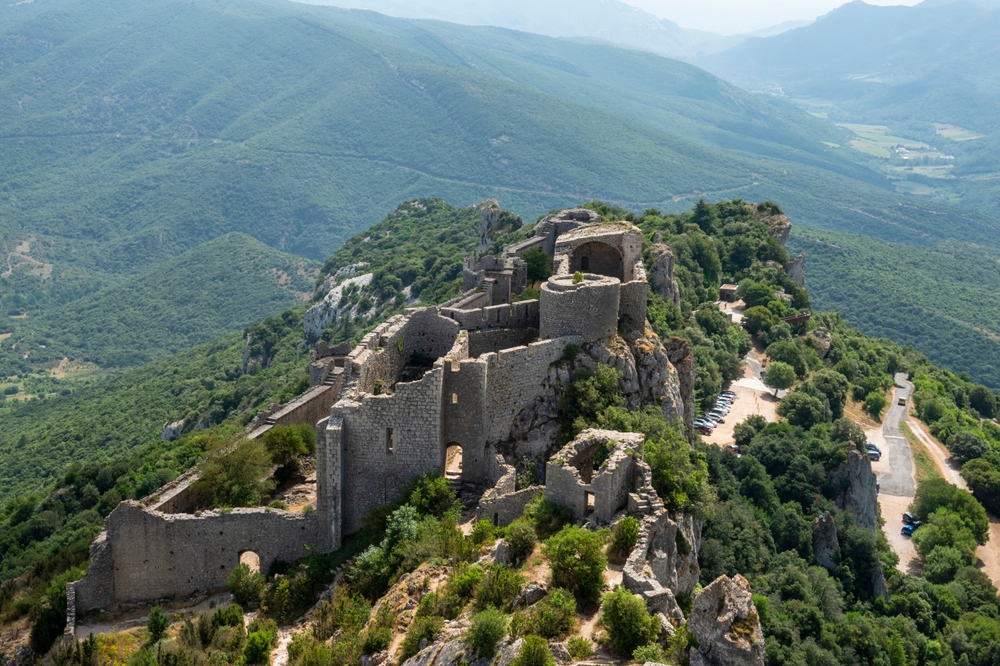
Spectacular and imposing, the Château de Peyrepertuse literally splits the Roussillon sky with its massive silhouette. Opposite the Château de Quéribus, this citadel bears the name of the village of Duilhac-sous-Peyrepertuse, which it majestically overlooks. With a surface area equivalent to that of the Cité de Carcassonne, it is one of the most impressive Cathar castles in the region.
Built under Saint-Louis, Peyrepertuse protected the border with Aragon. The fortress can be visited all year round for €7 (adults), €6 (students) and €4 (children). Every August, a medieval festival brings the citadel back to life with re-enactments, shows and period crafts. The climb up to the castle rewards visitors with exceptional panoramic views of the surrounding vineyards and garrigue.
4. Royal fortress of Najac
Situated in Aveyron in south-west France, the Royal Fortress of Najac bears witness to medieval military power. This model of defence was home in turn to the Counts of Toulouse, the Knights Templar and the Croquants, serving alternately as a defensive fort and a prison. Its imposing architecture makes it a remarkable example of 13th-century military architecture.
The tour takes in the perfectly intact keep, the Chapel of St Julien decorated with medieval frescoes and the Governor’s bedroom. Don’t miss the magnificent view from the terrace overlooking the valley. Admission is €6 for adults and €4.50 for children. Remarkably, this is the most-visited private monument in the former Midi-Pyrénées region.
5. Montségur Castle
Erected at an altitude of 1207 metres, the Château de Montségur is without doubt the most emblematic of the Cathar castles. This Ariège citadel was the last great stronghold of Catharism, falling in 1244 after a siege lasting almost a year. The bloody history of Montségur symbolises the religious and bellicose policy pursued by the King of France and the Pope, which led to numerous cruel executions. More than 200 Cathars were burnt at the stake at the foot of the fortress.
Download the audio-guided tour to discover Carcassonne on foot and on your own
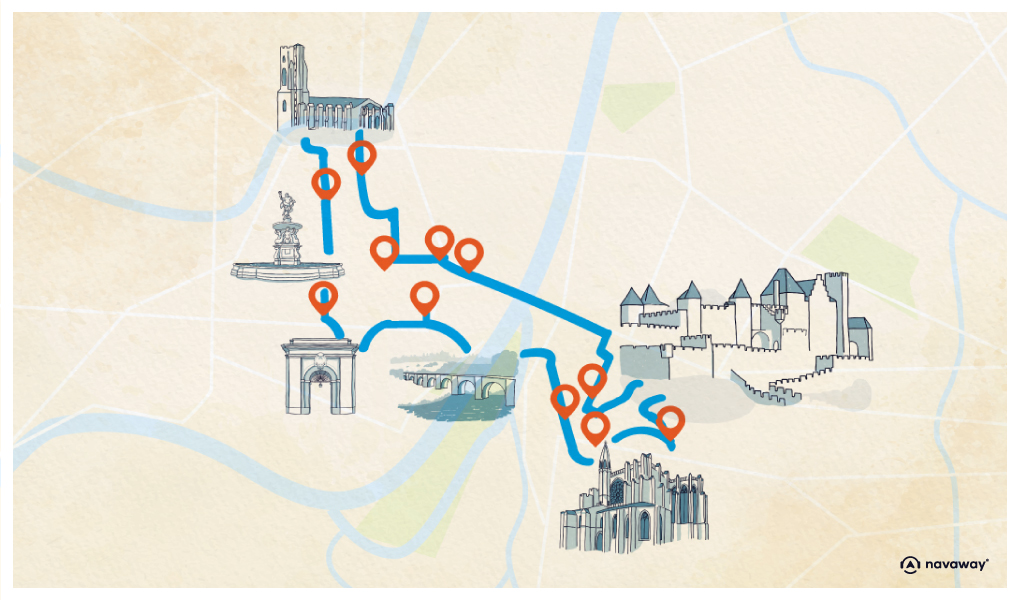
For an in-depth exploration of the Cathar region, be sure to visit Carcassonne, the historic capital of the Pays Cathare. Our audioguided itinerary in Carcassonne will take you to 27 places of interest in this exceptional medieval city, a UNESCO World Heritage Site. You’ll explore the majestic medieval city, the Château Comtal, the Basilique Saint-Nazaire and the charming Bastide Saint-Louis on a 5.7 km tour lasting 2? hours.
Today, the Montségur site and its museum can be visited all year round, except in January. Opening times vary between 10am and 7pm, depending on the season. Admission is €5.50 for adults and €3 for children. The climb up to the castle is quite strenuous, but the panoramic view of the Pyrenees is well worth the effort.
6. Puilaurens Castle
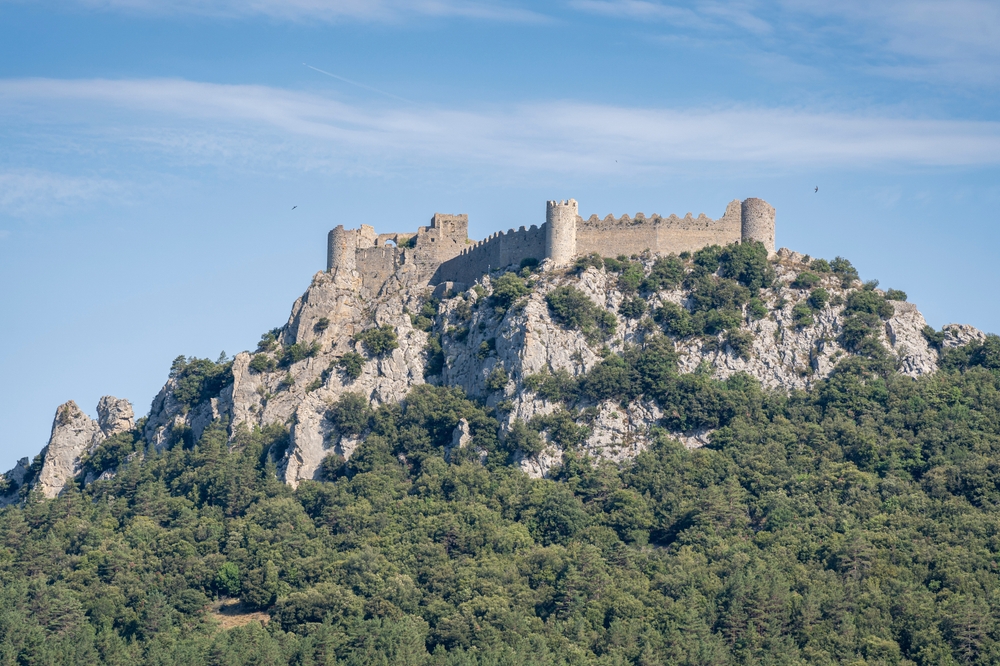
Château de Puilaurens is undoubtedly one of the most beautiful Cathar castles in Occitanie. Perched at an altitude of 697 metres on Mont Ardu, this fort dominates a spectacular green mountainous landscape. The remarkably well-preserved medieval remains blend harmoniously into the Pyrenean scenery, creating a unique atmosphere.
The castle walls are particularly well preserved, with their towers, staircases, ramparts and gates, each of which tells its own story. The visit costs €7 for adults and €4 for children. According to local legend, the keep is haunted by the Dame Blanche, the ghost of a noble lady who still wanders the stone corridors.
7. Châteaux de Lastours
The exceptional site of Lastours boasts not one, but four Cathar castles! These four royal fortresses – Cabaret, Tour Régine, Surdespine and Quertineux – still sit atop a rocky spur, creating an architectural ensemble that is unique in the region.
The visit combines archaeological discovery with an exhibition entitled “Lastours, 4000 years of history”. We recommend starting by admiring the panorama from the Belvedere, then walking through the heart of the historic site before exploring the Fauna and Flora trail organised into three themed areas: geology, botany and zoology. Admission is €7 for adults, €5 for students and €2.50 for children.
8. Château de Saissac
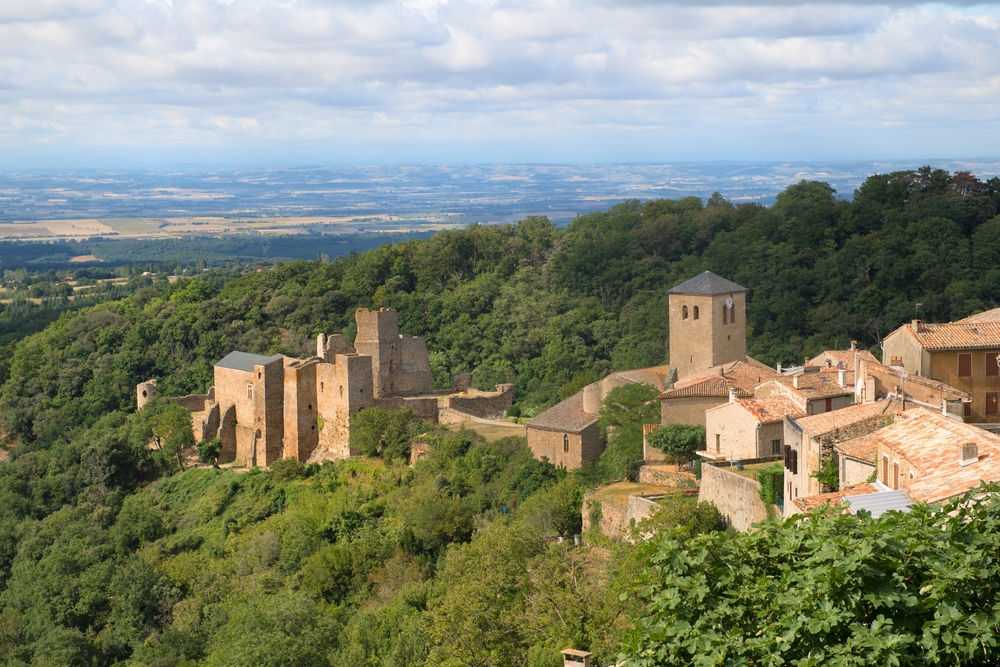
In the heart of the Montagne Noire, Château de Saissac stands out for its exceptional grounds and sumptuous setting. The castle’s architecture is remarkable, and the panoramic view embraces both the Pyrenees and the Carcassonne plain, offering an unforgettable visual spectacle.
Visitors can admire the imposing fortifications, explore the keep and discover the exhibition on the Saissac Monetary Treasure, comprising 2,000 13th-century denarii. Admission is €5 for adults, €4 for students and €3 for children. On the second weekend in August, don’t miss the Médiévales de Saissac, a festival featuring entertainment at the château and in the village.
9. Château de Termes
Not far from Carcassonne, the Château de Termes almost rivals the famous Cité. Dominating the Termenet gorges and overlooking the charming village of Termes, the citadel rises to an altitude of 460 metres. For centuries, it has protected the surrounding vineyards and garrigue.
The tour begins with an introductory film on the history of the region, followed by free exploration with a tour guide. Admission is €4 for adults and €1 for children. A special treat: the castle has a restaurant with a medieval rotisserie where you can sample authentic recipes from the Middle Ages.
10. Puivert Castle
Château de Puivert is undoubtedly one of the most famous Cathar castles in France, not least because of its role in film. The fortress has been the setting for several films, including Bertrand Tavernier’s “La Passion Béatrice”, Jacques Perrin’s “Le Peuple migrateur” and Roman Polanski’s “La Neuvième porte”.
Beyond its cinematic fame, Puivert is one of the best-preserved Cathar castles in the region. Its proud keep bears witness to the Occitan medieval past. Access to this stronghold is via the picturesque Troubadours trail, which takes visitors back into the medieval atmosphere. The visit costs €7 for adults and €5 for children.
11. Villerouge-Termenès Castle
Not far from Carcassonne, Château de Villerouge-Termenès is one of the finest Cathar castles in the region. Fully restored, this defensive fortress dominates the medieval village below and the surrounding wine-growing landscape.
This Cathar stronghold was the scene of a tragic event: in 1321, the last of the Cathars, Guilhem Bélibaste, was burnt alive here. The tour retraces the fateful fate of this last survivor of Catharism. Admission is €6 for adults and €2 for children. As at Termes, the château has a medieval rotisserie where you can sample recipes from the period.
12. The City of Carcassonne
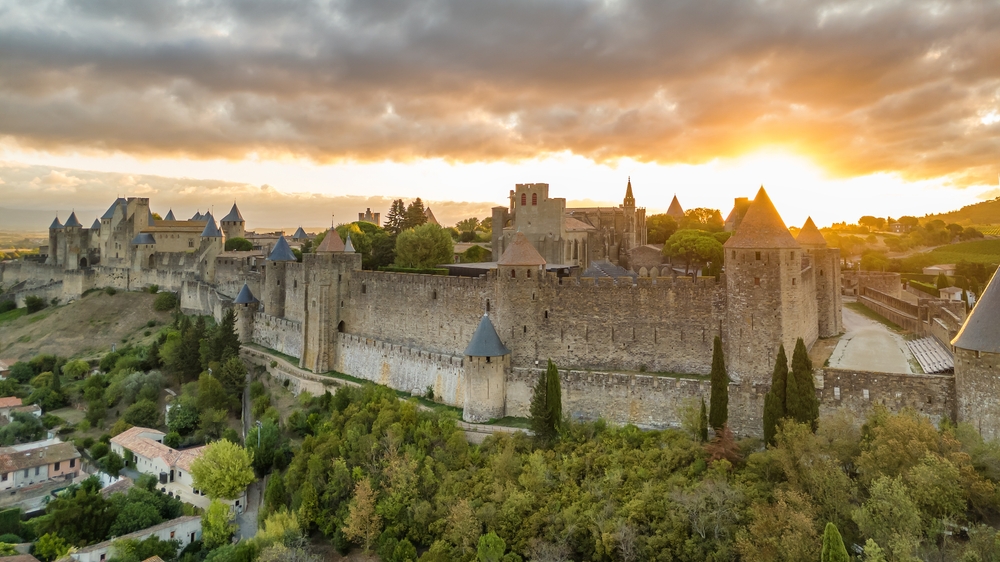
A must-see Cathar site, the Cité de Carcassonne is home to the Château Comtal, nicknamed “the fortress within the fortress”. With over 2 million visitors a year, this medieval city is one of the most visited sites in France. Its imposing fortifications bear witness to an exceptional wealth of architecture, the fruit of more than 2,600 years of history and 1,000 years of military architecture.
To make the most of your visit to Carcassonne, let our Navaway audio tour guide you through the treasures of this exceptional city. As well as the panoramic views of the lower town, the Montagne Noire and the Pyrenees, the must-see monuments include the Basilica of Saint-Nazaire, the ramparts, the hoardings and the Musée Lapidaire. A visit to the Château Comtal costs €9.50 for adults and is free for under-18s.
13. Château d’Aguilar
If you’re staying in Perpignan, don’t miss the Château d’Aguilar, one of the most accessible Cathar castles in the region. This ancient fortress was built by Saint-Louis to defend the border of the kingdom of France.
Perched on a rocky spur, the castle dominates the Tuchan plain, offering superb views of the Corbières, the Pyrenees and the surrounding vineyards. The fortress can be visited all year round for €4 (adults) and €2 (children), allowing visitors to discover one of the “five sons of Carcassonne” that protected the kingdom’s southern border.
14. Château de Roquefixade
The Château de Roquefixade rounds off our selection in style. Perched atop a vertiginous cliff, this Ariège fort is deeply marked by Cathar history. Its impressive walls are over 100 metres long, bearing witness to the sheer size of this fortress.
This free tour provides access to the site via a gate tower. This is one of the few surviving rooms, with a wall pierced by two windows and a tower. Although the remains are only partial, the site offers an exceptional panoramic view, allowing visitors to imagine the past power of this Cathar fortress.
In conclusion, the Cathar castles of Occitanie are an exceptional historical heritage well worth a visit. These citadels of vertigo tell the tragic story of Catharism and its repression in the 13th century, while offering breathtaking panoramas of the Occitan countryside. From Montségur to Quéribus, via the not-to-be-missed Cité de Carcassonne, each fortress reveals its own history and architectural particularities. For a complete exploration of the region, don’t hesitate to plan several days ahead and use our audio-guided itinerary in Carcassonne as the starting point for your discovery of the Pays Cathare.
Frequently asked questions
Why are these castles called “Cathar castles”?
The term “Cathar castles” is actually a misnomer. Most of these fortresses were not built by the Cathars themselves, but were erected or rebuilt by the French royal powers after the crusade against the Albigensians in the 13th century. However, they are closely linked to the history of Catharism, as they served as refuges for persecuted Cathars or were the scene of major events during this period.
When is the best time to visit the Cathar castles?
Spring (April-May) and autumn (September-October) are the ideal times to visit the Cathar castles. The climate is pleasant, there are fewer tourists than in summer, and the scenery is magnificent. Summer offers the advantage of medieval festivals and entertainment, but can be very hot for climbing. Some sites close in winter.
How long does it take to visit the Cathar castles?
To visit the 14 châteaux featured in this article, you should allow at least 4 to 5 days. Each castle takes between 1? and 3 hours to visit, including the ascent and discovery of the site. If you also want to take time to explore the surrounding villages and enjoy the scenery, a full week would be ideal.
Are the Cathar castles accessible to people with reduced mobility?
Unfortunately, most of the Cathar castles are not accessible to people with reduced mobility due to their hilltop location and steep access paths. However, the Cité de Carcassonne offers better accessibility. We recommend that you contact each site directly before your visit to find out about specific access conditions.
Can children visit the Cathar castles?
Yes, it is possible to visit Cathar castles with children, and we even recommend it as a way of introducing them to medieval history. Some sites, such as Château de Lordat, offer activities specially designed for young visitors (falconry shows, treasure hunts). Bring good walking shoes and water, as the climbs can be quite strenuous.
200 audioguided tours for cities all around the world
Download