8 islands on the Seine to explore in Paris
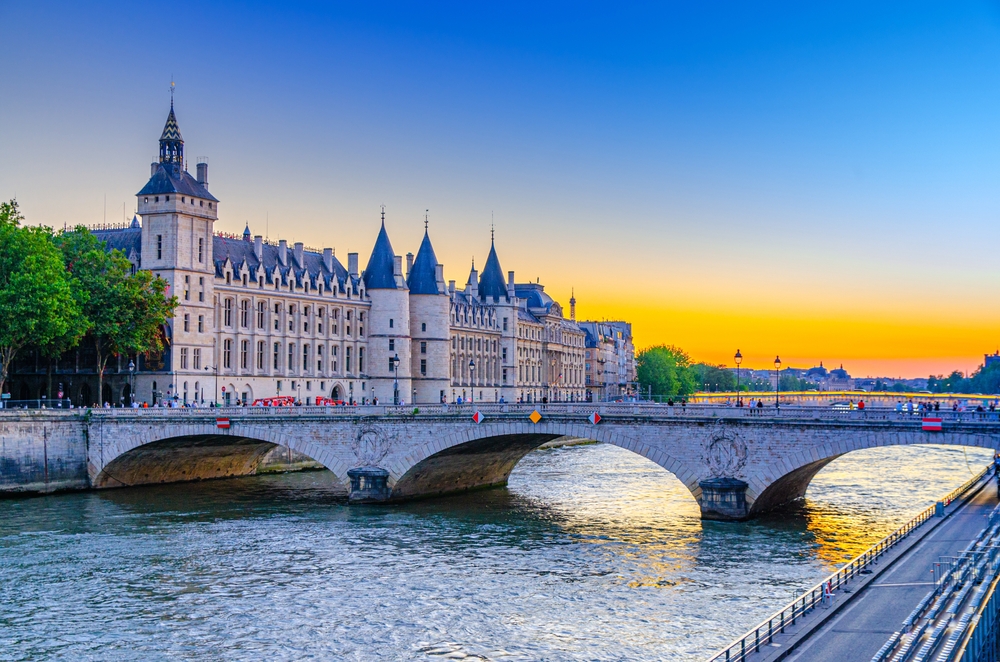

The Seine meanders majestically through Paris, giving rise to a series of island jewels. These islands, which bear witness to Paris’s history, offer a beautiful escape in the heart of the capital and are essential destinations for discovering Paris from a different angle. From the most famous, such as Ile de la Cité, to the least known, such as Ile aux Cygnes, each has its own character and treasures to explore. Embark on a discovery of the 8 islands along the Seine that make up Paris’ unique charm!
200 audioguided tours for cities all around the world
DownloadSee also the Paris guide :
- Best activities in and around Paris
- Free activities and visits in Paris
- The most beautiful parks and gardens in Paris
- Cruise on the Seine in Paris
- Visit Paris in 3 days
- Top 7 best hotels in Paris
1. The Ile de la Cité: the historic birthplace of Paris
The Ile de la Cité is the historic heart of Paris. This natural island of 22.5 hectares, located between the 1st and 4th arrondissements, is considered to be the cradle of the French capital. This is where it all began, with Lutetia, the ancient Gallic and then Roman city.
Dominated by the majestic Notre-Dame de Paris cathedral, the Ile de la Cité is also home to other exceptional monuments such as the Sainte-Chapelle, a true jewel of radiant Gothic art, and the Conciergerie, a former royal prison that became a symbol of the French Revolution. The Palais de Justice, the Hôtel-Dieu and the Square du Vert-Galant complete this remarkable architectural heritage.
Linked to the riverbanks by nine historic bridges, including the famous Pont-Neuf (ironically the oldest bridge in Paris!), the Ile de la Cité offers a fascinating insight into over 2,000 years of Parisian history. Each stone tells the story of a piece of French history, from the Capetian kings to the present day.
2. Ile Saint-Louis: French elegance
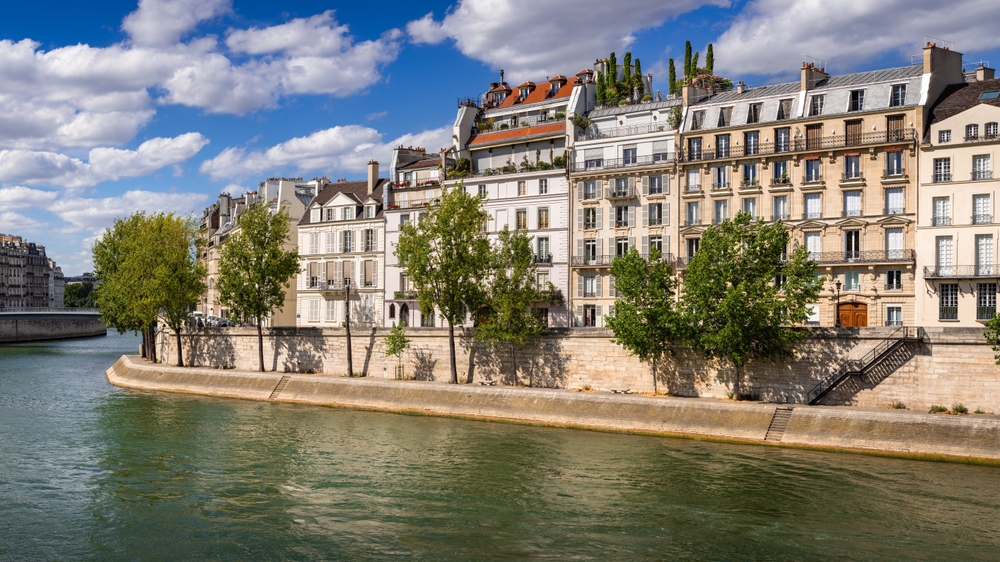
Neighbouring the Île de la Cité, the Île Saint-Louis embodies the Parisian art of living. This natural island of 11 hectares, located entirely in the 4th arrondissement, was for a long time called “Ile Notre-Dame” before taking the name of King Louis IX (Saint Louis) in 1725.
The peaceful atmosphere of the Ile Saint-Louis, with its magnificent 17th-century town houses, sets it apart. Its narrow cobbled streets, free from heavy traffic, invite you to take a stroll. The Hôtel Lambert, Hôtel de Chenizot and Hôtel Le Vau bear witness to French classical architecture at its apogee.
Don’t miss the Square Barye at the eastern tip of the island, offering a romantic view over the Seine. Gourmets are sure to make a diversion to the famous Berthillon ice cream parlour for a taste of the best artisanal ice creams in Paris. The island also boasts a number of charming craft shops and fine restaurants.
3. L’île aux Cygnes: a promenade facing the Eiffel Tower
Ile aux Cygnes is one of Paris’s most surprising getaways. This artificial island, 890 metres long and just 11 metres wide, was created in 1827 on a former dyke in the port of Grenelle, in the 15th arrondissement.
Its unusual shape makes it a unique promenade along the water, lined with more than 300 trees offering welcome shade. Ile aux Cygnes is famous for housing a replica of the Statue of Liberty, 11.5 metres high, donated by the American community in Paris in 1889. This statue, facing west towards the United States, faces the Eiffel Tower and offers one of the best views of the Parisian landmark.
At the other end of the island, Holger Wederkinch’s equestrian statue “La France renaissante” pays tribute to the heroes of the First World War. Ile aux Cygnes can be reached via the Bir-Hakeim, Rouelle and Grenelle bridges, and is a popular place to stroll for Parisians and tourists in search of tranquillity.
4. Ile Louviers: the remains of a vanished Paris
Ile Louviers occupies a special place in the history of Parisian islands. Formerly located in the Seine in the 4th arrondissement, the island was gradually linked to the right bank during the urban development of the 19th century.
Once the property of Nicolas de Louviers, the island was used as a training ground for crossbowmen and for grazing. Bought by the City of Paris in 1700, it was finally attached to the river banks during Haussmann’s major works, creating what is now the Quai Henri-IV.
Today, the former site of Ile Louviers corresponds to the gardens that line the Seine near the Pont de Sully. These preserved green spaces perpetuate the memory of this vanished island while offering a peaceful setting for contemplation, with an uninterrupted view of the Île Saint-Louis and Notre-Dame.
5. Île Saint-Germain: contemporary art and nature
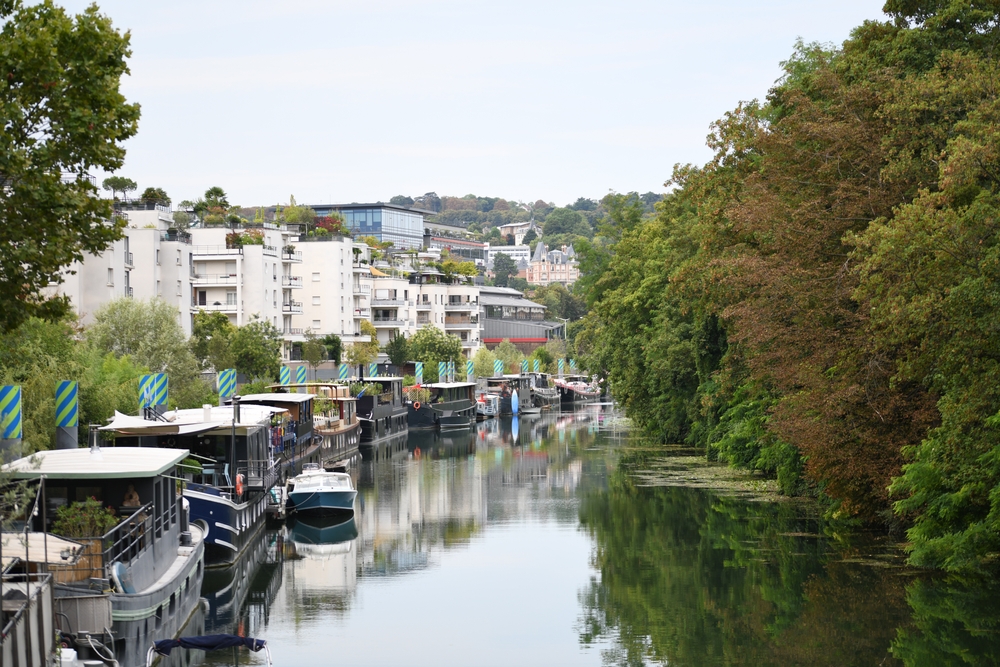
Located in Issy-les-Moulineaux in the Hauts-de-Seine department, Ile Saint-Germain offers a perfect balance between industrial heritage, contemporary art and natural spaces. This 12-hectare island was the site of the 1867 Universal Exhibition, and still retains traces of its prestigious past.
Île Saint-Germain has become a veritable jewel case of greenery, with its parklands laid out in the 1980s, boasting 1,500 trees and 3,500 shrubs. It is home to two remarkable works of contemporary art: Jean Dubuffet’s Tour aux Figures, a monumental sculpture 24 metres high, and Jacques-Émile Lecaron’s truncated column.
Accessible via the Pont d’Issy, a pedestrian footbridge or the Billancourt bridges, Ile Saint-Germain is a great place for families to take a stroll. Its vast lawns, playgrounds and footpaths make it an ideal destination for a nature break just outside Paris.
6. Ile de la Jatte: in the footsteps of the Impressionists
Île de la Jatte, located between Neuilly-sur-Seine and Levallois-Perret, occupies a unique place in French art history. This natural island of 10.23 hectares and 2 kilometres in length was immortalised by the Impressionist painters, notably Georges Seurat in his famous painting “Un dimanche après-midi à l’Île de la Grande Jatte”.
Ile de la Jatte still retains the bucolic atmosphere that seduced 19th-century artists. Claude Monet, Vincent van Gogh and many other masters came here for inspiration. Today, an “Impressionist Trail” allows visitors to follow in their footsteps and rediscover the landscapes that inspired them.
Accessible via the Levallois bridge and two pedestrian footbridges, the Ile de la Jatte is home to the Temple de l’Amour, the Levallois apiary and a bird sanctuary. Its dance halls and artists’ studios perpetuate the artistic tradition of this magical place, the starting point of the Tour de France in 1909.
7. Ile Seguin: a cultural and architectural renaissance
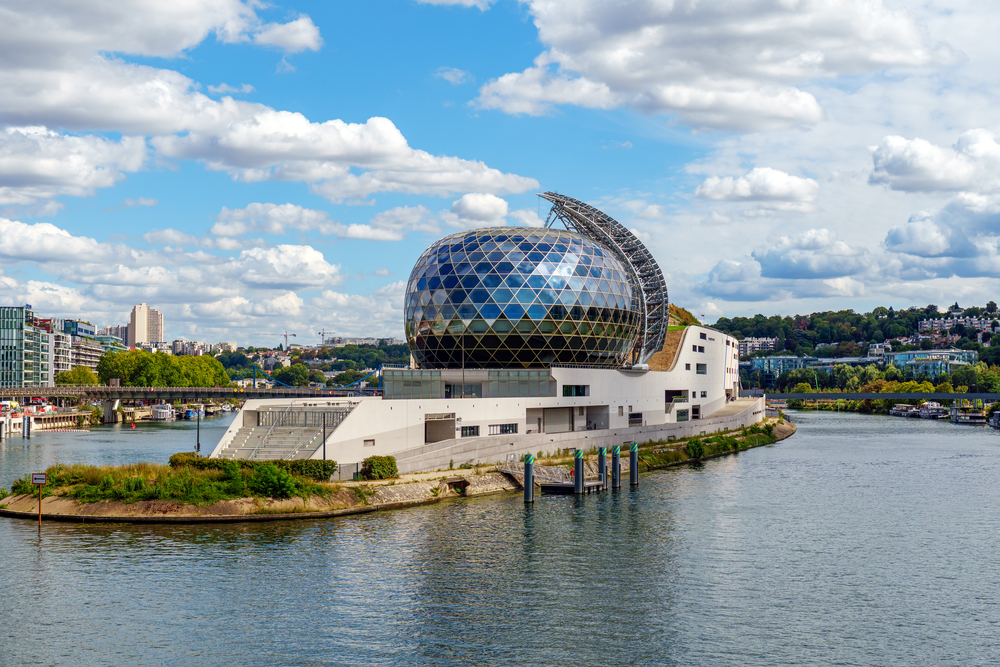
Ile Seguin, located in Boulogne-Billancourt in the Hauts-de-Seine department, embodies the urban and cultural renaissance of western Paris. This 11.5-hectare artificial island was for many years the symbol of the French car industry, with the famous Renault factories producing vehicles there from 1929 to 1992.
After the factories closed, the Ile Seguin underwent a spectacular transformation. It is now home to the Seine Musicale, an ultra-modern cultural complex inaugurated in 2017, which hosts concerts, shows and artistic events of international renown. The innovative architecture of this venue, with its mobile photovoltaic sail, makes it a new architectural symbol of the Paris region.
The Ile Seguin also features vast green spaces and promenades along the banks of the Seine, offering exceptional views of Paris and the surrounding area. This exemplary urban regeneration project makes the island a model of sustainable and cultural development.
8. The island of Puteaux: sports and leisure on the water
The Ile de Puteaux, shared by the municipalities of Puteaux and Neuilly-sur-Seine, completes the string of islands along the Seine in western Paris. This artificial island specialises in sports and leisure activities, offering an exceptional setting for the practice of a variety of disciplines.
The Ile de Puteaux is home to a number of high-quality sports facilities, including sports pitches, water sports areas and fitness trails. Its landscaped banks are ideal for jogging, cycling or simply strolling with the family in a green setting.
Easily accessible from both banks of the river, the Ile de Puteaux is a veritable lung of green and sport in the western suburbs of Paris. It follows in the footsteps of the other islands along the Seine, forming a coherent whole of leisure and recreation areas along the water.
Download the audio tour to discover Paris on foot and on your own
To discover Paris and its treasures in an immersive way, let the Navaway itinerary guide you through the capital’s most beautiful monuments. This tour of Paris lets you explore iconic sites with fun audio guides and fascinating historical commentaries. Navaway accompanies you on your discovery of the City of Light with interactive navigation that adapts to your pace.
In conclusion, the 8 islands of the Seine offer an exceptional journey through history, art and nature in the heart of Paris and its region. From the Île de la Cité, the capital’s birthplace thousands of years ago, to more contemporary islands like the Île Seguin with its Seine Musicale, each island tells a unique story of Parisian identity. These island jewels, easily accessible during a visit to Paris, are essential stages in understanding the soul of the City of Light. Whether you’re a lover of history, art, nature or simply looking for some peace and quiet, the islands of the Seine promise unforgettable discoveries along the way.
Frequently asked questions
How many islands are there on the Seine in Paris?
There are officially 8 main islands on the Seine in Paris and its inner suburbs: île de la Cité, île Saint-Louis, île aux Cygnes, île Louviers (formerly), île Saint-Germain, île de la Jatte, île Seguin and île de Puteaux. Some are natural, others man-made, and some have been attached to the riverbanks over the course of history.
Which islands are open to the public?
All the islands mentioned are accessible to the public, with the exception of the former Île Louviers, which is now part of the riverbank. Ile de la Cité and Ile Saint-Louis are the most easily accessible by public transport, while the other islands require a short journey to the Paris suburbs.
Can you visit several islands in one day?
Yes, it is quite possible to visit several islands in one day. The Ile de la Cité and the Ile Saint-Louis can easily be visited together, being linked by the Pont Saint-Louis. Ile aux Cygnes can be combined with a visit to the Eiffel Tower. For the islands in the suburbs, it is advisable to concentrate on one geographical area (western Paris, for example) to optimise travel.
What’s the best time of year to visit the Seine islands?
Spring and summer are the ideal seasons to discover the islands of the Seine, especially the greener islands such as Ile Saint-Germain and Ile de la Jatte. However, each season has its own charm: autumn reveals magnificent colours on the hundred-year-old trees, and winter offers a unique romantic atmosphere, especially on the Île de la Cité and the Île Saint-Louis.
200 audioguided tours for cities all around the world
Download