12 must-sees in Saint-Jean-de-Luz
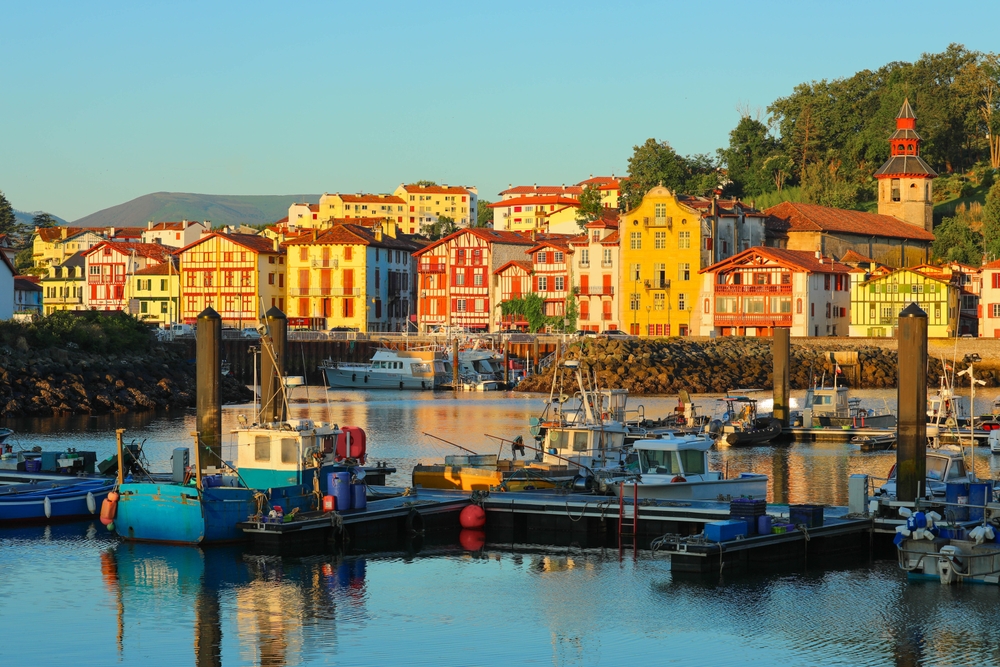

Nestling between the Atlantic Ocean and the Basque mountains, Saint-Jean-de-Luz is one of the pearls of the French Basque Country. This charming seaside resort, famous for its authentic fishing port and exceptional historical heritage, offers the ideal setting for a holiday combining sea and culture. From the majestic Saint-Jean-Baptiste church, where Louis XIV was married, to the sheltered beaches of its magnificent bay, not forgetting its shipowners’ houses and picturesque little streets, Saint-Jean-de-Luz has plenty to tempt visitors. Here are the 12 must-do things to do in Saint-Jean-de-Luz to discover all the facets of this emblematic town on the Basque coast.
Also in the Pays Basque guide :
- The 7 most beautiful beaches in the Basque Country
- The 12 most beautiful villages in the French Basque Country
- The most beautiful villages to visit around Bayonne
- What to do in the Basque Country: activities, climate, history…
- 9 walks around Biarritz on the Basque coast
- Discover the Spanish Basque Country in 10 must-sees
1. Saint-Jean-Baptiste church

Inside, you’ll be amazed by the sumptuous Baroque altarpiece in gilded wood that adorns the choir. This 17th-century work of art, by Martin de Bidache, depicts biblical scenes and saints in remarkable detail. The three levels of wooden galleries, typical of Basque churches, were once used to accommodate sailors and fishermen. The historic organ, listed as a Historic Monument, also deserves your full attention. The door through which the royal newlyweds exited was walled up after they had passed through, a tradition that can still be seen today (20 Rue Gambetta, 64500 Saint-Jean-de-Luz, rated 4.6/5 on Google out of 1526 reviews).
It’s impossible to visit Saint-Jean-de-Luz without visiting its famous Saint-Jean-Baptiste church. This emblematic monument of the town is world-famous for having hosted the marriage of Louis XIV to the Infanta Maria Theresa of Spain on 9 June 1660, a historic event that sealed the peace between France and Spain. The building, built in the 15th century and extended in the 17th, is a masterpiece of Basque religious architecture, with its sober façade and richly decorated interior.
2. The House of Louis XIV
The Maison Louis XIV, also known as Lohobiague Enea, is a magnificent 17th-century shipowner’s residence that welcomed the young King Louis XIV when he came to Saint-Jean-de-Luz for his wedding in 1660. This Louis XIII-style house, built in 1643 by Johannot de Lohobiague, a wealthy shipowner and privateer, is an exceptional example of traditional Basque architecture, with its pink brick and ashlar facades.
Now open to the public, the Maison Louis XIV can be visited and immerses you in the atmosphere of the Grand Siècle. You’ll discover period furniture, Flemish tapestries, family portraits and precious objects that have survived the centuries. The special feature of this residence is that it has remained in the same family since it was built, giving it a rare authenticity. The rooms are furnished as they were in the time of the Sun King, allowing you to imagine the daily life of Louis XIV during his stay in Luz.
3. The House of the Infanta

Opposite the port and the Maison Louis XIV stands the Maison de l’Infante, also known as Joanoenia. This imposing 1640 residence, even larger than the King’s, was home to the Infanta Maria Theresa of Spain before her marriage to Louis XIV. Built by Joannis de Haraneder, a wealthy shipowner and privateer captain, this brick and stone building is an architectural gem of Basque heritage.
Although you can’t visit the interior of the Maison de l’Infante because it’s private, its remarkable façade is well worth a look. Listed as a Historic Monument, it boasts magnificent half-timbering and typical Basque architecture. Its privileged location opposite the fishing port makes it a must-see landmark in the town and an ideal photographic spot. Many visitors stop to admire its elegance and imagine the life of the infanta in this prestigious residence.
4. The fishing port

The port of Saint-Jean-de-Luz is the authentic soul of the town, a lively place where traditional fishing activities have been going on for centuries. France’s leading tuna port, it welcomes boats every day that return to port with their catch, perpetuating a centuries-old maritime tradition. A stroll along the quayside is a great way to discover the unique atmosphere of Saint-Jean-de-Luz, with the smell of sea spray, the cries of seagulls and the bustle of the port.
In the morning, you can watch the return of the fishermen and the fish auction, where fresh fish is sold to professionals. In the afternoon and evening, the quays come alive with their many restaurants and terraces where you can sample the famous line hake of Saint-Jean-de-Luz, a local speciality renowned for the quality of its meat. The port is also the departure point for a number of boat trips that allow you to discover the Basque coast from the sea. In summer, the casetas, traditional Basque festivals inspired by Andalusia, take over the quays and create an unforgettable festive atmosphere.
5. La Grande Plage

The Grande Plage in Saint-Jean-de-Luz is undoubtedly one of the most beautiful beaches in the Basque Country. Nestling in the heart of an amphitheatre-shaped bay, it enjoys exceptional natural protection thanks to the dykes that line both sides of it. This unique configuration makes it an ideal beach for families with children, with calm waters and few waves, making it particularly safe for swimming, unlike the surrounding ocean beaches.
This 800-metre long beach of fine golden sand offers an enchanting setting with views of the Basque mountains and the Socoa fort. Bordered by the elegant Promenade Jacques Thibaud, it comes alive in summer with its typical striped beach huts and beach clubs offering water sports and entertainment. The quality of its waters has earned it the Blue Flag label. Whether you’re a fan of lounging, swimming or water sports, the Grande Plage will satisfy all your seaside desires. Don’t forget to visit at sunset for an unforgettable natural spectacle. When you discover the most beautiful beaches in the Basque Country, you’ll understand why this one is so popular (Boulevard Thiers, 64500 Saint-Jean-de-Luz, rated 4.4/5 on Google out of 2687 reviews).
6. Socoa Fort

At the end of the bay of Saint-Jean-de-Luz, the Socoa Fort has stood proudly on its rocky promontory since the 17th century. This historic military structure, reinforced by Vauban in 1680, bears witness to the strategic importance of Saint-Jean-de-Luz over the centuries. Designed to protect the town and its port from Spanish attacks and pirates, this bastioned fort has stood the test of time and remains one of the most emblematic monuments on the Basque coast.
Today, the Fort of Socoa is open to visitors and offers an exceptional panorama of the whole bay of Saint-Jean-de-Luz, the Basque coast and the Pyrenees. From its ramparts, you can admire the spectacle of the waves breaking on the 350-metre-long Artha dyke, which links the fort to the Socoa district. This walk along the dyke is particularly spectacular during high tides or stormy weather. The site also provides access to Pointe Sainte-Barbe via the coastal path, offering a natural walk combining history, military architecture and magnificent maritime landscapes.
7. Pointe Sainte-Barbe

Perched high above the bay of Saint-Jean-de-Luz, Pointe Sainte-Barbe is undoubtedly one of the most beautiful vantage points on the entire Basque coast. This unspoilt natural site, accessible via the coastal path, is an exceptional vantage point from which to take in the whole bay, the port, the beach, the Socoa fort and, on a clear day, the Basque mountains as far as the Pyrenees.
The walk to Pointe Sainte-Barbe is an experience in itself, winding its way through flower-filled moorland, towering cliffs and wild coves. Along the way, you may come across surfers tackling the coast’s famous waves or fishermen on the rocks. At the summit, an orientation table will help you identify all the remarkable points in the landscape. It’s also a great spot to watch the sun set over the Atlantic Ocean, a magical moment when the sky is decked out in flamboyant colours. On stormy days, the spectacle is just as breathtaking, with the waves crashing against the cliffs in an impressive roar. Don’t forget your camera to capture these breathtaking views (Pointe Sainte-Barbe, 64500 Saint-Jean-de-Luz, rated 4.7/5 on Google out of 658 reviews).
8. The historic centre and its pedestrianised streets

Losing yourself in the picturesque narrow streets of the historic centre of Saint-Jean-de-Luz is like stepping back in time. This unspoilt district, with its colourful half-timbered houses and traditional Basque facades, exudes an authentic charm that is the very essence of the town. Rue Gambetta, the main shopping street, is packed with shops, restaurants and patisseries where you can sample the famous local specialities.
Take a stroll through the narrow streets around the town, such as rue de la République and rue Mazarin, to discover the typical architecture of 17th-century shipowners’ and privateers’ houses. These opulent residences, adorned with sculpted lintels and wrought-iron balconies, bear witness to the town’s past prosperity thanks to fishing and maritime trade. Don’t miss Place Louis XIV, the beating heart of the town, lined with restaurants with lively terraces and historic houses. The covered market, open every morning, is the ideal place to soak up the local atmosphere and discover local Basque produce.
9. The Paul Jovet Coastal Botanical Garden

The Paul Jovet Coastal Botanical Garden is a 2.5 hectare green setting offering a natural interlude in the heart of Saint-Jean-de-Luz. Nestling on the heights of Sainte-Barbe hill, this educational and scientific garden offers visitors the chance to discover the flora of the Basque coast in a magnificent setting with panoramic views over the ocean and the bay.
Created in 1994, the garden features more than 800 plant species divided into different themed areas: a garden of exotic plants, a collection of plants from five continents, a maze of botanical families and an area devoted to ecological gardening techniques. The paths wind between rocks, lawns and flowerbeds, offering a pleasant and instructive walk for young and old alike. There are educational panels along the way to help you better understand the coastal ecosystem and the issues involved in preserving it. The garden is also an excellent vantage point for observing bird migration in spring and autumn.
10. Basque gastronomy and local pastries

A visit to Saint-Jean-de-Luz also means discovering its rich Basque gastronomy and renowned traditional patisseries. The town is particularly famous for its sweet treats, which have been the pride of the local craftsmen for generations. Foremost among these delicacies are Adam’s macaroons, created in 1660 for the wedding of Louis XIV. This speciality, prepared according to a jealously guarded recipe handed down from generation to generation, can be enjoyed at the Maison Adam, the town’s oldest patisserie.
The kanougas from Maison Paris, small delicacies made with caramelised marzipan, and the mouchous, praline-filled chocolate bites, are also must-tries for souvenirs. On the savoury side, the line hake of Saint-Jean-de-Luz is a local pride, fished in a traditional and sustainable way, which you can sample in the many restaurants in the port. Ttoro, a traditional Basque fish soup, and chipirons in ink are other specialities not to be missed. To accompany these dishes, try the wine of Irouléguy, the only vineyard in the French Basque Country.
11. Promenade Jacques Thibaud

The Promenade Jacques Thibaud is the emblematic seaside thoroughfare of Saint-Jean-de-Luz, stretching majestically along the Grande Plage. Named in honour of the famous violinist, who was born in Bordeaux but regularly stayed in the town, this seaside promenade offers the ideal setting for a stroll with your feet in the sand or on the cobbles, facing the Atlantic Ocean.
Bordered on one side by Belle Époque villas and charming hotels, and on the other by the fine sandy beach, this promenade is the lungs of the seaside resort. In summer, it is alive with walkers, cyclists and rollerbladers enjoying the mild Basque evenings. The many public benches invite you to contemplate the bay and the Pyrenees in the distance. It is also the scene of numerous cultural and festive events throughout the year: traditional Basque races, Midsummer festivities and summer entertainment. At sunrise or sunset, the promenade is decked out in exceptional colours, creating vivid tableaux that photographers love to immortalise.
12. Boat trips on the bay

Discovering Saint-Jean-de-Luz from the sea is a unique experience that allows you to appreciate the beauty of the bay and the Basque coastline from a whole new angle. Several companies offer boat trips departing from the port, offering guided walks along the coast with uninterrupted views of the town, the Socoa fort, Pointe Sainte-Barbe and the surrounding cliffs.
These sea outings also give you the chance to observe the local marine fauna: dolphins, seals and various species of seabirds are regular visitors to these fish-filled waters. Some excursions even take you to the nearby ports of Ciboure and Hendaye, or across the maritime border to discover the Spanish coast as far as San Sebastian. For the more adventurous, sea fishing trips are organised, allowing you to set sail with local sailors and learn traditional Basque fishing techniques. In summer, sunset cruises offer an unforgettable romantic spectacle, with the golden lights setting the bay ablaze.
In conclusion, Saint-Jean-de-Luz is a destination that seduces with its diversity and preserved authenticity. With its exceptional historical heritage, magnificent beaches, delicious gastronomy and generous natural surroundings, this pearl of the Basque Country offers a complete travel experience to suit all tastes. Whether you’re a history buff visiting the church where Louis XIV was married, a nature lover exploring Pointe Sainte-Barbe, a food enthusiast sampling local specialities, or simply looking to relax on the Grande Plage, you’ll find something to satisfy all your desires in Saint-Jean-de-Luz. To make the most of your stay and make sure you don’t miss out on any of the treasures this charming town has to offer, download the Navaway app, which will help you discover Saint-Jean-de-Luz and the surrounding area at your own pace and in complete autonomy.
FAQ
How long does it take to visit Saint-Jean-de-Luz?
A two-day weekend allows you to discover the essentials of Saint-Jean-de-Luz by visiting the main monuments, enjoying the beach and sampling the local specialities. For a more in-depth discovery, including walks along the coastal path and boat trips, allow three to four days.
When is the best time to visit Saint-Jean-de-Luz?
The ideal period is from May to September, with a tourist peak in July and August. Spring and early autumn offer an excellent compromise, with a pleasant climate, fewer crowds and more attractive prices. Winter remains mild but rainier, with the advantage of discovering the city in an authentic atmosphere.
Where can I park in Saint-Jean-de-Luz?
Several pay car parks are available in the town centre, including the Jai Alai car park and the Sainte-Barbe car park. In high season, you can use the park-and-ride facilities on the outskirts of the town with a free shuttle bus service. Street parking is regulated and charged for in the blue zone.
Can you visit Saint-Jean-de-Luz with children?
Absolutely! Saint-Jean-de-Luz is an ideal family destination. The Grande Plage, protected and safe, is perfect for children. The botanical garden offers educational activities, and the boat trips will delight the youngest. Many restaurants offer children’s menus with specially adapted local specialities.
What are the culinary specialities not to be missed?
Adam’s macaroons, kanougas and mouchous are must-tries on the sweet side. On the savoury side, try the line-caught hake from Saint-Jean-de-Luz, ttoro (fish soup), chipirons in ink and Basque cake. Pair it all with a glass of Irouléguy wine for a complete gastronomic experience.
200 audioguided tours for cities all around the world
Download